Communications and General Best Interest Obligations
A financial market is essentially an engine that processes two things: capital and information. As a future registered representative, your primary tool is not a trading terminal; it is your communication. When you speak, send an email, or distribute a report, you are transmitting information that dictates how capital moves. Because the public relies on the specialized knowledge of broker-dealers, the regulatory framework governing your communications and recommendations is extraordinarily precise. You are bound by a fiduciary-like standard: your advice cannot be self-serving, and your communications cannot be reckless.
To understand these rules, we must examine them not as bureaucratic red tape, but as the foundational physics of trust in the financial system. Let us deconstruct how you communicate with the public, how you come to know your clients, and the stringent obligations you face the moment you utter the words, "I recommend..."
Before we can discuss what you say, we must categorize how and to whom you say it. FINRA Rule 2210 classifies broker-dealer communications with the public into three distinct categories. The regulatory logic here is simple: the wider the net you cast to unsophisticated investors, the heavier the regulatory scrutiny.
The Three Categories of Communication
A retail investor is defined simply as any person other than an institutional investor. When you communicate, the audience size and makeup dictate your regulatory category:
| Category | Definition | Principal Approval Required? |
|---|---|---|
| Retail Communication | Any written or electronic communication distributed or made available to more than 25 retail investors within any 30-calendar-day period. | Yes. Generally requires approval from a registered principal before first use. |
| Correspondence | Any written or electronic communication distributed or made available to 25 or fewer retail investors within any 30-calendar-day period. | No. Does not require prior principal approval before use, but broker-dealers must subject correspondence to appropriate supervision and review. |
| Institutional Communication | Any written or electronic communication distributed or made available only to institutional investors. | No. Does not require prior principal approval before use, but remains subject to supervision. |
Why the 25-person threshold? Imagine sending a personalized letter to five clients about a market event. That is correspondence; the risk of mass manipulation is low, so your firm can review it after the fact through routine supervision. But if you blast a marketing email to 300 prospective retail clients, that is retail communication. A principal—a senior supervisor at your firm—must pre-approve that message to ensure it is fair, balanced, and devoid of exaggerated claims.
Regardless of the category, broker-dealers must retain records of retail communications, institutional communications, and correspondence for a minimum of three years.
Telemarketing and the TCPA
If you pick up the phone to solicit business, you cross into the jurisdiction of the Telephone Consumer Protection Act (TCPA), which heavily regulates outbound telemarketing calls made by broker-dealers.
The fundamental rule of time: Telemarketing calls to residences may only be placed between 8:00 a.m. and 9:00 p.m. in the local time zone of the called party. If you are in New York at 8:30 a.m., you cannot call a prospect in California, because it is 5:30 a.m. there.

Furthermore, broker-dealers must manage two distinct exclusion lists:
- They must check the National Do Not Call Registry before making outbound telemarketing calls.
- They must maintain a firm-specific do-not-call list. This list maintains phone numbers of individuals who have specifically requested that your broker-dealer not contact them, even if they are not on the national registry.
Exceptions to the Rule: Telemarketing time restrictions and Do-Not-Call list prohibitions do not apply if the broker-dealer has an established business relationship with the person being called, or if the person has given prior express written consent to receive calls from the broker-dealer.
Before you can offer advice, you must gather data. FINRA Rule 2090 is known as the Know Your Customer (KYC) rule.
The KYC rule requires broker-dealers to use reasonable diligence to know the essential facts concerning every customer. What makes a fact "essential"? Essential facts under the Know Your Customer rule are those required to effectively service the customer's account and include the information needed to understand the authority of each person acting on behalf of the customer.
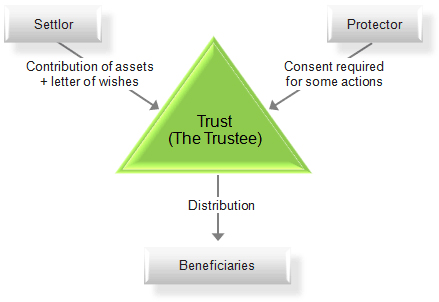
Think of KYC as establishing the mechanical foundation of the account. Who owns the assets? If it is a trust, who is the trustee? If it is a corporation, who is authorized to trade?
Crucially, this is not a one-time event. While the Know Your Customer obligation applies at the time a customer account is opened, the Know Your Customer obligation is an ongoing requirement throughout the life of the customer relationship. If a client gets married, changes jobs, or retires, the essential facts have changed, and you must update your understanding.
The moment you make a "recommendation," you trigger a cascade of regulatory obligations. But what exactly is a recommendation?
A recommendation is a communication that could reasonably be viewed as a call to action or a suggestion that a customer engage in a securities transaction. Whether a communication constitutes a recommendation depends heavily on the specific content, context, and presentation of the communication.
- Not a recommendation: Providing general financial information or educational materials does not typically constitute a recommendation. Explaining the mathematical difference between a stock and a bond is education.
- A recommendation: Saying, "Given your impending retirement, you should shift assets into the XYZ Bond Fund," is a call to action.
The Nuance of "Holding"
Recommendations are not just about buying and selling; they are also about doing nothing. An implicit hold recommendation occurs when a broker-dealer recommends that a customer refrain from selling a specific security. For example, telling a client, "Don't panic, leave your tech stocks right where they are," is advice. Furthermore, under modern regulations (which we will discuss next), an investment strategy recommendation includes an explicit recommendation to hold a security.
Historically, the gold standard for broker-dealer advice was Suitability. FINRA Rule 2111, known as the Suitability rule, requires a broker-dealer to have a reasonable basis to believe a recommended transaction or investment strategy is suitable for the customer.
The suitability of a recommendation is derived directly from the information obtained through the reasonable diligence of the broker-dealer to ascertain the customer's investment profile.
Think of an investment profile as a clinical chart in a hospital. A doctor cannot prescribe medication without knowing the patient's vitals and history. Your client's "vitals" include two sets of critical data:
- Age, other investments, financial situation, tax status, and investment objectives.
- Investment experience, investment time horizon, liquidity needs, and risk tolerance.
Once you have this profile, FINRA defines three main suitability obligations that must be met simultaneously:
1. Reasonable-Basis Suitability
Before you recommend a product to anyone, you must understand it yourself. Reasonable-basis suitability requires a broker-dealer to understand the potential risks and rewards associated with the recommended security or strategy, and to believe the recommendation is suitable for at least some investors. If a product is so structurally flawed or toxic that it benefits no one, it fails this test.
2. Customer-Specific Suitability
This bridges the product to the client. Customer-specific suitability requires a broker-dealer to have a reasonable basis to believe a recommendation is suitable for a particular customer based on that specific customer's investment profile.
3. Quantitative Suitability
This obligation looks at the cumulative math of your advice. Quantitative suitability requires a broker-dealer with actual or de facto control over a customer account to believe that a series of recommended transactions is not excessive.
The Power of Context: A series of transactions may be entirely suitable when viewed in isolation, while simultaneously violating quantitative suitability by being excessive when taken together. Buying a mutual fund once is fine; recommending a client buy and sell that same mutual fund every three days generates massive fees and violates quantitative suitability, a practice known as churning.
While Suitability requires your advice to be "appropriate," the SEC decided this was not strict enough for everyday people. Enter SEC Regulation Best Interest, which establishes a higher, fiduciary-like standard of conduct for broker-dealers when recommending securities transactions.
It is vital to understand jurisdiction here: Regulation Best Interest applies exclusively to recommendations made to retail customers. In fact, Regulation Best Interest supersedes the FINRA Suitability rule for recommendations made to retail customers.
Does Suitability still exist? Yes. The FINRA Suitability rule continues to apply to recommendations made to institutional customers. Institutions are considered sophisticated enough to protect themselves, so the baseline Suitability rule remains their standard.
The Core Mandate of Reg BI
Regulation Best Interest requires broker-dealers to act in the best interest of the retail customer at the time a recommendation is made. Most importantly, under Regulation Best Interest, broker-dealers cannot place the financial or other interests of the firm ahead of the retail customer's interests. You cannot recommend Product A over Product B simply because Product A pays you a higher commission, if Product B is better for the client.
To enforce this, Regulation Best Interest comprises four core obligations:
-
The Disclosure Obligation Broker-dealers must provide retail customers with a written description of material facts regarding the recommendation and the broker-dealer relationship. The cornerstone of this is Form CRS. Form CRS stands for Client Relationship Summary, and it is exactly that—a brief relationship summary document outlining services, fees, conflicts, and disciplinary history. Broker-dealers must deliver Form CRS to retail investors to fulfill these relationship disclosure requirements.
-
The Care Obligation This elevates the Suitability concept. The Care Obligation requires a broker-dealer to exercise reasonable diligence, care, and skill in making a recommendation. It is not enough that the investment is merely "suitable"; you must apply professional skill to ensure it serves the client's best interest.
-
The Conflict of Interest Obligation Financial firms are businesses, and conflicts of interest are inevitable. The Conflict of Interest Obligation requires broker-dealers to establish written policies to identify and mitigate or eliminate conflicts of interest. If a conflict cannot be eliminated, it must be prominently disclosed so the client can make an informed decision.
-
The Compliance Obligation A rule is meaningless without an enforcement mechanism. The Compliance Obligation requires broker-dealers to establish, maintain, and enforce written policies and procedures to achieve compliance with Regulation Best Interest as a whole.
As you prepare for the SIE, visualize these rules as a chronological timeline of a client relationship.
First, you reach out to the public under strict boundaries (Rule 2210 and the TCPA). When a prospect agrees to become a client, you must learn who they are mechanically (Rule 2090 KYC). When you are ready to give advice, you must evaluate their investment profile. If they are an institutional client, you apply Suitability (Rule 2111). If they are an everyday retail investor, you must elevate your advice to meet the strict, conflict-free standards of Regulation Best Interest, ensuring that every call to action—including an explicit recommendation to hold a position—is made solely to benefit the client, not your firm.