The SEC and SROs
Imagine a sprawling, high-speed rail network carrying trillions of dollars in cargo every single day. If every conductor decided their own speed limit and every switch operator ignored the signals, the system would collapse into catastrophic wrecks. The United States financial markets represent the most complex and heavily trafficked economic engine in human history, and they function only because of a carefully engineered system of regulatory oversight. At the pinnacle of this system sits the federal government, establishing the ultimate rules of the track. Yet, managing the intricate day-to-day operations of every specialized train requires delegating authority to those actually working on the rails. Understanding this division of labor—between the ultimate federal authority and the industry’s self-policing bodies—is the foundation of your career in the securities industry.

Following the devastating stock market crash of 1929, the federal government realized that public trust in the financial markets had completely evaporated. To restore that trust, Congress passed a landmark piece of legislation: The Securities Exchange Act of 1934.
This Act established the Securities and Exchange Commission (SEC), an independent federal government agency. Today, the Securities and Exchange Commission (SEC) acts as the primary regulator and overseer of the United States securities markets.
The SEC is not merely a bureaucratic paper-pusher; it is the ultimate architect of market integrity. It has the authority to write and enforce federal securities laws, and it holds jurisdiction over self-regulatory organizations (SROs), broker-dealers, investment advisers, and mutual funds.
The Three-Pronged Mission of the SEC
To understand how the SEC operates, you must understand what it is trying to achieve. Every rule they write and action they take traces back to one of these three primary missions:
- To protect investors: The SEC ensures that the investing public has access to truthful, comprehensive information. When a firm misleads an investor, the SEC steps in.
- To maintain fair, orderly, and efficient markets: The SEC designs rules so that when you execute a trade, you receive a fair price and the transaction settles efficiently, without chaotic disruptions.
- To facilitate capital formation: This is the economic engine. Capital formation is the process by which companies raise money to build factories, hire workers, and innovate. By maintaining a trustworthy market, the SEC ensures that investors are willing to hand their capital over to growing businesses.
SEC Enforcement Power: Civil, Not Criminal
When a firm or individual breaks federal securities laws, the SEC swings into action. However, their powers have a very specific, and highly testable, boundary.
The Securities and Exchange Commission (SEC) holds the power to bring civil enforcement actions against individuals and companies for violations of securities laws. This means they can sue you, freeze your assets, force you to return stolen profits (disgorgement), and levy massive financial penalties.
Crucial Distinction: The Securities and Exchange Commission (SEC) does not possess the authority to bring criminal charges against individuals or entities. The SEC cannot send anyone to prison.
When the SEC uncovers a fraud so egregious that it warrants jail time, they do not simply let it go. The Securities and Exchange Commission (SEC) can refer suspected criminal violations of securities laws to the Department of Justice (DOJ) for prosecution. The DOJ handles the handcuffs; the SEC handles the fines and market bans.

The SEC oversees an unimaginably vast market. It is impossible for one federal agency to monitor every single trade, every options contract, and every municipal bond offering in real-time. To solve this, the SEC utilizes a system of self-regulation.
A Self-Regulatory Organization (SRO) is a non-governmental organization. It is an industry body comprised of the very professionals it regulates.
The Securities and Exchange Commission (SEC) delegates authority to Self-Regulatory Organizations (SROs) to enforce federal securities laws within specific jurisdictions. Because they operate close to the ground, SROs understand the intricate mechanics of their specific markets better than a distant federal agency might. Furthermore, a Self-Regulatory Organization (SRO) has the power to create and enforce stand-alone industry and professional regulations above and beyond basic federal law.
The Layer Cake of Compliance
As a registered representative, your professional life is governed by multiple layers of rules. Broker-dealers are required to comply with Securities and Exchange Commission (SEC) rules, Self-Regulatory Organization (SRO) rules, and applicable state laws (often called Blue Sky laws).
Member firms of a Self-Regulatory Organization (SRO) must abide by the rules of the specific SRO, while simultaneously recognizing that they must abide by the rules of the Securities and Exchange Commission (SEC).
SRO Disciplinary Powers
SROs are the frontline police, but their weapons are strictly professional and financial. Self-Regulatory Organizations (SROs) possess the authority to fine, suspend, or expel member firms and associated persons for rule violations.
However, just like the SEC, Self-Regulatory Organizations (SROs) do not have the authority to impose criminal penalties or sentence individuals to prison. They cannot throw you in a physical jail, but they can throw you out of the industry.
To ensure SROs do not abuse their power—or go too easy on their friends—the SEC keeps them on a tight leash. All disciplinary actions taken by a Self-Regulatory Organization (SRO) are subject to review by the Securities and Exchange Commission (SEC).
| Feature | SEC | SRO |
|---|---|---|
| Status | Federal Government Agency | Non-Governmental Organization |
| Jurisdiction | The entire U.S. securities market | Specific markets delegated by the SEC |
| Civil Penalties | Yes (Fines, injunctions) | Yes (Fines, suspensions, expulsions) |
| Criminal Penalties | No (Refers to DOJ) | No |
| Oversight | Answers to Congress | Disciplinary actions subject to SEC review |
Let's examine the three major SROs you must know for your exam.
The Financial Industry Regulatory Authority (FINRA) is the largest non-governmental regulator for all securities firms doing business in the United States. If you are entering the securities industry to sell stocks, bonds, or mutual funds to the public, FINRA is your direct supervisor.
The primary mission of the Financial Industry Regulatory Authority (FINRA) is to safeguard the investing public against fraud and bad practices. To achieve this, the Financial Industry Regulatory Authority (FINRA) has the authority to write and enforce rules governing the activities of all registered broker-dealer firms in the United States.
To conduct public business, broker-dealers must register with the Financial Industry Regulatory Authority (FINRA). This registration is their lifeblood. The revocation of a broker-dealer's FINRA registration effectively bars the broker-dealer from operating within the securities industry.
Beyond writing and enforcing rules, FINRA provides two massive structural services to the market:
- Gatekeeping: The Financial Industry Regulatory Authority (FINRA) administers qualification exams for securities professionals. The very exam you are studying for right now—the SIE—is administered by FINRA.
- Conflict Resolution: The Financial Industry Regulatory Authority (FINRA) operates the largest dispute resolution forum in the United States securities industry. When a client sues a broker, or a broker sues their firm, the matter is typically handled in FINRA arbitration, rather than in a traditional civil courtroom.
While FINRA oversees the broad broker-dealer landscape, the derivatives market requires specialized oversight.
The Chicago Board Options Exchange (CBOE) is the largest options exchange in the United States. Beyond serving as a marketplace where options are bought and sold, the Chicago Board Options Exchange (CBOE) acts as a Self-Regulatory Organization (SRO) for the standardized options market.
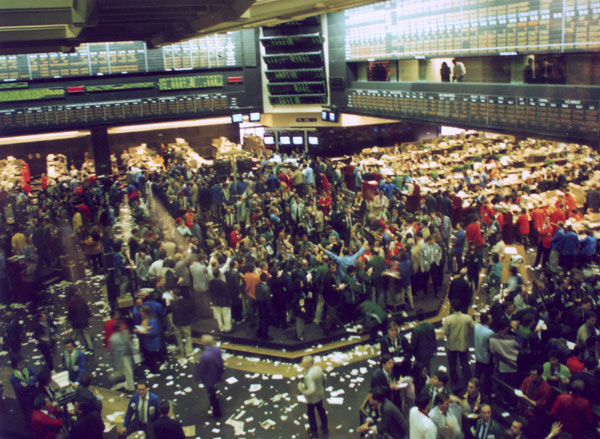
Because options are highly leveraged and mathematically complex, they carry unique risks. The Chicago Board Options Exchange (CBOE) enforces rules to ensure fair and orderly markets for the trading of options contracts. Furthermore, the Chicago Board Options Exchange (CBOE) is responsible for regulating the trading activities of member firms in the options market, ensuring that traders do not manipulate pricing or abuse the mechanics of options expiration.
Municipal bonds are debt securities issued by states, cities, and local governments to fund public projects like schools, highways, and water treatment plants. Congress recognized that this market operates very differently from corporate equities, leading to the creation of a highly specialized SRO.

The Municipal Securities Rulemaking Board (MSRB) is a Self-Regulatory Organization (SRO) established by Congress in 1975. The Municipal Securities Rulemaking Board (MSRB) writes rules regulating broker-dealers, banks, and municipal advisors engaging in municipal securities activities.
Like all SROs, the Municipal Securities Rulemaking Board (MSRB) focuses on promoting a fair and efficient municipal securities market. However, the MSRB possesses one of the most highly tested quirks in all of securities regulation.
The MSRB Paradox: The Municipal Securities Rulemaking Board (MSRB) lacks the authority to enforce compliance with the rules written by the MSRB.
They write the rulebook, but they do not have a police force to arrest the rulebreakers. If the MSRB cannot enforce its own rules, who does? Enforcement is divided based on the type of institution breaking the rule:
- For Broker-Dealers: The Financial Industry Regulatory Authority (FINRA) enforces the rules written by the Municipal Securities Rulemaking Board (MSRB) for registered broker-dealers.
- For Banking Institutions: Because banks often deal in municipal bonds but are generally exempt from FINRA oversight, Bank regulatory agencies enforce Municipal Securities Rulemaking Board (MSRB) rules for banking institutions dealing in municipal securities.
- Specifically, the Federal Reserve Board enforces Municipal Securities Rulemaking Board (MSRB) rules for regulated banking institutions within its system.
- The Federal Deposit Insurance Corporation (FDIC) enforces Municipal Securities Rulemaking Board (MSRB) rules for regulated banking institutions under its purview.
- The Office of the Comptroller of the Currency (OCC) enforces Municipal Securities Rulemaking Board (MSRB) rules for regulated banking institutions it charters.
- The Ultimate Authority: Overarching all of this, the Securities and Exchange Commission (SEC) holds ultimate enforcement authority for the rules written by the Municipal Securities Rulemaking Board (MSRB).
Summary of the Regulatory Ecosystem
As you prepare for the exam, visualize the hierarchy. The federal government, through the SEC, sets the overarching mission to protect investors, maintain orderly markets, and facilitate capital formation. They handle civil prosecution and oversee the whole system.
Beneath them, non-governmental SROs handle the granular, day-to-day regulation. FINRA polices the broker-dealers. The CBOE polices the options pits. The MSRB writes the rules for the municipal market (while outsourcing the actual enforcement). And as a professional entering this ecosystem, you are bound by all of them.