American Revolution and Founding
Not sure you’re ready?
Take the ~3-minute readiness diagnostic and see where you stand.
To build a functional government from scratch is to solve a profound problem in the physics of human power: how do you bind thirteen disparate, fiercely independent colonial systems together without recreating the very tyranny that forced them apart? The history of the American Revolution and the founding of the United States is fundamentally a story of structural engineering. It is the observation of how economic friction generated a social explosion, how a war of ideas was translated onto the battlefield, and how an initial, deeply flawed attempt at a national blueprint forced an entire generation back to the drafting table to invent a lasting constitutional machinery.
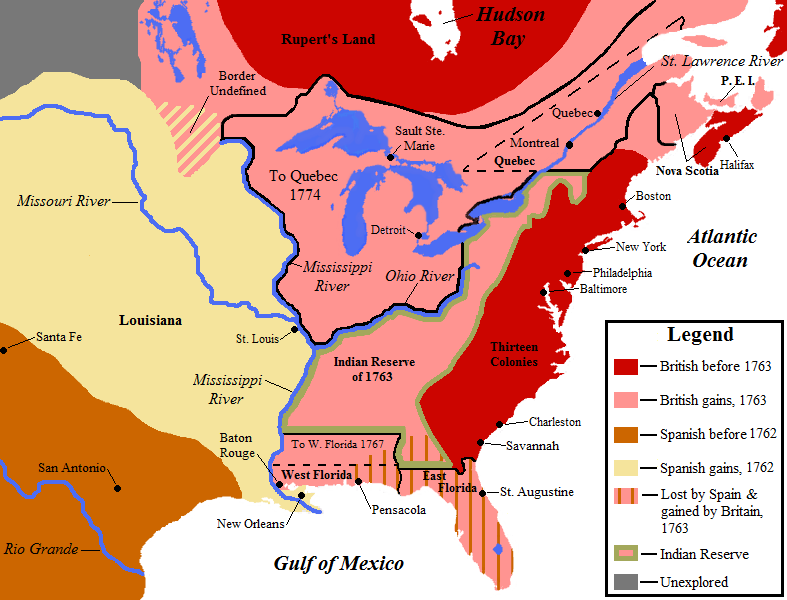
Every action has an equal and opposite reaction. In the mid-eighteenth century, the geopolitical landscape of North America shifted dramatically, setting off a chain reaction that would tear the British Empire apart.
The mechanism was primarily economic. The French and Indian War resulted in significant debt for the British government. When you run an empire, wars are exceptionally expensive. Faced with a heavily depleted treasury, the British government attempted to pay off war debt by imposing new taxes on the American colonies.
To the British Parliament in London, this seemed entirely logical; the war had been fought partly to defend those very colonies. To the colonists, however, the imposition of these taxes violated a foundational rule of their political universe. In 1765, Parliament passed the Stamp Act of 1765, which imposed a direct tax on printed materials in the American colonies. Newspapers, legal documents, and even playing cards suddenly required a paid stamp.
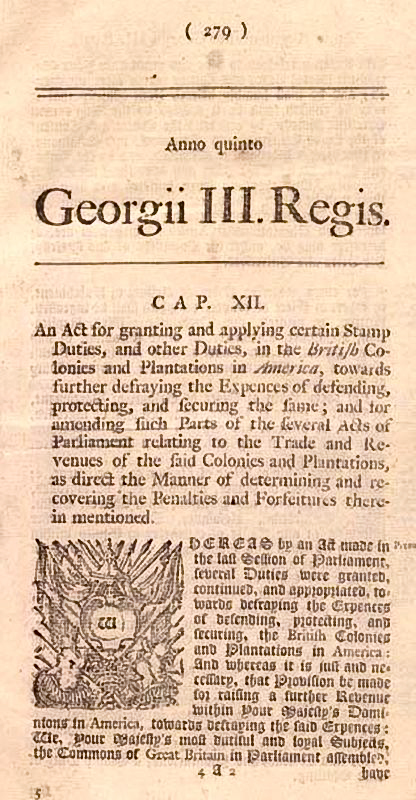
The colonists' reaction was immediate and fierce. American colonists objected to direct taxation by a British Parliament that lacked colonial representatives. They possessed no voice, no vote, and no seat at the table in London. Consequently, the phrase "Taxation without representation" became a central rallying cry for American colonists.
As resistance organized, the British introduced military friction. The presence of heavily armed British troops in colonial cities acted like a lit match near a powder keg. This tension violently erupted during the Boston Massacre of 1770, which involved British soldiers killing five colonial protestors after a standoff escalated in the streets.
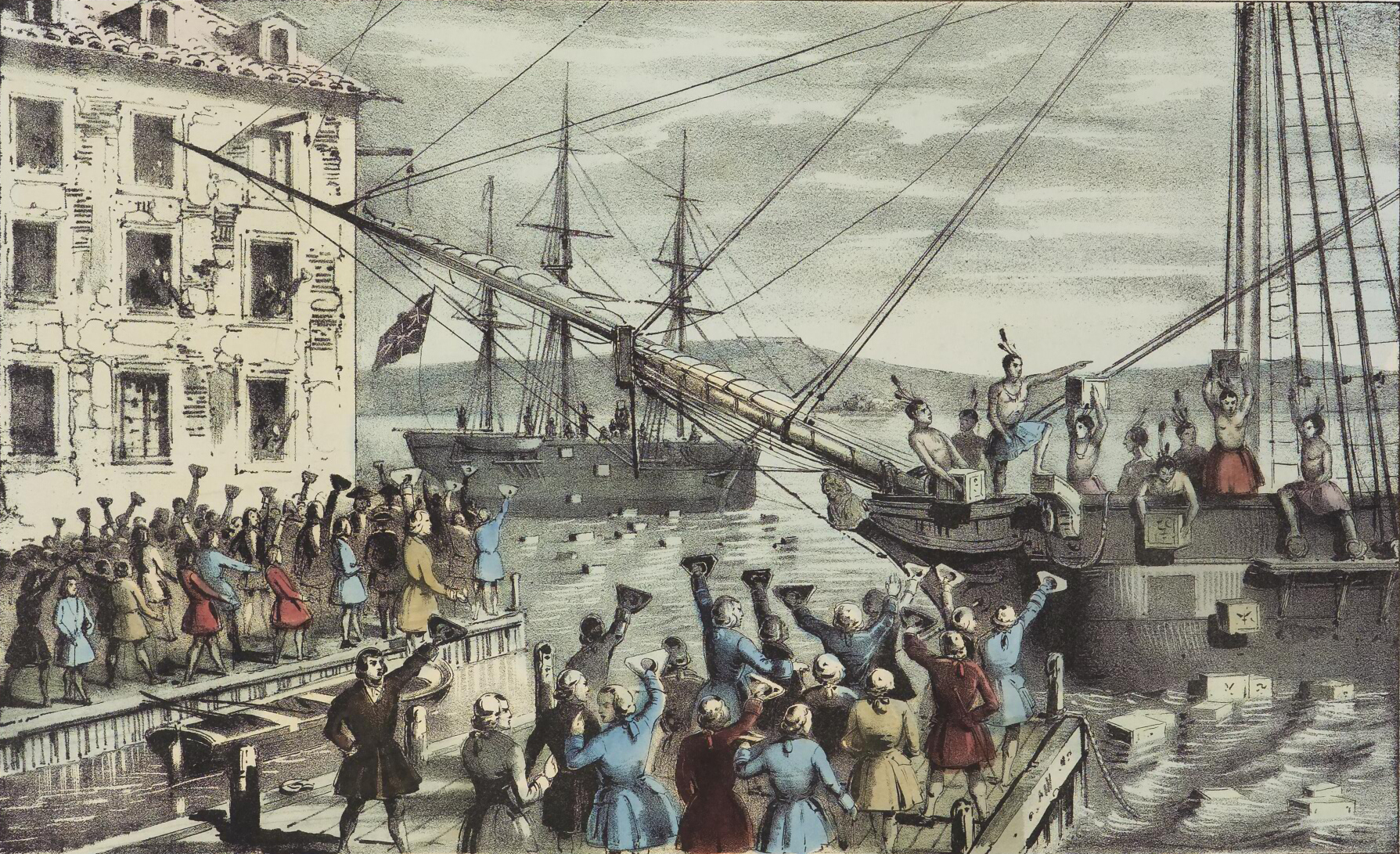
Parliament continued to apply pressure, eventually passing the Tea Act, which effectively monopolized the tea trade. The colonial response was highly calculated civil disobedience. The Boston Tea Party of 1773 was a colonial protest against the British Tea Act, during which American colonists dumped British tea into Boston Harbor.
London’s reaction was punitive. The British Parliament passed the Coercive Acts in 1774 to punish Massachusetts for the Boston Tea Party. These acts closed the port of Boston and stripped the colony of its self-governance. Because these laws were viewed as unbearable violations of natural rights, the American colonists referred to the Coercive Acts as the Intolerable Acts.
To respond to this immense external pressure, the colonies realized they could no longer act as isolated entities. The First Continental Congress convened in 1774 to coordinate colonial resistance to British policies. They boycotted British goods and began quietly preparing for the possibility of armed conflict.
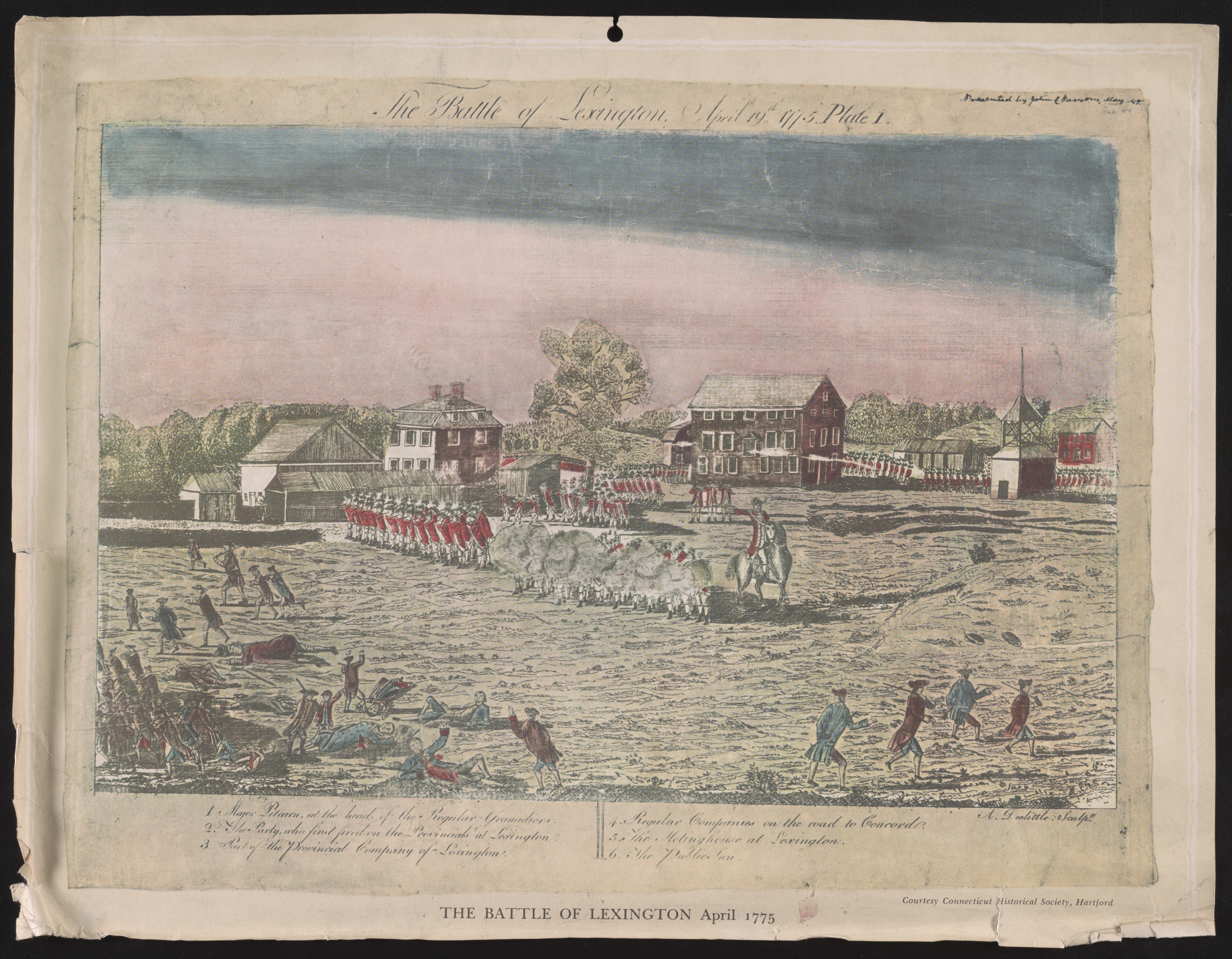
When you compress a highly combustible mixture, a single spark is all it takes. The Battles of Lexington and Concord in April 1775 marked the beginning of armed conflict in the American Revolution. Colonial militias and British regulars exchanged the first volleys of a war that would last for eight years.
Realizing they were now locked in open rebellion, colonial delegates convened once more. The Second Continental Congress appointed George Washington as the commander of the Continental Army, recognizing that they needed a unified military force led by a commander capable of navigating the impossible logistics of fighting the world's most powerful empire.
Yet, military action requires a unified psychological justification. Why fight? Early on, many colonists merely wanted their rights as British subjects restored. This paradigm shifted dramatically when Thomas Paine published the highly influential pamphlet Common Sense in 1776. The pamphlet Common Sense argued for immediate colonial independence from Great Britain, stripping away the reverence for the monarchy and framing independence as pure, rational necessity.
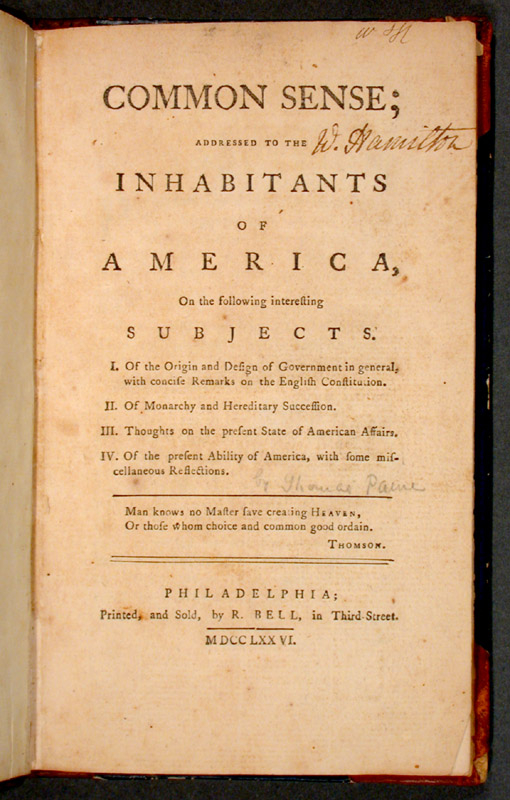
With public opinion shifting, the ideological framework of the new nation was formally codified. The Second Continental Congress adopted the Declaration of Independence on July 4, 1776.
Thomas Jefferson was the principal author of the Declaration of Independence, and he engineered it not just as a secession document, but as a universal philosophical statement.
%2C_by_John_Trumbull.jpg)
The Core Philosophy of the Declaration
- Equality: The Declaration of Independence asserts that all men are created equal.
- Natural Rights: The Declaration of Independence claims that individuals possess unalienable rights to life, liberty, and the pursuit of happiness.
These words acted as the theoretical foundation for the entirely new society they were trying to build.
Proclaiming independence is simply an assertion; defending it requires surviving the brutal realities of war. The Continental Army was initially outmanned, outgunned, and profoundly underfunded.
The survival of the revolution hinged on a few critical turning points. The most vital early victory came in New York. The Battle of Saratoga in 1777 is considered the turning point of the American Revolution. Why? Because wars require logistics and allies. The American victory at the Battle of Saratoga convinced France to form a military alliance with the United States, supplying desperately needed naval power, troops, and funds.
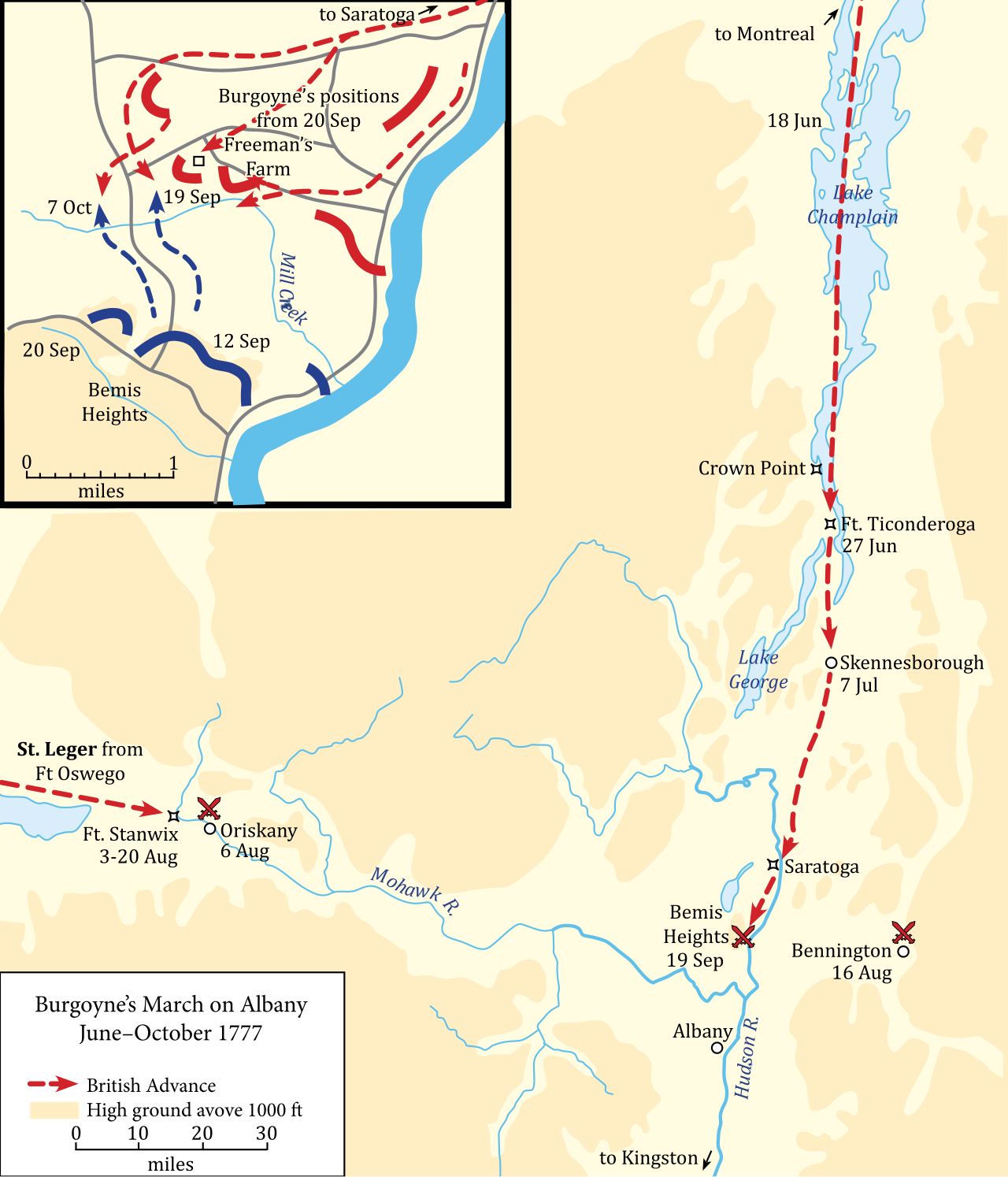
Despite the French alliance, the internal struggle of maintaining the army was agonizing. The Continental Army endured a severe winter encampment at Valley Forge from 1777 to 1778, where disease, starvation, and exposure threatened to destroy the army from within. Washington’s ability to keep the military cohesive through this winter was as critical as any battlefield victory.
The strategic end of the war arrived in Virginia. The Battle of Yorktown in 1781 was the final major military engagement of the American Revolution. Trapped by American forces on land and the French navy at sea, British General Charles Cornwallis surrendered to George Washington at the Battle of Yorktown.
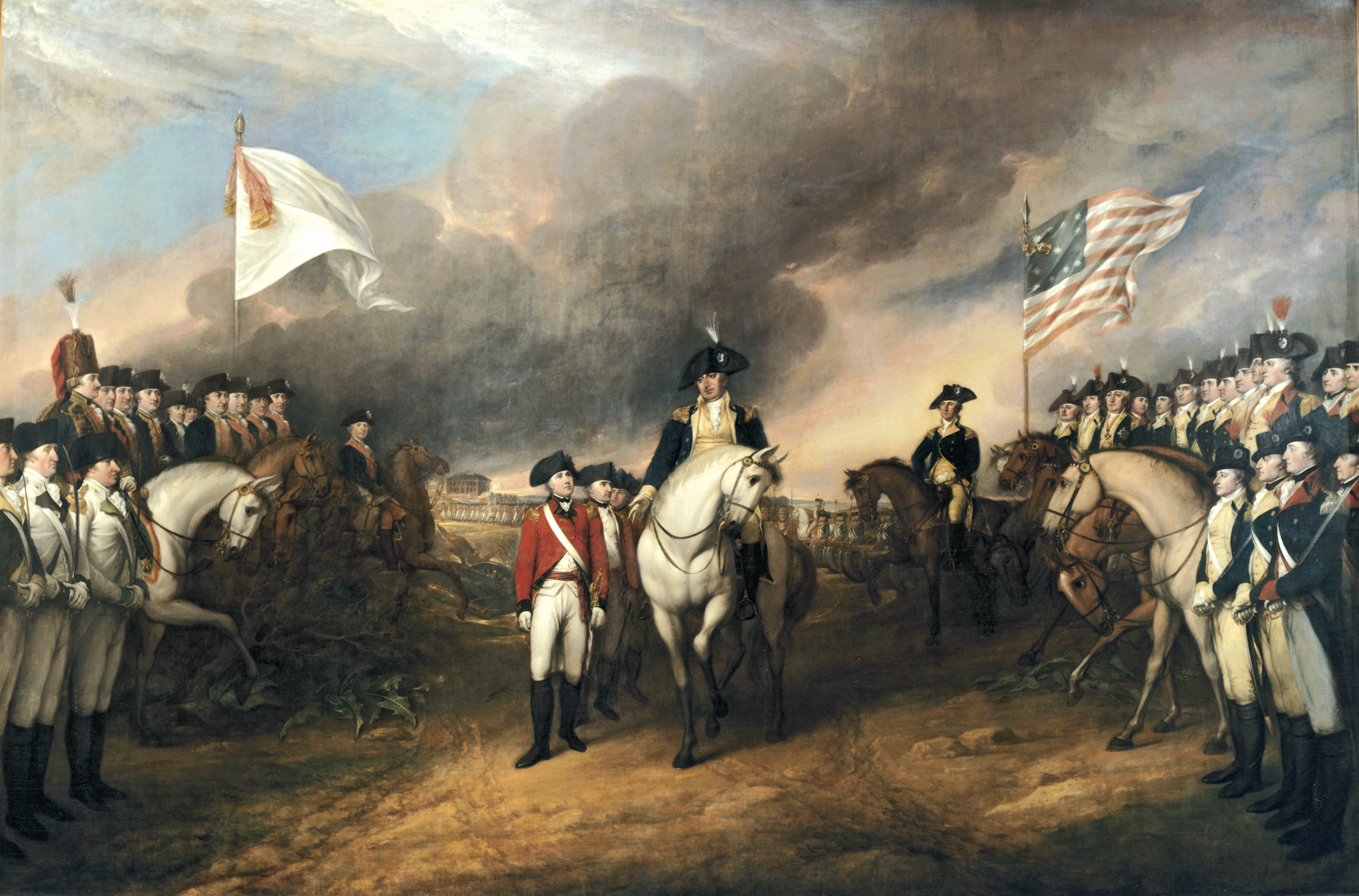
Diplomatic closure followed two years later. The Treaty of Paris of 1783 officially ended the American Revolutionary War, and, most crucially, the Treaty of Paris of 1783 recognized the United States as an independent nation.
When you overthrow a powerful, centralized authority like a king, your immediate instinct is to avoid creating another one. The founders engineered their first government to be as weak as possible to prevent tyranny.
The Articles of Confederation served as the first constitution of the United States, and by design, the Articles of Confederation intentionally created a weak central government.
Think of a government as an engine. To function, it needs fuel (revenue) and a drive shaft (authority). The Articles provided neither.
| Structural Flaw under the Articles | Consequence |
|---|---|
| No Revenue Power | Under the Articles of Confederation, the national government lacked the power to levy taxes. They could only ask states for money, which states routinely ignored. |
| No Economic Control | Under the Articles of Confederation, the national government could not regulate interstate commerce, leading to chaotic trade disputes between states. |
| No Enforcement Mechanism | Under the Articles of Confederation, the national government lacked a separate executive branch to enforce laws. |
| No Judicial Authority | Under the Articles of Confederation, the national government lacked a national court system to settle disputes. |
| Impossible to Fix | Amending the Articles of Confederation required a unanimous vote of all thirteen states, making any structural reform virtually impossible. |
The system inevitably cracked under its own inadequacy. Shays' Rebellion in 1786 involved an armed uprising of farmers facing debt and property foreclosures in Massachusetts. The federal government was entirely powerless to intervene or raise an army to suppress the revolt. Thus, Shays' Rebellion demonstrated the inability of the national government under the Articles of Confederation to maintain public order.
Recognizing the impending collapse of their new nation, delegates were summoned to a convention. The Constitutional Convention convened in Philadelphia in 1787.
The original stated purpose of the Constitutional Convention was to revise the Articles of Confederation. However, as soon as the doors were locked, men like James Madison realized that you cannot renovate a crumbling foundation. The Constitutional Convention resulted in the creation of an entirely new United States Constitution.
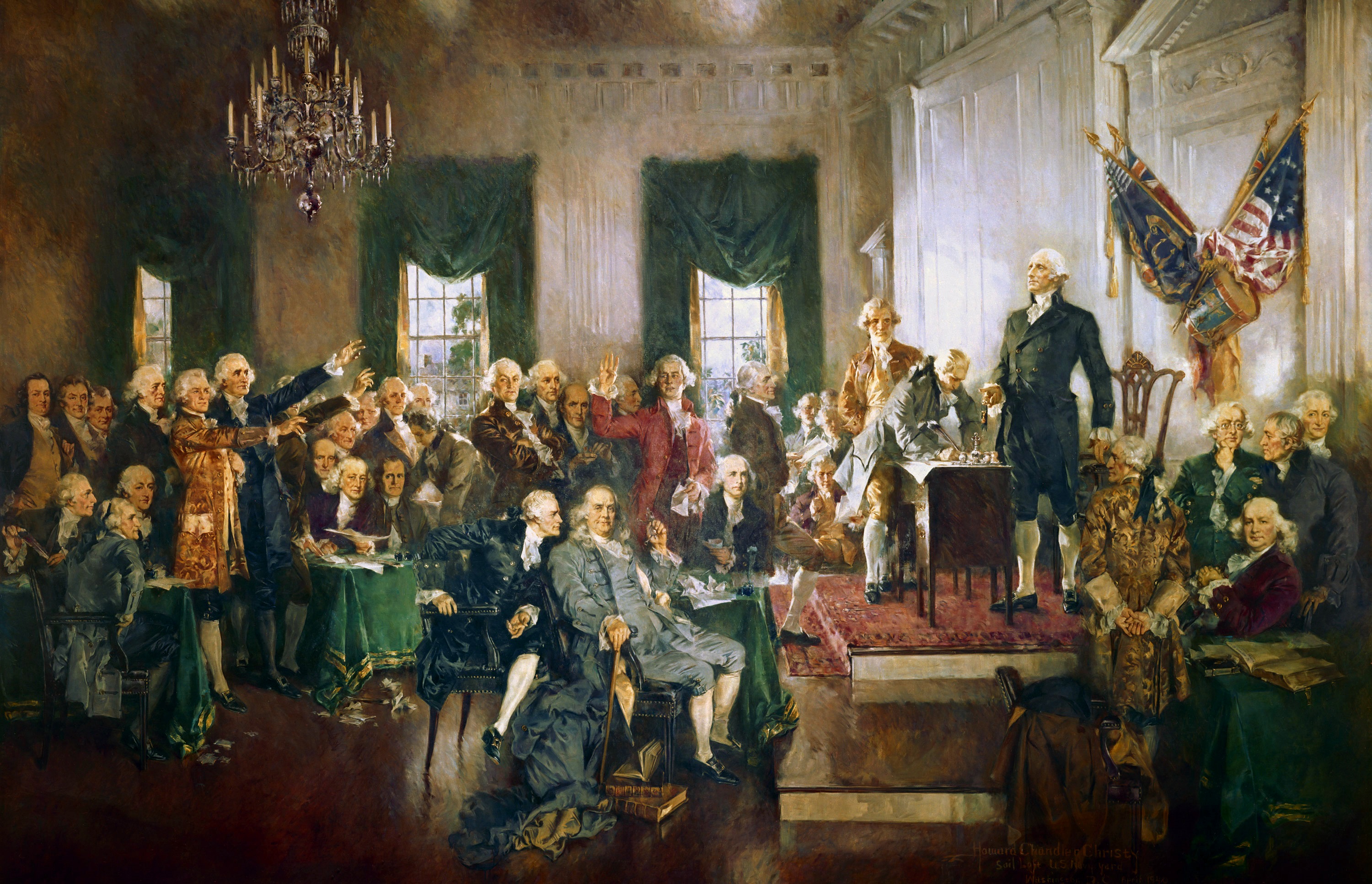
The core problem was representation: how do you balance the power of large states against small states? Two competing architectural plans were proposed:
- The Virginia Plan proposed a bicameral national legislature with representation based on state population. (Favoring large states).
- The New Jersey Plan proposed a unicameral national legislature with equal representation for every state. (Favoring small states).
To avoid a deadlock that would have destroyed the convention, the delegates engineered a hybrid solution. The Great Compromise merged the Virginia and New Jersey Plans to create a bicameral legislature.
- The Great Compromise established the United States House of Representatives with proportional representation based on population.
- The Great Compromise established the United States Senate with equal representation of two senators for each state.
This structural elegance, however, was accompanied by a deeply grim calculus regarding slavery. Southern states wanted enslaved people counted to increase their political power in the House, while Northern states objected since enslaved people possessed zero rights. The Three-Fifths Compromise determined how enslaved people would be counted for congressional representation and taxation, dictating that the Three-Fifths Compromise counted three out of every five enslaved individuals toward a state's total population. It was a moral failing inscribed into the mathematical machinery of the new government to keep the Southern states in the union.
Writing a constitution is only half the battle; it must be accepted by the people. The proposal of the new Constitution triggered a massive ideological debate, splitting the nation into two camps.
Federalists were a political faction that supported the ratification of the United States Constitution. Recognizing the disasters of the Articles, Federalists favored a strong central government to maintain order and manage the national economy.
Conversely, Anti-Federalists were a political faction that opposed the ratification of the United States Constitution. Having just fought a war against a distant, powerful government, Anti-Federalists feared that a strong central government would threaten individual liberties and state sovereignty.
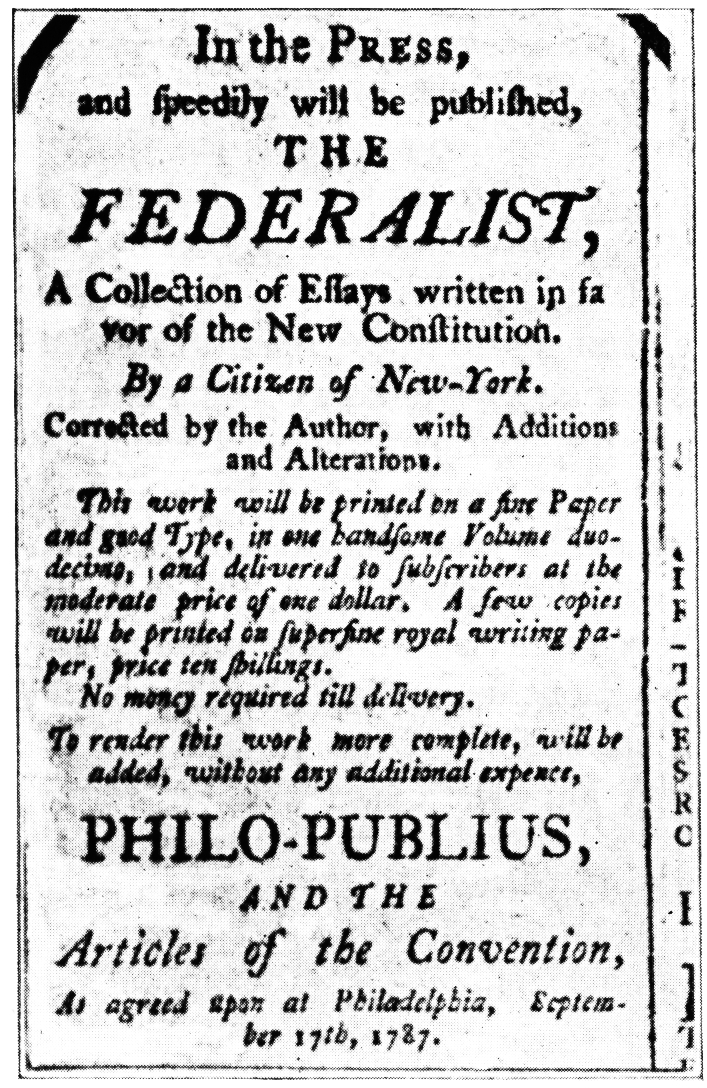
To win the intellectual war and explain the mechanics of the new system, the Federalist Papers were a series of eighty-five essays written to promote the ratification of the United States Constitution. Alexander Hamilton, James Madison, and John Jay wrote the Federalist Papers, laying out a brilliant defense of the Constitution's structural safeguards.
But logic alone was not enough. To secure ratification, a political deal was struck. The promise of adding a Bill of Rights helped secure Anti-Federalist support for ratifying the Constitution.
The Bill of Rights consists of the first ten amendments to the United States Constitution, and the Bill of Rights was added to the United States Constitution specifically to protect individual liberties—ensuring freedom of speech, religion, and protection against unreasonable search and seizure.
Ultimately, the brilliance of the new Constitution lay in its internal mechanics—the precise way it distributed power to prevent tyranny without sacrificing efficacy:
The Constitutional Principles
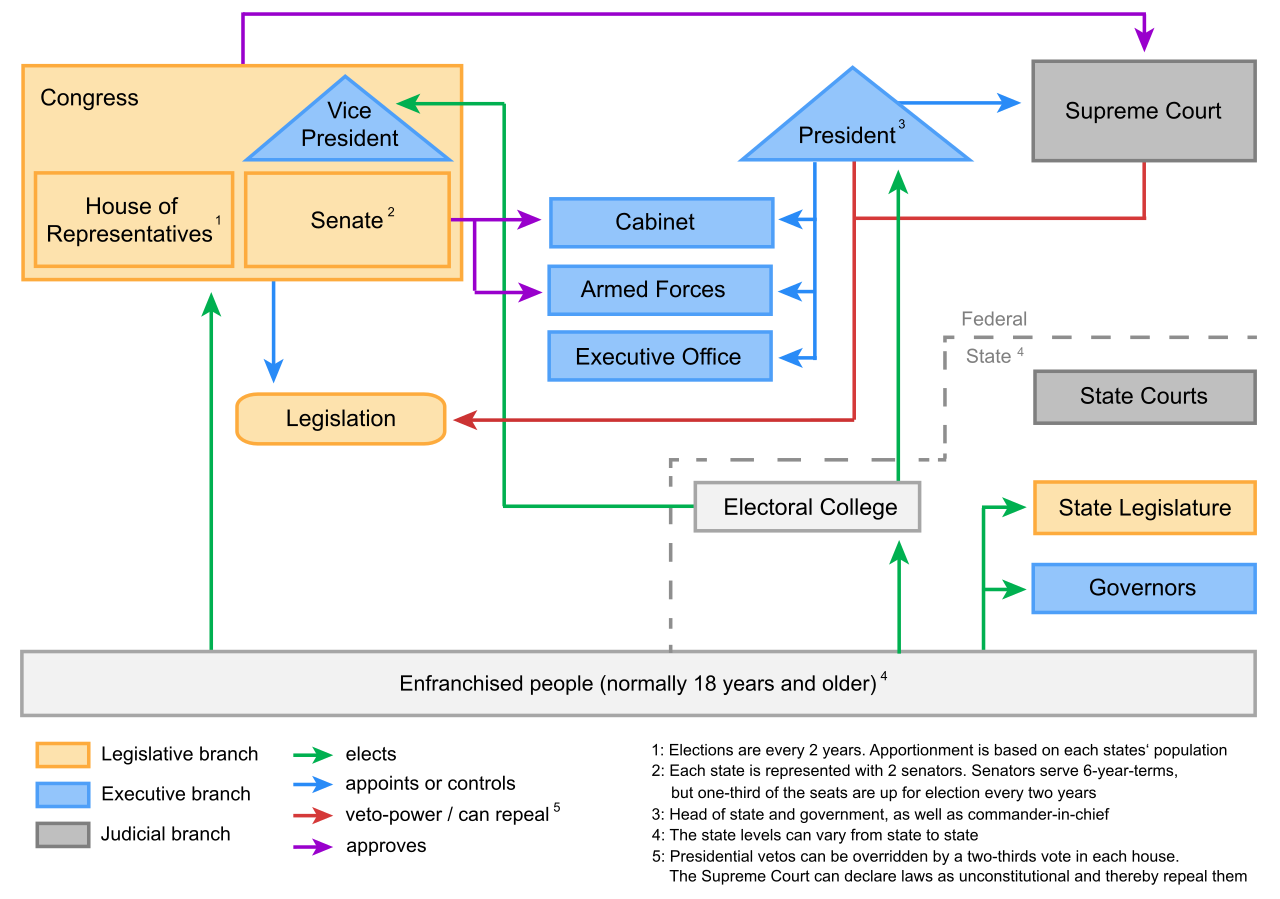
- Separation of Powers: The constitutional principle of separation of powers divides the government into legislative, executive, and judicial branches. Power is not concentrated; it is dispersed.
- Checks and Balances: The United States Constitution establishes a system of checks and balances to prevent any single branch from becoming too powerful. The President can veto laws, the legislature can override vetoes, and the courts can declare actions unconstitutional.
- Federalism: Federalism is a constitutional system of government dividing power between a national government and state governments. This ensures local governance handles local issues, while the national machinery operates the country as a unified whole.
By understanding the structural forces at play—from the economic pressures of the Stamp Act to the architectural genius of the Constitution—we see how the founders systematically disassembled a colonial empire and engineered an enduring constitutional republic.