Comprehending Literature
Not sure you’re ready?
Take the ~3-minute readiness diagnostic and see where you stand.
Reading a literary text is fundamentally an act of reverse engineering. An author constructs a narrative much like a physicist builds a theoretical model: they assemble characters, sequence events, and establish environments to test how human nature reacts under the pressure of conflict. As educators, our task is not merely to have students absorb a story, but to equip them with the analytical tools to dismantle it. We must train them to identify the load-bearing structures of a plot, trace the psychological evolution of characters, and extract the underlying universal truths woven into the text. This requires moving beyond passive reception to active investigation, demanding rigorous evidence for every analytical claim.
At its core, a plot is the structured sequence of interconnected events forming a narrative. It is not simply a random list of things that happen; it is a causal chain.
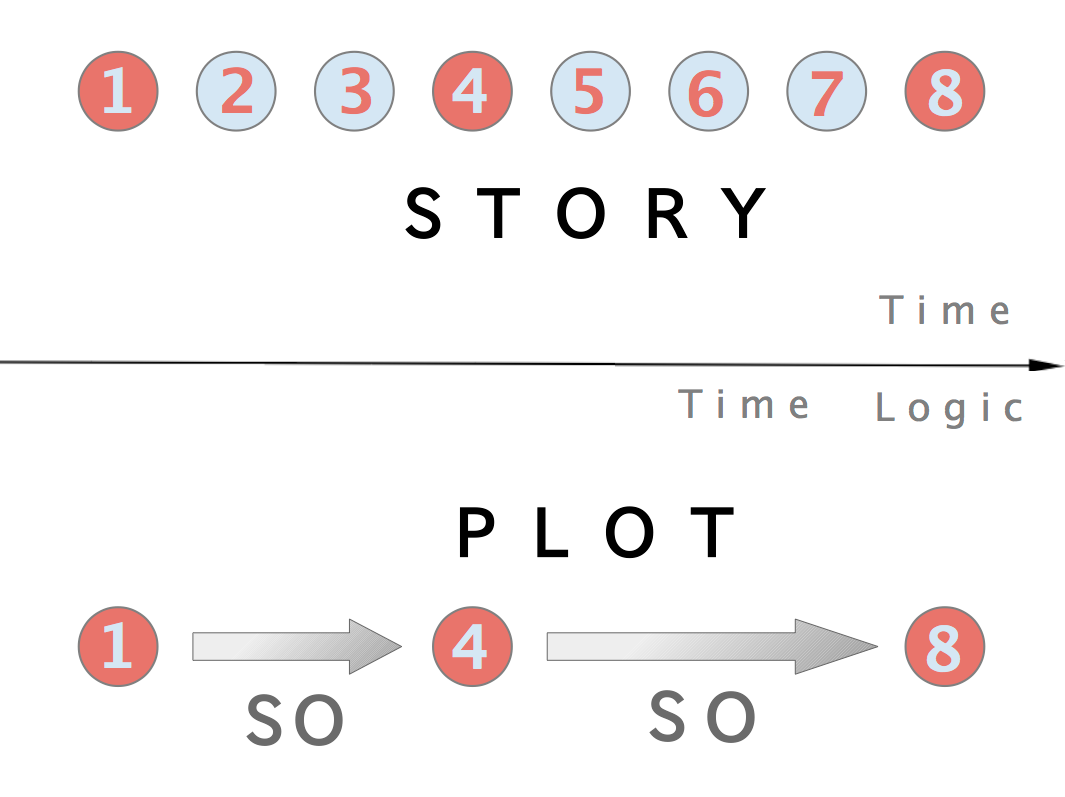
To map this out visually, literary analysts use Freytag's Pyramid, a structural model utilized to map out the plot of a literary text, detailing the rise and fall of narrative tension.
Freytag's Pyramid breaks a narrative into five distinct phases, revealing the mechanical engine driving the story forward.
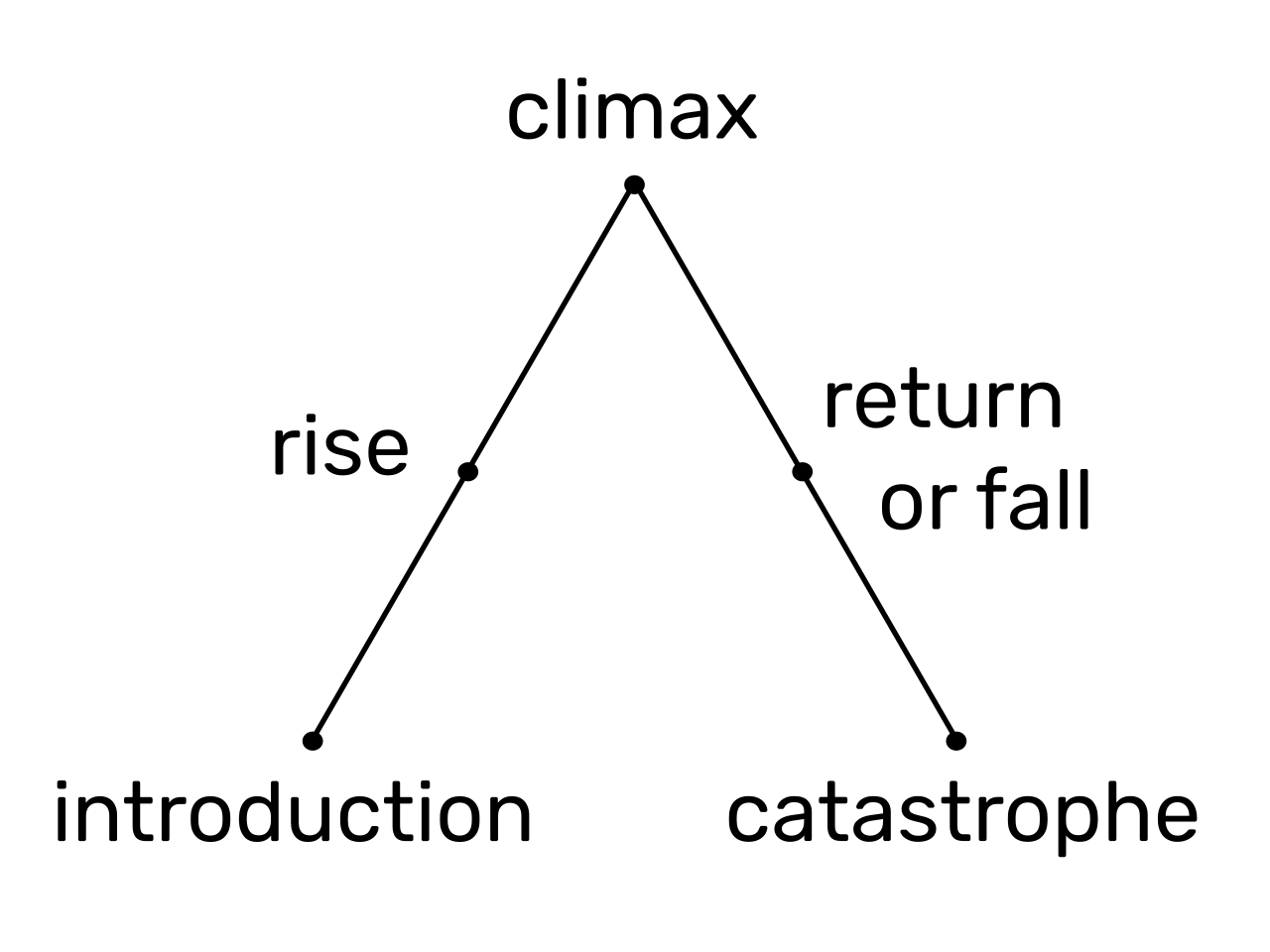
- Exposition: The exposition is the opening phase of a narrative plot. During this phase, the author lays the groundwork. The exposition establishes the foundational setting of a narrative and introduces the primary characters of a narrative.
- Rising Action: The calm of the exposition is shattered by the inciting incident, an event setting the main conflict of a plot into motion. Once the fuse is lit, the narrative enters the rising action, which comprises a series of events building narrative tension.
- Climax: The tension continues to compound until it reaches the apex. The climax represents the point of highest emotional tension in a narrative. Crucially, the climax serves as the pivotal turning point of a literary plot; the forces in conflict clash definitively, determining the direction of the outcome.
- Falling Action: The falling action consists of events immediately following the narrative climax. The fallout of the climax is addressed, and the falling action directly guides the narrative toward a final conclusion.
- Resolution: Finally, we arrive at the resolution, which is the final conclusion of a narrative plot. It is here that the primary narrative conflict is completely resolved, restoring a new equilibrium to the world of the story.
While Freytag's Pyramid presents a chronological map, authors frequently distort time to manipulate information. Flashbacks interrupt the chronological sequence of a narrative plot; they function to reveal past events to the reader, often recontextualizing a character's current motivations. Conversely, foreshadowing is a literary device providing subtle hints about future plot developments, building anticipation in the reader's mind without spoiling the ultimate outcome.
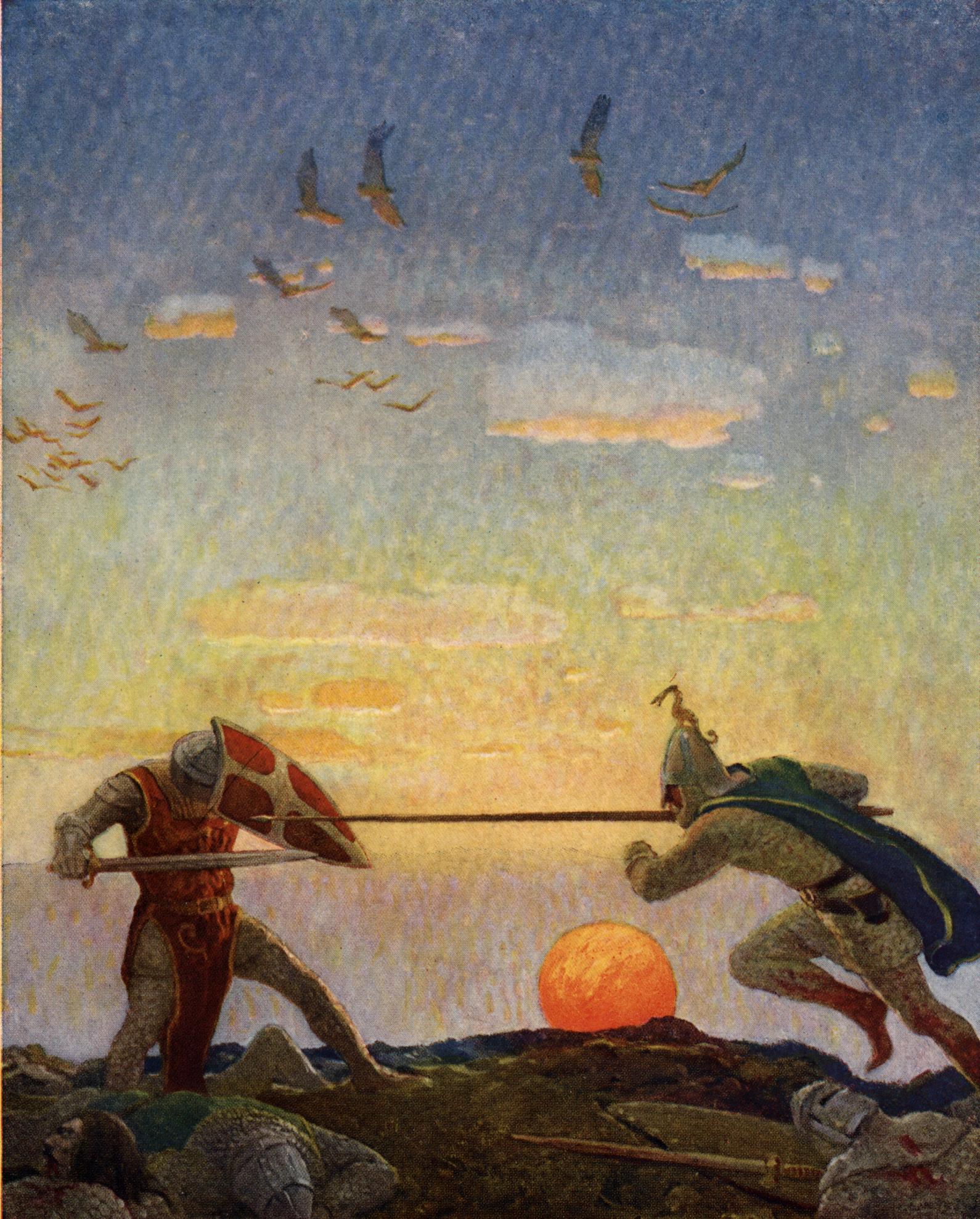
Without a struggle, a plot remains inert. A literary conflict is a direct struggle between opposing forces in a narrative. It is the catalyst that forces characters to act, adapt, or fail. We categorize literary conflicts into two broad domains:
| Conflict Type | Definition | Common Manifestations |
|---|---|---|
| Internal Conflict | An internal conflict occurs entirely within a single character's mind. | Moral dilemmas, overcoming fear, crises of identity. |
| External Conflict | An external conflict involves a character struggling against an outside force. | Character versus character: an external conflict involving a struggle between two individuals.<br><br>Character versus nature: an external conflict pitting a character against environmental forces.<br><br>Character versus society: an external conflict pitting a character against cultural norms or systemic oppression. |
To understand what happens, we must understand who it is happening to and where it is taking place.
Setting as an Active Force
The setting of a literary text encompasses far more than mere backdrop. It performs three critical functions:
- It establishes the physical location of the narrative.
- It establishes the historical time period of the narrative.
- It encompasses the social environment of the narrative (the cultural rules and expectations of the characters' world).
We must teach students that settings can be active participants in a story. For example, a hostile physical setting can serve as the primary source of conflict in a narrative, particularly in character versus nature survival stories where the environment itself acts as an antagonist.

The Dynamics of Characterization
The protagonist acts as the primary focal character of a literary text. They are the lens through which we experience the plot. Opposing them is the antagonist. While we often think of villains, an antagonist can be a specific character directly opposing the protagonist, or an antagonist can be an abstract force directly opposing the protagonist, such as an oppressive government, a severe storm, or a societal prejudice.
Characters are constructed with varying degrees of complexity and malleability:
- Dimensionality: Round characters possess highly complex personalities, exhibiting contradictory flaws and virtues like real human beings. In contrast, flat characters display only a single distinctive personality trait, often serving as archetypes or minor supporting figures.
- Evolution: We also evaluate characters by their capacity for change. Dynamic characters undergo significant internal psychological changes throughout a narrative in response to the plot's conflicts. Conversely, static characters maintain a consistent personality throughout an entire narrative, acting as fixed points of reference.
When analyzing characters, students must learn to distinguish between who a character is and how a character feels. Character traits are enduring qualities of a character's overall personality (e.g., inherently courageous, chronically pessimistic). In contrast, character emotions represent temporary psychological states reacting to specific events (e.g., momentary panic, brief joy).
Authors convey these traits using two distinct methods. Direct characterization occurs when an author explicitly states a character's specific traits ("John was a greedy man"). Indirect characterization, however, requires active deduction from the reader. Indirect characterization requires readers to deduce traits through a character's actions, and it requires readers to deduce traits through a character's dialogue. If John steals coins from a beggar's cup, the author doesn't need to call him greedy; the trait is illuminated through his behavior.
How do we extract profound meaning from the mechanics of plot and character? We synthesize the micro to reveal the macro.
At the foundational level, key details are specific pieces of information found within a literary text. These are the "data points" of reading. Key details provide foundational support for the main idea of a literary text.
By examining how these key details interact, we uncover the theme. A literary theme expresses a broad universal observation about human nature. Because a literary theme is rarely stated explicitly within the text, discovering it requires high-level synthesis.
- Readers must analyze character actions to determine a literary theme.
- Readers must analyze plot outcomes to determine a literary theme.
If a dynamic character acts with unchecked ambition and their story ends in isolation at the plot's resolution, the theme likely revolves around the destructive, isolating nature of unchecked ambition.
It is vital to distinguish between a theme and a moral. A theme is an observation; a moral is an instruction. A moral is a direct actionable lesson concerning ethical behavior ("Don't judge a book by its cover"). For example, fables are a specific genre of traditional literature designed to deliver an explicit moral. Fables feature flat characters—often talking animals—navigating a simple plot designed expressly to teach a behavioral rule.
In literature, just as in science, assertions mean nothing without proof. We must train students to differentiate between what is visibly on the page and what is hidden just beneath it.
Explicit information is stated directly and unambiguously in the literal text. If a text reads, "The door was locked," the information is explicit. Implicit information, conversely, is suggested by the text without being directly stated. If a text reads, "He turned the knob repeatedly, but it wouldn't budge," the locked status of the door is implicit.
To access implicit information, readers must make an inference.
An inference is a logical conclusion derived from analyzing implicit information. Making a valid inference requires synthesizing textual clues with the reader's background knowledge.
However, an inference cannot be a wild guess; a valid inference must be supported by verifiable examples extracted from the literary text. This brings us to the bedrock of literary analysis: textual evidence.
Textual evidence is strictly required to validate assertions made about literary elements. Whether a student claims a character is dynamic, a setting is hostile, or a theme is about greed, they must prove it. Textual evidence consists of exact words pulled directly from a literary text.
There are two primary ways to wield this evidence:
- Quoting: Direct quotations require quotation marks to indicate exact wording taken from a text. This proves precisely what the author wrote.
- Paraphrasing: Alternatively, paraphrasing involves restating textual evidence using the reader's own vocabulary. This demonstrates comprehension of the text's meaning while still utilizing the text as the foundational anchor for the student's analytical claims.
When you teach students to read in this manner—identifying plot structures, deducing character traits, extracting themes, and demanding textual evidence—you are no longer teaching them simply to consume stories. You are teaching them how to process human logic, evaluate motives, and decode the complex mechanics of the world around them.