Comprehending Informational Text
Not sure you’re ready?
Take the ~3-minute readiness diagnostic and see where you stand.
To read an informational text effectively is to reverse-engineer a complex structure. You are not merely absorbing a sequence of words on a page; you are identifying the load-bearing columns, mapping the electrical routing, and determining precisely why the intellectual architect chose a specific foundation. Every paragraph is engineered to hold up an idea, and as a reader, your task is to walk into this structure, test its materials, and comprehend exactly how its components hold together against the gravity of scrutiny.
The foundation of any informational text relies on three distinct layers of meaning. Understanding a text begins with isolating the absolute broadest layer and systematically drilling down into the microscopic evidence.
The topic of an informational text is the broad, general subject matter being discussed. It is the mere plot of land upon which the intellectual building sits—such as "ocean currents," "the American Revolution," or "photosynthesis." However, a topic alone makes no assertions.
To find the purpose of the text, we look for the central idea. The central idea is the primary point the author wants to communicate to the reader in an informational text. A central idea differs from a topic by expressing a specific perspective or statement about the general subject matter. If the topic is "ocean currents," the central idea might be, "Ocean currents regulate global climate by distributing equatorial heat toward the poles."

Authors construct this central idea in one of two ways:
- Explicit central idea: The primary point is directly stated by the author within the informational text, often appearing in the introduction or conclusion as a definitive thesis statement.
- Implicit central idea: The primary point is not directly stated and must be inferred by the reader using clues from the informational text. The author relies on the cumulative weight of the evidence to make the point clear in the reader's mind.
To uphold this central idea, the author uses key details. Key details are specific pieces of information that support, prove, or develop the central idea of a text. Without them, a central idea is merely an unsupported assertion floating in the air.
Structural Elements: Common types of key details in informational texts include statistics, expert quotes, historical dates, and specific examples.
If the central idea asserts that an animal population is declining, a key detail is the precise historical date the decline began, the specific statistics showing a 40% drop over a decade, and expert quotes from biologists explaining the phenomenon.
Information never exists in a vacuum; it must flow. Authors use specific organizational structures to establish relationships between individuals, events, and ideas in informational texts. Recognizing these structures allows a reader to anticipate how information will unfold.
There are five primary architectural frameworks used to organize informational texts:
- Chronological structure: Presents historical events or narratives in the exact order those events occurred in time. This structure is heavily utilized in history textbooks and biographies, tracing an unbroken timeline from the past into the future.
- Sequential structure: Explains the specific steps required to complete a process or procedure. While similar to chronological order, sequential text is distinctly instructional—like a recipe or a scientific protocol.
- Cause-and-effect structure: Explains the reasons why a specific event happened and the resulting consequences of that event. It isolates the catalyst (cause) and measures the fallout (effect).
- Compare-and-contrast structure: Details the similarities and differences between two or more subjects, ideas, or events. This structure places concepts side-by-side to illuminate their relative traits.
- Problem-and-solution structure: Introduces a specific issue and presents one or more ways to resolve that issue. It moves strictly from a point of friction to a proposed remedy.
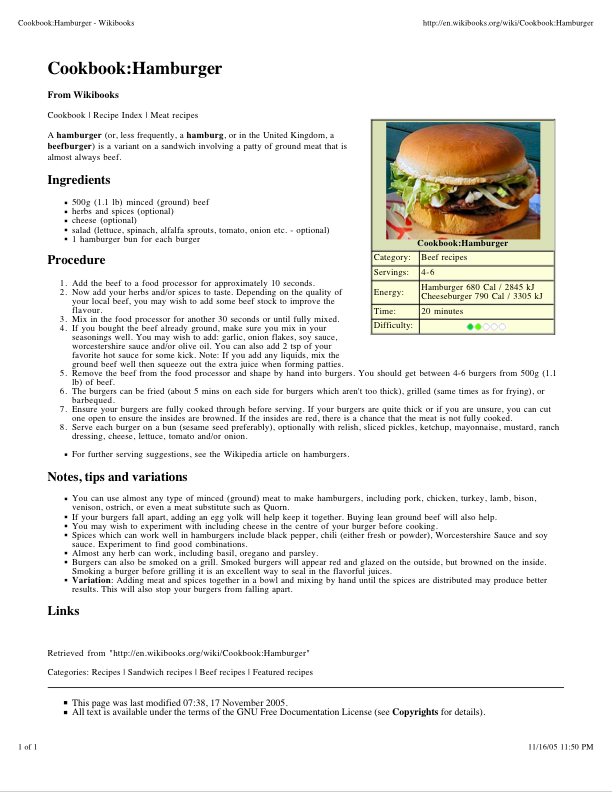
To map these relationships, authors embed linguistic signposts into their writing. Signal words act as transitions that help readers identify the structural relationships between ideas in a text. By paying attention to these microscopic cues, you can instantly categorize the macroscopic structure of the paragraph.
| Organizational Structure | Purpose | Common Signal Words |
|---|---|---|
| Chronological & Sequential | Time-based order or procedural steps | "initially," "subsequently," and "finally" |
| Cause-and-Effect | Establishing catalysts and consequences | "consequently," "therefore," and "as a result" |
| Compare-and-Contrast | Exploring similarities and differences | "similarly," "conversely," and "on the other hand" |
Once you have navigated the text's structure, you must test your comprehension through summarization. A summary is a brief, condensed restatement of the most important parts of an informational text.
Creating an accurate summary requires absolute editorial ruthlessness. An accurate summary must include the central idea and the most critical supporting details. Conversely, an accurate summary must omit minor details, redundant information, and secondary examples. It is the process of boiling down fifty gallons of maple sap to yield a single quart of concentrated syrup; the water is discarded, but the essential flavor remains.

Crucially, this process requires total neutrality. An objective summary strictly excludes the reader's personal opinions, biases, and judgments. You are acting as a mirror, reflecting only the author's architecture, not your own ideological furniture.
When an author writes to persuade, the informational text morphs from a mere explanation into an argument. Comprehending argumentative text requires acting as an intellectual auditor.
The argument begins with a claim—an arguable statement that the author asserts to be true. However, asserting a truth is cheap; proving it is expensive. An author must support a claim with relevant and sufficient evidence to persuade the reader.
We measure the quality of this evidence across two axes:
- Relevant evidence: Directly connects to and supports the specific claim being made by the author. If the claim is about lunar geology, evidence about the Martian atmosphere is irrelevant, no matter how fascinating it may be.
- Sufficient evidence: Means the author provides enough factual proof to convince a reasonable reader of the claim's validity. A single isolated data point is relevant, but it is rarely sufficient to prove a systemic trend.
The bridge connecting the evidence to the claim is valid reasoning. Valid reasoning requires a logical, coherent connection between the provided evidence and the author's claim. If the evidence is sound but the logic connecting it to the conclusion is flawed, the entire intellectual structure collapses.
Separating the Verifiable from the Subjective
Evaluating an author's claim involves determining whether the supporting evidence relies on verifiable facts rather than subjective opinions. To execute this evaluation, a reader must understand the epistemological divide between the two:
- A fact is a statement that can be objectively proven true or false through observation or documentation. The statement, "Water freezes at 32 degrees Fahrenheit at sea level," is a fact because it can be universally tested and documented.
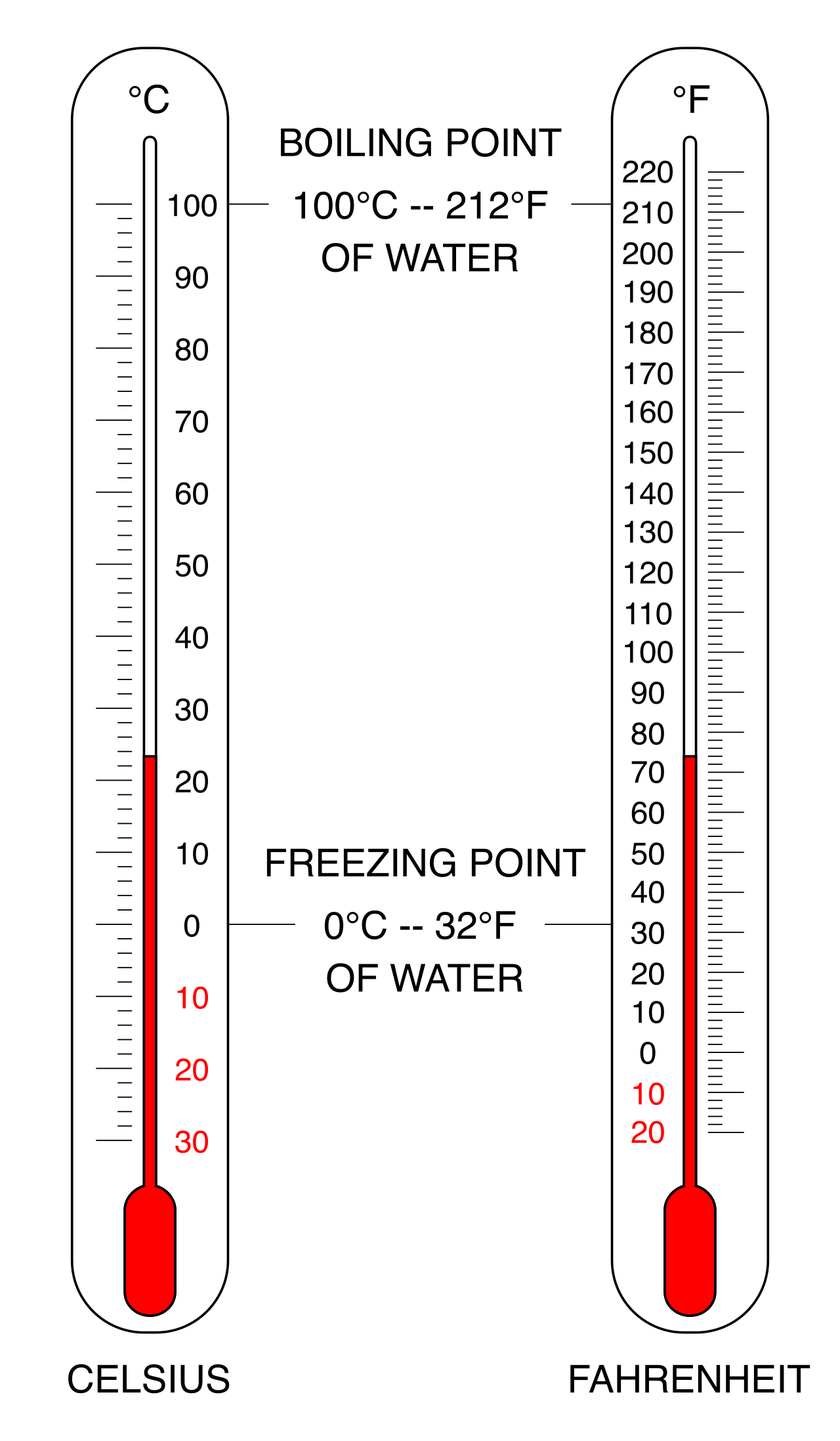
- An opinion is a statement of personal belief or subjective judgment that cannot be objectively proven. The statement, "Winter is the most beautiful season," is an opinion. It is entirely dependent on internal, subjective experience.
If an author builds a claim primarily out of opinions, they are building a house out of vapor. The foundation of a persuasive informational text must rest on the bedrock of verifiable facts.
Finally, authors do not force readers to navigate their structural blueprints blindly. Informational texts frequently utilize text features to organize information and highlight key concepts. These graphical and typographical elements exist outside the main body paragraphs but are vital to deep comprehension.
- Headings and subheadings are text features that preview the core content of upcoming text sections. They allow the reader to mentally prepare for the specific relationships and details about to be introduced, breaking the text into digestible zones.
- A glossary is a text feature that provides definitions for domain-specific vocabulary used within the text. Instead of interrupting the flow of a complex scientific or historical explanation, the author offloads the specialized definitions to the glossary.
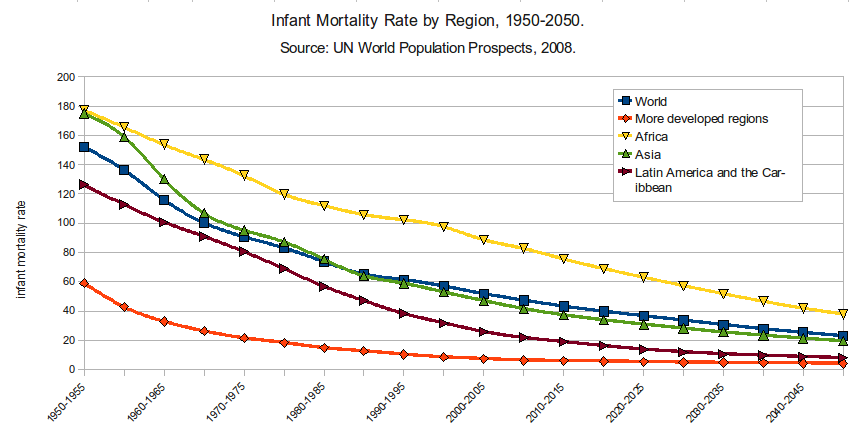
- Captions are text features that explain the context or meaning of accompanying visual aids like photographs and charts. A chart showing a downward trend line is meaningless without a caption explaining whether it represents a drop in infant mortality (a positive outcome) or a drop in crop yields (a crisis).
Comprehending an informational text is never a passive endeavor. By mastering the interplay between central ideas and supporting details, tracking structural signal words, evaluating the hard logic of claims and evidence, and leveraging text features, you transform yourself from a mere spectator into an active, analytical force. You see the text exactly for what it is: an engineered machine for the transmission of human knowledge.