Conventions of Standard English
Not sure you’re ready?
Take the ~3-minute readiness diagnostic and see where you stand.
Consider the sheer mechanical miracle of human communication. A complex, abstract thought forms in your mind, and by utilizing an agreed-upon system of structured vocalizations or written symbols, you can reliably reconstruct that exact thought inside the mind of someone else. For this transfer of information to occur without catastrophic loss of meaning, both the transmitter and the receiver must rely on a shared set of rules. We call this shared infrastructure the conventions of Standard English. Standard English is a specific language dialect widely accepted in formal education and professional business settings. Just as physics relies on agreed-upon units of measurement to build bridges that do not collapse, writers and speakers rely on the mechanics of grammar to build arguments that do not crumble under scrutiny.
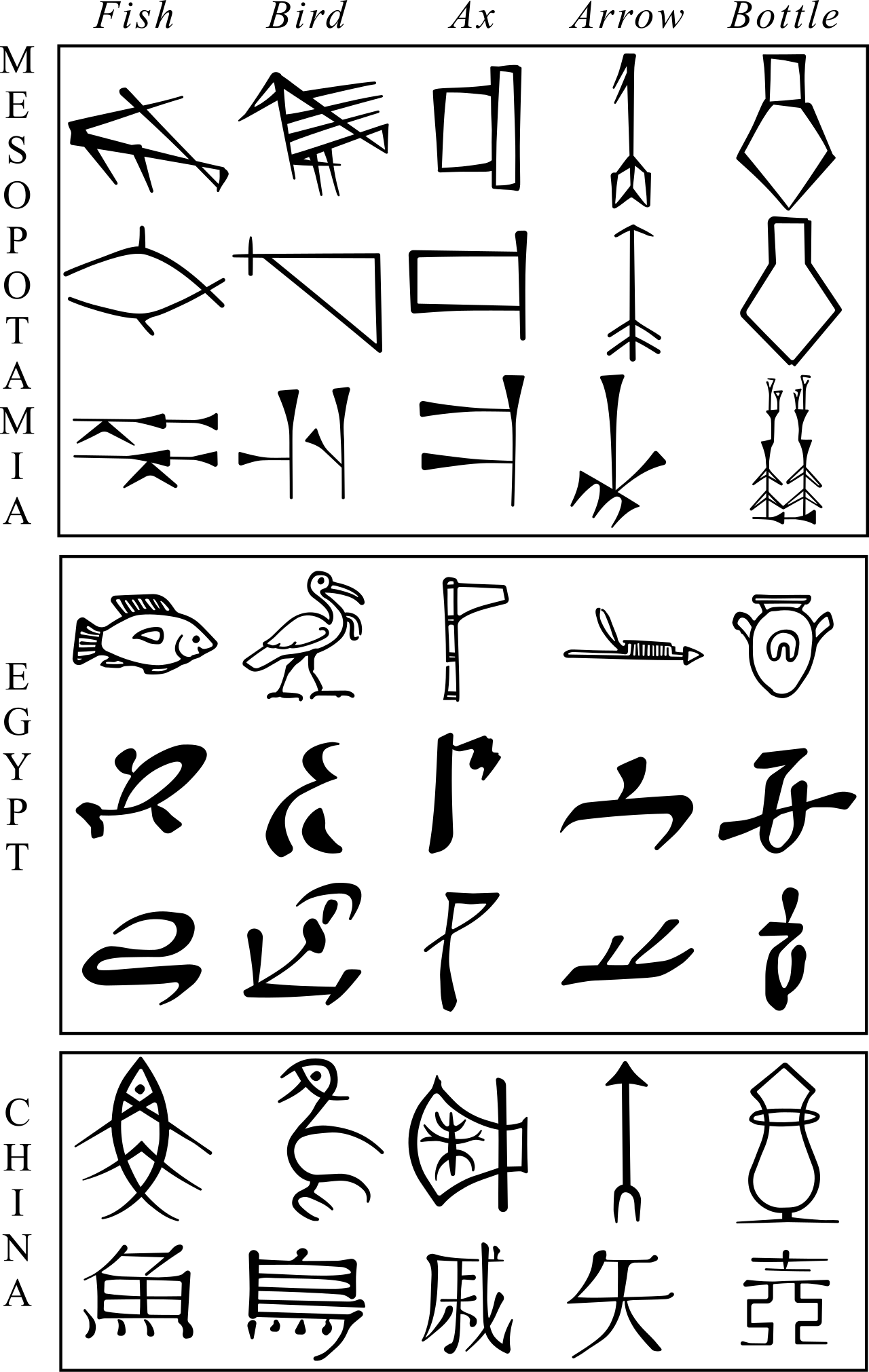
To master this system for the Praxis exam, we must first examine the fundamental particles of language—the parts of speech—and then understand how these elements bond together to form the molecules of human thought: clauses and sentences.
If we are going to understand how a sentence operates, we must first look at the individual components that make it up. Every word in a sentence serves a highly specific mechanical function.
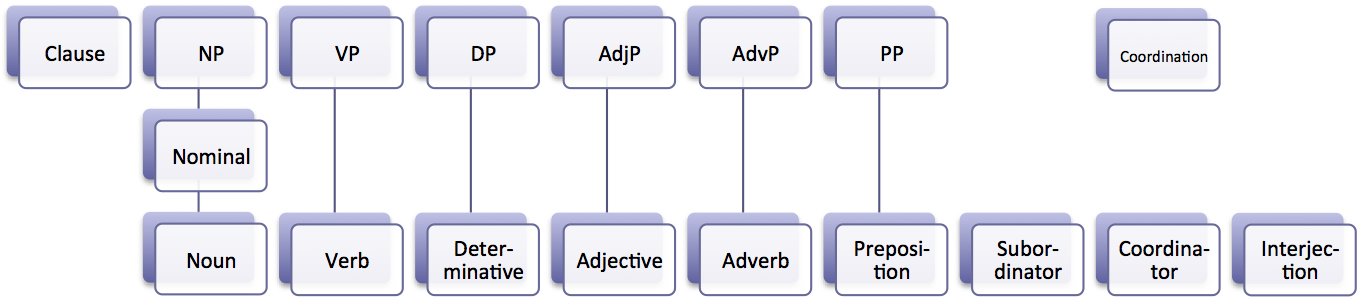
The Core Subjects and Actions
The anchor of any sentence is its subject and its action.
- Noun: A noun functions as the grammatical name of a person, place, thing, or abstract idea. It provides the core "mass" of the sentence.
- Pronoun: To prevent the repetitive, cumbersome naming of the same noun, we use a substitute. A pronoun functions as a grammatical substitute for a specific noun or functions as a grammatical substitute for a specific noun phrase. The specific noun or noun phrase replaced by a pronoun is called its antecedent.
- Verb: If nouns are the matter, verbs are the energy. A verb expresses a physical action, a mental action, or a state of being. Without a verb, nothing happens in a sentence.
The Modifiers
Modifiers are the precision instruments of language. They take a general concept and give it exact dimensions, colors, and contexts.
- Adjective: An adjective functions to grammatically modify or describe a noun, and similarly, an adjective functions to grammatically modify or describe a pronoun. (e.g., The red car; He is tall).
- Adverb: An adverb operates on a different axis. An adverb functions to grammatically modify a verb (e.g., running quickly), grammatically modify an adjective (e.g., very tall), or grammatically modify another adverb (e.g., running incredibly quickly).
The Connectors and Indicators
Words must relate to one another in space, time, and logic.
- Preposition: A preposition indicates the relationship between a prepositional object and another word in the sentence. It tells us where things are in relation to each other (e.g., under the table, after the meeting).
- Conjunction: A conjunction is the glue of the language. A conjunction connects individual words within a sentence (apples and oranges), connects multi-word phrases within a sentence (into the woods but out of the dark), or connects grammatical clauses within a sentence.
- Interjection: An interjection expresses spontaneous human emotion or sudden exclamation. It sits outside the core grammatical structure of the sentence (e.g., Wow! or Ouch!).
The Precision of Conjunctions When dealing with conjunctions, we must distinguish between two primary forces. Coordinating conjunctions join sentence elements of equal grammatical rank. You must commit to memory a fixed numerical reality: the English language contains exactly seven coordinating conjunctions (for, and, nor, but, or, yet, so). Conversely, subordinating conjunctions (like because, although, if) introduce dependent clauses, fundamentally shifting the weight of the clause to rely on the rest of the sentence.
Once we have our words, we bind them into clauses. A clause is the most basic unit of organized meaning, but not all clauses possess the structural integrity to stand alone.
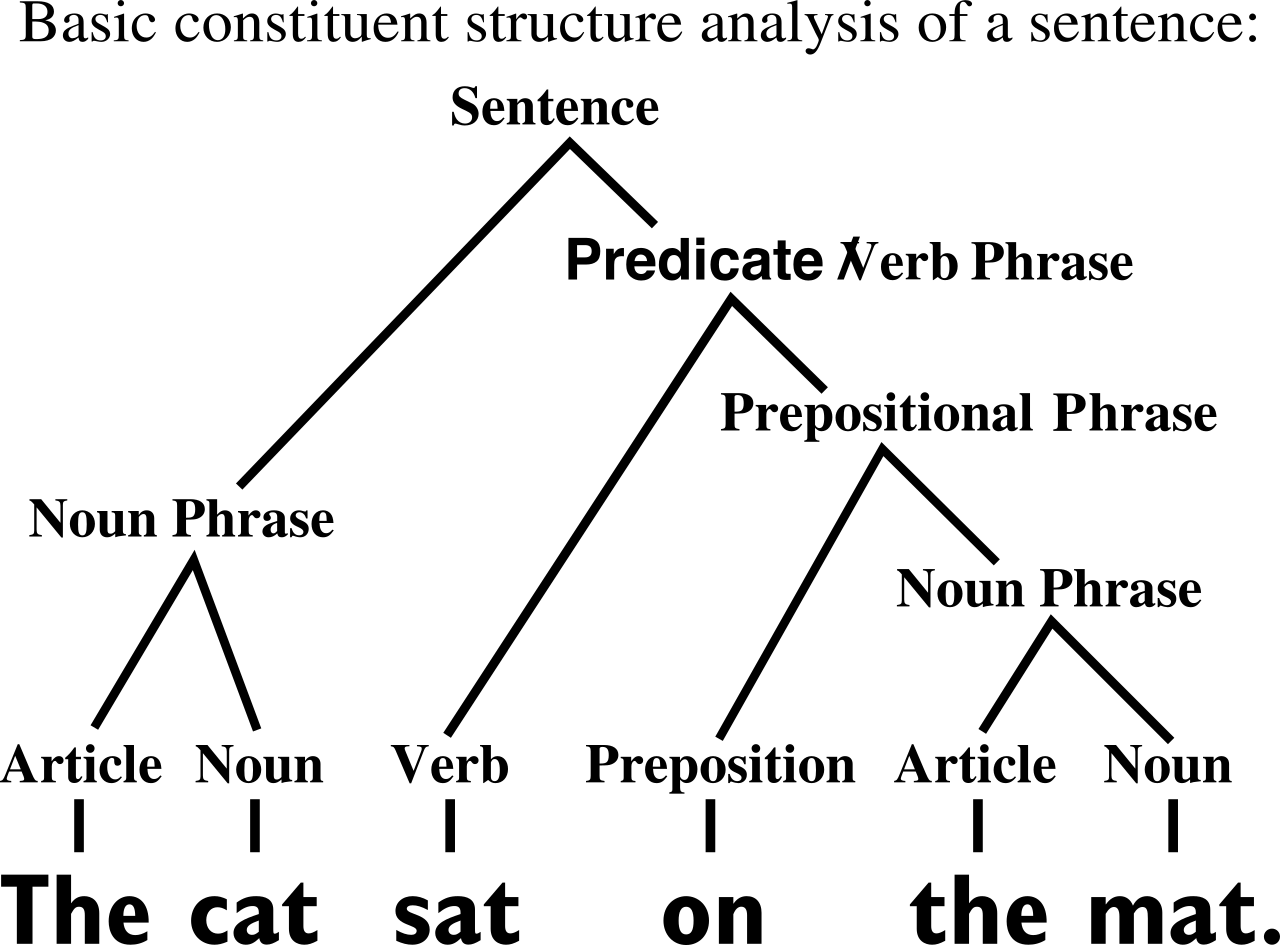
- Independent Clause: An independent clause contains a grammatical subject and a grammatical verb, and crucially, it expresses a complete, standalone thought.
- Dependent Clause: A dependent clause contains a grammatical subject and a grammatical verb, but because of the presence of a subordinating word, a dependent clause cannot stand alone as a complete sentence. It leaves the reader anticipating a resolution.
By combining these clauses in specific ways, we generate the four universal sentence structures.
| Sentence Type | Independent Clauses | Dependent Clauses | Example |
|---|---|---|---|
| Simple Sentence | Exactly one | Zero dependent clauses | The physicist calculated the trajectory. |
| Compound Sentence | Two or more | Zero dependent clauses | The physicist calculated the trajectory, and the engineer built the rocket. |
| Complex Sentence | Exactly one | At least one | Because the math was perfect, the rocket reached orbit. |
| Compound-Complex Sentence | Two or more | At least one | Because the math was perfect, the rocket reached orbit, and the crew celebrated the achievement. |
A sentence, much like an equation, must balance. If the internal rules of agreement are violated, the logic collapses, and the sentence fails to communicate effectively.
Agreement in Number and Gender
The most fundamental rule of balancing a sentence is agreement. Standard English requires a sentence subject and a sentence verb to agree in number. This means singular sentence subjects require singular verb forms, and plural sentence subjects require plural verb forms.
Furthermore, when a pronoun acts as a substitute, it must perfectly mirror what it replaces. Standard English requires a pronoun to agree with the pronoun's antecedent in number. It also requires a pronoun to agree with the pronoun's antecedent in grammatical gender. If the antecedent is "the scientists" (plural), the pronoun must be "they" or "them," not "he" or "she."
The Danger of Modifiers
When modifying phrases are placed carelessly, the resulting physics of the sentence become distorted, leading to illogical or impossible scenarios.
- Misplaced Modifier: A misplaced modifier is a word or phrase separated too far from the specific word the modifier describes. (Example: The professor served sandwiches to the students on paper plates. Are the students on the paper plates?)
- Dangling Modifier: A dangling modifier lacks a clear grammatical target to modify within the bounds of the sentence. (Example: Walking through the park, the trees looked beautiful. The trees were not walking through the park; the actual subject has been completely omitted.)
Parallel Structure
When presenting a sequence of ideas, the human brain expects symmetry. Standard English requires parallel grammatical structure for items arranged in a series or list. Parallel structure involves using the exact same grammatical form for elements of equal grammatical importance. If you begin a list with verbs ending in -ing, every subsequent item must match: He enjoys hiking, swimming, and running (not to run).
Mechanics are the visual cues on a page that instruct the reader exactly how to pace, parse, and process the data.
Capitalization Rules
Capitalization acts as a visual starting gun. Standard English requires capitalization of the first word in every independent sentence. It also requires capitalization of all proper nouns, signaling to the reader that we are dealing with a specific, unique entity rather than a general category.
End Punctuation
Every thought requires a definitive boundary.
- Period: A period marks the official end of a declarative sentence (a statement of fact or argument).
- Question Mark: A question mark marks the official end of an interrogative sentence (a request for information).
- Exclamation Point: An exclamation point marks the official end of an exclamatory sentence (an expression of high emotion or volume).
Internal Punctuation
If end marks are the walls of a room, commas and apostrophes are the furniture arrangement.
- The Comma: A comma separates sequential items arranged in a series of three or more elements. A comma also separates an introductory phrase or clause from the main independent clause, allowing the reader to take a breath before tackling the core subject and verb.
- The Apostrophe: An apostrophe serves two strictly distinct mechanical functions. First, an apostrophe indicates grammatical possession (the student's book). Second, an apostrophe indicates the targeted omission of letters in a word contraction (don't for do not).

Spelling in English is notoriously chaotic because it is a language built from the wreckage of Latin, French, German, and Greek. However, predictable mechanical rules do exist for morphological changes.
- The Silent 'e' Rule: Adding a suffix starting with a vowel to a word ending in a silent letter 'e' generally requires dropping the silent letter 'e'. (Make + ing = Making).
- The Consonant + 'y' Rule: Words ending in a consonant and the letter 'y' change the 'y' to 'i' before the addition of a suffix. (Happy + ness = Happiness).
- Homophones: You must remain vigilant of a word that sounds identical to another word while possessing a completely different spelling and meaning. These are called homophones (their, there, they're). Because they sound identical, auditory memory will not save you; you must rely strictly on grammatical context.
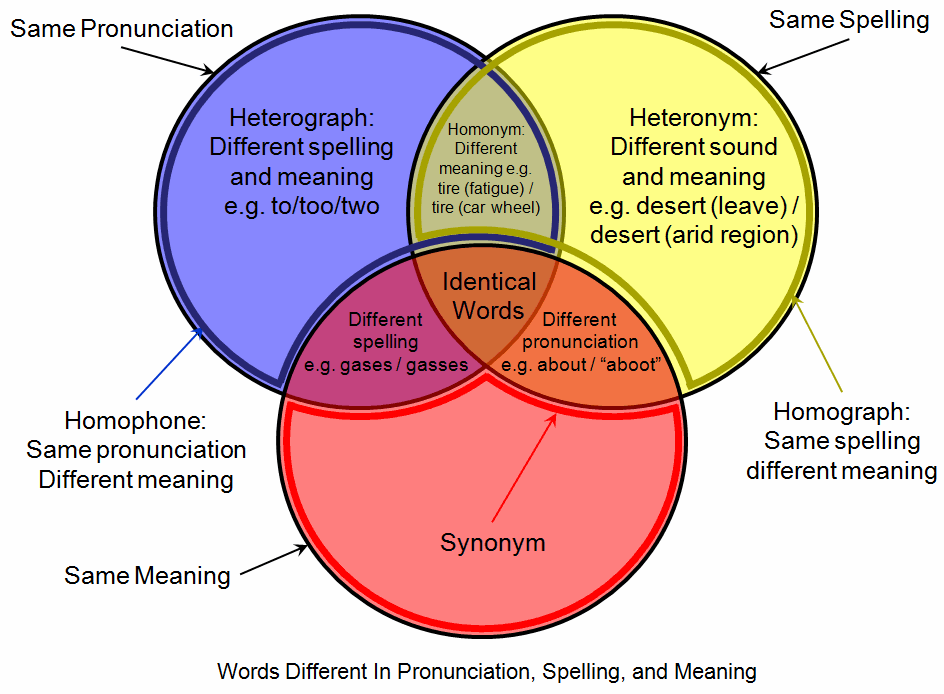
Up until now, we have treated Standard English as a fixed monolith. But language is a living, breathing social organism. Meaning is not just derived from dictionary definitions; it is highly dependent on who is speaking, where they are speaking, and who they are speaking to.
Dialects: The Geography and Sociology of Language
Standard English is simply one dialect among many. A language dialect is a specific variety of a language characteristic of a particular regional group, or it is a specific variety of a language characteristic of a particular social group.
Language dialects feature distinct vocabulary patterns compared to other dialects. They feature distinct grammatical structures compared to other dialects. They also feature distinct pronunciation rules compared to other dialects.
Why do these variations exist and persist? Because language dialects support conversational meaning by signaling regional origin among participating speakers, and they support conversational meaning by signaling cultural identity among participating speakers. Dialects are not "broken" English; they are highly structured linguistic systems operating perfectly within their own contextual boundaries.

Registers: The Volume Dial of Formality
If a dialect is what system you are using, a register is how you tune that system for the room. A language register refers to the specific level of formality applied to language used in a given context. Language speakers consciously or subconsciously shift language registers based on the intended audience and consciously or subconsciously shift language registers based on the immediate social situation.
- Formal Language Register: Used in academic writing, legal documents, and professional settings. A formal language register features precise vocabulary choices and a strict adherence to standard grammatical rules.
- Informal Language Register: Used with friends, family, and casual environments. An informal language register frequently includes conversational colloquial expressions and frequently includes relaxed or abbreviated grammatical structures.
Code-Switching: Linguistic Adaptation
Because humans navigate multiple, overlapping social spheres on any given day, we require an adaptive mechanism. Code-switching is the linguistic practice of alternating between two or more language varieties in a single conversation. Language speakers utilize code-switching to adapt rapidly to varying social environments. A student might use a regional dialect with peers in the hallway, seamlessly switch to a formal Standard English register to answer a professor's question, and switch back to the regional dialect when sitting back down. This is not a sign of confusion, but a demonstration of high-level linguistic mastery—the ability to apply the exact right tool for the exact right social and mechanical job.