Vocabulary and Word Meaning
Not sure you’re ready?
Take the ~3-minute readiness diagnostic and see where you stand.
Language is not a flat list of terms to be memorized; it is a highly structured, mechanical system of meaning. When we encounter an unfamiliar word in a text, we do not simply guess at its purpose. We inspect its environment, examine its internal moving parts, and evaluate its functional role within the broader machinery of the sentence. To master vocabulary instruction is to teach students how to be linguistic engineers—how to dismantle a word, look at its roots and affixes, deduce its exact function through surrounding context, and determine whether it is conveying a cold, literal fact or painting an abstract, figurative landscape.
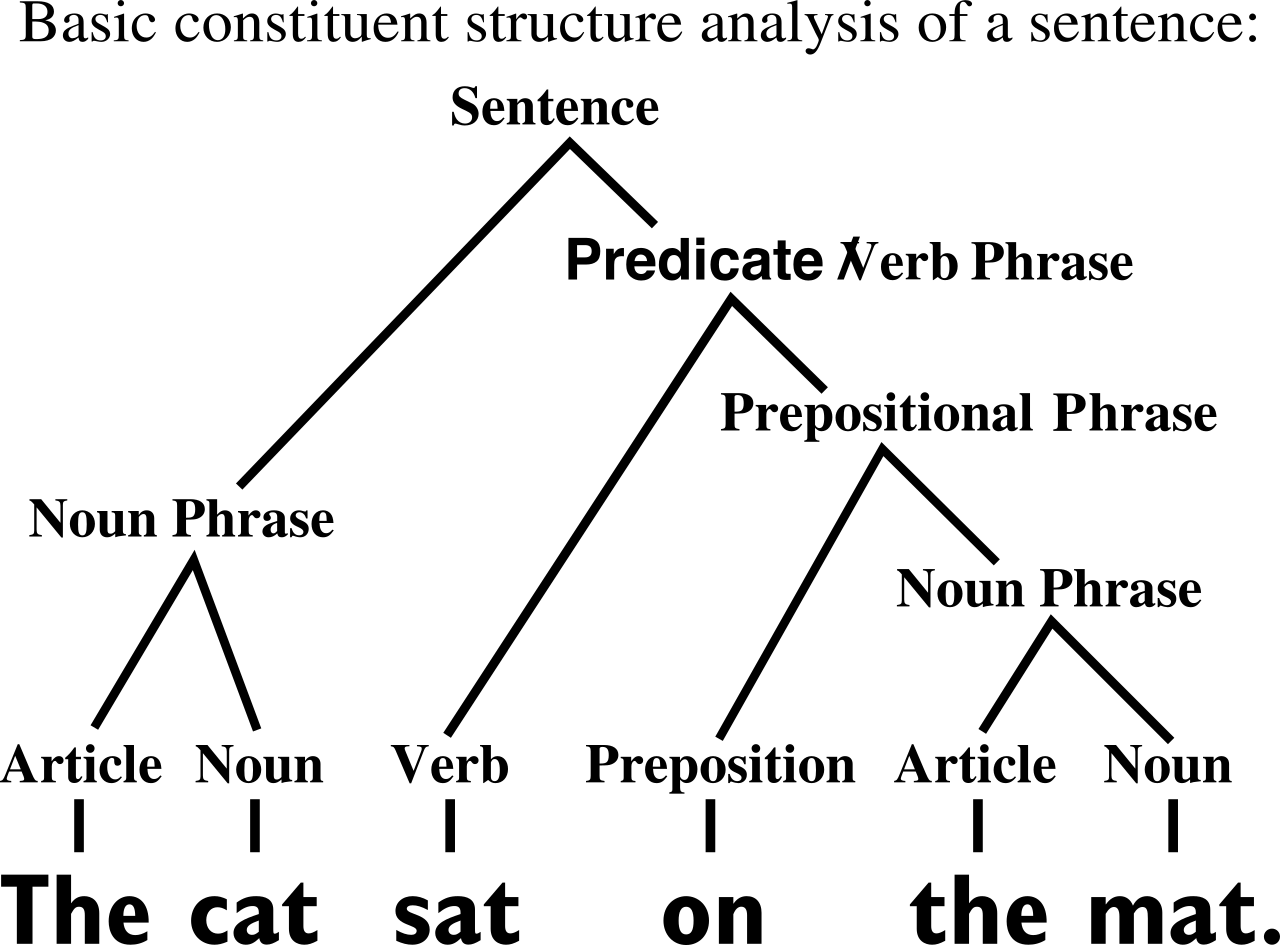
To teach vocabulary efficiently, we must first recognize that not all words serve the same cognitive or communicative purpose. Educational researchers categorize the English lexicon into a three-tiered framework. Think of these tiers not as levels of difficulty, but as different zones of utility.
Tier 1: The Foundation of Communication
Tier 1 vocabulary consists of basic, everyday words commonly used in casual conversation. Because children are surrounded by these words at home, on the playground, and in standard media, they typically acquire them naturally through daily oral interaction. Consequently, Tier 1 vocabulary words rarely require explicit instructional focus in the classroom. If a student speaks the language natively, they already possess this foundation.
Examples: 'Dog', 'run', and 'happy' are examples of Tier 1 vocabulary words.
Tier 2: The Mortar of Academic Thought
As students transition from "learning to read" to "reading to learn," they encounter words that are not tied to a single subject, but appear frequently in formal, written texts. Tier 2 vocabulary consists of high-frequency academic words used across multiple disciplines.
These are the versatile tools of the intellect. A student might evaluate a poem in English class, evaluate a data set in mathematics, or evaluate a historical primary source. Because these words hold complex academic texts together, Tier 2 vocabulary words heavily influence a student's reading comprehension of complex texts. These are the words that give students the most "bang for their buck" and should be the primary focus of direct vocabulary instruction.
Examples: 'Analyze', 'evaluate', and 'contrast' are examples of Tier 2 vocabulary words.
Tier 3: The Domain-Specific Bricks
At the top of the pyramid are highly specialized words. Tier 3 vocabulary consists of domain-specific words tied exclusively to a specific subject area. You will rarely encounter these words outside of their specialized fields. Because they carry such distinct, technical meanings, Tier 3 vocabulary words require explicit instruction when introducing a new academic topic. You cannot expect a student to infer the deep scientific reality of these terms purely from casual reading; they must be explicitly taught as part of the content.
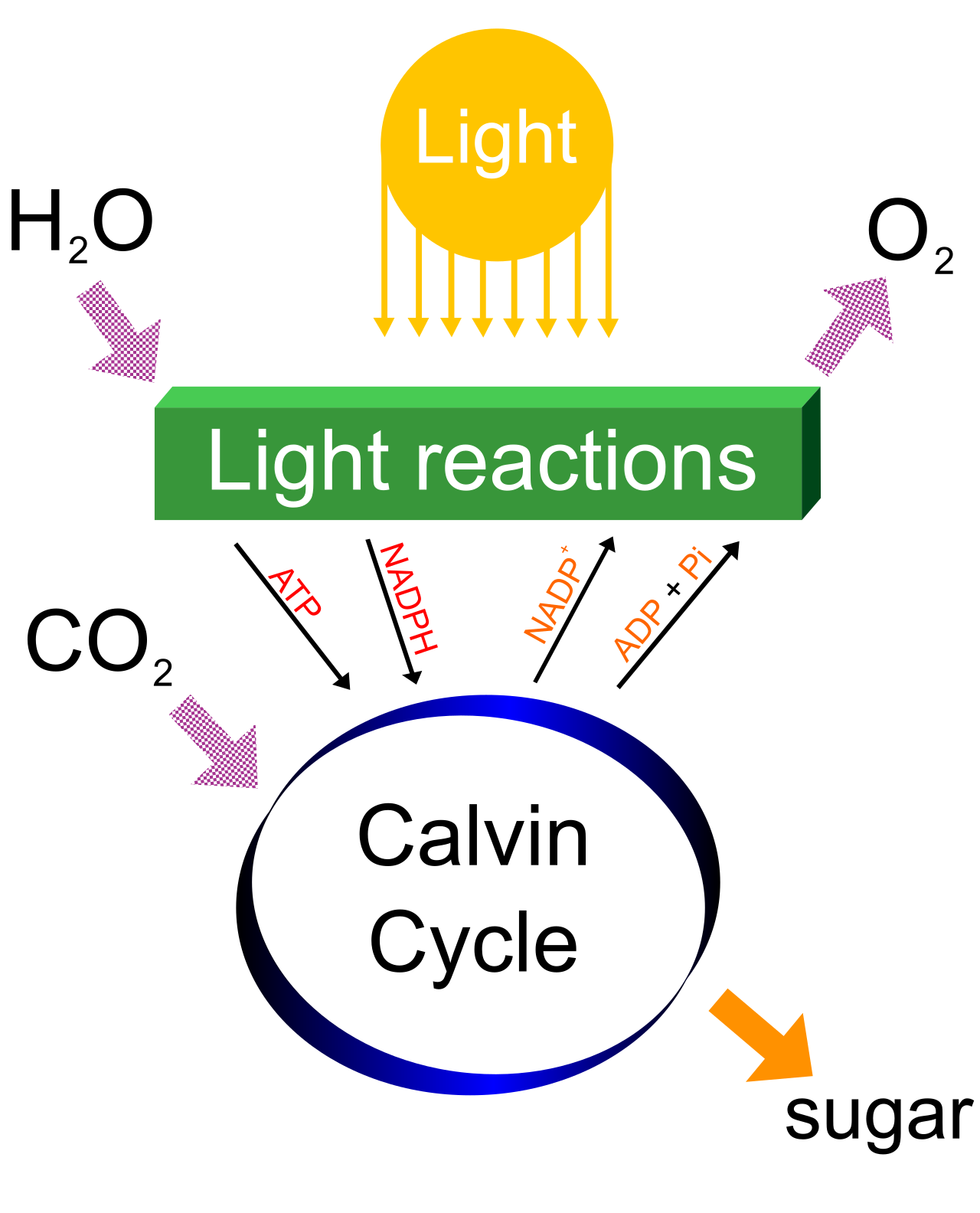
Examples: 'Photosynthesis', 'isotope', and 'legislature' are examples of Tier 3 vocabulary words.
When a reader encounters a word they do not know, they do not immediately reach for a dictionary. Instead, skilled readers use context clues from surrounding text to infer the literal meaning of an unknown word. Just as a detective pieces together the identity of a suspect by looking at footprints and discarded clues, a reader pieces together a word's meaning by looking at the semantic and grammatical clues left by the author.
Semantic Context Clues
Authors frequently embed direct hints about what a word means into the narrative. We categorize these hints into four main types:
- Definition Clues: Sometimes, the author simply hands the reader the answer. A definition context clue explicitly states the meaning of a target word within the same sentence.
- Example: "The entomologist, a scientist who studies insects, carefully cataloged the new beetle."
- Synonym Clues: A synonym context clue provides a word with a similar meaning near the unknown word to help explain the unknown word.
- Example: "The king’s hubris, or extreme arrogance, eventually led to his downfall."
- Antonym Clues: Contrast is a powerful illuminator. An antonym context clue provides a word with an opposite meaning to highlight the unknown word's definition.
- Example: "While her brother was lethargic, Sarah was highly energetic and ready to hike."
- Inference Clues: Often, the text paints a vivid scene that demands logical deduction. An inference context clue requires the reader to use logical reasoning to deduce an unknown word's meaning from the described situation.
- Example: "He grabbed his umbrella and buttoned his raincoat tightly before stepping out into the torrential weather." (Logic dictates torrential must mean a heavy, wet storm).
Syntactic Cues: The Grammar of Meaning
Meaning does not just come from surrounding definitions; it comes from structure. Sentences are governed by rigid rules of grammar. Readers use syntax to identify the part of speech of an unknown word based on the unknown word's grammatical position in a sentence.
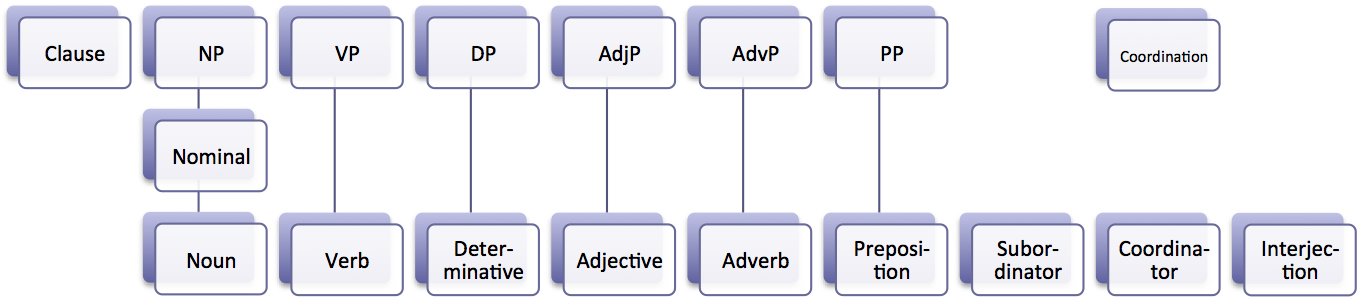
If I write, "The furry glarp happily borked over the fence," you have no idea what a glarp or a bork is. But syntactic cues allow a reader to determine whether an unfamiliar word functions as a noun, verb, adjective, or adverb. You intuitively know that glarp is a noun (it has an article "The" and an adjective "furry" attached to it) and that borked is a verb (it tells you what the noun did). Recognizing a word's functional part of speech is the vital first step in narrowing down its possible meaning.
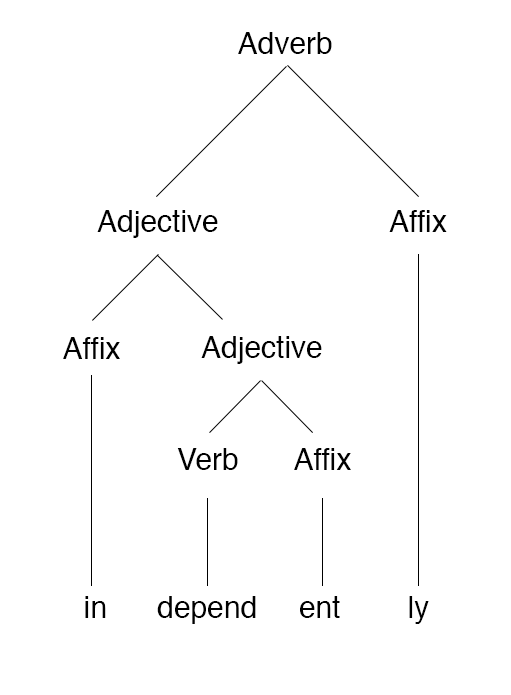
If context clues are the external environment of a word, morphology is its internal anatomy. Many words in English are not monolithic, solid blocks; they are composite structures built from smaller units of meaning called morphemes.
The Foundation: Root Words
At the core of these composite words is a central anchor. A root word provides the core, foundational meaning of a word. For instance, the root word struct comes from Latin, meaning "to build." This foundational concept remains present whether the word is construct, destruct, or structure.
Modifying the Core: Affixes
To change how a root word operates, we attach additional pieces to it. Affixes are morphemes added to a root word to alter the root word's meaning or grammatical function. Depending on where we place the affix, it behaves differently.
Prefixes: Shifting the Meaning
Prefixes are affixes placed at the beginning of a root word. When we attach morphemes to the front of a word, we are usually fundamentally altering its semantic definition. Adding a prefix to a root word typically changes the core meaning of the original word.
- The prefix 'un-' means 'not' or 'the opposite of'. If we take the word happy and add un-, we create unhappy—the exact reverse of the original state.
- The prefix 're-' means 'again' or 'back'. If we take the root build and add re-, we get rebuild—to build again.
Suffixes: Shifting the Part of Speech
Suffixes are affixes placed at the end of a root word. While prefixes shift the semantic definition, suffixes generally alter how the word behaves grammatically within a sentence. Adding a suffix to a root word typically changes the word's grammatical part of speech.
- The suffix '-ful' means 'full of' or 'characterized by'. Adding it to the noun beauty creates the adjective beautiful.
- The suffix '-less' means 'without' or 'lacking'. Adding it to the noun fear creates the adjective fearless.
- The suffix '-ly' transforms an adjective into an adverb indicating how an action is performed. Adding it to the adjective quick creates the adverb quickly (e.g., "She ran quickly").
Language must frequently capture human experiences that defy cold, mathematical description. Therefore, we must train students to discern when an author is speaking objectively versus when they are painting a picture with words.
Literal language states facts exactly as the words are defined in a standard dictionary. If I say, "The water is freezing," and the water is literally at 32 degrees Fahrenheit (0 degrees Celsius), I am using literal language.
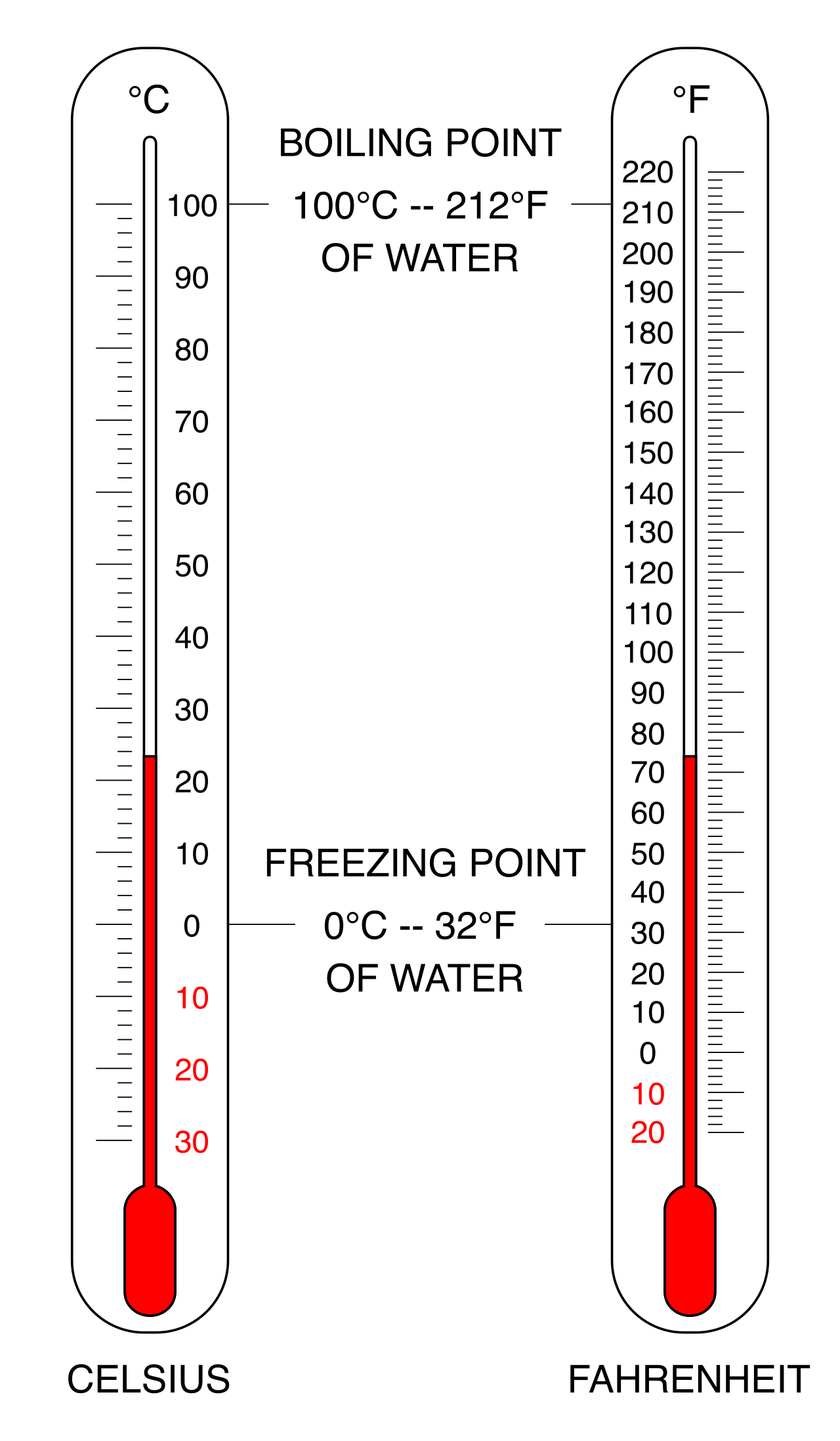
However, if I step outside on a brisk autumn day and say, "I am freezing," my blood is not actually turning to ice. I am using a mechanism to convey the intensity of the cold. Figurative language goes beyond the dictionary definition of words to express complex or abstract ideas.
Authors rely on an arsenal of established literary devices to craft these figurative meanings. Mastery of reading comprehension requires students to identify and interpret these specific figures of speech:
| Term | Definition |
|---|---|
| Simile | A simile is a figure of speech comparing two distinct things using the words 'like' or 'as'. (Example: "Her mind was sharp as a razor.") |
| Metaphor | A metaphor is a figure of speech making a direct comparison between two distinct things without using the words 'like' or 'as'. (Example: "Time is a thief.") |
| Personification | Personification is a figure of speech assigning human characteristics to non-human entities or objects. (Example: "The opportunity knocked at his door.") |
| Hyperbole | Hyperbole is a figure of speech utilizing extreme exaggeration for emphasis or dramatic effect. (Example: "My backpack weighs a ton.") |
| Oxymoron | An oxymoron is a figure of speech combining two contradictory terms placed side by side. To illustrate, the phrase 'jumbo shrimp' is an example of an oxymoron, placing the concept of massive size next to a word intrinsically tied to smallness. |
Idioms: The Cultural Codes of Language
Some figurative language is deeply embedded in cultural history, making it entirely illogical if translated literally word-for-word. An idiom is a culturally established phrase possessing a figurative meaning entirely different from the literal meanings of the individual words. If you tell a non-native English speaker to "break a leg," they will be horrified, unaware that you are actually wishing them good luck.
As a classic example, the phrase 'piece of cake' is an idiom meaning a task is very easy to accomplish. It has nothing to do with baked goods.
The Auditory Impact: Onomatopoeia and Alliteration
Finally, authors sometimes play with the very sound of words to create sensory experiences for the reader.
- Onomatopoeia is a figure of speech in which a word imitates the natural sound of the thing the word describes. Words like buzz, hiss, crack, and splash force the reader's mouth to mimic the acoustic reality of the object in motion.
- Alliteration is a literary device involving the repetition of initial consonant sounds in neighboring words. (Example: "The slippery snake slid silently.") This technique creates a rhythmic, musical quality that draws the reader's attention and accelerates the pacing of the text.
By teaching students to untangle the threads of vocabulary tiers, syntactic context, morphological building blocks, and figurative expressions, we are giving them the ultimate key to human knowledge: the ability to read deeply, critically, and independently.