Developmental Stages of Writing
Not sure you’re ready?
Take the ~3-minute readiness diagnostic and see where you stand.
Human beings are not born with the instinct to write. While spoken language blossoms naturally in early childhood through mere exposure, the act of writing requires a dramatic, systemic rewiring of the developing brain. To observe a child progressing from haphazard crayon streaks to the mastery of English orthography is to witness a profound cognitive metamorphosis. This evolution is not random; rather, the developmental continuum of writing describes the predictable stages students progress through from initial mark-making to fluent spelling.
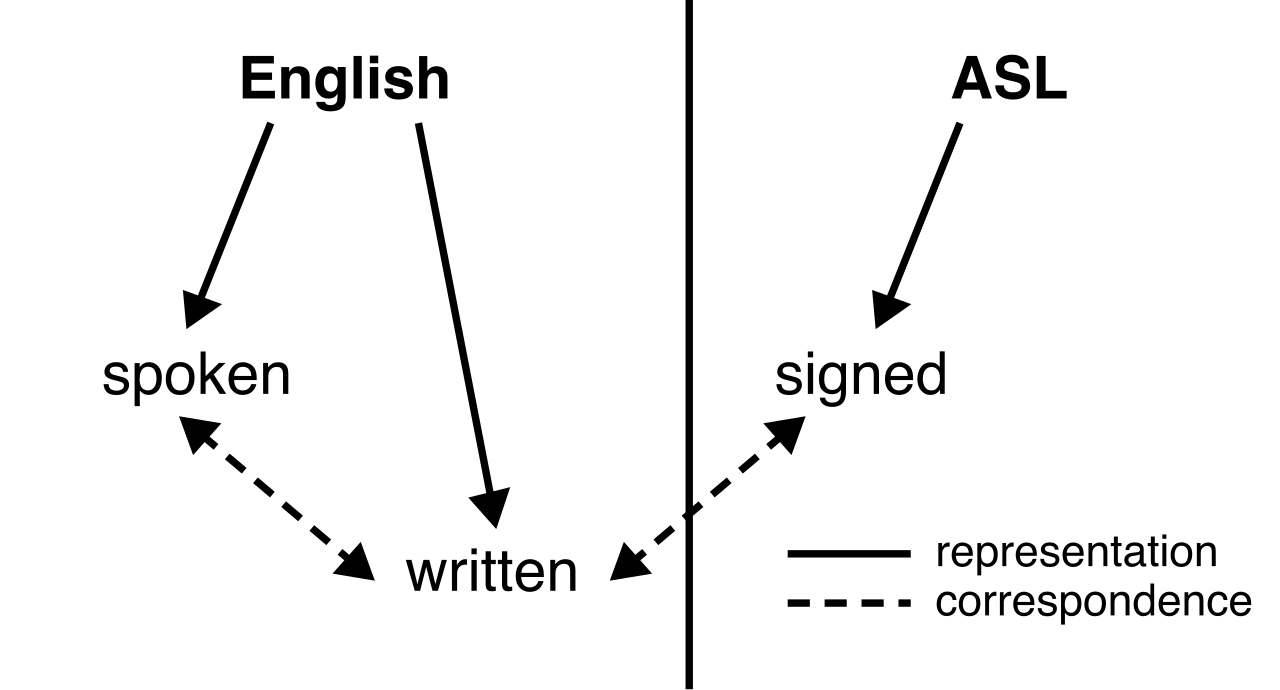
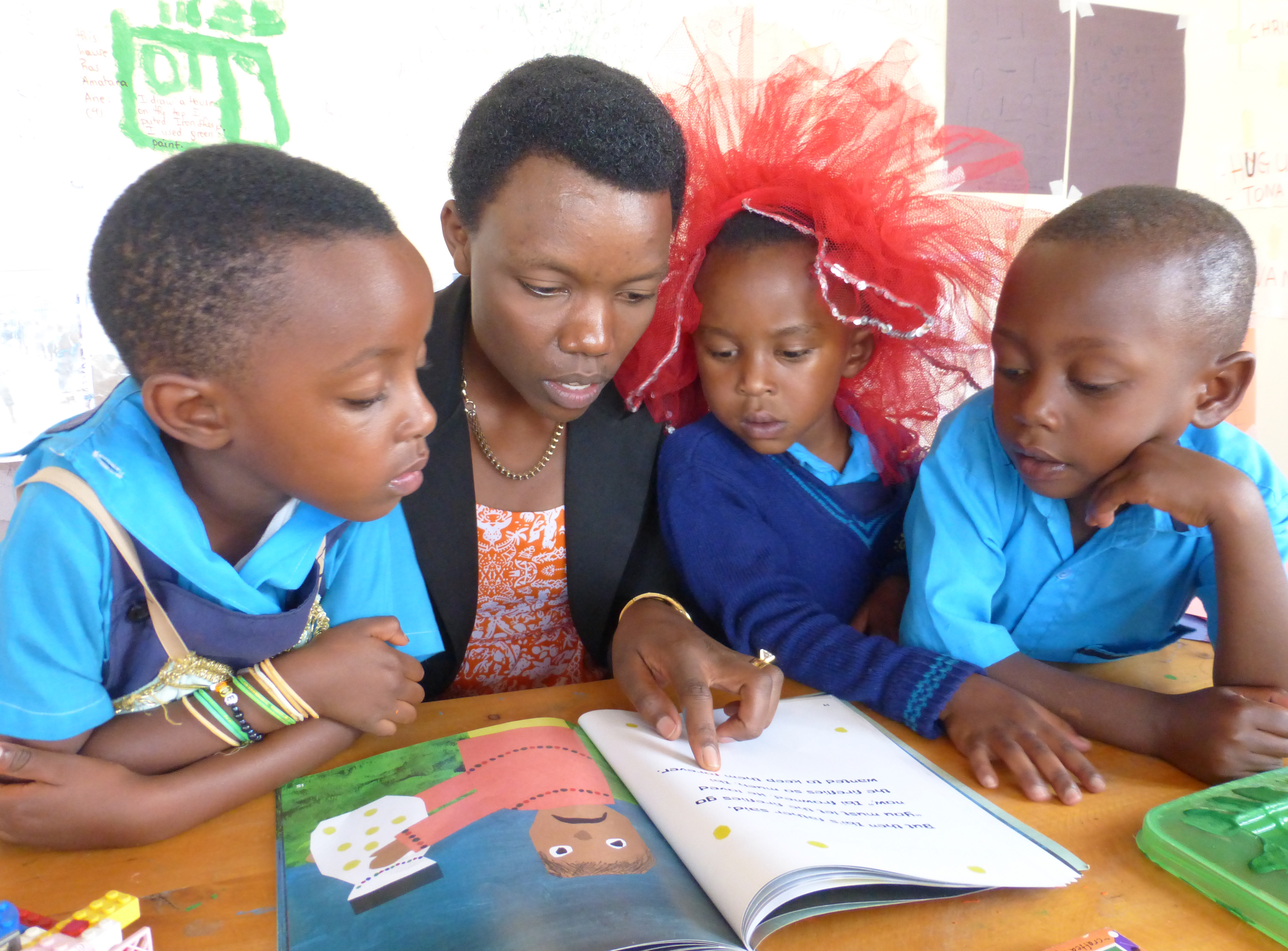
To teach writing effectively, we must first understand how a child’s mind conceptualizes the mechanics of print. It begins long before the first perfectly formed "A" is etched onto lined paper. It starts with an emerging print awareness—the foundational understanding that written language actually carries meaning and follows highly specific spatial rules. A child must learn that unlike a drawing of a dog, which remains a dog whether it is viewed upside down or sideways, text is strictly bound by space. They must learn that English text is read from top to bottom, and that English text is read from left to right.
Let us dissect this remarkable journey step-by-step, tracing the precise cognitive milestones a young writer conquers as they transition from raw physical expression to sophisticated symbolic thought.
Long before children realize that letters map to sounds, they must discover that marks on a page can tell a story. This pre-alphabetic era is defined by the gradual realization that the tool in their hand can leave a permanent record of their thoughts.
The Picture Writing Stage
The picture writing stage is the earliest recognized stage of writing development in early childhood. If you ask a young child in this stage to "write a story," they will draw a picture. In the picture writing stage, children use illustrations to convey meaning before understanding that letters represent spoken words. To the child, the drawing is the writing. They have not yet decoupled the visual representation of an object from the linguistic representation of it.
The Scribbling Stage
Following picture writing in early writing development is the scribbling stage. If you hand a crayon to a toddler, you will witness this firsthand. The scribbling stage consists of uncontrolled, random marks on a page. The child is primarily exploring the physical, sensorimotor joy of movement and the cause-and-effect relationship between the crayon and the paper.
At this juncture, scribbling typically lacks directionality—it circles, zig-zags, and spirals chaotically across the boundaries of the page. Crucially, scribbling does not visually resemble conventional print.
Directional Scribbling
As cognitive and motor control mature, we see a fascinating shift: directional scribbling emerges when children begin making marks in a linear, left-to-right pattern. The child is no longer just moving their arm; they are mimicking the behavior of adults writing. Though the marks are still illegible loops and waves, directional scribbling demonstrates an emerging awareness of the physical spatial conventions of English print. They are essentially saying, "I know how writing is supposed to sit on the page, even if I don't know the symbols yet."
The Mock Letters Stage
The bridge between chaotic scribbles and actual typography is the mock letters stage, which involves the creation of shapes that resemble manuscript alphabet letters. A child might draw something that looks vaguely like an "E" combined with a ladder, or a circle with an extra tail.
Mock letters are individual squiggles that are not actual alphabet letters, but their presence signals a massive conceptual leap. The creation of mock letters shows a child's understanding that written text consists of distinct, separate symbols. The unbroken wave of a directional scribble is broken down into discrete units. The child realizes that writing is built out of individual characters.
Once children realize that adults use specific, agreed-upon symbols (letters) to write, they begin to hijack those symbols. However, they do not yet understand how those symbols work.
The Pre-Phonemic Stage (Random Letters)
The pre-phonemic stage of writing involves producing strings of actual alphabet letters. Because there is no auditory logic applied yet, the pre-phonemic stage is also frequently referred to as the random letters stage.
In the pre-phonemic stage, children write letter strings without any connection to the spoken sounds those letters make. They are merely mimicking the visual appearance of a word. For example, a child writing the random letters "RzxTQO" to represent the word "bottle" is demonstrating the pre-phonemic stage of writing. They know that "bottle" requires letters, and they know how to draw letters, so they simply provide a cluster of them to do the job.
A Note on Early Pedagogy: Preschool and Pre-Kindergarten writing instruction typically targets drawing, scribbling, mock letters, and random letter strings. The educator's goal here is not accuracy, but physical fluency, print awareness, and fostering the joy of creation.
The most revolutionary moment in a young writer's life is the sudden, glorious realization that letters are actually physical stand-ins for invisible sounds.
The Semi-Phonetic Stage
The semi-phonetic stage of writing marks the beginning of a child's understanding of sound-symbol relationships. Suddenly, the letters they choose are not random; they are intentional acoustic targets.
However, because their phonemic awareness is still developing, they capture only the most salient parts of a word. In the semi-phonetic stage, children often use only one or two letters to represent entire words. When they speak a word aloud, they hear the hard boundaries—the beginnings and the ends. Thus, children in the semi-phonetic stage typically use initial and final consonants to represent words. Because vowel sounds are continuous and easily lost in the middle of spoken words, children in the semi-phonetic stage frequently omit vowels from written words.
If you ask a child at this stage to write the word "bottle," they will likely write "bt". A child writing "bt" to represent the word "bottle" is demonstrating the semi-phonetic stage of writing.
The Phonetic Stage
As auditory discrimination sharpens, the child begins to map every sound they hear to a corresponding letter. The phonetic stage of writing involves spelling words strictly according to the sounds the writer hears in the spoken word.
In the phonetic stage, children use letters to represent almost all the distinct sounds in a spoken word. The logic is beautifully rigorous, even when the outcome is technically incorrect. Phonetic stage writers often misspell words due to an exclusive reliance on phonetic sounds rather than standard orthographic rules.
English is a notoriously irregular language, full of silent letters and borrowed historical spellings. To a phonetic writer, "bottle" sounds like /b/ /o/ /t/ /l/. Therefore, a child writing "botl" for the word "bottle" is demonstrating the phonetic stage of writing. Similarly, a child writing "kat" for the word "cat" is demonstrating the phonetic stage of writing. The spelling "kat" makes perfect auditory sense; it just defies conventional English orthography.
The Power of Invented Spelling During the semi-phonetic and phonetic stages, educators witness the phenomenon of invented spelling. This is a developmental process where children attempt to write words based on current phonetic knowledge. We want students to do this. Encouraging invented spelling allows young writers to focus on expressing ideas rather than finding the exact conventional spelling of every word. If a child stops their creative flow to ask for the correct spelling of "pterodactyl," the cognitive load overwhelms the storytelling. Invented spelling ("terodaktil") keeps the mind moving.
Eventually, the strict reliance on the ear begins to fade as the eye takes over. Through reading and exposure to standard text, children begin to realize that English spelling is governed by visual patterns and rules, not just raw acoustics.
The Transitional Stage
The transitional stage of writing bridges phonetic spelling and conventional standard spelling. This is where visual memory and complex pattern recognition enter the fray.
In the transitional stage, writers begin to rely on visual memory and common spelling patterns rather than just matching single sounds to single letters. They start to realize that every syllable needs a vowel—even if they guess the wrong one. Consequently, transitional stage writing typically includes a written vowel in every recorded syllable.
At this level, writing becomes a hybrid. Transitional stage writing features the application of basic phonetic spellings alongside correctly spelled sight words. Because they have seen them so often in texts, in the transitional stage, students correctly spell many high-frequency sight words. However, transitional stage writers still invent spellings for complex words that exceed their current orthographic knowledge.
Consider a sentence like this: "I hav a pet dog." A child writing "I hav a pet dog" demonstrates the transitional stage of writing. "I," "a," "pet," and "dog" are correctly spelled sight words and basic CVC (consonant-vowel-consonant) words. "Hav" is technically incorrect, but it shows a transitional logic: the child phonetically built the word but dropped the silent "e".
The Standard (Conventional) Spelling Stage
The pinnacle of the developmental continuum is the standard spelling stage, which represents fluent writing where the vast majority of words are spelled correctly. Because it aligns with established societal norms of written language, the standard spelling stage is also commonly known as the conventional spelling stage.
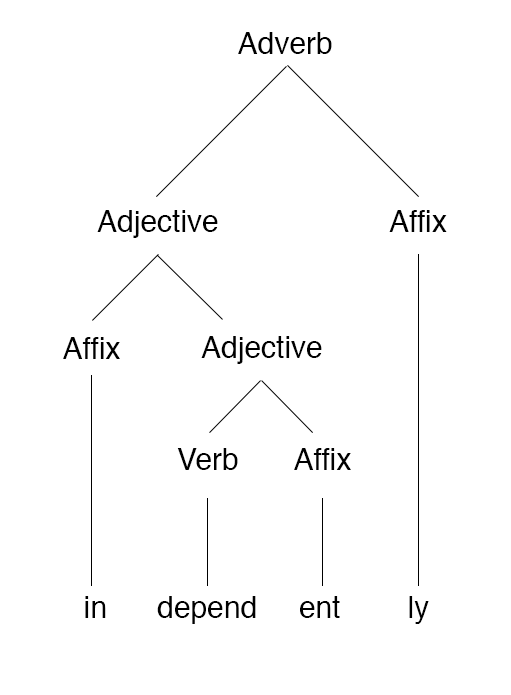
In the standard spelling stage, writers consistently apply English orthographic rules. They are no longer relying purely on sound or basic visual memory; they understand morphological structures. Standard spelling stage writers correctly utilize prefixes, suffixes, and silent letters. They know that "jumped" ends in -ed, not -t, despite how it sounds, because they understand the morphological rule governing past-tense verbs.
To effectively differentiate instruction, a Praxis educator must map these developmental stages to their corresponding grade levels. While children develop at distinct paces, the instructional focus shifts in a highly predictable grade-appropriate sequence.
| Grade Level | Primary Instructional Focus |
|---|---|
| Preschool & Pre-Kindergarten | Preschool and Pre-Kindergarten writing instruction typically targets drawing, scribbling, mock letters, and random letter strings. The focus is motor control and basic print awareness. |
| Kindergarten | Kindergarten writing instruction generally addresses the transition from random letters to semi-phonetic and phonetic spelling. Students are actively mapping the alphabet to the phonemes they hear. |
| First Grade | First-grade writing instruction typically focuses on moving students from phonetic spelling to transitional spelling. Students learn sight words and realize that sounds can be spelled in multiple ways (e.g., ee vs. ea). |
| Second & Third Grade | Second-grade and third-grade writing instruction usually focuses on solidifying conventional standard spelling. During these years, second-grade and third-grade writing instruction usually focuses on mastering complex orthographic rules, including multisyllabic words, irregular vowels, and morphological affixes. |
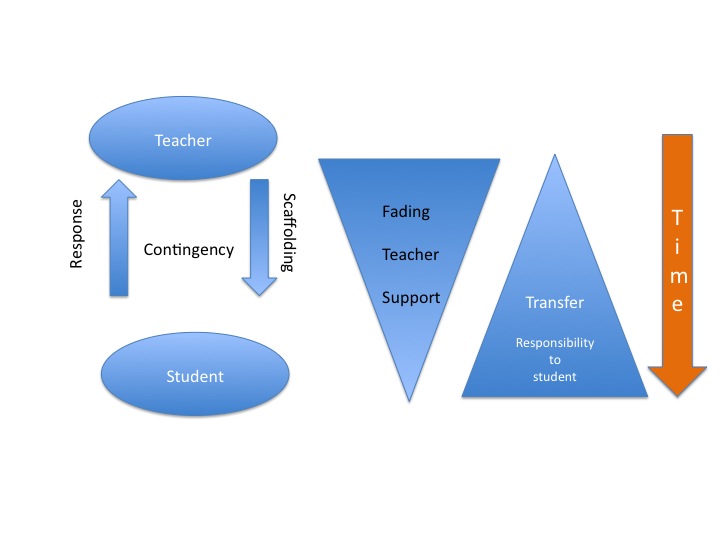
Understanding this continuum is the key to diagnostic teaching. When a first-grader writes "bkos" for "because," an untrained observer sees an error. A master educator, however, sees a magnificent cognitive achievement: a child firmly in the phonetic stage who is precisely applying their knowledge of sound-symbol correspondence. By recognizing exactly where a student stands on the continuum, you can provide the exact scaffolding necessary to guide them to the next brilliant stage of written expression.