Perimeter, Area, and Volume
Not sure you’re ready?
Take the ~3-minute readiness diagnostic and see where you stand.
Geometry is the mathematics of physical space, and to understand it deeply is to master the art of measurement across dimensions. When we stretch a tape measure around the boundary of a garden, we are exploring one-dimensional length. When we tile the floor of a kitchen, we step into the two-dimensional realm of surfaces. And when we fill a shipping container with boxed cargo, we transition into the three-dimensional world of capacity. The Praxis Elementary Education exam requires you to seamlessly navigate these dimensional shifts, translating the physical realities of shape and space into the precise, rigorous language of perimeter, area, and volume. To teach this effectively, we must first understand how a single infinitely thin line stretches into a bound boundary, how that boundary sweeps into a flat plane, and how that plane stacks upward to occupy a solid world.
Before we can measure the space inside a shape, we must define the fence that encloses it. Perimeter is the total length of the continuous boundary of a closed two-dimensional figure. Because we are measuring length—imagining that we could snip the boundary of a shape with scissors and stretch it out into a single straight line—perimeter is always measured in linear units such as inches, centimeters, or meters.

The most fundamental rule of one-dimensional measurement is wonderfully simple: the perimeter of any polygon is calculated by adding the lengths of all the sides of the polygon together. However, as shapes become more uniform, our mathematics becomes more elegant.
Instead of adding every individual side, we can rely on symmetry:
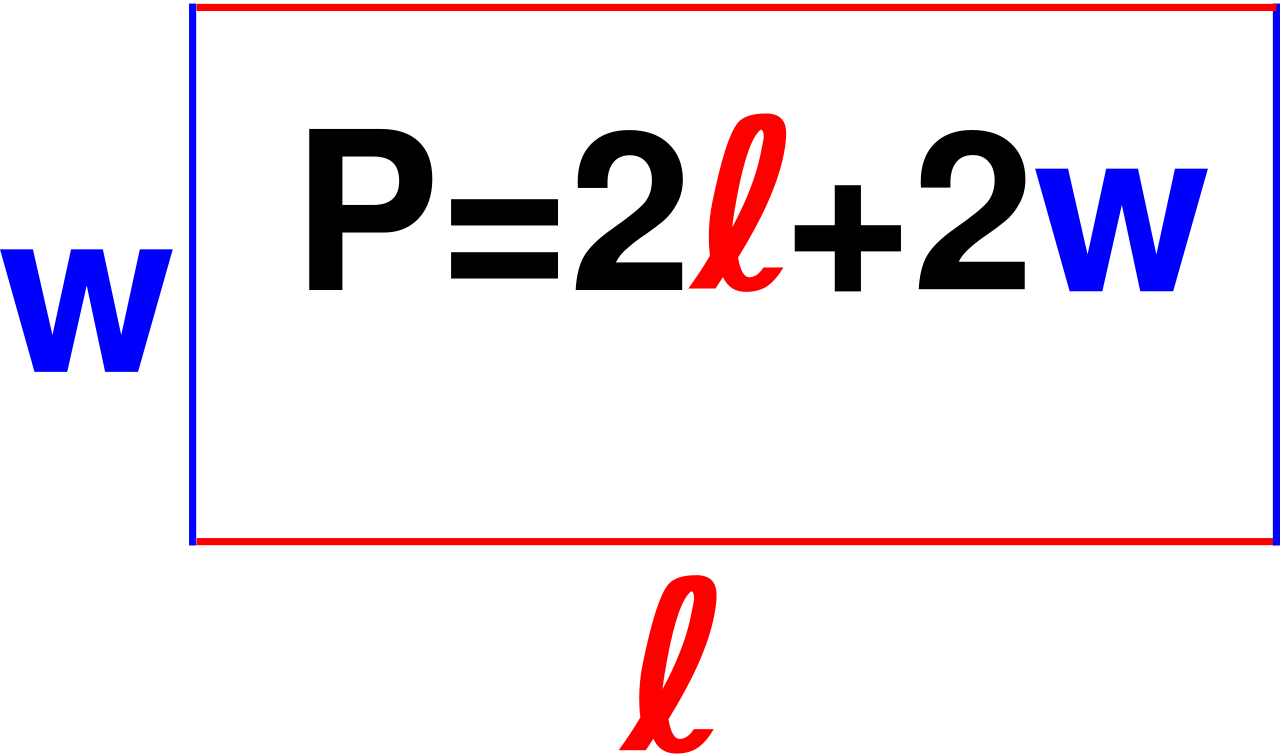
Perimeter of a Rectangle Because a rectangle is defined by pairs of equal opposite sides, the formula for the perimeter of a rectangle is exactly two times the length plus two times the width (P=2l+2w).
Perimeter of a Square Because a square has four equal sides, the formula for the perimeter of a square is exactly four times the side length (P=4s).
This principle of symmetry extends naturally to regular polygons. A regular polygon is a two-dimensional shape in which all sides have identical lengths and all interior angles have identical measures. For these perfectly uniform shapes, whether it is a regular pentagon or a regular octagon, the formula for the perimeter of a regular polygon is simply the total number of sides multiplied by the length of a single side (P=n×s).
Navigating Fractional Boundaries
In the real world, fences and frames rarely measure to exact whole numbers. When calculating the perimeter of polygons with fractional side lengths, you must remember that you are performing arithmetic on parts of a whole. Adding fractions requires a uniform scale. Therefore, calculating the perimeter of polygons with fractional side lengths requires finding a common denominator to add the fractional side lengths together. You cannot piece together an edge of 1/3 inch and 1/4 inch without first understanding that they measure 4/12 and 3/12 of an inch, respectively, yielding a combined edge of 7/12 of an inch.
Once we have built our one-dimensional fence, we can investigate the meadow inside. Area is the amount of two-dimensional space enclosed within a flat geometric shape. Because we are no longer measuring length but rather flat coverage, area is always measured in square units such as square inches, square centimeters, or square meters. We are essentially asking: How many perfectly uniform squares of a given size can we fit inside this boundary?
The bedrock of area calculation is the rectangle.
Area of a Rectangle: The formula for the area of a rectangle is the length multiplied by the width (A=l×w). Area of a Square: As a specific type of rectangle, the formula for the area of a square is the side length squared (A=s2).
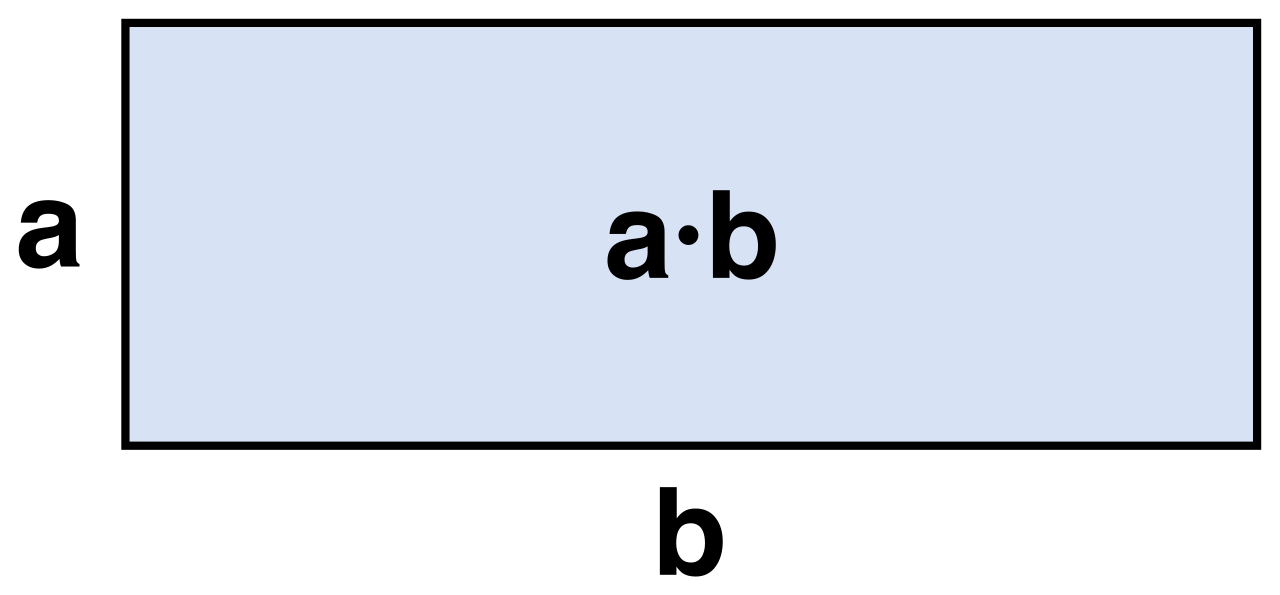
When dealing with non-whole numbers, the geometric logic remains identical. The area of a rectangle with fractional side lengths is calculated by multiplying the fractional length and the fractional width. If a rectangle is 1/2 of an inch wide and 3/4 of an inch long, multiplying them (1/2×3/4=3/8) proves that the rectangle covers exactly three-eighths of a standard square inch.
Sweeping Through Triangles, Parallelograms, and Trapezoids
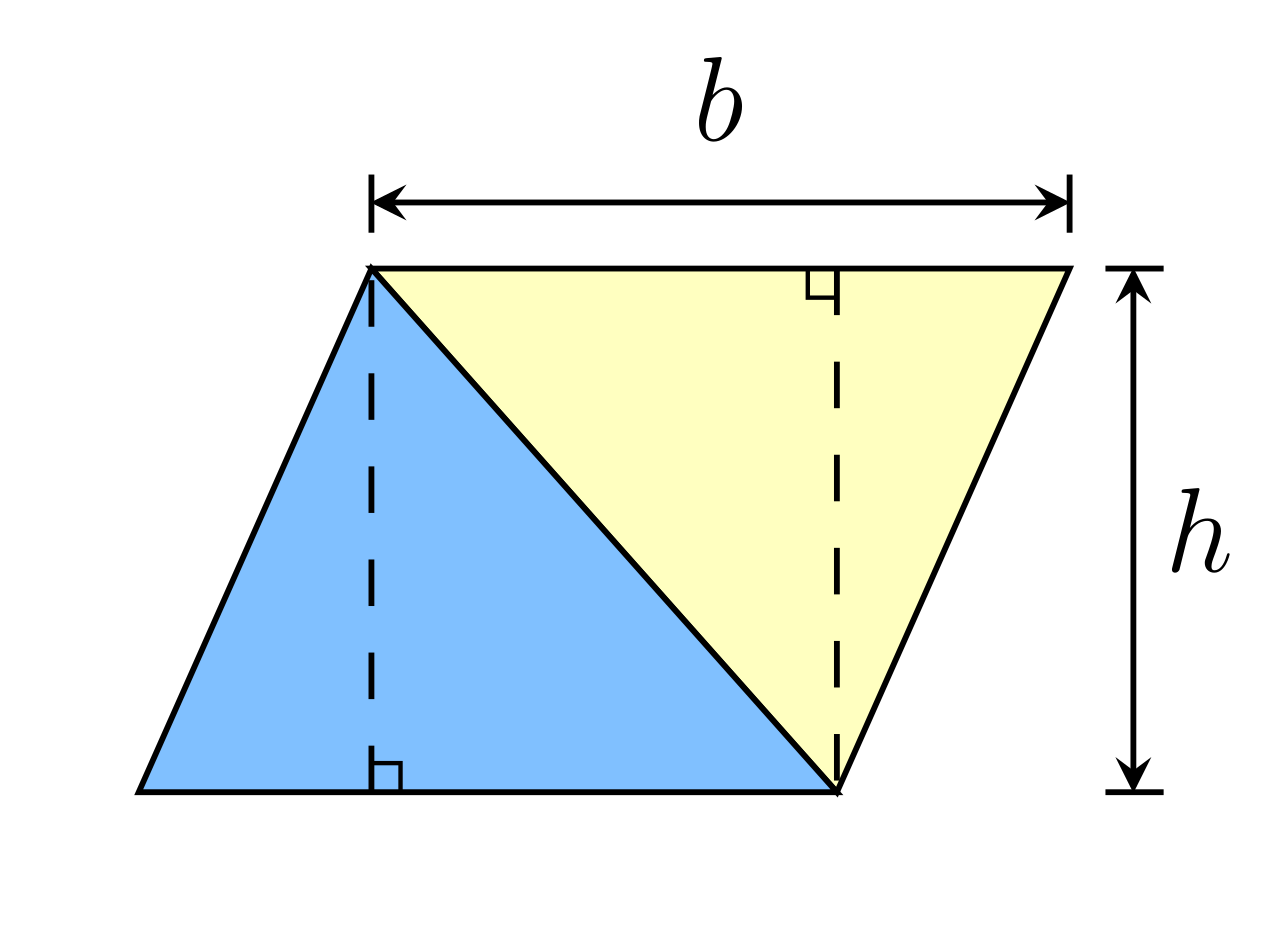
Not all flat shapes are rectangles, but all foundational flat shapes derive their area formulas from the rectangle. The critical concept here is the perpendicular height—the straight vertical drop from the top of the shape to its base, forming a 90-degree angle.
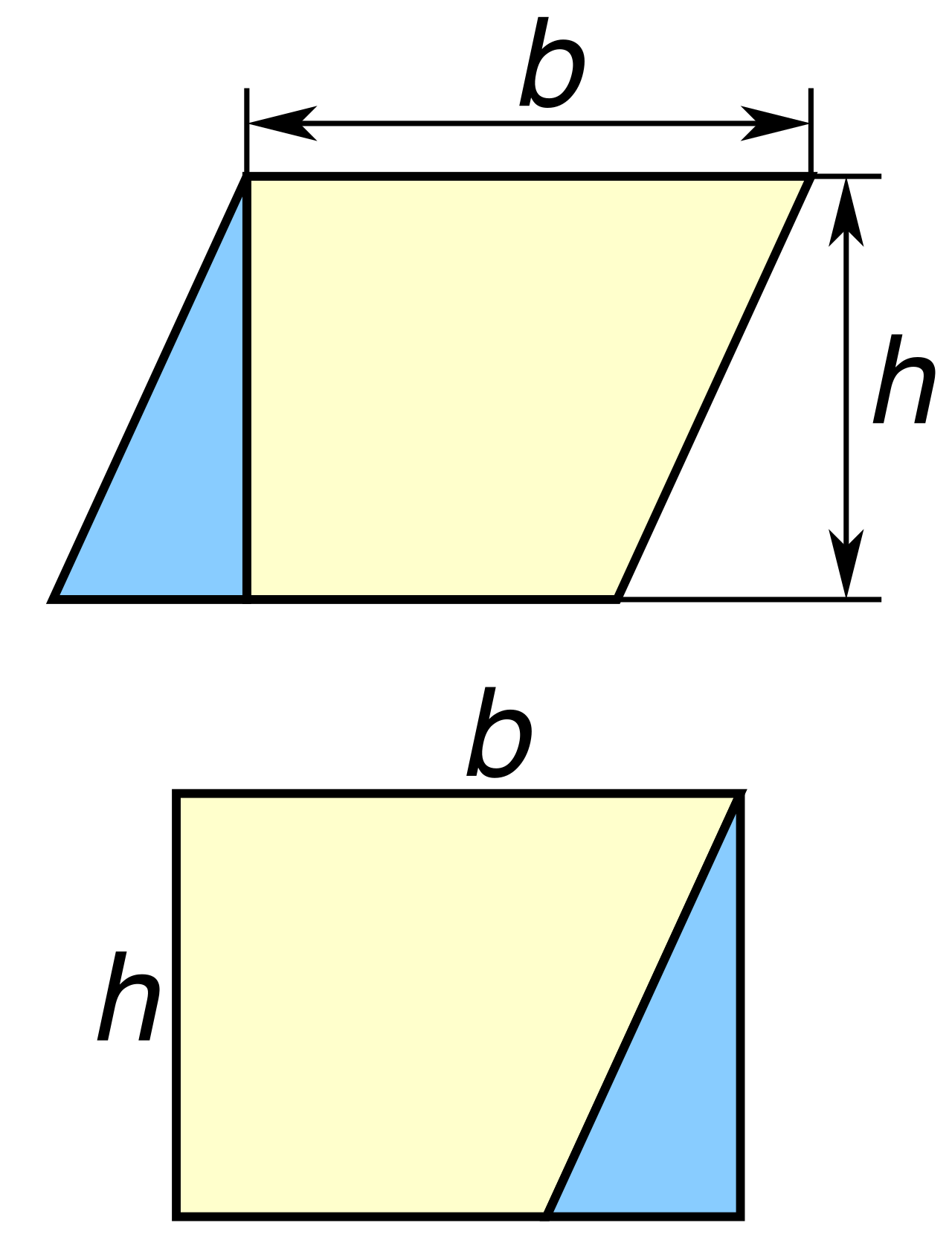
- Parallelograms: If you snip a triangular wedge off one end of a parallelogram and attach it to the other end, you form a perfect rectangle. Therefore, the formula for the area of a parallelogram is the base multiplied by the perpendicular height (A=b×h).
- Triangles: Every triangle is exactly half of a parallelogram. Thus, the formula for the area of a triangle is one-half multiplied by the base multiplied by the perpendicular height (A=21bh).
- Trapezoids: A trapezoid features two parallel bases of unequal length. If we average those bases, we find the width of an equivalent rectangle. Consequently, the formula for the area of a trapezoid is one-half multiplied by the sum of the two parallel bases multiplied by the perpendicular height (A=21(b1+b2)h).
Decomposing Complex Polygons
Nature rarely provides us with perfect singular polygons. Often, you will encounter jagged, irregular floor plans or odd plots of land. The area of a complex irregular polygon can be calculated by decomposing the complex irregular polygon into simpler shapes like non-overlapping rectangles and triangles.
By shattering a complicated shape into manageable, familiar shards, we apply our standard formulas to each piece. The total area of a decomposed complex polygon equals the sum of the areas of the individual simpler geometric shapes within the decomposed complex polygon. This principle is a cornerstone of mathematical problem solving: reduce the unknown into a sum of knowns.
When we move from flat planes to solid objects, we encounter a fascinating property: three-dimensional objects are bounded by two-dimensional surfaces. Surface area is the total area of all the outside surfaces and faces of a three-dimensional object combined. Because it represents the flat space wrapping the object, surface area is always measured in square units.
To visualize how 2D space wraps a 3D object, mathematicians use nets. A geometric net is a two-dimensional pattern that can be folded along specific edges to form a three-dimensional solid figure. Imagine slicing down the edges of a cardboard shipping box and pressing it completely flat against the floor.
The surface area of a three-dimensional figure is equal to the total area of the corresponding two-dimensional unfolded net. Calculating surface area using a geometric net involves finding the area of each individual flat face within the net and adding the individual face areas together.
Recognizing the distinct net of standard geometric solids is a critical spatial reasoning skill:
| Three-Dimensional Solid | Anatomy of its Geometric Net |
|---|---|
| Cube | The geometric net of a cube consists of exactly six identical non-overlapping squares. |
| Right Rectangular Prism | The geometric net of a right rectangular prism consists of six rectangles arranged in three identical opposite pairs. |
| Square Pyramid | The geometric net of a square pyramid consists of one square base and four identical triangular faces. |
| Triangular Prism | The geometric net of a triangular prism consists of two identical triangular bases and three rectangular faces. |
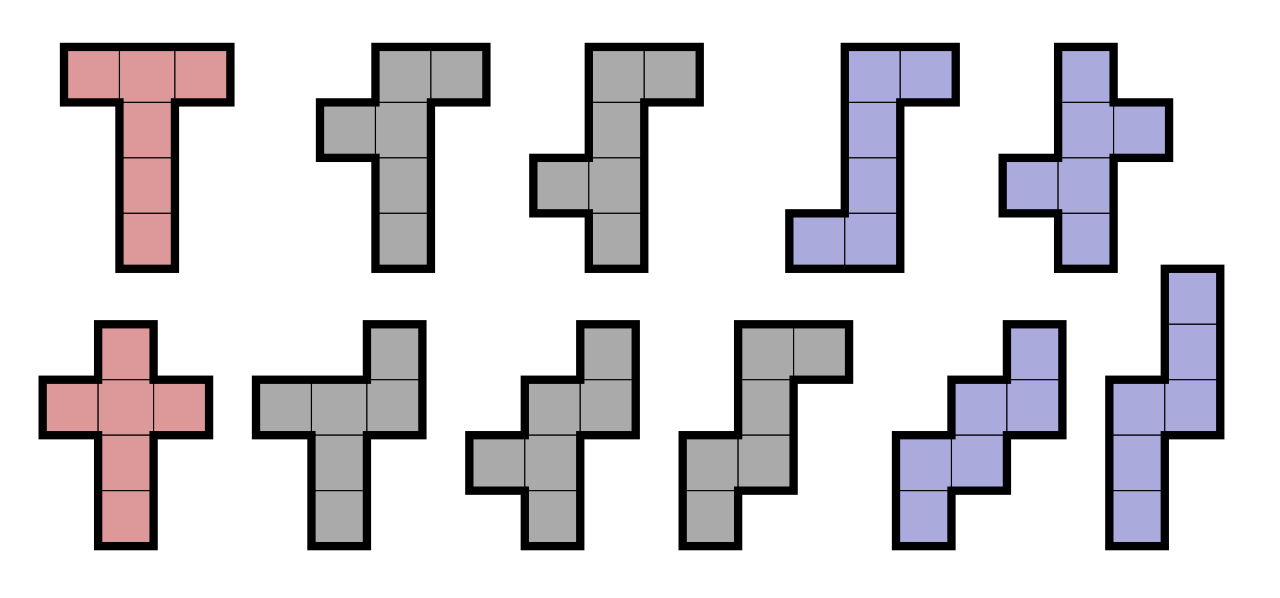
By translating a 3D shape into its 2D net, a complex surface area problem instantly becomes a standard 2D complex polygon problem. You simply decompose the net, calculate the area of the individual rectangles or triangles, and sum them up.
Finally, we transition from the wrapper to the space inside. Volume is the measure of the amount of three-dimensional space that an object entirely occupies. Because we are measuring three directional bounds—length, width, and depth—volume is always measured in cubic units such as cubic inches, cubic centimeters, or cubic meters.
To understand volume deeply, we focus on the right rectangular prism, which is a three-dimensional solid composed of six rectangular faces where all adjacent faces meet at ninety-degree right angles (like a standard shoebox or a brick).
Conceptually, the volume of a right rectangular prism can be determined by packing the right rectangular prism completely with gapless unit cubes and counting the total number of unit cubes. If a box holds 24 solid wooden unit cubes without any empty gaps, its volume is strictly 24 cubic units.
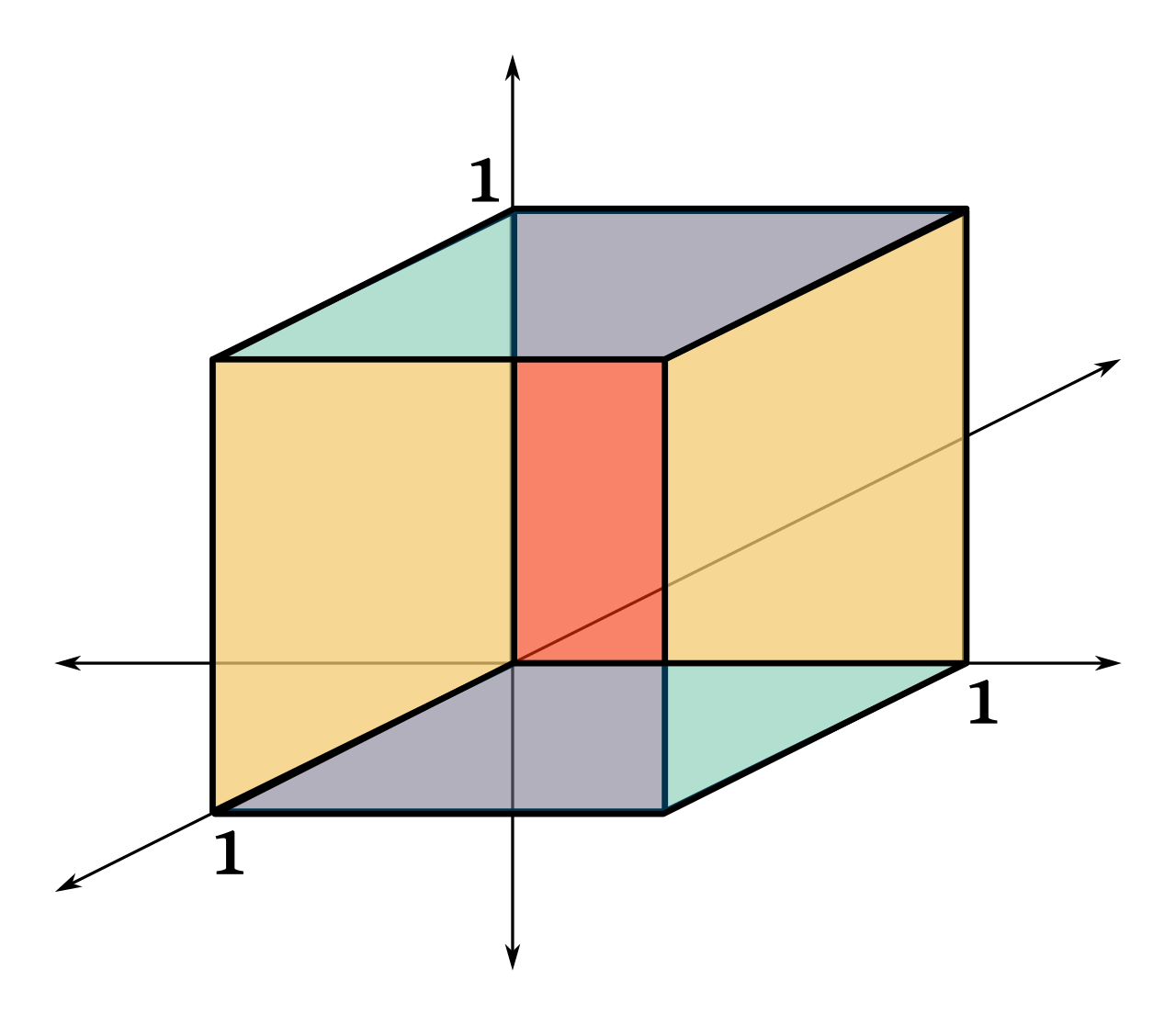
Instead of manually counting every single cube, we use the architecture of the shape. If we know how many cubes line the length, how many rows of them make up the width, and how many layers stack up to the height, we arrive at our fundamental calculation:
Volume of a Right Rectangular Prism The mathematical formula for the volume of a right rectangular prism is the length multiplied by the width multiplied by the height (V=l×w×h).
There is an alternative, equally powerful way to view this. Imagine a single flat layer of cubes resting on the bottom of the prism. The number of cubes in this base layer is identical to the 2D area of the base. If we stack identical layers on top of it until we reach the roof of the prism, we are multiplying that base footprint by the vertical climb. Thus, an alternative mathematical formula for the volume of a right rectangular prism is the area of the base multiplied by the overall height of the prism (V=B×h).
The Fractional Volumetric Model
Just as with length and area, we must account for prisms whose dimensions do not fall on neat whole numbers. The mathematics scales perfectly: the volume of a right rectangular prism with fractional edge lengths is calculated by multiplying the fractional length, the fractional width, and the fractional height together.
But what does this physically look like? You cannot pack a box measuring 221 inches across with standard 1-inch unit cubes; they simply will not fit without leaving an awkward half-inch void. Instead, the volume of a right rectangular prism with fractional edge lengths can be physically modeled by packing the prism with smaller cubes that possess fractional side lengths.
For instance, if you pack the prism with small cubes that each have a side length of 1/2 inch, eight of these smaller fractional cubes form a single standard 1-inch unit cube (since 2×2×2=8). By counting these smaller fractional cubes and converting them back into standard cubic units, you achieve a flawless calculation of occupied space, seamlessly linking the physical act of packing a box with the rigorous arithmetic of multiplying fractions.