Geometry and Classification
Not sure you’re ready?
Take the ~3-minute readiness diagnostic and see where you stand.
Imagine stripping physical reality down to its absolute bare minimum. Before we can measure the area of a farmland or engineer the architecture of a skyscraper, we must first establish the fabric of space itself. Geometry is precisely this: a rigorous, step-by-step construction of the universe starting from absolute zero. By defining simple rules for how purely theoretical elements interact, we eventually build the complex, three-dimensional world we inhabit. To master elementary geometry for the Praxis exam, you do not need to memorize a disconnected dictionary of shapes. You simply need to watch how dimensions stack on top of each other.
To build a universe, we must start with a location. In geometry, a point specifies an exact location in geometric space. Because it is purely theoretical, a point has zero dimensions, meaning zero length, zero width, and zero depth. It is not a dot drawn by a pencil; it is a coordinate of pure existence.
Once we have a point, we can stretch it. If we take a point and drag it forever in two opposite ways, we create a line. A line is a straight one-dimensional geometric figure. Because it captures only the dimension of length, a line has zero thickness, yet it extends infinitely in two opposite directions.
Infinity is difficult to work with, so we often extract measurable pieces of a line:
- A line segment is a bounded portion of a line. Unlike a line, a line segment has exactly two distinct endpoints. It represents a complete path; thus, a line segment contains every point on the line located between its two endpoints.
- If we bound a line on only one side, we create a ray. A ray is a portion of a line that begins at a single endpoint and extends infinitely in only one direction. Rays are the fundamental building blocks of angles and light vectors.

The Rules of Intersection
When multiple lines exist in the same flat plane, their relationship is defined entirely by whether or not they cross.
Parallel lines are straight lines located in the same flat plane. By definition, parallel lines never intersect, no matter how far they extend. Because they are perfectly aligned, parallel lines remain a constant distance apart at all points.
If lines are not parallel, they must eventually cross. Intersecting lines cross each other at exactly one point. The most structurally important intersecting lines are those that cross perfectly squarely. Perpendicular lines are intersecting lines that meet to form right angles, meaning that perpendicular lines intersect at an angle of exactly 90 degrees.
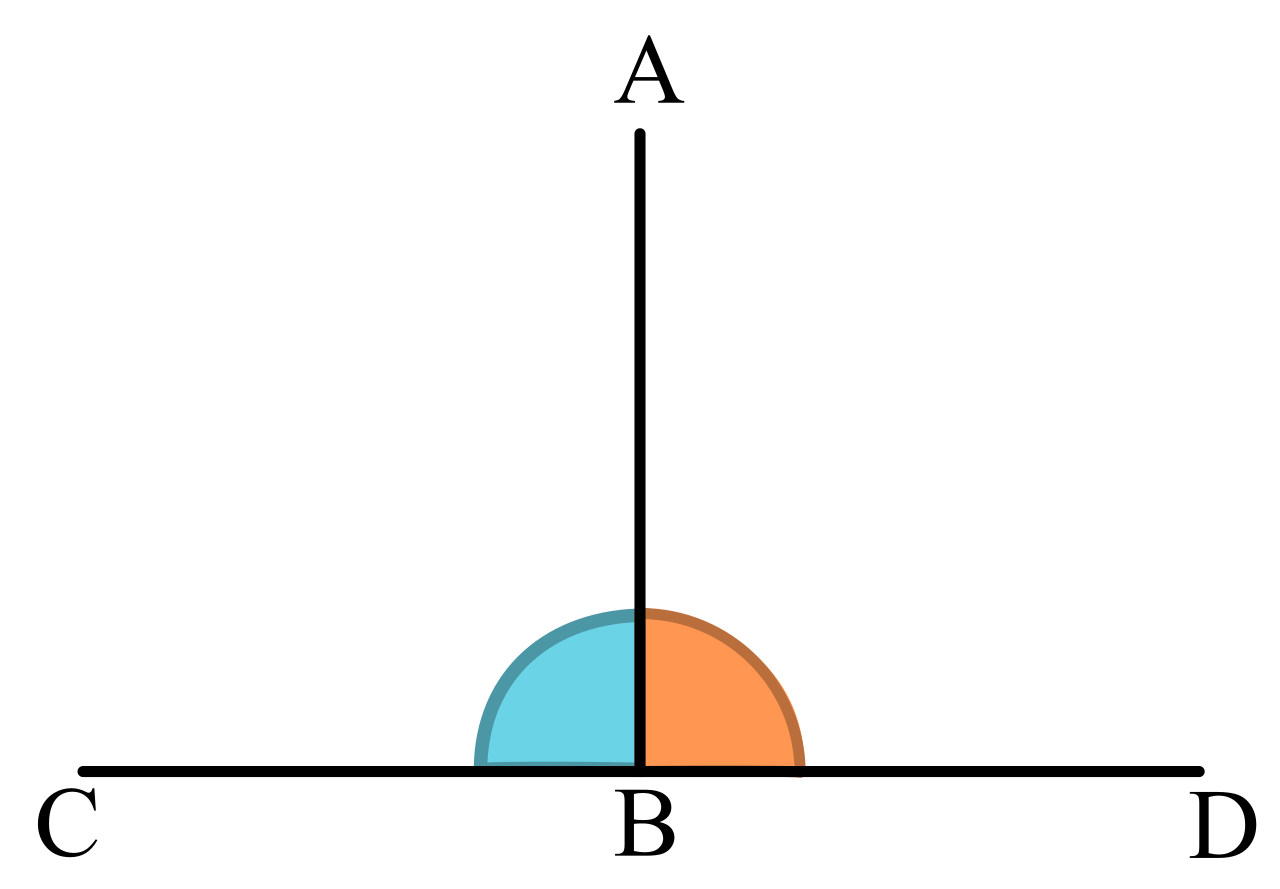
Lines and segments give us distance, but to enclose spaces and build shapes, lines must change direction. We measure this deviation using angles. An angle is a geometric figure formed by two rays sharing a common endpoint. This pivot point is crucial: the common endpoint of two rays forming an angle is called the vertex.
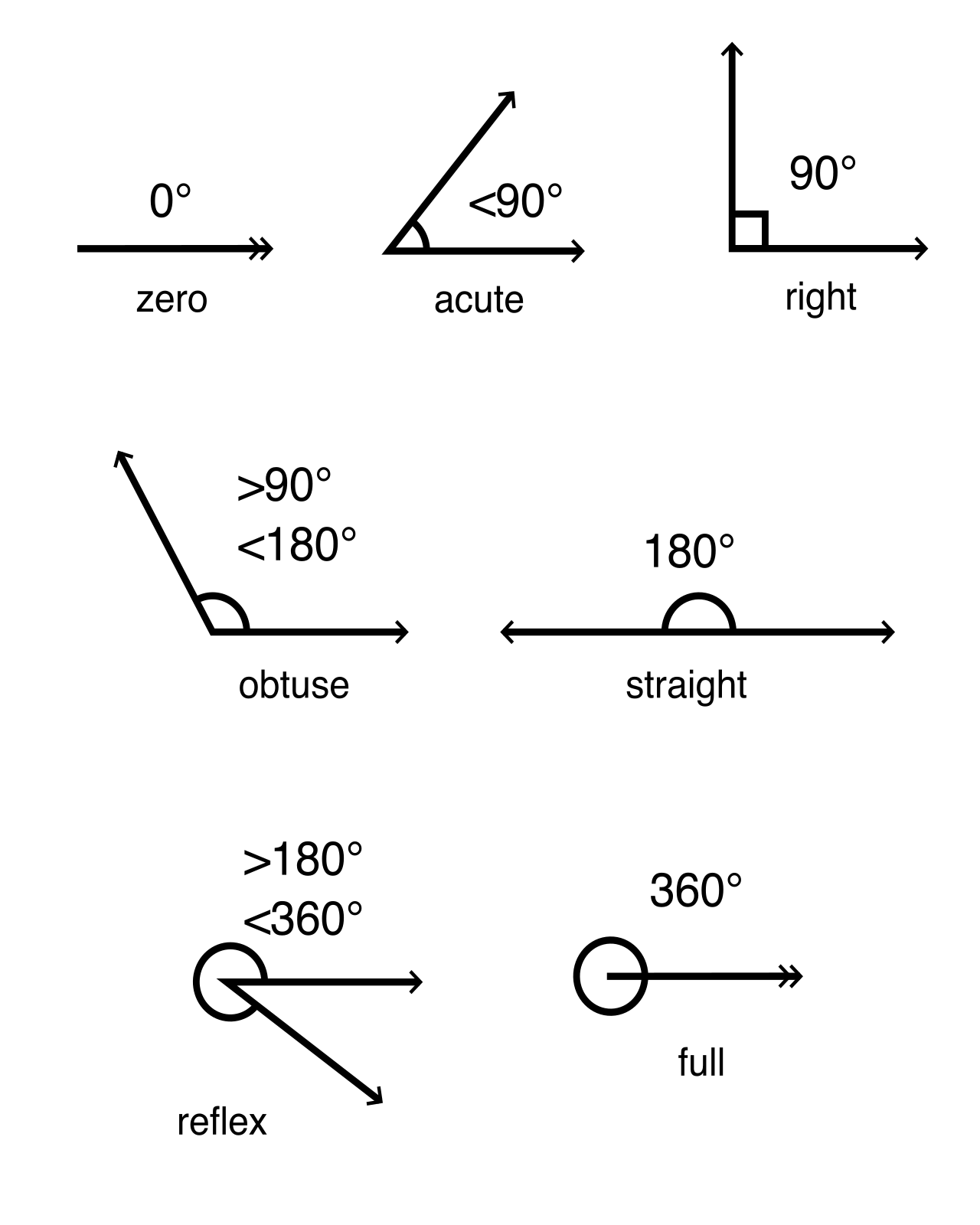
Angles measure rotation. We categorize them strictly by their degree of openness:
| Classification | Definition |
|---|---|
| Acute Angle | An angle that measures strictly less than 90 degrees. |
| Right Angle | An angle that measures exactly 90 degrees. |
| Obtuse Angle | An angle that measures strictly greater than 90 degrees and strictly less than 180 degrees. |
| Straight Angle | An angle that measures exactly 180 degrees. Visually, a straight angle forms a perfectly straight line. |
| Reflex Angle | An angle that measures strictly greater than 180 degrees and strictly less than 360 degrees. |
| Full Rotation Angle | An angle that measures exactly 360 degrees, completing a perfect circle. |
When analyzing geometric figures, angles rarely act alone. We specifically classify pairs of angles based on how they combine to form fundamental limits:
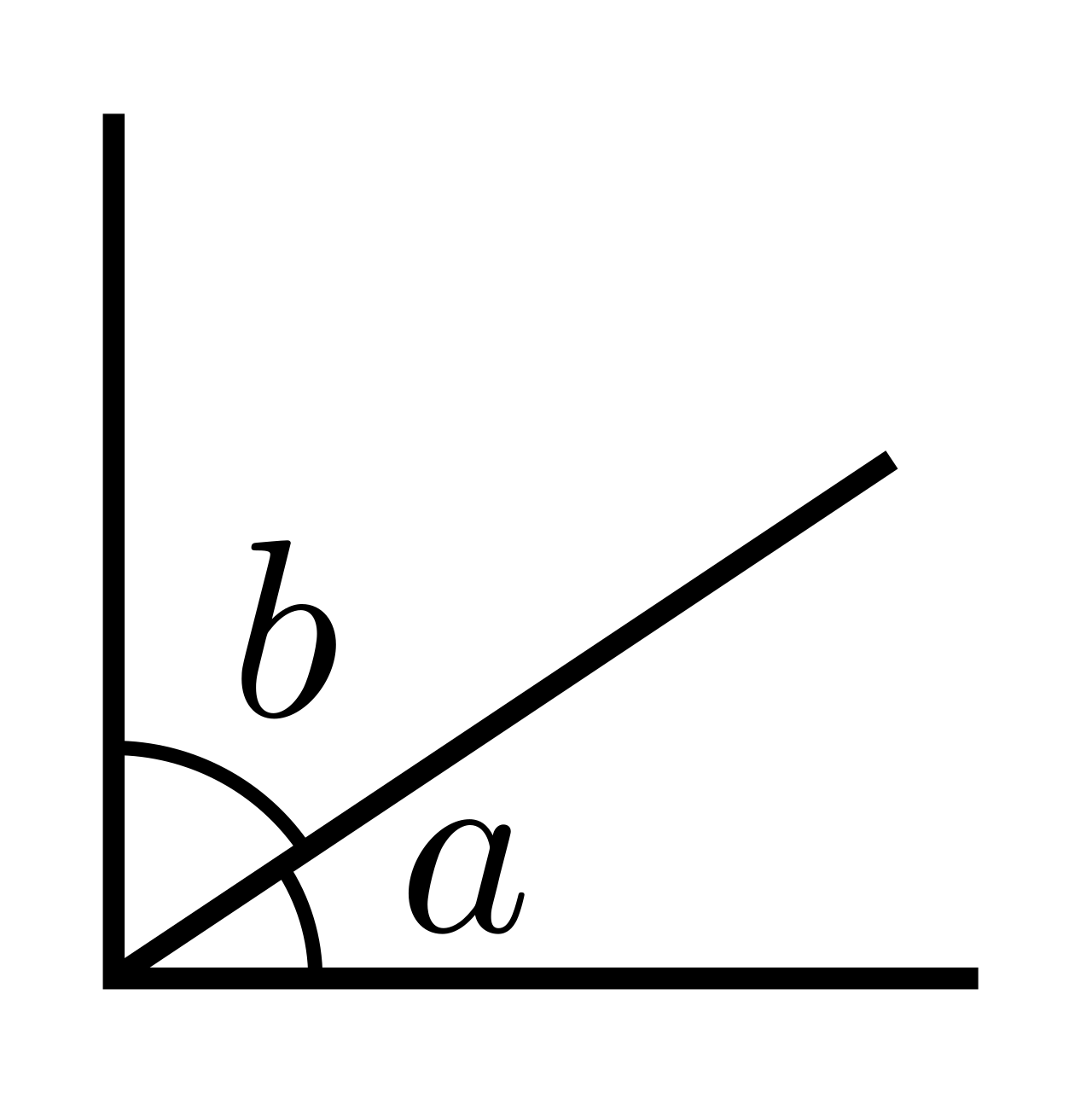
- Complementary angles are two angles whose sum is exactly 90 degrees. (Together, they form a right corner).
- Supplementary angles are two angles whose sum is exactly 180 degrees. (Together, they form a straight line).
When we take straight line segments and connect them end-to-end until the shape is sealed, we step into the second dimension. A polygon is a closed two-dimensional geometric figure that is formed entirely by straight line segments.
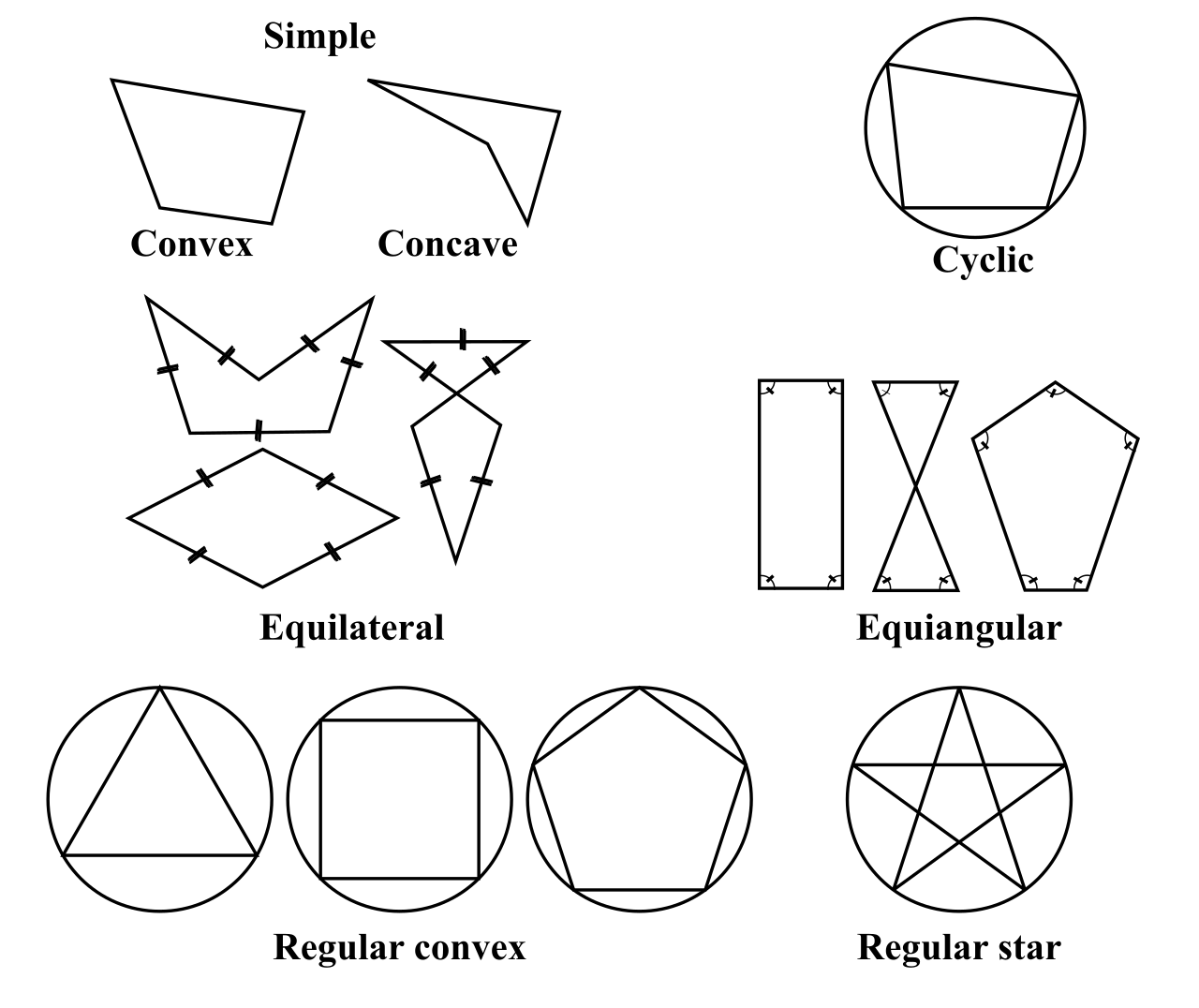
Nature and mathematics highly favor symmetry. When a polygon is perfectly symmetric, we call it regular. A regular polygon has all sides of equal length and has all interior angles of equal measure.
Triangles: The Structural Minimum
Three is the absolute minimum number of straight line segments required to close a two-dimensional space. Therefore, a triangle is a polygon with exactly three sides. Because of the geometric constraints of a flat plane, the sum of the interior angles of a triangle is exactly 180 degrees.
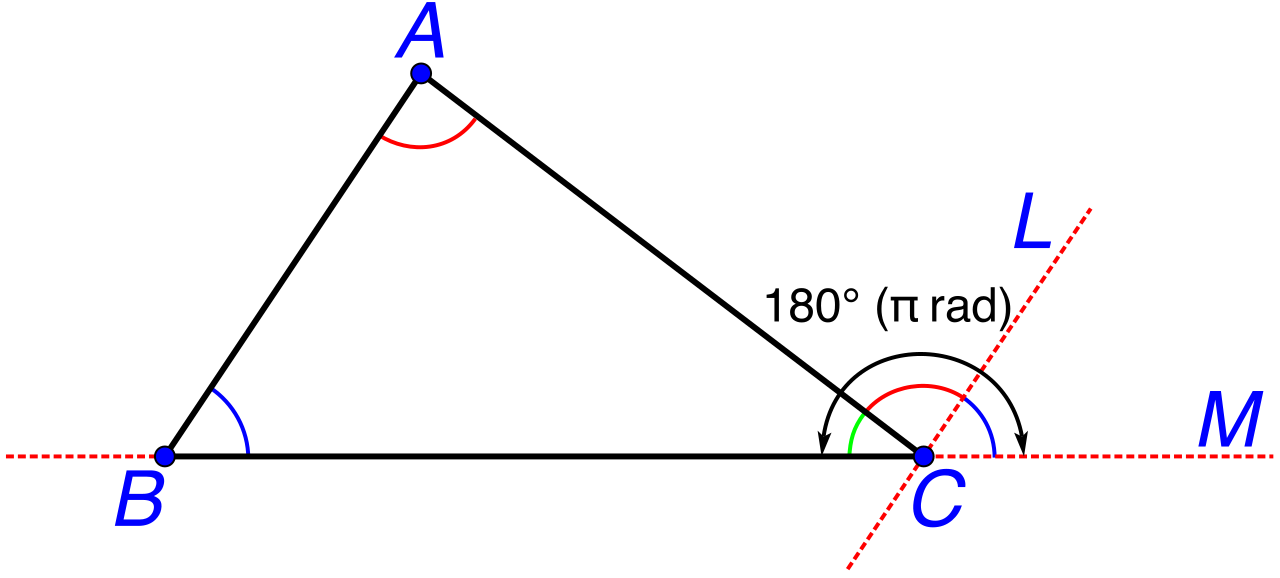
We classify triangles through two distinct lenses: by their sides and by their angles.
Classification by Sides:
- Equilateral triangle: Has three sides of equal length. Because side lengths force angle measures in a triangle, each interior angle of an equilateral triangle measures exactly 60 degrees.
- Isosceles triangle: Has at least two sides of equal length.
- Scalene triangle: Has zero sides of equal length. Every side and angle is entirely distinct.
Classification by Angles:
- Acute triangle: Contains exactly three acute interior angles.
- Right triangle: Contains exactly one right interior angle.
- Obtuse triangle: Contains exactly one obtuse interior angle.
Quadrilaterals: The Hierarchy of Four
Adding one more side introduces tremendous structural variety. A quadrilateral is a polygon with exactly four sides. To enclose this shape without crossing lines, the sum of the interior angles of a quadrilateral is exactly 360 degrees.
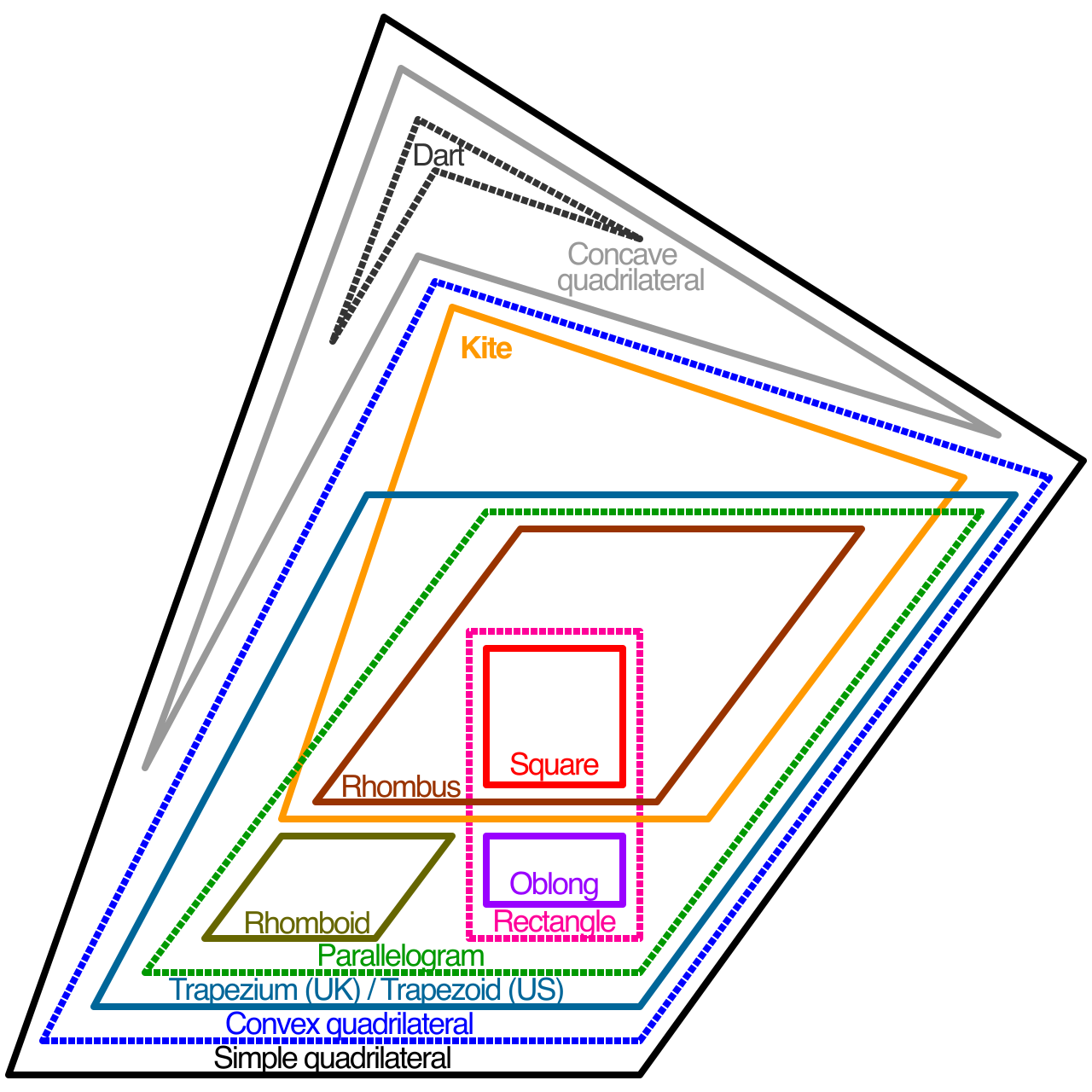
Quadrilaterals are taught not as separate shapes, but as a family tree defined by the addition of increasingly strict attributes:
- Trapezoid: A quadrilateral with at least one pair of parallel opposite sides.
- Parallelogram: A stricter quadrilateral with two pairs of parallel opposite sides. This dual-parallelism forces specific internal symmetries: the opposite sides of a parallelogram are equal in length, and the opposite interior angles of a parallelogram are equal in measure.
- Rectangle: A highly specific parallelogram: a rectangle is a parallelogram containing exactly four right angles.
- Rhombus: Another specific parallelogram: a rhombus is a parallelogram containing exactly four sides of equal length.
- Square: The ultimate synthesis. A square is a rectangle containing exactly four sides of equal length. Because all four sides and all four interior angles are identical, a square is considered a regular quadrilateral.
Higher-Order Polygons
Beyond four sides, shapes expand outward into the plane. These are classified purely by the count of their perimeter segments:
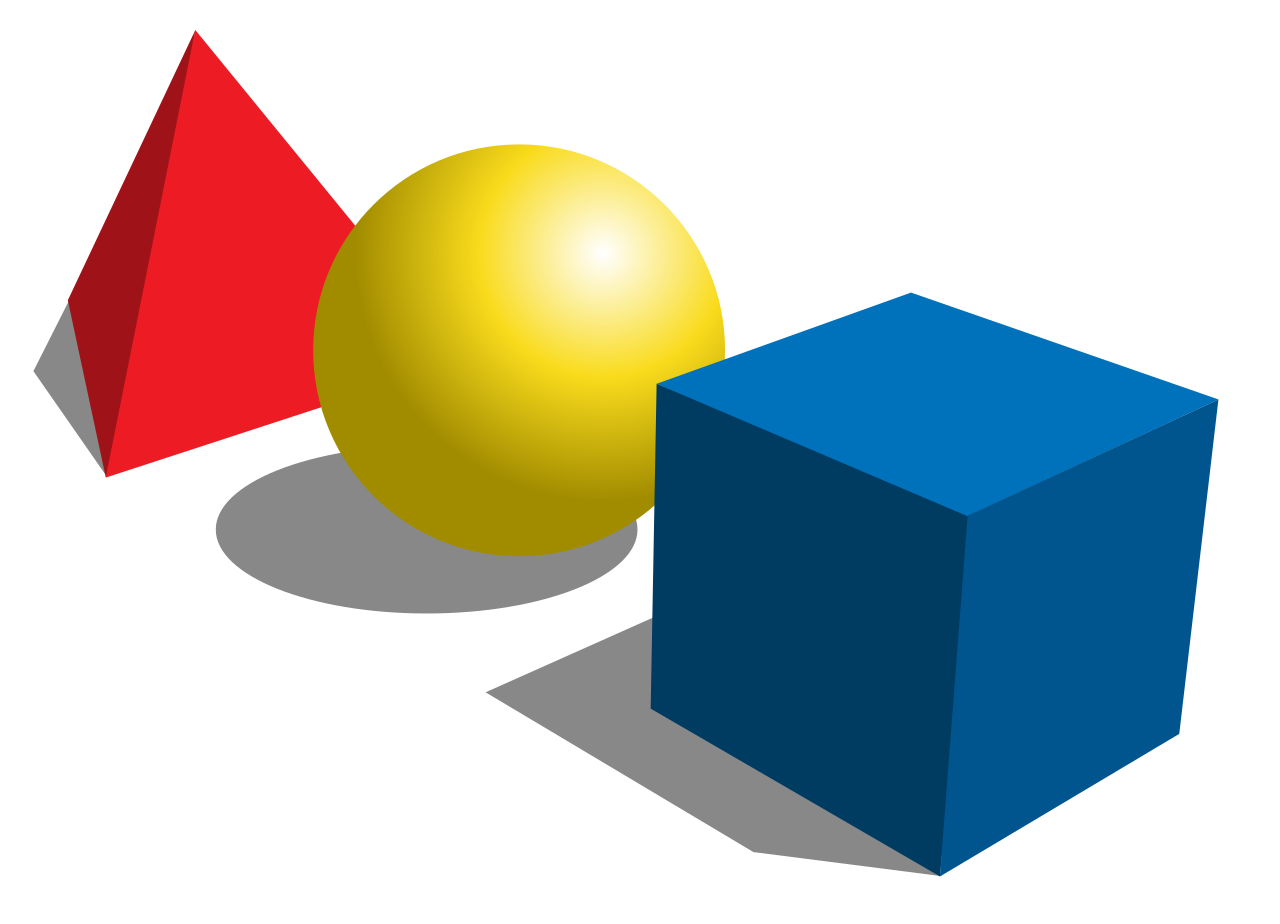
If two-dimensional geometry is a blueprint, three-dimensional geometry is the house itself. A three-dimensional figure is a solid geometric object that has length, width, and height.
To navigate solid geometry, we must define the anatomical features of a solid shape:
- Face: A flat distinct surface of a solid three-dimensional figure.
- Edge: A line segment where two faces of a solid figure intersect.
- Vertex: A corner point where three or more edges intersect.
Polyhedrons: Prisms and Pyramids
When a solid is constructed exclusively from the flat 2D polygons we just studied, it belongs to a specific family. A polyhedron is a three-dimensional solid figure where every face of a polyhedron is a flat polygon.
Polyhedrons generally fall into two dominant categories:
A prism is a polyhedron defined by uniformity. A prism has exactly two polygonal bases that mirror each other across space: the two polygonal bases of a prism are strictly parallel to each other and are completely congruent to each other. Because these bases are parallel and equal, the lateral faces of a prism are all parallelograms or rectangles.
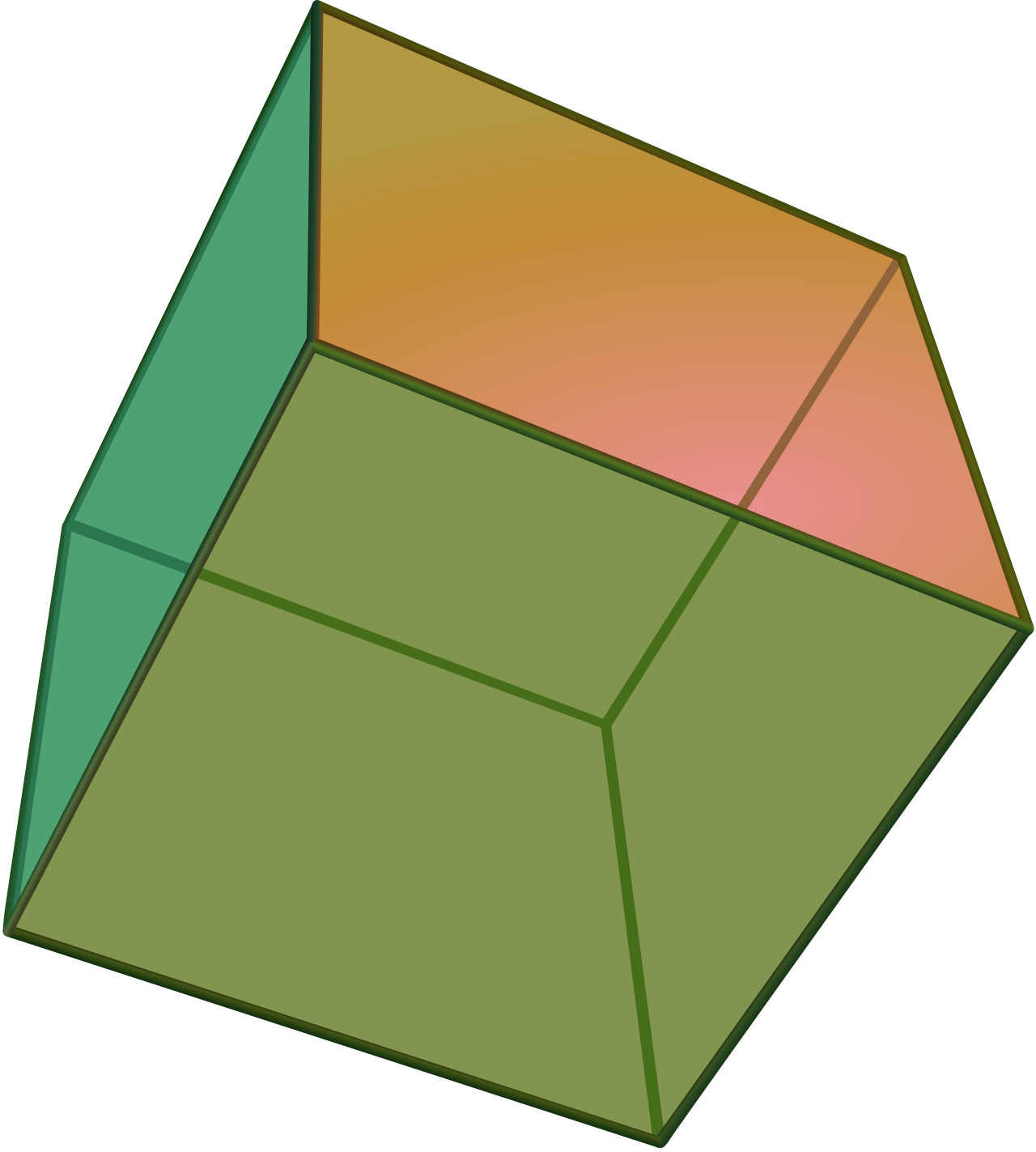
- A rectangular prism is a prism whose bases and sides are all perpendicular blocks. Specifically, a rectangular prism has exactly six rectangular faces, exactly 12 edges, and exactly 8 vertices.
- If we force every dimension of a rectangular prism to be perfectly equal, we get a cube. A cube is a specific type of rectangular prism that has exactly six identical square faces.
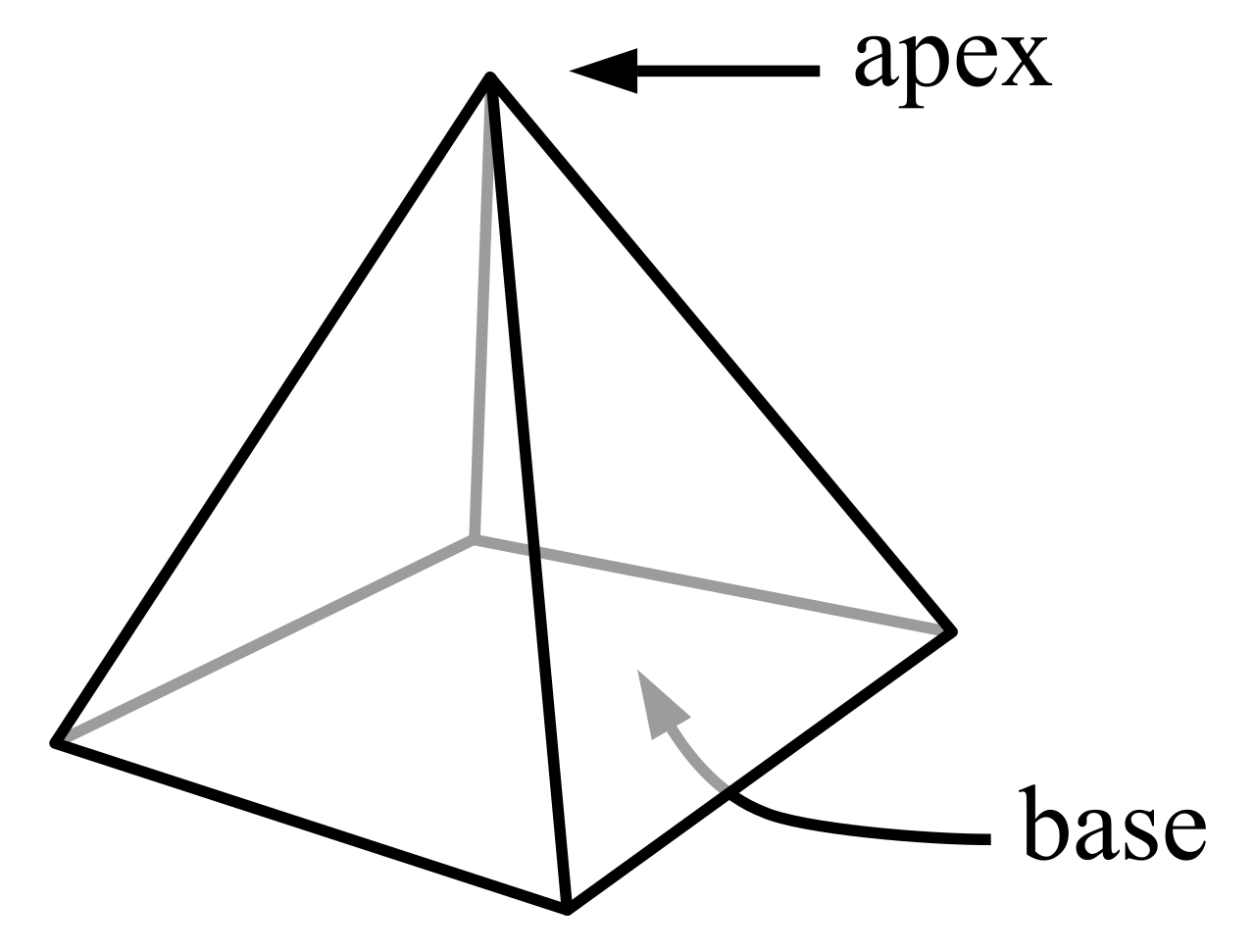
Pyramids Unlike a prism, which projects uniformly through space, a pyramid collapses inward. A pyramid is a polyhedron that has exactly one polygonal base. As it rises from this base, the lateral faces of a pyramid are all triangles. Eventually, all lateral faces of a pyramid meet at a single common point called the apex.
Curved Solids: Mathematics in Motion
Not all three-dimensional reality is built from flat faces and sharp edges. When mathematical curves are spun into the third dimension, we generate entirely different classes of solids.
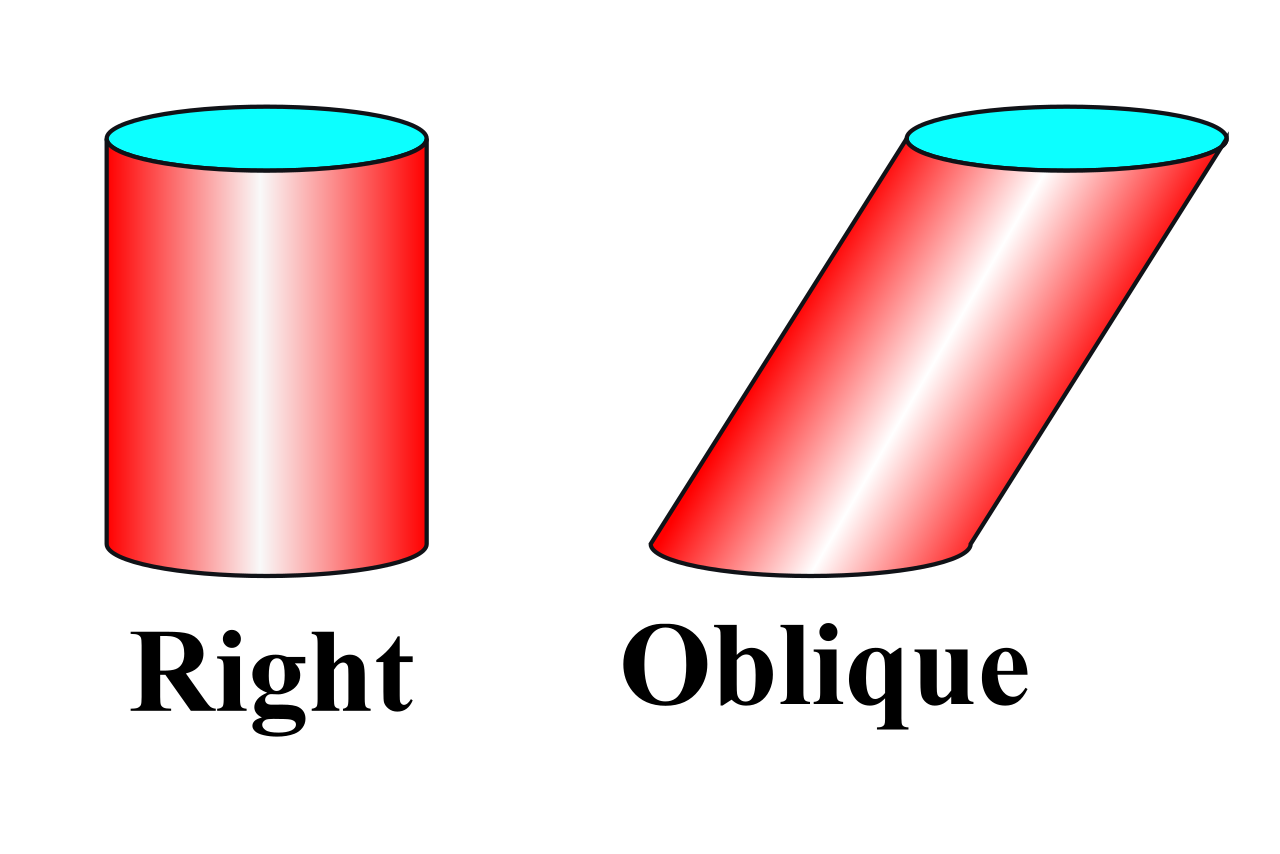
Cylinders A cylinder is a three-dimensional geometric figure that behaves much like a prism, but without the straight-edged polygons. A cylinder has exactly two circular bases. Just like a prism, the two circular bases of a cylinder are strictly parallel to each other and are completely congruent to each other. However, instead of flat rectangular sides, the two circular bases of a cylinder are connected by a single curved surface. Because curves lack corners, a cylinder has zero vertices.
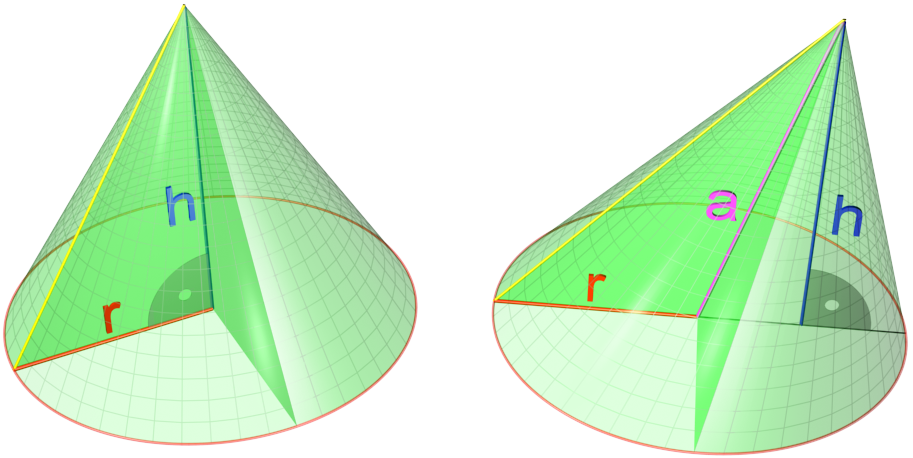
Cones A cone is to a cylinder what a pyramid is to a prism. A cone is a three-dimensional geometric figure that has exactly one circular base. From this foundation, the curved surface of a cone tapers continuously from the base to a single point. Just as in a pyramid, the single point at the top of a cone is called the apex.
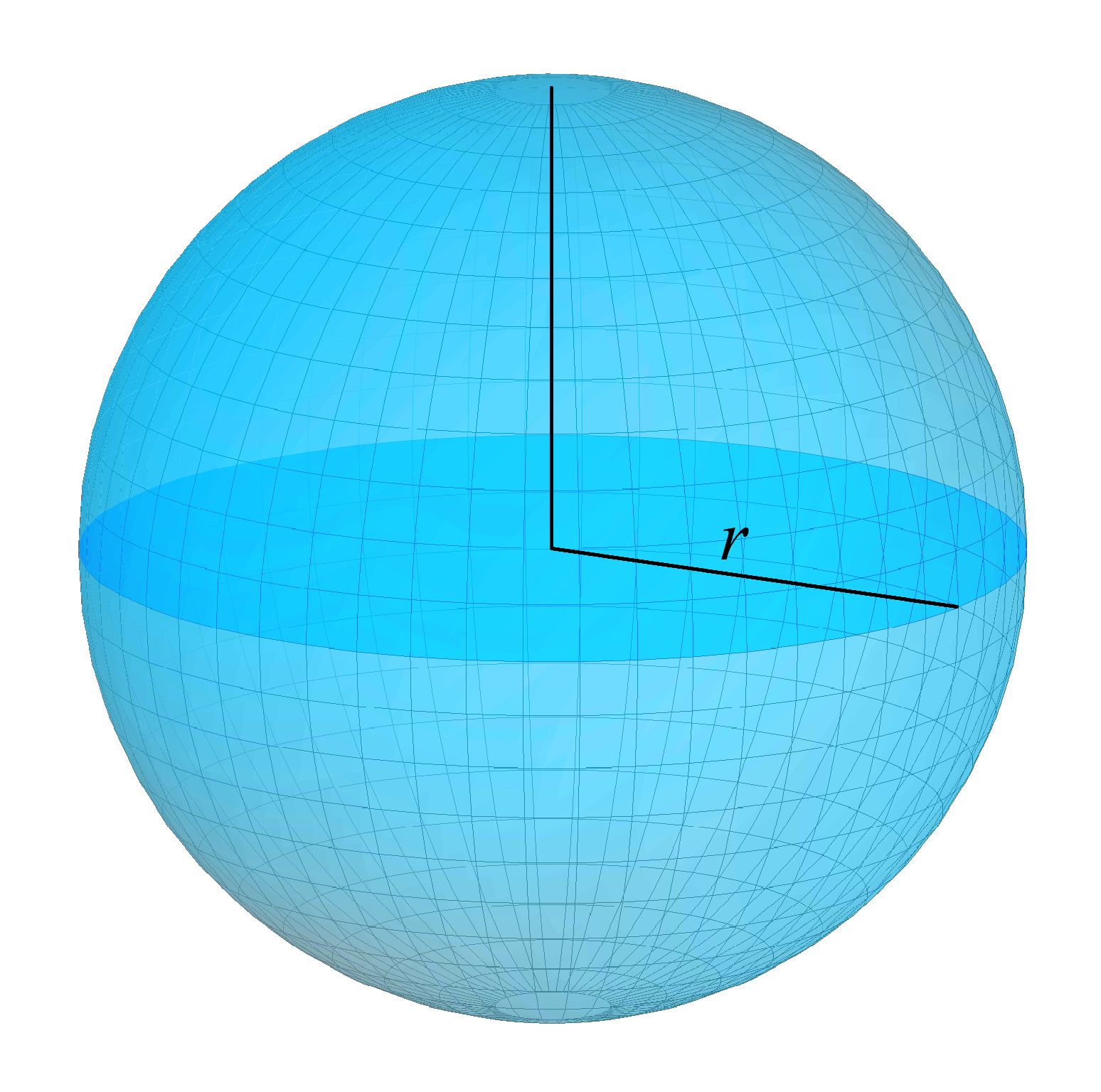
Spheres The ultimate expression of mathematical symmetry is the sphere. A sphere is a perfectly round three-dimensional shape. Its definition is deceptively simple: every point on the surface of a sphere is equidistant from its center point. Because a sphere exists purely as a continuous equidistant boundary in 3D space, it has no flat geometry whatsoever. A sphere has exactly zero flat faces, exactly zero edges, and exactly zero vertices.