Rational Number Operations
Not sure you’re ready?
Take the ~3-minute readiness diagnostic and see where you stand.
Numbers were invented to count, but they were perfected to measure. When we slice a length of wood, divide a sum of money, or calculate a deficit, whole integers are insufficient. We are forced into the realm of rational numbers—a numerical construct built upon the ratio of quantities. Understanding how to manipulate these values, how to reverse-engineer our steps, and how to interpret the mathematical leftovers is not just an exercise in rote memorization. It is the fundamental grammar of quantitative logic.
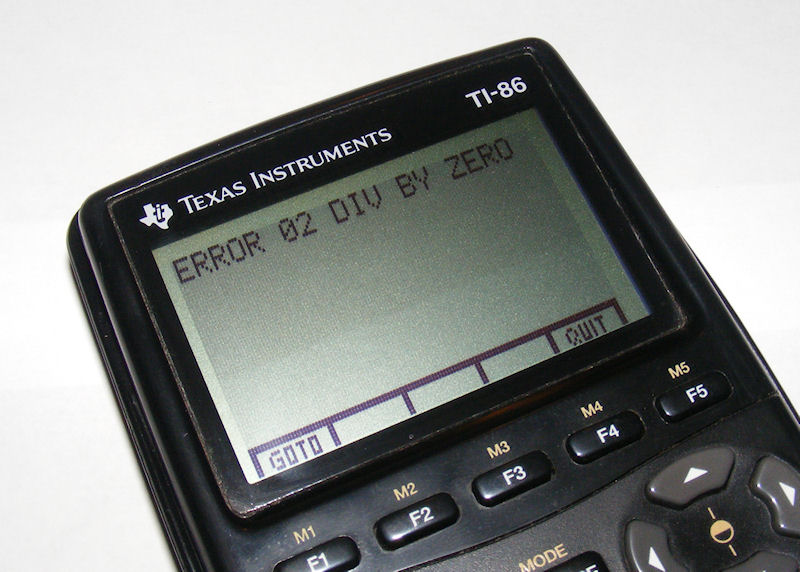
To understand the machinery of mathematics, we must first examine the parts. Fundamentally, a rational number is any number capable of being expressed as a fraction of two integers. Because it is a ratio, the denominator of a fraction representing a rational number cannot be zero. Why? Because division by zero is undefined in mathematics; it asks us to split a quantity into zero parts, a logical impossibility.
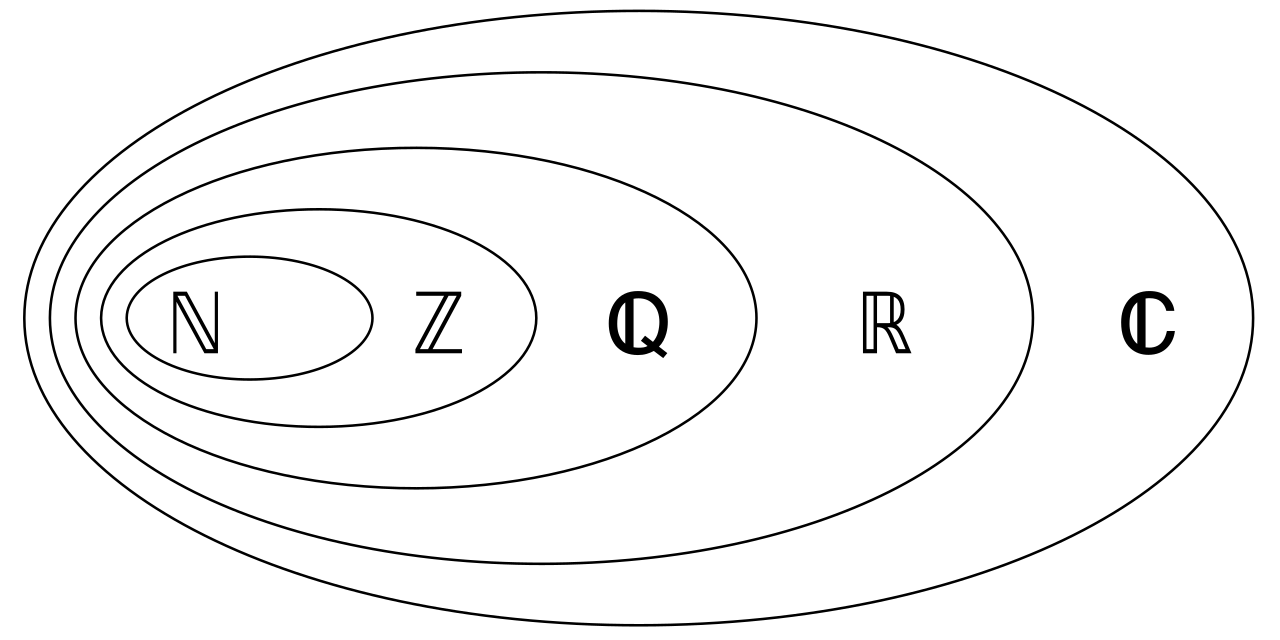
Rational numbers are wonderfully diverse. Integers, fractions, and terminating or repeating decimals are all examples of rational numbers. The integer 5 is rational because it can be written as 15. The terminating decimal 0.75 is rational because it is 43.
Within this system, certain numbers have special properties that leave other numbers completely unchanged.
- Zero is the additive identity for rational numbers. Consequently, adding zero to a rational number does not change the mathematical value of the rational number.
- One is the multiplicative identity for rational numbers. Similarly, multiplying a rational number by one does not change the mathematical value of the rational number.
When we step past zero into the negative numbers, mathematics requires us to account for both magnitude (size) and direction (sign).

Addition and Subtraction
Addition behaves differently depending on the direction of our numbers.
- Adding two rational numbers with the same sign results in a sum that has the exact same sign as the addends. If you add two positive debts or two negative deficits, you simply move further in that same direction.
- Adding two rational numbers with different signs requires subtracting the smaller absolute value from the larger absolute value. In this scenario, when adding two rational numbers with different signs, the sum takes the sign of the addend with the larger absolute value.
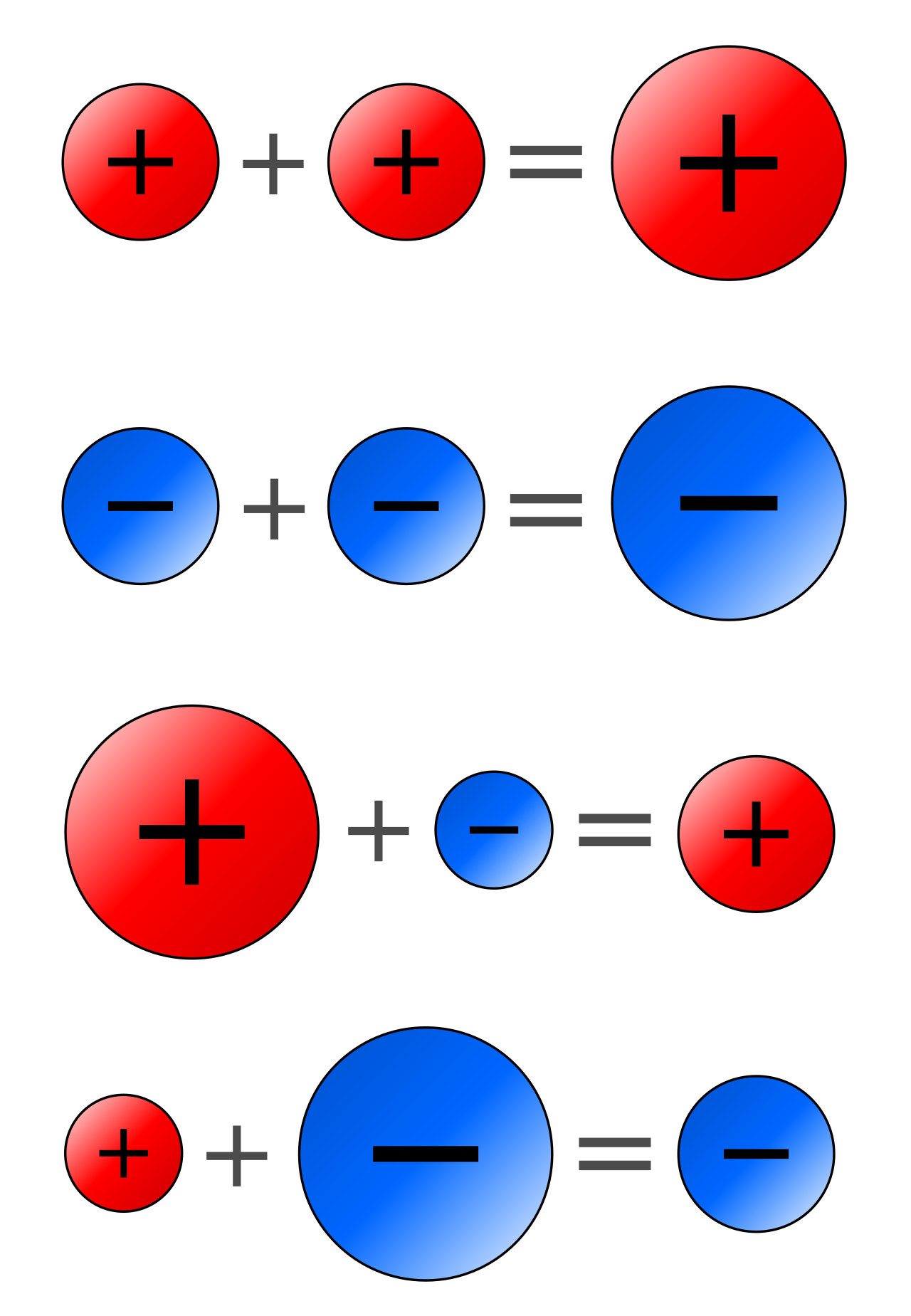
Subtraction is not an entirely new operation; it is merely addition in reverse. Specifically, subtracting a rational number is mathematically equivalent to adding the additive inverse of that specific rational number.
Additive Inverse: The value that, when added to a number, yields zero. The additive inverse of a positive rational number is the negative counterpart of that specific number (and vice versa). By mathematical law, the sum of any rational number and the additive inverse of that identical rational number is always zero.
Multiplication and Division
When multiplying or dividing signed rational numbers, the rules harmonize beautifully into a simple binary system based on agreement:
- The product of two rational numbers with the exact same sign is always a positive number.
- The quotient of two rational numbers with the exact same sign is always a positive number.
- The product of two rational numbers with different signs is always a negative number.
- The quotient of two rational numbers with different signs is always a negative number.
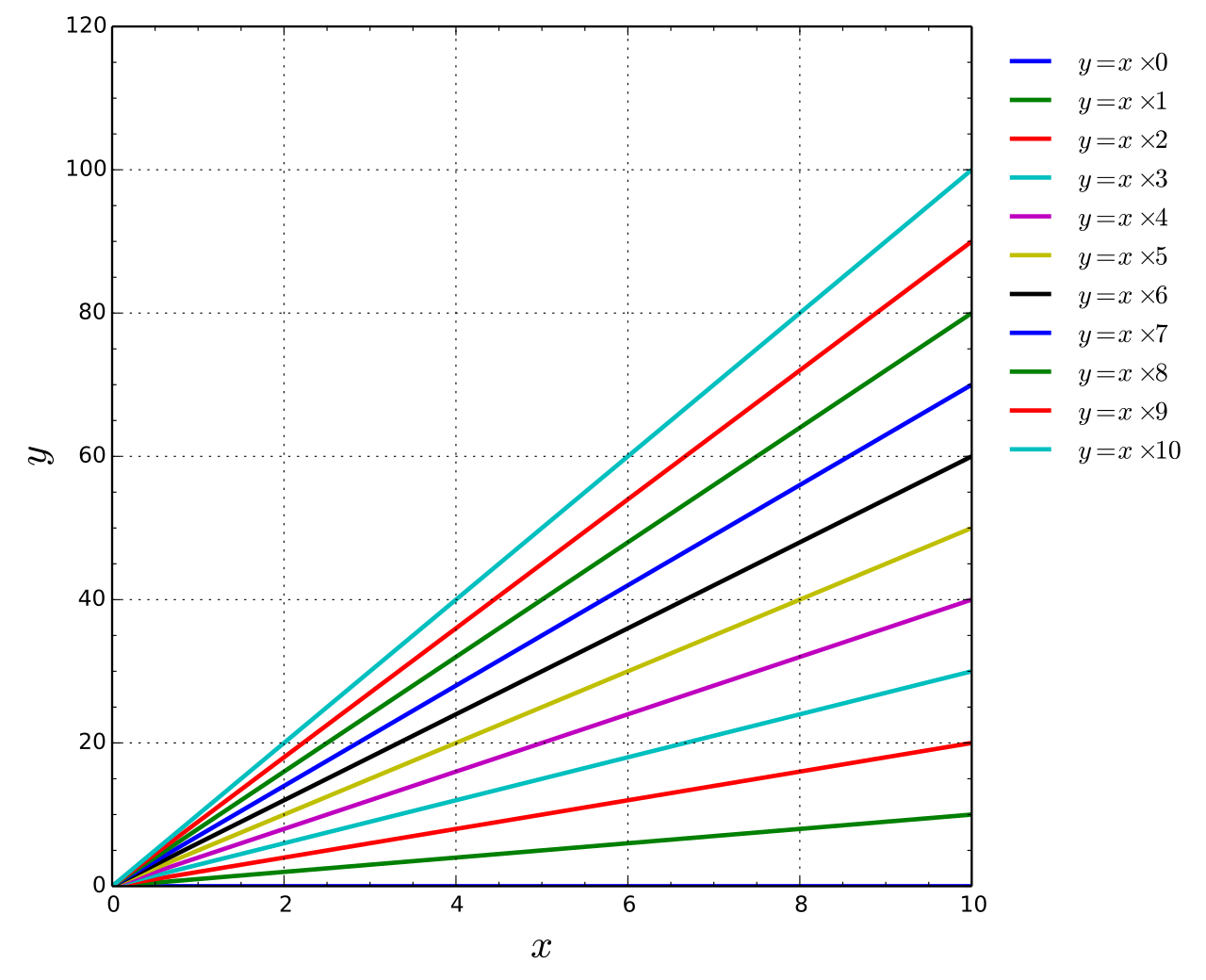
Understanding why standard algorithms work prevents computation from becoming mere guesswork. The algorithms for fractions and decimals differ significantly because of how they represent portions of a whole.
Operating on Fractions
When manipulating fractions, the operation dictates the preparation.
Adding and subtracting fractions requires finding a common denominator before performing the operation. You cannot meaningfully add 31 of a pie to 41 of a pie without first cutting the pieces into identical sizes.
However, multiplying and dividing fractions does not require finding a common denominator. Multiplication is an act of scaling.
- When multiplying fractions, the numerators are multiplied together to form the new numerator.
- Simultaneously, when multiplying fractions, the denominators are multiplied together to form the new denominator.
Division relies on an elegant transformation. Dividing by a fraction is mathematically equivalent to multiplying by the reciprocal of that specific fraction.
- The reciprocal of a fraction is formed by swapping the numerator and the denominator of the fraction. Thus, dividing by 32 is identical to multiplying by 23.
Operating on Decimals
Decimals are essentially fractions whose denominators are hidden powers of ten.
- To add or subtract decimals, the numbers must be vertically aligned by their decimal points before performing the operation. This ensures you are adding tenths to tenths and hundredths to hundredths.
- When multiplying decimals, the total number of decimal places in the product equals the sum of the decimal places in the factors.
- Division requires shifting our perspective. When dividing a decimal by a decimal, the decimal point in the divisor must be moved to the right to create a whole number. However, to maintain the true ratio of the problem, moving the decimal point in the divisor requires moving the decimal point in the dividend by the exact same number of places to the right.
Mathematics is deeply symmetrical. Every action has an equal and opposite reaction, known as an inverse. An inverse operation can be used to mathematically reverse the effect of another operation.
- Addition and subtraction are inverse operations.
- Multiplication and division are inverse operations.
This symmetry provides us with powerful tools for verifying logic and solving mysteries. The inverse relationship between addition and subtraction can be used to check the accuracy of a calculated sum or difference. The logic is bulletproof: The inverse relationship between addition and subtraction dictates that if value A plus value B equals value C, then value C minus value B must equal value A.
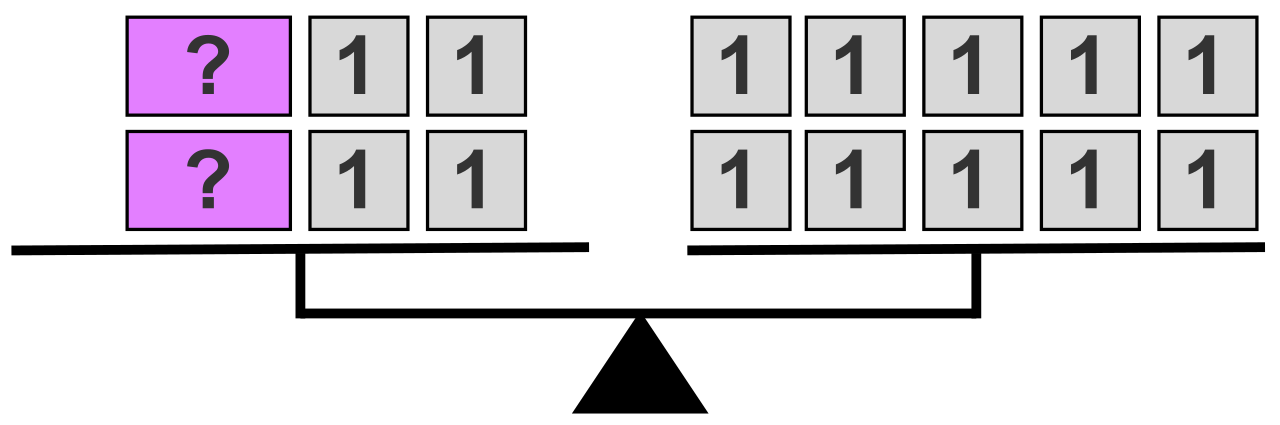
Likewise, the inverse relationship between multiplication and division can be used to solve for an unknown value in a mathematical equation. We know with absolute certainty that the inverse relationship between multiplication and division dictates that if value A times value B equals value C, then value C divided by value B must equal value A.
In algebraic practice, using inverse operations allows for the isolation of an unknown variable in an algebraic equation. If we have 3x=12, we apply the inverse of multiplication (division) to both sides to unearth that x=4.
Reality rarely presents us with a single, isolated calculation. Translating real-world situations into mathematical expressions requires mapping specific vocabulary words to corresponding operations.
| Vocabulary Cue | Mathematical Operation |
|---|---|
| The word total or sum in a mathematical word problem typically indicates... | ...the addition operation. |
| The word difference or the phrase how many more in a mathematical word problem typically indicates... | ...the subtraction operation. |
| The word product or times in a mathematical word problem typically indicates... | ...the multiplication operation. |
| The word quotient or per in a mathematical word problem typically indicates... | ...the division operation. |
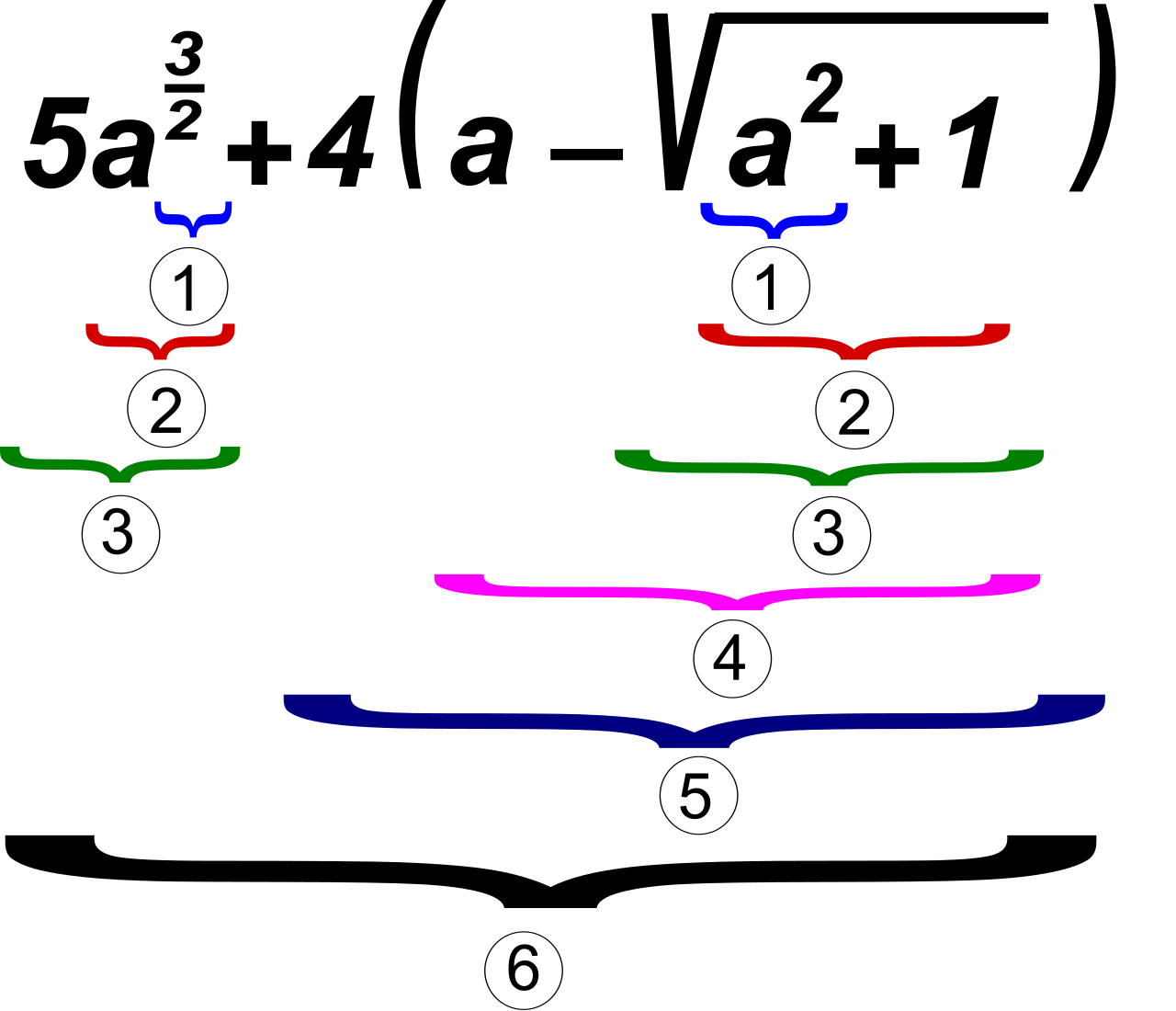
Once translated, a complex equation must be solved systematically. Multistep mathematical problems require applying the standard order of operations to determine the correct sequence of calculations. If we calculate out of order, the mathematical model breaks down.
The standard order of operations dictates evaluating parentheses first, followed by exponents, then multiplication and division from left to right, and finally addition and subtraction from left to right.
Pure mathematics exists in the abstract, but applied mathematics bumps into reality. Division problems involving real-world contexts often result in a remainder that must be interpreted based on the specific situation. You cannot simply write "Remainder 3" when calculating how many buses you need for a field trip. Context dictates the treatment of the remainder in three distinct ways:
1. The Discarded Remainder
In some real-world division problems, the remainder must be completely discarded. Consider a scenario where a student has $20 to buy notebooks that cost $3 each. 20÷3=6 with a remainder of 2. When determining how many full items can be purchased with a set amount of money, the remainder of the division operation is discarded. You cannot buy a partial notebook with the remaining $2. Therefore, when discarding a remainder in a division problem, the final answer is solely the whole number quotient (in this case, 6).
2. The Rounded-Up Remainder
Conversely, in some real-world division problems, the remainder requires rounding the quotient up to the next consecutive whole number. Imagine transporting 25 students in vans that hold 7 students each. 25÷7=3 with a remainder of 4. You cannot discard the remaining 4 students, nor can you order a fraction of a van. When determining the number of containers or vehicles needed to hold a specific quantity, any remainder requires rounding up the quotient to the next whole container or vehicle. The answer here is 4 vans.
3. The Precise Fractional Remainder
Finally, in some real-world division problems, the remainder is expressed as a fraction or decimal to represent a precise shared continuous quantity. Think of sharing 5 pizzas among 4 people. 5÷4=1 with a remainder of 1. The remaining pizza isn't discarded, nor does it summon a magic sixth pizza. When dividing a continuous quantity like food or fabric equally, the remainder is typically expressed as a fraction or decimal. Each person receives exactly 1.25 (or 141) pizzas.