Base-10 Place Value System
Not sure you’re ready?
Take the ~3-minute readiness diagnostic and see where you stand.
The base-10 numeral system is humanity’s most elegant cognitive machinery—an alphabet of just ten distinct symbols that seamlessly scales to count the atoms in a star or measure the microscopic width of a cellular membrane. Instead of inventing a new, unique symbol for every conceivable quantity, as early civilizations attempted, ancient mathematicians conceptualized a system built entirely on position. The genius of this architecture lies not in the digits themselves, but in the spaces they occupy. By understanding the invisible mechanics that govern place value, you are not merely learning how to write numbers; you are uncovering the universal grammar that translates the physical dimensions of reality into manipulable mathematical truths.
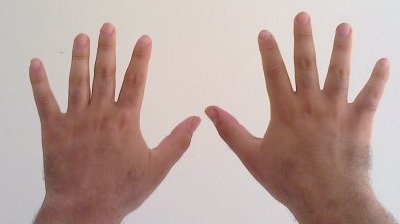
To appreciate how numbers work, we must first look at the raw materials. The base-10 numeral system uses ten distinct digits from 0 through 9 to represent numbers. Every measurement in the known universe, from the distance to the Andromeda galaxy to the price of a $4.50 cup of coffee, is constructed from the digits 0, 1, 2, 3, 4, 5, 6, 7, 8, and 9.

But having ten digits is not what makes the system powerful. The true breakthrough is the concept of place value: the position of a digit in a number determines the mathematical value of that digit.
If you write down the digit 7, it represents a quantity of seven individual units. However, if you place another digit behind it to make 70, the 7 is no longer counting units; it is counting tens. Move it again to 700, and it counts hundreds. The ink on the page has not changed. The symbol 7 is visually identical. Yet its meaning has scaled massively simply because its geography has shifted.
The Fundamental Rule of Base-10 In the base-10 system, each place value is ten times greater than the place value immediately to its right.
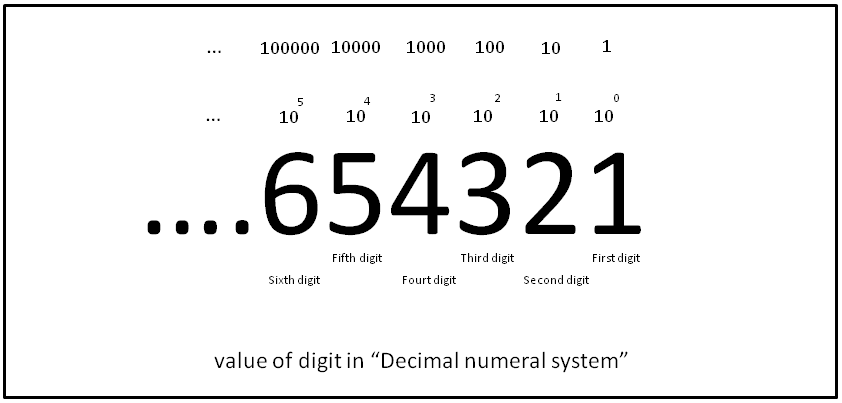
The Physics of the 10× and 101 Rules
Let us look closer at the internal mechanics of this system by examining a number with repeating digits, such as 4,444.
Because each position is ten times larger than the one to its right, a fascinating symmetry emerges. A digit in one place value position represents ten times the value of the exact same digit in the position immediately to its right.
- The 4 in the thousands place (4,000) is exactly ten times the value of the 4 in the hundreds place (400).
- The 4 in the hundreds place (400) is exactly ten times the value of the 4 in the tens place (40).
Conversely, if we traverse the number in the opposite direction, we find the exact inverse of this rule. A digit in one place value position represents one-tenth of the value of the exact same digit in the position immediately to its left.
- The 4 in the tens place (40) is exactly 101 of the 4 in the hundreds place (400).
- The 4 in the ones place (4) is exactly 101 of the 4 in the tens place (40).
This recursive 10× and 101 relationship forms an infinite continuum, extending endlessly to the left into trillions and rightward past the decimal point into millionths.
To manipulate numbers effectively, students and educators must be fluent in translating a single numerical value into different representations. These representational forms allow us to read, calculate, and conceptually deconstruct quantities.
1. Standard Form
Standard form is a method of writing numbers using standard base-10 numerals. This is the highly efficient, universally recognized shorthand we use in daily life and complex calculations.
- Example: 8,205
2. Word Form
Word form expresses numerical values using written alphabetical words instead of numerals. This requires translating the underlying place value mechanics into the linguistic conventions of a given language. Notice how the word form explicitly names the place values (thousands, hundreds).
- Example: Eight thousand two hundred five.
- (Note: When writing whole numbers in word form, do not use the word "and", which is strictly reserved to indicate the presence of a decimal point.)
3. Expanded Form
If standard form is a completed building, expanded form is the blueprint. Expanded form represents a number as the addition of the specific mathematical values of all its individual digits. By tearing the number apart, we expose the structural reality of the place value system.
- Example: 8,205 written in expanded form is 8,000+200+5.
| Value | Standard Form | Word Form | Expanded Form |
|---|---|---|---|
| 342 | 342 | Three hundred forty-two | 300+40+2 |
| 7,089 | 7,089 | Seven thousand eighty-nine | 7,000+80+9 |
| 50,610 | 50,610 | Fifty thousand six hundred ten | 50,000+600+10 |
By converting numbers into expanded form, a child mathematically internalizes the fact that 342 is not a single immutable object, but a composite of three hundreds, four tens, and two ones.
When numbers become exceptionally large, writing out strings of zeros becomes cumbersome and prone to error. To solve this, mathematicians use exponents. An exponent indicates the total number of times a base number is multiplied by itself.
In our base-10 system, we rely specifically on powers of 10. A power of 10 consists of the base number 10 raised to a specific whole-number exponent.
Let us map out the fundamental powers of 10:
- 103: Ten to the power of three equals the number 1,000. (10×10×10)
- 102: Ten to the power of two equals the number 100. (10×10)
- 101: Ten to the power of one equals the number 10. (10 multiplied by itself just once)
- 100: Ten to the power of zero equals the number 1.
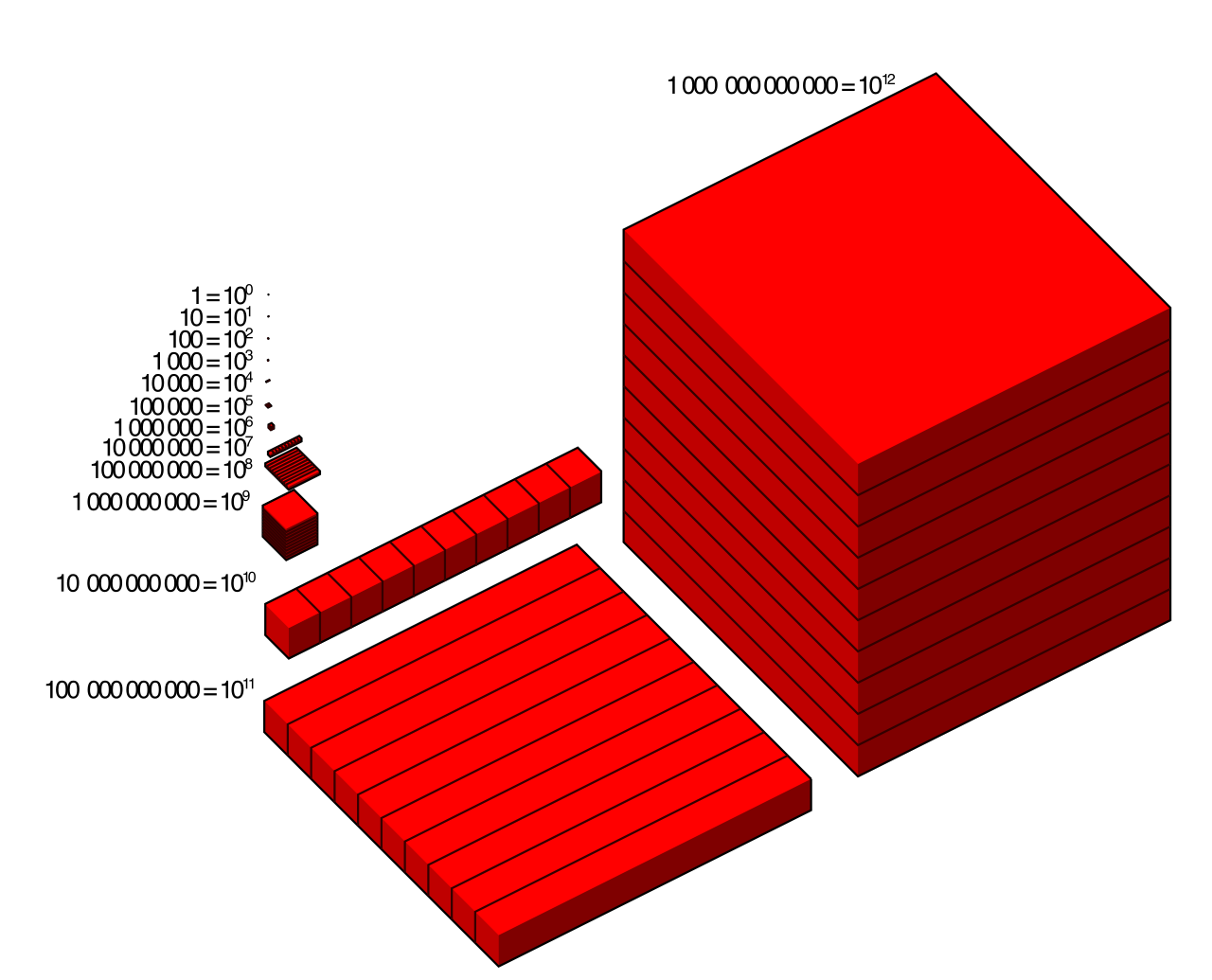
You may look at that last statement and pause. Why does ten to the zeroth power equal one? Think of exponents as an instruction to multiply by a base. If you perform zero multiplications, you are simply left with the fundamental multiplicative identity of the universe, which is 1.
The Exponent-Zero Relationship
There is a beautiful, visual shortcut embedded in standard base-10 notation. A whole-number exponent on the base 10 corresponds exactly to the number of zeros that follow the digit 1 in the standard form of the number.
- In 101, the exponent is 1, and there is exactly one zero in 10.
- In 102, the exponent is 2, and there are exactly two zeros in 100.
- In 103, the exponent is 3, and there are exactly three zeros in 1,000.
This correlation allows us to easily comprehend numbers of astronomical magnitude. When a physicist states there are roughly 1080 atoms in the observable universe, you immediately know what that standard form looks like: a 1 followed by precisely 80 zeros.

Because our entire number system is constructed on powers of 10, executing multiplication or division by 10 (or 100, or 1,000) requires almost zero computational arithmetic. Instead of calculating, we are merely shifting the digits along the place value track.
The True Conceptual Reality (Digit Shifting)
If you multiply 45 by 10, you do not need to perform long multiplication. You apply the spatial rules of base-10:
- Multiplying a number by 10 shifts every digit in that number one place value position to the left. The 4 in the tens place slides to the hundreds place (400). The 5 in the ones place slides to the tens place (50). The empty ones place is filled with a zero. 45×10=450.
- Conversely, dividing a number by 10 shifts every digit in that number one place value position to the right. If we divide 450 by 10, the digits slide right, shrinking in value, returning us to 45.
The Operational Shortcut (Decimal Moving)
While "shifting the digits" is the true conceptual reality of what is happening mathematically, the most common visual heuristic used to execute these operations involves shifting the decimal point itself.
- Multiplying a decimal number by a power of 10 moves the decimal point to the right by the number of zeros in the power of 10.
- Example: 3.141×10². Because 102 (100) has two zeros, the decimal point moves two spots to the right. The answer is 314.1.
- Dividing a decimal number by a power of 10 moves the decimal point to the left by the number of zeros in the power of 10.
- Example: 87.5÷103. Because 103 (1,000) has three zeros, the decimal moves three spots to the left (requiring us to insert placeholder zeros). The answer is 0.0875.
Whether you visualize the digits sliding left/right, or the decimal point bouncing left/right, the underlying mechanics remain the same: base-10 multiplication and division are ultimately spatial transformations.
Absolute precision is not always necessary, and in fact, it can sometimes be distracting. If you are calculating the budget for a construction project, knowing the cost is roughly $54,000 is far more useful than tracking an exact sum of $54,012.38.
Rounding is a mathematical process used to approximate a number to a specific place value. It removes unnecessary noise while preserving the mathematical scale of the original figure.
To round a number effectively, follow an uncompromising logical sequence:
- Identify the target rounding place (e.g., round to the nearest hundred).
- Look at the digit immediately to the right of that target place.
The digit immediately to the right of the target rounding place dictates whether the target digit rounds up or stays the same.
The 0–4 Rule
A target rounding digit remains unchanged when the digit immediately to its right is 0, 1, 2, 3, or 4.
- Example: Round 7,429 to the nearest hundred. The target digit is 4 (in the hundreds place). The digit immediately to its right is 2. Because 2 falls into the 0-4 category, the target 4 remains unchanged.
The 5–9 Rule
A target rounding digit increases by exactly one when the digit immediately to its right is 5, 6, 7, 8, or 9.
- Example: Round 7,489 to the nearest hundred. The target digit is 4. The digit immediately to its right is 8. Because 8 falls into the 5-9 category, the target 4 increases by exactly one, becoming a 5.
Managing the Tail: Whole Numbers vs. Decimals
Once the target digit has been addressed, we must deal with the digits trailing to the right. The protocol differs strictly based on whether we are dealing with a whole number or a decimal number.
Whole Number Rounding Rule: All digits to the right of the target rounding digit in a whole number turn into zeros after the rounding process.
- Returning to our 7,489 example: The 4 becomes a 5, and the digits to the right (8 and 9) turn into zeros to maintain the place value magnitude. The final rounded number is 7,500.
Decimal Rounding Rule: All digits to the right of the target rounding digit in a decimal number are completely removed after the rounding process.
- Example: Round 3.14159 to the nearest hundredth. The target is 4. The digit to the right is 1. The 4 remains unchanged. The remaining digits (159) are not turned into zeros; they are amputated entirely. The final rounded number is 3.14.
- Why? Because trailing zeros on the right side of a decimal point (3.14000) do not change the value of the number, but they mathematically imply a false level of precision. Dropping them entirely is the correct procedure.
The base-10 system is not an arbitrary set of rules designed to frustrate students. It is a highly optimized engine of logic. When you teach a student that a digit's place governs its worth, that numbers can be expanded like accordions, that exponents are simply the fuel for massive spatial shifts, and that rounding lets us control precision, you are giving them the master keys. They are no longer memorizing random arithmetic facts—they are observing the elegant, predictable machinery of mathematics at work.