Affixes, Context, and Syntax for Word Meaning
Not sure you’re ready?
Take the ~3-minute readiness diagnostic and see where you stand.
When an accomplished reader encounters an unfamiliar word like circumlocution in a dense text, they do not merely guess at its meaning; they reverse-engineer it. Language comprehension is fundamentally an act of structural and environmental analysis. A word is not an isolated monolith; it is a mechanism built of distinct, functional parts, operating within the highly governed ecosystem of a sentence. For secondary English teachers, equipping students to decode complex texts requires moving beyond rote vocabulary memorization. It requires teaching the architecture of language—how to dismantle words into their foundational gears, and how to read the grammatical blueprint of the sentences that house them.
If we want to understand how a complex machine works, the first thing we do is take it apart and look at the components. In language, structural analysis is the process of breaking words down into basic component parts to determine word meaning.
The primary component we are looking for is the morpheme.
A morpheme is the smallest meaningful unit of a language. It is the indivisible atom of meaning. Break it down any further, and you are left with meaningless letters and sounds.
Morphemes behave in two distinct ways:
- A free morpheme can stand alone as an independent word. Think of words like act, time, or sound. They require no support to function.
- A bound morpheme cannot stand alone as an independent word. A bound morpheme must be attached to another morpheme to convey meaning.
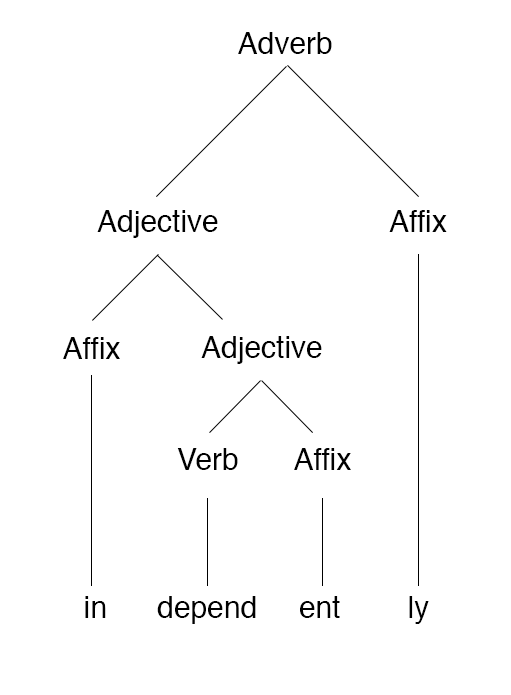
When a bound morpheme is attached to a root or base word to modify the base word's meaning or part of speech, we call it an affix.
The Machinery of Affixes: Prefixes and Suffixes
Affixes operate like modifiers on a control panel. Depending on where you place them and what they do, they shift the word's trajectory.
- A prefix is an affix placed at the beginning of a word to alter the word's meaning.
- A suffix is an affix placed at the end of a word to alter the word's meaning or grammatical function.
But not all affixes do the same kind of work. As a teacher, you must recognize—and help your students recognize—the profound difference between derivation and inflection.
Derivational affixes change the grammatical category or fundamental meaning of a base word. If you take the verb active and add the suffix -ate to get activate, you have derived a completely new function. Inflectional affixes, on the other hand, modify the tense, number, or degree of a word without changing the word's core part of speech. Adding -ed to walk gives us walked. It is still a verb; we have merely shifted its location in time.
High-Yield Roots and Affixes
Understanding Greek and Latin components is like handing your students the master keys to the English language. When they know the building blocks, a massive percentage of academic vocabulary unlocks automatically.
| Morpheme | Type | Meaning | Example in Action |
|---|---|---|---|
| anti- | Prefix | Against or opposite | Antithesis (the exact opposite) |
| circum- | Prefix | Around | Circumnavigate (to sail around) |
| hyper- | Prefix | Over or above | Hyperbole (over-exaggeration) |
| -ology | Suffix | The study of a specific subject | Biology (the study of life) |
| -tion | Suffix | Typically changes a verb into a noun | Construct (v) → Construction (n) |
| -ize | Suffix | Typically changes a noun or adjective into a verb | Modern (adj) → Modernize (v) |
| dict | Latin Root | To say or to speak | Dictate (to speak aloud for recording) |
| bene | Latin Root | Good or well | Benefactor (one who does good for another) |
| mal | Latin Root | Bad or evil | Malevolent (wishing bad things upon others) |
| chron | Greek Root | Time | Chronological (arranged in order of time) |
| phon | Greek Root | Sound | Phonetics (the study of speech sounds) |
Imagine a student staring at the word hyperchronia. Even if they have never seen it in their life, structural analysis saves them. Hyper- (over/above) + chron (time) = a condition of having too much time, or an excessive duration. They didn't memorize the word; they computed it.

Sometimes structural analysis isn't enough. English is full of opaque words and borrowed terms. When the internal mechanics of a word are mysterious, we must look to its environment.
Context clues are words or phrases surrounding an unfamiliar word that help infer the unfamiliar word's meaning. Writers rarely leave a difficult word completely unsupported. As a teacher, your job is to train your students to become literary detectives, spotting the clues the author left behind.
The Five Primary Context Clues
- Definition Context Clue: This is the author handing you the answer. A definition context clue provides the exact meaning of an unfamiliar word within the same sentence or adjoining sentence.
- Visual Cues: Punctuation marks like commas, dashes, or parentheses frequently enclose definition or synonym context clues.
- The Appositive: Often, definitions are hiding in plain sight as appositives. Appositives are noun phrases placed next to another noun to rename the adjacent noun. Because of their renaming function, appositives frequently serve as embedded definition context clues for unfamiliar nouns. (e.g., "The entomologist, a scientist who studies insects, examined the specimen.")
- Synonym Context Clue: This clue offers a word with a similar meaning near the unfamiliar word. (e.g., "The monarch was capricious, completely unpredictable in his rulings.")
- Antonym Context Clue: This presents a word with an opposite meaning to help deduce the unfamiliar word's meaning.
- Signal Words: Antonym context clues frequently appear alongside contrast signal words like although or unlike. (e.g., "Unlike her gregarious sister, Jane was incredibly reticent.")
- Example Context Clue: This provides specific instances of the unfamiliar word to illustrate the unfamiliar word's meaning. (e.g., "The pantry was stocked with legumes, such as lentils, chickpeas, and black beans.")
- Inference Context Clue: This is the most demanding type. An inference context clue requires the reader to use reasoning and background knowledge to determine a word's meaning from the overall described situation. The text won't give a direct synonym, but the cumulative weight of the scene dictates the word's meaning.

Now we reach the deepest level of linguistic analysis. What happens when a word has no recognizable affixes and no obvious context clues? We look at the very physics of the sentence itself.
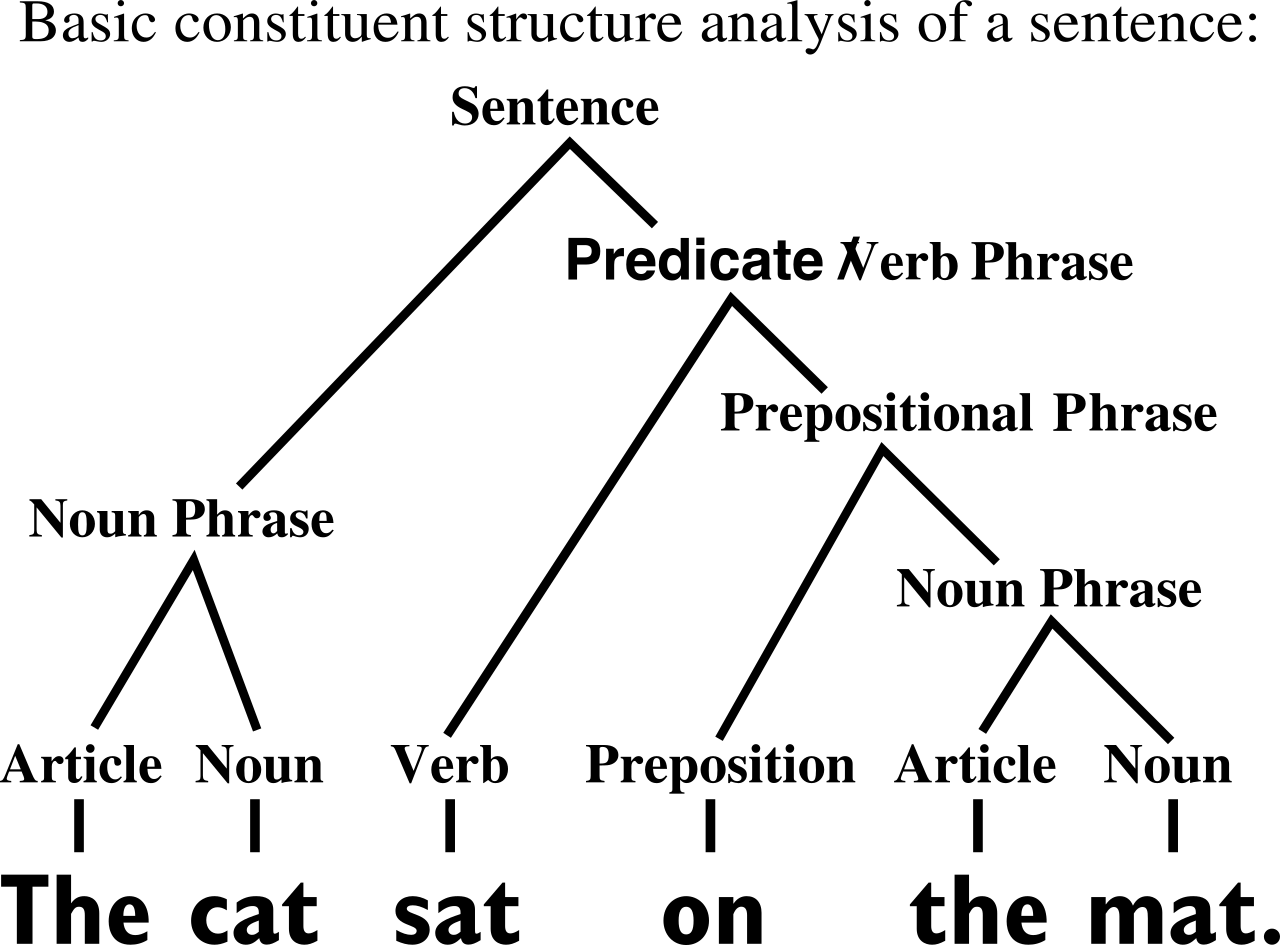
Syntax refers to the arrangement of words and phrases to create well-formed sentences in a language. Syntax is the blueprint. It determines where things are allowed to go.
Analyzing a sentence's syntax helps a reader identify an unfamiliar word's part of speech. Why is this so crucial? Because a word's part of speech narrows down the word's potential meanings based on the word's grammatical function. Furthermore, syntactic clues help distinguish between multiple meanings of words that can function as different parts of speech (think of the word harbor—is it a place for ships, or the act of hiding a fugitive? Syntax tells you).
Syntactic Slotting: Rules of Position
In English, position is power. The placement of an unknown word reveals its grammatical identity through absolute rules:
- The Subject Rule: A word functioning as the subject of a sentence must be a noun, pronoun, or noun phrase. If it acts as the doer of the verb, you automatically know its category.
- The Article Rule: A word immediately following a definite or indefinite article (the, a, an) typically functions as a noun or an adjective modifying a noun. (e.g., "The slithy toves." The tells us toves is a noun, which means slithy, positioned right before it, is an adjective).
- The Adjective Slot: A word positioned directly before a noun usually functions as an adjective modifying that noun.
- The Linking Verb Slot: A word positioned directly after a linking verb (like is, seems, becomes) often functions as a predicate adjective or a predicate nominative. It describes or renames the subject.
Syntactic Connectors: Parallelism and Conjunctions
Sentences are held together by structural beams. If you know the weight-bearing properties of one side of the beam, you can deduce the other.
Parallel structure connects words of the same grammatical class within a sentence. Identifying parallel structure allows a reader to infer that an unknown word shares the same part of speech as the known words in a given series. Example: "She loved running, jumping, and obfuscating." Even if a student doesn't know obfuscating, the parallel structure dictates it must be an action (a verb acting as a gerund) just like running and jumping.
Similarly, coordinating conjunctions (for, and, nor, but, or, yet, so) connect syntactic units of equal rank. Consequently, coordinating conjunctions often join unfamiliar words with known words of similar or contrasting syntactic functions.
The Transitive vs. Intransitive Distinction
Finally, syntax reveals the precise nature of verbs through their relationship with objects.
An intransitive verb does not take a direct object. (e.g., "The glass shattered.") A transitive verb requires a direct object to complete the transitive verb's meaning. (e.g., "The boy shattered the glass.")
Identifying whether a verb is transitive or intransitive through syntax helps clarify the verb's precise meaning in context. Take the word yield. If a student sees, "The farm yields corn" (transitive), the syntax tells them it means to produce. If they see, "The driver yields to traffic" (intransitive), the syntax tells them it means to give way. The grammatical behavior fundamentally alters the conceptual definition.
The Takeaway for Educators
When you teach your students morphology, context, and syntax, you are not just teaching them how to pass a reading comprehension test. You are teaching them how to dismantle the engine of the English language. You are teaching them that unfamiliarity is not a roadblock, but an invitation to analyze. By mastering affixes, leveraging contextual environments, and decoding syntactic blueprints, an accomplished reader can look at any text, no matter how complex, and confidently ascertain the truth of its meaning.