Usage and Syntax in Standard English
Not sure you’re ready?
Take the ~3-minute readiness diagnostic and see where you stand.
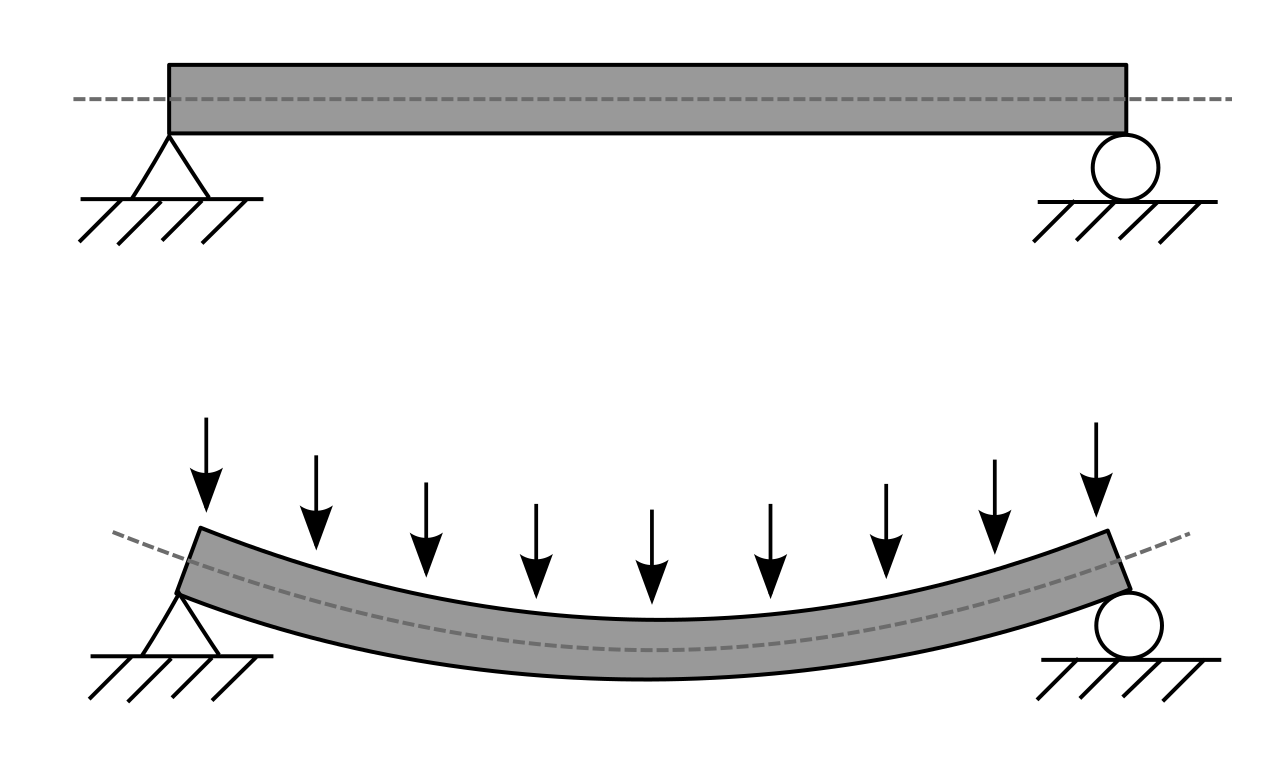
A sentence is an architectural marvel. It takes the infinite, chaotic abstraction of human thought and forces it into a linear sequence of mechanical parts. When you teach secondary English, you are not merely enforcing arbitrary rules of etiquette; you are teaching structural engineering. A student whose essay feels chaotic or disjointed hasn’t necessarily failed at creativity; they have experienced a structural failure. They have placed too much load on a delicate joint, or they have separated a load-bearing column from the beam it was meant to support.
To teach literature and writing at a high level, you must understand the physics of standard English. You need to see the invisible forces binding words together, understand how phrases transfer energy, and recognize why certain grammatical structures collapse under their own weight.
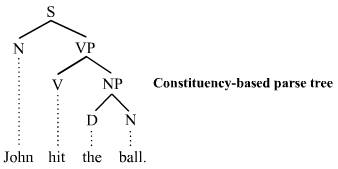
In English syntax, the standard word order for declarative sentences is Subject-Verb-Object. This is the fundamental load path of our language. Energy originates with the subject, is enacted by the verb, and lands on the object.
The Subject
A sentence subject is the person, place, thing, or idea performing the action or being described. It is the anchor.
- The simple subject is the main noun or pronoun in a sentence without any attached modifiers. (e.g., The exhausted teacher graded papers.)
- The complete subject includes the simple subject and all modifiers of the simple subject. (e.g., The exhausted teacher graded papers.)
- A compound subject consists of two or more subjects joined by a conjunction sharing the same verb. (e.g., The teacher and the students felt exhausted.)
The Predicate
If the subject is the anchor, the predicate is the engine. A predicate expresses the action or state of being of the subject.
- The simple predicate is the main verb or verb phrase in a sentence. (e.g., The student has written a masterpiece.)
- The complete predicate includes the simple predicate along with all modifiers, objects, and complements. (e.g., The student has written a masterpiece about structural mechanics.)
- A compound predicate consists of two or more verbs joined by a conjunction sharing the same subject. (e.g., The student drafted the essay and revised it twice.)
Objects and Complements: Receiving the Energy
Transitive verbs transfer their energy directly onto objects.
- A direct object is a noun or pronoun receiving the action of a transitive verb. (e.g., She wrote the essay.)
- An indirect object is a noun or pronoun preceding the direct object. Crucially, an indirect object indicates to whom or for whom the action of the verb is done. (e.g., She gave her peer the essay.)
But not all verbs transfer kinetic energy. Linking verbs (like to be, to seem, to become) act as equal signs. They require complements, which complete the meaning of the subject or object.
- A subject complement follows a linking verb and serves to rename or describe the sentence subject.
- If it renames the subject, it is a predicate nominative (a noun or pronoun subject complement). (e.g., Mr. Feynman is a professor.)
- If it describes the subject, it is a predicate adjective. (e.g., The lecture was fascinating.)
- An object complement follows a direct object and serves to modify or rename the direct object. (e.g., The committee appointed him chairman. Here, chairman renames the direct object him.)
Sentences rarely consist solely of simple subjects and verbs. We build complexity by attaching modules.
A phrase is a group of related words lacking a subject-verb pairing. A phrase functions as a single part of speech within a sentence.
Because they lack the fundamental subject-verb engine, phrases cannot stand alone. They must be bolted onto a main clause to function.
Prepositional and Appositive Phrases
A prepositional phrase begins with a preposition and ends with a noun or pronoun object. Prepositional phrases function as either adjectives or adverbs within a sentence, describing a noun (e.g., The book on the desk) or modifying a verb (e.g., She walked to the library).
An appositive is a noun or pronoun placed beside another noun to identify or describe the first noun. Consequently, an appositive phrase includes an appositive and all modifiers of the appositive. (e.g., My colleague, a brilliant linguist, explained the rule.) It is an elegant way to compress information without requiring a whole new sentence.
Verbals: Linguistic Camouflage
One of the most powerful tools in English syntax is the verbal. A verbal is a verb form functioning as a different part of speech. It is a repurposed part.
- Participial Phrases: A participial phrase includes a participle (an -ing or -ed verb form) and all associated modifiers. A participial phrase functions exclusively as an adjective. (e.g., Exhausted by the long exam, the student slept.)
- Gerund Phrases: A gerund phrase includes a verb ending in the suffix "-ing." Unlike participles, a gerund phrase functions entirely as a noun. (e.g., Analyzing sentence structure requires logic.)
- Infinitive Phrases: An infinitive phrase includes the word "to" immediately followed by a verb base. Highly versatile, an infinitive phrase functions as a noun, adjective, or adverb. (e.g., She wanted to understand the rules.)
The Absolute Phrase
The absolute phrase consists of a noun and a participle. Unlike other phrases that lock onto a specific noun or verb, an absolute phrase modifies the entire sentence rather than a single word. (e.g., The bell having rung, the students packed up their books.) It establishes an ambient condition or context for the whole independent clause.
If phrases are modular add-ons, clauses are the structural walls of your building.
A clause is a group of words containing both a subject and a predicate.
Independent vs. Dependent Clauses
An independent clause expresses a complete thought and can stand alone as a grammatical sentence. It is structurally sound by itself.
A dependent clause (also known as a subordinate clause) contains a subject and a verb, but it does not express a complete thought. Therefore, a dependent clause cannot stand alone as a complete sentence. It relies on an independent clause to support its weight.
Dependent clauses function as giant, multi-word parts of speech:
- An adverbial clause is a dependent clause modifying a verb, adjective, or adverb. It usually answers questions like when, why, how, or under what conditions. (e.g., We will leave when the bell rings.)
- An adjective clause (also known as a relative clause) is a dependent clause modifying a noun or pronoun. Relative clauses often begin with relative pronouns such as who, whom, whose, which, or that. (e.g., The student who reads voraciously will succeed.)
- A noun clause is a dependent clause functioning as a subject, object, or complement. (e.g., What you just said is absolutely correct.)
Restrictive vs. Nonrestrictive Clauses
When attaching adjective clauses, precision in punctuation dictates the meaning.
- A restrictive clause provides essential information about the modified noun. Because it restricts the identity of the noun, a restrictive clause is written without surrounding commas. (e.g., Students who cheat will be suspended.)
- A nonrestrictive clause provides nonessential information about the modified noun. It is extra commentary. Therefore, a nonrestrictive clause is strictly enclosed by commas. (e.g., The principal, who was wearing a red tie, announced the suspension.)
By combining these independent and dependent clauses, we engineer four primary sentence structures. Recognizing these is paramount for teaching varied, rhythmic writing.
De_Cotte_2503c%E2%80%93_Gallica_2011_(adjusted).jpg)
- Simple Sentence: Consists of exactly one independent clause and zero dependent clauses. (e.g., The dog barked.) Note that a simple sentence can be quite long if packed with phrases, as long as it has only one subject-verb axis.
- Compound Sentence: Consists of two or more independent clauses and zero dependent clauses. Independent clauses in a compound sentence are frequently joined by a coordinating conjunction and a comma. The acronym FANBOYS represents the coordinating conjunctions: for, and, nor, but, or, yet, and so.
- Complex Sentence: Consists of exactly one independent clause and at least one dependent clause. (e.g., Because the dog barked, the baby woke up.)
- Compound-Complex Sentence: Consists of two or more independent clauses and at least one dependent clause. (e.g., Although the dog barked, the baby remained asleep, and the parents were relieved.)
The Connective Tissue: Conjunctions
We mentioned coordinating conjunctions (FANBOYS), but other connectors handle different logical relationships:
- Subordinating conjunctions introduce dependent clauses. Common subordinating conjunctions include although, because, if, and until.
- A conjunctive adverb connects two independent clauses to indicate cause, sequence, or contrast. Common conjunctive adverbs include however, therefore, furthermore, and consequently. They are typically preceded by a semicolon and followed by a comma.
- Correlative conjunctions are paired words joining equal sentence elements. Common correlative conjunctions include either/or, neither/nor, and not only/but also.
When a student’s writing breaks down, it is usually because they have violated the physics of these structures. Let's look at the most common mechanical failures.
Fragments and Run-ons
A sentence fragment is an incomplete sentence punctuated as a complete sentence. Sentence fragments usually lack a subject, lack a main verb, or consist of an unattached dependent clause. (e.g., Because he was tired.) It has a subject and verb, but the subordinating conjunction because strips away its ability to stand alone.
Conversely, a run-on sentence occurs when two or more independent clauses are joined without appropriate punctuation or conjunctions. Run-ons take two distinct forms:
- A comma splice is a specific run-on sentence joining two independent clauses with only a comma. (e.g., The exam was hard, I failed.) A comma alone is not strong enough to hold together two independent clauses.
- A fused sentence is a specific run-on sentence joining two independent clauses with no punctuation whatsoever. (e.g., The exam was hard I failed.)
Modifier Misalignments
Modifiers must be physically placed near the word they intend to modify.
- A misplaced modifier is a word, phrase, or clause physically separated from the intended descriptive target, causing confusion or unintentional humor. (e.g., He served sandwiches to the children on paper plates. The children are not on paper plates; the sandwiches are.)
- A dangling modifier is a phrase or clause attempting to modify a word not explicitly stated in the sentence. (e.g., Walking through the park, the trees looked beautiful. The trees were not walking. The person walking is entirely missing from the core sentence.)
Parallel Structure
Parallel structure dictates using the same grammatical pattern of words to show equal importance of ideas. If you begin a list with a gerund, every item in that list must be a gerund. (e.g., She likes hiking, swimming, and bicycling is parallel. She likes hiking, swimming, and to ride bikes is a failure of parallelism.) Correlative conjunctions (not only/but also) strictly demand parallel structures on both sides of the junction.
Finally, the precise calibration of the subject-verb engine requires attention to agreement and voice.
Subject-Verb Agreement
The basic rule of subject-verb agreement dictates a singular subject requires a singular verb form, and a plural subject requires a plural verb form. This sounds simple, but English frequently tries to trick the writer.
- Intervening phrases: Intervening phrases between a subject and verb do not change the required subject-verb agreement. If the subject is singular, the verb remains singular, regardless of the plural nouns buried in the prepositional phrases between them. (e.g., The box of chocolates is on the table. Box is the subject; is is the verb.)
- Indefinite pronouns: Indefinite pronouns such as everyone, anyone, and each require singular verbs. (e.g., Everyone is going.) Even if the conceptual reality of "everyone" implies a crowd, grammatically, it acts as a single, unified entity.
- Collective nouns: Collective nouns functioning as a single unit take singular verbs. (e.g., The committee votes tomorrow.)
Active vs. Passive Voice
Voice refers to the orientation of the action relative to the subject.
- Active voice occurs when the sentence subject performs the action of the verb. (e.g., The scientist observed the reaction.) This is typically more forceful and direct.
- Passive voice occurs when the sentence subject receives the action of the verb. Passive voice sentences always include a form of the verb "to be" combined with a past participle. (e.g., The reaction was observed by the scientist.)
Passive voice is not a grammatical error, but it is a tool that shifts focus. It takes the doer of the action and shoves them into a prepositional phrase, elevating the recipient of the action to the structural subject. Teach your students to use it purposefully—when the recipient of the action matters more than the actor, passive voice is exactly the right architectural choice.