Components of Effective Oral Communication
Not sure you’re ready?
Take the ~3-minute readiness diagnostic and see where you stand.
Walk into a secondary English classroom during a poorly structured discussion, and you will hear a cacophony of isolated monologues. A true collaborative discussion, by contrast, operates like a complex biological system where every signal emitted by one organism is received, processed, and utilized by the rest. Teaching oral communication is not simply about encouraging students to speak aloud; it is the deliberate engineering of a reciprocal environment where speaking and listening are equally active, interdependent cognitive tasks.
For the aspiring secondary English teacher, mastering the mechanics of oral communication is just as vital as analyzing the syntax of Shakespeare or the rhetorical devices of Baldwin. When we teach students how to talk to one another, we are fundamentally teaching them how to think together.
We tend to think of listening as a passive state—the absence of speaking. But fundamentally, active listening involves focusing fully on the speaker to comprehend the message. It is an energetic, demanding cognitive process. A classroom of active listeners is not merely quiet; it is electrically engaged.
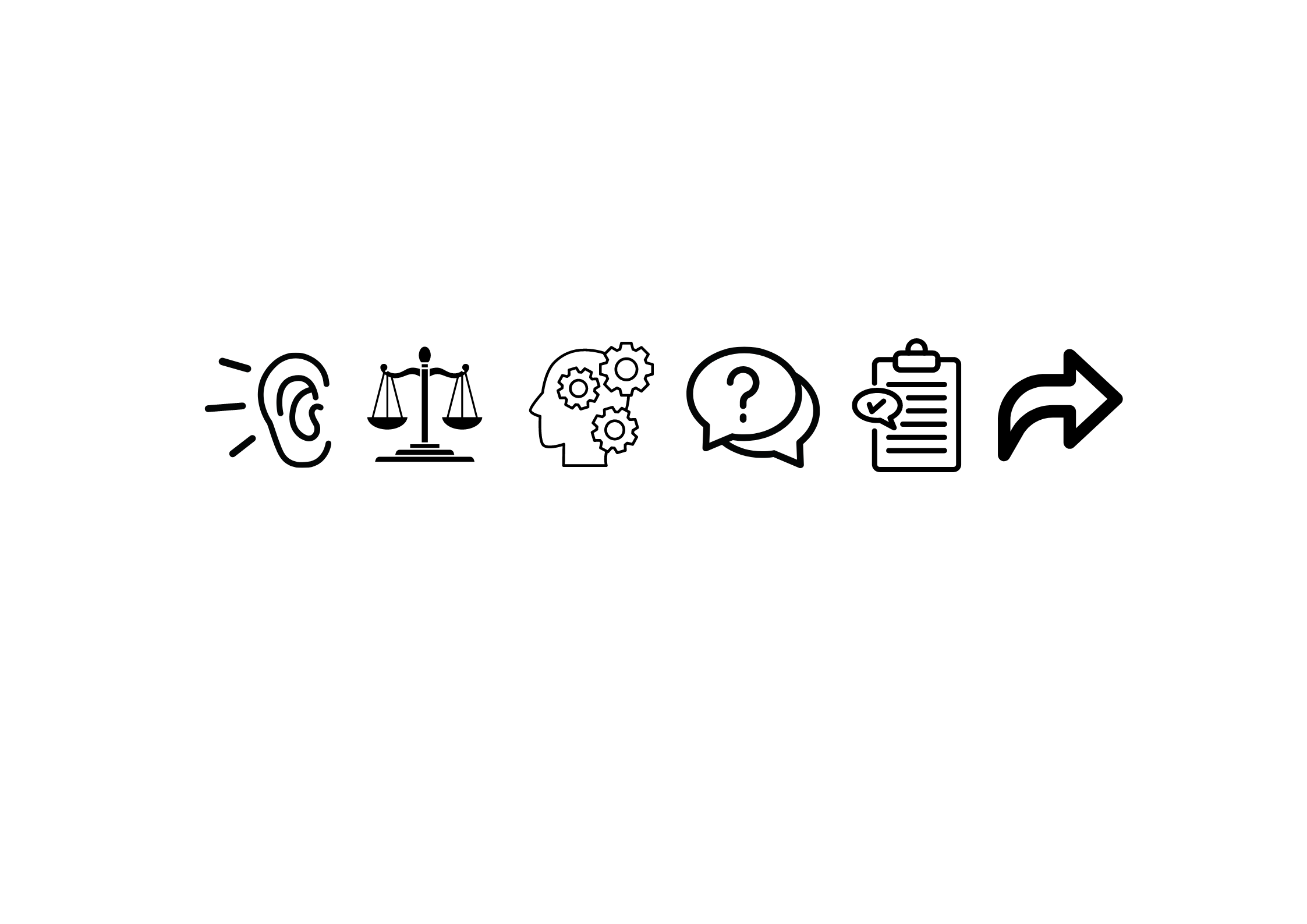
To ensure this engagement isn't an illusion, active listening requires the listener to provide verbal and nonverbal feedback. You cannot look inside a student’s mind to see if they are comprehending, but you can train them to externalize their cognition.
Nonverbal and Verbal Cues
Feedback manifests in two distinct channels:
- Nonverbal Cues: These are the physical manifestations of attention. Nonverbal cues of active listening include maintaining continuous eye contact with the speaker and nodding to acknowledge understanding. These small actions do two things: they anchor the listener's wandering attention, and they provide the speaker with the psychological safety needed to articulate complex, half-formed ideas.
- Verbal Techniques: Active listening must eventually re-enter the auditory space. Verbal active listening techniques include paraphrasing the speaker's main points (e.g., "What I hear you saying is...") and asking clarifying questions about the speaker's message (e.g., "Could you expand on what you meant by...").
Why this matters for your exam and classroom: If an exam scenario asks how to address a student who interrupts or tunes out, the solution is rarely punishment; it is explicitly teaching and requiring these active listening behaviors.
Before a single student speaks, the parameters of the environment must be set. Establishing clear norms is a fundamental step for ensuring productive group discussions. Norms are the physical laws of your classroom universe. Without them, gravity fails, and the loudest voices orbit out of control.
Discussion norms explicitly define expected behaviors for taking turns in conversation, ensuring that introverted students have a carved-out space to enter the dialogue. Just as importantly, discussion norms explicitly define expectations for respectful communication among peers.
_-_comparison_chart.svg)
But rules alone do not spark vibrant conversations. You must supply the right fuel. Choosing age-appropriate discussion topics increase student engagement, transforming a mandatory academic exercise into a deeply relevant exploration. When teenagers see themselves or their immediate societal concerns reflected in the material, age-appropriate discussion topics increase intrinsic motivation to participate in collaborative activities.
The greatest enemy of group work is the "passenger"—the student who comfortably rides along on the intellectual labor of their peers. Assigning specific roles to students ensures individual accountability in collaborative discussions. When a student has a specific, vital function, they cannot hide.
Common collaborative discussion roles include facilitator, recorder, timekeeper, and summarizer.
| Role | Function within the Discussion Ecosystem |
|---|---|
| Facilitator | The facilitator in a group discussion guides the conversation to keep participants on topic. They are the navigator, ensuring the group doesn't drift into irrelevant tangents. |
| Recorder | The recorder in a group discussion documents the main points and decisions made by the group. They provide the group with an external memory drive. |
| Summarizer | Summarizing a discussion involves distilling various arguments into a concise overview of the conversation. The summarizer synthesizes the raw data captured by the recorder into a cohesive narrative. |
| Timekeeper | Manages the clock, ensuring equitable time distribution for different phases of the task. |
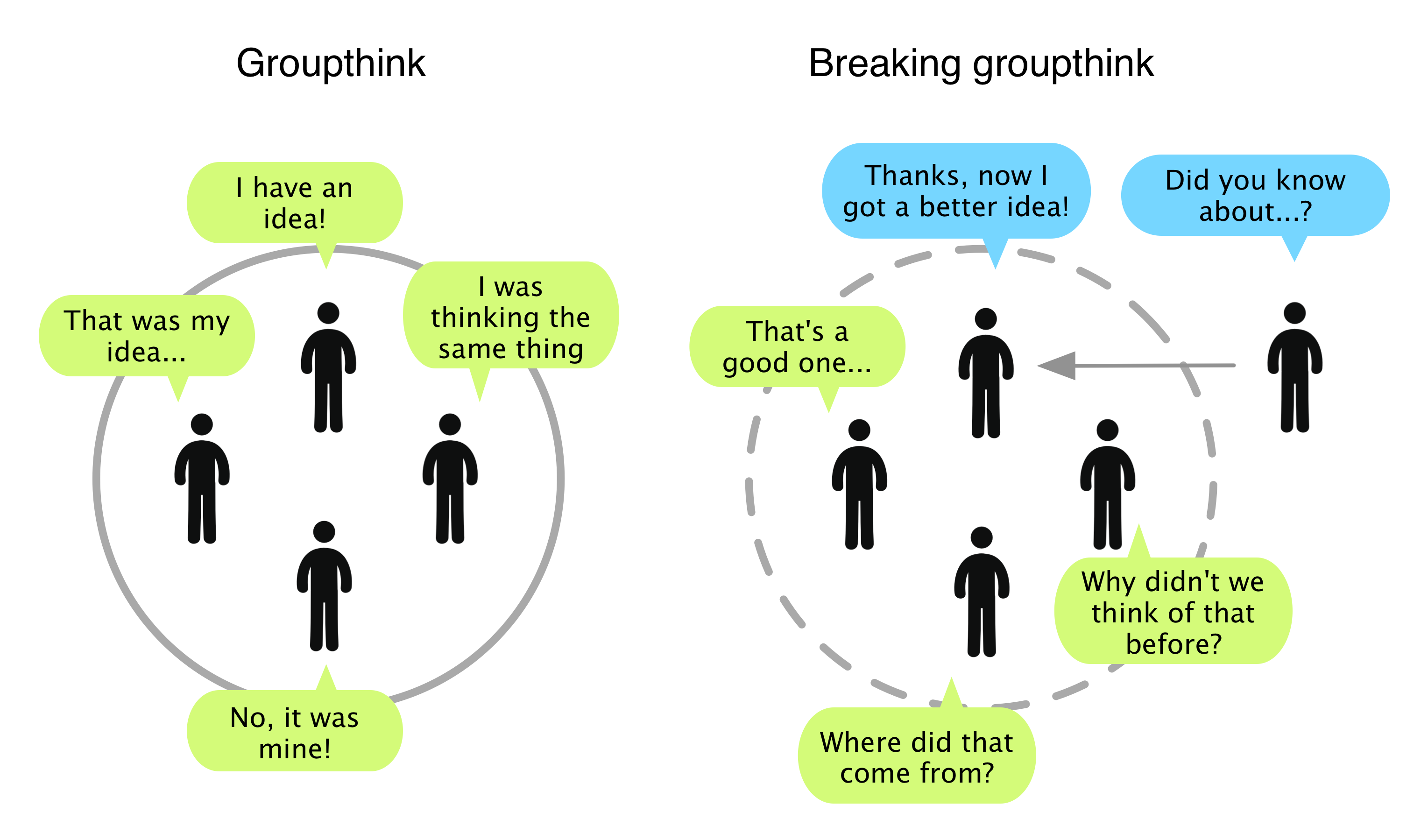
There is another, highly specialized role crucial for advanced literary analysis: the Devil's Advocate. The devil's advocate discussion role requires a student to intentionally challenge the group's consensus. When everyone quickly agrees that a protagonist’s actions were justified, the intellectual rigor flatlines. Assigning a devil's advocate role prevents groupthink during collaborative discussions, forcing students to defend their textual interpretations against targeted skepticism.
Different pedagogical goals require different structural vessels. As an ELA teacher, you must select the discussion structure that best fits the text and your students' readiness.
1. Think-Pair-Share: The Airlock
Public speaking terrifies many adolescents. The Think-Pair-Share method provides students with individual processing time before discussing ideas aloud. By having them think silently, talk to one partner, and then address the room, you create an intellectual airlock. Think-Pair-Share increases participation rates among hesitant speakers by providing a low-stakes initial audience.
2. Socratic Seminars: The Academic Crucible
When analyzing complex literature, you need a highly rigorous structure. A Socratic Seminar is a formal discussion based on a specific text. In this format, the teacher steps back entirely. Socratic Seminars require students to ask open-ended questions to explore the text deeply, moving away from "yes/no" comprehension into the realm of thematic analysis.
3. The Fishbowl: Observation and Meta-Analysis
Imagine a clinical observation theater. In a Fishbowl discussion structure, a small inner circle of students actively converses, while an outer circle of students silently observes the inner circle.
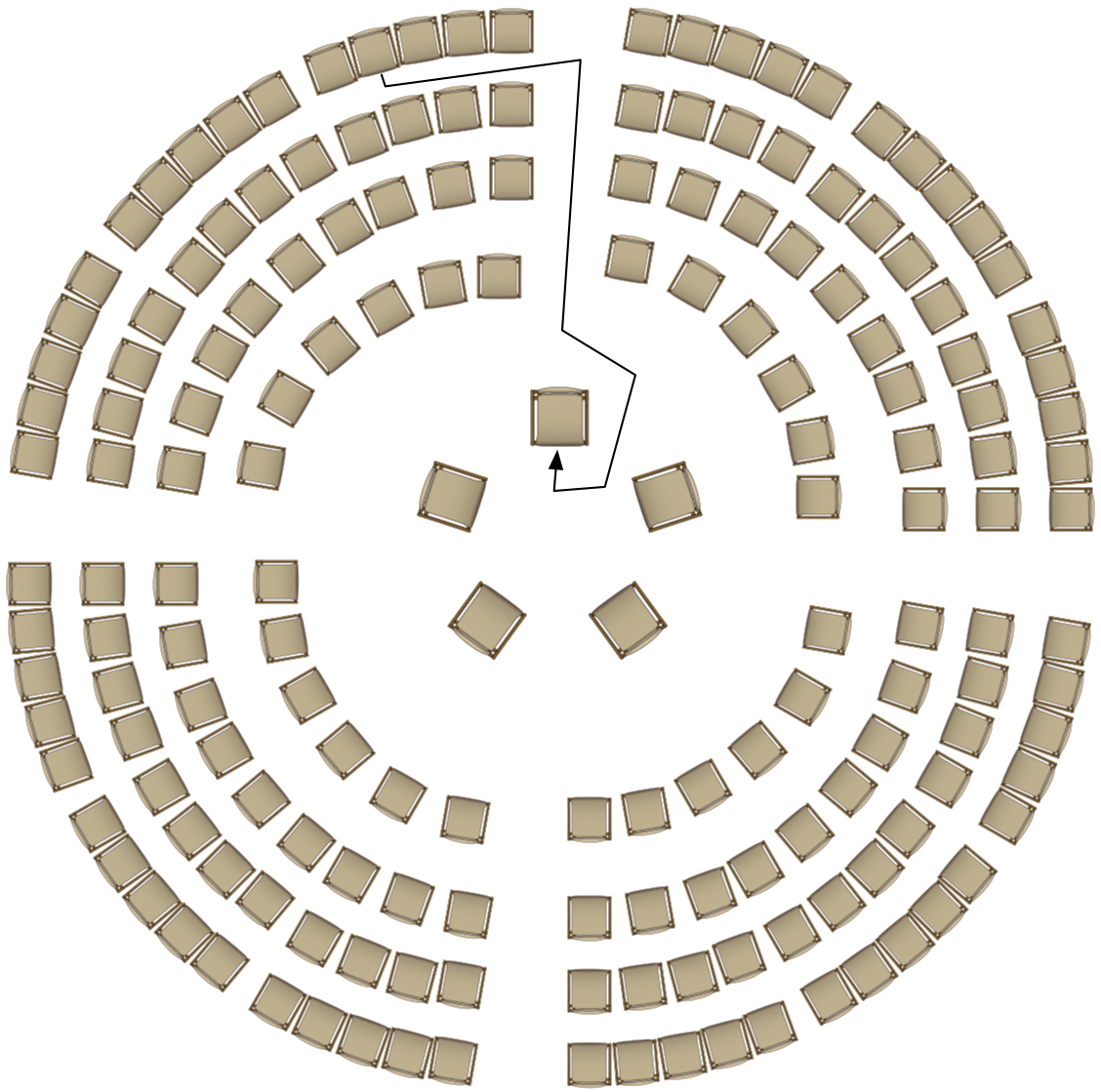
What is the outer circle doing? They aren't resting. The outer circle in a Fishbowl discussion evaluates the discussion techniques of the inner circle. They map the flow of conversation, tally how often textual evidence is used, and note the quality of the questions asked. This forces students to study the mechanics of communication, not just the content.
4. The Jigsaw: The Assembly Line of Knowledge
Sometimes a text or topic is too massive for one student to digest entirely in one sitting. The Jigsaw method divides a learning task into segments for individual students to master. If you are studying the historical context of To Kill a Mockingbird, one group masters the Jim Crow laws, another the Great Depression, another the Scottsboro Boys trial. Then, the groups re-form. Students in a Jigsaw activity teach their mastered segment to their home group members. Every student holds a vital piece of the puzzle; if one student doesn't communicate effectively, the whole group's understanding suffers.
For a discussion to be more than just sequential talking, students must interact dynamically with the text and each other.
First, spontaneity in an academic setting is a myth built on a foundation of preparation. Effective discussion initiation requires students to prepare by reading or researching the topic beforehand.
During the discussion, opinions mean very little unless anchored in evidence. Students participate effectively by explicitly referencing the text to support their claims, pointing to specific paragraphs or lines. Furthermore, students participate effectively by building on the ideas expressed by their peers, using phrases like, "Adding to what Sarah said about the author's tone..."
The Mechanics of Constructive Disagreement
Teenagers often interpret intellectual disagreement as a personal attack. You must explicitly teach the difference. Constructive disagreement focuses on challenging the idea rather than attacking the speaker.
To achieve this, you build linguistic scaffolding. Providing students with sentence stems scaffolds their ability to express agreement or disagreement constructively. Giving them stems like "I see your perspective on [X], but the text also suggests [Y]..." gives them the tools to navigate conflict intellectually rather than emotionally.
Ultimately, the highest form of participation is synthesis. Synthesizing ideas involves combining multiple discussion points to form a new comprehensive conclusion. It is the moment the group realizes that Idea A and Idea B together create a profound Idea C that neither student could have reached independently.
Here is a profound truth of the classroom: silence is a tool, not a void.
Wait time is the pause a teacher allows after asking a question to give participants time to think. When a teacher asks a complex question and immediately calls on the first raised hand, they short-circuit the cognitive processing of the rest of the room.
It feels agonizing to wait in silence for three to five seconds, but the empirical results are undeniable:
- Increasing wait time typically yields longer student responses.
- Increasing wait time typically yields more complex student responses.
When you give the brain time to sift through its archives, it moves past superficial recall and begins to formulate analytical, text-based arguments.
If we value oral communication as highly as written essays, we must evaluate it with the same rigor.
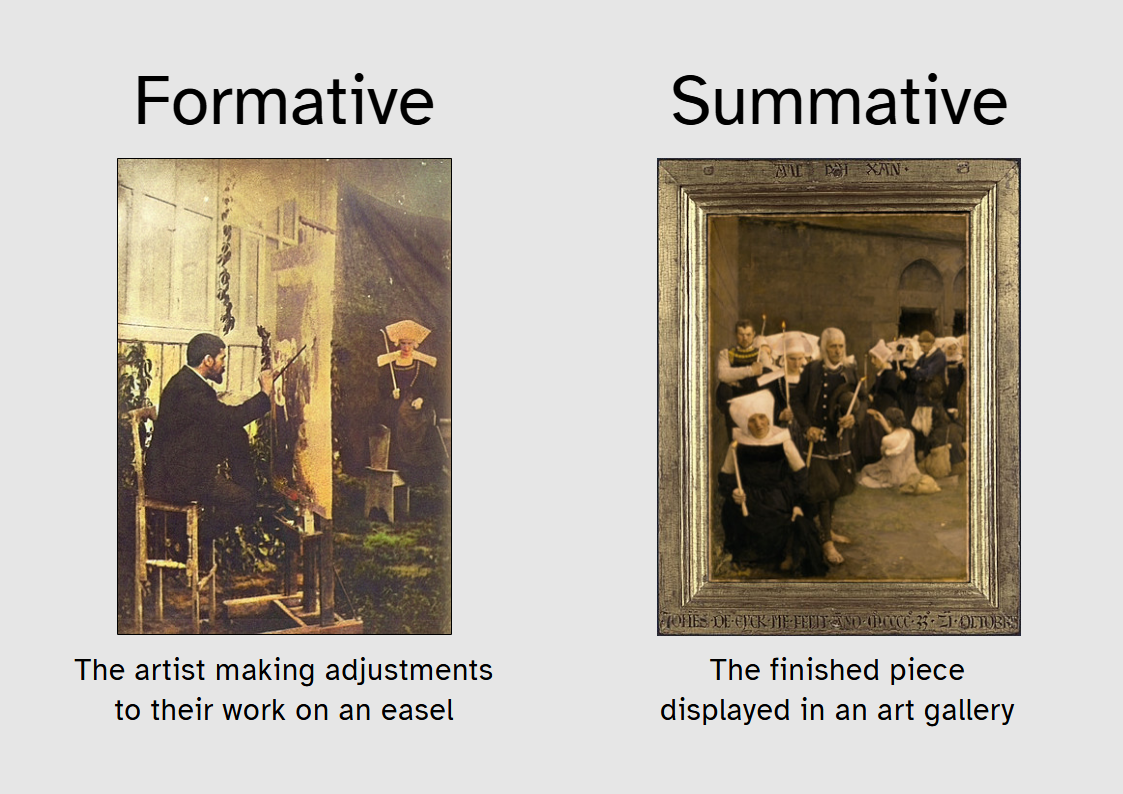
Evaluation begins in the moment. Formative assessment of oral communication includes teacher observation checklists used during group work. As you circulate the room during a Jigsaw or a Fishbowl, you are checking off specific behaviors: Who is quoting the text? Who is utilizing active listening cues?
Summative evaluation requires clear metrics. Evaluating discussion effectiveness involves using rubrics that measure speaking frequency, ensuring equitable participation. However, quantity is not quality. Therefore, evaluating discussion effectiveness involves using rubrics that assess listening quality, rewarding students who paraphrase peers and ask insightful clarifying questions.
Finally, the ultimate goal of education is to create independent learners. Students must evaluate themselves. Student self-reflection tools promote metacognitive awareness of personal discussion habits. When a student completes a post-discussion survey and realizes, "I spoke four times, but I never referenced the text, and I interrupted my partner twice," they have taken the first step toward fundamentally transforming how they communicate.