Interpreting Media and Non-Print Texts
Not sure you’re ready?
Take the ~3-minute readiness diagnostic and see where you stand.
A high school student watches a fifteen-second video on their phone. In that brief window, a heavily shadowed, low-angle shot of a fitness influencer, underscored by an urgent, pulsing bassline, compels them to purchase a dietary supplement. The student believes they have made a conscious choice. As a secondary English teacher, you understand they have simply responded to a highly calibrated sequence of stimuli.
While literature relies on the syntax of nouns, verbs, and punctuation to build worlds, non-print texts communicate meaning through visual, audio, and spatial elements. To teach students how to read a film, a podcast, or a social media feed is to teach them the grammar of the modern world. You are not just teaching them to appreciate art; you are teaching them defense against the dark arts of digital persuasion.
When you read a sentence in a novel, the author dictates the tone through word choice. In visual media, the author uses color, framing, and lighting to convey tone. Every visual composition is a deliberate argument.
Framing and Perspective
Consider how a camera positions the viewer in relation to a subject. These choices are entirely psychological:
- A low camera angle often makes a cinematic or photographic subject appear dominant or powerful. By forcing the audience to look up, the director subconsciously places the viewer in a position of subservience.

- Conversely, a high camera angle often makes a cinematic or photographic subject appear vulnerable or insignificant. Looking down at a character isolates them within their environment, stripping away their agency.

The Symphony of Sound
We process auditory information instantly and emotionally, often without intellectual filter. Sound in media is divided into two strict categories based on its relationship to the world on the screen:
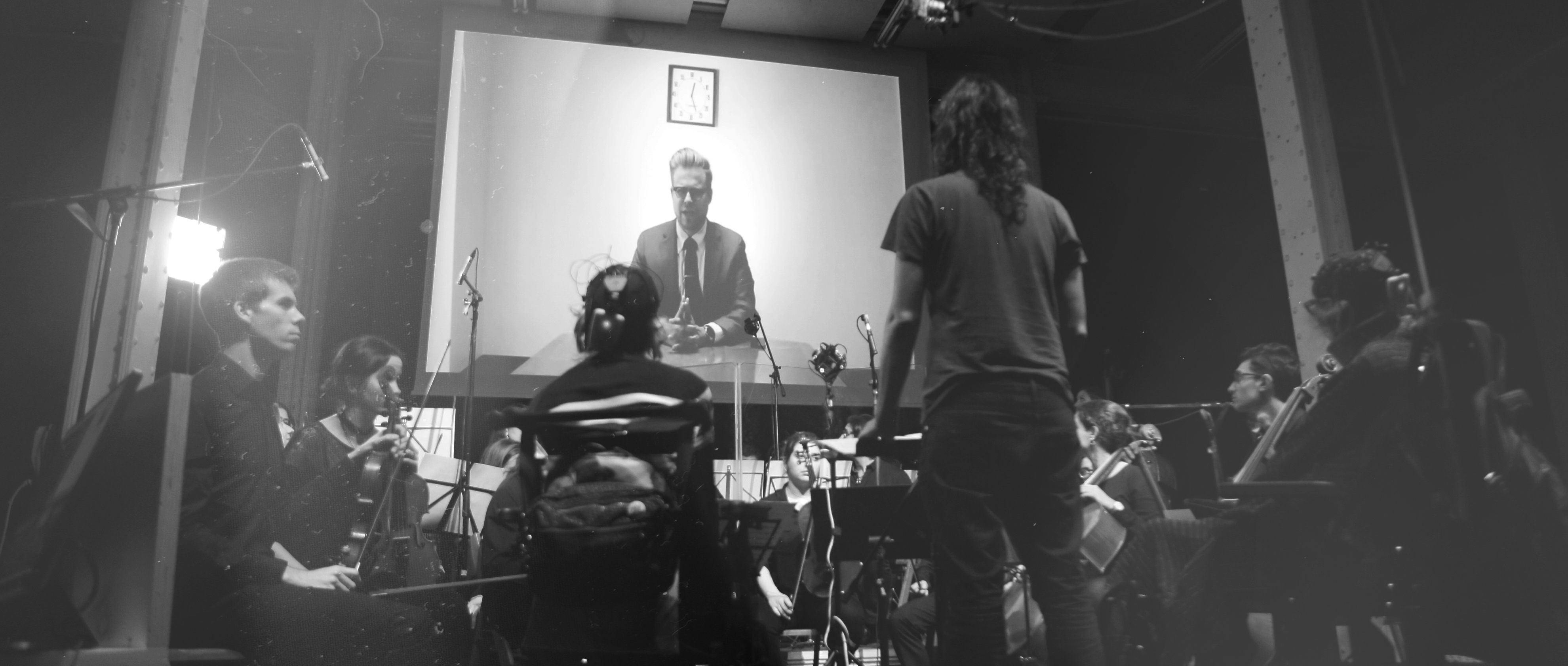
- Diegetic sound originates from a source within the world of the media presentation. Because it exists in their physical space, characters within a film or video can interact with or hear diegetic sound (e.g., a car radio playing, gravel crunching underfoot, a dog barking next door).
- Non-diegetic sound originates from a source completely outside the world of the media presentation. Characters cannot hear it. Background music in a film is typically a non-diegetic sound element used to evoke an emotional response from the audience, manipulating tension or sorrow without the characters' awareness.
Composition and Timing
The assembly of these elements dictates how the audience experiences time and logic.
- Juxtaposition in media places two distinct images side by side to emphasize a contrast. Show a starving child, cut immediately to a table overflowing with a decadent feast, and you have made a devastating argument about inequality without uttering a single syllable.

- Similarly, time is manipulated through editing. The pacing of video cuts influences the audience's perception of urgency or suspense. Long, uninterrupted takes simulate the flow of natural life; rapid, staccato cuts simulate panic, chaos, or adrenaline.
Even static elements carry weight. Typography in digital media influences the reader's perception of the text's tone. A stark, bold sans-serif font screams modern authority, while a flowing script whispers intimacy or tradition. Color symbolism in visual texts evokes specific cultural or emotional responses from the audience—a sterile, blue-tinted hospital scene feels inherently isolating, while a warm, golden-hour wash suggests nostalgia and safety.

Your students are navigating an ecosystem where the line between information and entertainment, or organic content and paid promotion, is deliberately blurred.
Distinct Media Formats
Each medium brings unique tools to the table:
- A documentary uses recorded footage of actual events and people to inform or persuade an audience. It borrows the aesthetic of objective reality, but through editing and framing, it invariably presents a subjective argument.
- A podcast communicates persuasive messaging entirely through audio elements like voiceover tone, pacing, and background sound effects. Bereft of visual cues, the intimacy of the human voice directly in the listener's ear becomes the primary rhetorical vehicle.
- Infographics combine numerical data with visual representations to quickly convey complex information. They weaponize clean design to make statistics feel unassailable and digestible.
- Interactive media requires active participation from the user to navigate the presented information. Video games, interactive timelines, and branching narratives force the user to make choices, increasing cognitive investment in the text.

- Hyperlinks in digital texts allow readers to immediately access referenced external sources. They create a multi-dimensional reading experience where context is layered, allowing the author to bolster their argument instantly through association.
The Invisible Economy of the Internet
The internet runs on an economy of attention, and modern media uses specialized tactics to capture and monetize it:
- Clickbait uses sensationalized headlines to encourage users to click a link to an article or video. It relies on the "curiosity gap"—giving the reader just enough shocking information to make ignoring the link psychologically uncomfortable.

- Product placement is a persuasive technique seamlessly integrating branded goods into a narrative media text. James Bond doesn't just drink a beer; he drinks a meticulously lit Heineken, fusing the brand with his sophisticated persona.

- Native advertising is paid digital media designed to perfectly match the visual format and tone of the platform hosting the ad. An article on a news site titled "10 Ways to Save for College" might actually be a paid advertisement authored by a major bank, camouflaged to look exactly like objective journalism.
The Algorithmic Confinement
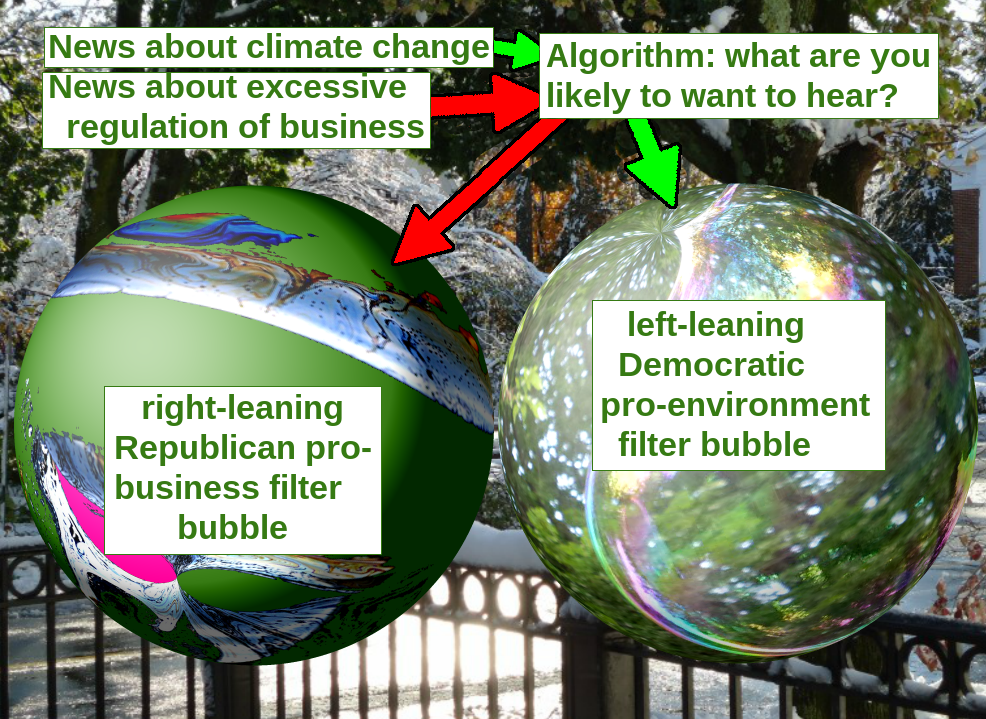
Digital platforms are not neutral libraries; they are reactive engines. Algorithms on social media platforms curate content based on a user's past engagement and viewing history. If a student watches a video about a particular political conspiracy, the algorithm registers the engagement and feeds them ten more.
This creates the filter bubble effect, which occurs when algorithms isolate a user from encountering diverse viewpoints. Students begin to believe that everyone agrees with their worldview simply because their algorithmic environment has scrubbed all dissenting voices from their feeds. This effect violently amplifies confirmation bias, the tendency of individuals to favor information confirming their preexisting beliefs.
Humans have not changed; only our delivery mechanisms have. Long before the internet, Aristotle first defined the rhetorical appeals of ethos, pathos, and logos in the fourth century BCE. Today, persuasive media often employs rhetorical appeals to logic, emotion, and authority just as the ancient Greeks did, only now those appeals are packaged in TikToks and Super Bowl commercials.
When rhetoric is deployed purely to manipulate, without regard for truth or nuance, it crosses into propaganda. Recognizing the systematic nature of this manipulation, the Institute for Propaganda Analysis formally identified seven basic propaganda devices in 1937. These remain the absolute bedrock of modern advertising and political messaging.
| Technique | Definition | Real-World Translation |
|---|---|---|
| Bandwagon | Attempts to persuade a target audience to adopt a behavior because everyone else is participating in that behavior. | "Millions of Americans have already made the switch. Don't be left behind." |
| Plain Folks | Attempts to persuade an audience by presenting a speaker as an ordinary citizen rather than an elite figure. | A billionaire politician wearing a flannel shirt and jeans while speaking in a rural diner. |
| Testimonial | Uses endorsements from famous individuals to promote a product or idea. | A famous actor looking gravely into the camera to endorse a specific prescription medication. |
| Glittering Generalities | Emotionally appealing words linked to highly valued concepts without providing supporting evidence. | Campaign slogans screaming "Freedom," "Family Values," or "Progress" without proposing a single concrete policy. |
| Name-Calling | Links a person or idea to a negative symbol to foster rejection from the audience. | Labeling an opponent a "radical," "fascist," or "un-American" to bypass logical debate. |
| Transfer | Projects the positive or negative qualities of one entity onto another entity. | Filming a political ad in front of an American flag so the viewer subconsciously transfers the reverence they feel for the flag onto the candidate. |
| Card Stacking | Involves emphasizing information supporting one side of an argument while entirely omitting contrary information. | A pharmaceutical ad highlighting the fast-acting relief of a drug while rushing through the fatal side effects in a low, rapid whisper. |
Beyond the classic seven, you will frequently see two other prominent mechanisms:
- Fear appeals attempt to persuade an audience by describing terrible outcomes resulting from a specific course of action. (e.g., A security system commercial showing a masked intruder breaking a window while a mother sleeps).
- Snob appeal is a persuasive technique suggesting that adopting a particular belief or purchasing a product elevates the consumer's social status. It relies on exclusivity, suggesting that you will rise above the common masses if you buy this luxury vehicle or wear this watch.

To survive in this ecosystem, a student cannot simply "read." They must verify. Media literacy requires evaluating the credibility of multiple digital and print sources.
Triangulation involves cross-checking a factual claim across at least three independent sources. If a student sees a sensational claim on a blog, they must find two other reputable, fundamentally distinct organizations reporting the same fact before accepting it as truth.
The CRAAP Test
To operationalize source evaluation, librarians developed a highly effective heuristic. The CRAAP test is a source evaluation acronym developed by librarians at California State University, Chico. It provides a ruthless, standardized metric for assessing whether a text deserves a student's cognitive trust.
The CRAAP test stands for Currency, Relevance, Authority, Accuracy, and Purpose:
- Currency: In source evaluation, this refers to the timeliness of the information presented. A 1998 article on space exploration is useless for a paper on the Mars Rover, regardless of the author's pedigree.
- Relevance: Does the information directly answer the research question, and is it pitched at an appropriate academic level?
- Authority: Refers to the credentials and expertise of the author or publisher. Is the author a peer-reviewed climatologist, or a political pundit funded by an oil conglomerate?
- Accuracy: Is the information supported by evidence? Can the claims be triangulated? Is the text free of glaring bias and grammatical errors?
- Purpose: Why does this information exist? Is it here to inform, to teach, to entertain, to sell, or to manipulate?
When you teach a student to analyze a non-print text, you are handing them the blueprints to the machinery operating their daily lives. You are showing them the high camera angles designed to make them feel small, the non-diegetic soundscapes designed to make them feel anxious, and the algorithms designed to keep them isolated. By teaching them to evaluate this media critically, you do far more than prepare them for an exam; you give them their minds back.