Standard English Grammar and Mechanics
Not sure you’re ready?
Take the ~3-minute readiness diagnostic and see where you stand.
Language is not a rigid, arbitrary set of rules handed down from antiquity; it is a highly evolved, dynamic system of interlocking gears designed to transmit human thought from one mind to another. As a secondary English educator, you are the master mechanic of this system. When a student’s essay falters, you cannot simply say, "This sounds awkward." You must peer under the hood, identify the precise gear that has slipped—a mismatched pronoun, a dangling participle, a ruptured clause—and explain exactly how to re-engage the transmission of meaning. This guide dismantles the engine of standard American English, laying out the fundamental architecture, the structural syntax, and the diagnostic tools you need to master the Content Knowledge exam and demystify the mechanics of language for your future students.
To diagnose a sentence, we must first understand the function of its most basic moving parts. We do not categorize words merely to label them; we categorize them to understand the specific mechanical forces they exert within a thought.
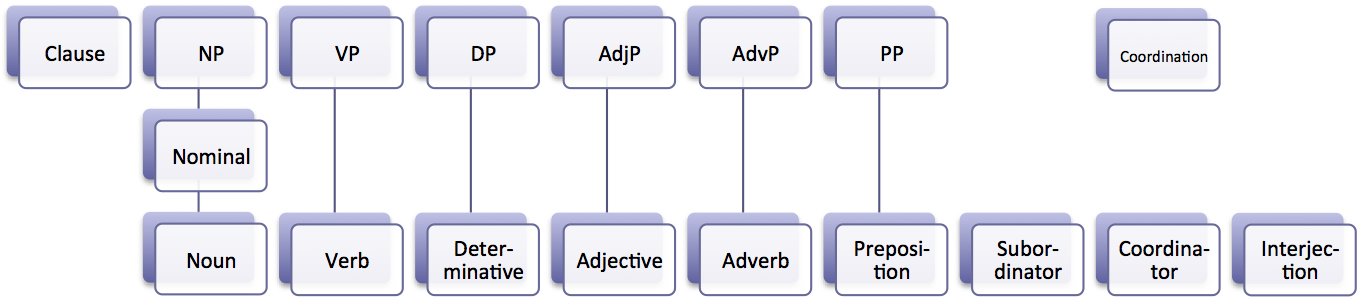
Nouns and Pronouns: The Payload
Nouns are the physical entities and core ideas moving through the sentence. Depending on their position, they serve distinct structural roles:
- Nouns function as the subject of a sentence, acting as the primary agent or topic.
- Nouns function as the direct object of a sentence, directly receiving the action of a transitive verb.
- Nouns function as the indirect object of a sentence, acting as the recipient or beneficiary of the direct object.
When your students write about groups—like a jury, team, or faculty—they are using collective nouns. A collective noun represents a group of individuals. Because the group acts as a single cohesive unit, singular collective nouns require singular verbs in standard American English (e.g., The committee votes tomorrow).
To prevent the engine of a sentence from bogging down in repetitive redundancy, we swap nouns out for pronouns. Pronouns replace nouns in a sentence to avoid repetition. The noun that is replaced is called the antecedent. Because the pronoun is a direct stand-in, grammatical physics demands absolute equivalence: a pronoun must agree in number with its antecedent noun, and a pronoun must agree in gender with its antecedent noun.
Pronouns also change their shape—their case—depending on their function in the sentence:
- Nominative case pronouns function strictly as subjects (I, she, they).
- Objective case pronouns function strictly as objects (me, her, them).
- Possessive case pronouns indicate ownership (mine, theirs, ours).
Verbs: The Engine
If nouns are the payload, verbs provide the propulsion.
- Action verbs express physical or mental activities (e.g., run, calculate, imagine).
- However, verbs also establish states of existence. Linking verbs connect the subject of the sentence to additional information about the subject without showing action (e.g., The hypothesis is valid; He seems tired).
- Sometimes, the main verb needs help expressing precise time or necessity. Here, auxiliary verbs accompany a main verb to express tense or mood (e.g., She has written the essay; He might attend).
Modifiers: The Tuning Dials
Modifiers allow us to calibrate meaning with precision. Without them, language is a blunt instrument.
- Adjectives modify nouns and adjectives modify pronouns, defining qualities like size, color, and quantity.
- Adverbs are far more versatile. Adverbs modify verbs, describing how, when, or where an action occurs. Furthermore, adverbs modify adjectives (e.g., incredibly loud), and remarkably, adverbs modify other adverbs (e.g., moving very quickly).
Prepositions and Conjunctions: The Connective Tissue
To build complex, dimensional thoughts, we need words that dictate relationships.
- Prepositions establish spatial or temporal relationships between nouns and other words. Think of them as the GPS of a sentence: under the desk, after the bell, through the text.
- Conjunctions act as structural glue. Coordinating conjunctions join words or clauses of equal syntactic importance. A vital mnemonic for your students: The acronym FANBOYS represents the standard coordinating conjunctions in standard English (For, And, Nor, But, Or, Yet, So).
- Conversely, subordinating conjunctions introduce dependent clauses, inherently demoting the clause they attach to so it relies on a main idea (because, although, if).
- Lastly, correlative conjunctions work in pairs to join equal syntactic elements (e.g., either/or, neither/nor, not only/but also).
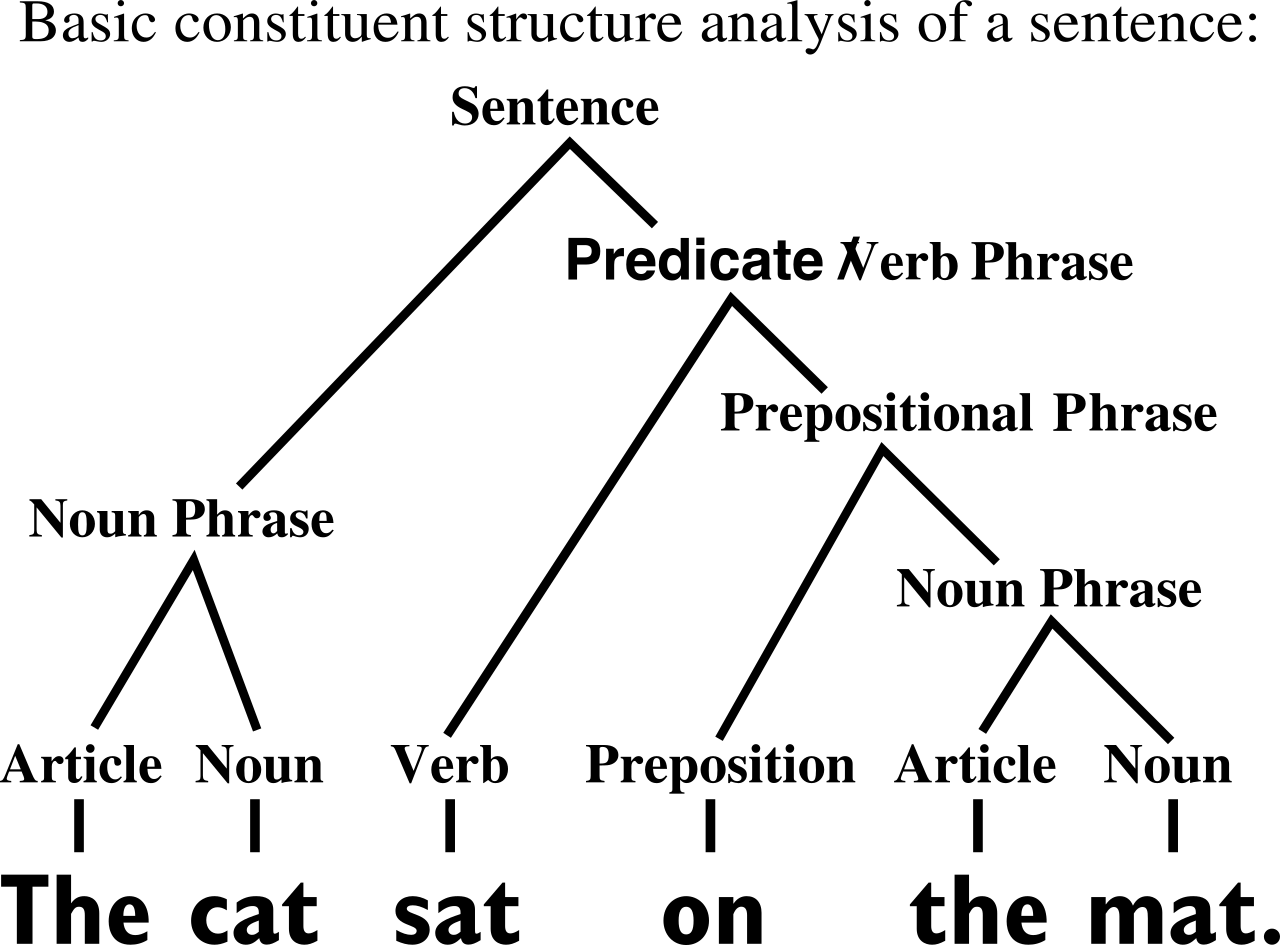
Understanding isolated parts of speech is like understanding the chemistry of gasoline. To actually drive anywhere, you must understand how they ignite inside the cylinder: the clause.
The Logic of Clauses
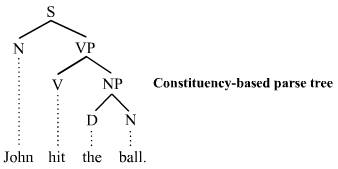
At the core of all English syntax is the clause.
- An independent clause contains a subject and a verb, and crucially, an independent clause expresses a complete thought.
- A dependent clause contains a subject and a verb as well, but because it is initiated by a subordinating word, a dependent clause cannot stand alone as a complete sentence.
Professor's Tip: When a student writes a dependent clause and ends it with a period, they haven't written a sentence; they've written a fragment. They have built an engine but forgotten to attach the driveshaft.
By combining these two types of clauses, we generate the four universal sentence structures. Mastering these allows a writer to control rhythm, pacing, and complexity.
| Sentence Structure | Composition | Example |
|---|---|---|
| Simple | A simple sentence consists of a single independent clause. | The author employs vivid imagery. |
| Compound | A compound sentence contains two or more independent clauses. | The author employs vivid imagery, and she utilizes rich symbolism. |
| Complex | A complex sentence contains one independent clause and at least one dependent clause. | Because the author employs vivid imagery, the theme resonates deeply. |
| Compound-Complex | A compound-complex sentence contains multiple independent clauses and at least one dependent clause. | Because the author employs vivid imagery, the theme resonates deeply, and the reader remains engaged. |
Voice and Verbals
Syntax isn't just about combining clauses; it's about how energy is directed.
- In the active voice, the subject of the sentence performs the action of the verb. This is direct and muscular (The committee revised the curriculum).
- In the passive voice, the subject of the sentence receives the action of the verb. (The curriculum was revised by the committee). While active voice is generally preferred for clarity, the passive voice is highly effective when the recipient of the action is the most important element.
Sometimes, writers need to bend verbs to perform entirely different functions. We call these verbals:
- A gerund is a verb form ending in '-ing' that functions entirely as a noun. (e.g., Reading transforms the mind).
- An infinitive is the base form of a verb preceded by the word 'to'. Highly adaptable, infinitives function as nouns, adjectives, or adverbs within a sentence structure. (e.g., To teach is to learn).
- A participle is a verb form functioning as an adjective to modify a noun. (e.g., The revising student; the exhausted teacher).
Punctuation marks are not pauses where a reader stops to take a breath. They are mathematical symbols that encode logic, hierarchy, and relationship.
The Comma and The Semicolon
The comma is a separator, deployed under strict syntactic conditions:
- A comma separates independent clauses joined by a coordinating conjunction (the FANBOYS).
- A comma separates introductory dependent clauses from a main independent clause to signal where the preliminary context ends and the main action begins.
The semicolon is a stronger boundary.
- A semicolon joins two closely related independent clauses without the aid of a coordinating conjunction.
- Furthermore, a semicolon separates items in a complex list containing internal commas, preventing chaotic misreadings.
- When bridging two independent ideas with transitional logic, conjunctive adverbs connect two independent clauses, requiring a semicolon before the adverb and a comma after it (e.g., The essay was brilliant; however, it was submitted late).
The Colon and The Apostrophe
A colon acts as a drumroll; it announces that a fulfillment or expansion is arriving. Crucially, whatever precedes the colon must be able to stand on its own.
- A colon introduces a list following an independent clause.
- A colon introduces a quotation following an independent clause.
- A colon introduces an explanation or definition following an independent clause.
The apostrophe has two strictly defined jobs, both tied to omission or possession.
- An apostrophe indicates possession for nouns (e.g., the student's thesis).
- An apostrophe replaces omitted letters in contractions (e.g., it is becomes it's). This is why the possessive pronoun its never takes an apostrophe—it is already inherently possessive.

Titles and Clauses: Essential vs. Nonessential
Formatting rules help readers instantly categorize texts. Quotation marks enclose titles of short literary works like poems or magazine articles, while italics indicate titles of long works like novels or academic journals.
When punctuating clauses embedded within sentences, logic reigns supreme.
- A nonrestrictive clause provides nonessential background information to a sentence. Because it is extra, "bonus" information, commas set off nonrestrictive clauses from the rest of the sentence. If you remove it, the core identity of the noun remains intact.
- Conversely, restrictive clauses provide essential identifying information to a sentence. Because the sentence's fundamental meaning would collapse without it, restrictive clauses are never set off by commas.
As an English teacher, you will spend much of your career in the diagnostic bay. Identifying why a sentence fails is the key to teaching a student how to fix it.
Agreement Failures
Language requires profound symmetry. A verb must agree in number with its corresponding subject. Simply put: subject-verb agreement requires a singular verb for a singular subject, and subject-verb agreement requires a plural verb for a plural subject.
The exam—and your sharpest students—will test you on tricky compound subjects.
- Two singular subjects joined by the word 'and' require a plural verb (e.g., The teacher and the principal are meeting).
- However, two singular subjects joined by the word 'or' require a singular verb matching the closest subject (e.g., Either the principal or the teacher is responsible).
Modifier Malfunctions
Modifiers are highly volatile; they attach to the nearest available noun. Therefore, modifiers must be placed as close as possible to the words the modifiers describe.
- A misplaced modifier is positioned too far from the specific word the modifier is intended to describe, creating absurd accidental meanings (e.g., I served sandwiches to the children on paper plates. Were the children sitting on the plates?).
- A dangling modifier is a phrase lacking a clear logical target noun in the sentence. The actor simply vanishes from the sentence (e.g., Walking into the classroom, the whiteboard was completely blank. The whiteboard wasn't walking).
Structural Fractures
When students fail to manage independent clauses, structural fractures occur.
- A sentence fragment lacks a subject, a verb, or a complete thought. It is a piece of a machine masquerading as the whole.
- A comma splice occurs when two independent clauses are joined solely by a comma. A comma is too weak to hold two independent thoughts together without a FANBOYS conjunction.
- A run-on sentence improperly fuses two independent clauses without appropriate punctuation, creating a chaotic collision of ideas.
Finally, we look to symmetry. Parallel structure requires matching grammatical forms for items presented in a series. If a student writes, "She enjoys reading, writing, and to analyze literature," the engine sputters. The forms must match: reading, writing, and analyzing.
Mastering these rules does not make you a pedant; it makes you a custodian of clarity. When you internalize exactly how these components and clauses interact, you transition from someone who simply reads well to an elite educator who can definitively explain the invisible physics of human communication.