Reading Strategies for Comprehension
Not sure you’re ready?
Take the ~3-minute readiness diagnostic and see where you stand.
When a novice reads a complex text, the eyes move across the page like a spotlight panning over an unfamiliar room—illuminating one word at a time but often failing to grasp the architecture of the space. The novice assumes the meaning of a text is locked inside the ink, waiting to be passively absorbed. But seasoned readers, and the secondary English teachers who train them, know that reading is highly constructive. It is a collision between the author’s provided clues and the reader’s cognitive machinery.
To bridge the gap between decoding words and truly comprehending literature or complex informational texts, we must understand the precise strategies that move a student from a passive spectator to a rigorous investigator. We must dismantle the invisible internal processes of reading, classify them, and evaluate how they function.
At the foundation of all comprehension is a posture of intentionality. Active reading is the process of consciously engaging with a text to construct meaning. It is the refusal to let words merely wash over you. The engine driving this active engagement is metacognition—which simply means thinking about thinking. In the context of reading, metacognition involves readers thinking about their own thinking processes during reading.
The Metacognitive Monitor Metacognitive readers monitor their comprehension to identify moments of confusion. When the internal voice says, "Wait, why did the author just shift the setting to 1920?", the reader has successfully caught a breakdown in understanding and can pause to repair it.
How does an English teacher make this invisible cognitive engine visible to a classroom of adolescents? You externalize the internal monologue.
- Think-alouds: The most powerful pedagogical tool for this is the think-aloud. Think-alouds model the active reading process by verbalizing metacognitive thoughts. A teacher reads a passage aloud and literally pauses to say, "I'm confused by this character's reaction. Let me re-read the previous paragraph to see what I missed."
- Questioning the Text: Before and during reading, questioning the text helps readers set a purpose for reading. Instead of wandering aimlessly through a chapter, the reader becomes a detective searching for answers to specific inquiries.
- Annotating: To solidify these fleeting thoughts, readers must leave a trail of breadcrumbs. Annotating is a physical active reading strategy involving marking the text to track thoughts and questions. A marginal note is proof of an active mind interacting with the author's ideas.
The human brain does not learn in a vacuum; it learns by binding new information to existing neural networks. In reading, this is achieved through text connections, which link new textual information to a reader's existing background knowledge.
Researchers Ellin Oliver Keene and Susan Zimmermann popularized the three main types of text connections in their 1997 work, famously categorizing how readers build bridges between the text and the known universe:
- Text-to-self connection: This links reading material to a reader's personal life experiences. (e.g., "The isolation the protagonist feels reminds me of how I felt moving to a new high school.")
- Text-to-text connection: This links reading material to other previously read written works. (e.g., "The dystopian government in this passage relies on surveillance, much like Oceania in Orwell's 1984.")
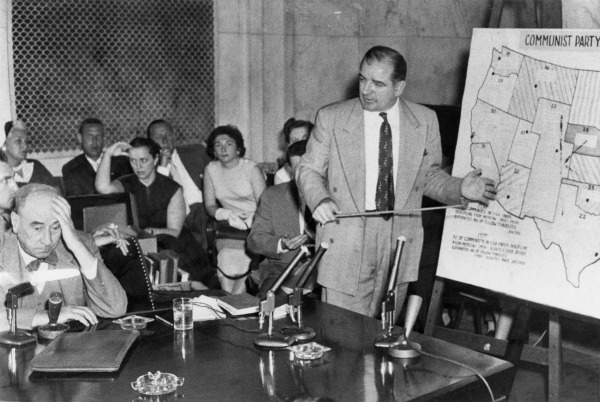
- Text-to-world connection: This links reading material to historical events or broader social issues. (e.g., "Arthur Miller’s 'The Crucible' mirrors the paranoia of the McCarthy hearings.")
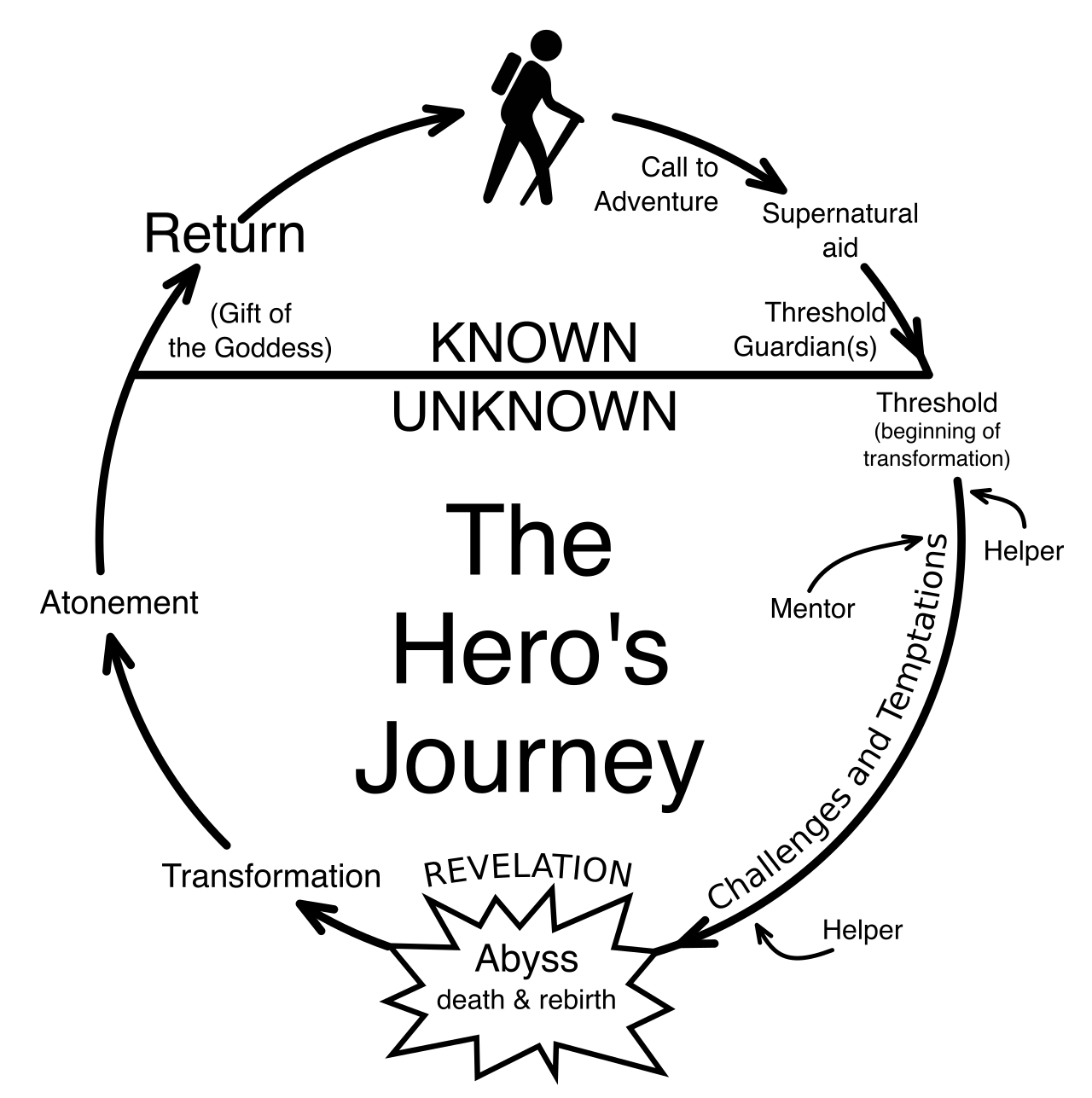
To orchestrate these connections systematically, educators often rely on structural aids. Graphic organizers visually represent relationships between textual concepts to aid comprehension, mapping out how the protagonist's journey mirrors the student's own. Similarly, teachers frequently deploy the KWL chart. The acronym KWL in reading comprehension stands for Know, Want to know, and Learned. By starting with the "Know" column, students explicitly prime their background knowledge before the reading even begins, giving the new text a foundation to latch onto.
Comprehension requires a reader to navigate both the past (what has been said) and the future (what is coming). Two distinct cognitive tools manage this temporal navigation: inferencing and predicting.
Inferencing requires drawing conclusions from implicit textual clues rather than explicit statements. The author writes, "The floorboards groaned, and Sarah extinguished her candle, holding her breath." The author never explicitly says someone is sneaking into the house, but the reader infers danger through the convergence of details.
Predicting, on the other hand, requires a reader to anticipate future textual events based on current evidence. To evaluate the validity of a prediction, we must treat it like a scientific hypothesis.
Evaluating Predictions Evaluating a prediction involves checking the logical alignment between the anticipated outcome and foreshadowing details. A prediction is not a random guess. Strong predictions rely on a combination of textual clues and a reader's prior knowledge.
Consequently, a prediction lacks strength if the prediction contradicts established character traits or plot facts. If a famously pacifist character is suddenly predicted by a student to resolve a conflict with physical violence, the prediction is weak because it ignores the established data of the text.
Furthermore, predictions are not static. Because reading is a dynamic process, active readers continually revise their predictions as new textual evidence emerges. As they read, students might also employ visualizing, which involves creating mental images to represent textual descriptions. By mentally "seeing" the setting or the character's posture, readers can more accurately test their predictions against the physical reality the author has constructed in the text's world.
When analyzing a text, students must be able to manipulate its content. Two primary mechanisms for manipulating text are paraphrasing and summarizing. Though often conflated by novices, they serve fundamentally different functions in comprehension and require entirely different structural logic.
| Feature | Paraphrasing | Summarizing |
|---|---|---|
| Purpose | To clarify the meaning of a complex excerpt without losing its detail. | To capture the holistic core message of a larger text. |
| Length | A paraphrase maintains the approximate length of the original text. | Summarization condenses the original text into a significantly shorter format. |
| Mechanics | Paraphrasing involves restating a specific passage in the reader's own words. | Summarizing requires distilling a text into its most essential main ideas. |
To execute a strong summary, a reader acts as an editor. Summarization involves the deliberate omission of minor details and repetitive examples. It requires the discipline to let go of the fascinating—but ultimately peripheral—anecdotes the author used to decorate their central argument.
When you, as an educator or an exam candidate, are evaluating a summary, the primary task requires determining if the summary accurately reflects the author's central claim. An effective summary has two non-negotiable traits:
- It maintains the original text's logical structure. If the author argues Cause A leads to Effect B, the summary must trace that same causal architecture.
- It utilizes objective language without injecting the summarizer's personal opinions. A summary is a mirror, not a critique.
Conversely, it is easy to spot a mechanical failure in a student's attempt to condense a text. A flawed summary gives disproportionate weight to minor supporting details, failing to differentiate between the structural beams of the text and the wallpaper.
If predicting is anticipating a text, and summarizing is distilling a text, synthesizing is transcending the text entirely.
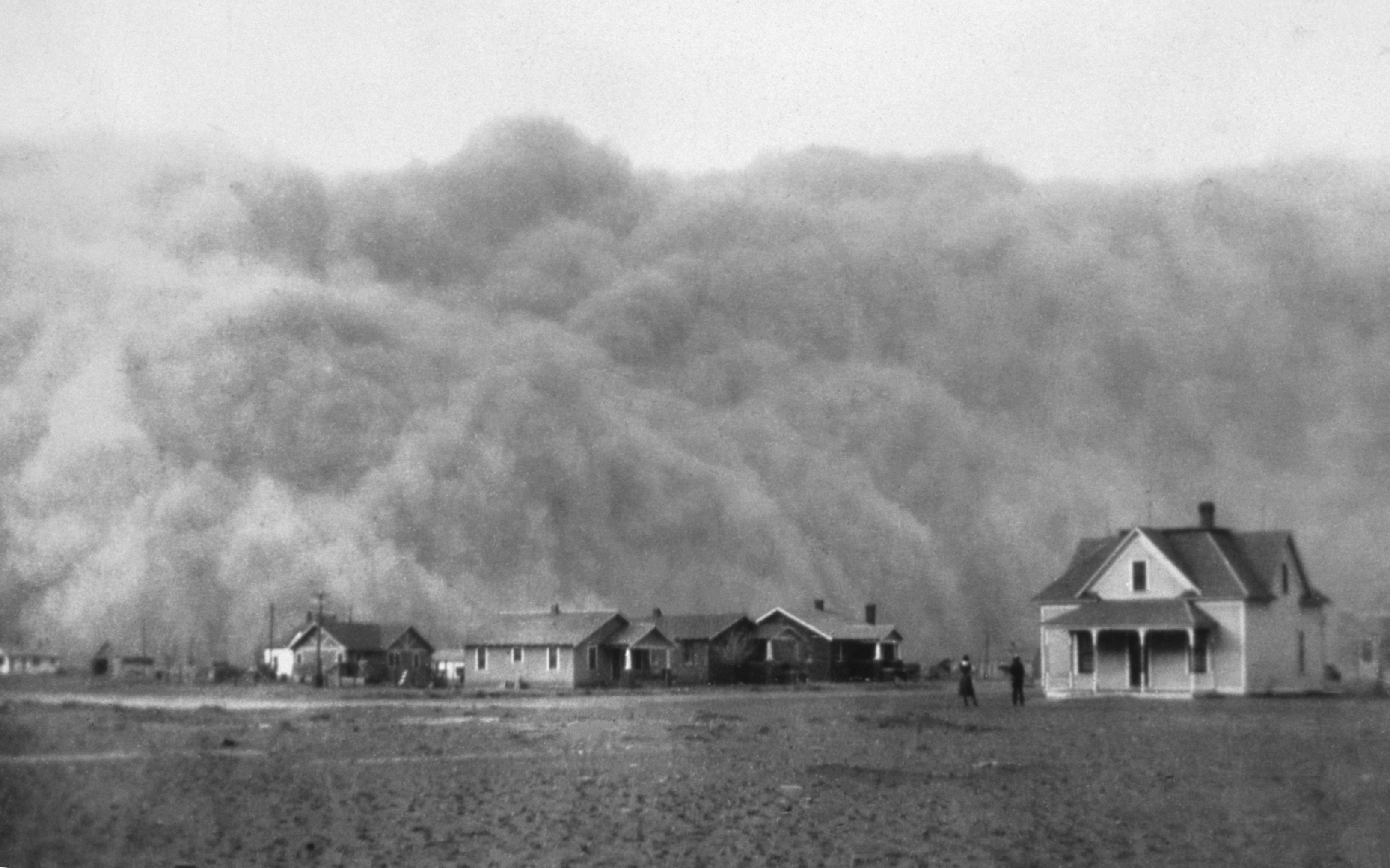
Synthesizing involves combining information from multiple sources to form a new understanding. It is the highest order of reading comprehension. When a student reads a poem about the Dust Bowl, a historical textbook excerpt about agricultural practices in the 1930s, and a primary source letter from a migrant worker, the student must synthesize these isolated data points. They must merge the emotional resonance of the poem, the factual mechanics of the textbook, and the personal stakes of the letter into a singular, complex, and entirely new mental model of the Great Depression.
Summary for the ELA Practitioner
To master reading comprehension is to master the invisible tools of thought. By teaching students to actively monitor their confusion (metacognition), forge deliberate connections to the self and the world, continuously hypothesize based on textual evidence (predicting), and rigorously distill texts down to their structural core (summarizing), you transform reading from a passive absorption of ink into the active, dynamic construction of knowledge.