Research-Based Approaches for Language Acquisition
Not sure you’re ready?
Take the ~3-minute readiness diagnostic and see where you stand.
Consider the difference between understanding the physics of a bicycle and successfully pedaling one across a crowded intersection. You can memorize the equations of gyroscopic motion and center of mass, but until you actually get on the bike and interact with gravity, you cannot ride. Language acquisition works similarly. As secondary English teachers, you are not merely delivering the rules of grammar and the plots of classic literature; you are constructing environments where students learn to ride the bicycle of standard English while navigating the heavy traffic of complex academic thought.
To help diverse learners acquire language skills, we must look at the cognitive architecture of how the human brain actually processes, internalizes, and produces a new language.
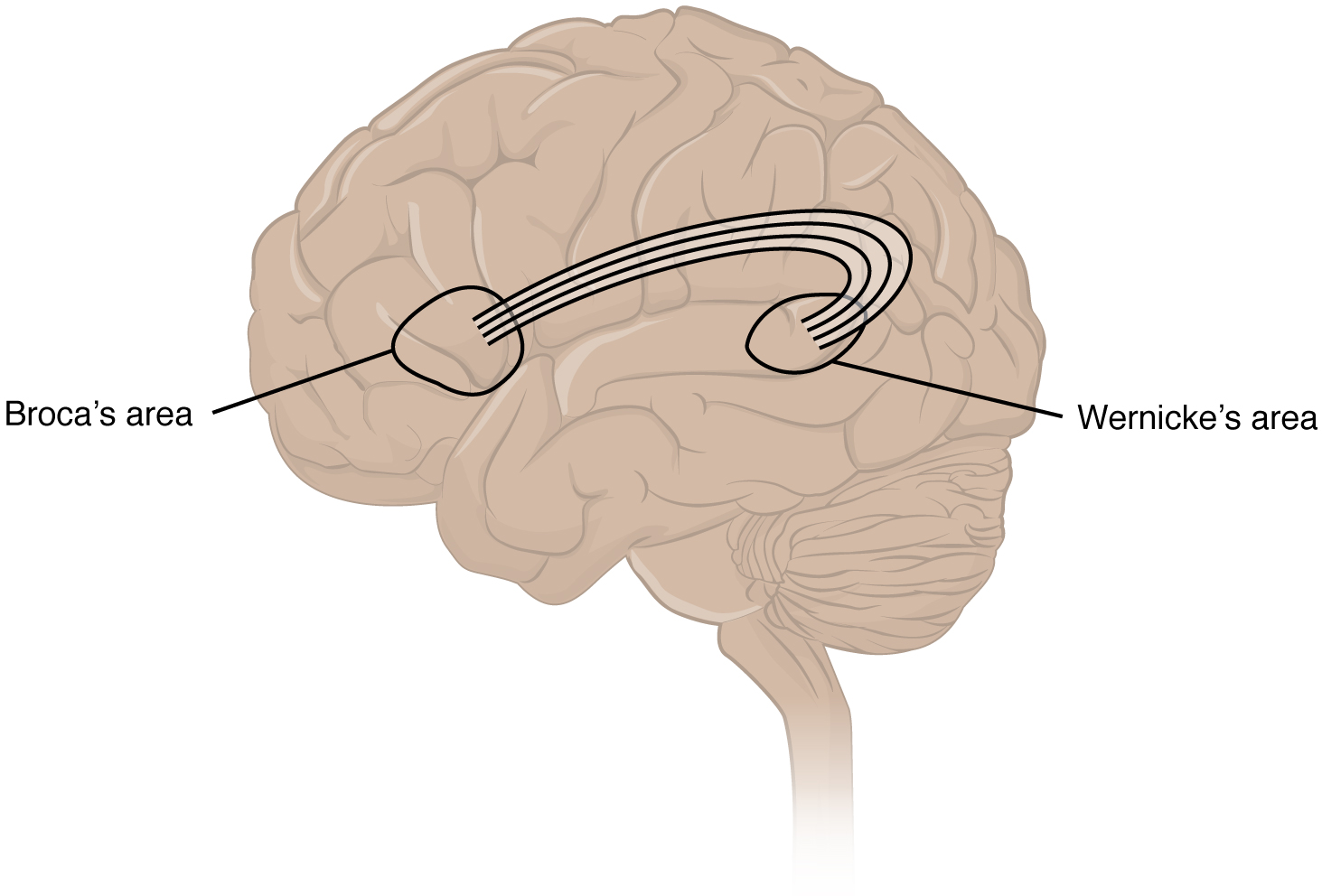
In the late 1970s and early 1980s, linguist Stephen Krashen developed the Monitor Model of second language acquisition. Think of this model as the blueprint for everything we currently understand about how students absorb language. The Monitor Model of second language acquisition consists of five distinct hypotheses:
- The Acquisition-Learning hypothesis: Krashen distinguishes between subconscious language acquisition and conscious language learning. "Acquisition" is the organic, intuitive absorption of language (riding the bike), whereas "learning" is the formal study of grammatical rules (the physics of the bike).
- The Monitor hypothesis: This posits that consciously learned language rules only serve as an editor to correct output. When your student pauses mid-sentence to fix a verb tense, they are using their internal monitor.
- The Natural Order hypothesis: This argues that the acquisition of grammatical structures follows a predictable sequence, regardless of formal instruction.
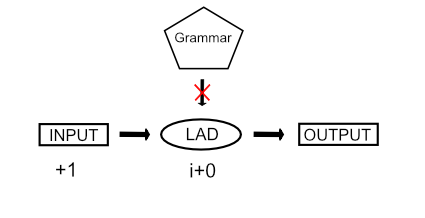
- The Input hypothesis (or Comprehensible Input hypothesis): This critical theory posits that learners acquire language best when receiving input slightly above the learners' current language level. Krashen framed this as the i+1 model, which represents language input that is one step beyond a learner's current linguistic competence.
- The Affective Filter hypothesis: This states that variables such as motivation, self-confidence, and anxiety play a facilitative role in second language acquisition. If a student is terrified of being mocked, their "filter" is up. A high affective filter prevents comprehensible input from reaching the language acquisition device, essentially blocking learning from occurring.
While Krashen emphasized input, later researchers realized the crucial role of output and awareness. In 1985, Merrill Swain introduced the Output Hypothesis. The Output Hypothesis suggests that producing language forces learners to recognize linguistic gaps. When a student tries to express a complex thought and stumbles, they suddenly realize what they don't know. Furthermore, the Output Hypothesis suggests that producing language helps learners move from semantic processing to syntactic processing—shifting from merely stringing words together for basic meaning to structuring them with proper grammar.
Adding to this, Richard Schmidt proposed the Noticing Hypothesis in 1990. The Noticing Hypothesis suggests that input does not become intake for language learning unless the learner consciously notices the input. A student might hear the past-perfect tense a hundred times, but they won't acquire it until their brain actively flags it as a distinct and meaningful pattern.
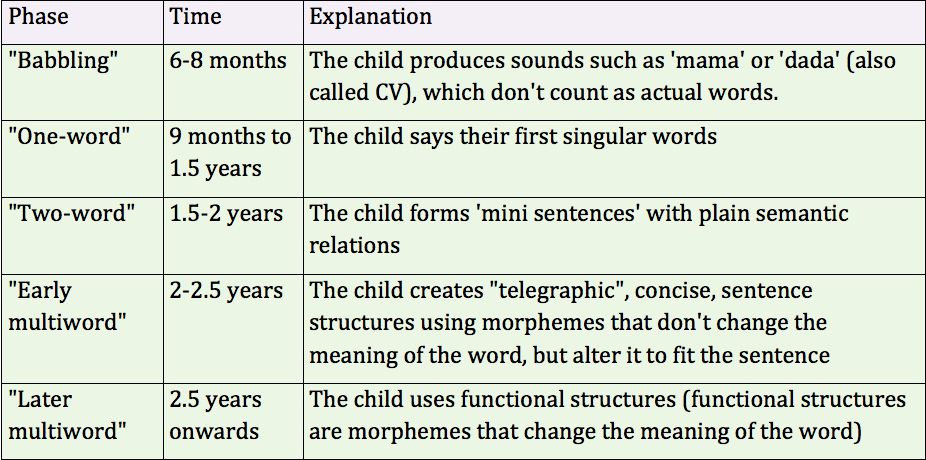
Language acquisition occurs in predictable stages from pre-production to advanced fluency. Recognizing where a student is on this continuum is vital for assigning appropriate tasks.
- The pre-production stage: This phase features minimal language comprehension and is characterized by a lack of verbal production. This is often called a silent period, a phase in early second language acquisition where learners focus on listening and comprehension rather than speaking. Do not force a student in this stage to read aloud; their brain is busy decoding the noise around them.
- The early production stage: Here, students still have limited language comprehension. Students in the early production stage of language acquisition typically produce one-word or two-word responses.
- The speech emergence stage: Now, the student features good language comprehension. Students in the speech emergence stage of language acquisition use simple sentences with frequent grammatical errors.
- The intermediate fluency stage: At this level, students display excellent language comprehension. Students in the intermediate fluency stage of language acquisition use complex sentences with few grammatical errors.
- The advanced fluency stage: Finally, this stage is characterized by a near-native level of speech and comprehension.
The Two Timelines of Fluency
In 1979, researcher Jim Cummins introduced the distinction between Basic Interpersonal Communicative Skills and Cognitive Academic Language Proficiency.
Basic Interpersonal Communicative Skills (BICS) refer to the social, conversational language used in everyday interactions. When students chat in the hallway, they use BICS, which rely heavily on context clues, gestures, and visual support. Because of these supports, Basic Interpersonal Communicative Skills typically take English language learners one to three years to develop.
However, the classroom demands Cognitive Academic Language Proficiency (CALP), which refers to the formal, academic language needed for success in school settings. Analyzing a poem or writing a persuasive essay requires CALP, which is highly context-reduced and relies primarily on linguistic cues for meaning. Because it lacks the rich visual context of a playground, Cognitive Academic Language Proficiency typically takes English language learners five to seven years to fully develop.
Crucial Insight: Do not confuse BICS with CALP. A student who sounds perfectly fluent asking for a hall pass (BICS) may still deeply struggle to comprehend a passage from The Great Gatsby (CALP).
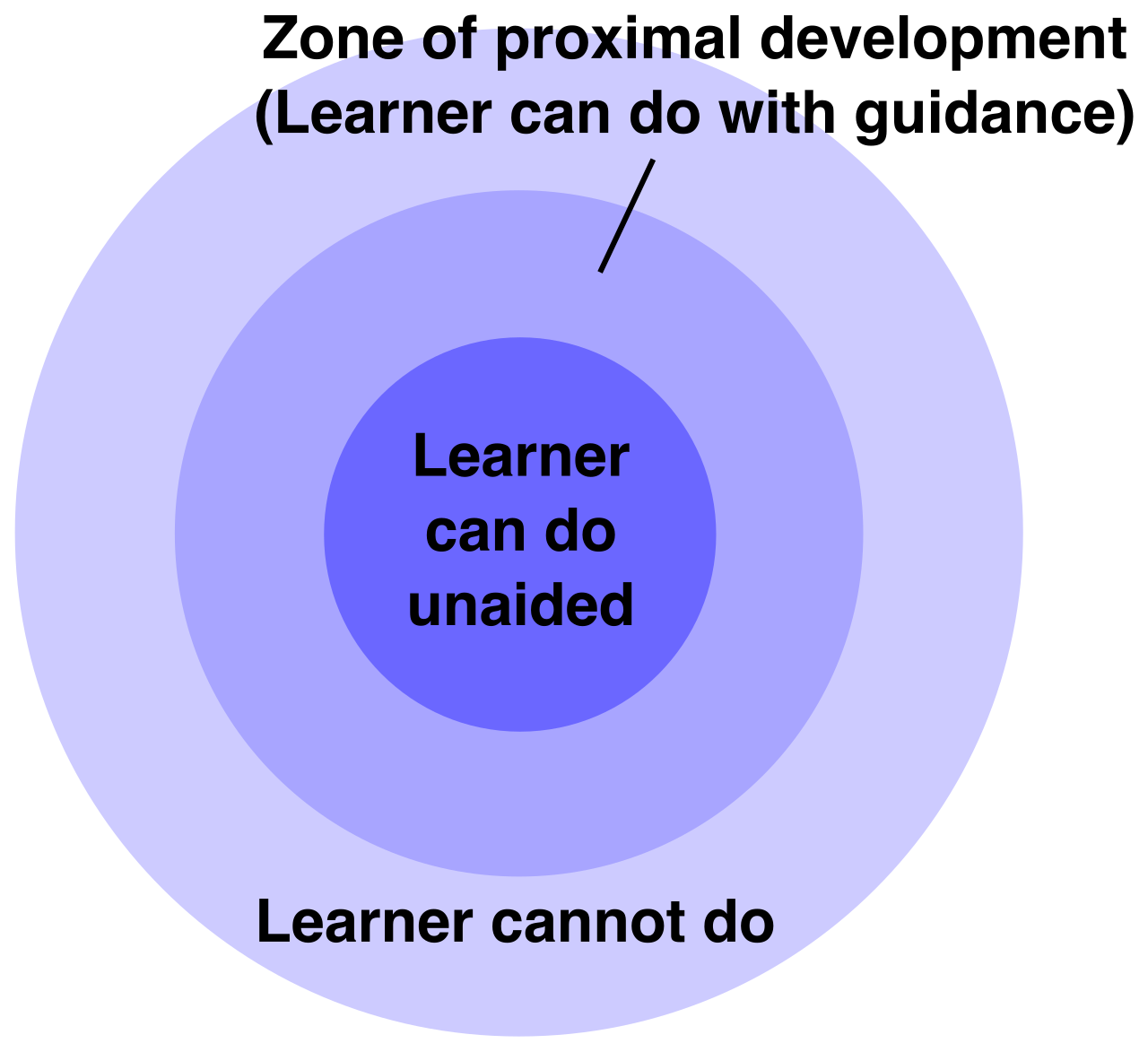
To bridge the gap between BICS and CALP, we rely on the theories of Lev Vygotsky, specifically the Zone of Proximal Development, which describes the space between what a learner can do independently and what the learner can do with guidance.
To move students through this zone, we use Scaffolding, which involves providing temporary support to a student to help the student achieve a learning goal. Just like physical scaffolding on a building, scaffolding is gradually removed as a student becomes more independent in a learning task.
Tools for Scaffolding Academic Language
- Wait time: This involves pausing after asking a question to give students time to process and formulate a response. Never rush an English Language Learner (ELL); their brain is translating your question, searching for the answer, and translating the answer back into English.
- Graphic organizers: These help English language learners visualize relationships between concepts and help English language learners structure thoughts before writing.
- Sentence frames: These provide structured templates that help students articulate thoughts (e.g., "While the author argues X, I believe Y because Z"). Crucially, sentence frames guide students in using academic language correctly.
- Multimodal instruction: This uses visual, auditory, and kinesthetic elements to reinforce language comprehension. For instance, providing real-time captioning during video viewing provides dual-modality input for language learners, combining the auditory word with its visual spelling.
- Realia: This refers to objects and materials from everyday life used as teaching aids. Bringing in a physical train ticket when reading about a journey uses Realia to improve students' understanding of concepts by connecting abstract vocabulary to concrete objects.
- Peer tutoring: This pairs students together to practice language skills in a low-stakes, supportive environment, lowering the affective filter.
- Think-alouds: These model cognitive processes by having a teacher verbalize thoughts while reading a text or solving a problem. It makes the invisible act of reading comprehension visible.
Vocabulary is the raw material of thought. Incidental vocabulary learning occurs when students acquire new words naturally through reading and listening. Conversely, explicit vocabulary instruction involves directly teaching specific words and word-learning strategies.
Educators categorize vocabulary into three tiers:
- Tier 1 vocabulary words are basic, everyday words that typically do not require explicit instruction (e.g., clock, happy, walk).
- Tier 2 vocabulary words are high-frequency words found across various academic disciplines (e.g., evaluate, synthesize, contrast). Because they appear in science, history, and literature alike, Tier 2 vocabulary words often require explicit instruction for full comprehension.
- Tier 3 vocabulary words are low-frequency, domain-specific words related to a particular subject area (e.g., iambic pentameter, isotope).
Vocabulary Strategies and Organizers
To teach Tier 2 and Tier 3 words, avoid rote memorization. Instead, leverage word relationships:
-
Morphological analysis: This involves breaking down words into root words, prefixes, and suffixes to determine word meaning.
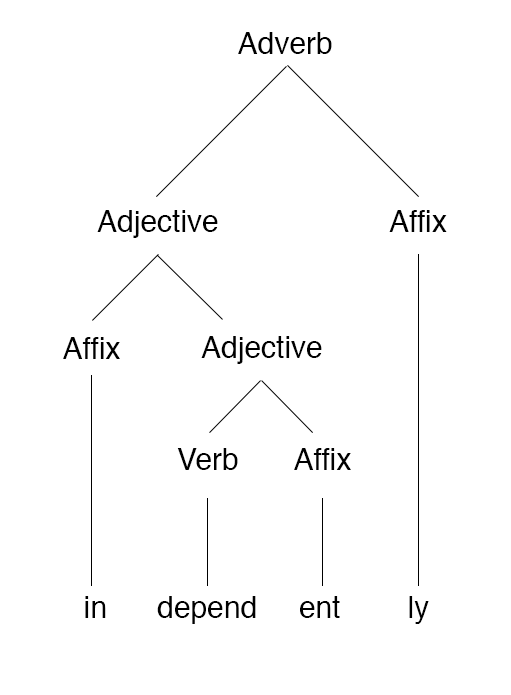
A morphological tree breaking down the word "independently" into its constituent prefix, root, and suffixes to systematically deduce meaning. Source: Independently morphology tree by Annie yang, CC BY-SA 4.0. -
Context clues: These are hints found within a sentence or passage that a reader can use to understand the meaning of new or unfamiliar words.
-
Cognate awareness: This is the ability to recognize words in two languages that share a similar meaning, spelling, and pronunciation (e.g., family in English and familia in Spanish).
When structuring direct vocabulary instruction, visual models are vital. Word walls are visual displays of high-frequency or unit-specific vocabulary words in the classroom. Semantic mapping is a visual strategy for vocabulary expansion that displays how words are related to one another.
For deeper analysis, use Semantic Feature Analysis, which uses a grid to help students compare the traits of related vocabulary words (e.g., a grid comparing different types of literary conflict by checking off their attributes).
Another powerful tool is The Frayer Model, a graphic organizer used for vocabulary building. The Frayer Model prompts students to define a target vocabulary word, prompts students to describe the characteristics of a target vocabulary word, and requires students to provide examples and non-examples of a target vocabulary word.
How do we structure an entire lesson around these concepts? We use frameworks that merge content with language.
Content objectives state what students will know and be able to do at the end of a lesson (e.g., "Students will analyze the theme of revenge"). Parallel to this, language objectives outline the specific language skills students will need to learn to accomplish the lesson's content goals (e.g., "Students will write complex sentences using transitional phrases of contrast").
To deliver these dual objectives, we use Sheltered Instruction, which integrates language and content instruction to make academic content comprehensible for English language learners. The most prominent model for this is the Sheltered Instruction Observation Protocol (SIOP) model, which provides a framework for organizing and delivering sheltered instruction. The Sheltered Instruction Observation Protocol model was developed by researchers Jana Echevarría, MaryEllen Vogt, and Deborah J. Short, and the Sheltered Instruction Observation Protocol model consists of eight interrelated components, including lesson preparation, building background, comprehensible input, strategies, interaction, practice/application, lesson delivery, and review/assessment.
Other macro-strategies include:
- Content and Language Integrated Learning (CLIL): This involves teaching subjects such as science or history through a foreign or second language.
- Total Physical Response (TPR): Developed by psychologist James Asher in the 1960s, Total Physical Response is a language teaching method that coordinates language and physical movement (e.g., the teacher says "stand up" and models the action).
- Communicative Language Teaching: This emphasizes interaction as both the means and the ultimate goal of language study.
- Task-based Language Teaching: This focuses on the use of authentic language to complete meaningful tasks, such as having students collaborate to plan a mock budget.
When applying language skills to texts, we want to expose students to Authentic texts, which are materials created for native speakers of a language rather than for language teaching purposes (like a real newspaper article versus a fabricated textbook dialogue).
To build fluency, we utilize Extensive reading, which involves reading large quantities of self-selected, easy-to-understand texts for pleasure. For deep analysis, we use Intensive reading, which involves the careful, detailed reading of short texts to extract specific information and involves the detailed reading of short texts to analyze language structures.

Reading and Writing Approaches
- Reciprocal teaching: This is a reading comprehension strategy where students take turns leading discussions about a text. Crucially, reciprocal teaching incorporates the four strategies of predicting, questioning, clarifying, and summarizing.
- The Language Experience Approach: This uses students' personal experiences and spoken language as the basis for reading and writing instruction, validating their own narratives while teaching literacy.
- Dictogloss: This is a classroom dictation activity where learners reconstruct a text rather than copying the text down word for word. Dictogloss encourages students to use grammatical knowledge to recreate the meaning of a spoken text, forcing syntactic processing.
Navigating Languages and Learner Errors
As students internalize English, their primary language (L1) interacts with English (L2).
- Translanguaging: This is the process by which multilingual speakers utilize their entire linguistic repertoire to make meaning and communicate. It views their native language as an asset, not an obstacle.
- Code-switching: This is the practice of alternating between two or more languages or varieties of language in conversation.
- Language transfer: This occurs when learners apply knowledge from the learners' native language to a second language.
- Positive language transfer happens when structures in the native language facilitate the acquisition of the second language (like utilizing cognates).
- Negative language transfer occurs when structures in the native language cause errors in the second language (e.g., applying Spanish adjective-noun word order to English). Negative language transfer is also known as language interference.
During the learning process, students develop an Interlanguage, which is the emerging linguistic system developed by a second language learner who has not yet become fully proficient. Within this interlanguage, overgeneralization in language acquisition occurs when a learner applies a grammatical rule to situations where the rule does not apply (such as saying "I runned" because they generalized the -ed past-tense rule).
If these errors are not addressed, Fossilization occurs when a second language learner's linguistic errors become a permanent part of the learner's language use.
The Art of Corrective Feedback
How you correct these errors matters immensely for the affective filter.
- Explicit correction involves a teacher clearly indicating that a student's utterance was incorrect and providing the correct form. (e.g., "No, you don't say 'he go,' you say 'he went.'")
- Recasts involve a teacher reformulating a student's incorrect utterance into the correct form without explicitly pointing out the error. (Student: "I goed to the store." Teacher: "Oh, you went to the store? What did you buy?")
- Metalinguistic feedback involves a teacher providing comments or questions related to the grammatical correctness of a student's utterance, pushing the student to self-correct (e.g., "Wait, is 'go' the right verb tense for yesterday?").
By mastering these research-based approaches, you transform your English classroom from a place where language is merely judged into a vibrant laboratory where language is actively built.