Supporting Vocabulary Development for Diverse Learners
Not sure you’re ready?
Take the ~3-minute readiness diagnostic and see where you stand.
To understand a text is to decode a highly complex cipher in real time. We often think of reading comprehension as a macro-level skill—the ability to grasp themes, track character arcs, or evaluate arguments. Yet, at the foundation of all these cognitive tasks lies the micro-level unit of meaning: the word. Decades of educational research indicate that vocabulary knowledge is one of the strongest predictors of reading comprehension success. If a student’s internal lexicon is sparse, the structural integrity of the entire text collapses. For a secondary English teacher, the task is not simply to hand students a dictionary, but to construct a deliberate, scientifically grounded environment where language acquisition happens efficiently and permanently.
To achieve this, we must look at vocabulary not as a massive, undifferentiated list to be memorized, but as an ecosystem of interrelated concepts, tools, and acquisition strategies.
Not all words demand the same instructional real estate. If you spend forty-five minutes teaching the word "clock," you are wasting valuable time; if you expect students to casually absorb the word "juxtaposition" without help, you will be met with blank stares.
To solve this instructional triage problem, Isabel Beck, Margaret McKeown, and Linda Kucan developed the three-tier framework for vocabulary instruction. This framework allows teachers to categorize the English lexicon to determine where to direct their finite instructional energy.
Tier 1: The Foundation
Tier 1 words are basic, everyday words that typically do not require explicit instruction for native English speakers. These are the words of daily commerce and conversation: walk, book, happy, clock, table. For native speakers, these words are acquired naturally through environmental exposure. While you generally will not spend English Language Arts (ELA) class time teaching Tier 1 words, you must monitor them carefully when working with English Language Learners (ELLs).
Tier 2: The Academic Engine
This is where your instructional focus should heavily lie. Tier 2 words are high-frequency, cross-curricular academic words that require explicit instructional focus. These words are ubiquitous in written texts but less common in oral conversation. They are the verbs of the intellect and the adjectives of nuance. Words like analyze, evaluate, and synthesize are examples of Tier 2 academic vocabulary words. Because they appear across science, history, and literature, teaching a Tier 2 word pays massive dividends. If a student understands "evaluate" in your English class, they can apply it to their history DBQ or their science lab report.
Tier 3: The Specialized Domain
Tier 3 words are domain-specific terms used primarily within a specific subject area. They are conceptually dense but have low frequency outside their specific field. Words like isotope, mitosis, and onomatopoeia are examples of Tier 3 domain-specific vocabulary words. You will teach these words precisely when the curriculum demands it (e.g., teaching onomatopoeia during a poetry unit), but you will not expect them to show up in a student's everyday reading.
How do human beings actually internalize thousands of complex words? The answer is a dual-engine process involving both natural absorption and direct intervention.
Implicit vocabulary instruction occurs when students learn new words naturally through wide reading and listening activities. The brain is a profound pattern-recognition machine. When a student reads voraciously, they experience incidental vocabulary learning, which occurs when students acquire new words without explicit teacher direction during independent reading tasks. They encounter a word, guess its meaning from the surrounding plot, and internalize it over time.

However, relying solely on implicit learning leaves massive equity gaps, particularly for struggling readers who read less volume. This necessitates explicit vocabulary instruction, which involves the direct, intentional teaching of specific words and word-learning strategies.
When preparing for a complex text—say, a Shakespearean play or a dense informational article—you must engage in pre-teaching vocabulary. This involves introducing key terms to students before those students encounter the terms in a reading assignment. Pre-teaching removes cognitive roadblocks, allowing students to focus on the text's broader meaning rather than stopping to decode every third word.
Crucial Instructional Principle: When engaging in explicit instruction, providing student-friendly definitions rather than traditional dictionary definitions significantly improves initial vocabulary comprehension. Traditional dictionaries often define complex words using other complex words, creating a frustrating loop for the learner. A student-friendly definition translates the concept into everyday language (e.g., instead of defining benevolent as "characterized by or expressing goodwill," define it as "someone who is kind and always wants to help others").
Because you cannot pre-teach every unknown word in the English language, you must equip students with the tools to dissect words independently.
Context Clue Instruction
Context clue instruction teaches students to infer the meaning of an unfamiliar word using the surrounding text. This is not merely "guessing"; it is a systematic analysis of textual evidence. Students must be taught to look for two distinct types of clues:
- Semantic context clues provide hints about an unknown word's meaning through definitions, synonyms, antonyms, or examples embedded within the text. If a sentence reads, "The monarch was a tyrant, a cruel dictator who oppressed his people," the phrase "cruel dictator" is a semantic clue acting as an immediate definition.
- Syntactic context clues provide hints about an unknown word's meaning based on the word's grammatical function within a sentence. If a sentence reads, "The garrulous man talked for hours without letting anyone else speak," the student can use syntax to deduce that garrulous is an adjective modifying "man," which narrows down the possibilities of its meaning to a descriptive trait related to talking.
Morphological Analysis
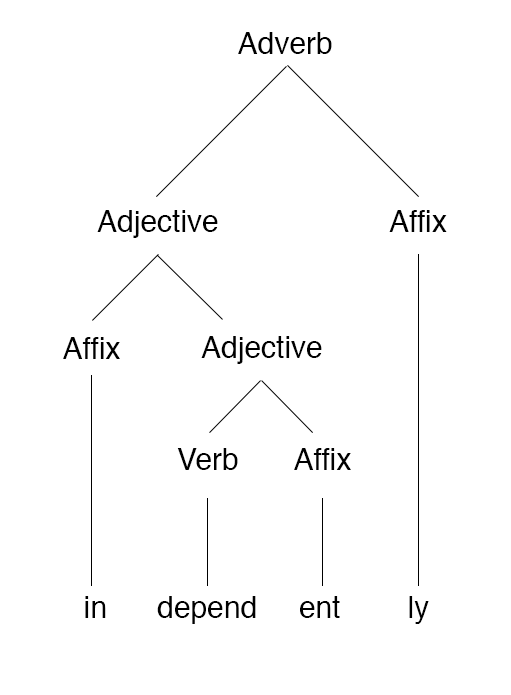
When context fails, we look inside the word itself. Morphological analysis teaches students to derive word meanings by breaking words down into prefixes, suffixes, and root words. If a student knows that mal- means "bad" and bene- means "good," words like malicious, malignant, benefactor, and beneficial suddenly become transparent. You are not just teaching a single word; you are handing them the keys to unlock entire families of words.
The human brain stores information in networks, not in isolated silos. If you want a student to remember a word, you must force them to connect that new node of information to their existing neural network. We achieve this through structured organizational tools.
The Frayer Model
One of the most robust tools for deep word knowledge is the Frayer Model, a graphic organizer requiring students to define a word, describe its characteristics, provide examples, and provide non-examples. The requirement to provide non-examples is vital; understanding the boundaries of a concept—what it is not—solidifies true comprehension.
Mapping and Grids
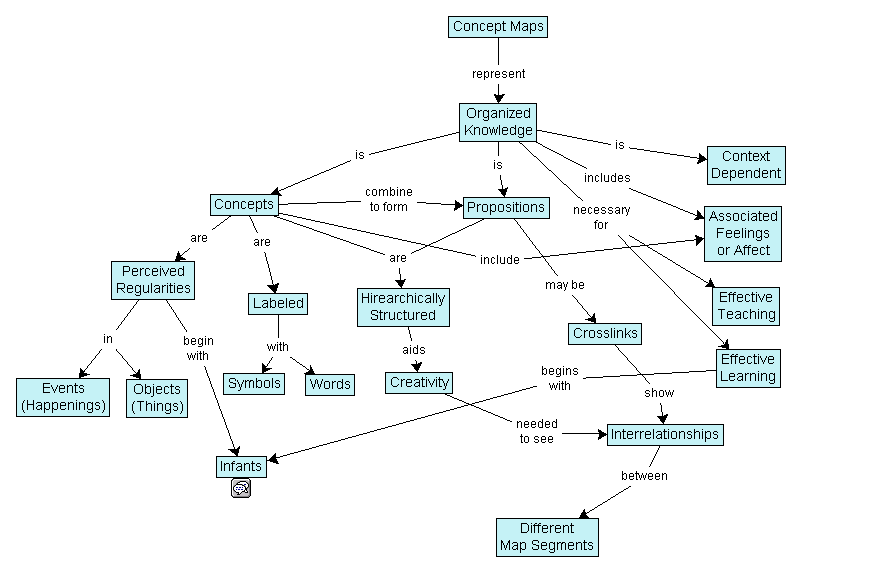
Semantic mapping is a visual brainstorming strategy that helps students connect new vocabulary words to existing background knowledge. Think of it as a web where the target word is in the center, and students draw branches to related concepts, personal experiences, and synonyms.
For exploring nuances between highly similar words, we use Semantic feature analysis, which uses a grid format to help students explore how a set of conceptually related words are alike and different.
| Word | Has a Screen? | Portable? | Makes Calls? | Runs complex software natively? |
|---|---|---|---|---|
| Smartphone | + | + | + | - |
| Laptop | + | + | - | + |
| Tablet | + | + | - | + |
By filling out the grid with pluses (+) and minuses (-), students are forced to analyze the precise semantic boundaries between related concepts.
Sorting Strategies
Categorization is a fundamental cognitive skill. Closed word sorts require students to categorize a provided list of vocabulary words into predefined categories established by the teacher. This tests their understanding of specific relationships you want them to see.
Conversely, Open word sorts require students to categorize a provided list of vocabulary words by determining the categories themselves. This is a higher-order thinking task. Watching how a student groups a list of words gives you immediate, diagnostic insight into their underlying comprehension of the concepts.
A word must live in the classroom to survive in the mind. Word walls provide constant visual access to target vocabulary to promote repeated exposure in the classroom environment. A word wall should not be static wallpaper; it should be interactive, continually referenced, and updated as units progress.
Simultaneously, students need an internal locus of control over their learning. Vocabulary notebooks encourage student ownership by allowing learners to record definitions, personal connections, and illustrations for new words. By personalizing the entry (e.g., drawing a quick sketch that represents the word to them), the student creates a highly durable memory trace.
When teaching English Language Learners, ELA teachers must recognize that these students are attempting to learn academic content and the language of instruction simultaneously.
The Theoretical Foundation
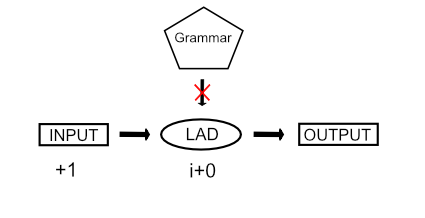
All effective ELL instruction routes back to one foundational principle: Stephen Krashen's Comprehensible Input hypothesis states that language acquisition occurs when learners understand messages slightly above their current language level (often denoted as i + 1). If the input is too simple, no growth occurs. If the input is entirely incomprehensible, the student learns nothing. Your job is to make complex language comprehensible through strategic scaffolding.
Leveraging the Native Language
A student's first language is an asset, not a deficit. Providing bilingual glossaries supports English Language Learners by allowing students to reference vocabulary definitions in native languages. This ensures that a student's lack of English vocabulary does not block their understanding of an underlying concept they may already know in Spanish, Arabic, or Mandarin.
Furthermore, cognate awareness is a vocabulary strategy that helps English Language Learners connect English words to related words in native languages. However, explicit instruction is required here because cognates contain a trap.
- True cognates are words in two different languages that share a similar meaning, spelling, and pronunciation (e.g., English family and Spanish familia). Pointing these out acts as an immediate force multiplier for an ELL's vocabulary.
- False cognates are words in two different languages that sound or look similar but possess completely different meanings. (e.g., English embarrassed and Spanish embarazada, which actually means pregnant). Teachers must actively point out false cognates to prevent profound misunderstandings.
Making the Abstract Concrete
Words are abstract symbols representing reality. For learners struggling with the language barrier, bypass the symbol and show them the reality. Using realia involves bringing physical objects into the classroom to make abstract vocabulary concepts concrete for diverse learners. If you are reading a story about a "spatula" or a "compass," do not spend five minutes trying to explain it verbally to a newcomer ELL—just hand them the object.
For verbs and kinetic concepts, employ Total Physical Response (TPR), a language acquisition strategy linking physical body movements to specific vocabulary words. If you are teaching the word scrutinize, have the entire class physically lean in and peer closely at their desks. The physical action cements the neurological pathway.
The Hurdle of Idioms
Finally, remember that idioms present specific vocabulary challenges for English Language Learners due to the non-literal meanings of the phrases. A phrase like "under the weather" or "bite the bullet" makes zero semantic sense when translated word-for-word. Idioms must be explicitly identified, translated to their literal meaning, and explained in context; they cannot be deciphered through morphological analysis or standard dictionary use.

We do not teach vocabulary so that students can pass matching quizzes. We teach vocabulary to expand the boundaries of their thinking.
Learning a word is not an event; it is a process. Effective vocabulary instruction requires providing students with multiple exposures to a target word across various contexts. Seeing a word once in a glossary will not encode it into long-term memory. A student needs to read the word in an article, hear the teacher use it in a lecture, see it on the word wall, and analyze it in a Frayer model.
But the final, critical step is production. Active engagement in vocabulary learning requires students to intentionally use newly acquired words in original writing and speaking tasks. Until a student can accurately and confidently deploy a word like synthesize in a spoken debate or a written essay, the word does not truly belong to them. It is merely rented.
By strategically blending explicit and implicit instruction, leveraging robust graphic organizers, deliberately scaffolding for diverse learners, and forcing active production, you transition your students from passive consumers of text into masterful architects of language.