Textual Evidence and Interpretations of Literary Texts
Not sure you’re ready?
Take the ~3-minute readiness diagnostic and see where you stand.
The architecture of meaning in literature is built not merely from words on a page, but from the spaces between them. When secondary students encounter a complex text for the first time, they often see only a flat plane of information—a chronological sequence of events and definitions. The English teacher’s craft lies in giving these students the tools to perceive depth. Teaching literature requires moving beyond mere plot retention to a rigorous examination of how meaning is constructed. It is the process of teaching a reader to decode denotation and connotation, to weigh the validity of textual evidence, and to synthesize disparate narrative elements into a cohesive analysis. This guide maps the fundamental mechanics of textual interpretation, from the strict boundaries of literal definition to the expansive possibilities of figurative language and structural analysis.
To teach a student to analyze text, we must first establish the ground rules of language. Words operate on two primary frequencies: the literal and the figurative.
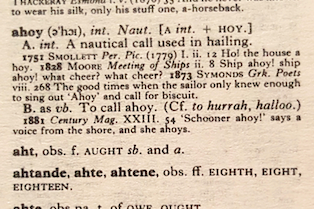
Literal meaning refers to the exact dictionary definition of words within a text. When a text operates literally, what you see is precisely what you get. This baseline is rooted in denotation, which is the strict dictionary definition of a word without emotional associations. If an author writes, "The dog is in the yard," the denotation is simple, objective, and devoid of secondary layers.
However, language is rarely so sterile. To create resonance, writers rely on the shadows that words cast. Connotation involves the emotional or cultural associations connected to a specific word. Consider the difference between describing a character as "youthful" versus "childish." Both share a similar denotation related to young age, but their connotations are wildly different—one implies vibrant energy, the other immaturity.
When writers want to push beyond the limitations of the dictionary, they employ figurative language. Figurative meaning goes beyond literal definitions to convey complex abstract ideas. It asks the reader's brain to process two ideas simultaneously, mapping the attributes of one onto the other.
The Figurative Toolkit
Your students must recognize the primary instruments of figurative language not just to identify them, but to understand how they construct meaning.
- Metaphor: A metaphor makes a direct comparison between two unrelated things without using comparison words. By stating "the classroom was a zoo," the text forces the reader to map the chaos and noise of a zoo directly onto the classroom environment.
- Simile: A simile compares two different things using the explicit comparison words like or as. Saying "the classroom was like a zoo" achieves a similar effect but maintains a degree of separation between the two subjects.
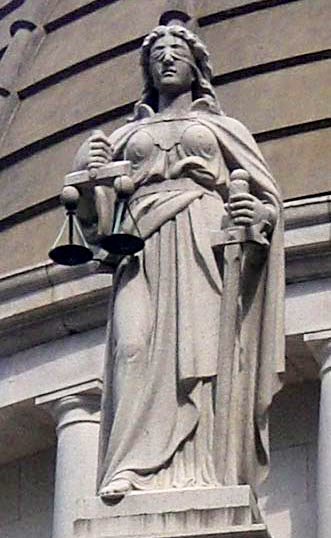
- Personification: This device bridges the human experience with the non-human world. It operates in two ways: first, personification attributes human characteristics to non-human entities (e.g., "The old house groaned in the wind"). Second, and often more conceptually challenging for students, personification attributes human characteristics to abstract concepts (e.g., "Justice is blind" or "Death laid his icy hands on kings").
- Hyperbole: A writer using hyperbole uses extreme exaggeration to make a point or show emphasis. When a student says, "I have a million hours of homework," the hyperbole conveys the feeling of being overwhelmed rather than a literal mathematical truth.
- Idiom: An idiom is a culturally specific phrase possessing a figurative meaning different from its literal translations. Phrases like "kick the bucket" or "spill the beans" are idioms. Teacher's Note: Idioms frequently trip up English Language Learners; teaching them requires directly addressing the gap between the literal translation and the culturally agreed-upon figurative meaning.
If denotation is what the author says, inference is what the author whispers. Comprehension requires students to navigate both the visible text and the invisible implications.
Explicit textual evidence consists of statements directly and unambiguously stated in the text. If the text says, "John slammed the door and kicked the wall," the explicit evidence is John's physical actions. However, implicit meaning is suggested by the text rather than directly stated. The text does not say John is angry, but the implicit meaning is clear.
To bridge the gap between explicit text and implicit meaning, readers must infer.
An inference is a logical conclusion drawn by combining explicit textual clues with reader background knowledge.
When you teach inference, you are teaching a cognitive equation: Explicit Evidence + Background Knowledge = Inference.
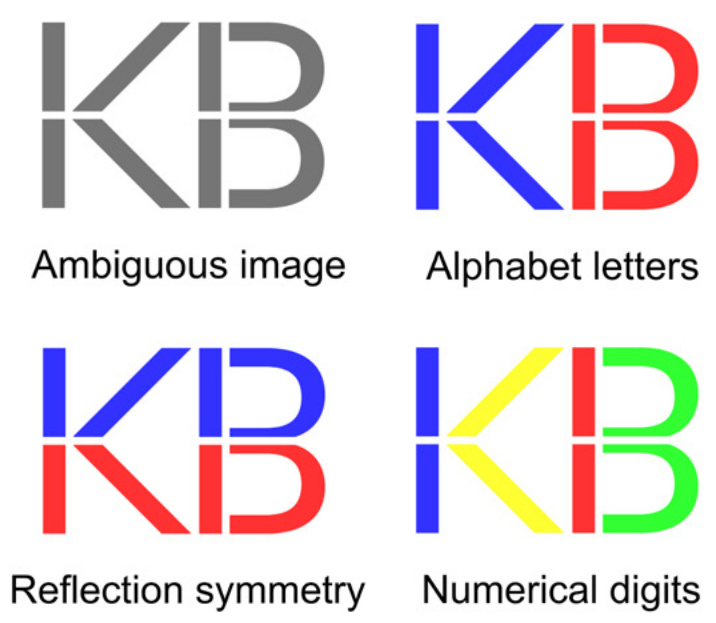
Sometimes, the text refuses to yield a single, clear inference. Textual ambiguity occurs when a word or passage supports multiple valid interpretations. Rather than a flaw, ambiguity is often a deliberate literary choice designed to reflect the complexity of human experience, demanding that students tolerate uncertainty and debate multiple perspectives.
Once students can infer meaning, they are ready for literary analysis, which involves breaking down a text into components to understand the creation of meaning. Instead of asking what happened, analysis asks how and why it happened.
The ultimate goal of literary analysis is often to uncover a literary theme, which is a central universal message explored in a literary work. A theme is not a single word (like "love" or "war"); it is a complete thought about that subject (like "love often demands profound personal sacrifice").
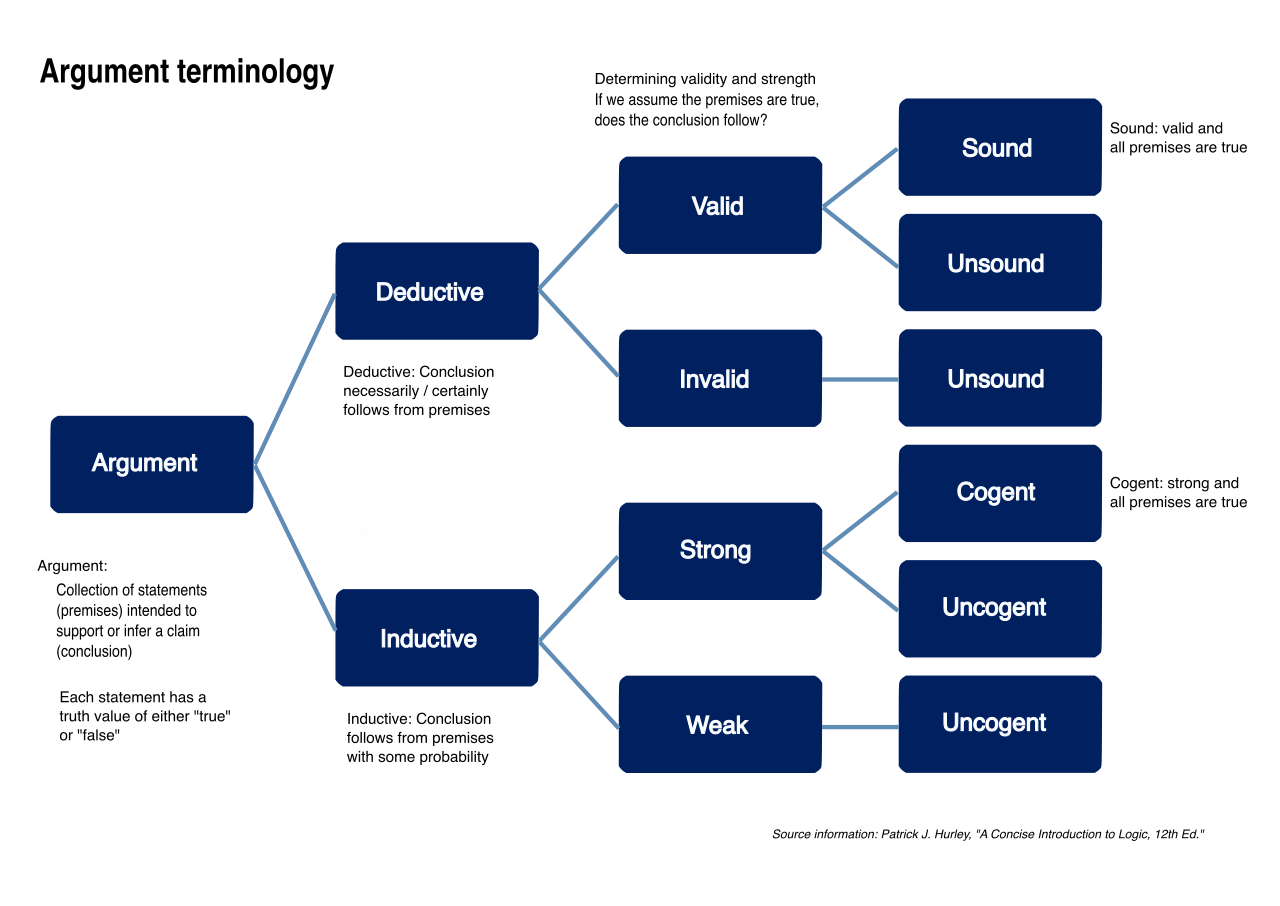
How do we arrive at themes? We use reasoning. In the ELA classroom, you will guide students through two primary analytical pathways:
| Type of Reasoning | Definition | Example in the ELA Classroom |
|---|---|---|
| Inductive Reasoning | Inductive reasoning in literary analysis builds a general thematic claim from specific textual observations. | A student notices Holden Caulfield constantly talking about the ducks in Central Park, protecting the innocence of his sister, and fearing change. Conclusion: The student builds the general theme that preserving innocence in a corrupt world is an impossible struggle. |
| Deductive Reasoning | Deductive reasoning in literary analysis applies a general literary theory to a specific textual example. | A student takes the general framework of Feminist Theory and applies it to The Great Gatsby, analyzing how Daisy Buchanan's choices are constrained by the patriarchal society of the 1920s. |
To break down a text, students must understand the mechanics of character and atmosphere.
Characterization encompasses the methods an author uses to reveal a character's personality.
- Direct characterization occurs when an author explicitly describes specific character traits (e.g., "Mr. Darcy was proud and arrogant").
- Indirect characterization requires readers to infer character traits through character actions or dialogue. When Abigail Williams threatens the other girls in The Crucible, Arthur Miller doesn't explicitly state she is manipulative and ruthless; the reader infers it through her chilling dialogue.
Just as characters have personalities, texts have emotional landscapes defined by tone and mood. These are distinct concepts that students frequently confuse:
- Tone is the author's attitude toward the subject matter or the audience. (Think of tone as the tone of voice the author is speaking in: sarcastic, mournful, didactic).
- Mood is the emotional atmosphere created for the reader by a text. (Think of mood as the feeling you get standing in the "room" the author built: eerie, joyful, suspenseful).
Often, authors create meaning by playing with a reader's expectations. This is the domain of irony.
- Verbal irony occurs when a speaker says one thing while meaning the exact opposite. (e.g., Stepping out into a hurricane and saying, "What lovely weather.")
- Situational irony occurs when the outcome of a situation completely subverts reader expectations. (e.g., A fire station burning down).
- Dramatic irony occurs when the audience knows critical information unknown to the characters in the text. (e.g., We know Juliet is only sleeping, but Romeo believes she is dead—creating immense tension).

As texts grow more complex, authors embed meaning into objects and structures.
- Symbolism uses a specific object or situation to represent a broader abstract idea. A red rose symbolizes love; the green light in Gatsby symbolizes unattainable dreams.
- A motif is a recurring symbolic element in a literary work. If a symbol appears once, it is just a symbol. If it repeats throughout the narrative (like the recurring imagery of blood in Macbeth or eyes in The Handmaid's Tale), it becomes a motif. Crucially, a motif helps develop and reinforce the major themes of a text.
- An allegory is a narrative where characters and events represent broader moral or political ideas. In George Orwell's Animal Farm, the entire plot is a literal story about farm animals that structurally maps onto the Russian Revolution.

Understanding a text is only half the battle for your students; they must also prove their understanding. This requires mastering textual evidence.
Textual evidence includes direct quotations used to support an analytical claim. Quotes bring the author's exact voice into the student's argument. However, textual evidence includes paraphrases used to support an analytical claim as well. A paraphrase expresses the meaning of a specific textual passage using different words. Paraphrasing is vital when a student needs to reference a long section of plot without bogging down their essay with massive block quotes.
Evaluating Evidence
Not all evidence is created equal. When evaluating textual evidence, the reader is assessing the logical alignment between a selected quote and the proposed claim. Does this quote actually prove what you say it proves?
Students must learn to look for two qualities in their evidence:
- Strong textual evidence directly supports the specific analytical claim being made. There is no logical leap required; the connection is undeniable.
- Sufficient textual evidence provides enough text details to fully support a comprehensive interpretation. One quote might show that a character was angry once, but is it sufficient to claim they are a fundamentally violent person? Usually not. Sufficiency requires breadth.
Synthesizing and Summarizing
Advanced analysis requires synthesis. Synthesizing textual evidence requires combining details from multiple text sections to support an analysis. This is when a student takes a quote from Chapter 1, pairs it with an observation from Chapter 7, and shows how a character has evolved.
Finally, students must master the art of the summary. A summary provides a brief restatement of the main points of a text. Unlike a paraphrase, which translates a specific passage point-by-point, a summary condenses. A summary omits minor details to focus strictly on the central ideas of a text.
Teaching students the mechanics of textual evidence—how to extract, evaluate, paraphrase, and synthesize—transforms them from passive consumers of literature into active, rigorous analysts. They learn that every text is a deliberate construction, and with the right tools, they can dismantle it, understand its mechanics, and rebuild its meaning in their own voice.