Characteristics of Literary Genres
Not sure you’re ready?
Take the ~3-minute readiness diagnostic and see where you stand.
Imagine walking into an analytical chemistry lab where all the unknown compounds are poured into a single, unlabelled vat. You wouldn't be able to study them, let alone understand how they react. Literature works the same way. When a middle school student encounters a text, they often see an undifferentiated mass of words on a page. To make sense of it, they must understand literary genres—categories of literature characterized by similarities in form, style, or subject matter. As an English Language Arts teacher, when you teach genre, you are not merely teaching vocabulary; you are handing students the rulebook for the world they are about to enter.

Different genres set distinct expectations for how information is delivered. Knowing whether to look for a stanza or a paragraph, a narrator or a speaker, or dialogue versus stage directions entirely shifts a reader's cognitive approach. Let's break down the mechanics of the four major literary genres: prose fiction, poetry, drama, and literary nonfiction.
Fundamentally, prose fiction describes imagined events. It builds an illusion of reality brick by brick. The bricks here are words written in standard grammatical structure, built into sentences, and those sentences are grouped into paragraphs.
At the center of any prose fiction is a narrative, which is simply a story told through a sequence of connected events. But a story cannot exist without someone to tell it. This voice is the narrator—the entity or voice telling the story in prose fiction.
Length and Scope
We categorize prose fiction by its scale:
- A Novel: An extended fictional work in prose. Because of its length, it can handle multiple subplots, sweeping timelines, and complex character webs.
- A Short Story: A brief fictional prose narrative focusing on a single incident or character. It is a highly concentrated form of storytelling; every word must earn its place to deliver a singular effect.
The Rules of the World (Subgenres)
When you hand a middle schooler a piece of prose fiction, they must quickly identify the physical laws governing that text's universe. We classify these into subgenres:
- Realistic fiction: Features events and characters that could plausibly exist in the real world. No magic, no space lasers—just human beings navigating possible scenarios.
- Historical fiction: Set in a specific verifiable past time period with fictional characters. The backdrop is rigorously factual, but the protagonist's specific interactions within it are imagined.
- Science fiction: Explores imaginative concepts governed by scientific extensions, such as futuristic science, space travel, or extraterrestrial life.
- Fantasy literature: Includes magical elements or supernatural worlds that do not exist in reality. If the rules of physics are routinely broken by incantations or dragons, you are in the realm of fantasy.
If prose fiction is written in sentences and paragraphs, poetry is shaped by constraints, breath, and white space. Poetry is a literary genre organized into lines and stanzas.
Crucial Terminology: A line is a single row of text in a poem. A stanza is a grouped set of lines in a poem separated by a blank space. On an exam, or in a classroom discussion, teaching a student to accurately contrast a stanza versus a paragraph prevents immediate misunderstandings of textual anatomy.
The Auditory Engine
Poetry is meant to be heard. Its engine is built on sound structures:
- Rhythm: The pattern of stressed and unstressed syllables in a line of poetry.
- Meter: A regular, measured pattern of rhythm in a poem. When rhythm becomes strictly mathematically predictable, it becomes meter.
- Rhyme scheme: The ordered pattern of rhymes at the ends of the lines of a poem (e.g., AABB, ABAB).
Forms of Poetry
Poets choose forms based on the level of constraint they want to work against:
- Free verse: Poetry that does not follow a strict meter or rhyme scheme. It flows closer to natural speech but retains poetic line breaks.
- Blank verse: Unrhymed poetry written in iambic pentameter. (Think Shakespeare: highly metrical, but no end rhymes).
- A sonnet: A fourteen-line poem with a specific rhyme scheme and meter, historically used to make arguments about love or mortality.
- A haiku: A Japanese poetic form consisting of three lines with a strict five-seven-five syllable structure.
Types of Poems and The Voice
Poems generally fall into two functional categories:
- A narrative poem: Tells a story and contains characters, a setting, and a plot. (Yes, poetry can tell stories just like prose!)
- A lyric poem: Expresses personal emotions or thoughts and is typically written in the first person.
Just as prose has a narrator, poetry has a speaker—the voice speaking in a poem. An absolute necessity in the middle school classroom is reminding students that the speaker is not necessarily the poet. The poet is the author; the speaker is the mask the author wears.
Drama is a literary genre intended for theatrical performance by actors before an audience. When reading a piece of drama in a classroom, students are effectively reading a blueprint for a live event.
Because we cannot see the action or hear the voices in a silent classroom, we rely on the script (the written text of a play). Structurally, a script is divided into an act (a major division of a dramatic work) and a scene (a subdivision of an act typically representing a single continuous action in one location).
The Mechanics of the Stage
Here is a profound difference you must impart to your students: Drama relies primarily on dialogue rather than narrative description to advance a plot. There is no narrator to tell us a character is angry or that the weather is cold. We only know what happens through:
- Dialogue: The spoken words exchanged between characters.
- Stage directions: Written instructions in a script indicating actor movements, lighting, and scenery.
The Art of the Solo Speech
Playwrights have specific tools for letting the audience inside a character's head. Students frequently confuse these three terms on assessments:
- Monologue: A long speech delivered by one character to other characters on stage. (Someone is listening).
- Soliloquy: A speech delivered by a character alone on stage to reveal inner thoughts to the audience. (No one else on stage hears it).
- Aside: A brief remark made by a character directly to the audience that other characters on stage do not hear, even if they are standing right next to them.
Tonal Arcs
Dramas historically map to two primary trajectories:
- A tragedy: A drama depicting the downfall of a heroic or noble character.
- A comedy: A dramatic work with a humorous tone intended to amuse the audience (which usually ends in a resolution of the chaos, such as a wedding).
Many students assume "nonfiction" just means textbooks or encyclopedias. Literary nonfiction (also known as creative nonfiction or narrative nonfiction) bridges the gap. It must contain verifiable facts and actual historical events, describing real events, but it uses literary elements such as narrative arcs and character development to present that factual information.
Just like a great novel, literary nonfiction often utilizes descriptive imagery to recreate factual settings and events, making the truth visceral and engaging.
Forms of Literary Nonfiction
- Autobiography: A factual account of a person's life written by that person. It covers the span of their life.
- Memoir: A factual narrative focused on a specific period or theme in the author's life (e.g., a book solely about the author's middle school years).
- Biography: A detailed account of a person's life written by someone else.
- Personal essay: A short work of autobiographical nonfiction characterized by a sense of intimacy and conversational manner.
To succeed on the Praxis 5047 exam and in the classroom, you must be able to confidently compare and contrast these genres. State standards often test a student's ability to identify structural cross-pollination.
Notice the fascinating overlaps:
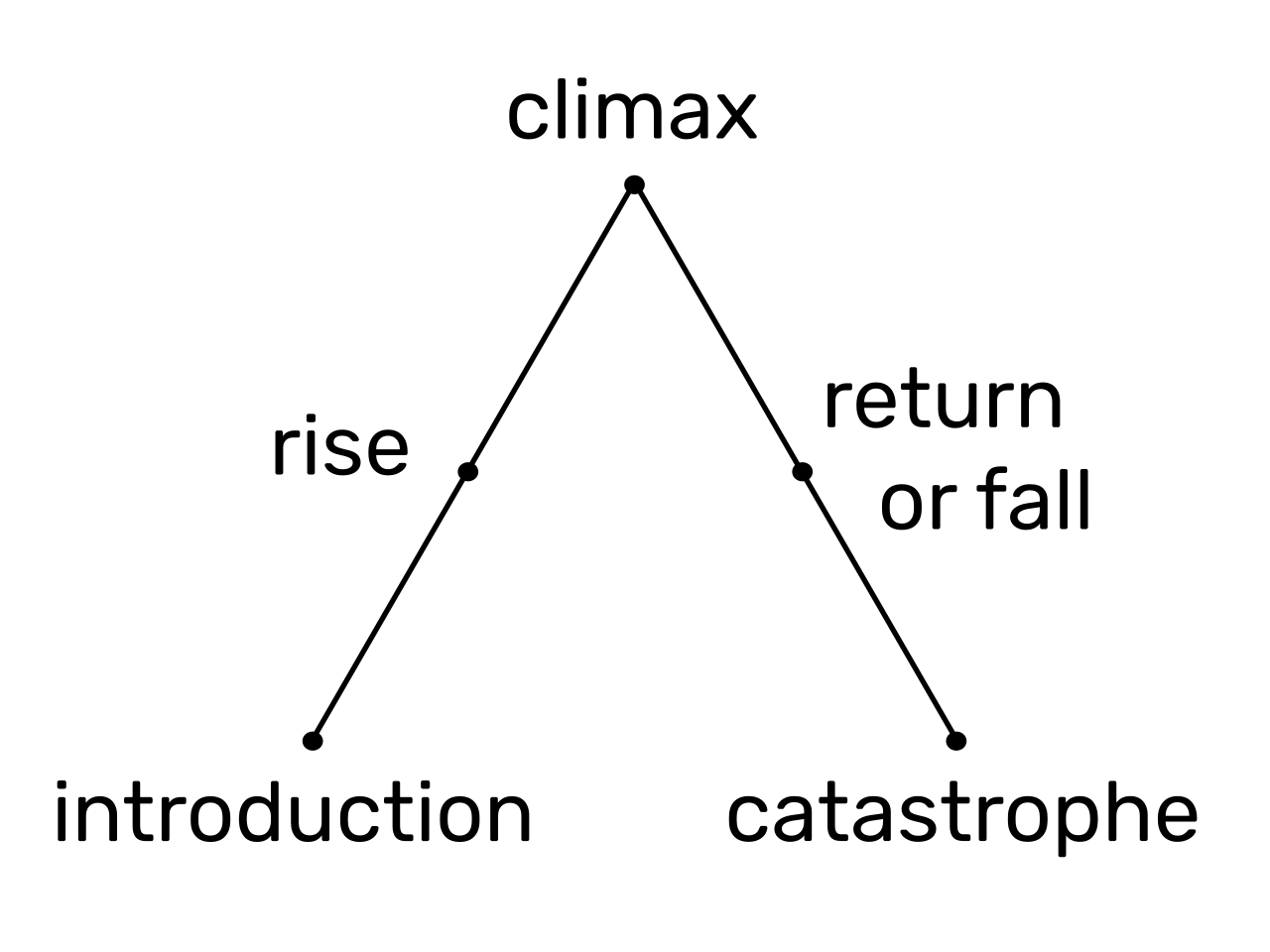
- Narrative Arcs: Both prose fiction and literary nonfiction can utilize narrative arcs. They both have rising action, climaxes, and resolutions. The defining boundary is simply that literary nonfiction describes real events, while prose fiction describes imagined events.
- Storytelling Elements: Both drama and narrative poetry contain characters, plot, and setting. A student reading Robert Frost's "The Death of the Hired Man" (a narrative poem) or Shakespeare's Macbeth (a drama) will find a plot and characters in both, even though one is written in stanzas and the other in acts and scenes.
Genre Comparison Matrix
| Feature | Prose Fiction | Poetry | Drama | Literary Nonfiction |
|---|---|---|---|---|
| Primary Structure | Sentences & Paragraphs | Lines & Stanzas | Acts & Scenes | Sentences & Paragraphs |
| Basis in Reality | Imagined events | Varies | Varies | Verifiable facts & real events |
| Voice/Perspective | Narrator | Speaker | Character Dialogue | Author / Real Subjects |
| Primary Driver | Narrative description | Rhythm, Meter, Imagery | Dialogue & Stage Directions | Factual narrative arcs & imagery |
When a student knows the structural anatomy of a text before they even read the first word, their comprehension deepens instantly. By mastering these defining characteristics, you give your students the tools to navigate any text they encounter, dissecting how authors build meaning through the precise machinery of genre.