Characteristics of Clear and Coherent Writing
Not sure you’re ready?
Take the ~3-minute readiness diagnostic and see where you stand.
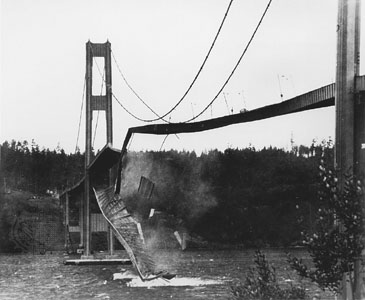
A piece of writing is an engineered structure. Just as a suspension bridge relies on towers for primary support, cabling for load distribution, and mortar to bind its foundations, a text relies on primary claims, supporting evidence, and logical transitions to carry a reader from ignorance to understanding. If the bridge is poorly designed, it collapses under the weight of traffic; if a text lacks coherence, the reader is lost to confusion. For a middle school English language arts teacher, diagnosing a struggling writer requires looking past the surface grammar to understand the structural physics of the essay. We must show students how to architect their ideas intentionally.
Before an author lays down a single sentence of evidence, they must establish the load-bearing pillars of their text. We organize these pillars in a strict hierarchy.
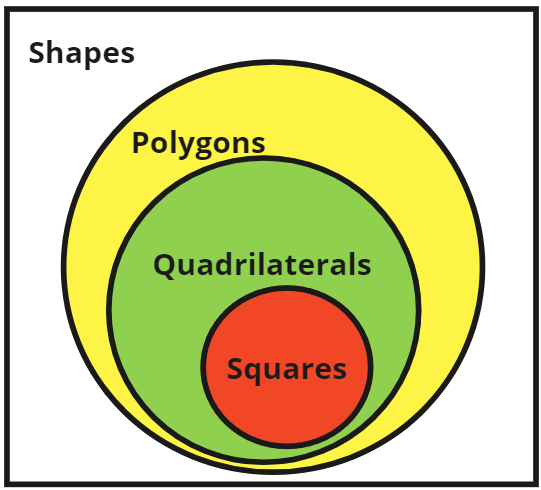
At the macro level, a thesis statement presents the central argument of an entire essay. It is the absolute, immovable foundation. But zooming in, the main idea represents the central point of a text or a specific section, and a topic sentence explicitly states the main idea of a single paragraph. When a student constructs a coherent paragraph, it develops a single controlling idea; it does not wander.
To prevent these foundational claims from crumbling under scrutiny, an author must reinforce them. Supporting details provide evidence to explain a main idea. These are the physical materials of your argument. When evaluating a text, we look for three distinct types of reinforcement:
- Supporting details include verifiable facts, which are objective truths.
- Supporting details include statistical data, which provide numerical authority.
- Supporting details include specific examples, which ground abstract concepts in concrete reality.
However, not all details carry weight. When diagnosing student writing, we must distinguish between the relevant and the extraneous. Relevant details directly advance the primary claim of an author. They pull in the same direction. Conversely, extraneous details disrupt the logical focus of a paragraph. If a student is writing a persuasive paragraph about school start times, a sudden detour into their favorite morning cereal is an extraneous detail. It adds weight without bearing any load.
A collection of well-supported paragraphs is meaningless if they are not assembled in an order the human mind can process.
At the structural boundaries of the text, an introduction establishes the context of a text, and a hook captures the attention of the reader at the beginning of a text. The exit must be equally deliberate. A conclusion synthesizes the main points of a text and restates the thesis statement using new phrasing—we do not merely copy and paste the introduction; we reflect on the journey the reader has just taken. Furthermore, a call to action prompts reader behavior at the end of a persuasive text, translating the intellectual argument into physical momentum.
Inside that framework, authors arrange their ideas using specific organizational blueprints. As educators, we must recognize—and teach students to deploy—the pattern that best suits the information:
| Organizational Pattern | Function in Text | Real-World Application |
|---|---|---|
| Chronological | Chronological organization arranges events in order of time. | Narratives, historical accounts, biographies. |
| Sequential | Sequential organization outlines the chronological steps in a process. | Recipes, laboratory reports, instructional manuals. |
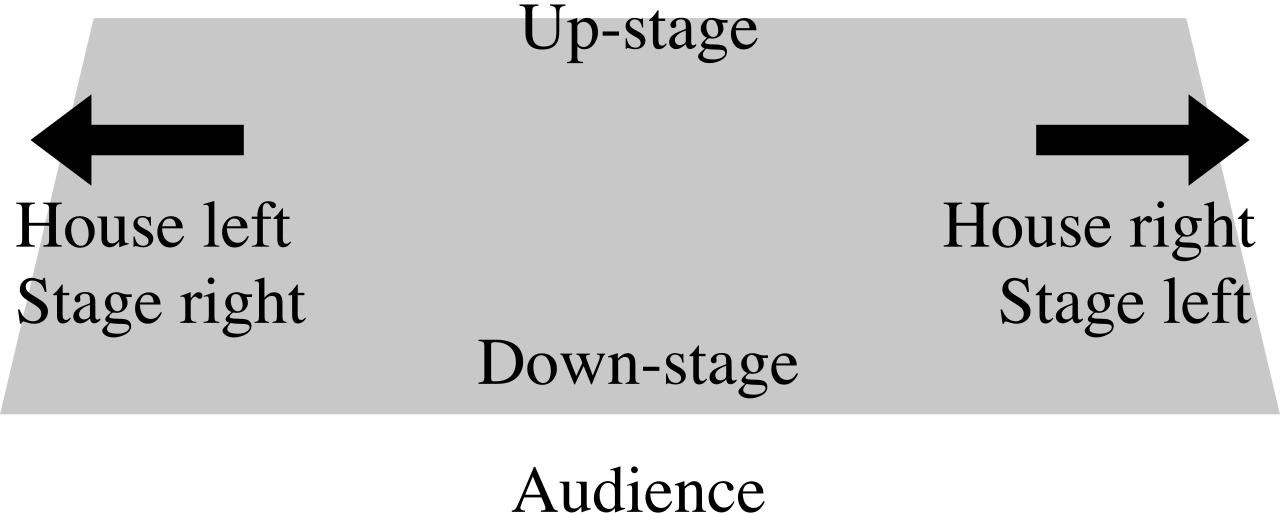
| Spatial | Spatial organization describes items according to physical position. | Descriptive writing (e.g., describing a theater from the stage to the balcony). |
| Cause-and-Effect | Cause-and-effect organization explains the reasons for specific events and explains the outcomes of specific events. | Analyzing the origins of a war or the ecological results of an oil spill. |
| Problem-and-Solution | Problem-and-solution organization introduces a specific issue and proposes remedies for a specific issue. | Public policy proposals, engineering pitches. |
| Compare-and-Contrast | Compare-and-contrast organization highlights similarities between subjects and highlights differences between subjects. | Analyzing two competing political platforms or two literary themes. |
If details and organizational structures are the bricks, transitions are the mortar. We must draw a sharp, scientific distinction between two terms often conflated in the ELA classroom: cohesion and coherence.

Cohesion refers to the grammatical linking of ideas at the sentence level. Think of cohesion as the chemical bonds holding individual molecules together. Coherence refers to the logical flow of ideas throughout an entire text. Think of coherence as the way those molecules form a functional, living cell. A text can have perfect sentence-level cohesion but completely lack text-level coherence.
To achieve this flow, a logical progression of ideas requires each new sentence to build upon the previous sentence. When the focus inevitably shifts, an author uses physical formatting to signal the pivot: paragraph breaks signal a shift to a new topic, a shift in time, or a shift in setting.
But the bridging of these gaps requires explicit language. Transitions connect ideas between sentences and connect ideas between paragraphs.
Crucial Exam Application The Praxis 5047 exam requires test-takers to identify the most effective transition word for a given passage. You must accurately categorize transitions by their logical function to pass these selected-response items.
The four primary categories of explicit transitions are:
- Additive transitions introduce supplementary information.
- The word "furthermore" serves as an additive transition.
- The word "moreover" serves as an additive transition.
- Adversative transitions signal a contrast between ideas.
- The word "conversely" serves as an adversative transition.
- The word "nevertheless" serves as an adversative transition.
- Causal transitions indicate a cause-and-effect relationship.
- The word "consequently" serves as a causal transition.
- The word "therefore" serves as a causal transition.
- Temporal transitions indicate a shift in time.
- The word "meanwhile" serves as a temporal transition.
- The word "subsequently" serves as a temporal transition.
Not all mortar is highly visible. Implicit transitions use repeated keywords to bridge ideas between paragraphs. If paragraph A concludes by discussing the friction of international trade, paragraph B might open by noting how that friction generates economic heat, creating a bridge without using a traditional transition word.
Once the structure is sound and the mortar has dried, the writer focuses on the finish. This is where clarity meets craft.
Word Choice and Tone
Language is an instrument of precision. Diction refers to the specific word choices of an author, and precise vocabulary enhances the clarity of descriptive writing. Calling an object "a red car" is functional; calling it "a crimson sedan" is precise.
Diction dictates the emotional frequency of the piece. Tone reflects the attitude of the author toward the subject matter. An author adjusts writing tone based on the intended audience, understanding that a letter to a school board requires a different frequency than an editorial for a student newspaper. For example, formal writing omits conversational colloquialisms. The writer trades the casual ease of "hanging out" for the precision of "congregating."
Syntactical Engineering
The length and shape of sentences profoundly affect how a reader physically experiences the text. If every sentence is five words long, the reader feels trapped in a marching band. Sentence variety involves combining different sentence structures within a text. By weaving together simple, compound, and complex sentences, sentence variety prevents monotony in a piece of writing.
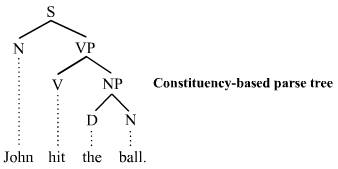
How the writer places the subjects and verbs within those sentences is equally vital to clarity.
- Active voice occurs when the subject of a sentence performs the action (e.g., The engineer designed the bridge). Because it mirrors the way the human brain processes cause and effect, active voice generally creates more direct writing than passive voice.
- Passive voice occurs when the subject of a sentence receives the action (e.g., The bridge was designed by the engineer). While often warned against in middle school, it is highly useful. Writers use passive voice to emphasize the recipient of an action, or when the actor is unknown or irrelevant.
Finally, clarity demands symmetry. Parallel structure uses consistent grammatical forms to group similar ideas. Consider a list: She likes hiking, swimming, and to ride bikes. The lack of symmetry causes the reader to stumble. Correcting it to She likes hiking, swimming, and biking aligns the grammatical forms. Parallel structure improves the readability of a list within a sentence.
When you step into a classroom or sit for the Praxis, approach a piece of writing not merely as a reader, but as a textual engineer. Trace the main ideas to their supporting facts. Test the load-bearing capacity of the transitions. Evaluate the symmetry of the syntax. When you understand how a text is constructed, you possess the exact tools required to teach others how to build.