Effective Research Practices
Not sure you’re ready?
Take the ~3-minute readiness diagnostic and see where you stand.
A student staring into the void of a blank search engine is a researcher drowning in a sea of unfiltered data. Without the architecture of effective research practices, the modern digital landscape offers only noise. For the English language arts educator, the mandate is clear: equipping students with the epistemological tools to evaluate truth, synthesize evidence, and ethically participate in the academic conversation requires moving beyond mere web surfing. To teach research is to teach the mechanics of structured thought.
Effective research begins with formulating a clear and focused research question. It is the compass that guides the entire intellectual journey. Without it, students wander aimlessly. Once this question is forged, the student must translate their natural language into the rigid logic of a database.
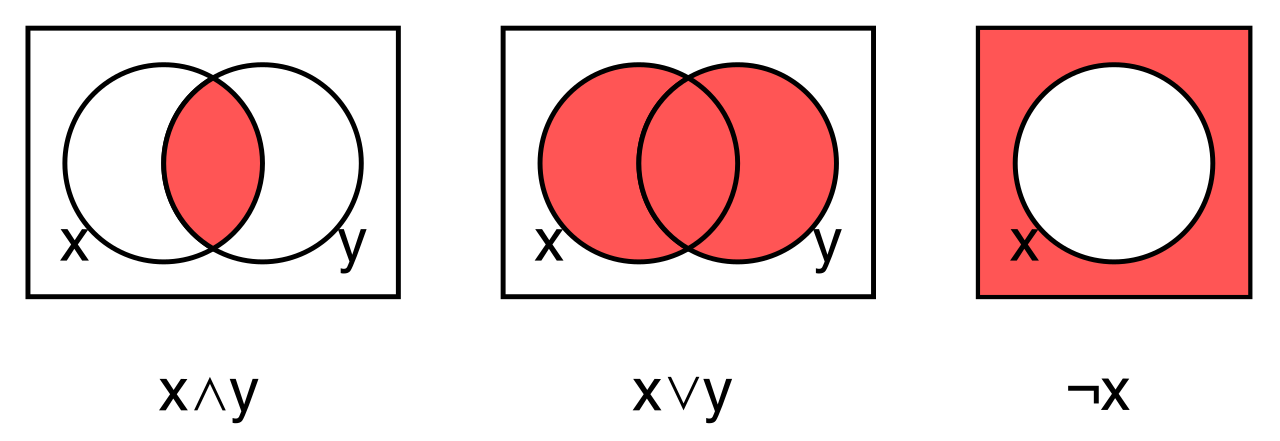
This requires keyword searching, which involves extracting the most important terms from a research question to use in a search engine. But keywords alone are blunt instruments; to refine the search, students must master Boolean operators—words used to connect or exclude keywords in a digital database search. Think of them as the mathematical operators of language:
- The Boolean operator AND narrows search results. Searching
volcanoes AND Hawaiiforces the database to return only sources containing both terms, drastically shrinking the haystack. - The Boolean operator OR broadens search results. Searching
volcanoes OR magmatells the database that either term is acceptable, yielding a larger pool of results. - The Boolean operator NOT excludes specific terms from search results. Searching
volcanoes NOT Pompeiiremoves irrelevant historical data from a geological query.
Once a student has a list of promising sources, they must process texts efficiently. Reading a 20-page article word-for-word before knowing if it is useful is a waste of cognitive energy. Instead, teach them two distinct, rapid-acquisition reading strategies:
- Skimming is a reading technique used to quickly identify the overarching main ideas of a text. (Think: reading headings, topic sentences, and conclusions).
- Scanning is a reading technique used to locate specific facts or keywords within a text. (Think: hunting for a specific date or a statistic).
Ultimately, the goal of gathering this data is not merely to regurgitate it. True academic work relies on synthesizing information, which requires combining evidence from multiple sources to form a new and unified understanding. From this synthesis, a student can finalize their argument. A research thesis statement proposes a specific and arguable claim based on gathered evidence. It is the destination that the initial research question set out to find.
Not all data is created equal. Understanding the origin of information is the foundation of media literacy.
Texts generally fall into two categories based on their proximity to the subject:
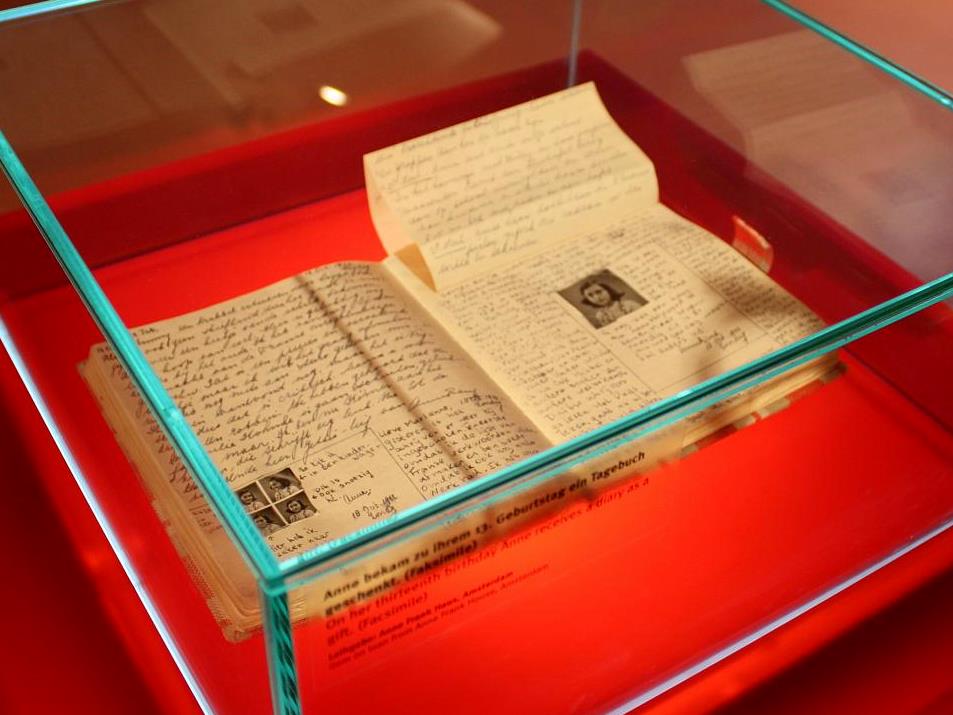
- Primary sources offer direct, firsthand evidence about an event or topic. (e.g., a diary entry from a Civil War soldier, raw data from an experiment, or a photograph).
- Secondary sources provide interpretation or analysis based on primary sources. (e.g., a modern historian's textbook chapter about the Civil War).
When students venture onto the open web, they must parse URLs to glean initial clues about a site's intent. Domain extensions are structural indicators of purpose:
- A .edu domain extension indicates a website is affiliated with a recognized educational institution.
- A .gov domain extension indicates a website is officially managed by a government entity.
- Websites with a .com domain extension exist primarily for commercial purposes. (Remember: commercial means driven by profit, which can sometimes influence content).
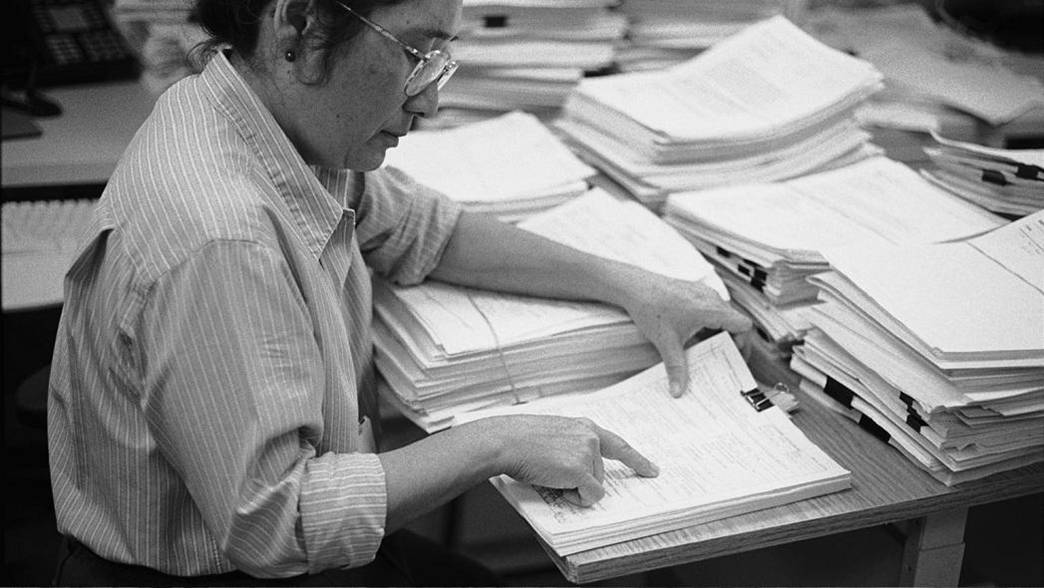
However, a domain extension is merely a clue, not a guarantee. Source credibility depends significantly on the author's expertise in the subject matter. The gold standard for academic credibility is found in peer-reviewed journals, which contain articles evaluated by independent experts in the same field prior to publication.
For the vast majority of web sources, educators rely on a highly effective heuristic. The CRAAP test is an acronym used by educators to evaluate source credibility. It trains students to interrogate a source methodically:
The CRAAP Test
- Currency: This aspect evaluates the timeliness of the published information. (Is a 1998 article on space exploration still valid?)
- Relevance: This aspect assesses the importance of the information for the user's specific needs.
- Authority: This aspect examines the credentials of the information's author or publisher.
- Accuracy: This aspect evaluates the reliability and correctness of the informational content.
- Purpose: This aspect identifies the reason the information exists. (Is it to inform, entertain, or sell?)
Detecting Bias and Verifying Truth
While applying the CRAAP test, students must remain vigilant for skewed perspectives. Bias in a text occurs when an author presents a one-sided perspective. A major telltale sign? The presence of heavily emotional language in a source often indicates subjective bias. If a text attempts to manipulate the reader's anger or pity rather than appeal to logic, the accuracy of its claims must be scrutinized.
To combat bias and verify facts, students must practice cross-referencing, which involves checking information across multiple independent sources to verify factual accuracy. If a startling claim appears on only one obscure blog, cross-referencing will quickly expose its lack of foundation.
When integrating research into their own writing, middle schoolers often stumble into ethical pitfalls—not always out of malice, but out of a lack of structural understanding.
At the foundational level, plagiarism is the act of presenting another person's work or ideas as one's own. While most students understand that buying an essay online is plagiarism, many are surprised to learn that self-plagiarism occurs when a student submits their own previously graded work for a new assignment.
The most pervasive issue in middle grades, however, is a clumsy attempt at paraphrasing. Patchwriting is a form of plagiarism that involves replacing a few words of a source text with synonyms. Crucially, patchwriting improperly retains the original sentence structure of the source text. It is the cognitive equivalent of tracing a drawing and changing the colors; it is not original thought.
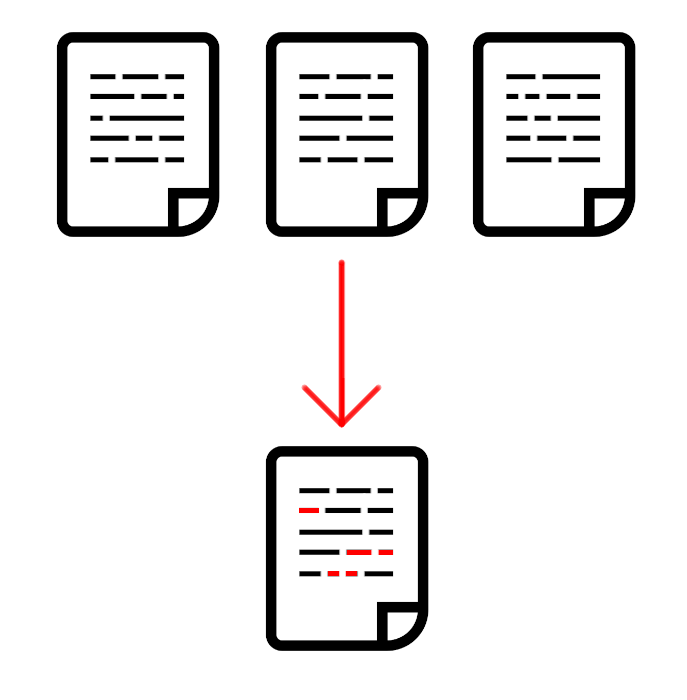
To avoid these pitfalls, students must master three distinct methods of integrating research:
- Direct Quoting: Direct quoting requires copying the exact words from a source. Because they are exact, direct quotes must be enclosed within quotation marks.
- Modifying Quotes: Sometimes a quote must be tailored to fit the grammar of a student's sentence or condensed for brevity. Ellipses are used within a quotation to indicate the intentional omission of original words (e.g., "The mayor stated that the new park... will open in May"). Conversely, brackets are used within a quotation to indicate words added or modified by the researcher for clarity (e.g., "She [the principal] announced the new policy").
- Paraphrasing: To truly digest a source, students must paraphrase. Paraphrasing involves rewriting a specific passage from a source entirely into the researcher's own words. To be ethical, a proper paraphrase must maintain the original factual meaning of the source text.
- Summarizing: While paraphrasing focuses on a specific passage, summarizing involves condensing the main ideas of a large source into a significantly shorter overview.
The Mandate of Attribution
Whether a student uses exact words or translated concepts, the rule remains absolute: Both paraphrased ideas and direct quotes require a formal citation.
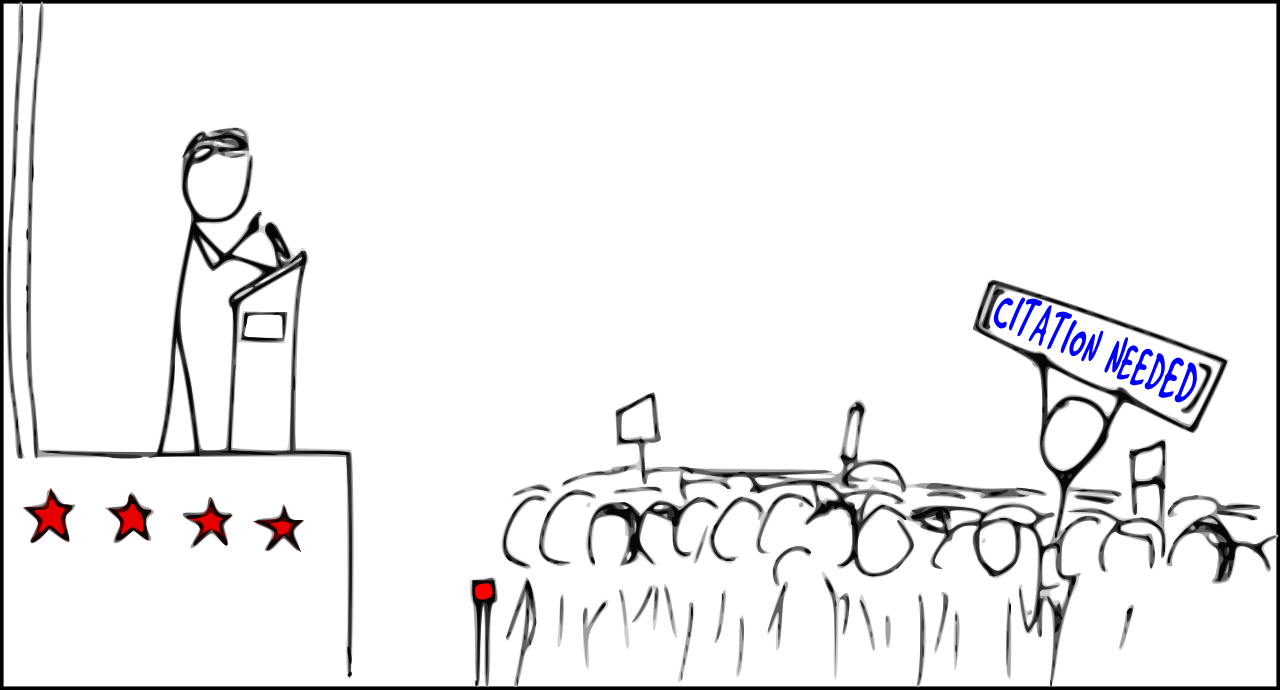
There is only one exception to this rule. Common knowledge consists of widely known, undisputed facts (e.g., water freezes at 32 degrees Fahrenheit, or George Washington was the first U.S. President). Because these facts belong to the collective public domain, common knowledge does not require formal citation in a research paper.
A well-researched paper provides a map for the reader to trace the origin of every claim. This map consists of two connected parts: the brief markers in the text, and the detailed legend at the end of the document.
In-text citations direct the reader to the full publication information located in the bibliography. The format of these citations depends entirely on the academic discipline.
| Feature | MLA Format (Modern Language Association) | APA Format (American Psychological Association) |
|---|---|---|
| Primary Use | The Modern Language Association (MLA) style is commonly used for formatting humanities and literature papers. | The American Psychological Association (APA) style is commonly used for formatting social sciences papers. |
| In-Text Citation | Standard MLA in-text citations require the author's last name and the page number. (e.g., Smith 42). | Standard APA in-text citations require the author's last name and the year of publication. (e.g., Smith, 2023). |
In the ELA classroom, you will primarily be teaching MLA style. At the end of an MLA paper, the student must provide a comprehensive list of every source referenced. Works Cited is the MLA terminology for the alphabetical list of sources at the end of a paper.
Formatting the Works Cited page requires specific typographic rules. For instance, a hanging indent is required for formatting multi-line entries in an MLA Works Cited page. This means the first line of the citation is flush left, and all subsequent lines are indented, making it easy for the reader's eye to scan down the alphabetical list of authors.
Advanced Citations and Bibliographies
Occasionally, a student will find a brilliant quote from Figure A, but they read about it in a book written by Figure B. They cannot cite Figure A directly because they did not read Figure A's original text. Here, an indirect citation is used when referencing a source that is quoted within another secondary source. To format this ethically, in MLA format, the abbreviation 'qtd. in' is placed inside the parenthetical citation to indicate an indirect source (e.g., "The sky is falling" (qtd. in Henny Penny 14)).
Finally, as students prepare for long-term research projects, they will often be asked to submit an intermediate assignment to prove they are evaluating their sources critically before writing their paper. An annotated bibliography includes a brief summary and evaluative commentary for each listed source. It is the ultimate testament to a student’s mastery of the research process: proving not only that they found the data, but that they have weighed its credibility, understood its context, and synthesized its value.