Effective Writing for Task, Purpose, and Audience
Not sure you’re ready?
Take the ~3-minute readiness diagnostic and see where you stand.
Imagine engineering a bridge. If the architect ignores the span of the river, the load of the vehicles crossing it, or the specific materials available, the structure will inevitably collapse, regardless of how beautifully it was sketched. Writing functions under the exact same physical laws of communication. Every text is constructed to bear a specific intellectual load and transport a specific reader from one shore of understanding to another. When a student sits down to write, they are not merely putting words on an empty page; they are solving a multi-variable equation governed by the constraints of the task, the intended purpose, and the audience. As a middle school English language arts teacher, your objective is to teach students how to read these blueprints—to show them that every stylistic choice, from a semicolon to a sensory detail, is a calculated decision.
To evaluate or produce effective writing, we must first isolate its three foundational variables. The Praxis 5047 exam tests a candidate's ability to evaluate middle school student writing based on task, purpose, and audience. Mastery of this framework is non-negotiable for an effective ELA educator.
Decoding the Task
The writing task defines the specific format required by a writing prompt, as well as the specific parameters required by an assignment.
Before a student writes a single word, they must deconstruct the prompt. Analyzing a writing prompt helps an author correctly identify the required mode of writing. If a prompt asks a student to "explain the events leading to the American Revolution," the task explicitly demands an informational text. The effectiveness of a piece of writing depends heavily on its strict adherence to the specific constraints of the assigned task. A beautifully written poem about George Washington fails the assignment if the task parameters demanded an essay.
Defining the Purpose
If the task is the what, the purpose is the why. The writing purpose represents the author's primary goal in creating a text.
Every piece of writing serves a function. The Common Core State Standards (CCSS) for English Language Arts categorize writing into three main text types: argument, informative or explanatory, and narrative. We will explore the mechanics of these three pillars in the following section, but at a macro level, we can define the author's core intentions as follows:
- One primary purpose for writing is to persuade the audience.
- One primary purpose for writing is to inform the audience.
- One primary purpose for writing is to entertain the audience.
Often, purposes overlap. Consider a book review: A book review utilizes an informative purpose to summarize the plot of a literary text, while simultaneously utilizing an evaluative purpose to judge the quality of a literary text.
Understanding the Audience
The third variable is the destination. The intended audience consists of the specific readers the author wants to reach, or in the case of a speech, the specific listeners the author wants to reach.
To write effectively, an author must consider the prior background knowledge of the intended audience when selecting vocabulary. If the audience lacks context, the writer must build it. Furthermore, an author must adjust sentence structure based on the reading level of the intended audience, just as an author must adjust vocabulary complexity based on the reading level of the intended audience. A text engineered for a university professor will shatter the comprehension of a sixth-grader; a text engineered for a sixth-grader will bore the professor.
Let us examine the mechanics of the three CCSS text types, analyzing how purpose dictates structural and stylistic choices.
1. Argumentative and Persuasive Writing
Argumentative writing aims to convince an audience to accept a specific viewpoint or to convince an audience to take a specific action.
Because human beings are naturally skeptical, argumentative writing relies heavily on logical reasoning to achieve its purpose, alongside relying heavily on relevant evidence to achieve its purpose. To evaluate this type of writing, we look closely at the architecture of the argument. Evaluating writing effectiveness requires analyzing the alignment between the chosen evidence and the author's core claim. If the evidence does not directly support the claim, the argument collapses.

- Addressing Skepticism: Persuasive writing often requires the inclusion of counterarguments to effectively address skeptical audiences. Anticipating the reader's doubts and dismantling them logically builds unassailable credibility.
- The Final Push: Often, the goal of persuasion is behavioral. A call to action is a concluding component of a persuasive text aimed at motivating an audience to change behavior.
- Real-World Application: A persuasive letter is the most appropriate type of writing for convincing a school board to change a policy.
2. Informative and Explanatory Writing
Informational writing aims to convey verifiable facts to an audience, whereas explanatory writing aims to explain complex processes to an audience.
When writing to inform, the author is a neutral conduit of truth. Therefore, an objective tone is required in informational writing to present facts without personal bias.
- Structuring the Data: Complex information requires rigid organization. A hierarchical structure using headings is highly effective for organizing complex informational texts.
- Navigating the Logic: To prevent the reader from becoming lost in the data, clear transitional phrases improve the effectiveness of informational writing by smoothly guiding the reader through complex ideas.
- Real-World Application: An expository essay is the most appropriate type of writing for explaining the causes of a historical event.
3. Narrative Writing
Narrative writing aims to share a real experience with an audience or to share an imagined experience with an audience.
Unlike the objective distance of informative writing, narrative writing thrives on immersion. An author writing to entertain relies heavily on sensory details and relies heavily on figurative language to paint a vivid mental landscape.
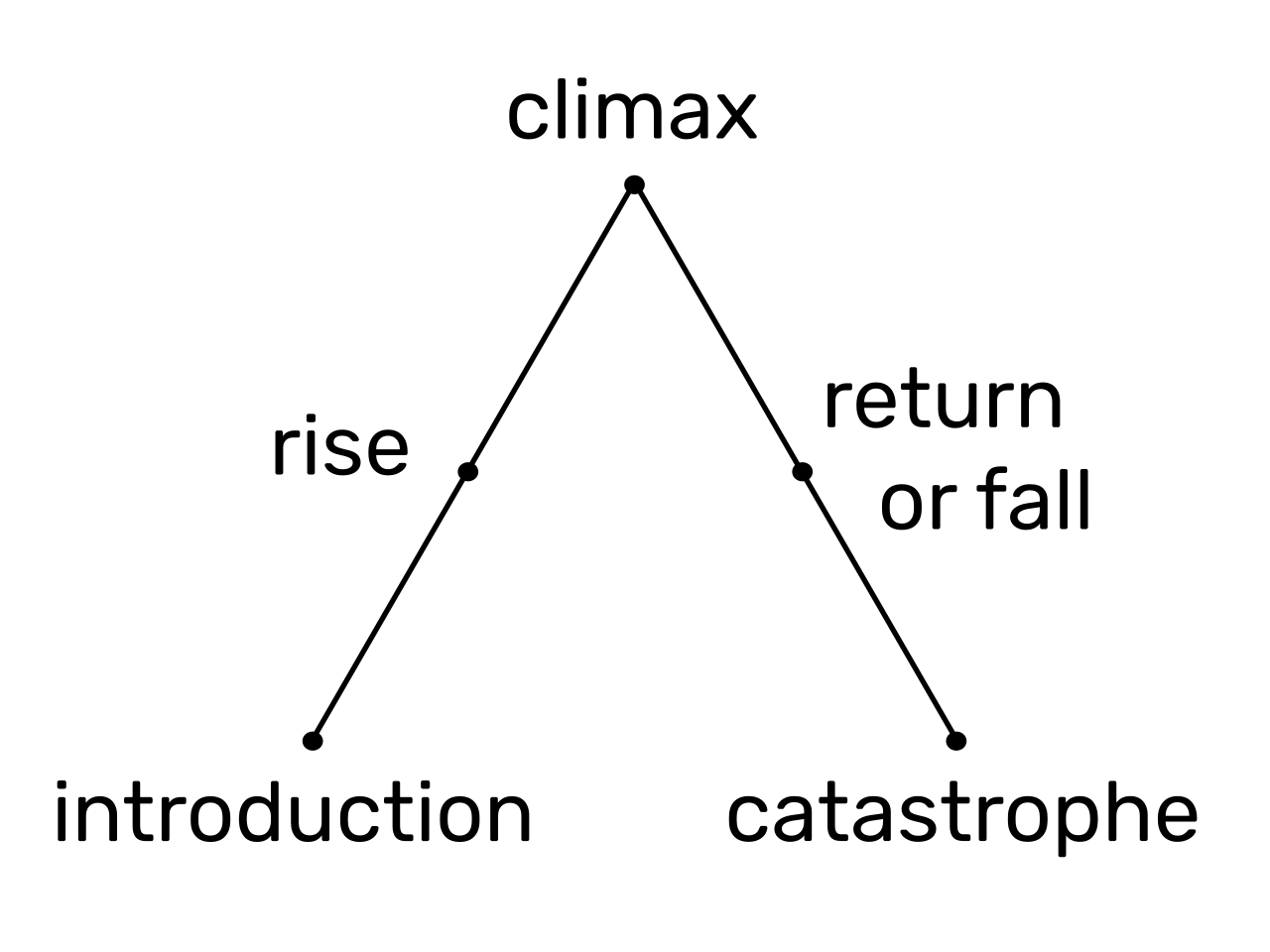
- The Role of Tone and Time: A subjective tone is often used in narrative writing to convey personal emotions. Furthermore, narrative structure allows for temporal manipulation; a writer adjusts pacing in a narrative to suit the purpose of building suspense for the audience.
Once an author understands their task, purpose, and audience, they must select the correct linguistic tools to execute their vision. This requires precise control over tone, register, and diction.
Diction refers to the specific word choices an author makes. Tone is the attitude conveyed by those choices. Register is the level of social formality governing those choices.
The Mechanics of Diction
Words are not merely definitions; they are highly specific tools. Diction refers to the specific word choices an author makes to convey a precise meaning, as well as the specific word choices an author makes to establish a specific tone.
Consider the use of specialized vocabulary. Technical jargon is highly effective when writing for an audience of experts in a specific field because it acts as an incredibly efficient shorthand. However, if the audience variable shifts, the result is disastrous: technical jargon severely hinders comprehension when writing for a novice audience.
Controlling Tone
Tone represents the author's underlying attitude toward the subject matter, and equally importantly, the author's underlying attitude toward the audience.
Just as we measure the structural integrity of an argument by checking its evidence, evaluating writing effectiveness requires assessing the alignment between the tone and the expectations of the intended audience. If a student writes a comedic, sarcastic essay about a devastating historical tragedy, the essay fails because the tone profoundly misaligns with both the subject matter and audience expectations.

Mastering Register
Register refers to the level of linguistic formality used in a particular social context. We smoothly shift registers in our spoken lives daily—speaking differently to a judge than we do to a close friend. Writing requires the same contextual awareness.
| Formality Level | Characteristics | Classroom & Real-World Application |
|---|---|---|
| Formal Tone / Register | A formal tone utilizes standard grammar. It completely avoids the use of slang and completely avoids the use of conversational colloquialisms. | A student must employ a formal register when writing a formal request to a school administrator. Similarly, a writer must choose a professional tone when drafting a cover letter for a job application. |
| Informal Tone / Register | An informal tone frequently includes colloquialisms and frequently includes grammatical contractions. | Appropriate for personal letters, casual blog posts, or dialogue within a narrative text. |
The Power of Point of View
The grammatical person an author selects (first, second, or third) fundamentally alters the relationship between the text and the audience.
- First-Person ("I", "We"): First-person point of view is highly effective in personal narratives to build intimacy with the audience. However, because it centers the author's subjective experience, first-person point of view is generally avoided in formal academic research papers to maintain an objective tone.
- Second-Person ("You"): Second-person point of view is highly effective in instructional writing to directly address the reader. (e.g., "First, you must preheat the oven.")

- Third-Person ("He", "She", "They", "It"): The standard for objective, explanatory, and informational writing, creating distance between the author, the subject, and the reader.
Ultimately, effective writing is not an innate mystical talent. It is the deliberate, calculated application of strategy. By teaching students to analyze the Task, define the Purpose, and calibrate their Tone, Diction, and Register for their specific Audience, you equip them with the precise tools they need to engineer robust, unshakeable communication.