Determining Word Meaning
Not sure you’re ready?
Take the ~3-minute readiness diagnostic and see where you stand.
When a seventh-grade student encounters a sentence like, "The philanthropist’s benevolent actions contradicted his previously malevolent reputation," the words often appear as opaque blocks of text. The untrained reader skips them, losing the sentence's structural integrity. The expert reader, however, unconsciously dismantles these words into their atomic components, examines their surrounding environment, and measures the grammatical forces acting upon them. As an English language arts teacher, your objective is to demystify this process. You are teaching students the fundamental physics of language: how to look at an unfamiliar word and derive its meaning not through memorized vocabulary lists, but through morphology, context, and syntax. By mastering these three interconnected systems, you equip students to independently navigate complex texts—a central requirement of the middle school curriculum and the Praxis 5047 exam.
To understand a word, we must first look at its internal construction. Morphology is the study of the internal structure of words and the rules by which words are formed. Just as matter is made of atoms, words are constructed from fundamental units of meaning.
We call these units morphemes. A morpheme is the smallest meaningful unit of a language. If we cannot break a word down any further without losing its core meaning, we have found its foundational morpheme.
Morphemes exist in two distinct states:
- A free morpheme can stand alone as an independent word. Examples include read, dog, or kind. They require no scaffolding to hold meaning.
- A bound morpheme cannot stand alone as an independent word. Elements like pre-, un-, or -ly possess specific meaning, but they must physically attach to a host to survive in a sentence.
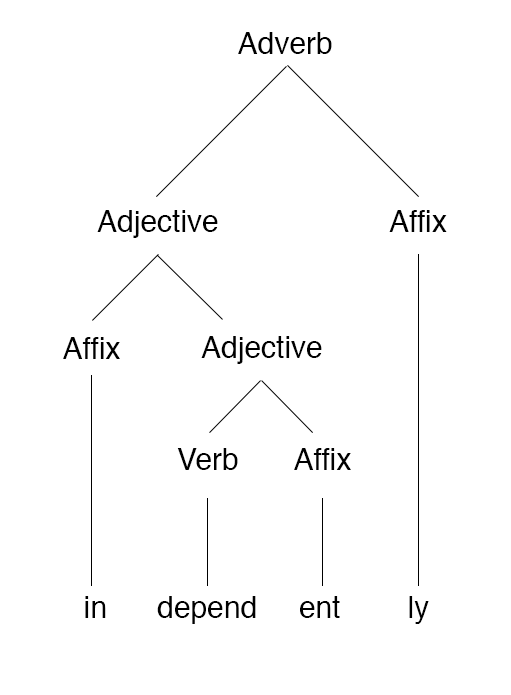
When we attach bound morphemes to a root or base word to alter its function or meaning, we call them affixes. Therefore, an affix is a bound morpheme attached to a root or base word to modify the meaning of the word.
Affixes operate based on their position:
- A prefix is an affix placed at the beginning of a base word.
- A suffix is an affix placed at the end of a base word.
Derivational vs. Inflectional Affixes
It is vital for an ELA teacher to distinguish between the two functional categories of affixes. They do fundamentally different jobs.
Derivational affixes create a new word with a significantly different meaning or a different part of speech from the base word. When you take the noun magnet and add the suffix -ize, you derive an entirely new word—the verb magnetize. You have altered its grammatical identity.
Inflectional affixes express grammatical relationships like tense or number without changing the basic meaning or part of speech of the word. If you take the noun dog and add -s to make it dogs, it remains a noun. If you take the verb walk and add -ed to make it walked, it remains a verb. The basic meaning is intact; only the tense or quantity has been adjusted.
The Canonical Roots and Affixes
Middle school students frequently encounter Greco-Latin vocabulary in science, history, and literature. Recognizing these recurring bounds morphemes allows a student to reverse-engineer a word’s meaning.
Important Conceptual Note: Teaching roots is not about rote memorization; it is about pattern recognition. When a student knows the Greek root morph means form or shape, and the Greek prefix poly- means many, they can deduce that a polymorphous entity has many forms.
Here is the essential catalog of roots and affixes you must know to guide students through complex morphological analysis:
| Morpheme | Origin | Meaning | Application Example |
|---|---|---|---|
| circum- (Prefix) | Latin | around or about | Circumnavigate (to sail around) |
| contra- (Prefix) | Latin | against or opposite | Contradict (to speak against) |
| poly- (Prefix) | Greek | many | Polygon (a shape with many angles) |
| chron (Root) | Greek | time | Chronological (in order of time) |
| dict (Root) | Latin | to say or to speak | Dictate (to say aloud) |
| aud (Root) | Latin | to hear | Audience (those who hear) |
| phil (Root) | Greek | love | Philanthropy (love of humanity) |
| morph (Root) | Greek | form or shape | Amorphous (without shape) |
| spect (Root) | Latin | to look or to see | Spectator (one who looks) |
| tract (Root) | Latin | to pull or to drag | Tractor (a machine that pulls) |
| bene (Root) | Latin | good or well | Benefactor (one who does good) |
| mal (Root) | Latin | bad or evil | Malevolent (wishing bad upon others) |

Suffixes, meanwhile, often carry heavy derivational power, signaling precisely how a word functions in a sentence:
- The suffix -ology means the study of. (e.g., Biology, the study of life).
- The suffix -ful means full of or characterized by. (e.g., Joyful, full of joy).
- The suffix -less means without. (e.g., Fearless, without fear).
- The suffix -tion typically changes a verb into a noun. (e.g., Inform becomes information).
- The suffix -ize typically changes a noun or adjective into a verb. (e.g., Modern becomes modernize).
- The suffix -ly frequently changes an adjective into an adverb. (e.g., Quick becomes quickly).
By explicitly teaching these properties, you give students the tools to decode the phrase "The philanthropist's benevolent actions." Phil (love), bene (good). The mystery dissolves into mechanics.
If morphology is the internal anatomy of a word, the surrounding text is its ecology. Words do not exist in a vacuum; they interact with the words around them.
Context clues are hints found within a sentence or paragraph that help a reader decipher the meaning of unfamiliar words. When ELA standards require students to "determine the meaning of words and phrases as they are used in a text," they are asking students to identify specific mechanisms authors leave behind.
The Five Primary Context Clues
Authors typically embed five types of clues. An adept reader maps these out through specific syntactical signals and transition words.
1. Definition Context Clues A definition context clue provides the exact meaning of an unfamiliar word directly within the sentence. Authors often rely on punctuation and specific phrasing to sneak a definition into a text. Punctuation marks like commas, dashes, and parentheses often enclose definition context clues.
- Example: "The process of apotheosis—elevation to divine status—was common for Roman emperors."

Additionally, signal phrases like that is or in other words indicate a restatement context clue, which functions almost identically to a definition clue by paraphrasing the difficult term immediately after it appears.
2. Synonym Context Clues A synonym context clue provides a word or phrase with a similar meaning to an unfamiliar word in close proximity. Writers often use parallel phrasing to amplify an idea. If a student sees an unfamiliar word, they should look for signal words like similarly, also, or likewise, which indicate a synonym context clue.
- Example: "The child was deeply recalcitrant; similarly, her brother was incredibly stubborn."
3. Antonym Context Clues Conversely, an antonym context clue provides a word with the opposite meaning of an unfamiliar word in close proximity. This creates a contrast that defines the word by what it is not. Signal words like unlike, although, or conversely indicate an antonym context clue.
- Example: "Although she expected the movie to be exciting, it turned out to be completely insipid."
4. Example Context Clues An example context clue provides specific illustrations that clarify the meaning of a broader unfamiliar term. By providing a list of familiar items, the author establishes the boundaries of the unfamiliar category. Signal phrases like such as, including, or for instance indicate an example context clue.
- Example: "The museum housed various relics, such as medieval swords, ancient pottery, and early maps."
5. Inference Context Clues Unlike the previous four, which rely on direct text signals, an inference context clue requires the reader to use logic and background knowledge to deduce an unknown word's meaning from the surrounding narrative situation. Within this category, authors frequently build logical chains. Signal words like because, since, or as a result indicate a cause-and-effect context clue.
- Example: "Because the bridge was incredibly dilapidated, the city restricted all heavy traffic from crossing it." Even without knowing the word dilapidated, logic dictates that a bridge restricted from heavy traffic must be weak, broken, or deteriorating.
When students exhaust morphology and semantic context clues, they must rely on the structural physics of the sentence itself. Syntax refers to the rules governing the arrangement of words and phrases into well-formed sentences.
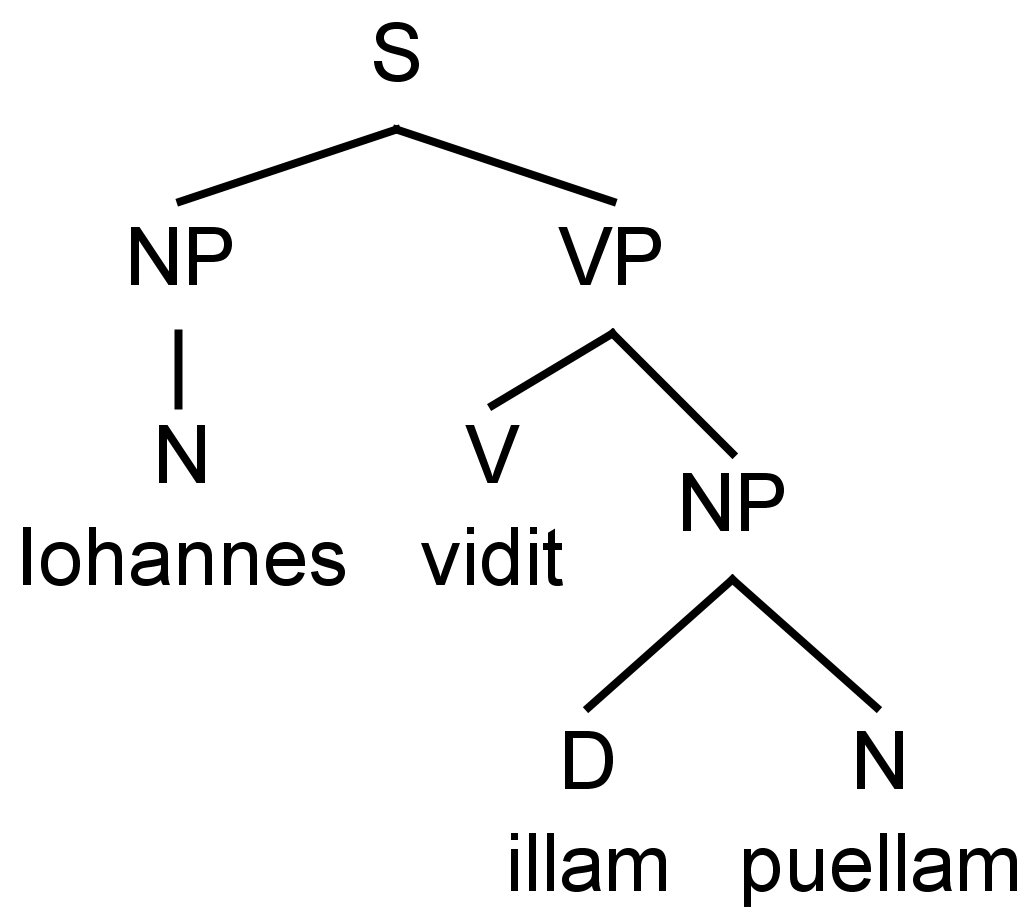
As an English teacher, you must convey a profound realization to your students: a word's syntactic position reveals the word's part of speech. English is a highly positional language. Because sentence structures operate on rigid mathematical-like rules, identifying an unknown word's part of speech narrows down the word's possible meanings. If a student knows a word must be an adjective, they automatically discard all noun or verb possibilities.
Positional Clues
We teach students to look at the immediate "neighbors" of an unknown word to determine its grammatical role:
- A word placed between a determiner and a noun typically functions as an adjective. Determiners (words like the, a, an, this, some) signal that a noun is approaching. If an unknown word sits between them, it is modifying the noun. Example: "The lugubrious hound." The (determiner) + lugubrious (unknown) + hound (noun). Lugubrious must be a descriptive adjective.
- A word placed directly after a sentence subject typically functions as a verb. Example: "The scientist corroborated the findings." Scientist (subject) + corroborated (unknown). It must be the action the scientist performed.
Advanced Syntactical Structures as Clues
Moving beyond simple parts of speech, specific syntactical architectures serve as built-in translation devices for the reader.
Appositive Phrases An appositive phrase is a noun phrase placed adjacent to another noun to rename or define the first noun. Structurally, it sits right next to its target, often set off by commas. Because its entire linguistic purpose is to rename, appositive phrases provide explicit syntactic clues for the meaning of adjacent unfamiliar nouns.
- Example: "The entomologist, a scientist who studies insects, carefully cataloged the beetle." The appositive structurally defines the target word.
Parallel Structure Parallel structure in syntax uses the same grammatical pattern of words to show that two or more ideas have the same level of importance. When a writer creates a list, they use parallel syntax (e.g., noun-noun-noun, or verb-verb-verb). Therefore, parallel structure helps readers infer the meaning of an unknown word by comparing the word to structurally similar words in the same series.
- Example: "The dictator's regime was characterized by censorship, surveillance, and subjugation." Because censorship and surveillance are mechanisms of oppressive control, the syntactically parallel word subjugation must mean something similar.
Subject-Verb Agreement Agreement rules establish a mathematical lock between nouns and verbs. Subject-verb agreement rules help a reader identify whether an unknown noun is singular or plural based on the accompanying verb form.
- Example: "The alumnae are gathering in the hall." If a student does not know if alumnae is singular or plural, the plural verb are immediately clarifies that it represents multiple people.
Transitive Verbs and Direct Objects Verbs dictate the geometry of the predicate. Some verbs, called intransitive verbs, can stand alone ("He slept"). However, transitive verbs require a direct object to complete the meaning of the action. They represent an action being "transferred" from the subject to a receiving object. Because the object receives the action, the presence of a direct object provides contextual clues to the meaning of an unfamiliar transitive verb.
- Example: "The exhausted marathon runner quaffed the entire gallon of water." The direct object is "gallon of water." What actions can a human perform upon a gallon of water? They can spill it, drop it, or drink it. The presence of the direct object forces the unknown transitive verb (quaffed) into a narrow band of logical meanings (to drink deeply or greedily).
Synthesis in the ELA Classroom
When preparing for the Praxis 5047 and stepping into the classroom, remember that teaching vocabulary is not about assigning lists from a glossary. It is about teaching the algorithmic process of deduction. When a student leverages a Latin prefix (Morphology), identifies an antonym signal word (Context), and recognizes that the unknown word functions as a transitive verb (Syntax), reading comprehension transforms from an act of guessing into an act of deduction.