Reference Materials and Dialect Variations
Not sure you’re ready?
Take the ~3-minute readiness diagnostic and see where you stand.
Language is not a static monument; it is a fluid, evolving ecosystem. To study English language arts is to act as both a field biologist and a cartographer, observing how words behave in the wild and mapping the rules that govern their formal use. For an educator, mastering this ecosystem means understanding exactly which tools to hand a student who is lost in a sea of syntax, and recognizing the rich, complex linguistic backgrounds those students bring into the classroom. We do not simply teach students to speak or write; we teach them to select the precise instrument for the specific rhetorical task, and to understand the profound social and historical forces embedded in the very syllables they utter.
Imagine trying to measure the temperature of a chemical reaction using a ruler. The tool is perfectly functional, but entirely wrong for the task. In the middle school ELA classroom, students frequently grab the nearest search bar without considering what type of information they actually need. Teaching them to distinguish among reference materials is about teaching them intellectual efficiency.
To understand reference texts, we must first acknowledge lexicography, which is the practice of compiling, writing, and editing dictionaries. Lexicographers observe language and distill it into tools we can use. But dictionaries are only one piece of the puzzle.
Navigating Words and Meanings
When a student asks, "What does this mean?" or "How do I spell this?", we guide them toward specific word-level references.
-
The Dictionary: This is the most appropriate reference for verifying the spelling of a word. Beyond spelling, a dictionary provides definitions, pronunciations, parts of speech, and etymologies—the study of word origins and how word meanings change over time. If a student wants to know whether "phobia" comes from Greek or Latin, the dictionary is their map.
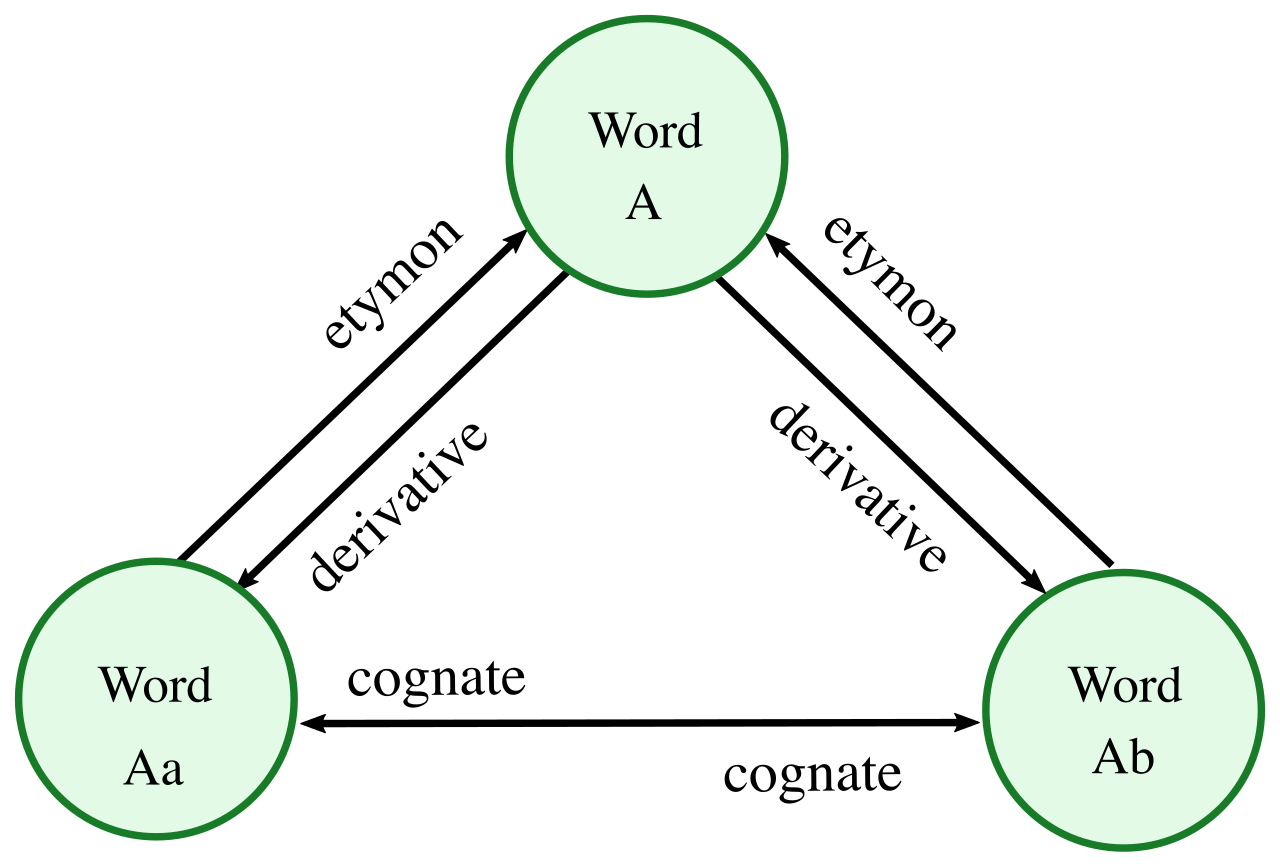
An etymological tree mapping the historical origins and evolutionary relationships between words, a feature often detailed in comprehensive dictionaries. Source: Etymological relations tree by Gufosowa, CC BY-SA 4.0. -
Online Dictionaries: The digital age has transformed lexicography. Online dictionaries frequently include audio clips to demonstrate the correct spoken pronunciation of a word, a massive advantage over print when encountering entirely unfamiliar terms.
-
The Pronunciation Guide: Often found at the beginning of a dictionary or as a standalone text, a pronunciation guide explains the phonetic symbols and rules for articulating words correctly. It translates the strange, upside-down e (the schwa) into a sound the student can produce.
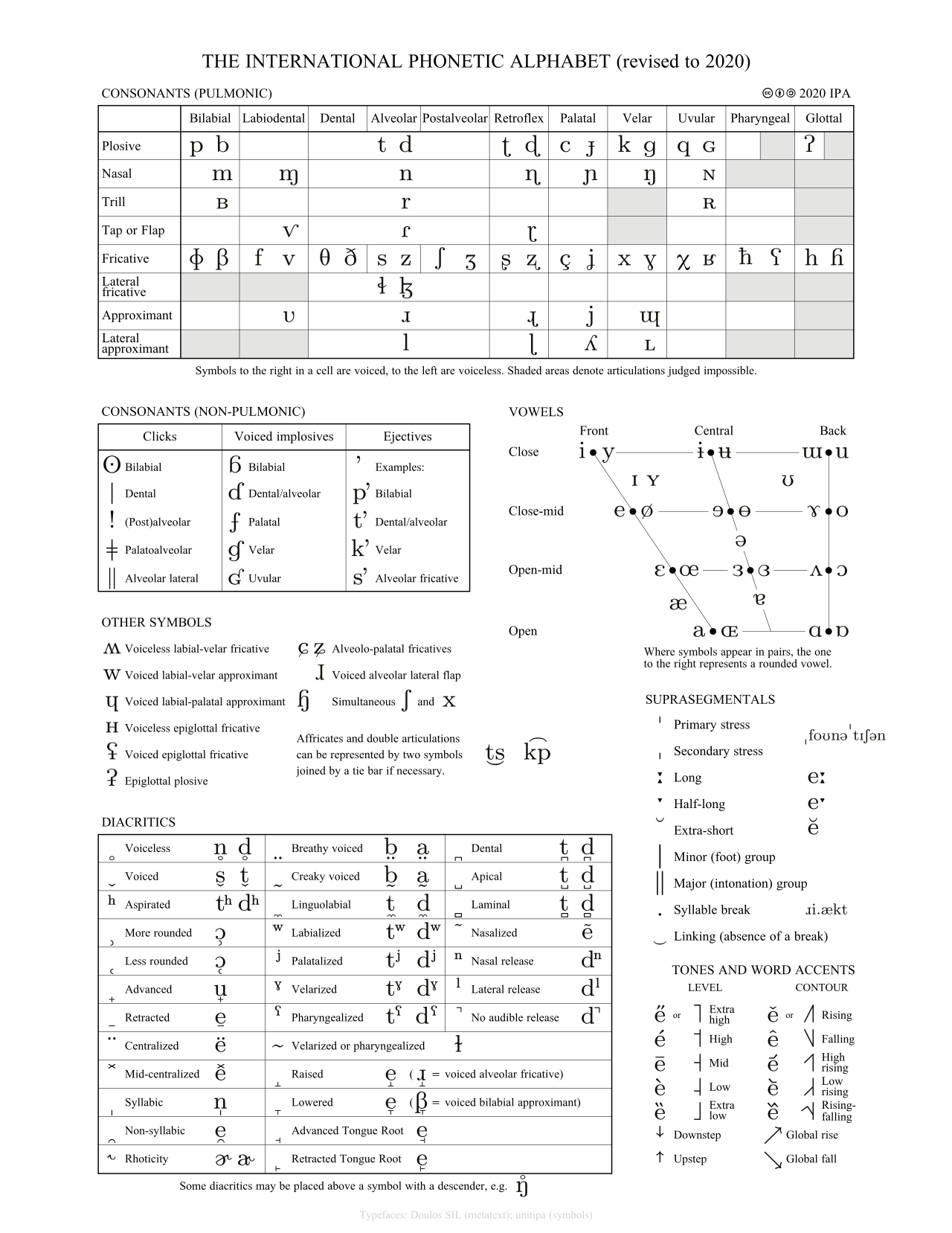
The International Phonetic Alphabet (IPA) chart provides a standardized system of symbols used in pronunciation guides to represent the exact sounds of spoken language. Source: IPA chart 2020 by International Phonetic Association, CC BY-SA 3.0. -
The Thesaurus: This is the most appropriate reference for avoiding repetitive vocabulary in a text. A thesaurus provides synonyms and antonyms to help writers find words with specific shades of meaning. If a student has written the word "sad" twelve times in a narrative essay, the thesaurus provides the gradient—from melancholy to despondent.
-
The Glossary: This provides definitions for domain-specific vocabulary and is typically located at the end of a text. A glossary is the most appropriate reference for understanding specialized terms within a specific textbook. You would not send a student to a general dictionary to understand what "mitosis" means in the context of their science reading; you send them to the book's glossary.
Navigating Facts, Rules, and Data
When the task moves beyond the definition of a single word, the toolkit must expand.
| Reference Material | Primary Function | Classroom Application |
|---|---|---|
| Encyclopedia | Provides detailed background information and articles on a wide variety of subjects. | A student needs broad historical context on the Harlem Renaissance before reading Langston Hughes. |
| Style Manual | Provides guidelines for formatting documents, citing sources, and applying punctuation rules. | It is the most appropriate reference for determining the correct citation format for a bibliography (e.g., MLA or APA). |
| Grammar Handbook | Provides comprehensive rules for syntax, sentence structure, and language usage. | A student needs to understand why a dangling modifier is incorrect or how to conjugate an irregular verb. |
| Almanac | Provides statistical data, historical facts, and current event summaries published annually. | A student needs to look up the population of Brazil in 2023 or who won the Nobel Peace Prize last year. |
| Atlas | Provides maps and geographical information. | A student needs to trace the physical route of the Oregon Trail for a cross-curricular project. |
Professor's Note: The Praxis exam frequently tests your ability to distinguish between a Grammar Handbook and a Style Manual. Remember: Grammar is the mechanics of the language itself (syntax, parts of speech). Style is the presentation of the writing (margins, Works Cited pages, whether to use a serial comma).
When your students walk into the classroom, they do not all speak the same English. If we approach language through the lens of strict prescriptivism—the linguistic approach that promotes strict rules dictating how a language should be used—we view deviations from the textbook as "errors."
However, modern linguistics relies on descriptivism—the approach that objectively analyzes and describes how a language is actually used by its speakers. Through a descriptivist lens, we see that variations in English are not mistakes; they are highly structured, rule-governed systems.
We organize these variations by studying dialect, which refers to a variety of a language characteristic of a particular group of speakers. Dialect variations include distinct differences in three main areas: vocabulary, grammar, and pronunciation.
Regional Dialects
Regional dialects develop in geographically isolated or distinct areas. When populations are separated by mountains, rivers, or sheer distance, their language evolves independently.
- Vocabulary variations in regional dialects often involve different words used to describe the same common object. (Is a sweetened carbonated beverage soda, pop, or Coke? Is a large sandwich a sub, a hoagie, or a hero?)
- Pronunciation differences in dialects can include vowel shifts and variations in consonant articulation. For example, some regions merge the vowel sounds in "cot" and "caught," while others keep them distinct.
- Grammatical differences in dialects can include variations in verb conjugation and pronoun usage.
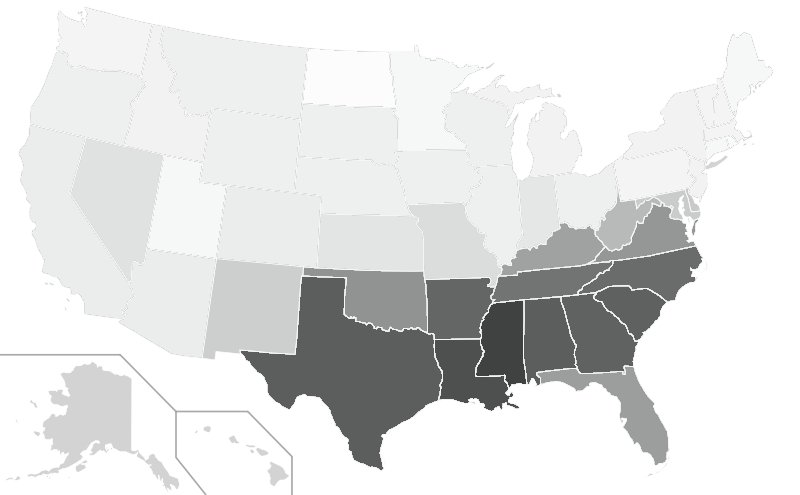
A prime example is Southern American English, a regional dialect characterized by specific vowel shifts (like the Southern drawl, where single vowels become stretched into diphthongs) and vocabulary (such as "y'all" as a second-person plural pronoun).
Sociolects and Ethnolects
Language is influenced by geography, but it is equally shaped by human connection and culture.
- Sociolects are dialects associated with specific social classes or demographic groups.
- Ethnolects are dialects associated with specific cultural or ethnic groups.
Two critical ethnolects in the American landscape are:
- African American Vernacular English (AAVE): Often misunderstood by prescriptivists as "broken" English, AAVE is an ethnolect with its own highly structured grammatical rules. For example, AAVE frequently utilizes the habitual "be" to indicate an ongoing or regular action. If a speaker says, "He be working," they are not failing to conjugate the verb "is"; they are communicating a precise grammatical aspect meaning "He works frequently or habitually," which Standard English actually lacks a concise equivalent for.
- Chicano English: This is an ethnolect spoken by many people of Mexican descent in the United States. It is not "Spanglish" or English spoken with a Spanish accent by a non-native speaker; it is a native dialect of English with its own distinct phonology and vocabulary, influenced by historical contact with Spanish.
Temporal Shifts: Historical Dialects
Language is also divided by time. Historical dialects reflect changes in language conventions across different time periods. When you teach Shakespeare, you are encountering Early Modern English, which features different vocabulary and syntax compared to Contemporary English. This is why Shakespeare uses "thou" and "doth" and places verbs before subjects in interrogative sentences ("Goes he to the market?"). It is not a different language; it is simply the dialect of a different century.

Understanding dialects allows us to respect the diverse linguistic identities of our students. But as ELA teachers, we also have a duty to teach them Standard English—the variety of English accepted as the norm for education, public life, and formal writing.
Teaching Standard English should not require erasing a student's native dialect. Instead, it involves teaching the rhetoric of diction and register.
Diction: The Words We Choose
Diction refers to the specific choice and use of words and phrases in speech or writing. Writers manipulate diction to control the tone of their text.
- Formal diction uses elevated, sophisticated language and avoids slang or colloquialisms. (e.g., "The protagonist exhibited profound trepidation.")
- Informal diction uses casual, conversational language and often includes colloquialisms. (e.g., "The main character was pretty scared.")
- Colloquialisms are informal words or phrases typically used in ordinary, familiar conversation. ("Y'all," "gonna," "kid.")
- Slang consists of very informal language usually restricted to a particular group or context. Slang evolves rapidly; the slang of today's middle schoolers will be obsolete before they graduate.
- Jargon consists of specialized terminology used by a specific profession or interest group. When we talk about "formative assessments" and "scaffolding," we are using educational jargon.
Register and Code-Switching
If diction is the paint, register is the canvas. Register refers to the level of formality and tone adapted to a specific audience or social setting. You speak in a different register to your school principal than you do to your best friend.
When a student successfully navigates these different social settings, they are engaging in code-switching—the practice of alternating between two or more linguistic varieties in a single conversation. A student might use AAVE with their peers in the hallway, switch to Standard English formal register to write an essay, and use regional slang at the dinner table.
As an educator, your goal is to help students become conscious of their code-switching. When they understand that different environments require different tools, they cease to see Standard English as an oppressive rulebook, and instead recognize it as one more powerful instrument in their vast, linguistic toolkit.