Sentence Structure and Mechanics
Not sure you’re ready?
Take the ~3-minute readiness diagnostic and see where you stand.
When an architect designs a suspension bridge, they do not toss cables and steel beams into the air, hoping they land in a recognizable shape. They rely on the invisible laws of physics to distribute weight, manage tension, and create safe passage. Grammar and mechanics are the physics of human language. To a middle school student, a sentence often feels like a random, chaotic jumble of words. As an English language arts teacher, your job is to reveal the structural engineering behind the prose. When you teach a student to justify their grammar and usage choices, you are not merely enforcing arbitrary rules; you are handing them the blueprints to build thoughts that will not collapse under the weight of their own meaning.

Before we can construct rhetorical masterpieces, we must understand the fundamental building blocks of standard English. At the heart of every sentence is the clause.
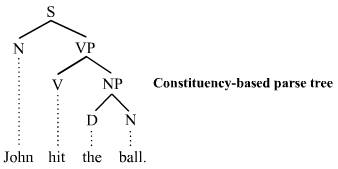
An independent clause contains a subject and a verb and expresses a complete thought. It is grammatically self-sufficient—a stable atom. Conversely, a dependent clause also contains a subject and a verb, but it is unstable; a dependent clause cannot stand alone as a complete sentence. It relies on an independent clause to anchor it.
By combining these clauses, writers dictate the pacing and complexity of their ideas through four structural types:
- Simple sentence: A simple sentence consists of exactly one independent clause.
- Compound sentence: A compound sentence consists of two or more independent clauses.
- Complex sentence: A complex sentence contains one independent clause and at least one dependent clause.
- Compound-complex sentence: A compound-complex sentence contains at least two independent clauses and at least one dependent clause.
Why do these structures matter to a writer? Because syntax is a rhetorical tool. Short, simple sentences can be utilized rhetorically to create tension or emphasize a specific point. Imagine a student writing a narrative climax: The door creaked. The shadow moved. I froze. The simplicity mimics a racing heartbeat. By contrast, complex sentences are utilized rhetorically to demonstrate cause-and-effect relationships between ideas, naturally subordinating one idea to another: Because Jonas realized the true nature of "release," he decided to flee the community.
When students attempt to build beyond their current grasp of syntax, the engineering breaks down. You must train your students to spot and repair these structural failures.
Boundary Errors
- A sentence fragment is an incomplete sentence missing a subject, a verb, or a complete thought. It is a bridge that drops off into the river.
- A run-on sentence incorrectly fuses two independent clauses without appropriate punctuation.
- A comma splice occurs when two independent clauses are joined by only a comma. This is like trying to hold two steel girders together with a piece of Scotch tape.
Alignment Errors
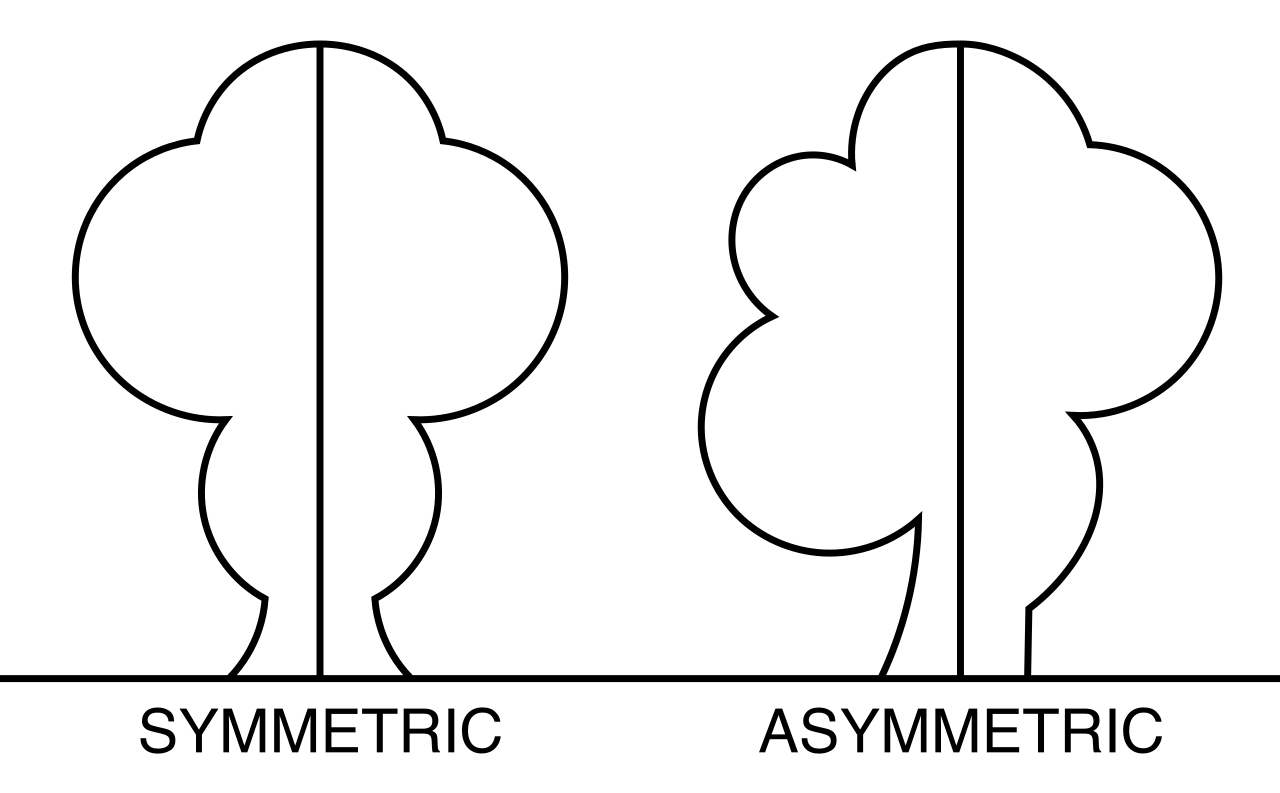
Just as a bridge requires symmetrical tension, a sentence requires symmetry. Parallel structure requires using the same grammatical form for coordinate elements in a sentence. Consider the difference between “The protagonist likes running, jumping, and to swim” (unbalanced) and “The protagonist likes running, jumping, and swimming” (parallel).
Modifier Malfunctions
Modifiers add vivid detail to writing, but they must be positioned precisely.
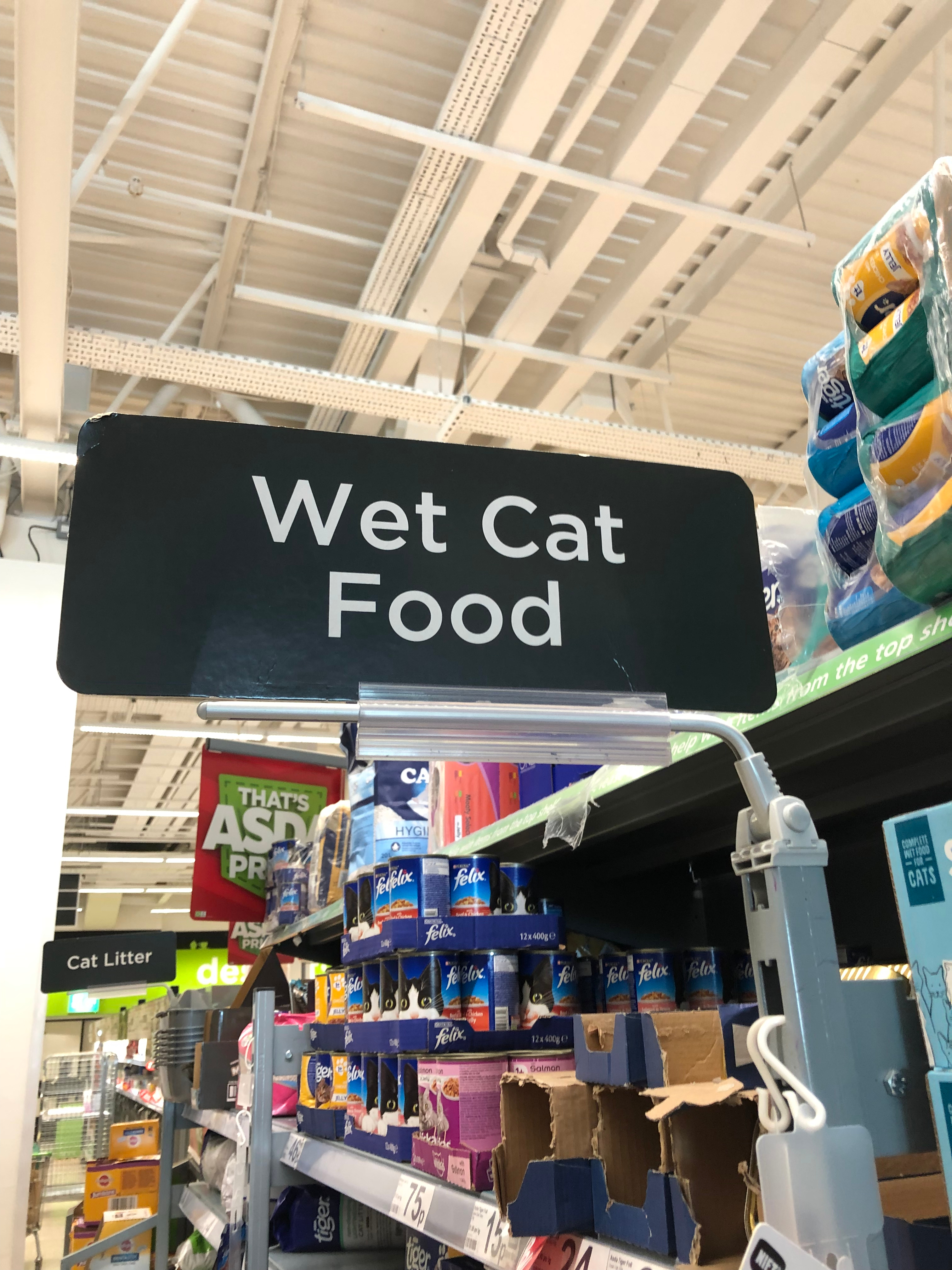
- A misplaced modifier is a phrase or clause placed too far from the word the phrase is intended to modify. Because of their proximity to the wrong nouns, misplaced modifiers create ambiguity regarding what word is being modified. (e.g., "The teacher handed back the essays to the students covered in red ink." Are the students covered in ink, or the essays?)
- A dangling modifier is a phrase or clause that modifies a word not explicitly stated in the sentence. (e.g., "Walking into the classroom, the bell rang." The bell was not walking.)
The Question of Voice
Structural choices also extend to voice.
- Active voice structurally emphasizes the performer of the action. (The principal canceled the dance.) It is direct, forceful, and usually preferred.
- Passive voice structurally emphasizes the receiver of the action. (The dance was canceled by the principal.) While middle schoolers are often taught to banish the passive voice, it is a legitimate tool. In fact, passive voice is grammatically justified when the performer of an action is unknown or irrelevant. (e.g., "The school was built in 1952.")
Punctuation marks are not mere decorations; they are traffic signals dictating the flow, connection, and hierarchy of ideas.
The Comma: The Versatile Connector
Commas provide brief pauses and necessary separation to prevent syntactic pileups.
- Linking Clauses: A comma placed before a coordinating conjunction links two independent clauses. The coordinating conjunctions in standard English are for, and, nor, but, or, yet, and so (easily remembered by the acronym FANBOYS).
- Introductions: A comma separates an introductory phrase or dependent clause from the main independent clause. (“After reading the chapter, the students debated its theme.”)
- Lists: Commas separate three or more items in a list or series.
- Restrictive vs. Nonrestrictive Elements: This is a crucial distinction in meaning. Commas set off nonrestrictive elements in a sentence. A nonrestrictive element adds extra information not essential to the core meaning of a sentence. However, commas must not enclose restrictive elements in a sentence. A restrictive element provides essential information required to identify a noun in a sentence.
Nonrestrictive (use commas): My brother, who loves Shakespeare, is an actor. (I only have one brother; the Shakespeare detail is extra.) Restrictive (no commas): The students who failed the quiz must attend tutoring. (Identifying exactly which students is essential; the clause is restrictive.)
The Semicolon: The Logical Suture
Many young writers are terrified of the semicolon. Demystify it. A semicolon links two closely related independent clauses without the use of a coordinating conjunction. Writers choose semicolons over periods to emphasize the logical connection between two distinct ideas.
- A semicolon precedes a conjunctive adverb linking two independent clauses. (“The protagonist faced an impossible choice; therefore, he sought the mentor's advice.”)
- A semicolon separates items in a complex series containing internal commas. (“We visited Springfield, Illinois; Madison, Wisconsin; and Austin, Texas.”)
The Colon: The Anticipator
A colon acts as a drumroll. It creates a sense of expectation.
- A colon introduces a list following an independent clause.
- A colon introduces an explanation or elaboration of the preceding independent clause.
- A colon introduces a block quotation or a formal statement.
- The Golden Rule: A colon must only follow a complete independent clause. You cannot write: The three themes are: love, death, and time. (The clause preceding the colon is incomplete).
Degrees of Interruption: Em Dashes and Parentheses
When a writer wishes to insert a thought into the middle of a sentence, they have three structural choices for enclosing it: commas, em dashes, or parentheses. Each carries a different rhetorical weight.
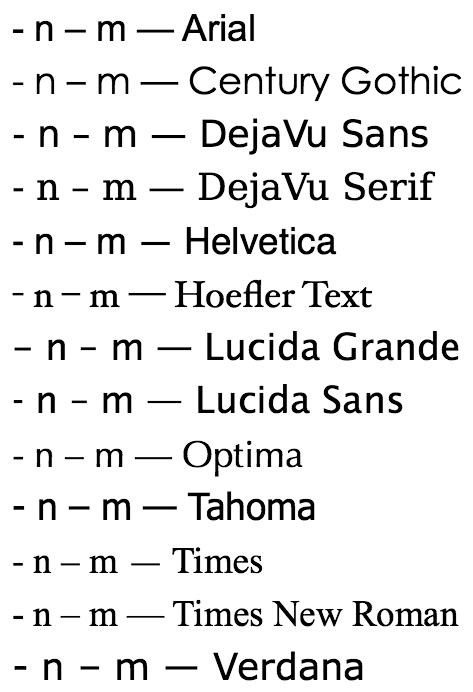
- An em dash indicates a sudden break or shift in thought within a sentence. Em dashes can set off a nonrestrictive phrase to create strong rhetorical emphasis. It thrusts the information into the spotlight.
- Parentheses enclose supplementary or clarifying information. However, unlike the em dash, parentheses structurally de-emphasize the enclosed information compared to commas or em dashes. They whisper to the reader.
Omission and Ownership
- An ellipsis indicates the deliberate omission of words from a quoted text. It shows the reader that the writer has truncated a longer thought for relevance.
- An apostrophe serves two distinct functions: it indicates the possessive case of nouns, and it indicates the omission of letters in a contraction.
Quotations and Capitalization
When managing quoted material and proper nouns, precision is paramount.
- Standard English conventions require capitalizing proper nouns.
- Standard English conventions require capitalizing the first word of a quoted complete sentence. (She asked, "Where is the library?")
- Conversely, standard English conventions dictate lowercase letters for the second part of an interrupted quotation. (“I believe,” she said, “that the library is closed.”)
Much of middle school ELA grading involves disentangling misused words. When words sound alike but behave differently, students rely on rote memorization. Help them understand the function of the words instead.
Pronouns vs. Contractions
The most persistent errors stem from confusing possessives with contractions. Remind students that contractions always represent two merged words.
| Word | Function / Definition | Example |
|---|---|---|
| its | A possessive pronoun indicating ownership. | The dog chased its tail. |
| it's | A contraction of "it is" or "it has". | It's raining outside. |
| their | A plural possessive pronoun indicating ownership. | The students lost their books. |
| there | Functions as an adverb of place or a pronoun introducing a sentence. | Look over there. There is no time. |
| they're | A contraction of "they are". | They're going to the museum. |
| your | A possessive pronoun indicating ownership. | Please open your notebooks. |
| you're | A contraction of "you are". | You're making a great argument. |
| who | A subjective pronoun used as the subject of a sentence or clause. | Who wrote this essay? |
| whom | An objective pronoun used as the object of a verb or preposition. | To whom did you give the letter? |
Transitive vs. Intransitive Verbs (Lie vs. Lay)
This pairing confounds even seasoned adults because they fail to distinguish between transitive and intransitive verb requirements.
- The verb lie means to rest or recline. The verb 'lie' is an intransitive verb and does not take a direct object. (I will lie down on the couch.)
- The verb lay means to put or place something down. The verb 'lay' is a transitive verb and requires a direct object. (I will lay the book on the table.)
Nuances of Meaning and Form
Finally, your students must navigate a landscape of homophones and near-homophones. Teach them the distinct conceptual domains of these pairings:
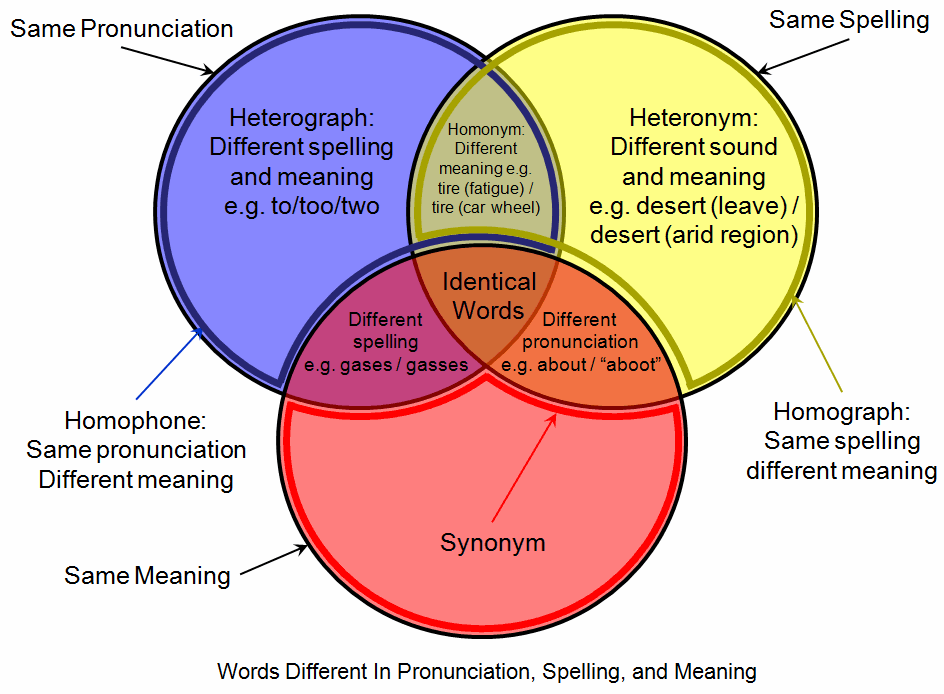
- Affect vs. Effect: The word affect is typically used as a verb meaning to influence or change something. (The weather affects my mood.) The word effect is typically used as a noun meaning a result or outcome. (The law had a positive effect.)
- Accept vs. Except: The word accept is a verb meaning to receive or agree to something. The word except is a preposition meaning excluding.
- Than vs. Then: The word than is a conjunction used to make comparisons between entities. (Taller than me.) The word then is an adverb indicating time or sequence. (We ate, then we left.)
- Principal vs. Principle: The word principal can mean a school administrator or a primary sum of money. The word principle refers to a fundamental truth, rule, or belief.
- Complement vs. Compliment: The word complement means something that completes or enhances another thing. (The cheese complements the wine.) The word compliment means an expression of praise or admiration.
- Lose vs. Loose: The word lose means to misplace something or fail to win. The word loose is an adjective meaning not tight or unbound.
- Farther vs. Further: The word farther refers to physical distance. (He ran farther down the road.) The word further refers to metaphorical distance or degree. (We need to discuss this further.)
- Elicit vs. Illicit: The word elicit is a verb meaning to evoke or draw out a response. (The teacher elicited answers from the class.) The word illicit is an adjective meaning forbidden by law, rules, or custom.
- Eminent vs. Imminent: The word eminent describes a person who is famous and respected within a particular sphere. The word imminent describes an event that is about to happen.
- Allusion vs. Illusion: The word allusion is an expression designed to call something to mind without mentioning the thing explicitly. (A literary reference). The word illusion refers to a false idea or a deceptive appearance.
Understanding mechanics goes far beyond avoiding red ink on a page. When you teach a student the difference between a semicolon and an em dash, or the reason a complex sentence maps so perfectly onto a complex thought, you are giving them agency over their own intellect. You are teaching them how to build bridges that will stand the test of time and truth.