When a paleontologist examines a fossilizedtrackway in the mud, the physical footprints are the absolute, undeniable data. They reveal the number of toes, the depth of the impression, and the stride length. But the paleontology does not stop at the footprint; from those physical impressions, the scientist deduces the weight, speed, and even the social behavior of the animal. Teachingmiddle school students to read literature requires a similar, dual-layered framework of observation and deduction. To analyze a text successfully, students must first observe exactly what is physically printed on the page before they can logically deduce the unseen realities the author has constructed.
Just as paleontologists use literal, physical footprints to deduce the unseen characteristics of an extinct animal, readers use literal textual evidence to deduce an author's implicit meaning.
Before a student can analyze the architecture of a text, they must be able to inventory its bricks. Literal interpretation involves understanding the exact, explicit meaning of words and events in a literary text. It is the process of extracting exactly what the author put on the page, without addition or embellishment.
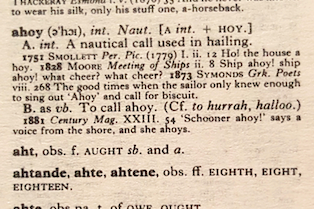
At this level, students are dealing with explicit information, which is directly and clearly stated by the author within the text. If an author writes, "The rustedirongate was locked," the explicit information is simply the state and material of the gate. To comprehend this, a reader must rely on denotation, which is the literal, dictionarydefinition of a word independent of emotional associations. "Rusted" denotes oxidized metal; "locked" denotes secured.
Literal interpretation relies on denotation, which extracts the exact, objective dictionary definitions of the words an author has chosen.
Crucial Pedagogical Truth:Literal comprehension forms the necessary foundation for higher-order literary analysis. A student cannot accurately analyze the symbolism of the rusted gate if they have not first literally comprehended that the gate is, in fact, locked and made of decaying metal.
We see literal comprehension tested and demonstrated in the classroom through distinct activities:
Summarizing a literary text demonstrates literal comprehension of the primary plot points and characters. When a student summarizes, they strip away the analysis and isolate the core facts.
By extension, objective literary summaries rely exclusively on the literal meaning and events of a text. They do not contain the student's opinions or guesses about the underlying meaning.
Identifying the setting of a story is a literal comprehension task if the author explicitly names the time and location. (e.g., "It was London, 1894.")
Once the literal foundation is secure, the real joy of reading begins. Literature rarely spells out its deepest truths; it gestures toward them. Inferential interpretation requires the reader to uncover meanings that are not directly stated by the author.
To do this, readers must process implicit information, which is suggested or hinted at by the text rather than explicitly stated. When readers engage with implicit information, they are making inferences. An inference is a logical conclusion derived from combining textual clues with the reader's background knowledge.
While literal reading relies on denotation, inferential reading heavily weighs connotation—the emotional or cultural associations implied by a word beyond the dictionary definition. If a character "trudges" rather than "walks," the denotation is movement, but the connotation implies exhaustion, reluctance, or sorrow.
In the middle school classroom, inference is the engine behind most analytical tasks:
Analyzing character motivation often requires inferring reasons from the character's actions and dialogue. Authors rarely say, "John did this because he was jealous." Instead, John sneers at his friend's new bicycle—and the student must infer the jealousy.
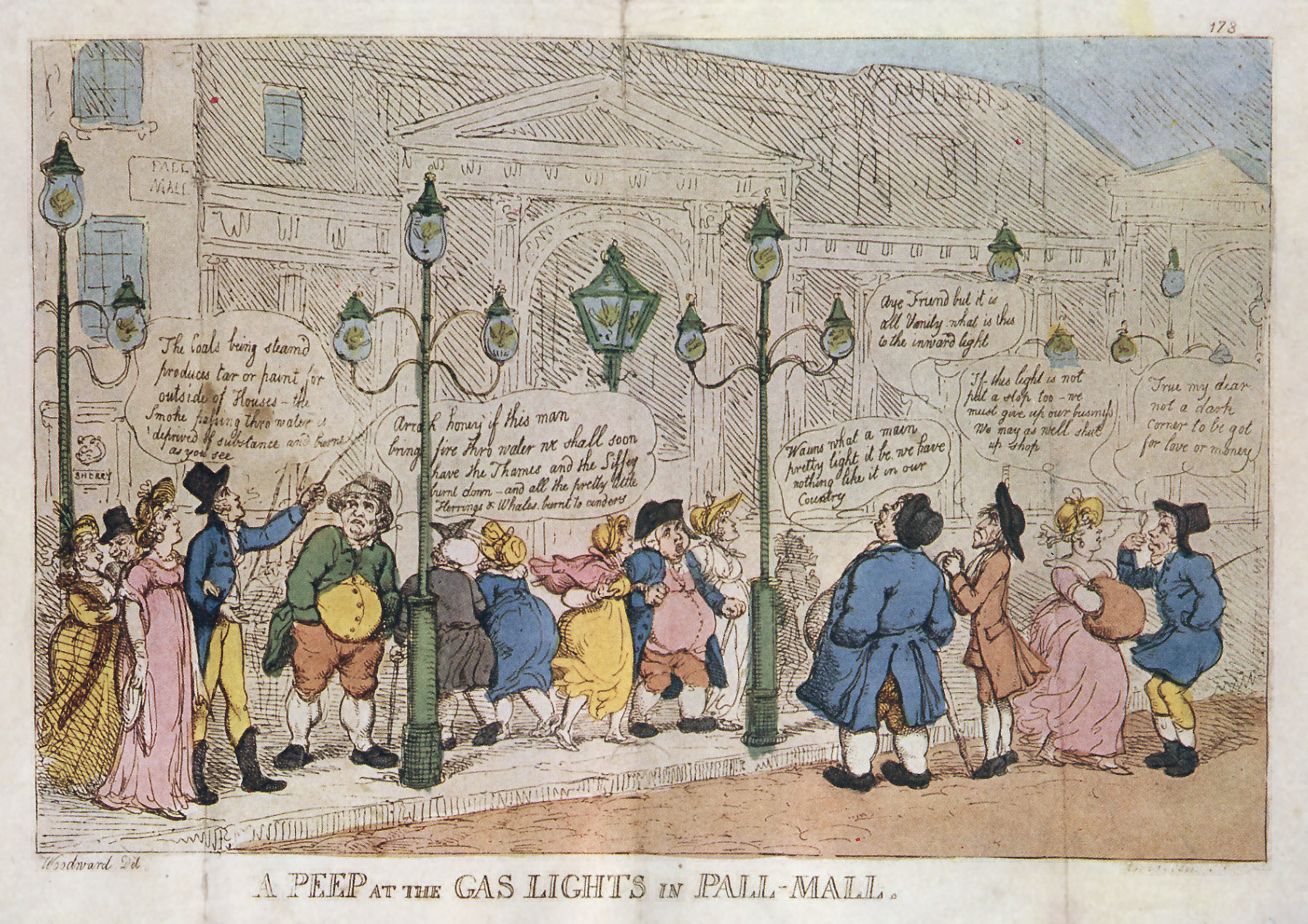
Historical environmental clues, such as the use of early gas lighting on city streets, require students to use their background knowledge to infer a story's time period and setting without it being explicitly stated.
Recognizing a narrator's bias requires inferential interpretation of the narrator's tone and specific word choices. The narrator will almost never announce, "I am an unreliable, prejudiced observer." The reader must infer this from how the narrator describes other characters.
Finally, discovering the core meaning of a work is an inferential act. A literary theme is typically an implicit message requiring inferential interpretation to identify.
As a teacher, you will frequently encounter students who make wild guesses about a story and defend them by saying, "That's just my interpretation!" It is vital to teach the boundary between a valid inference and mere guesswork.
A valid literary inference must be firmly rooted in the details provided within the text itself. If a character is described as trembling before speaking to a crowd, inferring that the character is nervous is highly valid. Conversely, speculation diverges from valid inference because speculation lacks direct support from textual evidence. If a student claims the trembling character is suffering from an undisclosed neurological disorder with no other clues provided in the text, they have crossed into speculation.
In the economy of literary analysis, ideas are cheap, but proof is strictly regulated. Textual evidence consists of specific details from a text used to support a reader's analysis or claim.
A fundamental rule of literary study is that textual evidence is strictly required to validate both literal claims and inferential claims about literature. You cannot prove a summary is accurate, nor can you prove a thematic analysis is valid, without pointing back to the text. Even when a text allows for multiple readings, subjective reader interpretations must still be anchored by objective, verifiable textual evidence.
Forms and Functions of Evidence
When students gather evidence, they generally use two primary methods:
A direct quotation reproduces a text's exact words to serve as textual evidence. This is the most surgical and precise tool, placing the author's exact phrasing under the microscope.
Paraphrasing restates a text's ideas in the reader's own words to serve as evidence while retaining the original meaning. This is highly useful when a student needs to condense a large section of literal text to support a broader point.
Not all evidence is created equal. Strong textual evidence directly and logically supports a specific claim about a literary text. If a student claims a character is generous, quoting a scene where the character buys a luxuriouscoat for themselves is textual evidence, but it is weak or invalid evidence for that specific claim.
Furthermore, middle school texts begin to feature complex narratives where a single quote isn't enough. Synthesizing details from multiple different parts of a text is often necessary to support a complex inference. A character's growth over a novel, for instance, requires evidence from the beginning, middle, and end, woven together to prove the transformation.
How do we actually teach the cognitive leap from the literal to the inferential? The middle school brain is transitioning from concrete to abstract reasoning, and teachers must build scaffolds to bridge this gap.
Close reading is an instructional strategy involving multiple readings to uncover deep layers of literal and inferential meaning. In a close read, the first pass is almost purely literal—establishing the plot, setting, and basic character facts. Subsequent passes prompt students to look at the text through an inferential lens, analyzing the connotation of specific word choices and thematic hints.
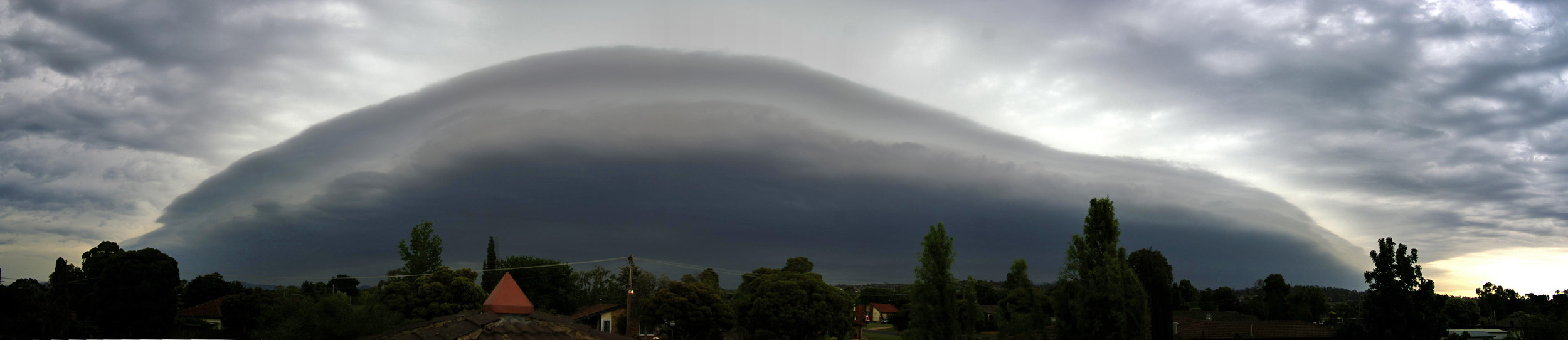
Because the process of making an inference is invisible—it happens inside the reader's head—teachers must make it visible. Think-alouds are pedagogical tools used by teachers to model the cognitive process of making inferences from text. By reading a passage aloud and pausing to say, "When the author writes that the sky turned a bruised purple, it makes me feel a sense of impending danger because of my background knowledge about severe storms," the teacher is showing students the mental formula: Textual Clue + Background Knowledge = Inference.
During a think-aloud, a teacher might explicitly model how an author's descriptive textual clues about a darkening sky combine with a reader's background knowledge of severe storms to form a valid inference.
Finally, to help students practice this on their own, teachers rely on visual scaffolding. Graphic organizers help middle school students visually connect explicit text evidence to their independently drawn inferences. A common iteration is a two-column chart: the left column asks for "What the Text Says" (Explicit Evidence/Direct Quotation), and the right column asks for "What I Infer" (Implicit Meaning). This mechanical separation forces the student to recognize the distinction between literal data and inferential logic, ensuring their highest-order literary analysis is always built upon a solid, objective foundation.