Poetic Devices and Structure
Not sure you’re ready?
Take the ~3-minute readiness diagnostic and see where you stand.
Imagine handing a middle school student a dismantled clock: a scattered pile of brass gears, tension springs, and tiny screws. Separately, these pieces do nothing. But arranged with precise mechanical logic, they track the passage of time. Poetry operates on the exact same principle. A poem is a machine made of words. The poet’s gears are syntax and sound; their springs are line breaks and stanzaic forms. For the aspiring English language arts teacher preparing for the Praxis 5047 exam, approaching poetry cannot be an exercise in mere memorization. You must teach your students to see how the gears interlock—how structural and linguistic choices engineer human emotion.
To analyze a poem is to reverse-engineer it. We must look at the blueprint of its stanzas, the rhythm of its engine, the acoustics of its language, and the physical architecture of its form. Let us take the machine apart.
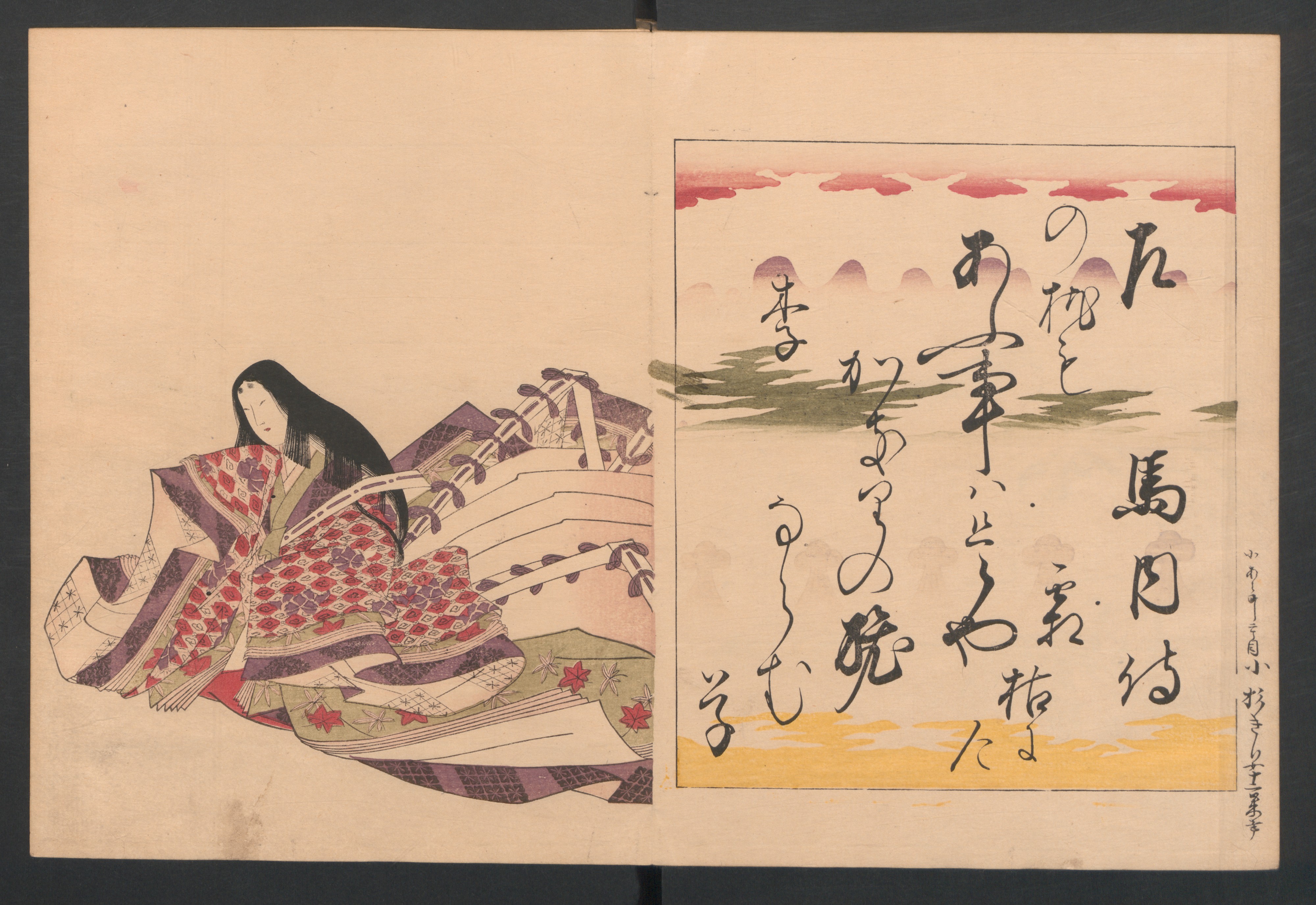
Before your students read a single word of a poem, their eyes scan the page. The physical shape of the text sets their psychological expectations. Typography and physical layout in a poem can visually reinforce the literal meaning of the text. A poem about a winding river might snake across the page; a poem about a falling leaf might scatter its words downward.
The primary building block of this architecture is the stanza, which is simply a grouped set of lines within a poem. In terms of function, stanzas function like paragraphs in prose to organize thoughts or shift topics within a poem. A poet’s choice of stanza length is never accidental—it directly influences the visual pacing and thematic grouping of ideas on the page.
We categorize stanzas mathematically:
- Couplet: A stanza consisting of two consecutive lines of poetry that typically rhyme and have the same meter. Couplets often act as quick, punchy conclusions.
- Tercet: A stanza composed of exactly three lines.
- Quatrain: A stanza containing exactly four lines. This is the workhorse of English poetry, providing a stable, square framework.
- Sestet: A stanza containing exactly six lines.
- Octave: A stanza containing exactly eight lines.
Why this matters for your students: When a student understands that an octave often builds up a problem and a sestet resolves it, they stop guessing the poem’s meaning and start analyzing its blueprint.
If stanzas are the paragraphs, the poetic line is the unit of breath. A poet controls exactly how fast a reader consumes the text by manipulating punctuation and line breaks.
When an idea reaches the end of a line and halts, we call it an end-stopped line. This line concludes with a punctuation mark indicating a distinct syntactic pause. Analytically, end-stopped lines slow the rhythm of a poem to emphasize specific thoughts or create a sense of finality. It forces the reader to stop, digest, and reset.
Conversely, enjambment occurs when a poetic line continues into the next line without a terminal punctuation mark. Instead of a stop sign, enjambment acts like a cliff edge. Enjambment accelerates the pace of reading by pulling the reader's eye rapidly to the next line. A poet writing about panic, running, or uncontrollable passion will heavily enjamb their lines to induce a sense of breathlessness in the reader.
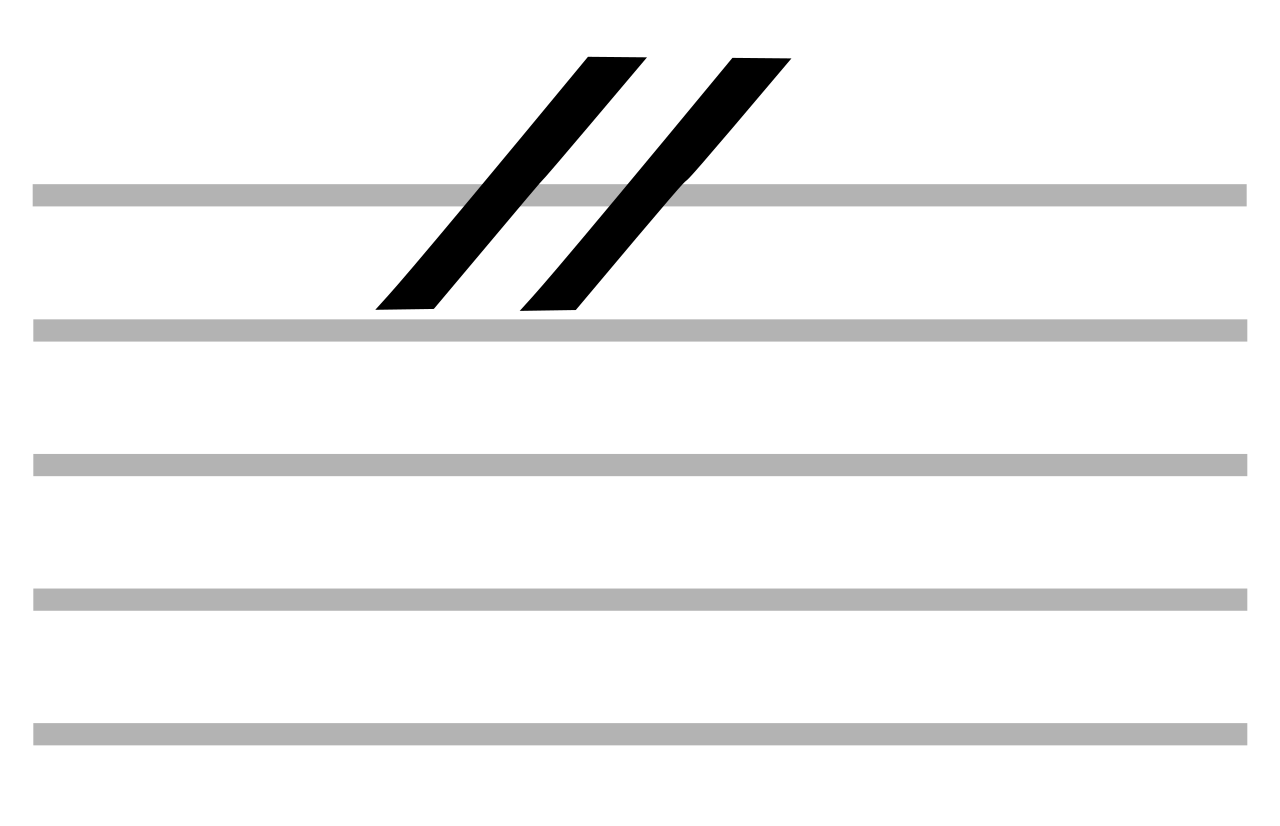
Sometimes, the poet hits the brakes right in the middle of the line. A caesura is a strong metrical pause or break within a single line of poetry (often punctuated by a dash, period, or semicolon). By interrupting the expected flow, a caesura creates a dramatic hesitation to emphasize a specific word or introduce an abrupt shift in tone.
Underneath the words lies the acoustic engine of the poem: its meter. Meter is the basic rhythmic structure of a verse or lines in a poem. It is the heartbeat of the text. Crucially, meter provides an underlying beat that can underscore a poem's emotional intensity.
We measure meter in "feet," which are specific combinations of stressed and unstressed syllables:
-
Iambic meter consists of an unstressed syllable followed by a stressed syllable (da-DUM). Why is it so ubiquitous in English? Because iambic meter closely mimics the natural cadence of conversational spoken English. When Shakespeare wrote his plays, he used iambic rhythms so the actors sounded like they were speaking naturally, yet elevated.
-
Trochaic meter consists of a stressed syllable followed by an unstressed syllable (DUM-da). Because it strikes the heavy beat first, trochaic meter often sounds forceful or chanting due to the initial stressed beat in each foot. Think of the witches in Macbeth: "DOUBLE, DOUBLE, TOIL and TROUBLE." It feels urgent and unnatural.
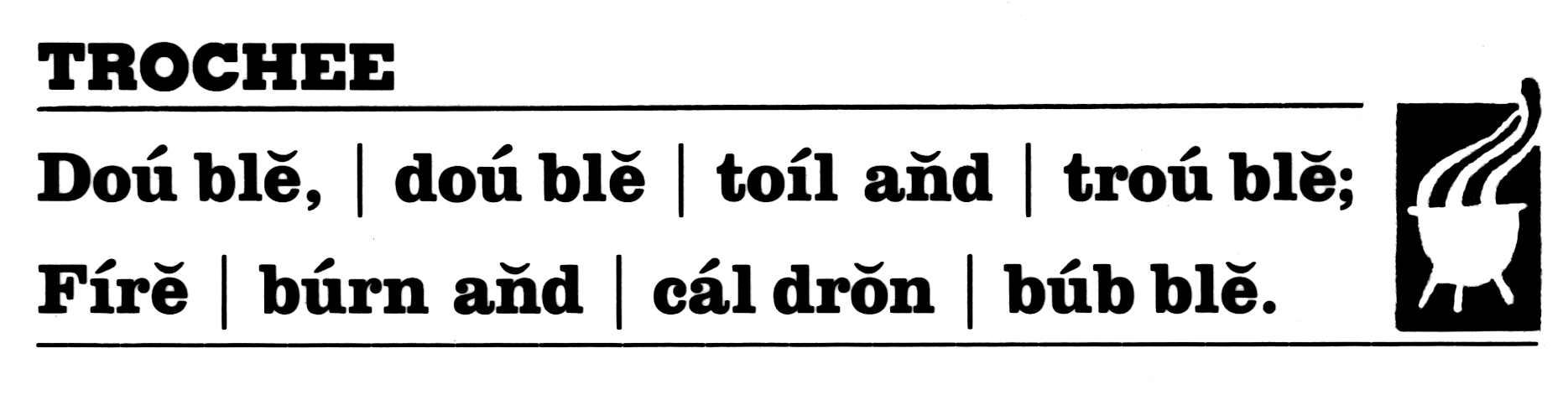
The chanting, urgent rhythm of the witches' spell in Shakespeare's Macbeth is a classic example of trochaic tetrameter.
Meter and Form
When a poet applies meter consistently, they build specific verse forms:
- Blank verse is poetry written with regular metrical patterns but entirely unrhymed lines. It is structured, yet highly fluid. In English literature, blank verse is predominantly written in iambic pentameter (five iambs per line).
- Free verse strips the gears entirely. It is poetry that does not use consistent meter patterns or explicit rhyme schemes. However, it is not lawless. Free verse allows a poet to dictate rhythm entirely through arbitrary line breaks and syntax manipulation, shifting the power away from traditional metrical rules directly into the poet's typographical choices.
Sound is not merely decoration; it is a mechanism of meaning. The most obvious of these mechanisms is the rhyme scheme, which is the ordered pattern of rhymes at the ends of the lines of a poem or verse (e.g., ABAB, CDCD). A regular rhyme scheme creates a predictable rhythm that can establish a comforting or lighthearted tone.
But what happens when the poet wants the reader to feel uncomfortable? They use slant rhyme, which involves words with similar but not identical sounds (like room and storm, or prove and love). Psychologically, slant rhyme creates a sense of unease or subverts reader expectations by avoiding perfect sonic resolution. It leaves a chord ringing unresolved.
Alternatively, a poet might pack rhymes inside the lines. Internal rhyme occurs when a word in the middle of a line rhymes with a word at the end of the same line or in the middle of the next. Doing this accelerates the musicality and sonic density within a single poetic line, making the language feel remarkably tight, fast, and lyrical.
The Physics of Consonants and Vowels
To truly impress upon your middle schoolers the power of craft, teach them to listen to the letters themselves:
-
Alliteration is the repetition of identical initial consonant sounds in successive or closely associated syllables (Peter Piper picked...). Because of its highly visible nature, alliteration draws attention to specific phrases by creating a linking musical effect.
-
Consonance is the repetition of similar consonant sounds in close proximity within or at the ends of words (like the ck sound in thick, black block).
-
Assonance is the repetition of vowel sounds across a line of text (like the long o in slow, cold ocean). Unlike the hard strikes of consonants, assonance creates an internal echoing effect to subtly enhance the emotional mood of a poem.
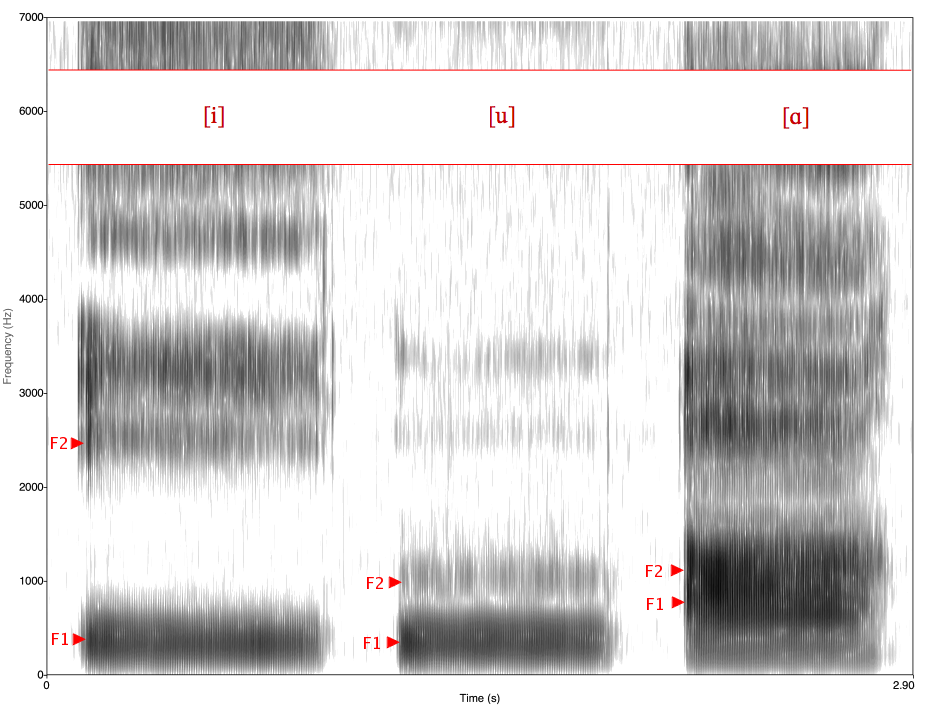
A spectrogram analyzing human vowel sounds. Poets manipulate these acoustic frequencies—pairing high, sharp vowels or low, resonant ones—to physically alter a poem's atmospheric mood. Source: Spectrogram -iua-, CC BY 2.0.
The specific sounds chosen dictate the atmosphere. Repeated soft consonant sounds (like s, m, l, w) can establish a calming or melancholic atmospheric mood. Conversely, repeated hard consonant sounds (like k, t, p, g) can create an aggressive, urgent, or highly energetic tone.
Furthermore, poets can bypass abstract language entirely by employing onomatopoeia—the use of words that imitate the sounds associated with the objects or actions the words refer to (buzz, crack, hiss). Onomatopoeia enhances poetic imagery by appealing directly to the reader's auditory sense.
Language in a poem must do double duty. A poet cannot simply state a fact; they must evoke an experience. They achieve this through figurative language.
-
Simile: A figure of speech comparing two different things using the explicit words "like" or "as." It places two concepts side-by-side for comparison.
-
Metaphor: A figure of speech describing an object or action in a way that is not literally true. A metaphor fuses two concepts. Mechanically, metaphors construct layers of meaning by transferring the inherent connotations of one object directly onto another. If a poet says "the classroom is a zoo," they transfer the chaos and noise of a zoo directly onto the students.
-
Personification: The attribution of human characteristics or behaviors to something entirely nonhuman. We are highly social creatures; therefore, personification makes abstract concepts or inanimate objects more relatable and emotionally resonant for the reader.
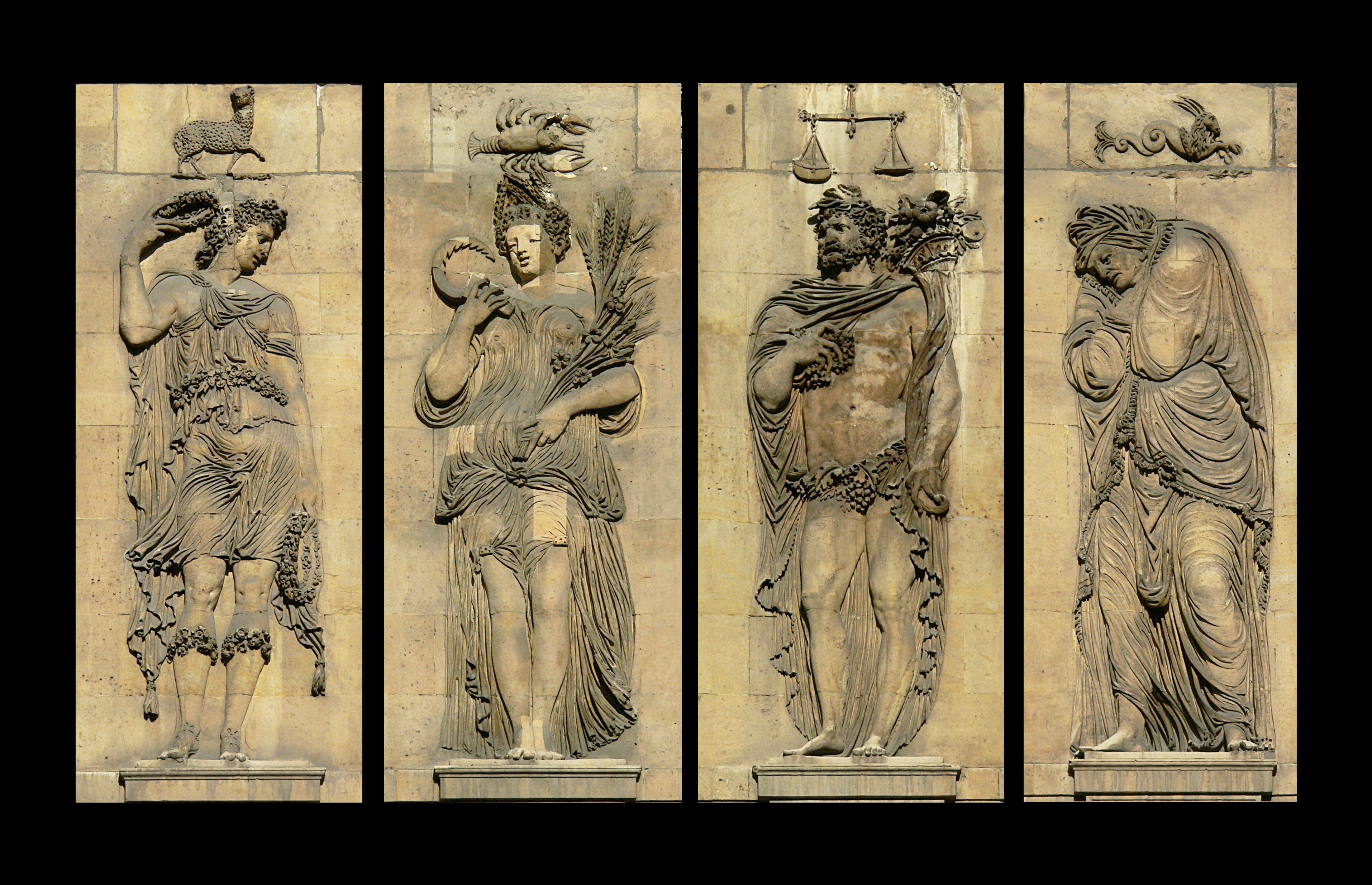
Visual personifications, such as these 16th-century reliefs of the Four Seasons, operate just like literary personification by assigning human bodies and recognizable behaviors to abstract concepts. Source: Goujon, les quatre saisons 02 by Clio20, CC BY-SA 3.0. -
Hyperbole: The use of exaggerated statements or claims not meant to be taken literally. In the emotional landscape of poetry, hyperbole emphasizes strong feelings or creates a memorable impression through extreme conceptual magnification.
-
Oxymoron: A figure of speech in which apparently contradictory terms appear in direct conjunction (e.g., deafening silence, jumbo shrimp). By forcing these words together, an oxymoron creates a complex conceptual tension by juxtaposing conflicting ideas.
-
Anaphora: The repetition of a word or phrase at the beginning of successive clauses or poetic lines. Like a drumbeat, anaphora builds a rhythmic, chanting momentum to intensely emphasize a central thematic point.
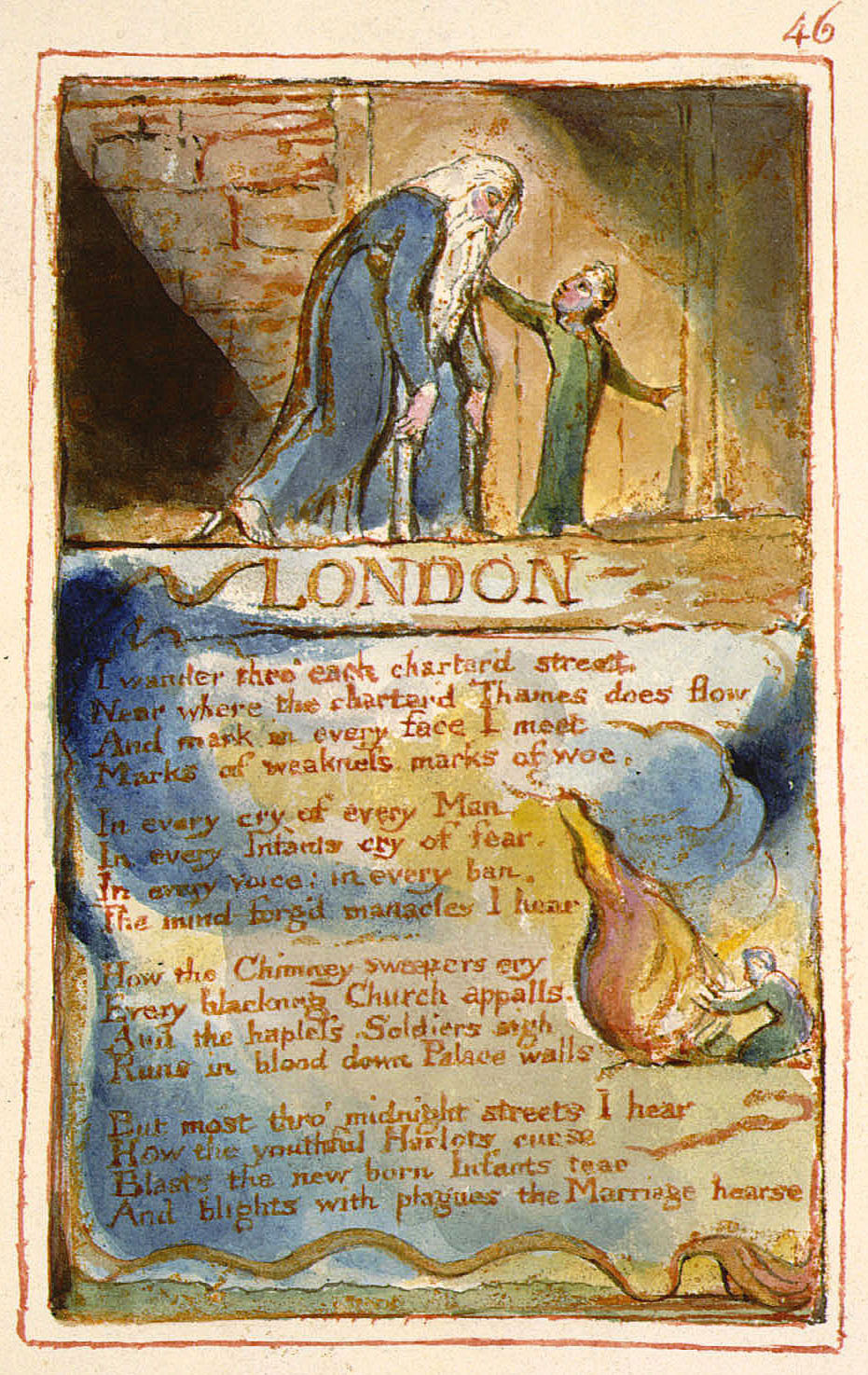
In William Blake's poem "London," the repetition of "In every" at the beginning of successive lines creates a chanting, claustrophobic momentum—a famous example of anaphora.
Finally, we must look at the containers into which all these devices are poured. Form is never neutral. The rigid structure of a highly formal poem can emphasize thematic feelings of restriction, tradition, or strict order. If a poet writes about feeling trapped in a relationship, they might deliberately choose a claustrophobic, tightly rhymed form to mirror that confinement.
The Sonnet
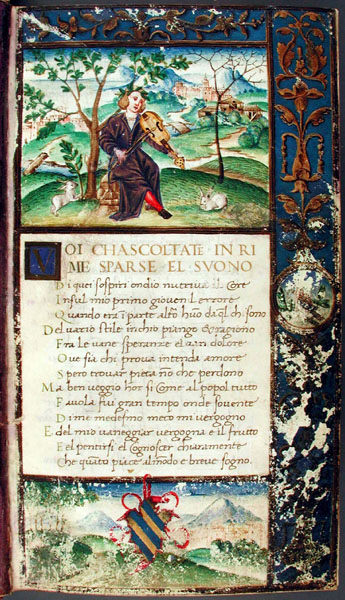
A sonnet is a fourteen-line poem traditionally written in iambic pentameter. It is the gold standard of formal poetic argumentation.
- A Shakespearean sonnet contains three quatrains and a final rhyming couplet (abab cdcd efef gg). The quatrains iterate on an idea, and the final couplet delivers a punchy concluding twist.
- A Petrarchan sonnet is divided structurally into an eight-line octave and a six-line sestet. The octave presents a problem or question, and the sestet provides the resolution or answer.
The pivot point between these sections—where the poem shifts its logic—is vital. The structural turn in a sonnet is called a volta. Analytically, the volta in a sonnet introduces a sudden shift in thought, perspective, or argument. Teaching students to hunt for the volta (often marked by words like yet, but, or and) is the key to unlocking the sonnet's ultimate meaning.
Other Foundational Forms
-
The Ballad: A narrative poem composed of four-line stanzas often alternating tetrameter (four beats) and trimeter (three beats). Historically rooted in oral traditions and folk music, ballads are built to tell tragic or heroic stories efficiently.
-
The Haiku: A Japanese poetic form consisting of three phrases with a five, seven, five syllable structure. It relies entirely on intense, isolated imagery without the connective tissue of rhyme or heavy meter.
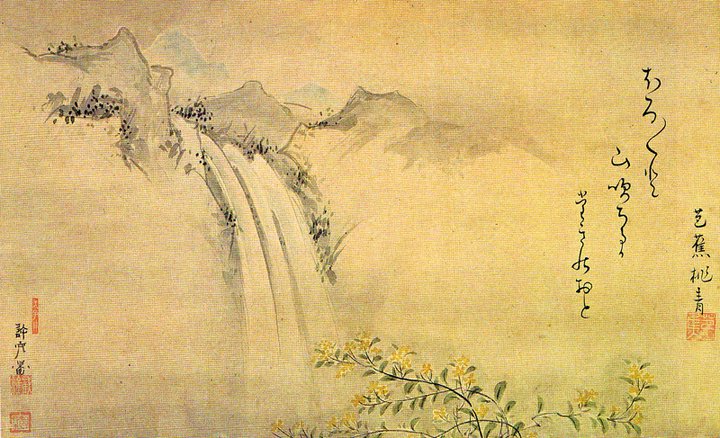
A classic haiku by master poet Matsuo Bashō. The form relies entirely on intense, isolated imagery rather than explicit narrative. -
The Ode: A lyric poem in the form of a direct address to a particular subject. It exists to elevate, praise, and deeply contemplate a specific object, person, or idea.
-
The Elegy: A poem of serious reflection usually written to lament a deceased person. It is an architecture of mourning, shifting from grief to consolation.
Final Thoughts for the ELA Classroom
As you face the Praxis 5047, remember that a multiple-choice question or a constructed-response essay won't just ask you to identify a quatrain or define a metaphor. It will ask you to explain how that quatrain organizes a shifting thought, or why that metaphor deepens the theme of the passage. Teach your future students that a poem isn't a riddle waiting to be solved. It is a precise emotional machine waiting to be turned on.