International Trade and Exchange
Not sure you’re ready?
Take the ~3-minute readiness diagnostic and see where you stand.
No single nation contains the precise geographical distribution of raw materials, labor, and capital required to sustain a modern industrialized economy. The device you are using to read these words is a geographical marvel: its glass was likely forged in Japan, its silicon chips etched in Taiwan, its assembly executed in China, and its software engineered in the United States. Global wealth is not generated by nations operating in self-sufficient isolation; it is generated through the mechanics of international trade. For a social studies educator, teaching international trade means bridging geography, civics, and behavioral economics. It requires making the invisible forces of global markets—the hidden logic of why we trade, the political battles over protectionism, the seesaw of exchange rates, and the meticulous ledger of the balance of payments—visible to your students.
To understand why nations trade, we have to understand the fundamental constraint of economics: scarcity. Because resources are finite, every decision has an opportunity cost—the value of the next best alternative given up when making an economic choice.
When assessing a nation's economic power, we often look at absolute advantage, which is the ability of a country to produce more of a good than another country using the exact same amount of resources. If the United States can produce more airplanes per worker than Brazil, the U.S. has an absolute advantage.
But absolute advantage does not dictate trade; opportunity cost does. In 1817, the classical economist David Ricardo first developed the economic theory of comparative advantage. Comparative advantage is the ability of a country to produce a good at a lower opportunity cost than another country. Even if Country A is better at producing everything than Country B, Country A should still focus on what it is best at, and leave the rest to Country B.
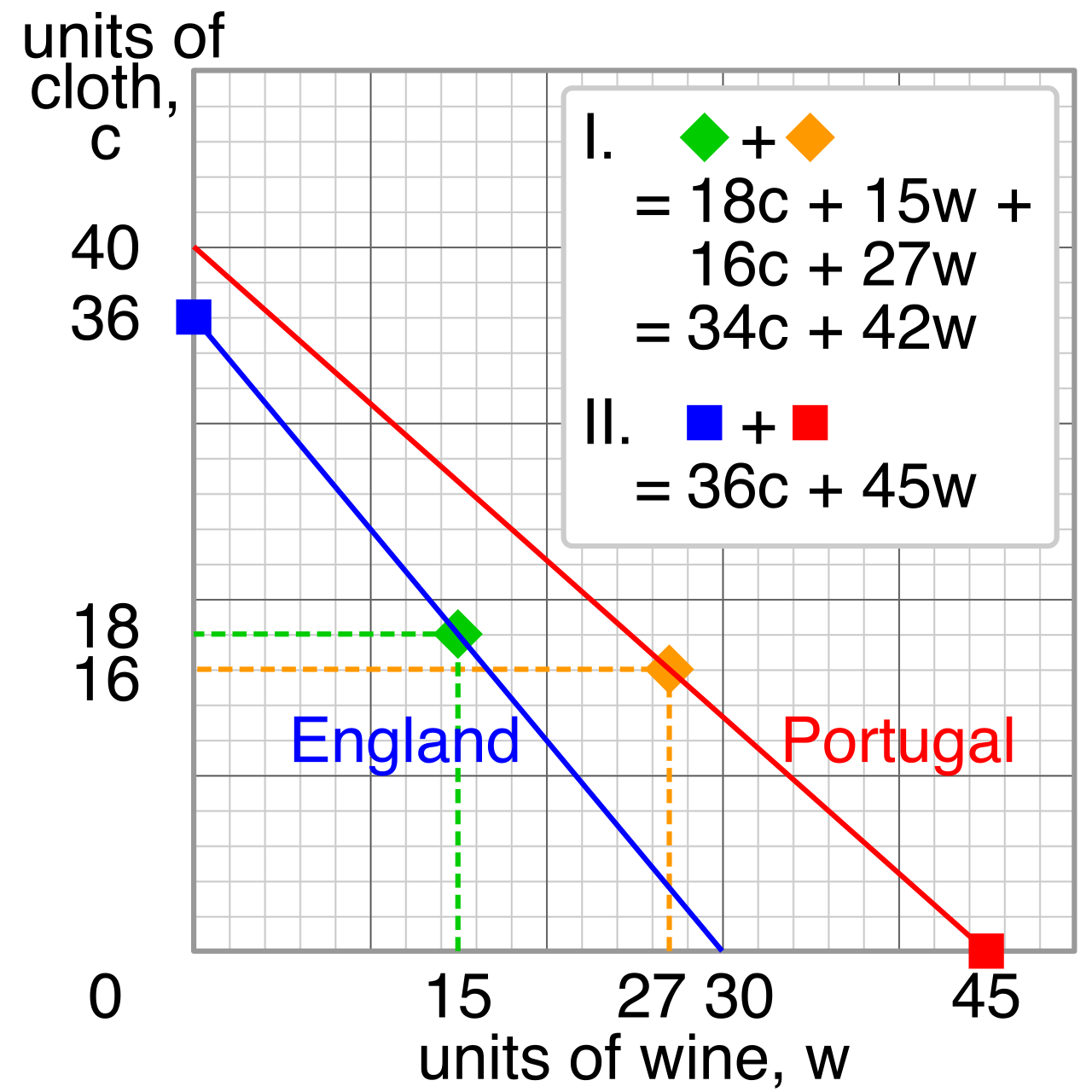
The Golden Rule of Trade Countries benefit from international trade when each nation specializes in producing goods for which that nation holds a comparative advantage.
When nations specialize based on comparative advantage, a mathematical miracle occurs: economic specialization allows total global output to increase. The world gets more total goods out of the exact same amount of resources.
However, for trade to actually happen, the countries must agree on the terms of trade, which represent the rate at which one country's goods are exchanged for another country's goods. For the exchange to happen, mutually beneficial terms of trade must fall between the respective opportunity costs of the two trading nations. If the price is outside this window, one country would be better off producing the good themselves.
The modern global economy operates through a web of treaties and organizations. Following the devastation of World War II, the international community sought to prevent the trade wars that had exacerbated the Great Depression.
- The General Agreement on Tariffs and Trade (GATT) was originally signed in 1947. It served as an international legal agreement minimizing barriers to international trade.
- The World Trade Organization (WTO) was officially established on January 1, 1995, superseding GATT. The WTO is an international organization that regulates and facilitates international trade, serving as a global referee for trade disputes.
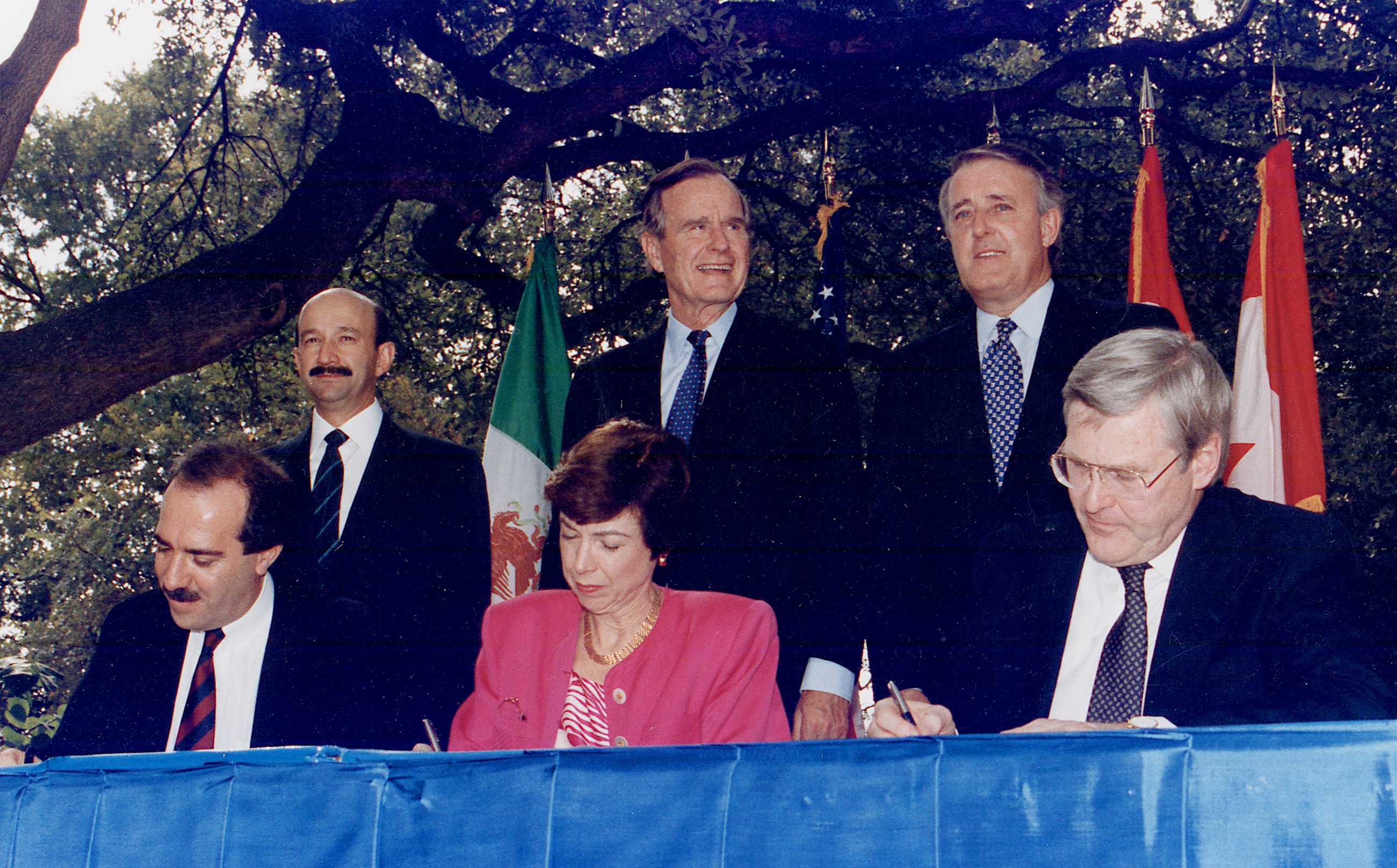
Nations also form regional alliances. The North American Free Trade Agreement (NAFTA) went into effect in 1994, and eliminated most tariffs between the United States, Canada, and Mexico. Decades later, the United States-Mexico-Canada Agreement (USMCA) officially replaced the North American Free Trade Agreement in 2020, updating rules for the digital age.
When assessing these agreements, economists measure two outcomes:
- Trade creation occurs when a free trade agreement shifts domestic production to a more efficient member country. This is highly beneficial.
- Trade diversion occurs when a free trade agreement shifts imports from a more efficient non-member country to a less efficient member country, simply because the member country is shielded from tariffs. This is an economic inefficiency.
Despite the proven gains of free trade, domestic politics often demand interventions. Protectionism refers to government policies designed to restrict international trade.
Why do countries restrict trade?
There are two primary justifications often debated in government and civics:
- The infant industry argument states that new domestic industries require temporary protection from foreign competition to become established and reach economies of scale.
- The national security argument asserts that a country should not rely on foreign imports for essential goods like weapons, energy, or critical technology.
The Tools of Protectionism
Governments use several mechanisms to protect domestic industries:
- Tariffs: A tariff is a tax imposed by a national government on imported goods. By taxing imports, tariffs increase the price of imported goods for domestic consumers. Crucially, tariffs provide additional tax revenue for the government imposing the tariff.
- Import Quotas: An import quota is a legal limit on the physical quantity of a specific good that can be imported during a given period. Import quotas artificially reduce market supply to raise the domestic price of a good. However, unlike tariffs, import quotas do not generate tax revenue for the government. The extra profit simply goes to the foreign producers who managed to get their goods under the quota.
- Embargoes: An embargo is a complete government-imposed ban on trade with a particular country (e.g., the U.S. embargo on Cuba).
- Subsidies: Instead of penalizing imports, governments can assist their own producers. Government subsidies lower the production costs for domestic producers. These lower domestic production costs resulting from subsidies make domestic goods more competitive against foreign imports.
- Voluntary Export Restraints (VERs): These are limits imposed by an exporting country on the physical quantity of goods exported to a specific country. Often, a country "volunteers" to restrict its exports to avoid being hit by harsher tariffs from the importing nation.
The Consequences of Protectionism
While protectionism saves specific domestic jobs, the macroeconomic costs are severe. Protectionist policies generally lead to higher commodity prices for domestic consumers. Furthermore, protectionist policies create deadweight loss in the global economy. Deadweight loss is a loss of overall economic efficiency occurring when the optimal equilibrium for a good or service is not achieved.
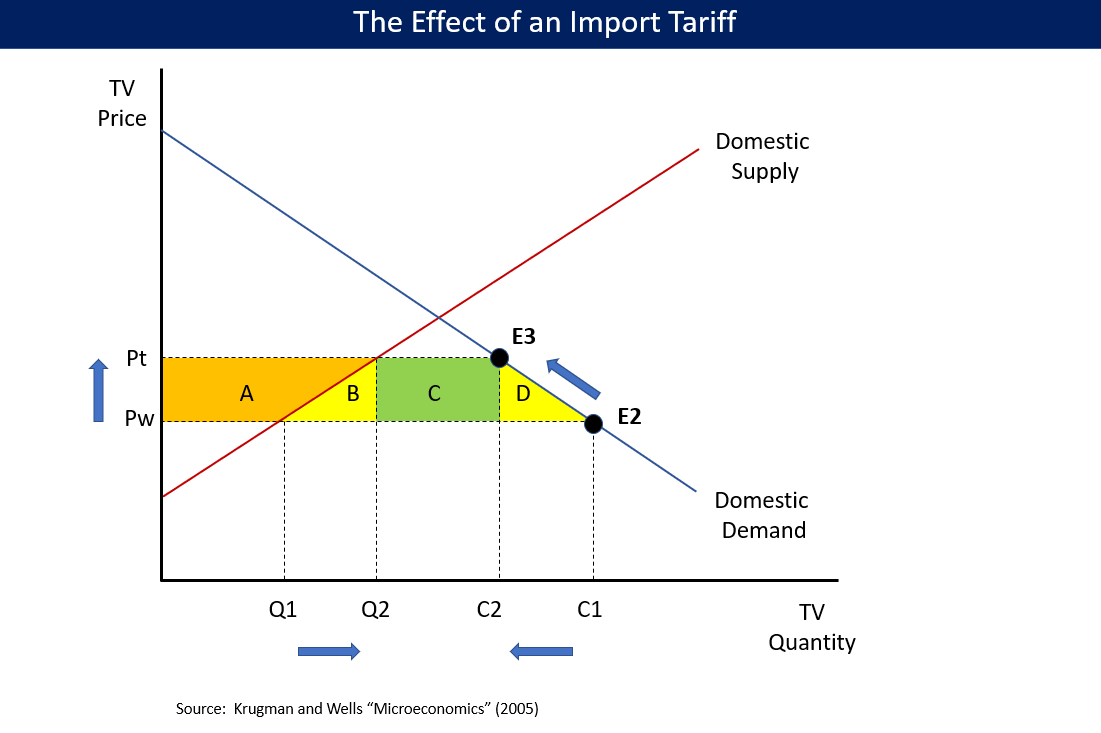
Finally, protectionism rarely happens in a vacuum. Trade retaliation occurs when a foreign country responds to new trade barriers by imposing new trade barriers of its own, sparking a trade war.
When an American company buys goods from Japan, Japanese workers cannot be paid in U.S. dollars; they need Japanese yen. This introduces the concept of an exchange rate, which is the price of one nation's currency expressed in terms of another nation's currency.
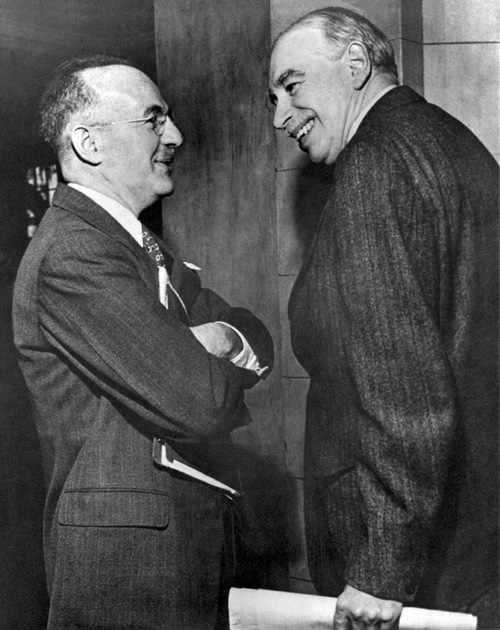
Historically, the global economy relied on fixed rates. The 1944 Bretton Woods Agreement established a global system of fixed exchange rates tied to the United States dollar, which was in turn pegged to gold. Today, most major economies use a floating exchange rate system, which determines currency values based on supply and demand in the foreign exchange market. Some nations still use a fixed exchange rate system, which ties the value of a national currency to another currency or a specific commodity.
The Teeter-Totter of Currency Value
Currencies fluctuate.
- Currency appreciation is an increase in the value of one currency relative to another currency.
- Currency depreciation is a decrease in the value of one currency relative to another currency.
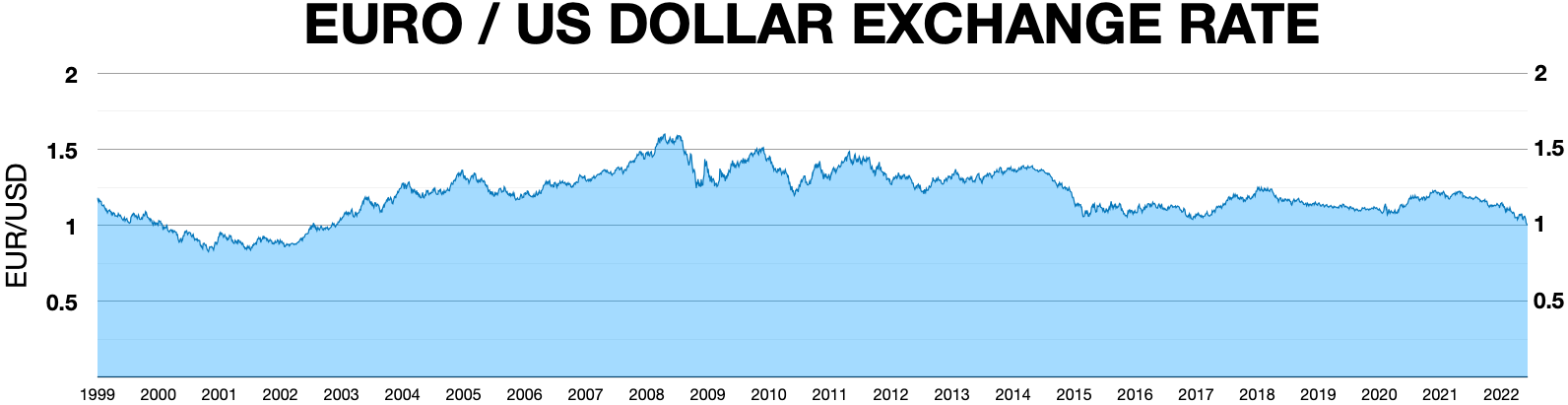
This fluctuation acts like a teeter-totter for imports and exports:
- When a country's currency appreciates, that country's money holds more purchasing power. Therefore, foreign imports become cheaper for domestic consumers. However, this hurts domestic manufacturers because that country's exports become more expensive for foreign buyers.
- Conversely, when a country's currency depreciates, foreign imports become more expensive for domestic consumers. But domestic manufacturers celebrate, because that country's exports become cheaper for foreign buyers.
What Shifts Exchange Rates?
Three primary factors alter the supply and demand for currency:
- Interest Rates: An increase in a country's real interest rates typically leads to an appreciation of that country's currency. Why? Because higher domestic interest rates attract foreign financial capital seeking higher investment returns. To invest in U.S. banks, foreigners must buy U.S. dollars, driving up the dollar's value.
- Inflation: Higher relative inflation in a country generally causes that country's currency to depreciate, because its purchasing power is eroding.
- Income Levels: An increase in a nation's relative income levels increases domestic demand for foreign imports. If Americans suddenly have more wealth, they buy more European cars and Japanese electronics. This increased domestic demand for foreign imports increases the supply of domestic currency in the foreign exchange market (because Americans are dumping dollars onto the market to buy euros and yen), causing the dollar to depreciate.
Ultimately, long-term exchange rates are guided by the concept of Purchasing Power Parity—an economic theory stating that exchange rates should adjust so that identical goods cost the exact same in different countries.
Every transaction we have discussed—every imported smartphone, every tariff paid, every foreign factory built—must be meticulously tracked. This is done via the balance of payments, which is a comprehensive record of all economic transactions between a country and the rest of the world over a specific period.
Think of the balance of payments as a massive double-entry accounting book with two main chapters: The balance of payments includes the current account and the balance of payments includes the capital and financial account.
1. The Current Account
The current account tracks the money flowing in and out of a country today. It records four distinct flows:
- A nation's international trade in physical goods (like cars and wheat).
- A nation's international trade in services (like banking, tourism, and software licensing).
- International investment income flows (dividends and interest earned on foreign investments).
- Unilateral financial transfers between nations (foreign aid or remittances sent by immigrants back to their home countries).
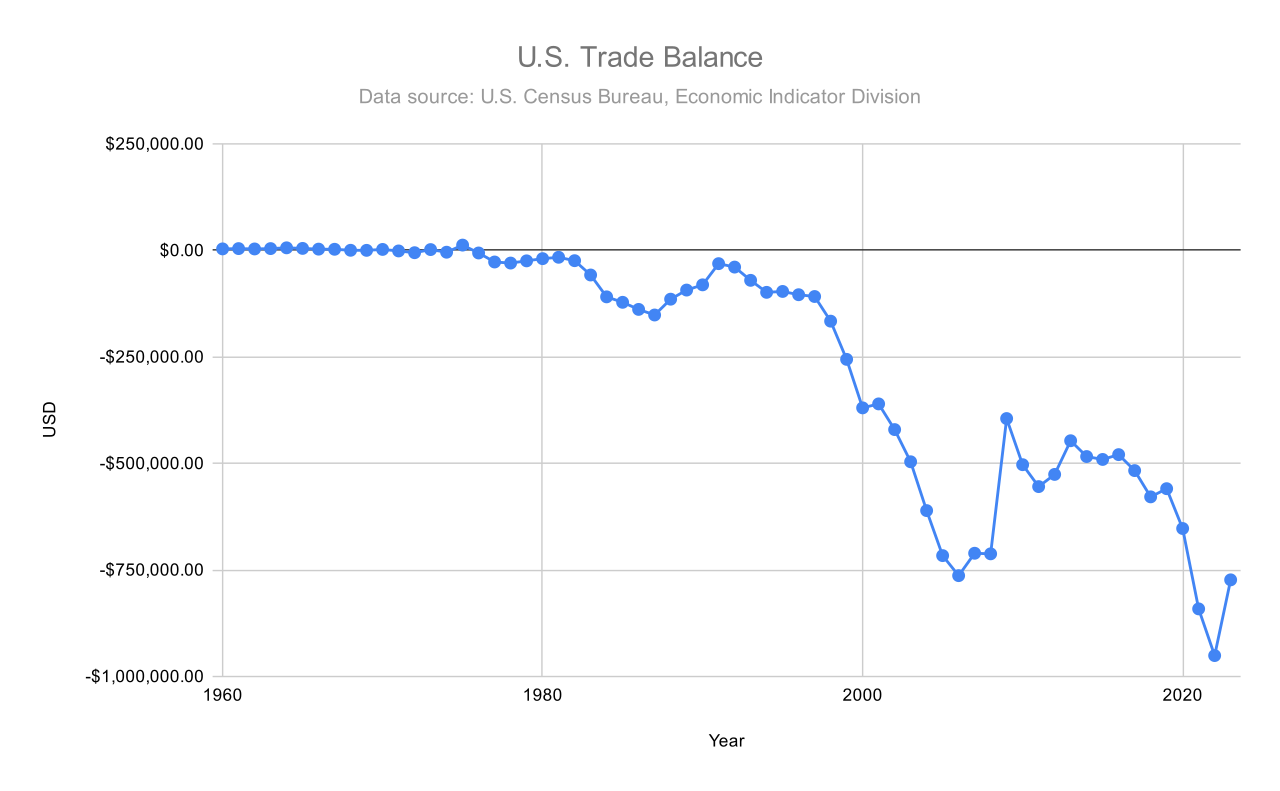
When economists talk about the "trade deficit," they are usually referring to the balance of trade, which is a sub-component of the current account. It measures the monetary difference between the value of a country's visible exports and visible imports.
- A trade deficit occurs when the monetary value of a country's imports exceeds the monetary value of a country's exports.
- A trade surplus occurs when the monetary value of a country's exports exceeds the monetary value of a country's imports.
2. The Capital and Financial Account
While the current account tracks goods and services, the capital and financial account records the international flow of investment capital. This involves buying and selling assets. It has two main components:
- Foreign direct investment (FDI) is a component of the capital and financial account. FDI involves purchasing physical assets in another country to gain a lasting interest in a business enterprise (e.g., Toyota building a manufacturing plant in Texas).
- Portfolio investment is a component of the capital and financial account. Portfolio investment involves buying foreign financial assets without gaining managerial control over the issuing company (e.g., a German citizen buying shares of Apple stock or U.S. Treasury bonds).
The Golden Rule of Balance
Because of double-entry bookkeeping, the money a nation spends on imported goods must ultimately end up coming back as foreign investment in that nation's assets. Therefore:
- A deficit in a nation's current account is mathematically balanced by a surplus in that nation's capital and financial account.
- Conversely, a surplus in a nation's current account is mathematically balanced by a deficit in that nation's capital and financial account.
Official Reserves
If the private markets do not perfectly balance out, governments step in. Official reserves are foreign currencies and assets securely held by a country's central bank. To manage the economic shocks of global trade, central banks actively use official reserves to intervene in the foreign exchange market to influence currency values, buying their own currency to prop it up or selling it to drive the price down.
By mastering these concepts—from Ricardo's foundational theory of opportunity cost to the granular arithmetic of the balance of payments—you equip your future students with the analytical lens required to decipher the vast, interconnected machinery of the modern world.