Sociological Perspectives and Institutions
Not sure you’re ready?
Take the ~3-minute readiness diagnostic and see where you stand.
Step into any secondary school hallway during a passing period, and you are immediately immersed in a complex web of unwritten rules, power dynamics, and synchronized behaviors. To the untrained eye, it is pure chaos. To the sociologist, it is a perfectly ordered system governed by invisible laws. Sociology is the systematic study of human society and social interaction. Since Auguste Comte coined the term sociology in 1838, this discipline has provided the intellectual tools to dissect these hidden forces. For a future social studies teacher, sociology is not just a subject on a Praxis exam; it is the fundamental operating system of your classroom. Understanding how institutions, inequalities, and group dynamics shape human behavior allows you to see the true architecture of the world you are preparing your students to inherit.

To study society, we have to decide where to put the camera. Do we zoom out to see the entire continent, or do we zoom in to watch a single conversation?
Macrosociology focuses on broad features of society such as social classes and large institutions. It looks at the sweeping tectonic plates of human civilization. Conversely, microsociology focuses on everyday social interaction and the daily behaviors of individuals.
Sociologists rely on three primary theoretical frameworks—two macro, one micro—to make sense of this behavior.
1. Structural Functionalism (The Machine)
Imagine society as a massive, intricate mechanical clock. Structural functionalism views society as a complex system whose parts work together to promote solidarity and stability. If one gear breaks, the entire clock struggles.
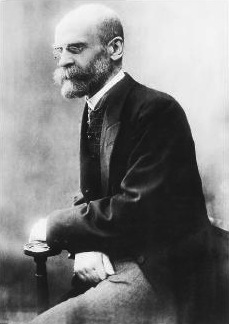
Émile Durkheim was a foundational contributor to the structural functionalist perspective. He argued that society is held together by shared values and mutual reliance. To evaluate any piece of this societal machine, functionalists look at its outcomes:
- Manifest functions are the recognized and intended consequences of any social pattern. (e.g., A school’s manifest function is to teach algebra and history).
- Latent functions are the unrecognized and unintended consequences of any social pattern. (e.g., A school implicitly acts as a matchmaking hub for teenagers).
- Social dysfunctions are social patterns that have undesirable consequences for the operation of society. (e.g., Bullying or widespread truancy disrupt the school's ability to function).
When society changes too quickly, the gears slip. Durkheim warned of anomie, which is a state of normlessness resulting from rapid social change or weakened social bonds. Émile Durkheim introduced the concept of anomie in his 1897 sociological study on suicide, demonstrating that individuals disconnected from societal norms are far more likely to suffer profound psychological despair.
2. Conflict Theory (The Battlefield)
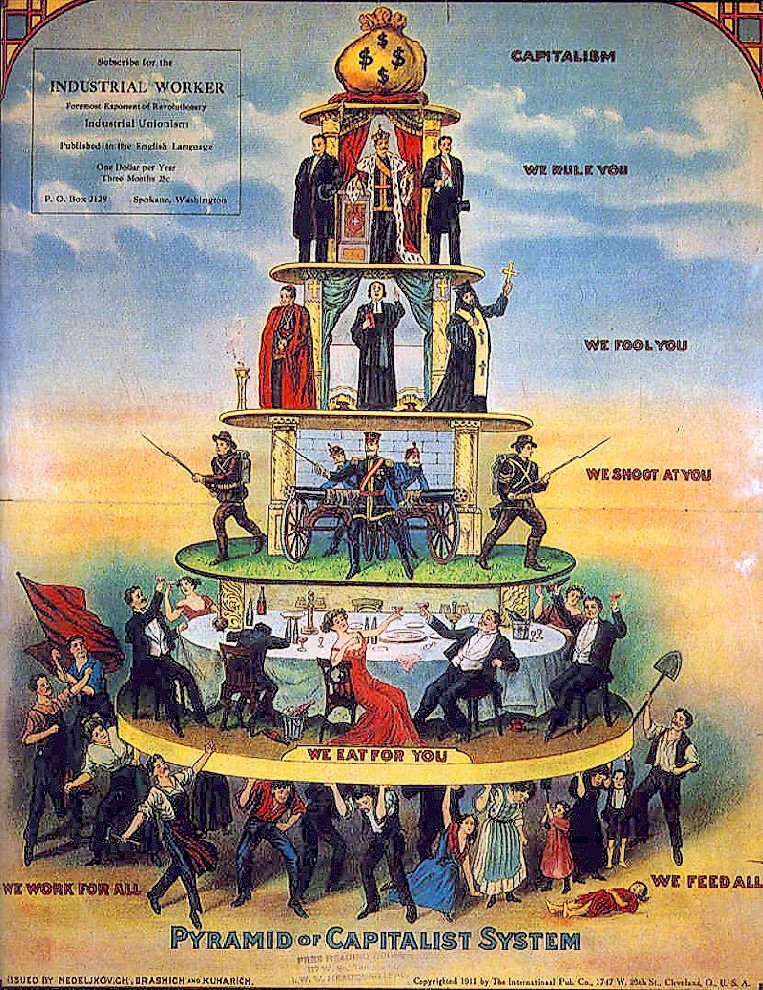
If functionalism sees a clock, conflict theory sees a rigged game of Monopoly. Conflict theory views society as an arena of inequality that generates systemic conflict and social change.
Karl Marx is the primary foundational thinker behind social conflict theory. Observing the brutal conditions of the Industrial Revolution, Marx divided society into two distinct camps based on economics:
- The bourgeoisie are the social class that owns the means of production within Marxist theory. (The factory owners).
- The proletariat are the working class who must sell their labor to survive within Marxist theory. (The factory workers).
In this view, the rules are not designed for stability; they are designed for control. Conflict theory argues that existing social institutions help maintain the privileges of the powerful groups in society.
However, economics is not the only source of friction. Max Weber expanded conflict theory to include status and power alongside economic class as dimensions of social inequality. While Marx looked solely at the wallet, Weber looked at social prestige and political influence.
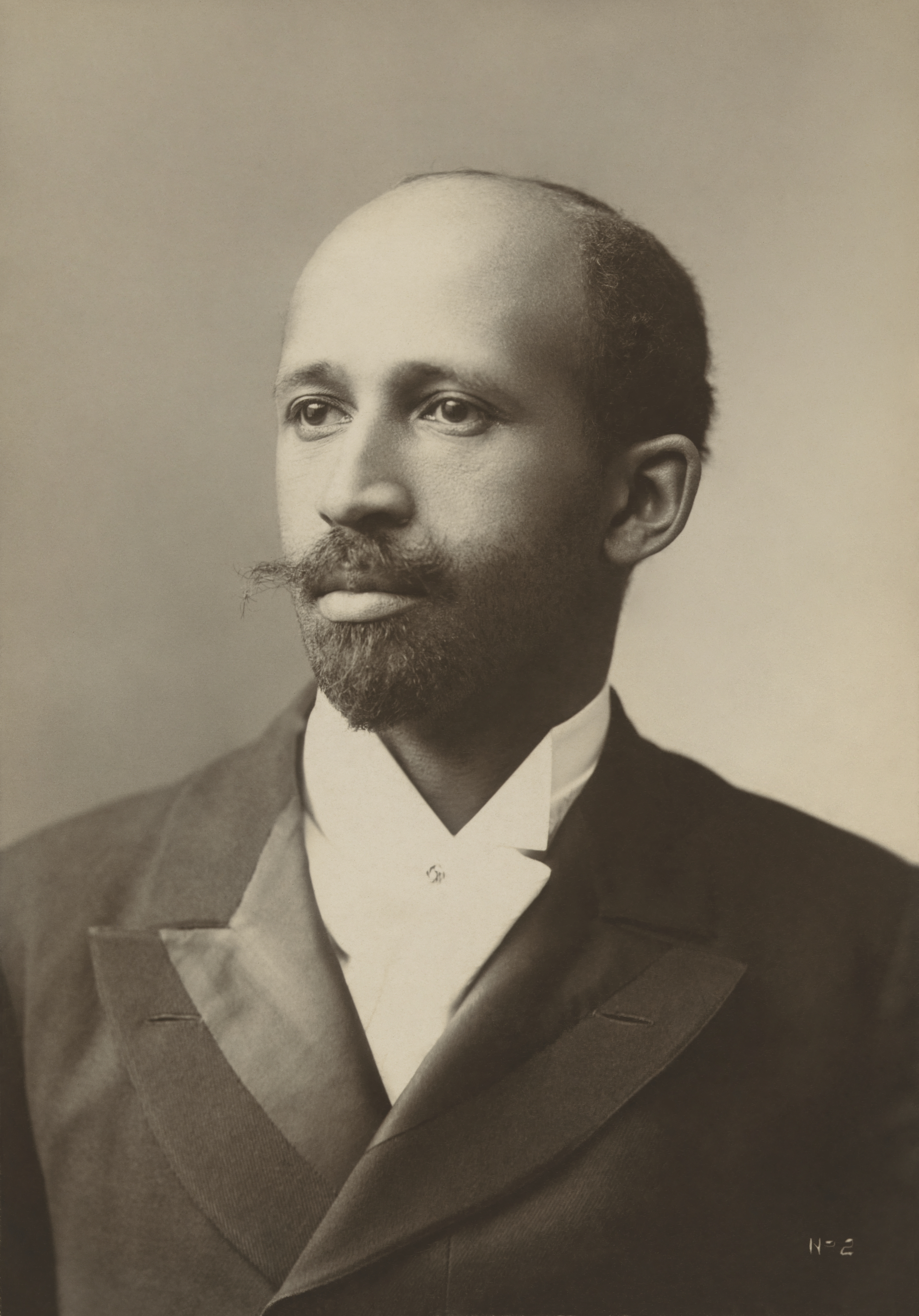
Furthermore, W.E.B. Du Bois developed race-conflict theory to analyze the inequality between white and Black populations. Recognizing the unique psychological toll of systemic racism, W.E.B. Du Bois introduced the concept of double consciousness to describe the divided social identity of Black Americans—the persistent sensation of looking at oneself through the eyes of a hostile, dominant society.
3. Symbolic Interactionism (The Stage)
Zooming in to the micro-level, symbolic interactionism views society as the product of the everyday interactions of individuals. It argues that reality is socially constructed. Symbolic interactionism focuses on the subjective meanings that people attach to objects, events, and behaviors. A diamond ring is biologically just compressed carbon, but socially, it means lifelong commitment.
George Herbert Mead is considered a primary founder of the symbolic interactionism perspective, emphasizing how our sense of self develops entirely through social interaction. Building on this, Erving Goffman developed the dramaturgical analysis perspective within symbolic interactionism.
Dramaturgical analysis compares human social interaction to actors performing on a theatrical stage.
Under Goffman's lens, you are performing a "role" as a teacher right now. You wear a costume (professional attire), use props (whiteboard, books), and manage the impressions of your audience (the students).
Social institutions are established sets of norms and subsystems that support the survival and organization of society. They are the load-bearing columns of human civilization.
Family
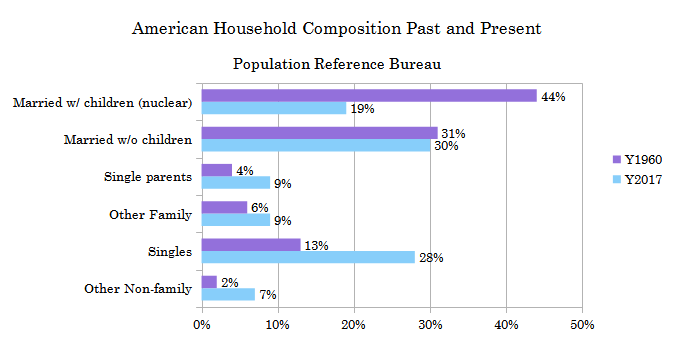
The family is the basic unit of society responsible for the primary socialization of children. It is where we first learn how to be human.
- A nuclear family consists strictly of two parents and their children living in one household.
- An extended family includes additional kin such as grandparents or aunts living in the same home or nearby.
How sociologists view the family depends entirely on their theoretical lens. Functionalists view the family institution as fulfilling vital societal tasks such as reproducing society and regulating sexual activity. However, conflict theorists view the family institution as a mechanism for perpetuating social inequality through the intergenerational inheritance of wealth.
Education
As a future educator, you are the face of this institution. Education is the social institution through which society provides its members with important knowledge, job skills, and cultural norms.
- A manifest function of the education system is the formal transmission of academic knowledge.
- A latent function of the education system is the provision of daily child care for working parents.
But schools teach far more than what is in the syllabus. The hidden curriculum refers to the unwritten, unofficial, and unintended cultural values and perspectives that students learn in school—such as obedience to authority, punctuality, and conformity.
Because education is heavily localized in the United States, conflict theorists argue that the education system reproduces social class inequality through mechanisms like unequal local school funding. Wealthier zip codes generate higher property taxes, funding better schools, thereby passing class privilege to the next generation. Furthermore, schools utilize tracking, which is the assignment of students to specific educational programs and classes based on test scores or perceived ability. Conflict theorists warn that tracking often disproportionately funnels lower-income students into vocational paths and wealthier students into college-prep paths, cementing existing inequalities.
Religion
Religion is a social institution involving beliefs and practices based on recognizing the sacred. Émile Durkheim defined the sacred as extraordinary things set apart from daily life that inspire awe and reverence.
- The Functionalist View: Functionalists argue that religion promotes social cohesion and provides societal members with meaning and purpose. It binds communities together through shared rituals.
- The Conflict View: Karl Marx argued that religion pacifies the working class and distracts them from recognizing their economic oppression. By promising a utopian afterlife, religion strips away the urgency to revolt against earthly injustices. Consequently, Karl Marx described religion as the opiate of the masses.
- The Weberian View: Max Weber argued that Protestant Christian beliefs heavily drove the historical development of Western capitalism. He observed that the "Protestant work ethic"—which viewed hard work and frugality as signs of divine favor—inadvertently laid the cultural groundwork for modern capitalist accumulation.

Every complex society ranks its members. Social stratification is a system by which a society ranks categories of people in a hierarchical structure.
| System Type | Definition | Open/Closed |
|---|---|---|
| Caste System | A caste system is a closed system of social stratification in which an individual's social position is determined entirely by birth. | Closed (No mobility) |
| Class System | A class system is an open system of social stratification based on a combination of birth circumstances and individual achievement. | Open (Mobility possible) |
| Meritocracy | Meritocracy is a theoretical system of social stratification based entirely on personal merit and individual effort. | Purely theoretical |
When evaluating an individual's place in the class system, sociologists draw a sharp distinction between two economic measures:
- Income refers specifically to the wages or investment dividends received by an individual over a specific time period. (e.g., A teacher's $55,000 annual salary).
- Wealth refers to the total monetary value of all assets minus outstanding debts owned by an individual. (e.g., A home, a retirement portfolio, inheritance, minus student loans). Wealth is deeply historically rooted and passed down across generations.
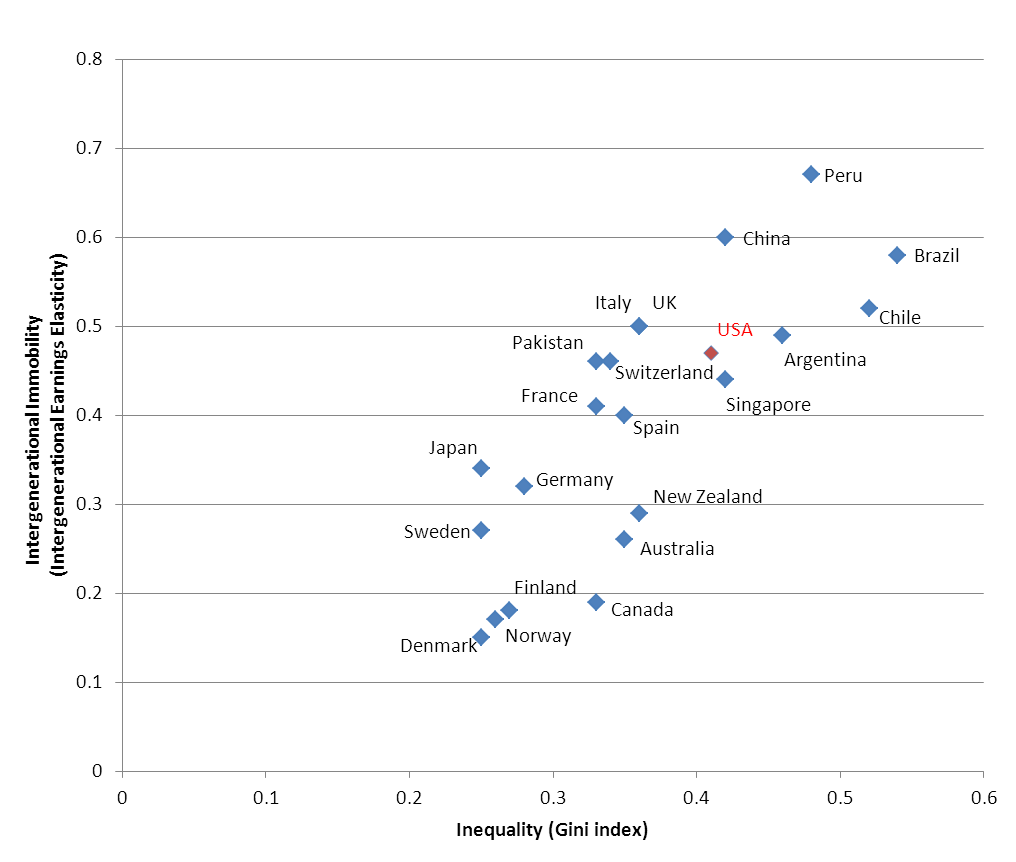
Movement within this hierarchy is called social mobility, defined simply as a change in an individual's position within the social hierarchy.
- Intergenerational mobility is the upward or downward social mobility of children in relation to the social class of their parents. (e.g., The daughter of a factory worker becomes a neurosurgeon).
- Intragenerational mobility is a change in social position occurring during a single person's lifetime. (e.g., A junior associate becomes the CEO of the company).
When diverse groups interact within a stratified society, tension inevitably arises. To master these concepts for your exam and your classroom, you must rigorously distinguish between thoughts (prejudice) and actions (discrimination).
Prejudice is a rigid and unfair generalization or internal attitude about an entire category of people. A stereotype is an overly simplified and generalized description applied to every person in a specific demographic category.
If prejudice is the internal attitude, discrimination is the outward action. Discrimination is the unequal and active negative treatment directed toward various categories of people.
While individual discrimination is a person-to-person act, sociologists are highly concerned with systemic issues. Institutional discrimination refers to the systemic, unjust mistreatment of marginalized groups embedded within societal structures and policies (e.g., historically redlining minority neighborhoods to deny them mortgage loans).
Where does this hostility come from? Scapegoat theory argues that prejudice develops among frustrated individuals who unfairly direct their anger at a less powerful target group. When economic times get tough, dominant groups often blame immigrants or minorities rather than complex economic systems.
Furthermore, discrimination rarely happens along a single axis. Intersectionality is the study of how overlapping social identities like race, class, and gender combine to create unique modes of discrimination. A wealthy white woman and a poor Black woman both experience sexism, but they experience it in fundamentally different ways because of how their class and race intersect with their gender. Patricia Hill Collins popularized the concept of intersectionality within mainstream sociological theory, fundamentally changing how sociologists study inequality.
Cultural Dynamics
When different cultures collide, societies manage the integration in various ways:
- Assimilation is the process by which minority groups gradually adopt the cultural patterns of the dominant societal group. (The "melting pot" ideal where distinct traits fade).
- Pluralism is a societal state in which distinct racial and ethnic groups coexist while maintaining equal social standing. (The "salad bowl" ideal where groups retain their identity but share political equality).
Finally, how we view other cultures dictates the peace of our social fabric.
- Ethnocentrism is the practice of judging another culture exclusively by the standards and values of one's own culture. (e.g., Thinking another culture's food is "gross" because it's not what you eat).
- Cultural relativism is the practice of evaluating and understanding a culture strictly by its own internal standards and context.
As a teacher, embracing cultural relativism is perhaps your greatest imperative. Your classroom will be a microsociety. By understanding the sociological forces that shape your students—their families, their stratification, their intersecting identities—you transcend being a mere dispenser of facts. You become an architect of their societal understanding.