Political Beliefs and the Electoral Process
Not sure you’re ready?
Take the ~3-minute readiness diagnostic and see where you stand.
Consider the American political system not as a philosophical ideal, but as an engine—a complex, thermodynamic system where individual beliefs provide the fuel, institutions act as the gears, and public policies are the output. When you step into a secondary social studies classroom, your task is not merely to have students memorize the names of these components. Your task is to show them how the gears mesh. Understanding this machinery requires dissecting how a teenager's dinner-table conversations aggregate into mass electoral movements, how electoral rules convert those movements into mathematical victories, and how money and media lubricate the entire process. To teach civics effectively, we must look under the hood.
Before a vote is ever cast, a citizen must decide what they believe and whether participating is worth their time.
Political socialization is the process by which individuals develop political beliefs and values. When you look out at your classroom, you are watching this process in real-time. However, you are not the primary engineer of their beliefs. The family is the most significant factor in shaping an individual's political socialization. A child mapping their parents' worldview is the foundational bedrock of political identity.
Who Votes? The Demographics of Turnout
Voting is an energy-intensive act. To understand who expends this energy, we look at statistical predictors.
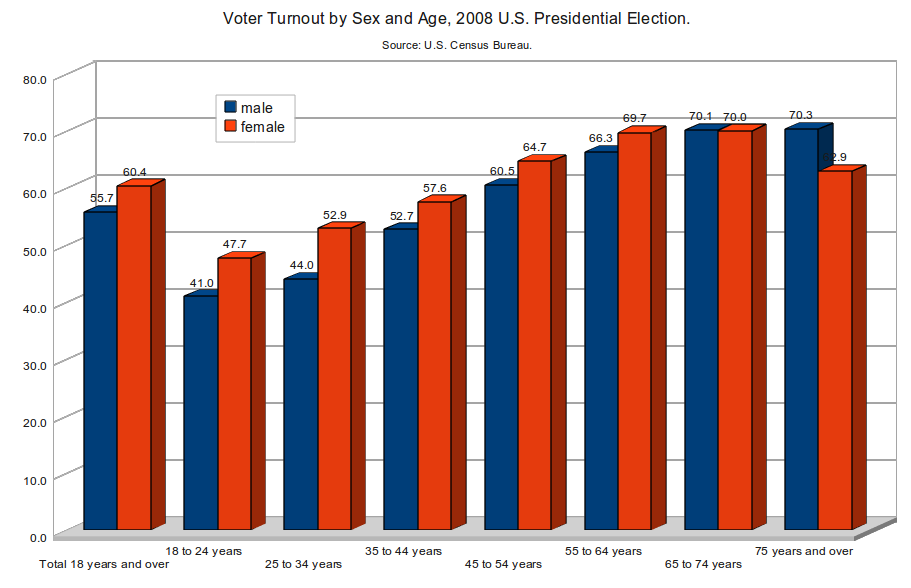
- Age: Age is a strong predictor of voter turnout. Statistically, older citizens vote at higher rates than younger citizens in the United States.
- Education: Education level strongly correlates with political participation rates. Quite simply, individuals with higher levels of education are statistically more likely to vote in United States elections.
- Gender: The gender gap refers to the statistical difference in voting behavior and political preferences between men and women. Since the 1980s, women in the United States have statistically favored Democratic candidates more often than male voters.
Why Participate? Efficacy and the Law
A person's willingness to engage heavily depends on political efficacy—the belief that an individual's political participation makes a meaningful impact on government. Naturally, high political efficacy correlates with an increased likelihood of participating in elections.
Yet, participation is not just about psychology; it is bounded by structural rules. Through history, the U.S. Constitution has been amended to expand the franchise:
| Expanding the Franchise | Historical Impact |
|---|---|
| Fifteenth Amendment | Prohibited the denial of voting rights based on race. |
| Nineteenth Amendment | Granted women the right to vote. |
| Twenty-fourth Amendment | Eliminated poll taxes in federal elections. |
| Twenty-sixth Amendment | Lowered the federal voting age from 21 to 18 (directly relevant to high school seniors). |
Legislation further removed hurdles. The Voting Rights Act of 1965 banned literacy tests as a prerequisite for voting, dismantling Jim Crow-era disenfranchisement. Later, to lower the friction of participation, the National Voter Registration Act of 1993 required states to offer voter registration opportunities at motor vehicle departments (often called the "Motor Voter" law).
Conversely, modern structural barriers such as strict voter identification laws can decrease voter turnout, adding friction back into the system. This friction, combined with lower media visibility, helps explain why voter turnout in United States midterm elections is historically lower than turnout in presidential elections.
How Do Voters Choose?
Once in the booth, voters utilize different models of decision-making:
- Rational-choice voting occurs when a voter selects a candidate based on individual self-interest.
- Retrospective voting involves evaluating a candidate's past performance in office to make a voting decision ("Are you better off than you were four years ago?").
- Prospective voting involves selecting a candidate based on predictions about the candidate's future policy actions.
- Party-line voting involves casting a ballot for candidates affiliated with a single political party across all offices (a straight-ticket vote).
If voters are the fuel, political parties are the transmission. Political parties serve as linkage institutions connecting citizens to the government. They do this by aggregating millions of disparate voices into manageable, organized coalitions.
Internally, political parties draft platforms to articulate the party's policy goals and ideological stances. Inside the machinery of government, political parties organize government operations within the United States Congress by determining committee leadership. The party with the majority essentially owns the legislative steering wheel.
The Mathematics of Electoral Systems
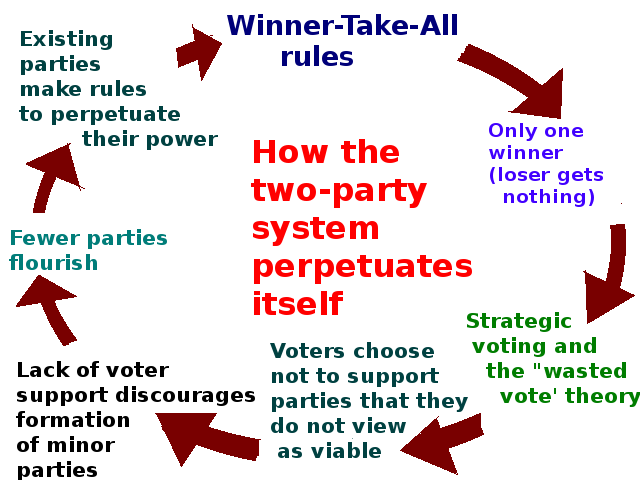
Why does the U.S. have a two-party system? It is not an accident; it is the mathematical result of our electoral rules.
The United States utilizes a winner-take-all plurality electoral system for most congressional elections. Whoever gets the most votes wins the single seat.
Duverger’s Law posits that winner-take-all plurality systems naturally favor a two-party political structure. In this system, voters abandon smaller parties to avoid "wasting" their vote on a candidate who cannot win a plurality.
Contrast this with the alternative: Proportional representation systems allocate legislative seats based on the percentage of the total vote a political party receives. If a party wins 15% of the vote, they get roughly 15% of the seats. Because smaller parties are rewarded with actual power, proportional representation systems generally encourage the proliferation of multi-party systems.
Despite the math of Duverger's Law, third parties often introduce new policy issues to the national political discourse. However, electorally, third parties can act as spoilers by drawing votes away from major party candidates with similar ideologies.
Selecting the Candidates
Before the general election, parties must choose their standard-bearers.
- An open primary allows any registered voter to cast a ballot in either party's primary election.
- A closed primary restricts voting to individuals formally registered with that specific political party.
- A caucus is a local gathering where voters openly discuss and vote for political party candidates—a highly visible, physically engaging process.
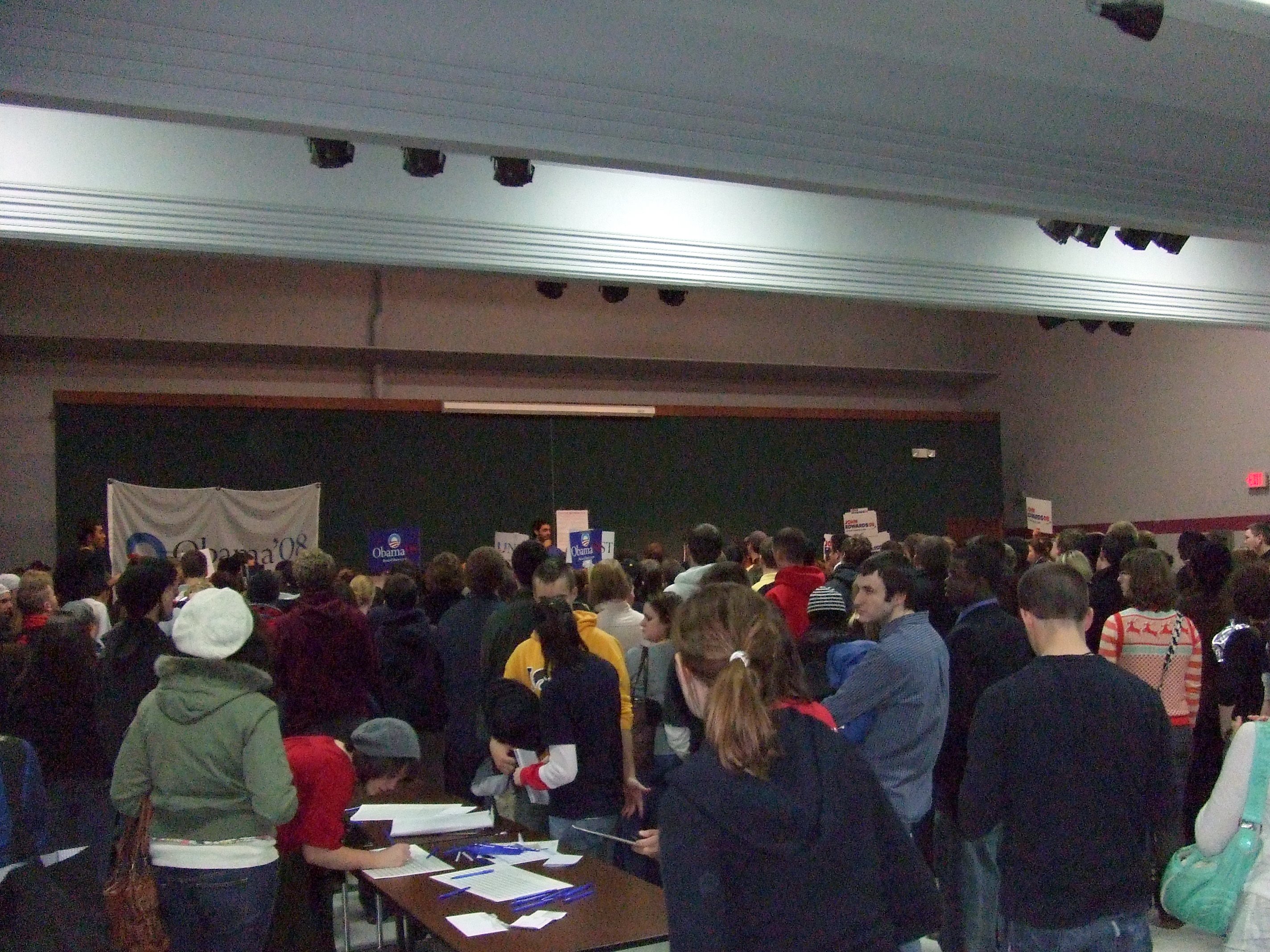
Because early momentum dictates funding and media coverage, states engage in front-loading, which is the practice of scheduling presidential primaries early in the election year to increase their political influence.
Shifting Allegiances
Over time, the coalitions change. Party realignment occurs when a demographic group significantly shifts long-term allegiance from one political party to another (e.g., the South shifting to the Republican Party in the late 20th century). Conversely, party dealignment occurs when an increasing number of voters identify as political independents, stepping away from the major party apparatus entirely.
When citizens want to influence policy between elections, they turn to interest groups. Interest groups are organizations seeking to influence public policy on specific issues. While parties want to win elections, interest groups want to change laws. Some are broad, but single-issue interest groups focus advocacy efforts on one narrow policy area (like the NRA or the Sierra Club).
The Tactics of Influence
- Lobbying: Interest groups utilize lobbying to directly persuade lawmakers to support or oppose legislation.
- Grassroots Lobbying: This relies on mobilizing the general public to contact elected officials regarding specific policy issues (e.g., organizing a massive email campaign).
- Litigation: Interest groups frequently use litigation to challenge the constitutionality of laws or executive agency actions. In the courts, an interest group will often file an amicus curiae brief, which is a legal document meant to influence a Supreme Court decision by offering external expertise or arguments.
A systemic hurdle these groups face is the free-rider problem, which occurs when individuals benefit from an interest group's actions (like a cleaner environment) without contributing to the organization financially or physically.
The Policy Networks
Policy isn't made in a vacuum. It is often crafted by an Iron Triangle, which is a mutually beneficial policy-making relationship among a congressional committee, an interest group, and a bureaucratic agency. They trade funding, electoral support, and favorable regulations.
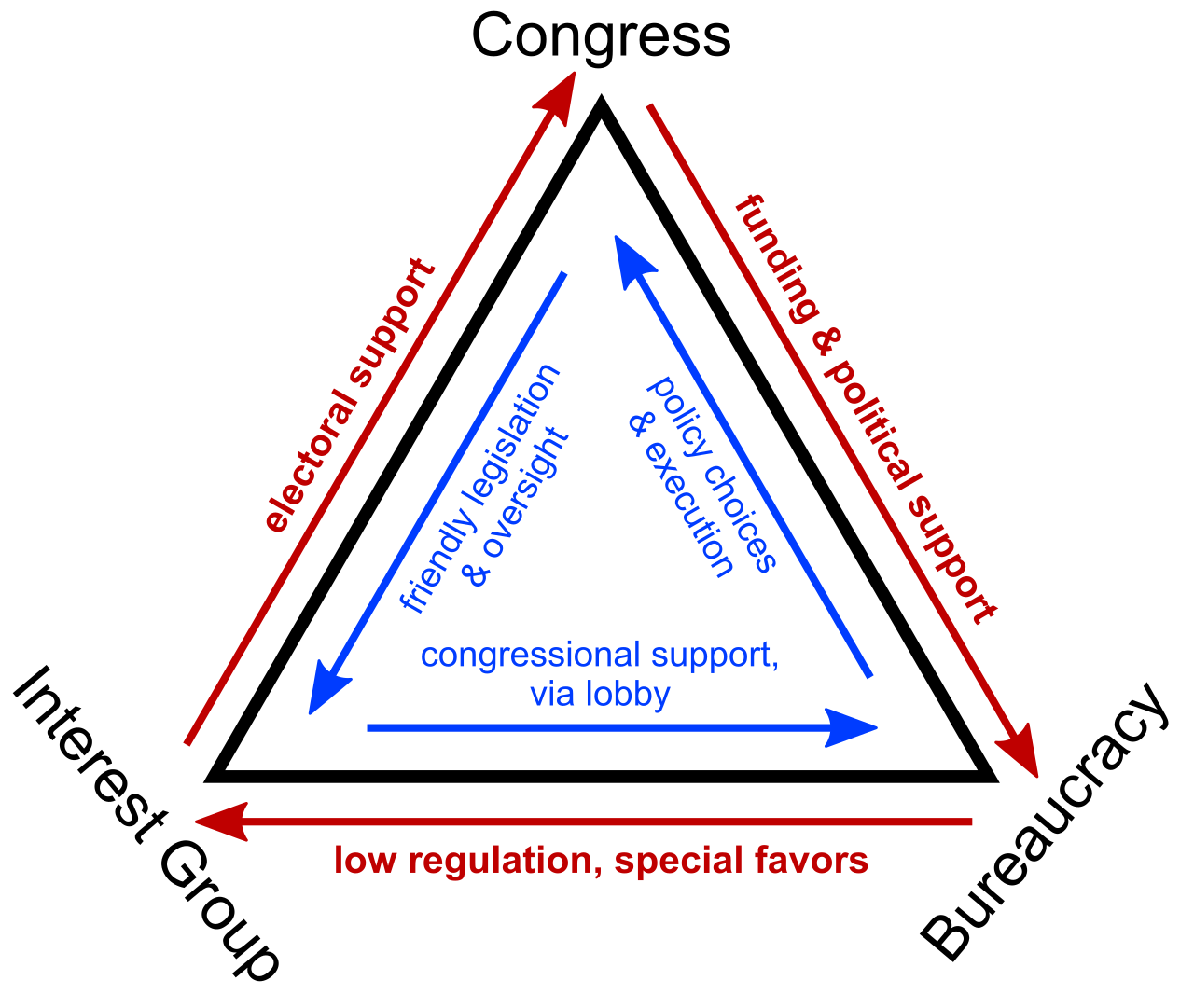
A broader conceptualization is issue networks, which include diverse policy experts, media figures, and interest groups debating a specific policy area. Facilitating these networks is the revolving door, a term that refers to the movement of personnel between roles as legislators and jobs as lobbyists.
The Mass Media
The media acts as the sensory organ of the electorate.
- The mass media functions as a gatekeeper by determining which issues receive national attention and shape the political agenda.
- The mass media functions as a watchdog by investigating and exposing government corruption or inefficiency.
However, commercial pressures shape this coverage. Networks often rely on horse-race journalism, which emphasizes candidate polling numbers rather than detailed candidate policy positions. Economically, media consolidation reduces the diversity of independent news sources available to the public.
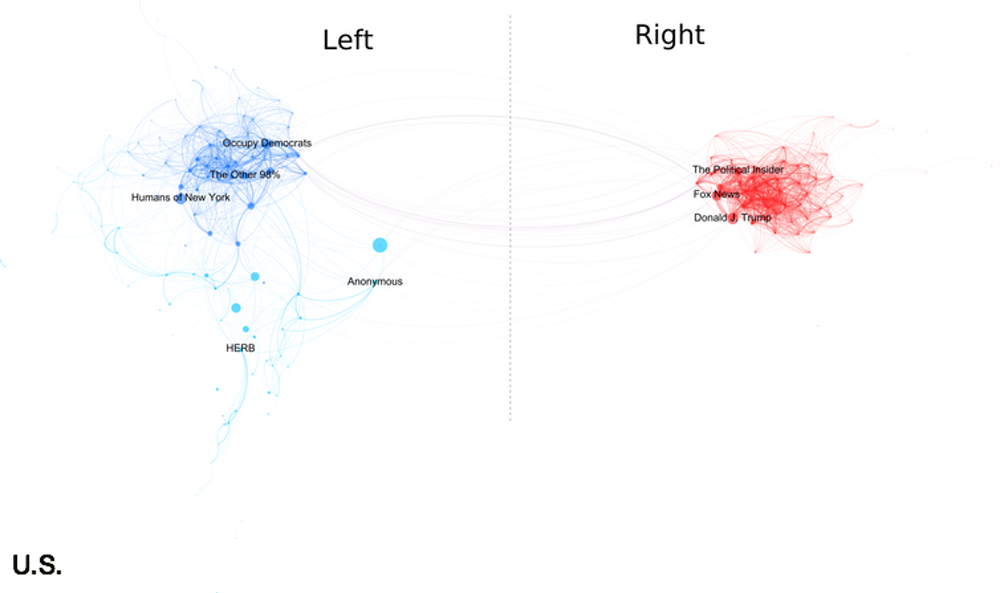
Furthermore, modern networks engage in narrowcasting, which involves targeting media programming at specific segments of the population. By feeding audiences exactly what they want to hear, narrowcasting contributes to political polarization by reinforcing pre-existing ideological beliefs.
Geography dictates political power in the United States.
Shaping Congress
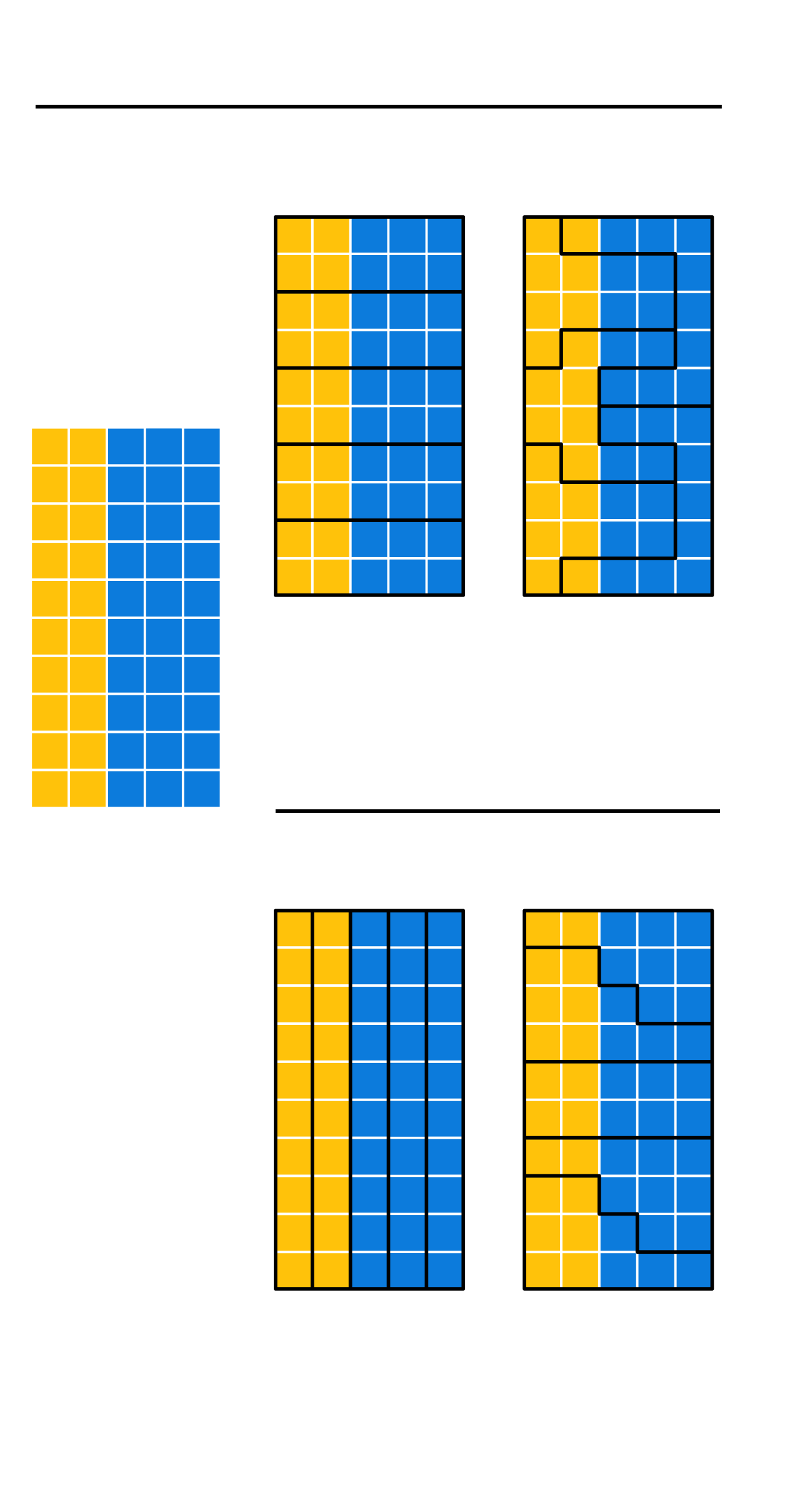
Every ten years, the census triggers reapportionment, which is the redistribution of United States House of Representatives seats among states based on population shifts. Once states know how many seats they get, they engage in redistricting, the process of redrawing state legislative and congressional district boundaries.
When this math is weaponized, you get gerrymandering, which involves manipulating district boundaries to favor a specific political party or demographic group. The Supreme Court has intervened on redistricting:
- Baker v. Carr established the "one person, one vote" principle for legislative redistricting, ensuring districts have roughly equal populations.
- Shaw v. Reno ruled that racial gerrymandering is subject to strict scrutiny under the Equal Protection Clause, limiting the use of race as the predominant factor in drawing district lines.
Once in office, incumbents are incredibly hard to beat. The incumbency advantage refers to the extremely high reelection rate of politicians currently holding political office. They possess name recognition, established donor networks, and the franking privilege, which allows incumbent members of Congress to send mail to constituents at the government's expense. Structurally, members of the United States House of Representatives have historically experienced higher incumbency reelection rates than United States Senators.
The Presidential Map: The Electoral College
The Electoral College is the formal mechanism for electing the President of the United States.
Here is the vital arithmetic:
- The total number of Electoral College votes is 538.
- A presidential candidate must secure at least 270 Electoral College votes to win the presidency.
- A state's Electoral College vote allocation equals the state's number of United States Representatives plus the state's two United States Senators.
How those votes are distributed depends on the state:
- Forty-eight states and Washington D.C. award Electoral College votes on a winner-take-all basis. Win the state by one vote, you win 100% of its Electoral College votes.
- Maine and Nebraska allocate Electoral College votes using a congressional district method, allowing their electoral votes to be split.
Because of the winner-take-all math, the Electoral College system encourages presidential candidates to concentrate campaign efforts on competitive swing states, ignoring deep red or deep blue states.
If there is a third-party disruption or a tie, and no presidential candidate reaches 270 electoral votes, the House of Representatives chooses the president from the top three candidates. In this rare contingent presidential election in the House of Representatives, each state delegation casts exactly one vote.
Finally, the entire electoral machine runs on money. The Federal Election Commission (FEC) is an independent regulatory agency responsible for enforcing federal campaign finance laws.
Historically, money fell into two buckets:
- Hard money refers to campaign contributions strictly regulated by the Federal Election Commission and given directly to candidates.
- Soft money refers to unregulated campaign contributions given to political parties for party-building activities.
To clean up the system, Congress passed the Bipartisan Campaign Reform Act of 2002, which attempted to ban soft money contributions to national political parties. This landmark legislation is commonly known as the McCain-Feingold Act.
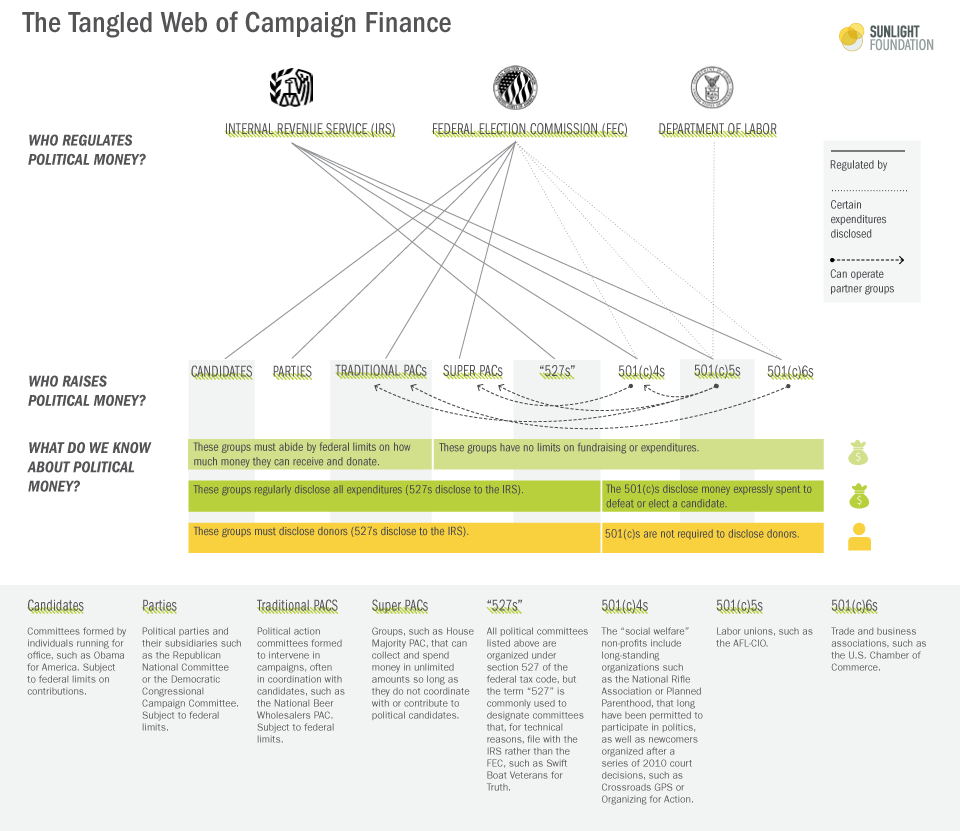
For a long time, traditional Political Action Committees (PACs)—organizations collecting political donations from members to distribute to candidate campaigns—had strict legal limits on the amount of money allowed to be donated directly to a candidate.
Everything changed with the Supreme Court. The Supreme Court case Citizens United v. Federal Election Commission ruled that corporate political spending is a form of protected free speech.
The Citizens United decision led to the creation of Super PACs. Unlike traditional PACs, Super PACs can raise and spend unlimited amounts of money on political advocacy. The only legal catch? Super PACs are legally prohibited from coordinating directly with a political candidate's official campaign. Therefore, the money is spent on independent expenditures, which are campaign communications not coordinated with any candidate's campaign organization.