Arithmetic Sequences
Not sure you’re ready?
Take the ~3-minute readiness diagnostic and see where you stand.
Imagine standing at the bottom of a staircase where every step is constructed with an identical vertical rise. If you move up one step, your elevation increases by exactly eight inches. Two steps, sixteen inches. This physical structure perfectly mirrors an arithmetic sequence, an ordered list of numbers where the difference between consecutive terms is constant. As a future middle school mathematics educator, your task is to transition students from the intuitive act of climbing stairs to the mathematical machinery that defines the staircase.
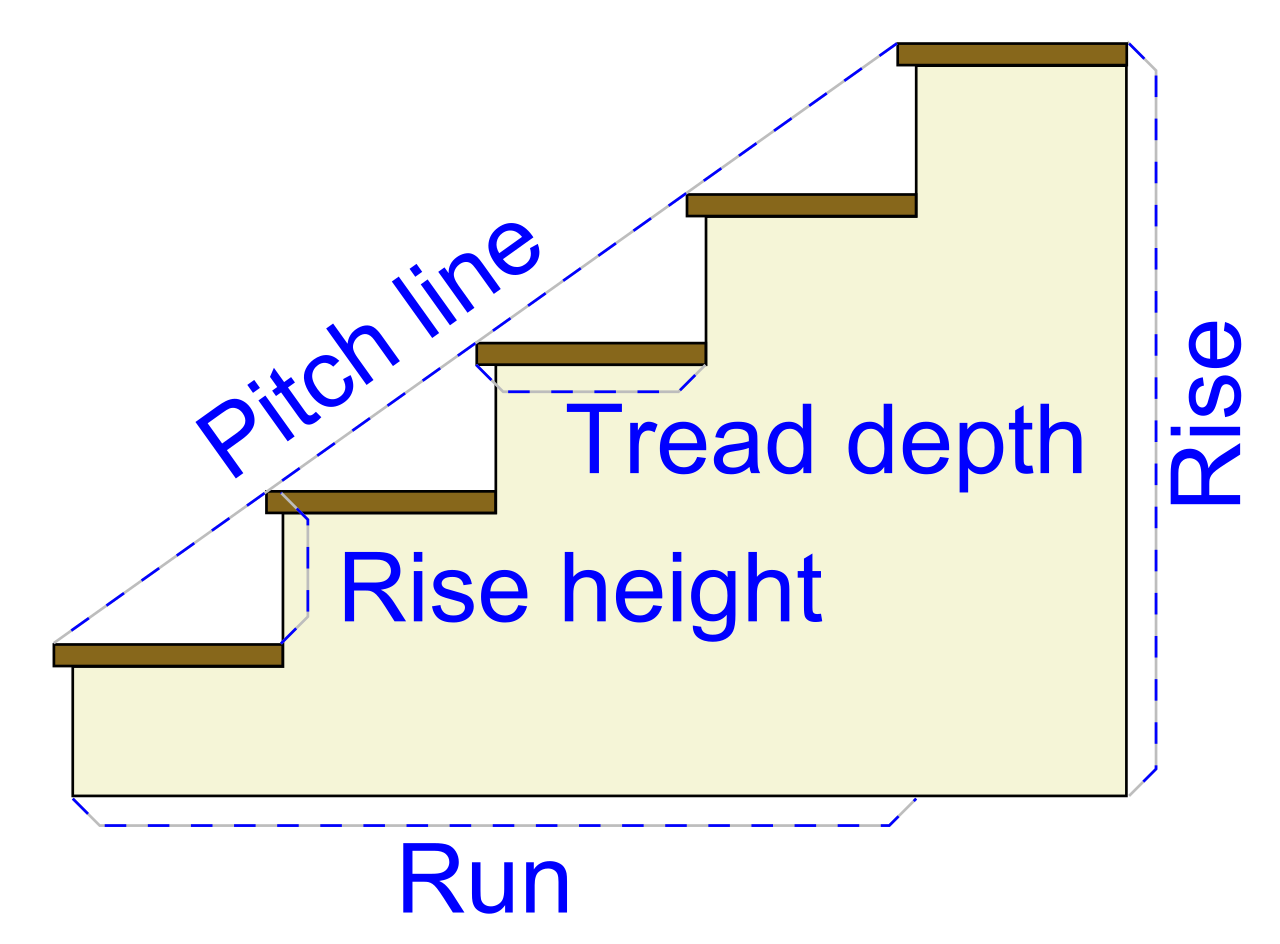
To begin, we must rigorously define our terms. The defining characteristic of an arithmetic sequence is its uniform spacing. The constant difference between consecutive terms in an arithmetic sequence is called the common difference. In algebraic notation, the common difference of an arithmetic sequence is universally denoted by the algebraic variable d.
The common difference is calculated by subtracting a sequence term from the immediately following sequence term. If the sequence is denoted as an, the common difference is simply d=an−an−1. The sign of d reveals the behavior of the sequence:
- A positive common difference indicates that the terms of the arithmetic sequence are strictly increasing in value.
- A negative common difference indicates that the terms of the arithmetic sequence are strictly decreasing in value.
- A sequence with a common difference of zero is an arithmetic sequence where all terms have the exact same value (e.g., 5, 5, 5, 5...).
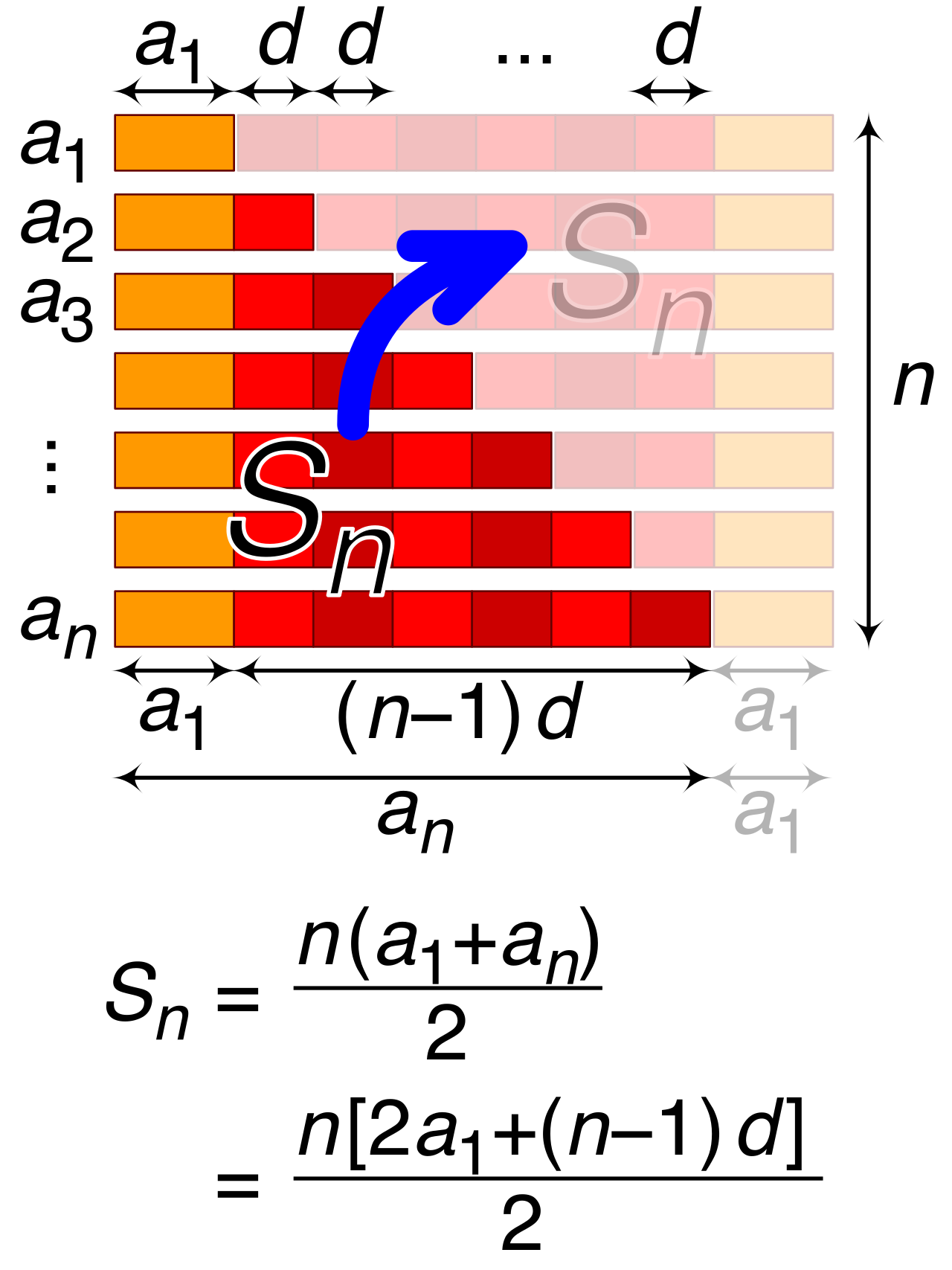
Two of the most foundational patterns your students have known since early childhood are perfect examples. The sequence of natural even numbers 2, 4, 6, 8, 10 is an arithmetic sequence with a common difference of 2. Similarly, the sequence of natural odd numbers 1, 3, 5, 7, 9 is an arithmetic sequence with a common difference of 2.
The Arithmetic Mean Property
There is an elegant symmetry hidden within these sequences. The arithmetic mean of any two terms in an arithmetic sequence equals the value of the term located exactly halfway between those two terms. Take the odd numbers: the arithmetic mean of 3 and 11 is 23+11=7, which is exactly the midpoint term in the sequence (3, 5, 7, 9, 11).
When translating a sequence into mathematics, we have two distinct approaches: building step-by-step or calculating directly. Your students must become fluent in both, as each serves a unique mathematical purpose.
The Recursive Formula: Building Step-by-Step
A recursive sequence formula defines the next term in a sequence using the value of the immediately preceding term.
Recursive Formula for Arithmetic Sequences an=an−1+d
However, an equation alone is insufficient. A complete recursive definition for an arithmetic sequence must explicitly state the numerical value of the initial term. Without a starting point, the instruction "add 5 to the previous number" is meaningless.
Depending on the context of the problem, the initial term of an arithmetic sequence is typically denoted as a1 for sequences starting at index one (common in pure number sequences). Conversely, the initial term of an arithmetic sequence is typically denoted as a0 for sequences starting at index zero (common in time-based real-world modeling).
The Explicit Formula: The Mathematical Time Machine
The limitation of a recursive formula is that finding the 100th term requires finding the first 99 terms. To bypass this, we use the explicit formula. An explicit sequence formula calculates the value of the n-th term directly using the position index n.
For sequences starting at index 1, the explicit formula is:
an=a1+(n−1)d
In the arithmetic sequence explicit formula an=a1+(n−1)d, the variable n represents the integer position of the term, and the variable a1 represents the value of the first term. We use (n−1) because we must take zero "steps" of size d to arrive at the first term.
Alternatively, if we are modeling a scenario starting at index 0, the explicit formula for an arithmetic sequence starting at index zero is:
an=a0+nd
This index-zero formula eliminates the (n−1) adjustment because the sequence starts at the baseline step.
Application: Finding the Number of Terms If you are given a finite arithmetic sequence—say, 7, 10, 13, ..., 85—how many terms are in the list? To find the total number of terms in a finite arithmetic sequence, substitute the last term value for an in the explicit formula and solve for n. 85=7+(n−1)3 78=(n−1)3 26=n−1 n=27. There are 27 terms.
One of your most vital roles as a middle school teacher is bridging isolated concepts. An arithmetic sequence is not merely an abstract list of numbers; it is the gateway to linear functions.
An arithmetic sequence models a discrete linear function. If you input an arithmetic sequence into a graphing calculator, the sequence can be represented graphically on a coordinate plane as a set of discrete collinear points.
Here, the domains of our mathematical tools demand precision. Unlike continuous lines, the domain of an arithmetic sequence modeled as a function is strictly restricted to a set of integers. You can measure the value of the 3rd term or the 4th term, but the 3.5th term does not exist.
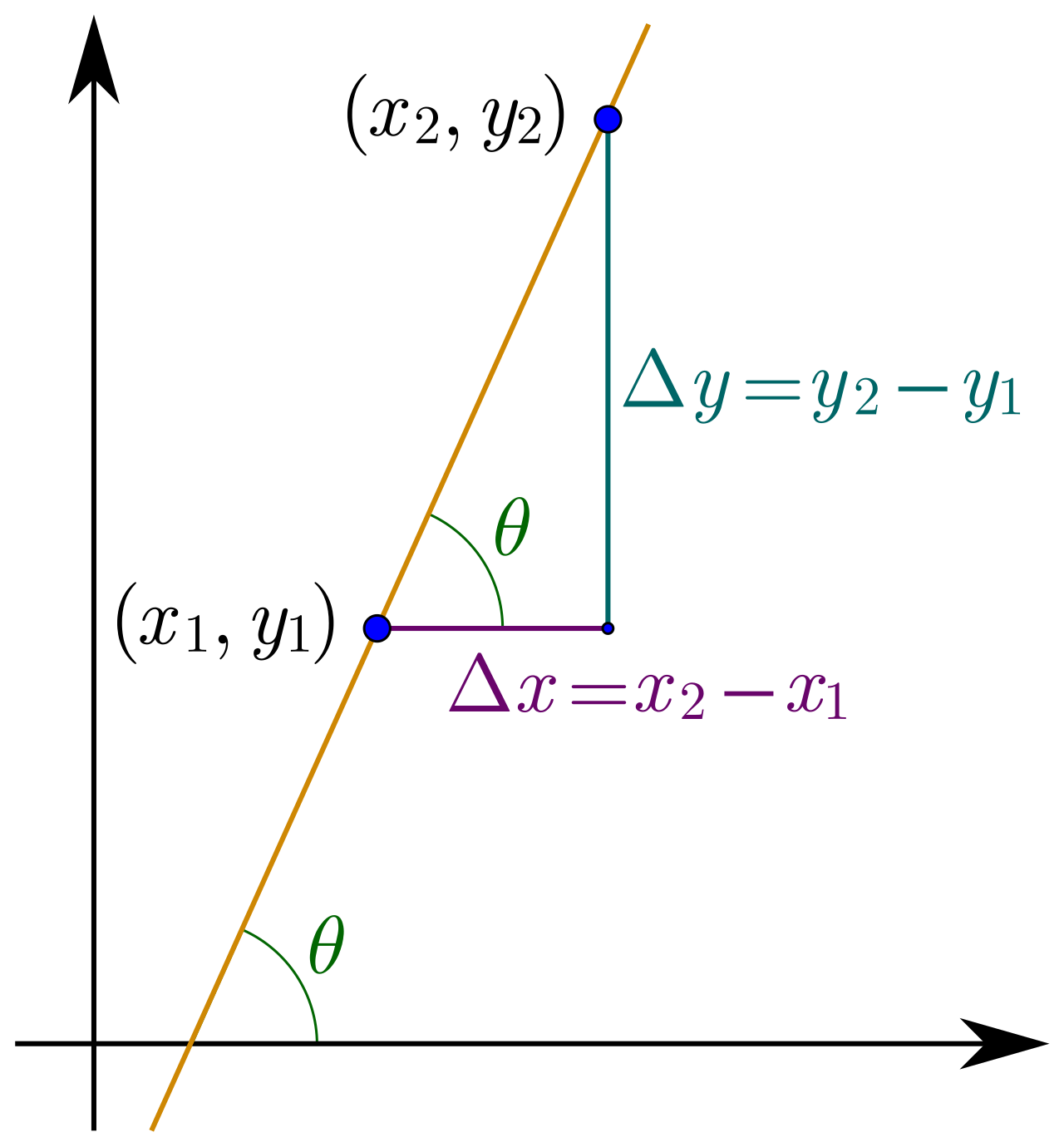
The geometry of the graph reveals a crucial algebraic truth: the common difference of an arithmetic sequence corresponds exactly to the slope of the sequence's linear function graph. Every time you move one unit to the right on the x-axis (an increment of n), the graph rises or falls by exactly d units.
| Arithmetic Sequence Feature | Linear Function Counterpart |
|---|---|
| Common Difference (d) | Slope (m) |
| Initial Term at index zero (a0) | Y-intercept (b) |
| Explicit Formula (an=a0+nd) | Slope-Intercept Form (y=mx+b) |
| Integer Position (n) | Independent Variable (x) with Integer Domain |
Mathematics takes root when it describes the student's reality. Real-world scenarios involving a constant rate of change over discrete time intervals are modeled by arithmetic sequences.
When establishing these models:
- When modeling a real-world arithmetic sequence, the starting value of the scenario corresponds to the initial term of the sequence.
- When modeling a real-world arithmetic sequence, the constant amount added or subtracted per step corresponds to the sequence common difference.
Consider personal finance. The accumulation of simple interest over discrete time periods is a real-world scenario modeled by an arithmetic sequence. If a student deposits $500 in an account that yields $25 in simple interest at the end of each year, the balance grows discretely.
- Initial Term (a0): $500 (the starting balance at Year 0)
- Common Difference (d): $25 (the constant addition per compounding period)
- Explicit Model: an=500+25n
With this model, a student can calculate the balance at year 10 simply by substituting n=10, bypassing the tedious recursive addition. By translating physical realities—whether it's building a staircase, analyzing simple interest, or tracking a decreasing gift card balance—into recursive and explicit formulas, you grant your students the mathematical leverage to predict, analyze, and master the discrete changes in the world around them.