Lines and Angles
Not sure you’re ready?
Take the ~3-minute readiness diagnostic and see where you stand.
Geometry is the study of constraints and relationships. When we draw a single, infinitely long line across a blank page, we divide a plane into two distinct worlds. When we draw a second line, we create a relationship—an intersection, a collision, or a rigid parallel boundary. As middle school mathematics teachers, you are tasked with introducing students to this structural language of the universe. The principles of lines and angles are not merely abstractions; they are the architectural blueprints of everything from the crossbeams of a suspension bridge to the path of light bouncing off a mirror. Mastering these relationships allows your students to move beyond seeing flat shapes to deducing the hidden, unbreakable laws that govern physical space.
In the Praxis 5164 exam, your fluency with these rules must be absolute. You must be able to calculate missing values, justify geometric proofs, and recognize student misconceptions. Let us dissect the anatomy of lines and angles from the ground up.
Before we can build structures, we must define our materials.
A line is a straight one-dimensional figure having no thickness and extending infinitely in both directions. It is the fundamental track upon which all of geometry runs.
When line segments begin to pivot or intersect, they create angles. An angle is formed by two rays that share a common endpoint. The common endpoint of the two rays forming an angle is called the vertex. You can think of an angle as a measurement of rotation—how far a door has swung open on its hinge.
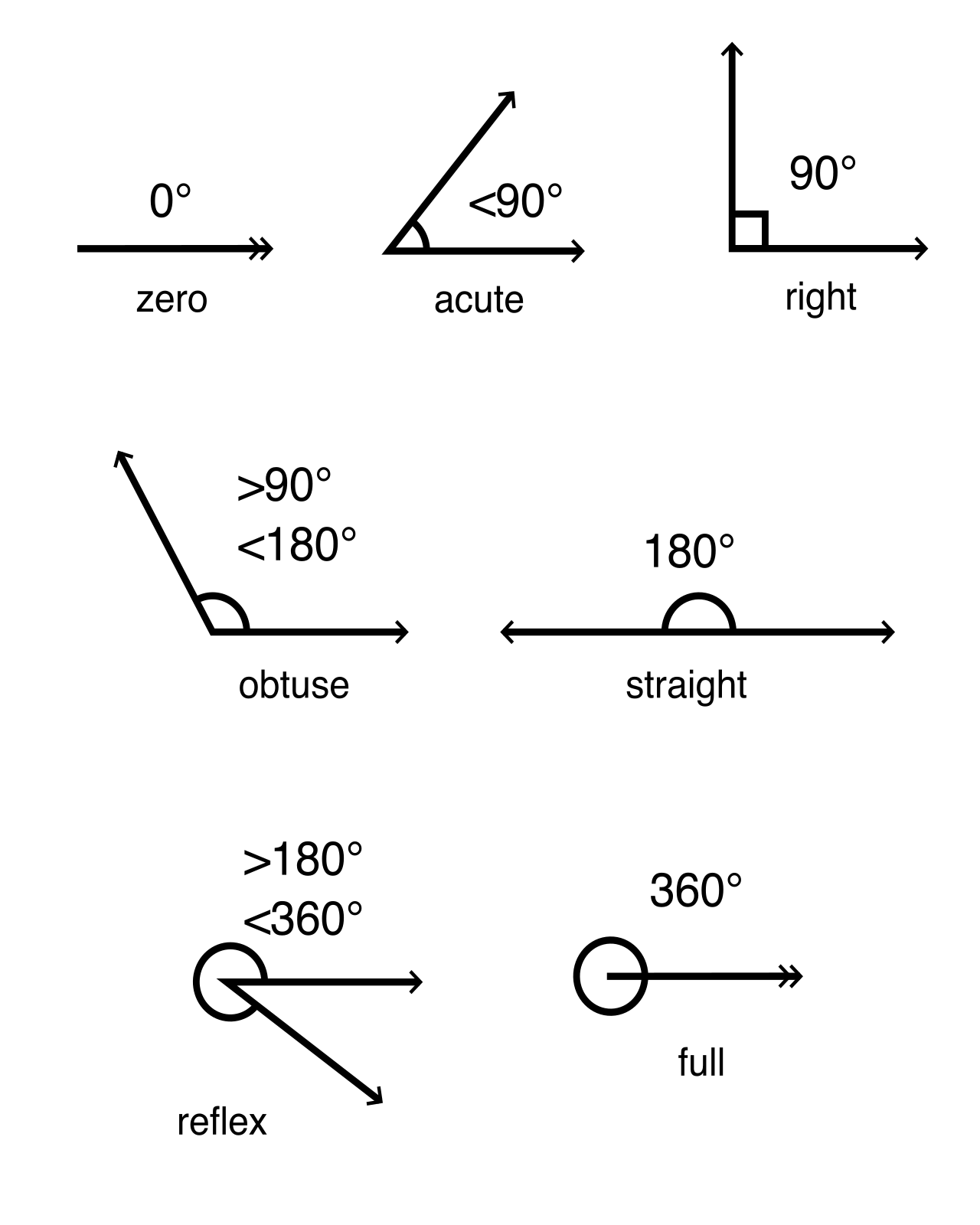
We classify angles by the rigidity of this rotation, assigning them distinct names based on their degree measure:
- An acute angle is an angle with a measure greater than zero degrees and less than ninety degrees.
- A right angle is an angle with a measure of exactly ninety degrees.
- An obtuse angle is an angle with a measure greater than ninety degrees and less than one hundred eighty degrees.
- A straight angle is an angle with a measure of exactly one hundred eighty degrees.
- A reflex angle is an angle with a measure greater than one hundred eighty degrees and less than three hundred sixty degrees.
Beyond isolated angles, geometry thrives on partnerships. Often, the measure of one angle dictates the identity of another.
- Complementary angles are two angles whose measures add up to exactly ninety degrees.
- Supplementary angles are two angles whose measures add up to exactly one hundred eighty degrees.
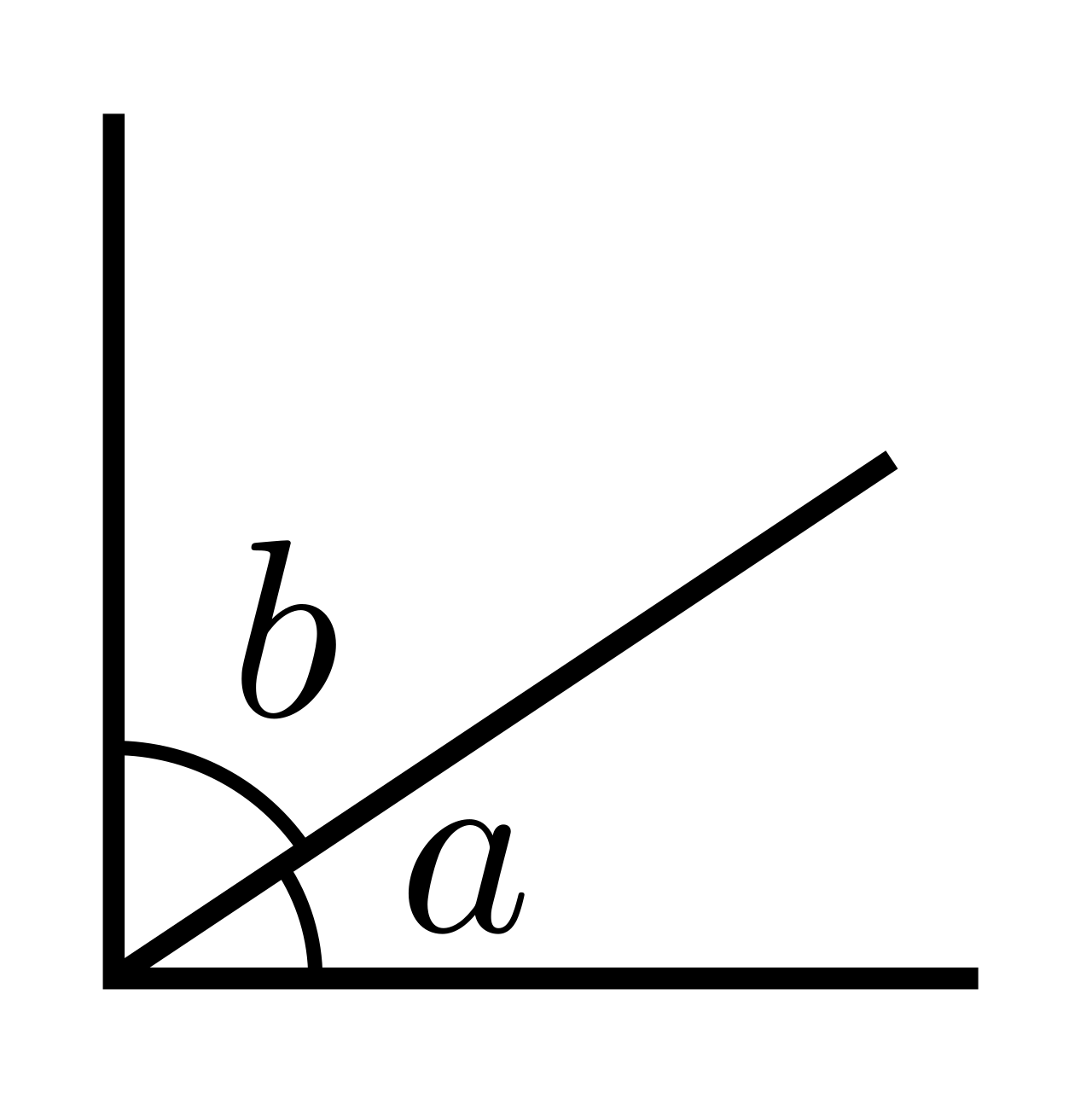
Teaching Tip: Middle schoolers frequently confuse complementary and supplementary. Connect them to the alphabet: Complementary comes before Supplementary, just as 90 comes before 180.
If two or more coplanar lines meet at a single point, they are intersecting lines. The moment lines intersect, they birth specific angular relationships based on position.
First, consider angles that live side-by-side. Adjacent angles are two angles in the same plane that share a common vertex and a common side. A crucial nuance often tested is that adjacent angles do not share any common interior points—they are strictly neighbors; their territories do not overlap.
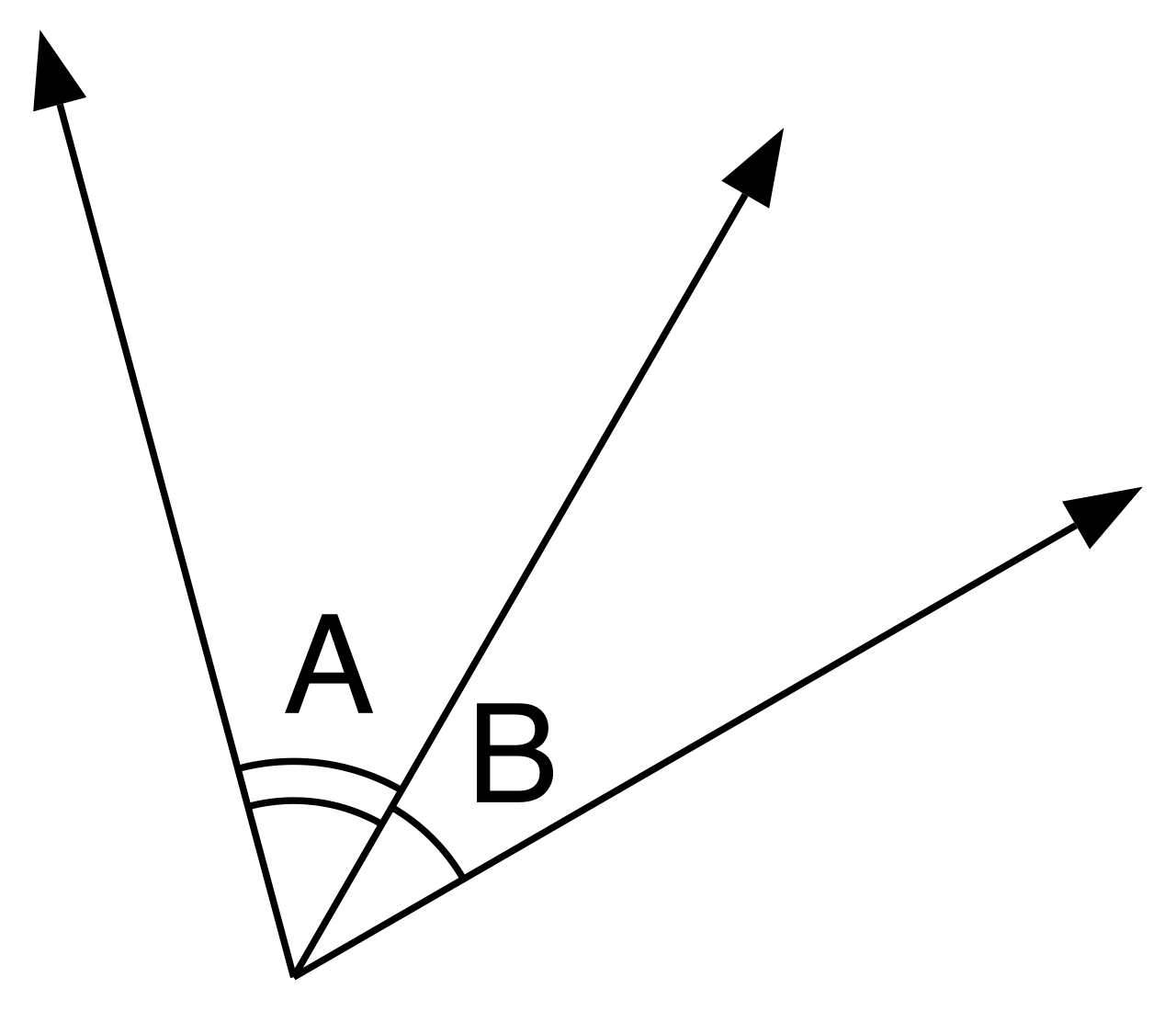
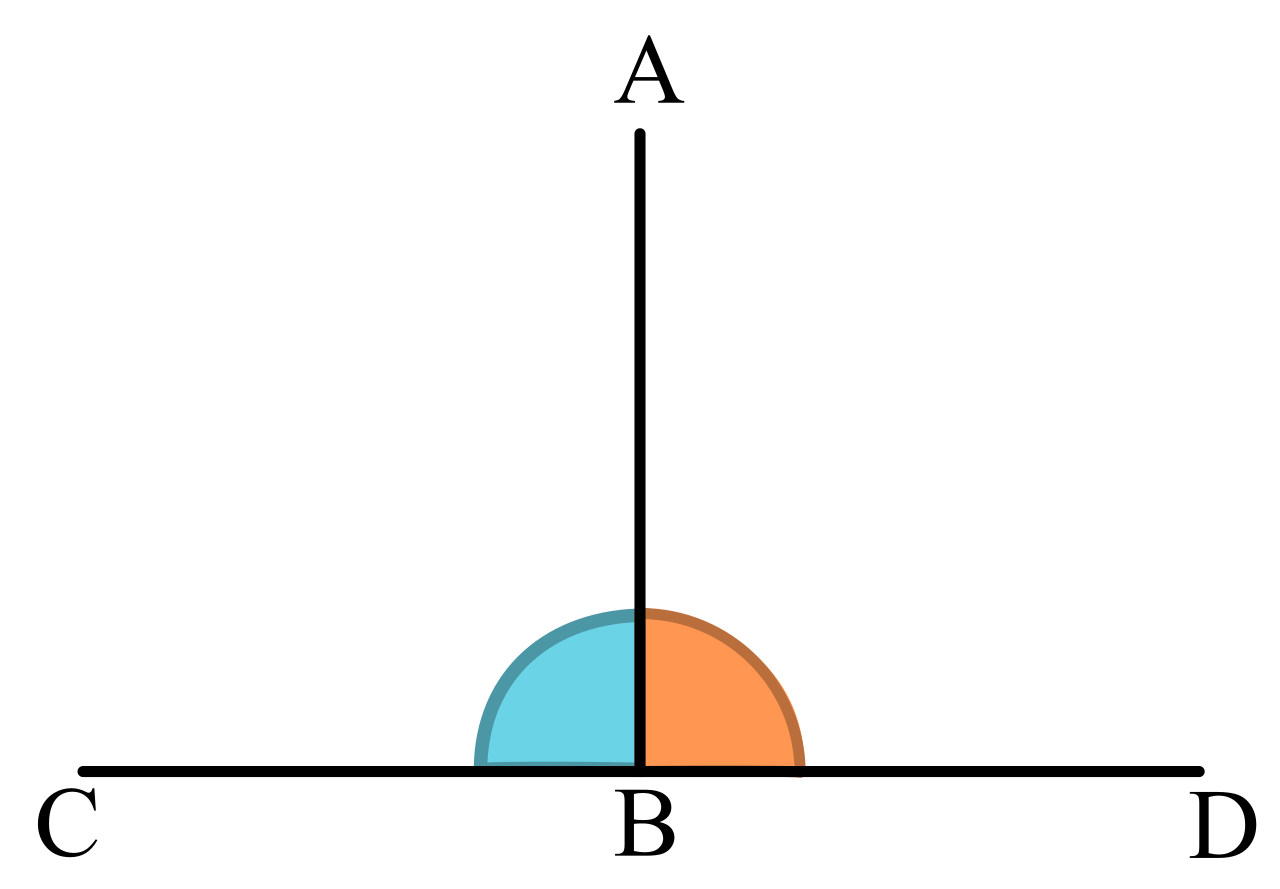
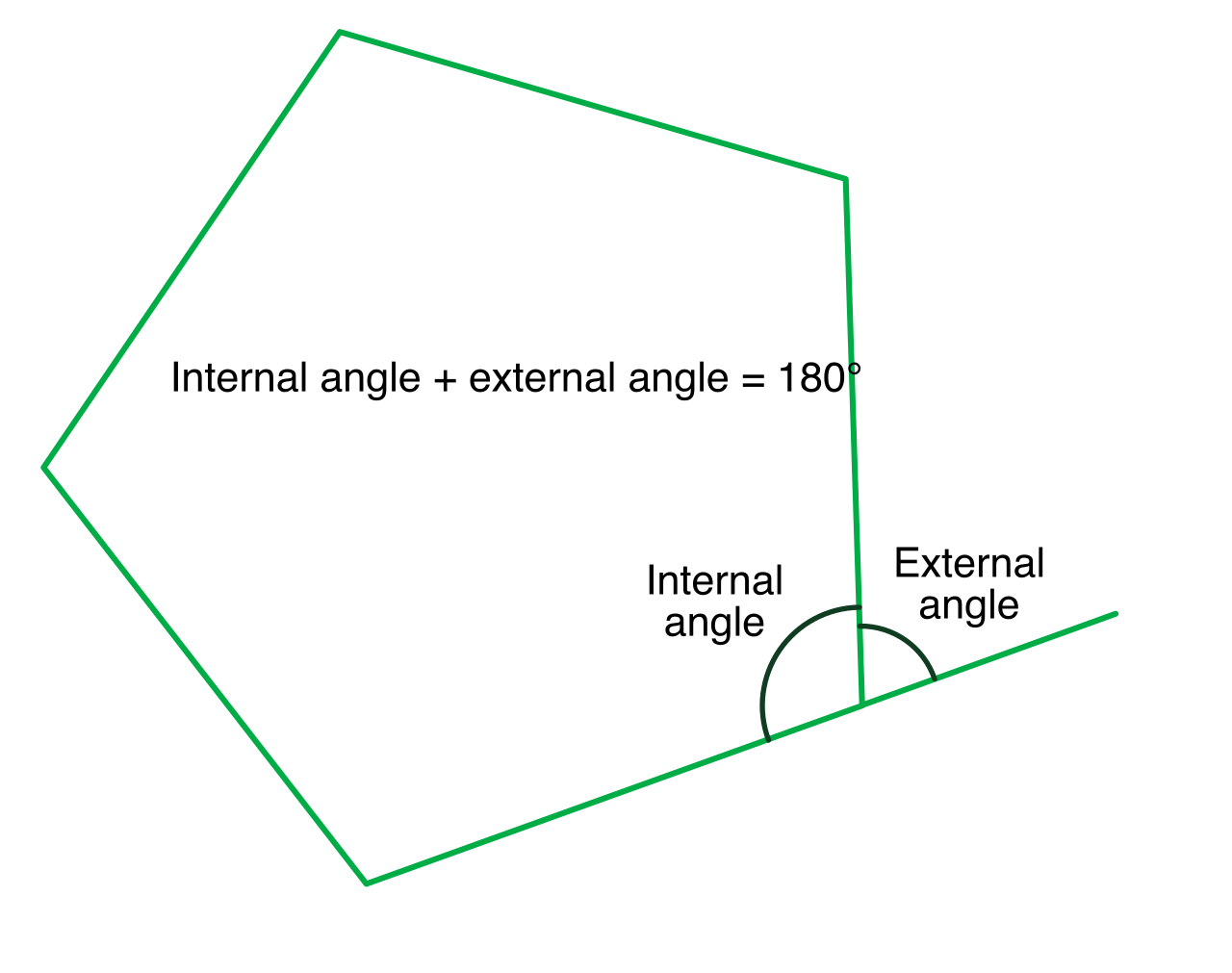
If you push two adjacent angles together so that their outer edges form a perfectly flat line, you create a linear pair. A linear pair is a pair of adjacent angles whose non-common sides form a straight line. Because a straight line measures 180 degrees, the angles that form a linear pair are always supplementary.
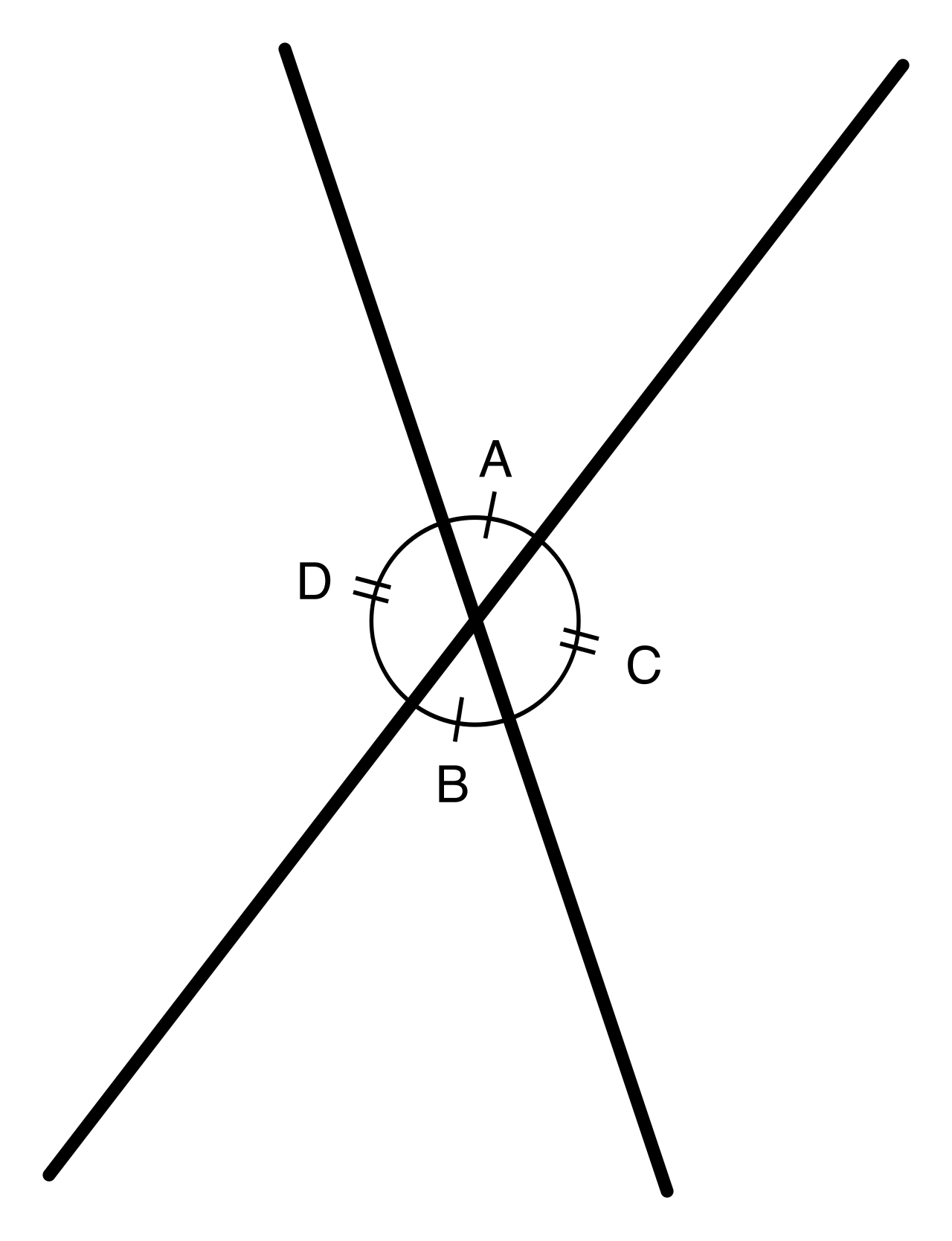
When two lines cross like an "X," they also create relationships across the intersection. Vertical angles are the pairs of opposite, non-adjacent angles formed by the intersection of two lines.
One of the most beautiful and easily proved truths in geometry is that vertical angles are always congruent. Why? Imagine lines crossing to form angles A, B, C, and D in a circle. Angle A and Angle B form a linear pair (supplementary). Angle B and Angle C also form a linear pair (supplementary). Since both A and C are supplements to the exact same angle B, they must be identical to each other.
Not all intersections are chaotic; some are perfectly ordered. Perpendicular lines are two intersecting lines that form four right angles.
- The symbol denoting perpendicular lines is an upside-down capital letter T (⊥).
Perpendicularity is the concept of "straight across." If you want to cross a busy road as quickly as possible, you do not walk at a slanted angle; you walk directly across. This intuitive truth reveals a formal geometric law: The shortest distance from a point to a line is the length of the perpendicular segment from the point to the line.
Perpendicularity also gives us a powerful tool for finding the exact center of objects:
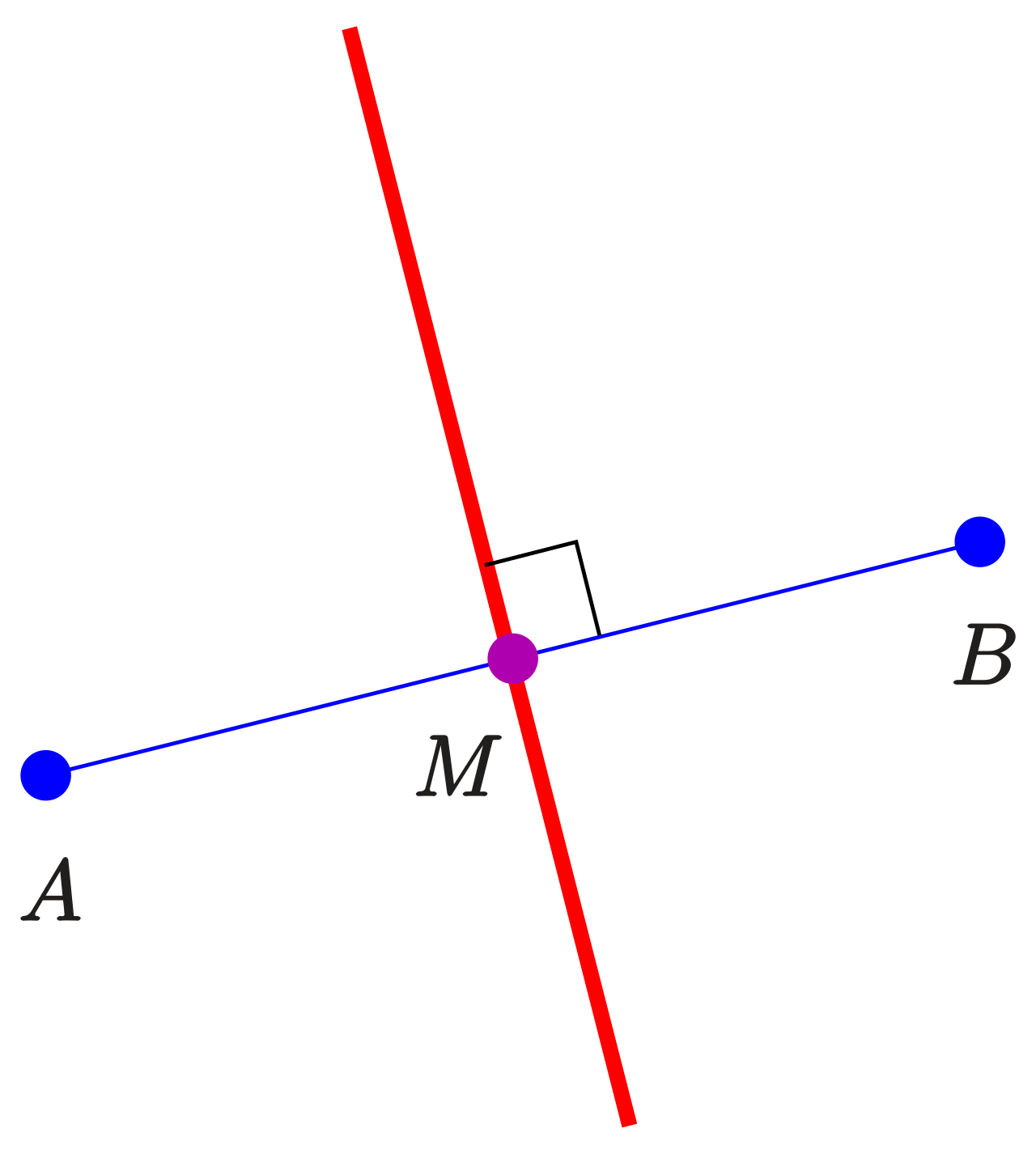
- The perpendicular bisector of a line segment is a line that intersects the segment at a ninety-degree angle and divides the segment into two equal parts.
- Any point on the perpendicular bisector of a line segment is equidistant from the endpoints of the segment. This is the logic your GPS uses when determining which of two cell towers you are closer to—it draws a perpendicular bisector between them!
Angles have their own version of a perfect split. An angle bisector is a ray that divides a single angle into two congruent angles. Similar to segment bisectors, there is a distance rule here: the points on an angle bisector are equidistant from the two sides of the angle.
If intersecting lines are about collision, parallel lines are about infinite isolation. Parallel lines are two coplanar lines that never intersect. Because they never converge or diverge, parallel lines always maintain a constant distance apart.
- The symbol denoting parallel lines consists of two vertical parallel bars (∥).
Our modern understanding of parallel lines rests heavily on a foundational rule of Euclidean geometry. Playfair's axiom states that given a line and a point not on the line, exactly one straight line can be drawn through the point parallel to the given line. It means parallel paths are unique; you cannot have two different lines passing through the same point that are both perfectly parallel to the original line.
From this rigidity comes a logical domino effect: Two lines parallel to a third line are parallel to each other. If Train Track A is parallel to Train Track B, and Train Track B is parallel to Train Track C, then Track A and Track C will never touch.
Parallel lines alone are structurally sound but mathematically quiet. The magic happens when we draw a line across them. A transversal is a line that intersects two or more coplanar lines at distinct points.
When a transversal cuts across two lines, it creates eight distinct angles. We categorize these angles by their geography.
- Interior angles are the angles that lie inside the region bounded by two lines intersected by a transversal (the space "between the tracks").
- Exterior angles are the angles that lie outside the region bounded by two lines intersected by a transversal.
We then pair these angles up to analyze their relationships.
| Angle Pair Name | Definition |
|---|---|
| Alternate interior angles | A pair of angles on opposite sides of a transversal and between the two intersected lines. |
| Alternate exterior angles | A pair of angles on opposite sides of a transversal and outside the two intersected lines. |
| Corresponding angles | A pair of angles in the same relative position at each intersection where a straight line crosses two others (e.g., both "top right"). |
| Same-side interior angles | A pair of angles on the same side of a transversal and between the two intersected lines. |
| Same-side exterior angles | A pair of angles on the same side of a transversal and outside the two intersected lines. |
(Note: "Same-side" angles are frequently referred to as "consecutive" angles in standard theorems).
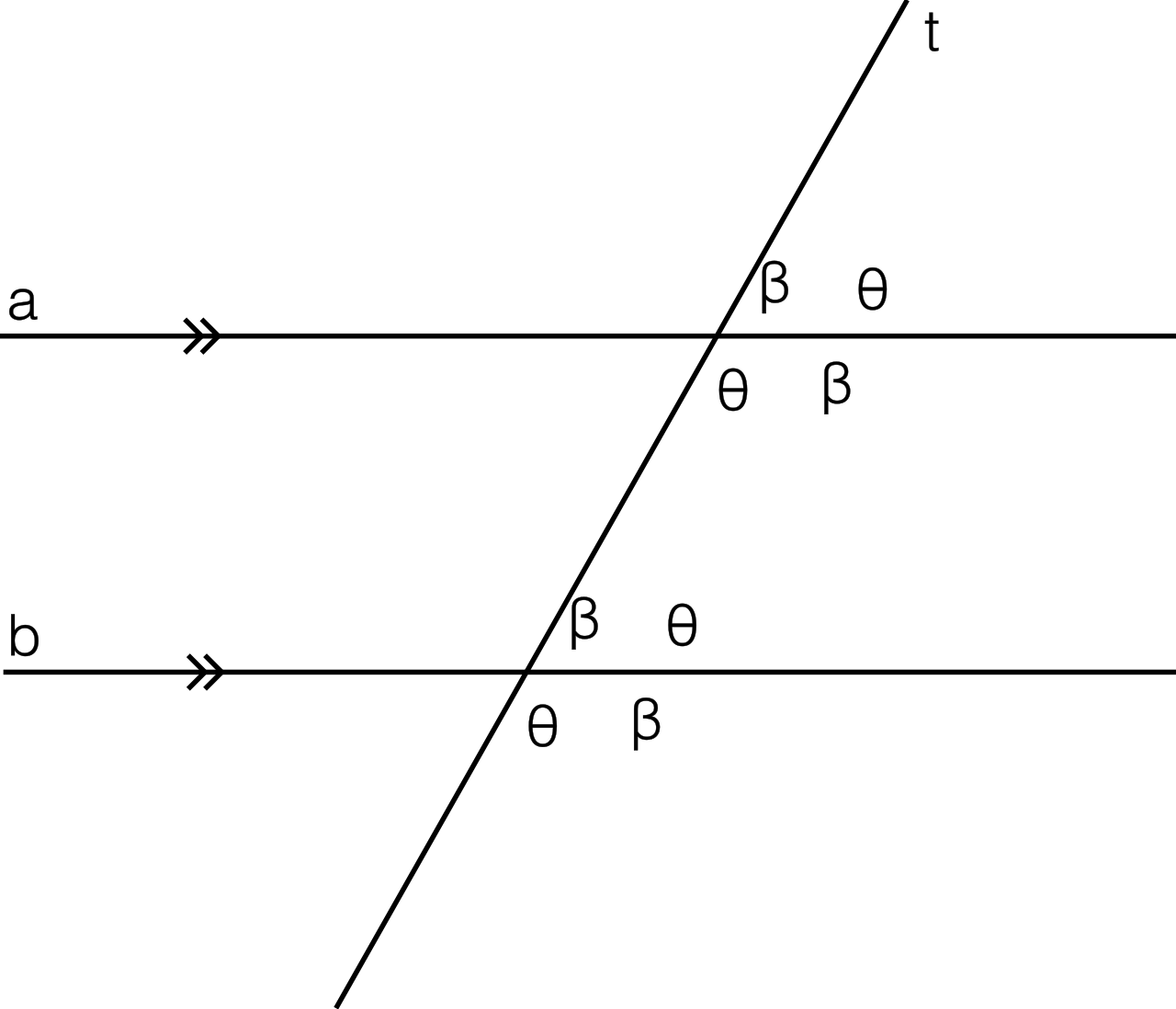
When a transversal cuts across just any two lines, the angles exist, but their measures hold no special relationship. But when those two lines are parallel, the transversal acts as a geometric copy machine, perfectly translating the intersection at the top line to the intersection at the bottom line.
These are the absolute, non-negotiable rules of parallel transversals. You will use these constantly to solve numeric-entry items on the 5164 exam:
- If two parallel lines are cut by a transversal, then the pairs of corresponding angles are congruent.
- If two parallel lines are cut by a transversal, then the pairs of alternate interior angles are congruent.
- If two parallel lines are cut by a transversal, then the pairs of alternate exterior angles are congruent.
- If two parallel lines are cut by a transversal, then the consecutive interior angles are supplementary.
- If two parallel lines are cut by a transversal, then the consecutive exterior angles are supplementary.
The Converses: Proving Lines are Parallel
In teaching mathematics, we must show students that logic flows in both directions. If we know lines are parallel, we know the angle measures. Conversely, if we measure the angles and find these relationships hold true, we have definitively proved the lines are parallel.
- If two lines are cut by a transversal such that corresponding angles are congruent, then the two lines are parallel.
- If two lines are cut by a transversal such that alternate interior angles are congruent, then the two lines are parallel.
- If two lines are cut by a transversal such that alternate exterior angles are congruent, then the two lines are parallel.
- If two lines are cut by a transversal such that consecutive interior angles are supplementary, then the two lines are parallel.
The Special Case: Perpendicular Transversals
What happens if our transversal crosses parallel lines straight on, at a perfect 90-degree angle?
The logic of corresponding angles tells us that if the top intersection is 90 degrees, the bottom must be 90 degrees as well. Therefore: In a plane, if a line is perpendicular to one of two parallel lines, then the line is also perpendicular to the other parallel line.
We can also reverse this to form a structural proof: In a plane, if two lines are perpendicular to the same line, then the two lines are parallel to each other. Think of the rungs of a ladder. If every rung is perfectly perpendicular to the side rails, every rung is mathematically guaranteed to be parallel to every other rung.
Mastering this network of definitions, axioms, and theorems gives you the capacity to unravel complex geometric puzzles. When a student looks at a tangle of lines and intersecting transversals on a graphing calculator, they often see chaos. Armed with these properties, you will teach them to see the underlying order.