Coordinate Geometry
Not sure you’re ready?
Take the ~3-minute readiness diagnostic and see where you stand.
Geometry, for millennia, was a discipline of pure spatial reasoning—a world of compasses, straightedges, and detached, floating shapes. Algebra was an entirely separate domain of balancing abstract quantities. The Cartesian coordinate system is the great translator between these two worlds. By laying down an x-axis and a y-axis that intersect at a right angle, we establish an infinite plane of absolute, quantifiable addresses. At the precise center of this grid lies the origin, holding the coordinates (0, 0).
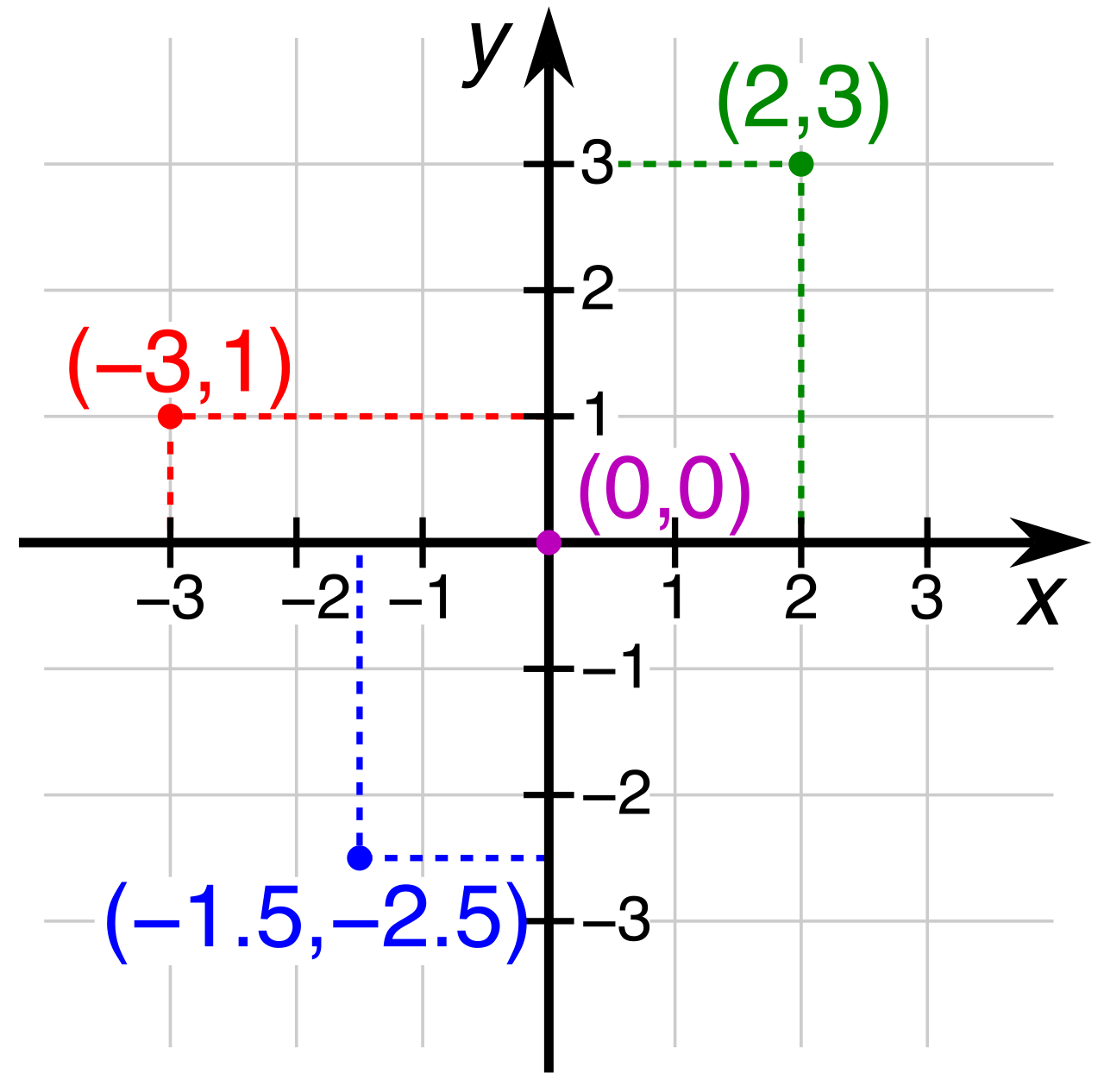
Because of this grid, a line is no longer just a visual stroke on a page; it is a measurable path. A shape is no longer just an idea; it is a defined boundary we can analyze with numbers. For the aspiring middle school mathematics teacher, mastering coordinate geometry is about giving your students the power to see the arithmetic hiding inside every physical shape. When we analyze relationships in the xy-plane using distance and midpoint, we are simply using algebra to measure space.
To understand how objects behave on the coordinate plane, we must first measure the gaps between them. We know intuitively that the shortest path between two points in the coordinate plane is a straight line segment connecting them.
When that segment runs perfectly horizontally or vertically, our calculations are effortless.
- The length of a horizontal line segment is the absolute value of the difference between the x-coordinates of the endpoints (∣x2−x1∣). Furthermore, because it does not rise or fall, the slope of any horizontal line on the coordinate plane is exactly zero.
- The length of a vertical line segment is the absolute value of the difference between the y-coordinates of the endpoints (∣y2−y1∣). Because a vertical line has no horizontal "run," the slope of any vertical line on the coordinate plane is mathematically undefined.
But how do we measure the distance of a slanted line? On the Praxis exam, and in your future classroom, you cannot simply count grid squares for a diagonal segment.
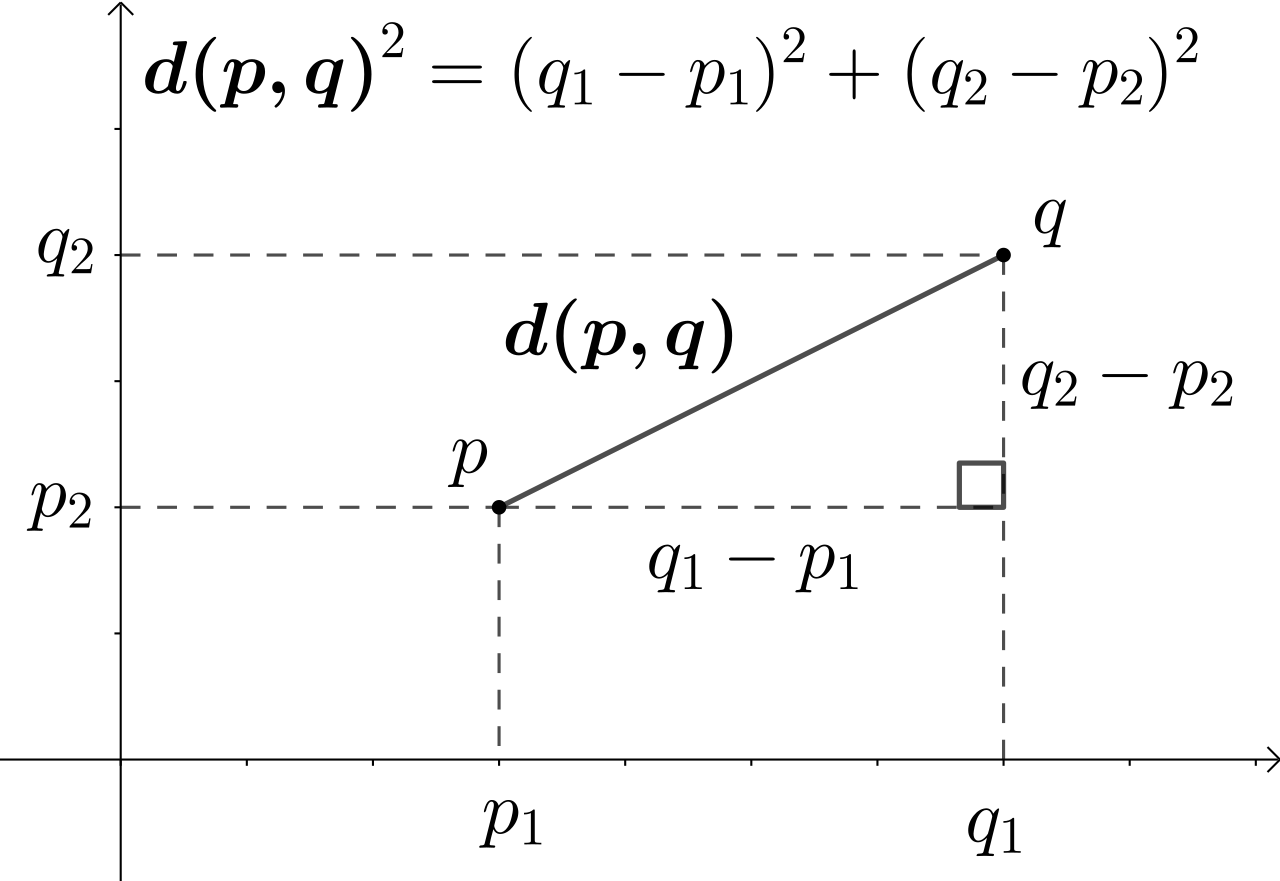
The Distance Formula calculates the straight-line distance between two points on the coordinate plane. Mathematically, the distance between two points is the square root of the sum of the squared difference of the x-coordinates and the squared difference of the y-coordinates: d=(x2−x1)2+(y2−y1)2
Do not let your middle school students merely memorize this as a random string of symbols. Tear the formula apart and show them what it really is: the distance formula is a direct algebraic application of the Pythagorean Theorem (a2+b2=c2).
When you draw a slanted segment between two points, imagine dropping a vertical line from the higher point and extending a horizontal line from the lower point until they meet. You have just constructed a right triangle. The "squared difference of the x-coordinates" is simply the length of the horizontal leg squared (a2). The "squared difference of the y-coordinates" is the vertical leg squared (b2). Taking the square root of their sum gives you the hypotenuse (c). The formula is not magic; it is merely a right triangle wearing an algebraic mask.
If the distance formula tells us how far apart two things are, the midpoint formula tells us where they balance.
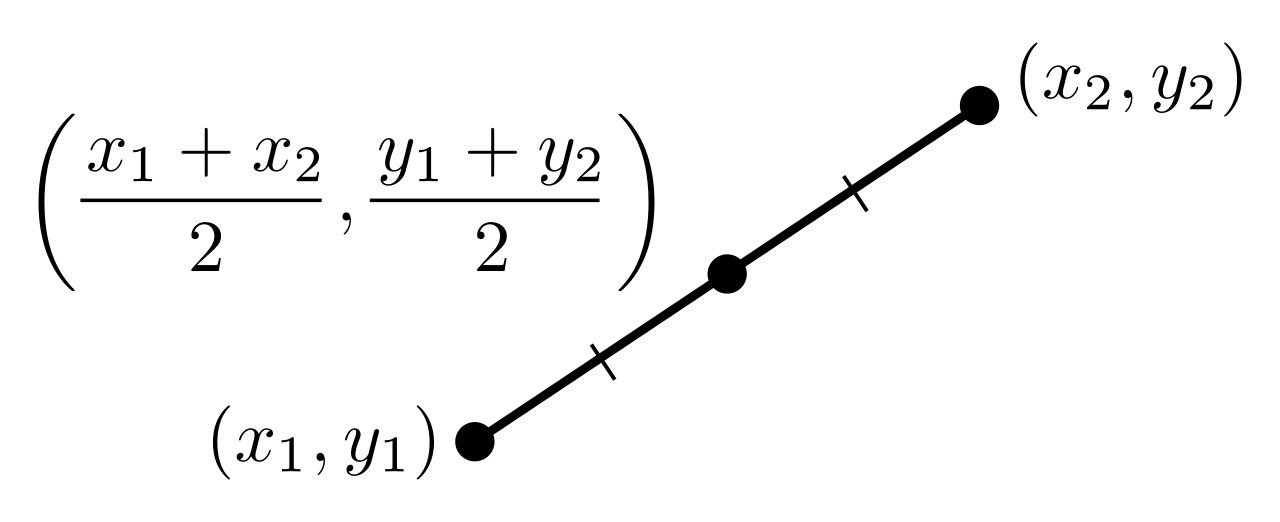
The Midpoint Formula calculates the exact center coordinate point between two coordinate pairs. By definition, the midpoint of a line segment divides that segment into two smaller segments of exactly equal length.
The genius of the midpoint formula lies in its simplicity. To find the middle of any two values, we simply average them.
- The x-coordinate of a segment midpoint is the arithmetic mean of the endpoints' x-coordinates: 2x1+x2.
- The y-coordinate of a segment midpoint is the arithmetic mean of the endpoints' y-coordinates: 2y1+y2.
Reversing the Process
In teaching, the true test of comprehension is working backward. Often, an assessment will provide the midpoint and one endpoint, asking for the missing boundary.
An unknown endpoint coordinate can be calculated algebraically by setting the known midpoint coordinate equal to the average of the known and unknown endpoint coordinates.
Classroom Context: Frame this for your students exactly like a grading scenario. If a student scored an 80 on their first test (the known endpoint x1), and they want a course average of 85 (the known midpoint Mx), what must they score on the second test (the unknown endpoint x2)? 85=280+x2 Multiply by 2 (170=80+x2), then subtract 80 to reveal that the missing endpoint is 90. This maps perfectly to the geometric plane.
Once we master line segments, we connect them to form enclosed polygons. The coordinate plane allows us to calculate the perimeter and area of these shapes with absolute algebraic precision.
Perimeter
The perimeter of a polygon on the coordinate plane is the sum of the lengths of all its sides. If a side is perfectly horizontal or vertical, you simply calculate the absolute difference of the relevant coordinates. However, the side lengths of a polygon with slanted sides on the coordinate plane are calculated using the distance formula. You will repeatedly apply the Pythagorean translation to sum the boundary.
Area
Area on the coordinate grid offers a wonderful opportunity for creative problem-solving. When faced with an irregular or slanted polygon, there are two definitive methods to calculate its area:
- The Additive Method (Decomposition): The area of a polygon on the coordinate plane can be calculated by decomposing the polygon into smaller non-overlapping rectangles and right triangles. Find the area of each distinct, easily calculable piece, and sum them.
- The Subtractive Method (The Bounding Box): This method is frequently more elegant, especially for heavily slanted triangles. The area of a polygon on the coordinate plane can be calculated by subtracting the areas of external right triangles from the area of an enclosing bounding box.
Teaching Context: Imagine the bounding box as a rectangular block of marble, and the polygon inside it as the statue you are carving out. Draw the tightest horizontal and vertical rectangle around the polygon's outermost vertices. Calculate the area of this entire rectangle. Then, identify the empty right-triangular gaps situated between the rectangle's boundary and the polygon's edges. Because the box is built on the grid's axes, these external triangles all have perfectly horizontal and vertical bases and heights, making their areas trivial to calculate (21bh). Subtract these empty spaces from the bounding box, and what remains is the area of your precise target shape.
The Cartesian plane allows us to define geometric figures not just by how they look, but by the immutable behavior of their lines. To classify a quadrilateral without a protractor, we analyze its slopes and lengths.
The Behavior of Slopes
The slope of a line represents its rate of change. When assessing relationships between sides:
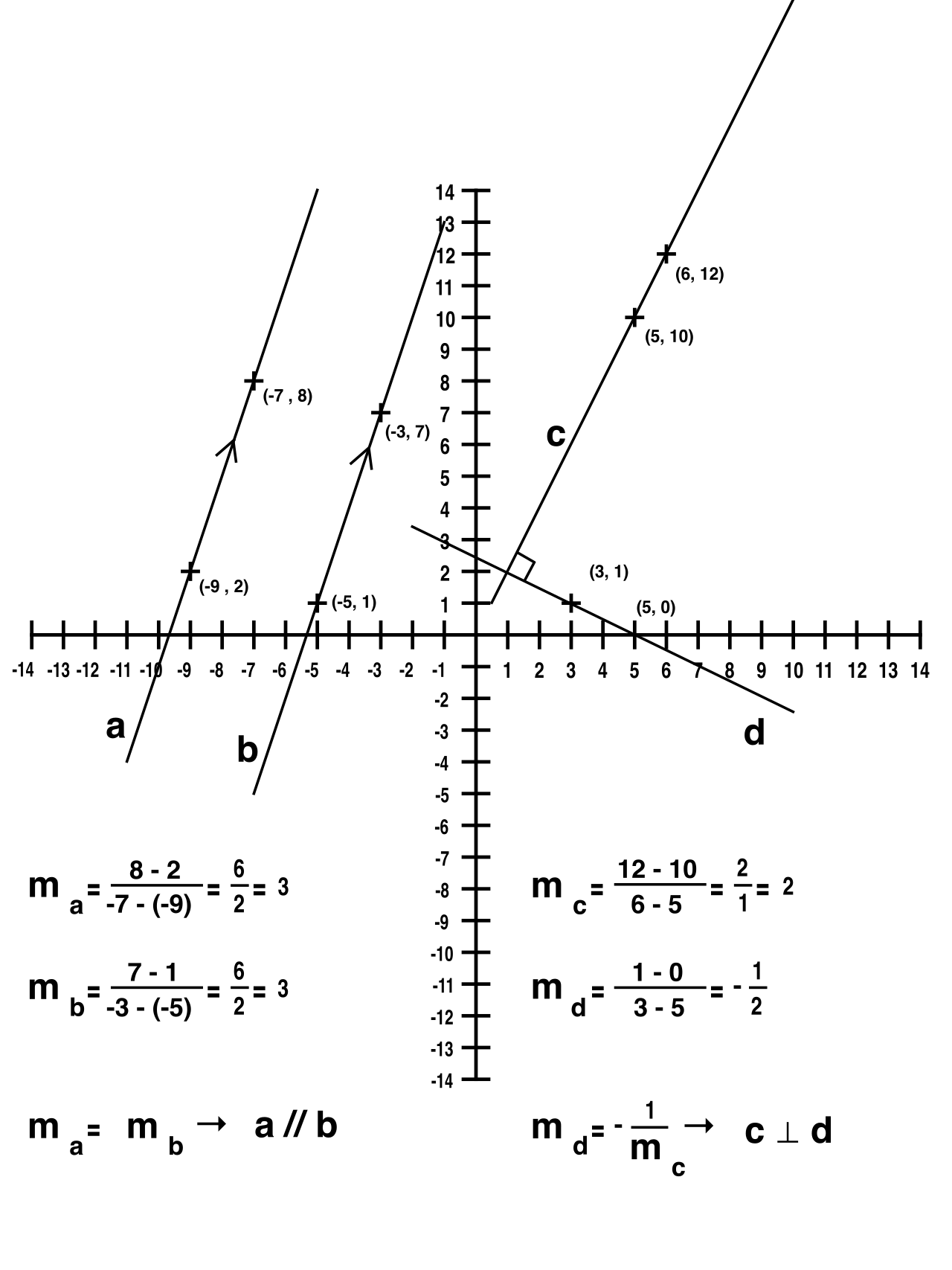
- Two distinct non-vertical lines on the coordinate plane are parallel if and only if their slopes are exactly equal. They rise and run at the exact same rate, never intersecting.
- Two non-vertical lines on the coordinate plane are perpendicular if the product of their slopes equals negative one. In classroom terms, their slopes are "negative reciprocals" of one another (e.g., 32 and −23).
Diagonals as the Key to Quadrilaterals
While we can prove a shape is a parallelogram by checking if its opposite sides are parallel, the most elegant mathematical proofs on the coordinate plane rely on the diagonals (the internal segments connecting opposite vertices).
Here is the definitive hierarchy for classifying quadrilaterals using diagonals:
| If you want to prove... | Then show that... | Using this coordinate tool... |
|---|---|---|
| Parallelogram | The midpoints of its two diagonals are located at the exact same coordinate point. | The Midpoint Formula |
| Rectangle | The lengths of its two diagonals calculated via the distance formula are equal. | The Distance Formula |
| Rhombus | Its two diagonals are perpendicular to each other. | Slope Calculations (m1×m2=−1) |
Notice how beautifully this integrates our core concepts. A quadrilateral on the coordinate plane is a parallelogram if the midpoints of its two diagonals are located at the exact same coordinate point. This mathematically proves the diagonals bisect each other, an essential defining property of all parallelograms.
If you have already established the shape is a parallelogram, you can narrow its specific classification. A parallelogram on the coordinate plane is a rectangle if the lengths of its two diagonals calculated via the distance formula are equal. (Think of the structural cross-bracing of a house—a wall is perfectly rectangular only when the diagonal cross-beams are identical in length).
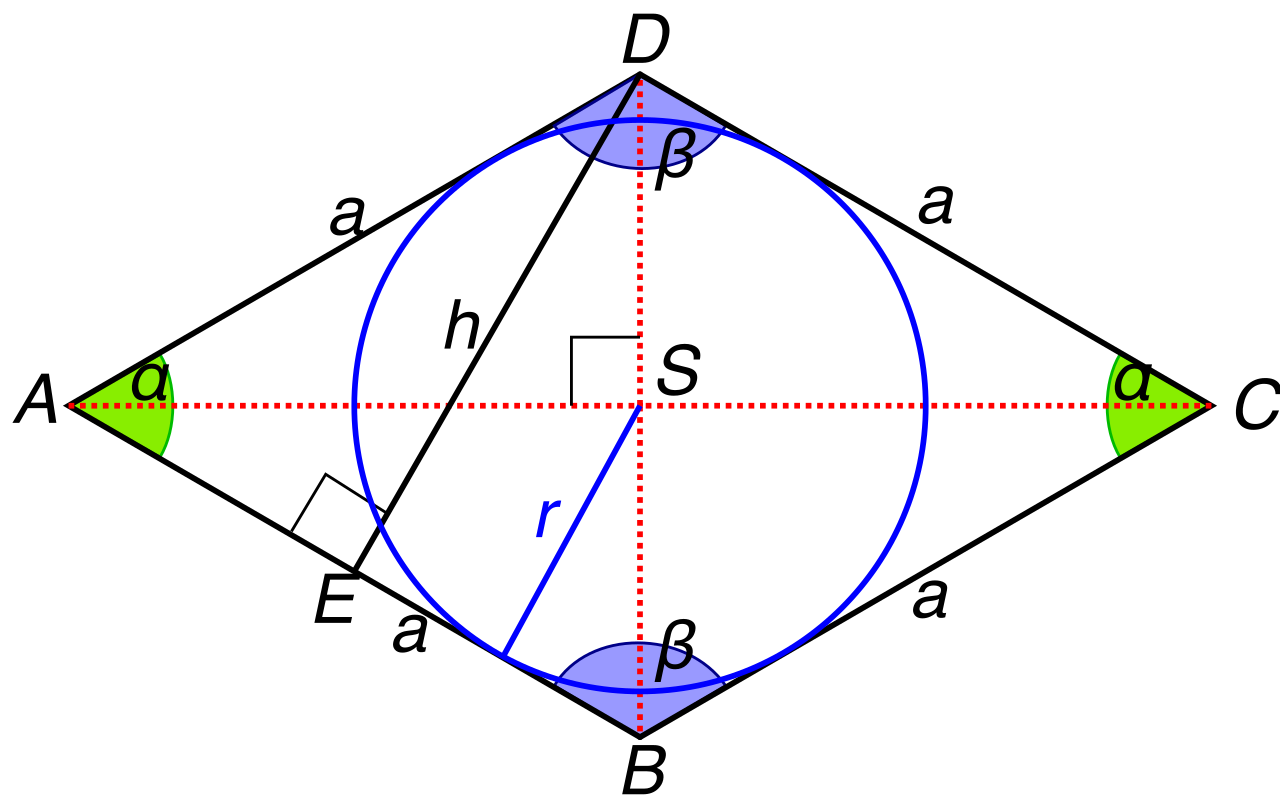
Finally, a parallelogram on the coordinate plane is a rhombus if its two diagonals are perpendicular to each other. By calculating the slopes of the two diagonals and confirming their product is exactly negative one, you prove the interior intersection forms four right angles, guaranteeing all four exterior sides are equal in length.
As an aspiring teacher, mastering this material is not just about memorizing formulas; it is about grasping the underlying unity of mathematics. Every distance is a hidden triangle. Every midpoint is a balancing act of averages. Every shape's identity is locked within the slopes and lengths of its internal framework. Bring this clarity to your future students, and you will teach them to see the grid not as a cage of rules, but as a map of logical discovery.