Properties of Circles
Not sure you’re ready?
Take the ~3-minute readiness diagnostic and see where you stand.
Drop a stone into a still pond, and the resulting ripple expands outward, perfectly symmetrical, capturing a profound mathematical truth: every point on that expanding wave is at an exact, equal distance from the point of impact. A circle is precisely this—a two-dimensional shape where all points on the boundary are at an equal distance from a fixed center point. For an aspiring middle school educator, mastering the geometry of circles is not merely about memorizing formulas; it is about translating the physical reality of wheels, planetary orbits, and architecture into the rigorous language of mathematics. As you prepare for the Praxis 5164 exam, you must realize that you are not just learning to calculate; you are learning to teach students how to tame the infinite curves of the natural world using finite, measurable straight lines and rational approximations.
Before we can measure a circle, we must build it. The skeleton of a circle relies entirely on straight line segments interacting with its curved boundary.
The most fundamental measurement is the radius, the straight-line distance from the center point to any point on the edge of the circle. If the radius is the spoke of a bicycle wheel, the diameter is the rigid rod connecting two opposite points on the tire, passing straight through the axle. Formally, the diameter of a circle is a straight line segment that passes directly through the center and whose endpoints both lie on the circle. Consequently, the length of a circle's diameter is exactly twice the length of its radius (d=2r).
To understand the diameter's special nature, we must define a chord: a straight line segment connecting any two distinct points on the edge of a circle. You can draw infinite chords across a circle, but as they move closer to the center, they grow longer. The diameter is simply the longest possible chord within a circle.
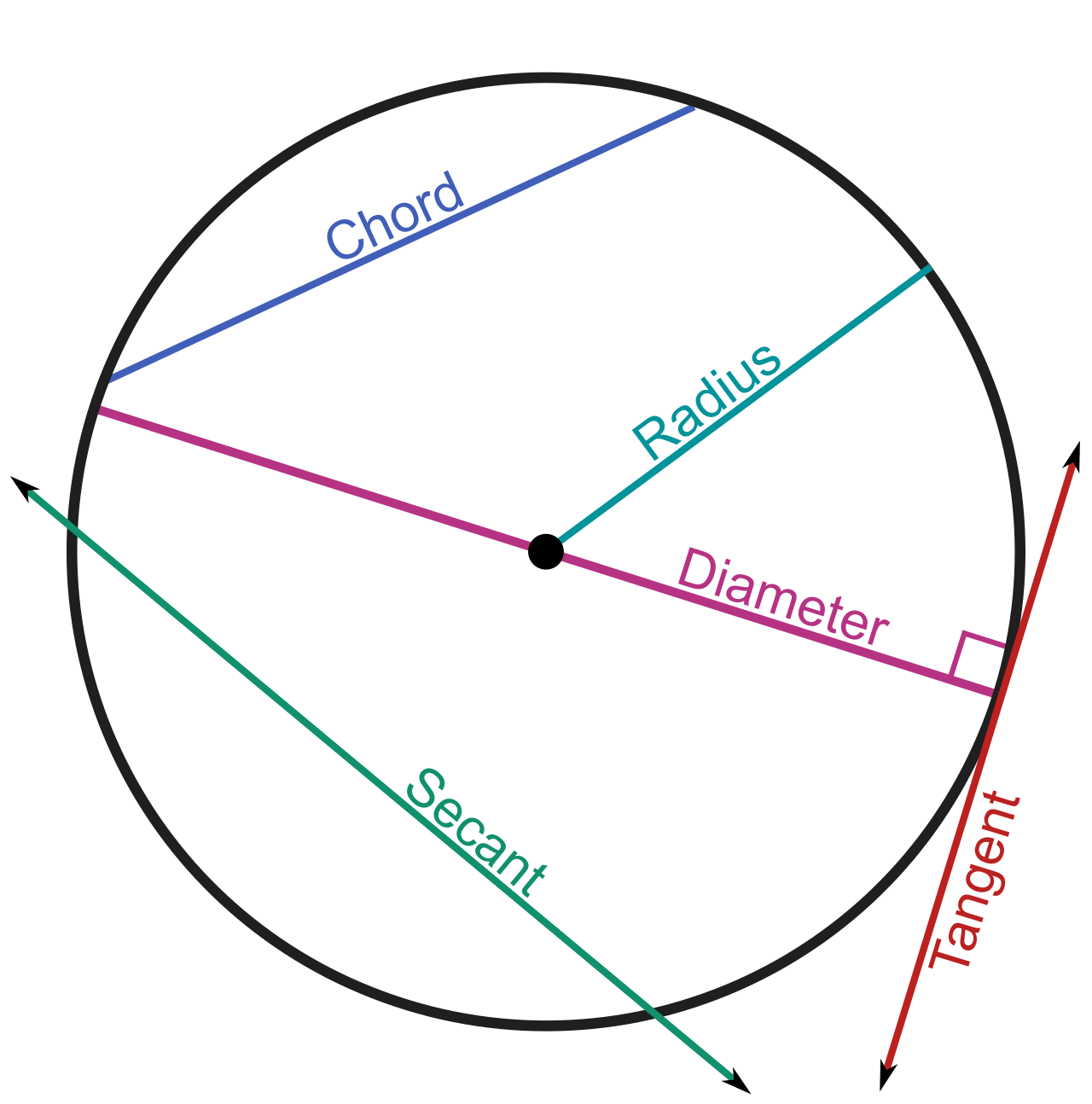
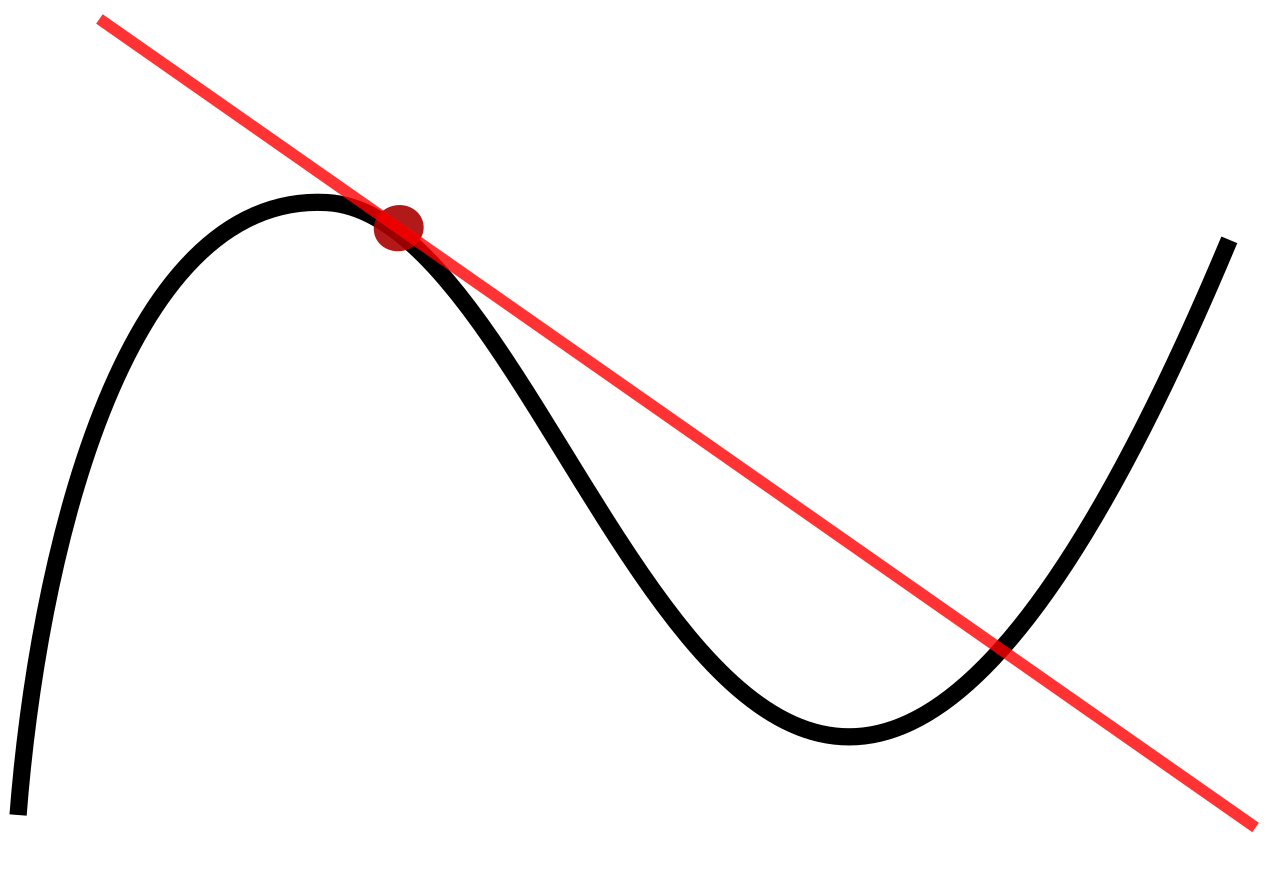
If we look just outside the boundary, we encounter a tangent. A tangent to a circle is a straight line in the same plane that touches the circle at exactly one point. Think of a perfectly flat road supporting a car tire. A profound geometric rule governs this relationship: a tangent line is always perfectly perpendicular (90∘) to the radius drawn to the point of tangency on the circle.
The circumference is the total linear distance around the outside edge of a circle. If you were to snip the circle and lay it flat against a ruler, the circumference is the length of that resulting line.
For thousands of years, mathematicians noticed something startling: if you take any perfect circle—whether it is the rim of a soup can or the equator of a planet—and divide its circumference by its diameter, you always get the exact same number.
The mathematical constant pi (π) is defined as the ratio of a circle's circumference to its diameter. The constant π is exactly equal to the circumference divided by the diameter for any perfectly round circle, regardless of size.
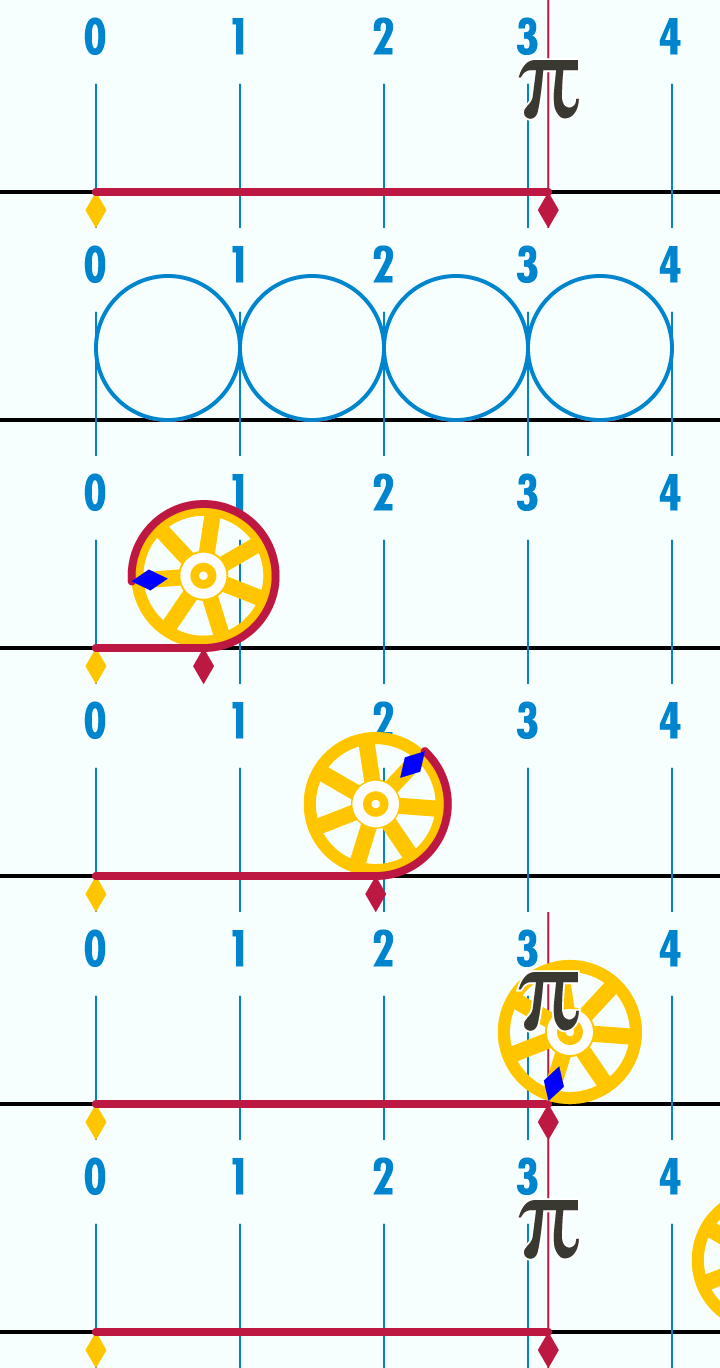
Formulas for Circumference Because π=dC, we can multiply both sides by d to reveal the formula for the circumference of a circle: the diameter multiplied by pi (C=πd). Substituting 2r for the diameter, we get the alternative and widely used formula: two multiplied by pi multiplied by the radius (C=2πr).
Because π is an irrational number, its true decimal representation never terminates and never settles into a permanently repeating pattern. It stretches on into infinity. However, your students cannot type infinity into their graphing calculators. For middle school mathematics calculations, we rely on standard approximations.
| Approximation | Format | When to Teach and Use It |
|---|---|---|
| 3.14 | Decimal | Commonly used in standard middle school curriculum when working with decimals or physical measurements (e.g., \12.50$ of fencing). |
| 722 | Fraction | Extremely useful when the radius or diameter is a multiple of 7. It allows students to cleanly cross-cancel fractions without a calculator. |
Teacher Tip for the Exam: Always read the item prompt carefully. The Praxis will often specify "Use 3.14 for π" or ask for the exact answer. If an exact answer is requested, leave the symbol π in the final expression (e.g., 14π).
While circumference measures the boundary, the area of a circle represents the total amount of two-dimensional space enclosed within the boundary of the circle.
Formula for Area The formula for the area of a circle is pi multiplied by the square of the radius (Area=πr2).
But why is this the formula? As a teacher, you cannot simply hand down equations from the mountaintop. You must provide the intuitive leap.
A common, highly visual geometric derivation of a circle's area involves dividing the circle into identical narrow sectors—like slicing a pie into dozens of incredibly thin slivers. If you take those slices and rearrange them, alternating them pointing up and pointing down, they interlock to form a shape approximating a parallelogram.
As you cut the circle into thinner and thinner slices, the shape gets closer and closer to a perfect parallelogram.
- In this parallelogram model, the height of the resulting approximate parallelogram is equal to the radius (r) of the original circle.
- The base length of the resulting approximate parallelogram is made up of the outer crusts of half the slices, meaning it is equal to exactly half of the original circle's circumference.
Since the full circumference is 2πr, half of the circumference is just πr. The area of a parallelogram is simply base × height. Therefore, Area = (πr)×(r)=πr2.
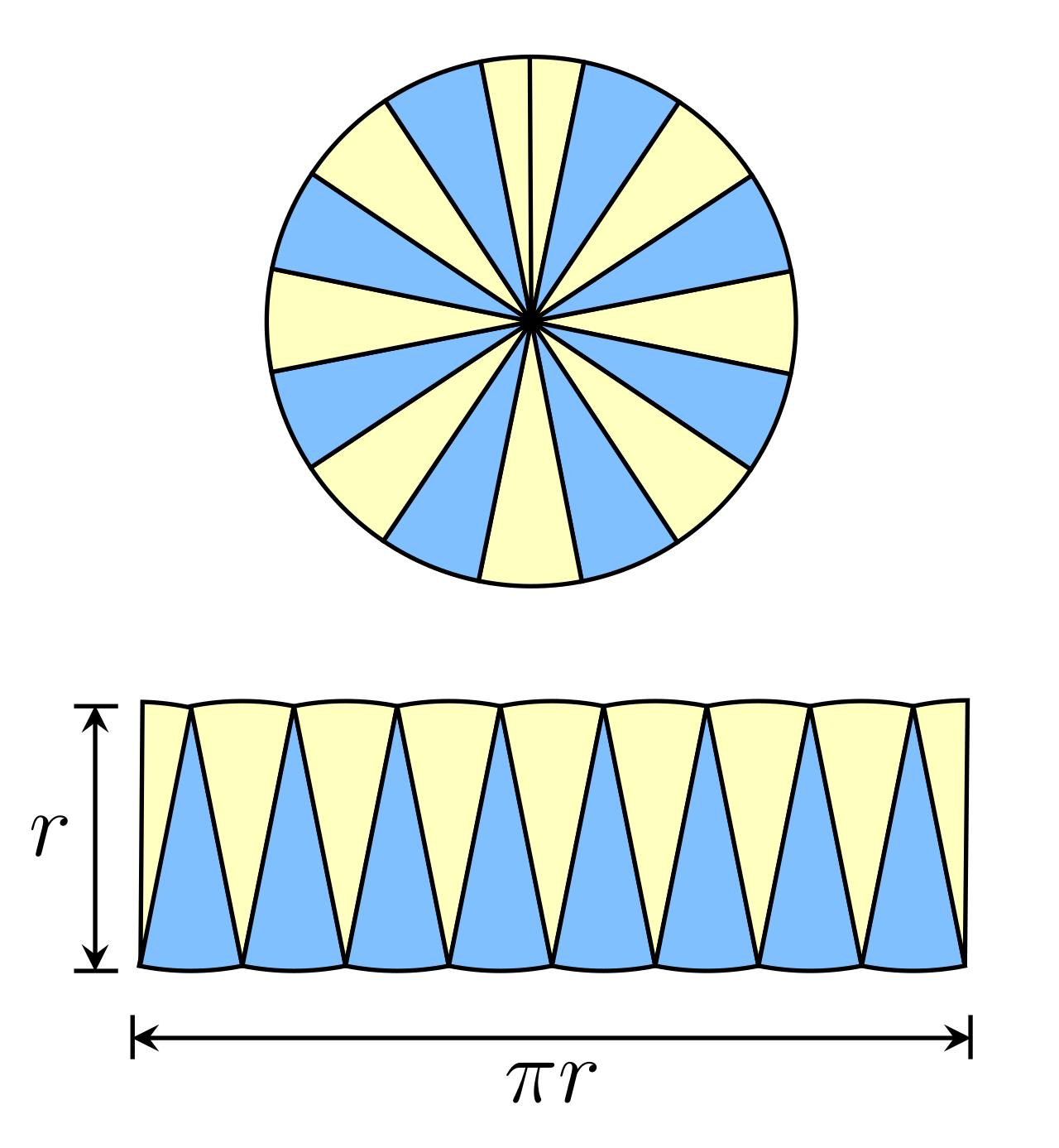
By connecting the curved world of the circle to the straight-edged world of the parallelogram, you give your students a framework that makes logical sense.
Circles are rarely encountered whole in composite geometry. We must understand how to measure fractions of a circle.
Everything begins at the center. A central angle is an angle whose vertex is located exactly at the center of the circle. This angle sweeps out across the circle, defining two crucial measurements:
- An Arc: A connected, unbroken portion of the circumference of a circle. (A 1D length).
- A Circular Sector: The portion of a 2D disk bounded by two intersecting radii and the included arc. (A 2D area—think of a slice of pizza).
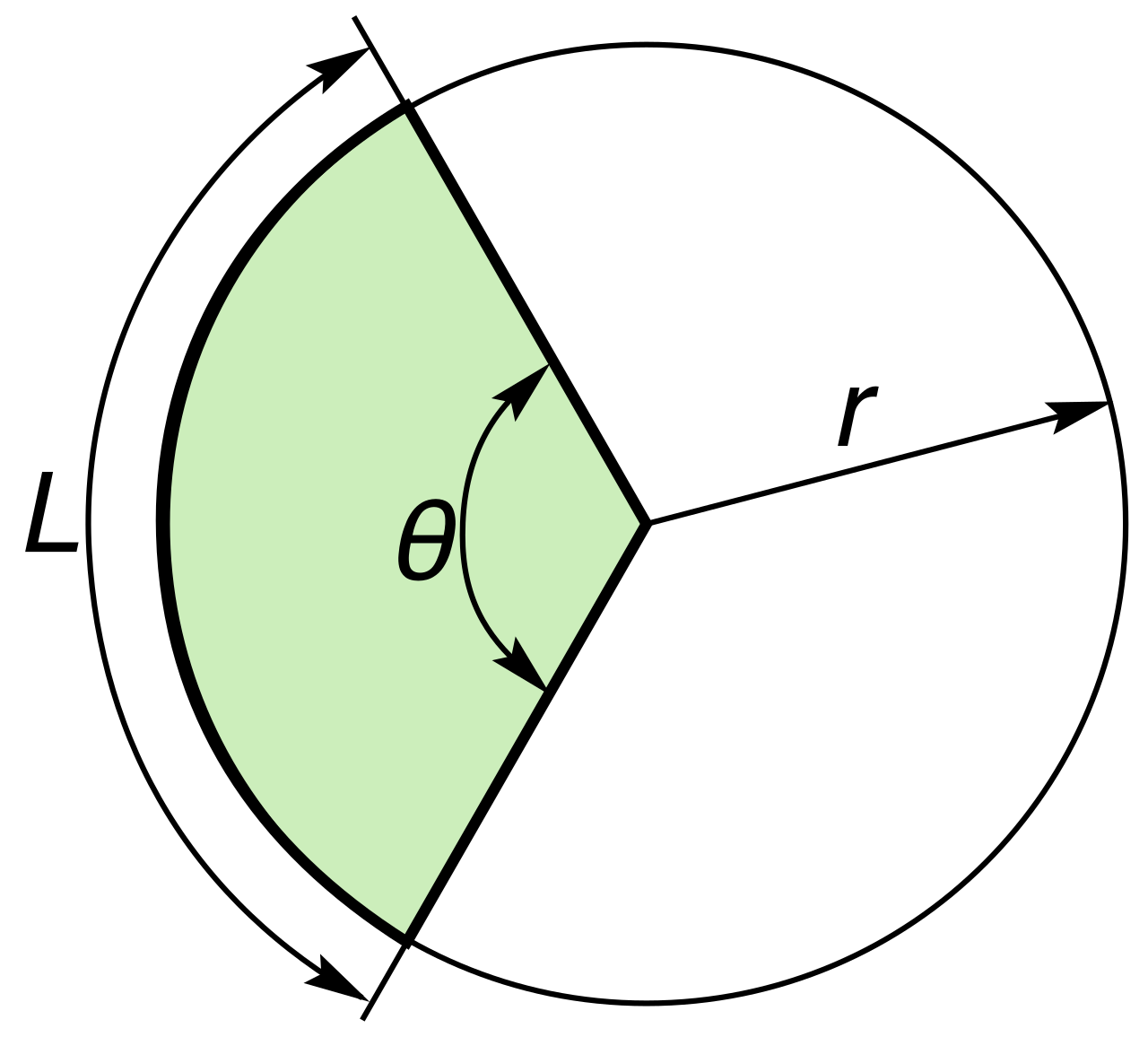
Because a circle contains 360 degrees, the size of both the arc and the sector is directly proportional to the measure of its central angle. To find the measurement of a slice, you simply find the measurement of the whole circle, and multiply it by the fraction of the circle you are looking at.
Fractional Area and Length Formulas
- The length of an arc is calculated by multiplying the full circumference by the fraction formed by the central angle divided by 360∘. Arc Length = 2πr×(360θ)
- The area of a sector is calculated by multiplying the full circle area by the fraction formed by the central angle divided by 360∘. Sector Area = πr2×(360θ)
Halves and Quarters
Two specific sectors have special names and frequent appearances on the Praxis exam:
- Semicircle: A semicircle is exactly half of a full circle. The area of a semicircle is calculated by determining the area of the corresponding full circle and dividing that area by two.
- Quadrant: A quadrant is a quarter of a circle, possessing an area equal to one-fourth of the full circle's area (created by a 90∘ central angle).
Crucial Trap: When asked for the perimeter of a semicircle, students often calculate half the circumference and stop. However, the total perimeter of a closed semicircle shape includes both the curved semicircular arc length AND the straight diameter length that encloses it. Do not let your students forget to add the straight edge back in!
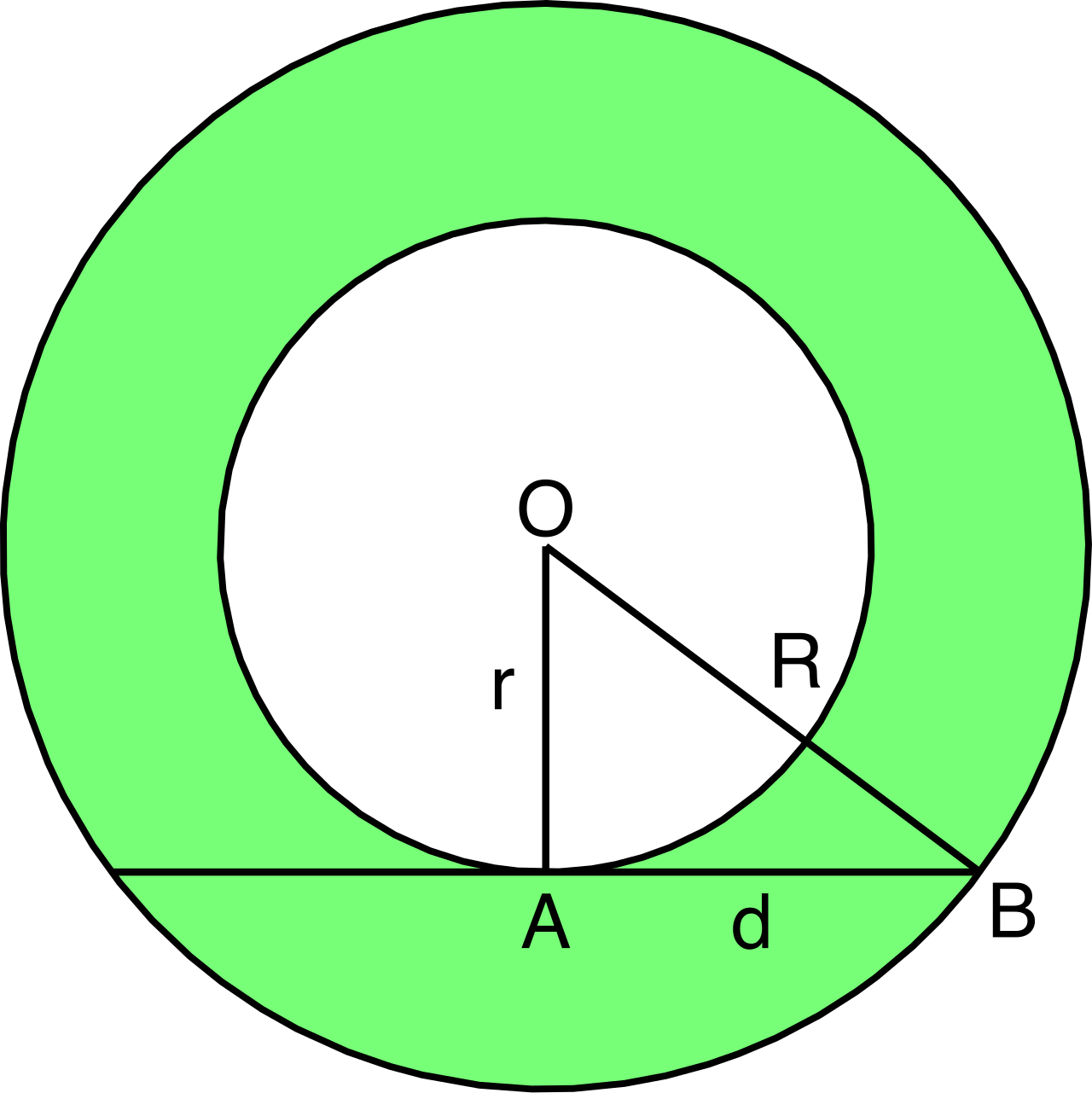
What happens when you drop two stones in the pond? You get ripples expanding outward from the same point. Concentric circles are two or more circles that share the exact same center point but have distinctly different radii.
The space between two concentric circles forms an annulus—a ring-shaped two-dimensional object bounded by two concentric circles (think of a flat metal washer or a donut).
To find the area of an annulus, you must use subtraction. The area of an annulus is found by calculating the area of the outer, larger circle and subtracting the area of the inner, empty circle. Area of Annulus = πR2−πr2 (where R is the outer radius and r is the inner radius).
The culminating skill your students must develop—and the skill tested most rigorously on exams—is manipulating composite figures.
The area of a composite figure containing circular parts is found by decomposing the complex figure into simpler, recognizable shapes (rectangles, triangles, semicircles). From here, two fundamental rules apply:
- Additive Area: The total area of a composite shape is the sum of the areas of its individual, non-overlapping constituent shapes.
- Example: A middle school running track is built from a rectangle in the center, flanked by two semicircles on the ends. To find the total area, you calculate the area of the central rectangle and add it to the area of the two semicircles (which neatly form one full circle).

- Subtractive Area: The area of a complex shaded region is generally found by subtracting the area of the unshaded inner shape from the total area of the outer shape.
- Example: A square piece of sheet metal with a circle cut out of the middle. You find the area of the square, find the area of the circle, and subtract the hole from the whole.
By mastering the transition from the strict definition of a circle's boundary to the proportional logic of sectors and composite regions, you empower your future students. You show them that geometry is not a chaotic collection of disjointed shapes, but a perfectly predictable toolkit for understanding the physical space around them.