Creating Equations and Inequalities
Not sure you’re ready?
Take the ~3-minute readiness diagnostic and see where you stand.
Consider the act of translating a masterpiece of literature into a foreign language. A simple word-for-word substitution will yield incomprehensible gibberish; the translator must understand the underlying structure, the idiom, and the fundamental constraints of the target language. Mathematics is no different. When we construct equations and inequalities from verbal descriptions, we are doing the delicate work of translating the messy, continuous reality of the physical world into the precise, rigorous grammar of algebra. This process forms the very foundation of mathematical modeling. For the students you will soon teach, this is the pivotal moment where mathematics ceases to be a mere collection of arithmetic exercises and transforms into a powerful system for describing the universe.
To teach this effectively, you must see algebra not merely as a set of rules to be memorized, but as a language that maps perfectly to physical phenomena. We will explore the lexicon of this language, the structural boundaries of inequalities, and the fluid art of manipulating literal equations.
Translating verbal phrases to mathematical expressions requires assigning variables to unknown quantities. This is the first leap of abstraction: we give a name to what we do not know so that we can manipulate it as if we do.
The vocabulary of basic operations is relatively straightforward, but precision is paramount.
- The phrase "sum of" indicates the mathematical operation of addition.
- The phrase "difference between" indicates the mathematical operation of subtraction.
- The phrase "product of" indicates the mathematical operation of multiplication.
- The phrase "quotient of" indicates the mathematical operation of division.
Special multipliers frequently appear in middle school applications. For example, the phrase "twice a number" translates to multiplying a variable by two (e.g., 2x), while the phrase "half of a number" translates to multiplying a variable by one-half (e.g., 21x).
The "Less Than" Trap
Subtraction translations contain one of the most common stumbling blocks for young learners: the phrase "less than" reverses the order of the written terms. If you say "five apples less than the total," you start with the total and take away five. Therefore, the phrase "five less than x" translates to the algebraic expression x−5, not 5−x.
Finally, the linchpin of any mathematical sentence is the verb. The word "is" in a verbal mathematical description translates to an equals sign in an algebraic equation. It is the fulcrum upon which the balance of the equation rests.

When your students encounter word problems, they are actually being asked to build mathematical models. How you frame the components of these models will dictate their understanding.
Linear and Exponential Models
In linear models, real-world scenarios typically provide two distinct pieces of information. An initial starting value in a real-world scenario translates to the y-intercept constant in a linear equation. Imagine a cell phone plan with a $20 base fee. Conversely, a constant rate of change in a real-world scenario translates to the slope coefficient in a linear equation—such as an additional $5 per gigabyte of data used.
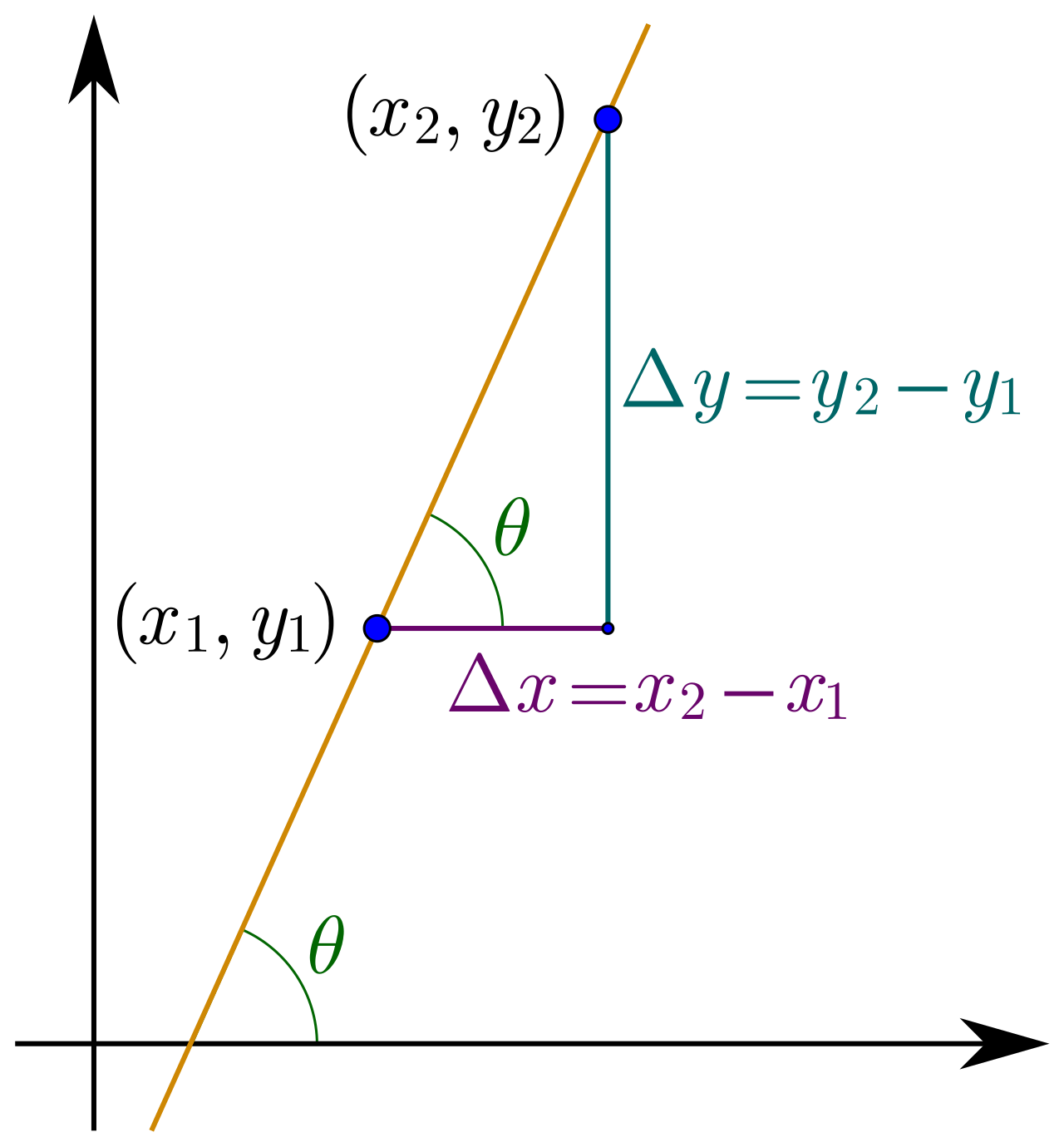
When the rate of change is not constant but proportional to the current amount, the model shifts. Creating an exponential equation from a verbal description requires identifying a constant multiplicative growth or decay rate, such as a population doubling every year or a radioactive isotope decaying by half.
The Logic of Consecutive Integers
A classic application of modeling involves sequential numbers. Constructing equations for consecutive integers involves defining a base variable and adding sequential integer values to it.
- Variables for three consecutive integers are defined as x, x+1, and x+2.
If the problem restricts the sequence, the step size changes. Constructing equations for consecutive even or consecutive odd integers requires adding sequential multiples of two to a base variable. Whether starting on an even or an odd number, the gap to the next even or odd number is always two.
- Variables for three consecutive even integers (or odd integers) are defined as x, x+2, and x+4.
Teaching Insight: Students often mistakenly use x,x+1,x+3 for odd integers because 1 and 3 are odd. Remind them that if x=5, then x+2=7 and x+4=9. The jump is even, regardless of the starting parity.
Domain Constraints and Dimensional Analysis
Equations built from reality are bound by reality. Real-world mathematical contexts often impose domain constraints on variables. A pure algebraic equation like 2x+10=0 happily yields x=−5. But if x represents the length of a rectangular garden, x=−5 is physical nonsense.
- A domain constraint might restrict a variable representing a physical length to strictly positive numbers (x>0).
- A domain constraint might restrict a variable representing a count of indivisible objects (like students, buses, or concert tickets) to whole numbers (x∈{0,1,2,...}).
Furthermore, when an equation is built correctly, its units must balance just as its numbers do. Dimensional analysis ensures that units match across both sides of a constructed equation. If you multiply a rate (miles per hour) by a time (hours), the "hours" cancel out, leaving you with "miles." If the other side of your equation is measuring gallons, you know immediately that your structural translation is flawed.
Reality is rarely exact. We operate within budgets, speed limits, and minimum height requirements. Creating an inequality involves identifying a strict or non-strict boundary condition for an unknown quantity.

Here is the translation guide for boundary phrasing:
| Verbal Phrase | Inequality Symbol | Boundary Type |
|---|---|---|
| "at least" | Greater than or equal to (≥) | Non-strict |
| "no less than" | Greater than or equal to (≥) | Non-strict |
| "at most" | Less than or equal to (≤) | Non-strict |
| "no more than" | Less than or equal to (≤) | Non-strict |
Reversing the Inequality
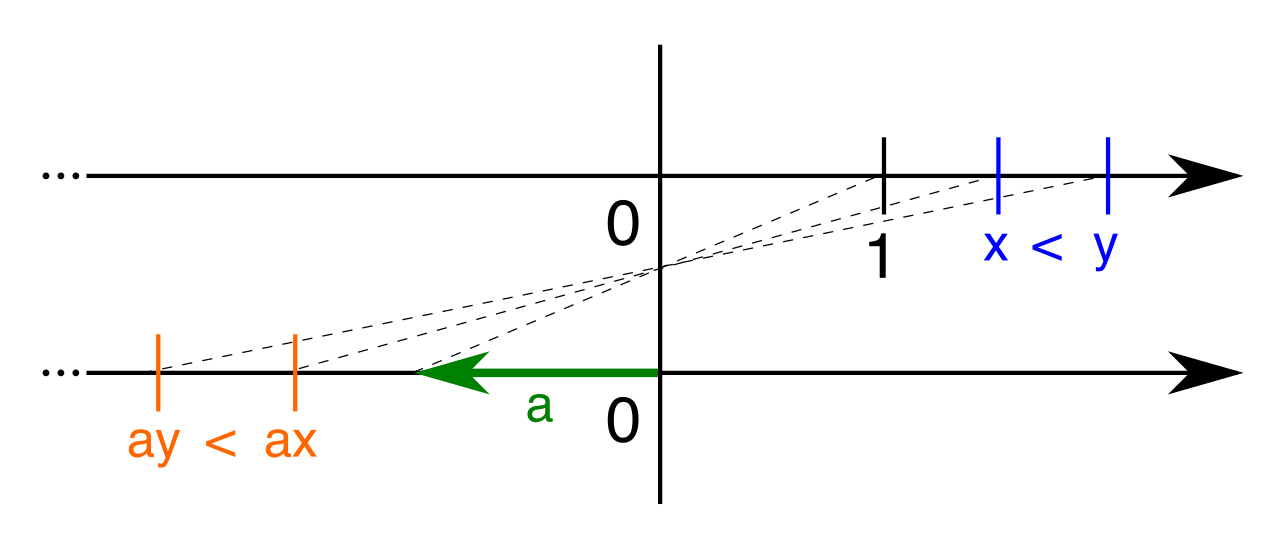
A foundational, yet often misunderstood, rule is that in a constructed inequality, multiplying or dividing both sides by a negative value reverses the direction of the inequality symbol.
Why? Think of the number line as a physical object. The numbers 2 and 5 exist on the right side of zero, with 2<5. Multiplying by −1 reflects these values across zero like a mirror. They land at −2 and −5. Because −5 is further left, it is now the lesser value: −2>−5. The multiplication by a negative reversed their relative spatial relationship, and therefore, the symbol must flip to preserve truth.
Compound Inequalities
Sometimes, a variable is boxed in by multiple constraints. A compound inequality is formed by joining two individual inequalities with the word "and" or the word "or."
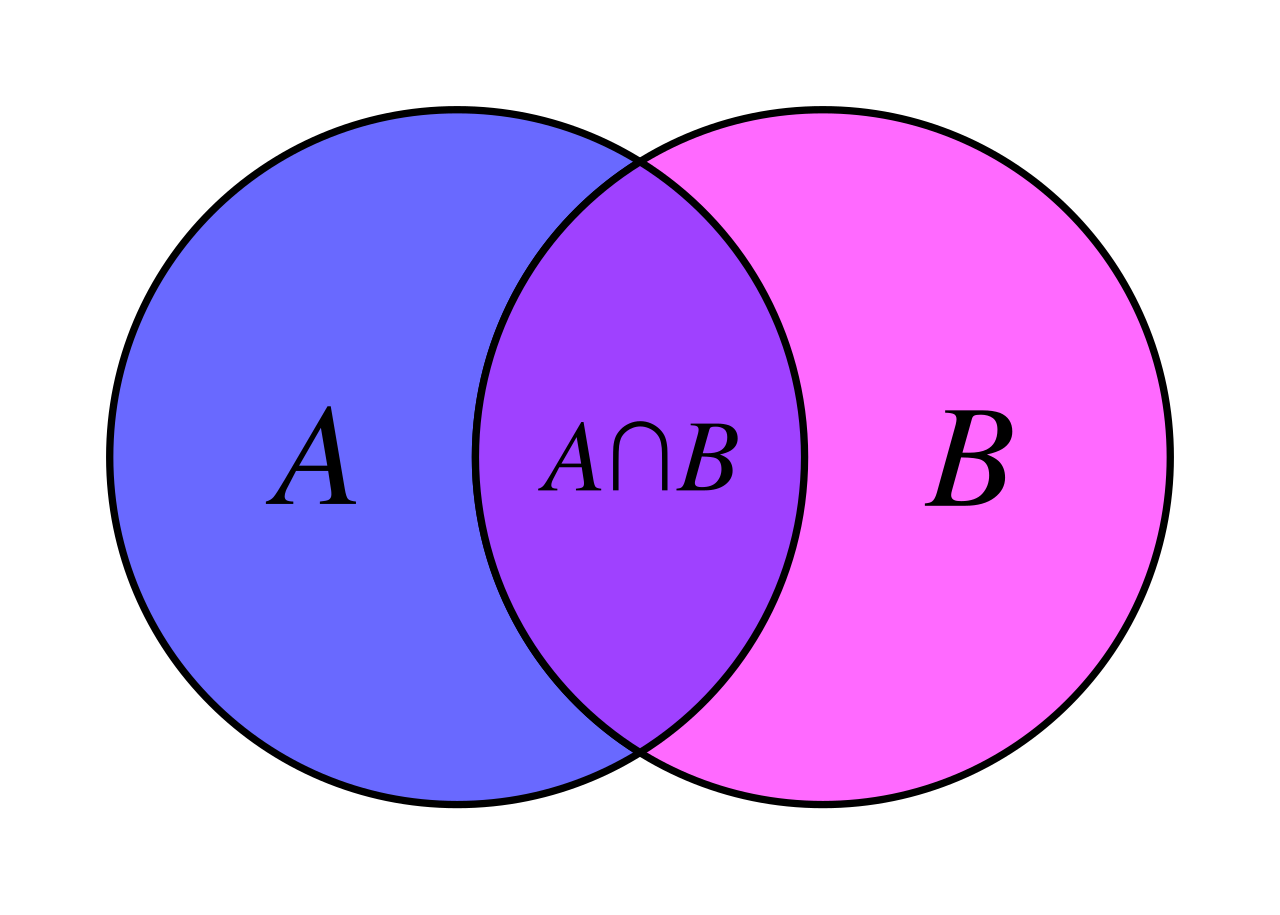
- The word "and" in a compound inequality represents the intersection of two conditions. The solution must satisfy both boundaries simultaneously (e.g., water is liquid when its temperature is ≥0∘C and ≤100∘C).
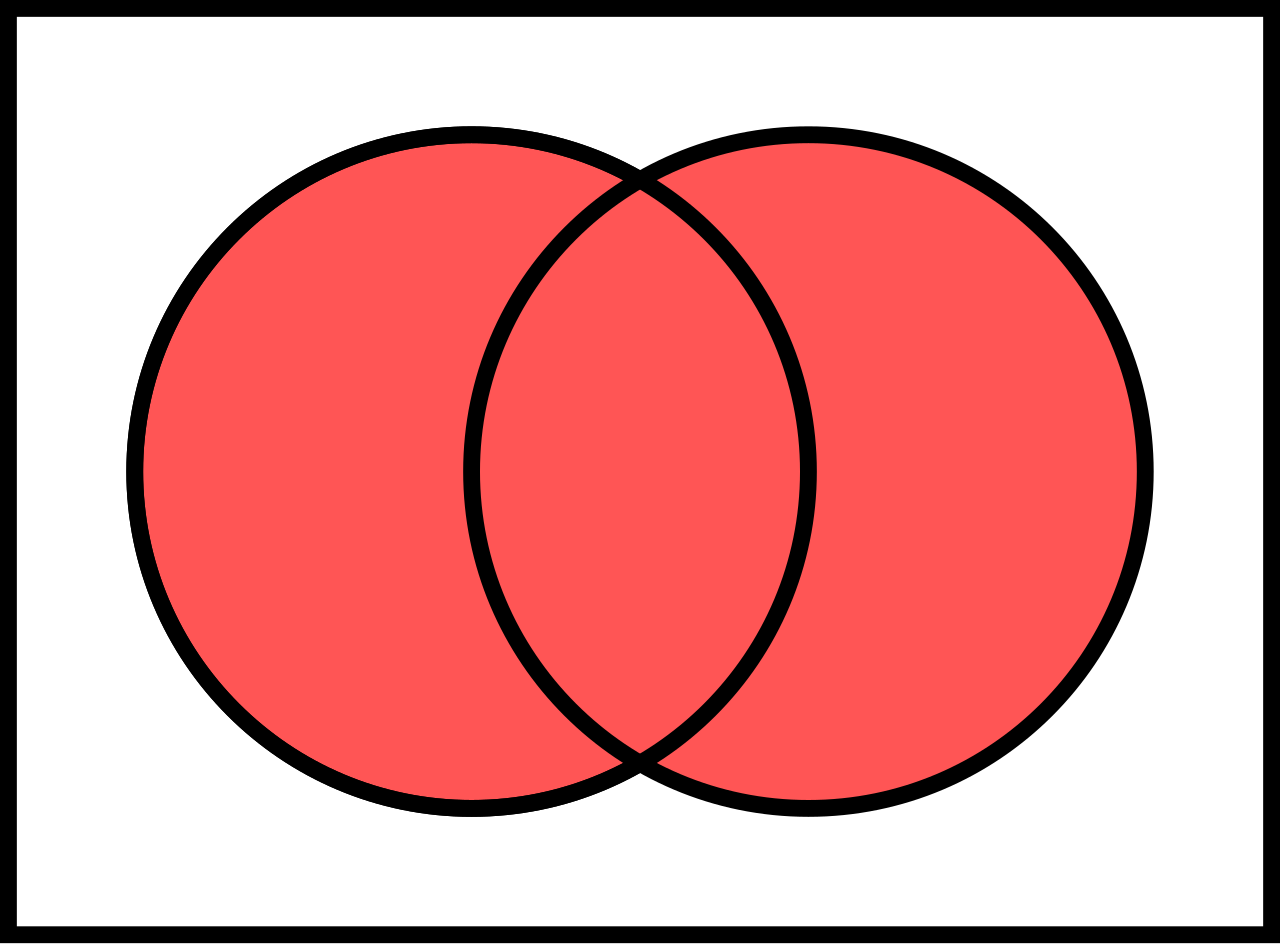
- The word "or" in a compound inequality represents the union of two conditions. The solution must satisfy at least one of the boundaries (e.g., a movie ticket is discounted if your age is <12 or ≥65).
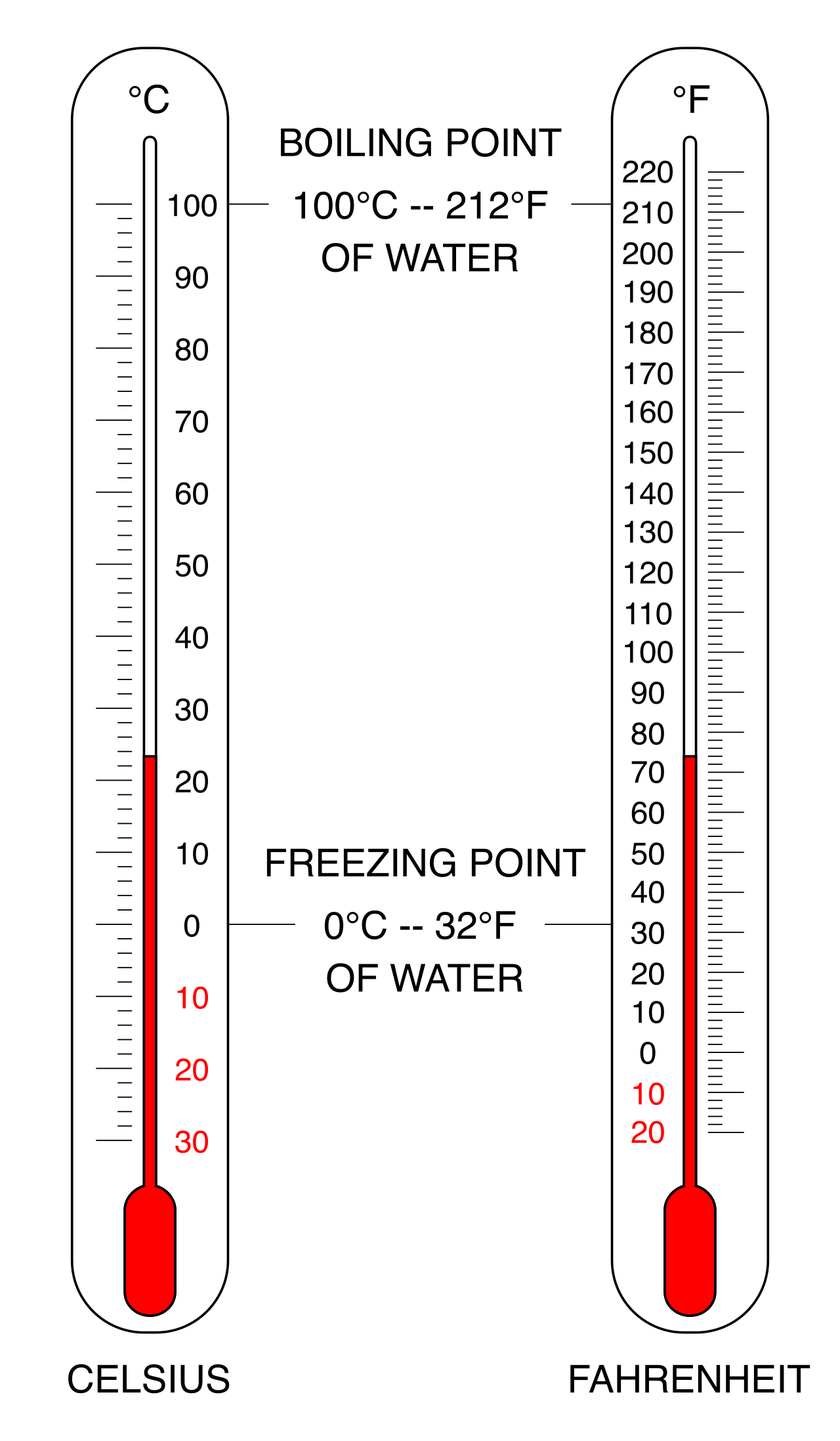
Mathematics relies heavily on formulas—generalized equations describing a relationship. A literal equation is an equation containing two or more variables. Famous examples include the area of a trapezoid (A=21h(b1+b2)) or the conversion between Celsius and Fahrenheit (F=59C+32).
Rearranging a formula requires isolating a specific target variable on one side of the equals sign. We do this not by magic, but by systematically untying the algebraic knots using the properties of equality. The properties of equality are used to perform inverse operations when rearranging literal equations.
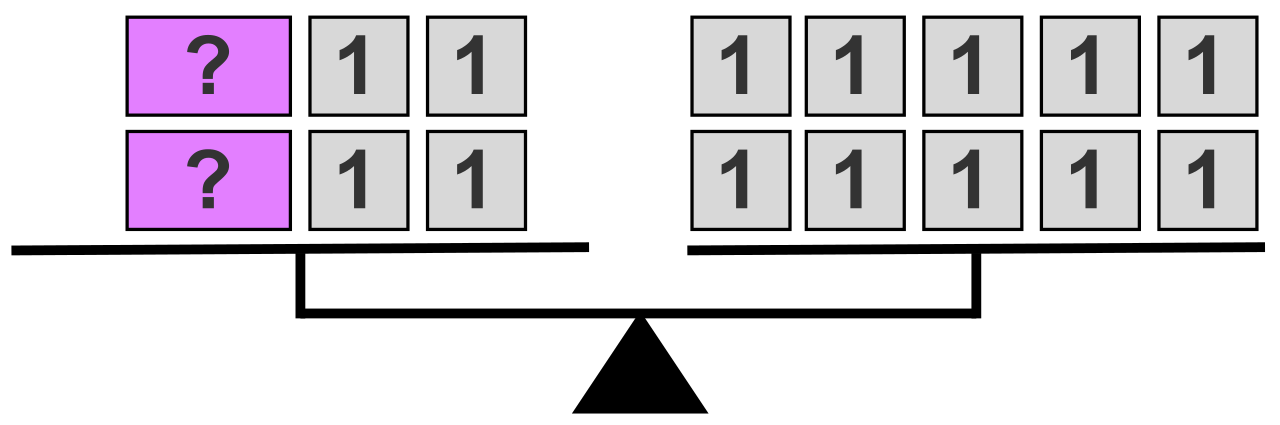
Properties of Equality in Action
The addition property of equality allows adding the same variable expression to both sides of an equation to rearrange terms. If you have y=mx+b and want to solve for b, you subtract mx (which is adding −mx) from both sides to get b=y−mx.
The multiplication property of equality allows multiplying both sides of an equation by the same non-zero variable expression to clear denominators. If A=21bh, multiplying both sides by 2 clears the fraction, yielding 2A=bh.
When equations are structured as proportional ratios (e.g., ba=dc), cross-multiplication is an algebraic technique used to isolate variables in rational equations. It is, fundamentally, just a simultaneous application of the multiplication property of equality—multiplying both sides by the common denominator bd.
Advanced Manipulations and Hidden Dangers
When formulas become complex, isolation requires a few vital, high-level algebraic maneuvers:
- Factoring Out the Target: Sometimes, the variable you want to isolate is scattered across the equation. Isolating a variable that appears in multiple terms of an algebraic expression requires factoring out that variable.
- Example: To solve ax+bx=c for x, you must realize that x cannot simply be divided away. You factor it out: x(a+b)=c. Then, you divide by the grouped binomial.
- The Zero-Division Assumption: When you execute that division, you invoke a silent mathematical contract. Dividing both sides of a formula by a variable expression requires the assumption that the expression does not equal zero. In the previous example, writing x=a+bc is only valid if a+b=0. In physical contexts, this usually holds, but mathematically, it must be acknowledged.
- Extraneous Solutions: Be incredibly careful when inverse operations alter the fundamental nature of the function. Squaring both sides of an equation containing a radical can introduce extraneous solutions that do not satisfy the original constructed equation.
- Why? Squaring destroys sign information. If you have the equation x=−4, common sense (and domain constraints) dictates there is no real solution. But if you blindly square both sides, you get x=16. However, substituting 16 back into the original equation yields 16=4=−4. The operation fabricated a solution.
A Final Word for the Educator
When you step into your classroom, recognize that constructing and rearranging equations is often when students decide if they are "good" at math. By anchoring abstract operations in physical realities—by proving that dimensional analysis keeps units honest, that domain constraints obey the laws of physics, and that properties of equality are just a method of maintaining perfect equilibrium—you demystify the subject. You transition them from memorizing isolated algorithms to mastering a cohesive, logical language.