Domain and Range
Not sure you’re ready?
Take the ~3-minute readiness diagnostic and see where you stand.
A mathematical function is a highly specific engine, bound by the physical and logical realities of its construction. When we analyze a function, we are not merely asking what it does, but rather what it can tolerate and what it can produce. In this system, the domain of a relation is the complete set of possible input values. It is the fuel the engine accepts, corresponding to the values of the independent variable. Conversely, the range of a relation is the complete set of possible output values generated by the system, corresponding to the values of the dependent variable.
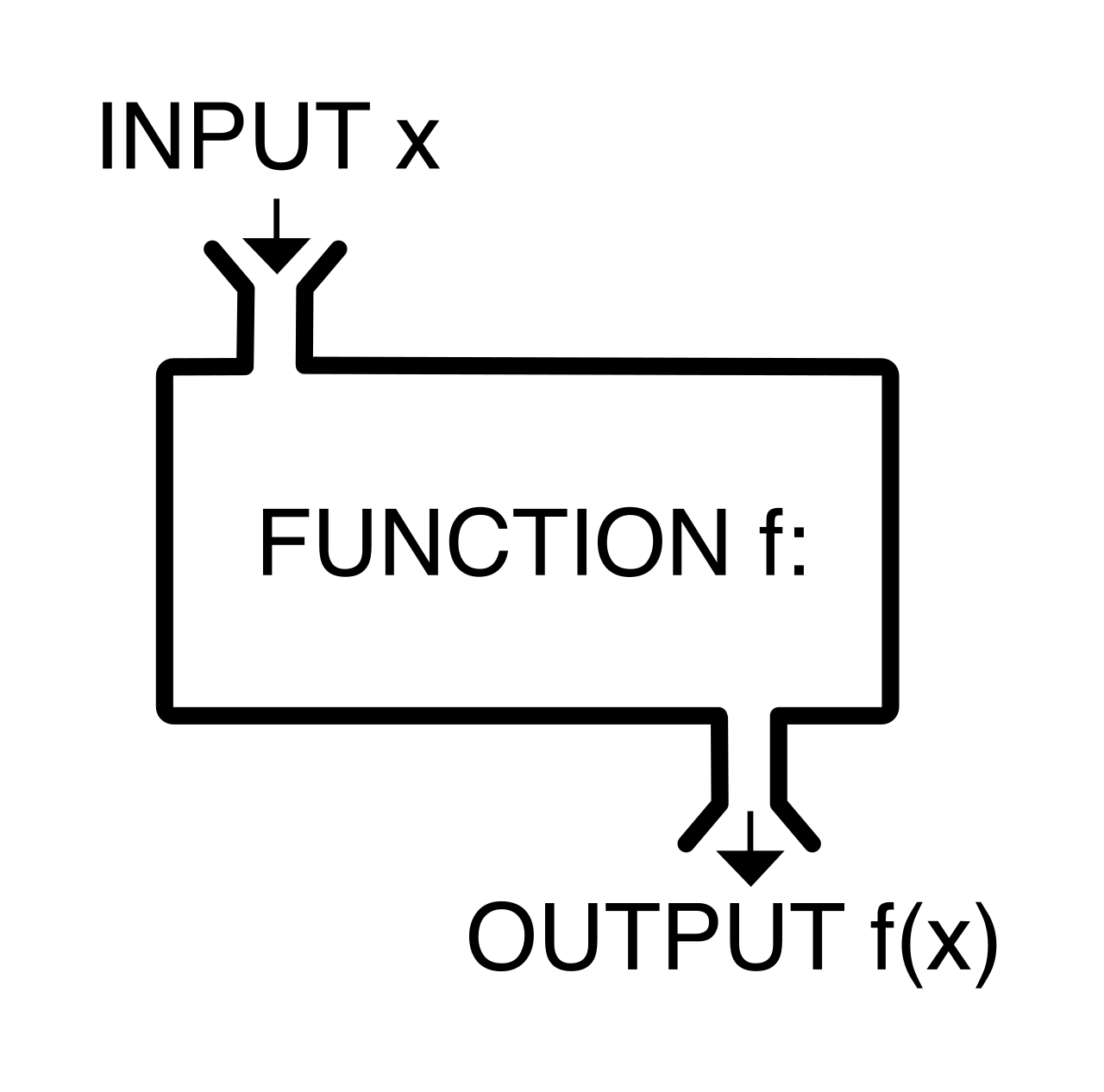
To govern this engine, we rely on a fundamental rule: in a function, each input value in the domain is mapped to exactly one output value in the range. If an input yields multiple, unpredictable outputs, the mechanism is broken; it is a relation, but no longer a function. For an aspiring middle school mathematics teacher, mastering domain and range means teaching students how to map the boundary conditions of the universe around them—understanding not just how to calculate an answer, but whether that answer has any right to exist in the first place.
Before a student can analyze the continuous curve of a parabola on an on-screen graphing calculator, they must first understand functions at their most atomic level: finite collections of data.
When dealing with a discrete set of ordered pairs, the distinction is straightforward. The domain of a relation is typically represented by the x-values in a set of ordered pairs, while the range of a relation is typically represented by the y-values in a set of ordered pairs.
When this data is organized into a table, students often make the mistake of simply copying the columns from top to bottom. However, sets do not care about repetition.
- To determine the domain from a table of values, identify the set of all unique input values listed in the table.
- To determine the range from a table of values, identify the set of all unique output values listed in the table.
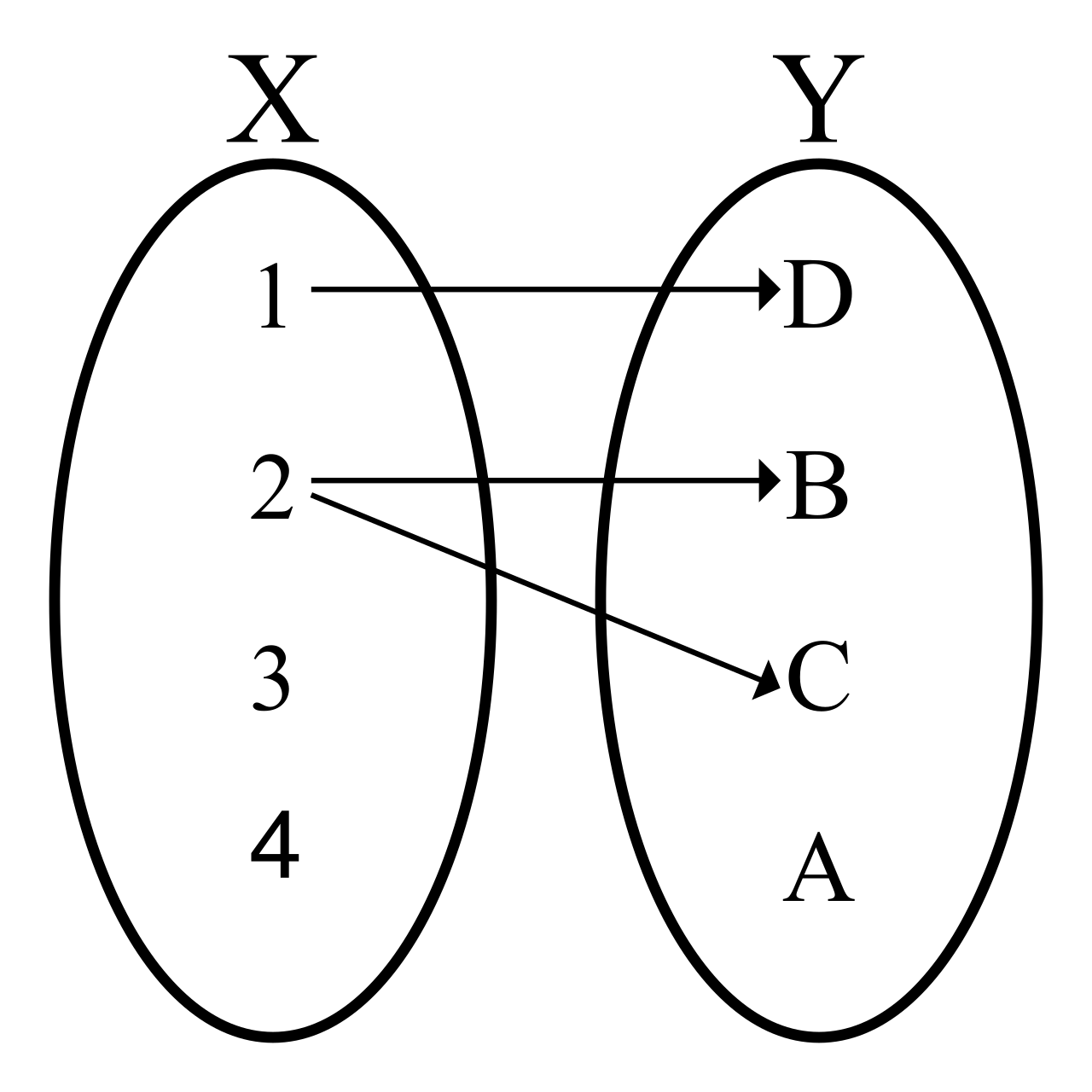
We can visualize this relationship using a mapping diagram. Think of a mapping diagram as a logistical flow chart. In a mapping diagram representing a relation, the domain consists of all values from which an arrow originates, representing the starting points of our independent variables. The range consists of all values to which an arrow points, showing the ultimate destination of the dependent variables. If more than one arrow originates from a single domain value, the relation fails the definition of a function.
When we move to the Cartesian plane, we leave behind distinct lists of numbers and enter the realm of visual geometry. To read a graph is to measure the physical space a function occupies.
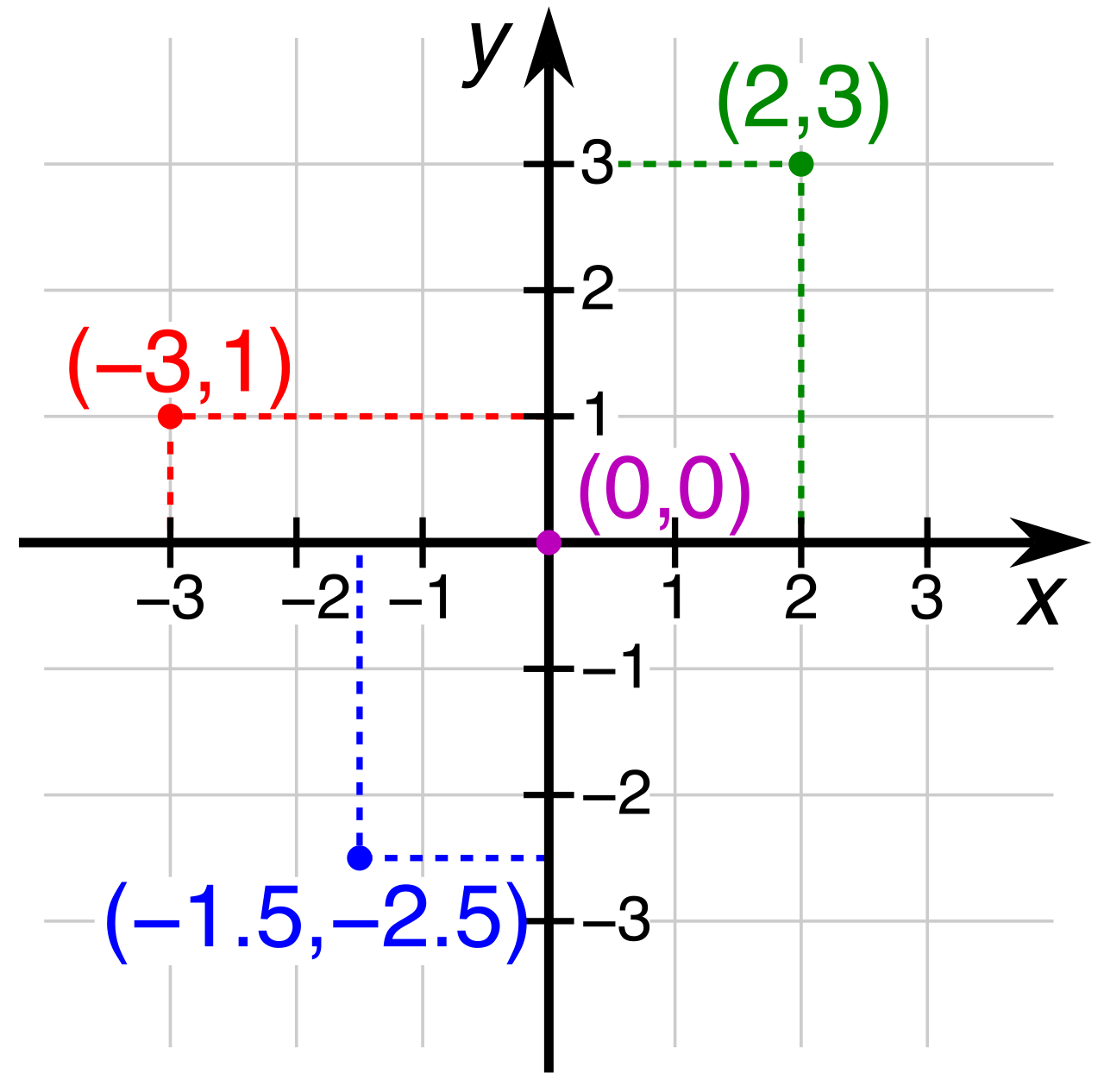
The Shadow Analogy Imagine shining a spotlight from the top and bottom of a graph, casting a shadow onto the x-axis. To determine the domain from a coordinate graph, measure the horizontal spread of the graph along the x-axis. Now, imagine shining a spotlight from the left and right sides of the graph, casting a shadow onto the y-axis. To determine the range from a coordinate graph, measure the vertical spread of the graph along the y-axis.
Graphs are highly precise about their boundaries, communicating exactly where they start and stop through visual cues:
- A solid dot on a graph endpoint indicates that the corresponding coordinate is included in the domain or range.
- An open circle on a graph endpoint indicates that the corresponding coordinate is excluded from the domain or range. It is a boundary the function approaches but never physically touches.
- An arrowhead on a graph line indicates that the function continues indefinitely in the direction of the arrow.
Once we visualize these boundaries, we need an exact language to communicate them. Students will encounter two primary systems of notation.
Set-Builder Notation
Set-builder notation uses a formal set structure, such as {x∣x>0}, to define a domain or range. You read this aloud as "The set of all x, such that x is greater than zero." It is the algebraic way of describing a boundary condition using inequalities.
Interval Notation
Interval notation drops the variables and focuses solely on the endpoints of the interval.
- Interval notation uses square brackets [ or ] to indicate that an endpoint is included in the domain or range (matching a solid dot on a graph).
- Interval notation uses parentheses ( or ) to indicate that an endpoint is excluded from the domain or range (matching an open circle).
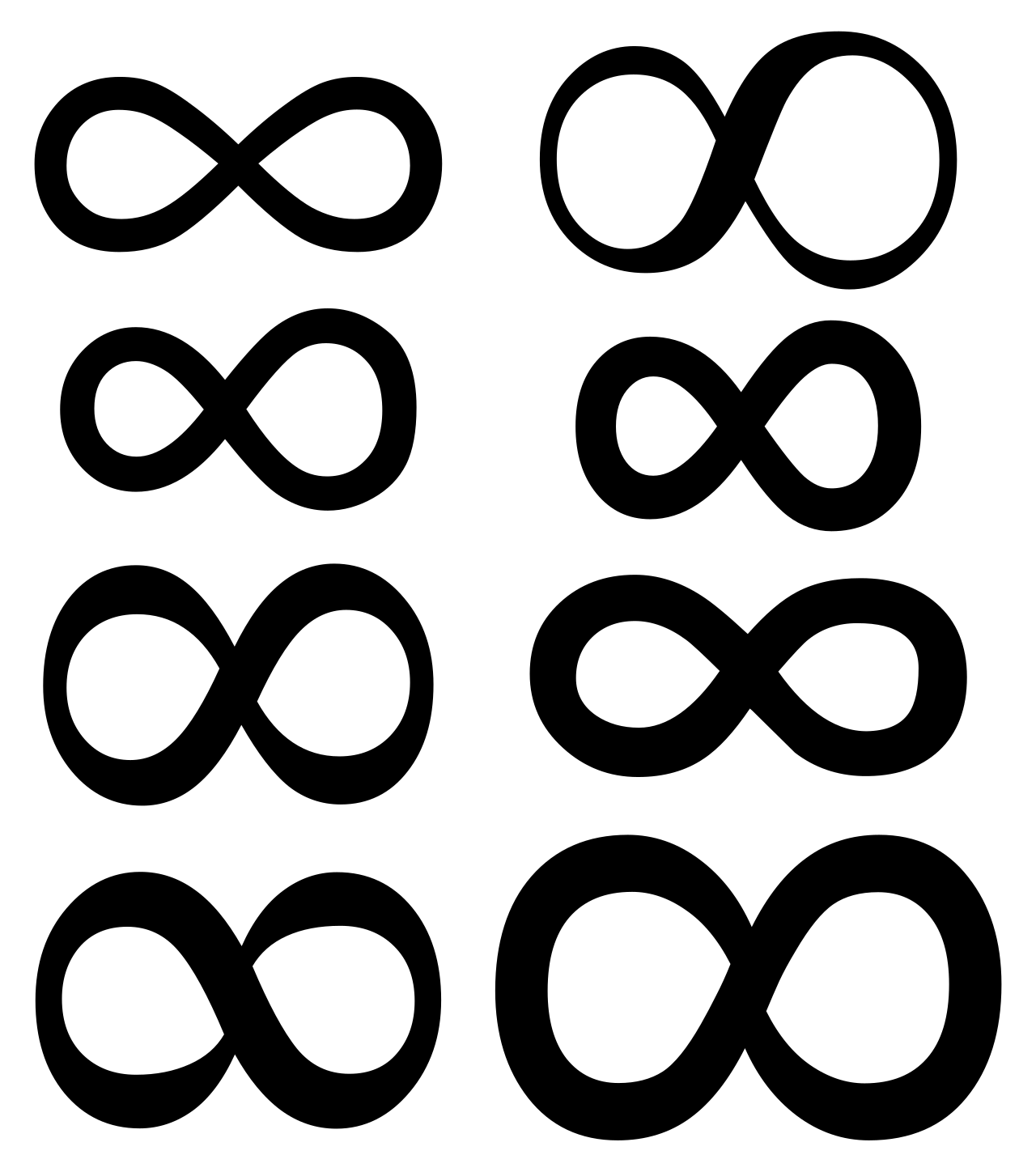
- Because infinity is not a reachable number but rather a concept of endless progression, in interval notation, the infinity symbol (∞) and negative infinity symbol (−∞) are always enclosed by a parenthesis.
Middle school mathematics introduces a menagerie of function families. Each family brings its own inherent structural constraints.
The Unrestricted Functions
Some functions accept any real number you feed them.
- Linear: The domain of a linear function without specific constraints is the set of all real numbers. As long as the line is not perfectly horizontal, the range of a non-horizontal linear function without specific constraints is also the set of all real numbers.
- Polynomial: More broadly, the domain of a polynomial function without specific constraints is the set of all real numbers. There are no fractions with variables in the denominator and no square roots to restrict the input.
The Stubborn Flatliners
A constant function of the form y=c (such as y=4) creates a perfectly horizontal line. It accepts any input, meaning it has a domain of all real numbers. However, its output mechanism is frozen. A constant function of the form y=c has a range consisting solely of the single value c.
Functions with Floors and Ceilings
Functions that reverse direction inherently restrict their range.
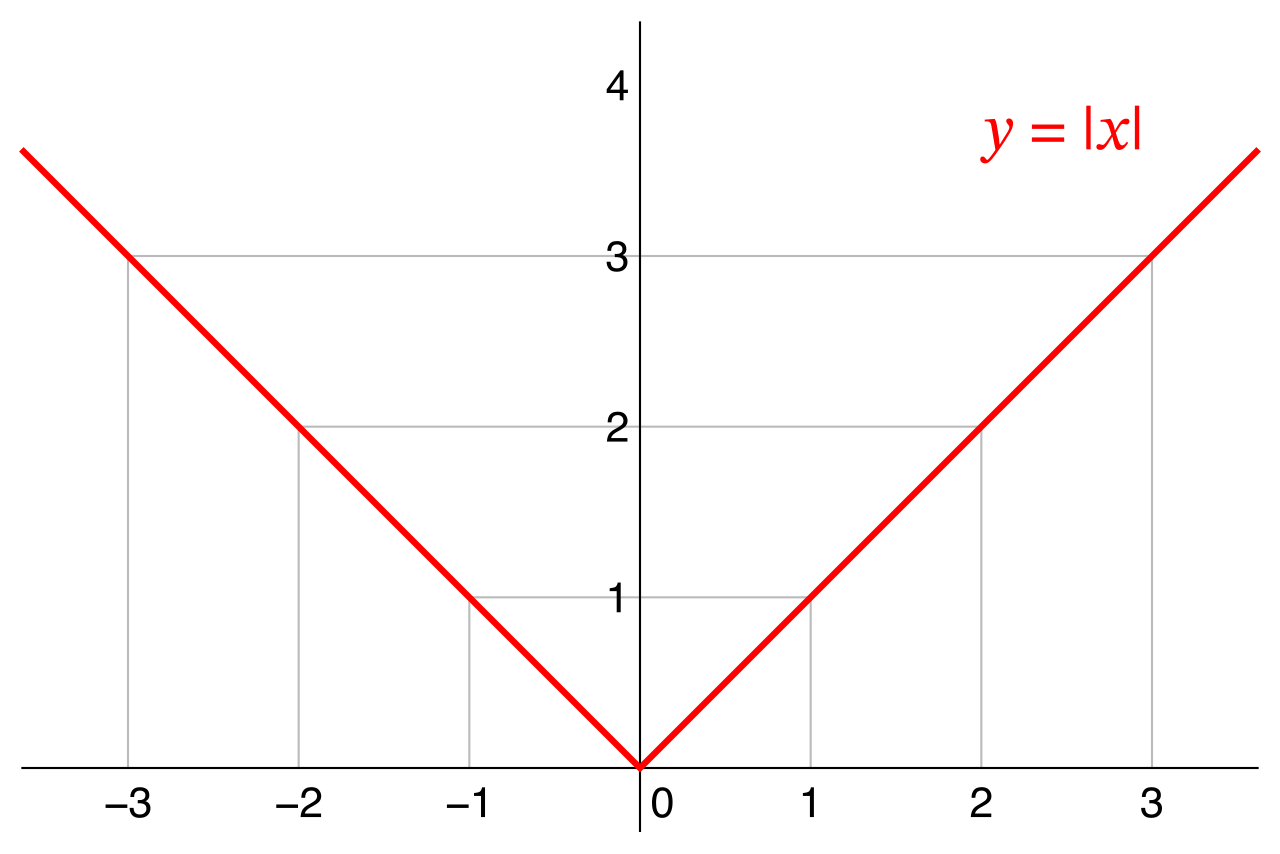
- Absolute Value: The absolute value operation measures the distance from zero, and distance is never negative. Therefore, the range of an absolute value function of the form y=∣x∣ is the set of all non-negative real numbers.
- Quadratics: Parabolas have vertices—a strict maximum or minimum point. The range of a quadratic function is restricted by the y-coordinate of the parabola's vertex. For a quadratic function whose parabola opens upwards, the range is all real numbers greater than or equal to the minimum y-value. For a quadratic function whose parabola opens downwards, the range is all real numbers less than or equal to the maximum y-value.
Functions with Fragile Domains
Algebraic structure can create "danger zones" for inputs. When teaching this, emphasize that we find the domain of these functions by looking for what breaks the mathematics, and excluding it.
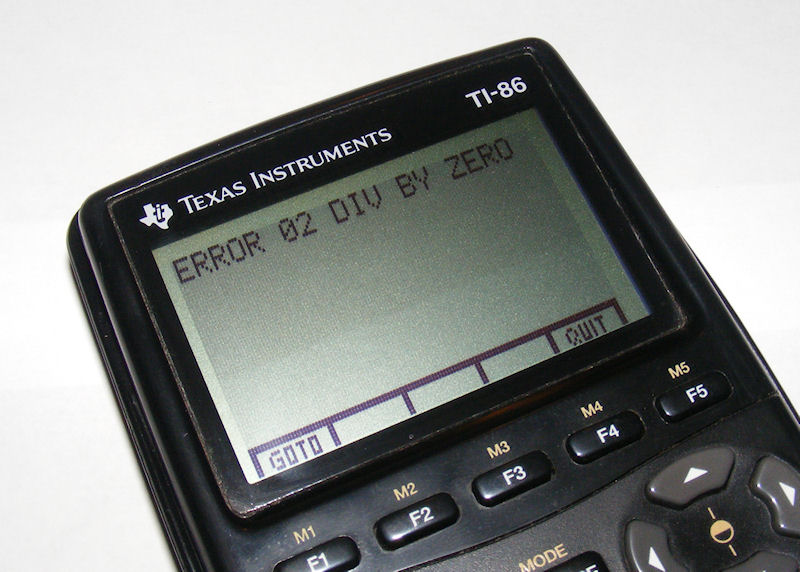
- Rational Functions: Division by zero is mathematically undefined. Therefore, the denominator of a fraction in an algebraic function cannot be equal to zero. To find the domain of a rational function, exclude any input values that cause the denominator to equal zero.
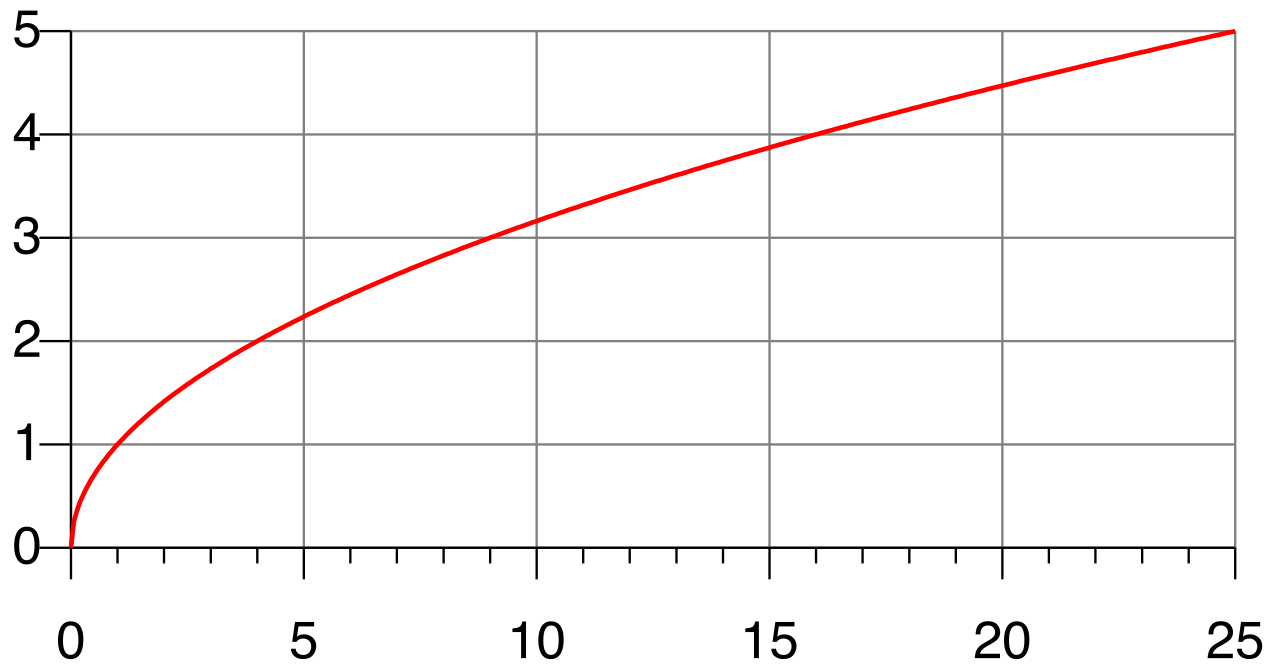
- Square Root Functions: We cannot take the square root of a negative number and get a real result. The expression inside a square root must be greater than or equal to zero for the function to output a real number. To find the domain of a square root function, set the radicand (the expression under the radical) greater than or equal to zero and solve for the input variable.
Algebraic Range Finding
Finding the domain is often a matter of looking at the equation. Finding the range algebraically requires a clever manipulation. To determine the range of a function algebraically, solve the equation for the independent variable (isolate x instead of y) and find the domain of the resulting expression. By inverting the perspective, the domain rules apply to the y-values, revealing the function's range.
An equation plotted on a blank grid is an abstract concept. But when we use mathematics to model the physical universe—which is heavily emphasized on the Praxis 5164—the rules of reality impose further constraints on our functions.
Continuous vs. Discrete Variables
Before we establish limits, we must establish the texture of the domain.
- A continuous domain represents an unbroken interval of real numbers. You can zoom in infinitely between two points. A function modeling continuous quantities like time or distance typically has a continuous domain. If a car drives for 3 hours, it also drove for 2.5 hours, and 2.51 hours, and 2.513 hours.
- A discrete domain consists of distinct, separate input values rather than an unbroken interval. You cannot zoom in forever. A function modeling the count of indivisible physical objects must have a discrete domain consisting of non-negative integers. If you are ordering pizzas at $15 each, you can order 2 pizzas or 3 pizzas, but the restaurant will not allow you to input 2.71 pizzas into their register.

Logic and Context
When a mathematical model interacts with reality, we restrict it using practical boundaries.
- The practical domain is the set of input values that logically make sense in the real-world context of a problem.
- The practical range is the set of output values that result from evaluating the practical domain in a real-world scenario.
Let's look at how the laws of physics overrule algebraic theory:
- The Flow of Time: A linear equation y=−5x+100 might algebraically have a domain of all real numbers. But if x represents time since a race began, the past does not exist in the model. A real-world context involving time elapsed since an event cannot have negative input values in the practical domain.
- Physical Space: If y represents the height of a falling object, the abstract quadratic equation might plunge into the negative y-axis on a graphing calculator. But in reality, the object hits the ground (y=0). A real-world context measuring physical dimensions cannot include negative values in the practical range.
To be an effective middle school mathematics educator is to teach students not just how to push numbers around a page, but how to use functions to make precise, logical arguments about the world. Understanding domain and range ensures that the mathematical models your students build remain firmly grounded in reality.