Exponents, Radicals, and Scientific Notation
Not sure you’re ready?
Take the ~3-minute readiness diagnostic and see where you stand.
A drop of ocean water contains roughly 1023 water molecules, a quantity so vast that writing it out in standard form demands twenty-four digits. Conversely, the diameter of a single water molecule is roughly 2.7×10⁻¹⁰ meters, a number so minuscule that a standard decimal representation loses all practical meaning. To navigate the sheer scale of our world—from the atomic to the astronomical—mathematics relies on a specialized machinery of compaction and expansion: exponents, radicals, and scientific notation. For the middle school mathematics teacher, these are not merely abstract algebraic rules; they are the fundamental syntax of magnitude. Mastering this syntax means understanding how repeated multiplication compresses data, how roots unpack it, and how specialized formatting allows us to compare the national deficit to the cost of a single pencil without losing our cognitive grip on either.

At its most fundamental level, an exponent is mathematical shorthand. A positive integer exponent indicates the number of times the base is used as a factor in repeated multiplication. When we write 53, we are simply requesting the product 5×5×5.
However, middle school students frequently stumble over exactly what is being repeatedly multiplied. The rule is strictly local: an exponent applies exclusively to the base immediately preceding it unless parentheses dictate otherwise.
This distinction governs the behavior of negative signs. Consider the difference between −32 and (−3)2:
- An expression formatted as a negative sign followed by a positive base raised to an even power evaluates to a negative number. In −32, the base is 3. The exponent squares the 3 to get 9, and the negative sign is applied afterward, yielding −9.
- Conversely, a negative base enclosed in parentheses and raised to an even integer exponent yields a positive result. In (−3)2, the base is −3, and (−3)×(−3)=9.
- If the exponent is odd, the distinction in signs temporarily vanishes, though the structural logic remains: a negative base enclosed in parentheses and raised to an odd integer exponent yields a negative result (e.g., (−3)3=−27).
Descending the Ladder: Zero and Negative Exponents
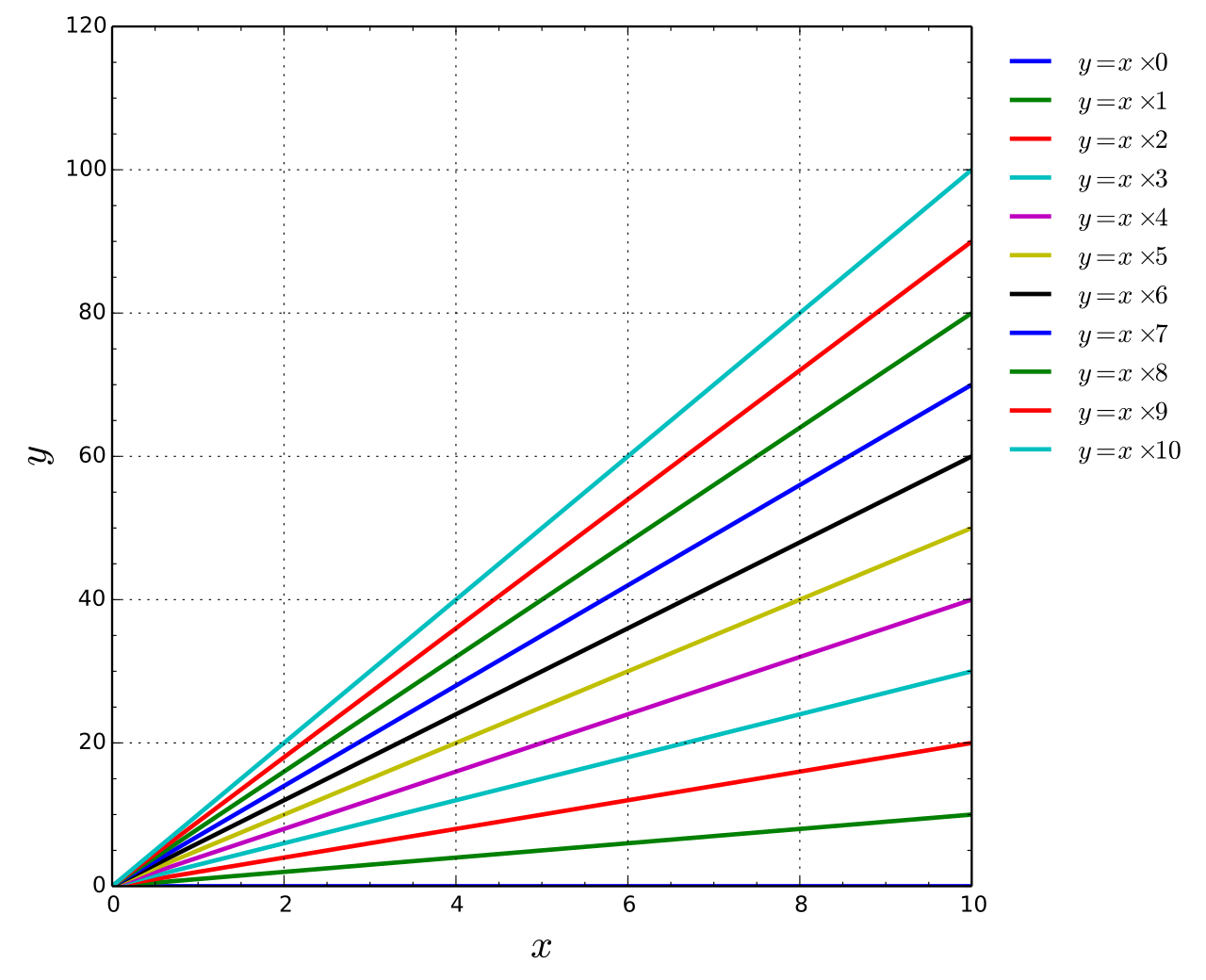
What happens when we decrease our exponents? Look at the pattern of base 2: 23=8 22=4 21=2
Every time the exponent decreases by one, we divide the result by the base. Following this physical logic, 20 must be 2÷2, which is 1. Therefore, a non-zero base raised to an exponent of zero equals exactly one. (We specify "non-zero" because the mathematical expression zero raised to the power of zero is undefined; it represents a conceptual clash between "anything to the zero is one" and "zero to any power is zero").
Continuing down the ladder past zero, we encounter negative exponents. A negative exponent is not a negative number; it is an instruction to divide. A non-zero base raised to a negative exponent equals the reciprocal of the base raised to the corresponding positive exponent. For example, 2−3=231=81.
This applies equally to rational numbers: a negative exponent applied to a fraction results in the reciprocal of the fraction raised to the corresponding positive exponent. So, (32)−2 flips smoothly into (23)2.
The Laws of Exponent Operations
When navigating expressions with exponents, we rely on a set of operational laws. Think of these as shortcuts for counting how many times a base is acting as a factor.
- The product of powers rule states that multiplying two expressions with the same base requires adding their exponents (x2⋅x3=x5).
- The quotient of powers rule states that dividing two expressions with the same base requires subtracting the denominator's exponent from the numerator's exponent (x2x5=x3).
- The power of a power rule states that raising an exponential expression to a power requires multiplying the exponents ((x2)3=x6).
- The power of a product rule states that raising a product to a power requires distributing the exponent to each individual factor ((xy)3=x3y3).
- The power of a quotient rule states that raising a quotient to a power requires distributing the exponent to the numerator and the denominator ((yx)3=y3x3).
A Critical Warning for Teachers: These shortcuts rely on a shared foundation. Multiplying or dividing exponential terms with different bases does not permit the addition or subtraction of their exponents. You cannot simplify 23⋅54 by adding the 3 and the 4. They are distinct dimensional units.
Exponents also crack open the door to geometry. An exponent of one-half is mathematically equivalent to taking the principal square root of the base, and an exponent of one-third is mathematically equivalent to taking the cube root of the base.
Radicals are the instruments we use to reverse-engineer an exponent.
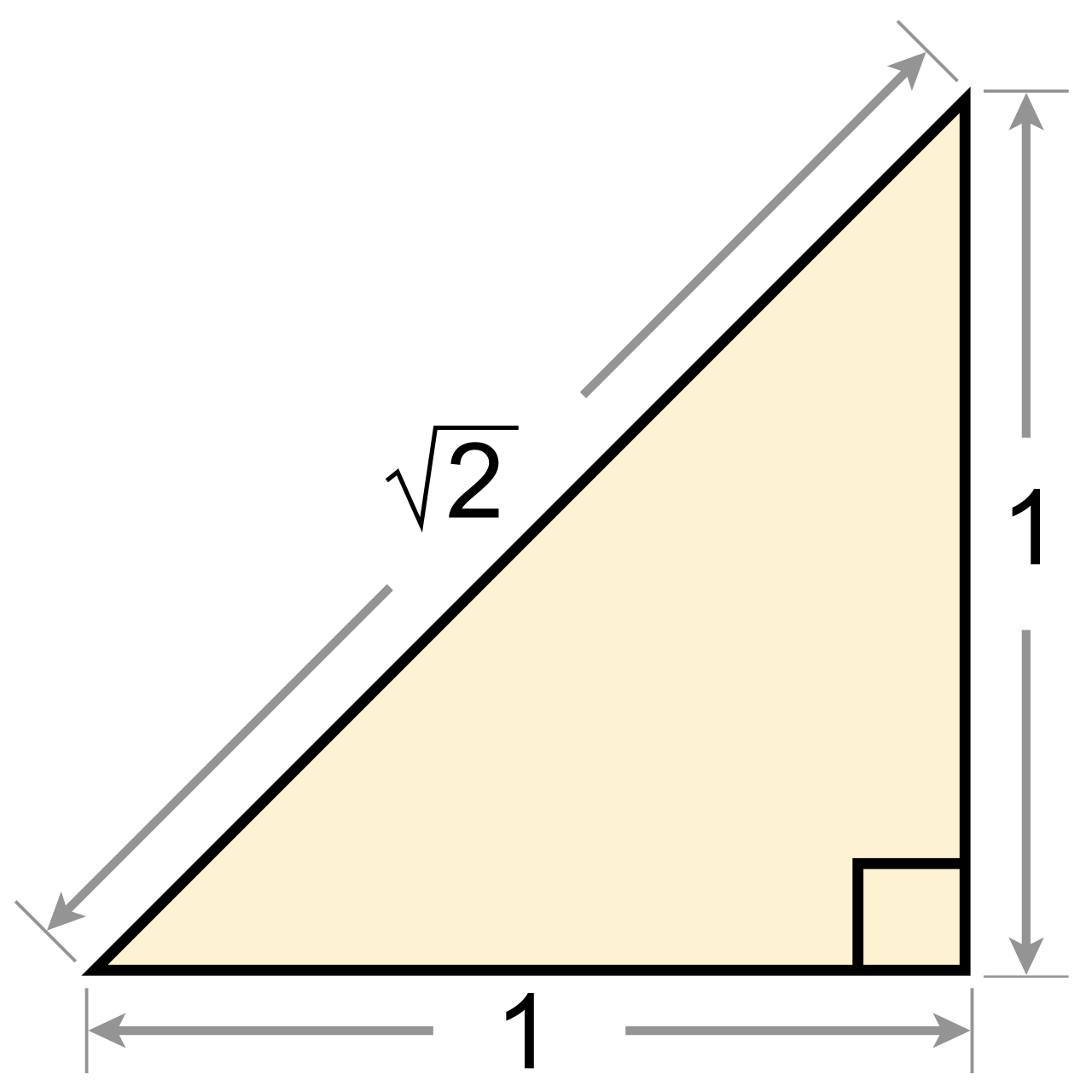
- Square Roots: The square root of a positive real number x is a value y such that y multiplied by itself equals x. Because both 4×4=16 and −4×−4=16, every positive real number has two square roots. To avoid ambiguity, mathematicians designated a standard: the radical symbol () without an explicit index denotes the principal square root of a number. The principal square root of a positive real number is its unique positive square root.
- Domain Limits: What about −16? Because any real number squared yields a positive result, the square root of a negative real number is not a real number.
- Cube Roots: We denote these with an index of 3 (3). The cube root of a real number x is a value y such that y cubed equals x. Because a negative times a negative times a negative is negative, the domain restrictions of square roots vanish here. The cube root of a negative real number always evaluates to a negative real number (e.g., 3−8=−2).
Perfect Roots and Irrationality
To teach roots effectively, you must arm your students with recognizable mile-markers.
- A perfect square is an integer equal to the square of another integer.
- A perfect cube is an integer equal to the cube of another integer.
| The First Ten Perfect Squares | The First Five Perfect Cubes |
|---|---|
| 1, 4, 9, 16, 25, 36, 49, 64, 81, 100 | 1, 8, 27, 64, 125 |
These mile-markers are rare. Most integers do not fall cleanly on this grid. The square root of a positive integer that is not a perfect square is an irrational number. Similarly, the cube root of an integer that is not a perfect cube is an irrational number. These are numbers with non-terminating, non-repeating decimal expansions.
Approximating and Simplifying Radicals
When a real-world problem requires evaluating an irrational root, we must approximate. Approximating a non-perfect square root requires identifying the two consecutive perfect squares that immediately bound the radicand.
Imagine estimating 40. It sits between the perfect squares 36 (which has a root of 6) and 49 (which has a root of 7). Therefore, 40 is 6-point-something. The fractional portion of a square root approximation can be estimated by comparing the radicand's distance from the two bounding perfect squares. The distance from 36 to 40 is 4 units. The total distance from 36 to 49 is 13 units. Our approximation is roughly 6134, or about 6.3.
Rather than estimating, algebraic contexts often require exact simplification. Simplifying a square root radical expression involves factoring out the largest perfect square that divides the radicand. To do this, we rely on two properties:
- The product property of radicals states that the nth root of a product equals the product of the nth roots of the individual factors. (50=25⋅2=25⋅2=52).
- The quotient property of radicals states that the nth root of a quotient equals the quotient of the nth roots of the numerator and denominator. (169=169=43).
When data escapes the bounds of human intuition—like the mass of a planet or the wavelength of an electron—we standardize its format. Scientific notation expresses a number as a product of a coefficient and the base ten raised to an integer power.
Think of scientific notation as a shipping container for numbers. The coefficient is the exact cargo; the exponent of ten tells you the size of the truck required to haul it.

The Rules of the Coefficient and Exponent
To be mathematically valid, the format must be strict.
- A valid coefficient in scientific notation must be greater than or equal to one.
- A valid coefficient in scientific notation must be strictly less than ten.
- Crucially for scientific contexts, the coefficient in scientific notation explicitly contains all the significant figures of the original number.
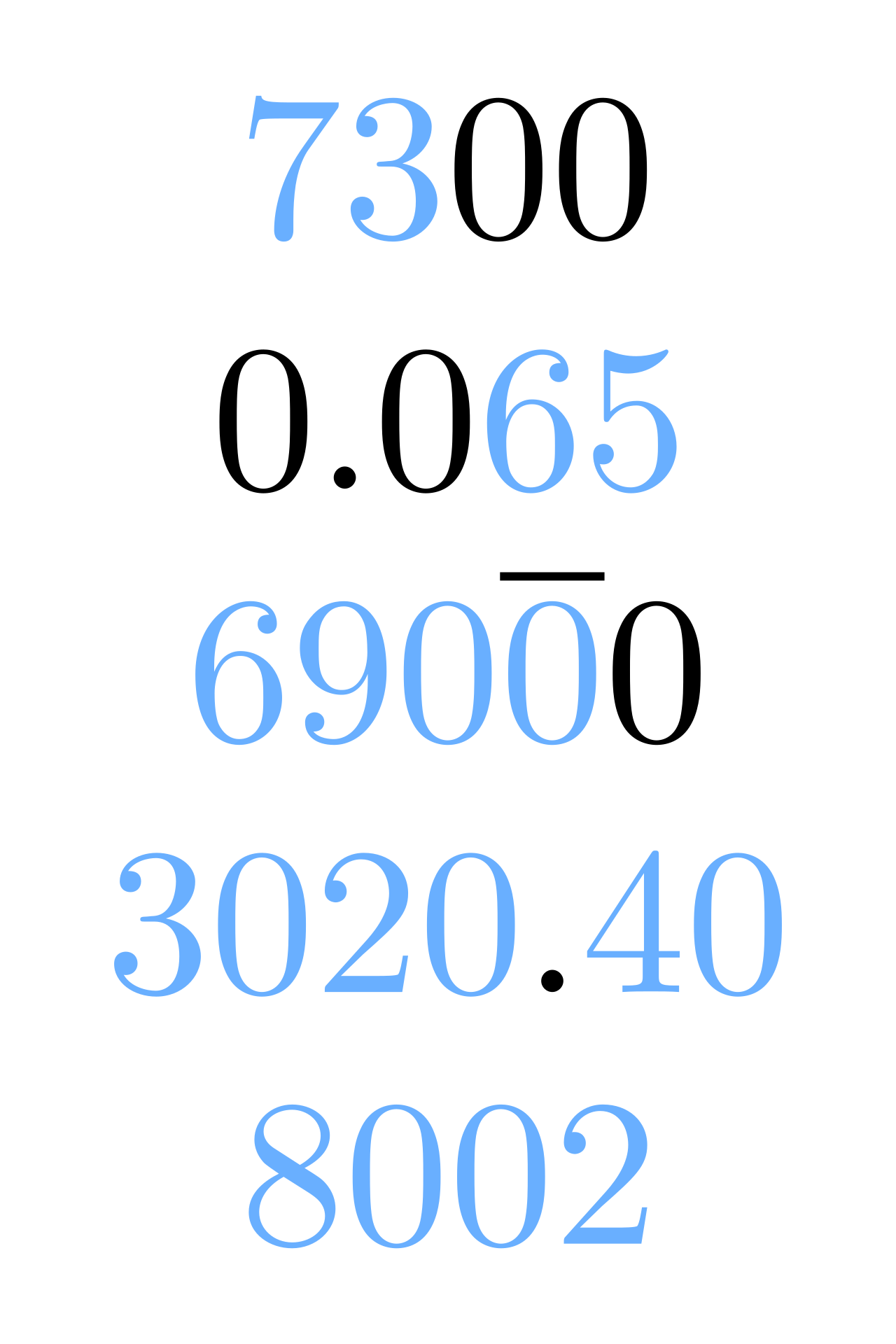
While the coefficient holds the precision, the order of magnitude of a number formatted in scientific notation is primarily determined by its base-ten exponent.
- A positive exponent in scientific notation represents a numerical value greater than or equal to ten. (e.g., 3.5×104=35,000)
- An exponent of zero in scientific notation represents a numerical value greater than or equal to one and strictly less than ten. (e.g., 4.2×100=4.2)
- A negative exponent in scientific notation represents a positive numerical value strictly less than one. (e.g., 8.1×10−3=0.0081)
Converting and Adjusting
Translating standard numbers into scientific notation is a mechanical process of shifting the decimal point until you trap a valid coefficient between 1 and 10.
- Converting a number greater than ten to scientific notation involves moving the decimal point to the left to form a valid coefficient. In doing so, the positive exponent equals the number of places the decimal point is moved to the left. (45,000 becomes 4.5×10⁴).
- Converting a positive number less than one to scientific notation involves moving the decimal point to the right to form a valid coefficient. Here, the negative exponent's absolute value equals the number of places the decimal point is moved to the right. (0.0072 becomes 7.2×10⁻³).
Sometimes, an operation leaves you with an invalid coefficient (like 45×103). You must adjust it. Remember the "seesaw" balance of magnitude: if you make the coefficient smaller, you must make the exponent larger to compensate.
- Moving the decimal point of a scientific notation coefficient one place to the left requires adding one to the base-ten exponent. (45×103→4.5×10⁴).
- Moving the decimal point of a scientific notation coefficient one place to the right requires subtracting one from the base-ten exponent. (0.45×10³→4.5×10²).
Comparing and Operating
Scientific notation allows us to swiftly evaluate magnitude. Comparing two numbers in scientific notation begins by comparing their base-ten exponents. A number with an exponent of 5 is intrinsically larger than a number with an exponent of 4, regardless of their coefficients. When comparing two numbers in scientific notation with identical exponents, the larger number is the one possessing the larger coefficient.
Operating on these numbers marries scientific notation with our standard laws of exponents:
- Multiplying two numbers in scientific notation requires multiplying their coefficients and adding their base-ten exponents. (2×10³)(3×10⁴)=(2⋅3)×103+4=6×10⁷.
- Dividing two numbers in scientific notation requires dividing their coefficients and subtracting the denominator's exponent from the numerator's exponent. 2×1028×105=(8÷2)×105−2=4×10³.
Addition and subtraction are vastly different. You cannot add the coefficients of numbers with different magnitudes, just as you wouldn't directly add $500 to 5 cents without converting them to a common scale. Adding or subtracting numbers in scientific notation requires rewriting the terms so that their base-ten exponents are identical before combining the coefficients. For example, to compute (3.0×10⁴)+(2.0×10³), shift the smaller magnitude to match the larger: (3.0×10⁴)+(0.2×10⁴)=3.2×10⁴.
Technology and Variations
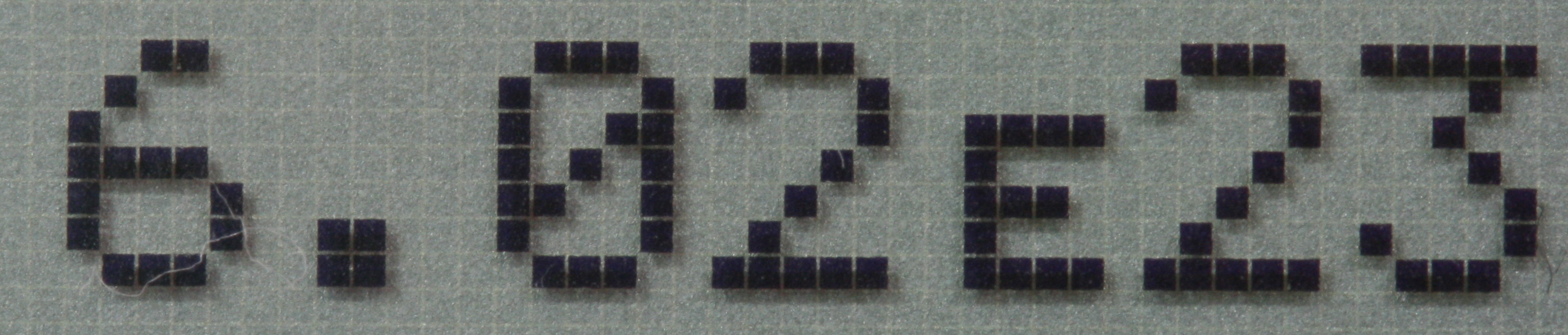
When your students utilize technology, the interface changes slightly. A standard scientific calculator displays scientific notation using an E or EE button to represent "times ten to the power of" the following number. A readout of 4.5E-6 represents 4.5×10⁻⁶.
Finally, students may encounter specific formatting rules in physics or shop classes. Engineering notation is a version of scientific notation where the exponent of ten must be a multiple of three. This aligns beautifully with our linguistic prefixes (kilo for 103, mega for 106, micro for 10−6). In engineering notation, 45,000 remains 45×103 rather than being forced into 4.5×10⁴, preserving an intuitive connection to "45 kilometers" or "45 kilowatts."