Triangles and the Pythagorean Theorem
Not sure you’re ready?
Take the ~3-minute readiness diagnostic and see where you stand.
If you hand a middle school student three arbitrary wooden dowels and ask them to build a closed, flat shape with three straight sides, they will quickly discover a profound truth of the physical universe: nature does not negotiate with geometry. You cannot force any three random lengths to close perfectly. When they do close, the resulting structure is absolutely rigid. Unlike a rectangle, which can easily collapse into a slanted parallelogram under a little pressure, a triangle’s sides lock its angles into place permanently. This inherent structural rigidity is why every bridge, crane, and roof truss in the world is built from intersecting triangles.
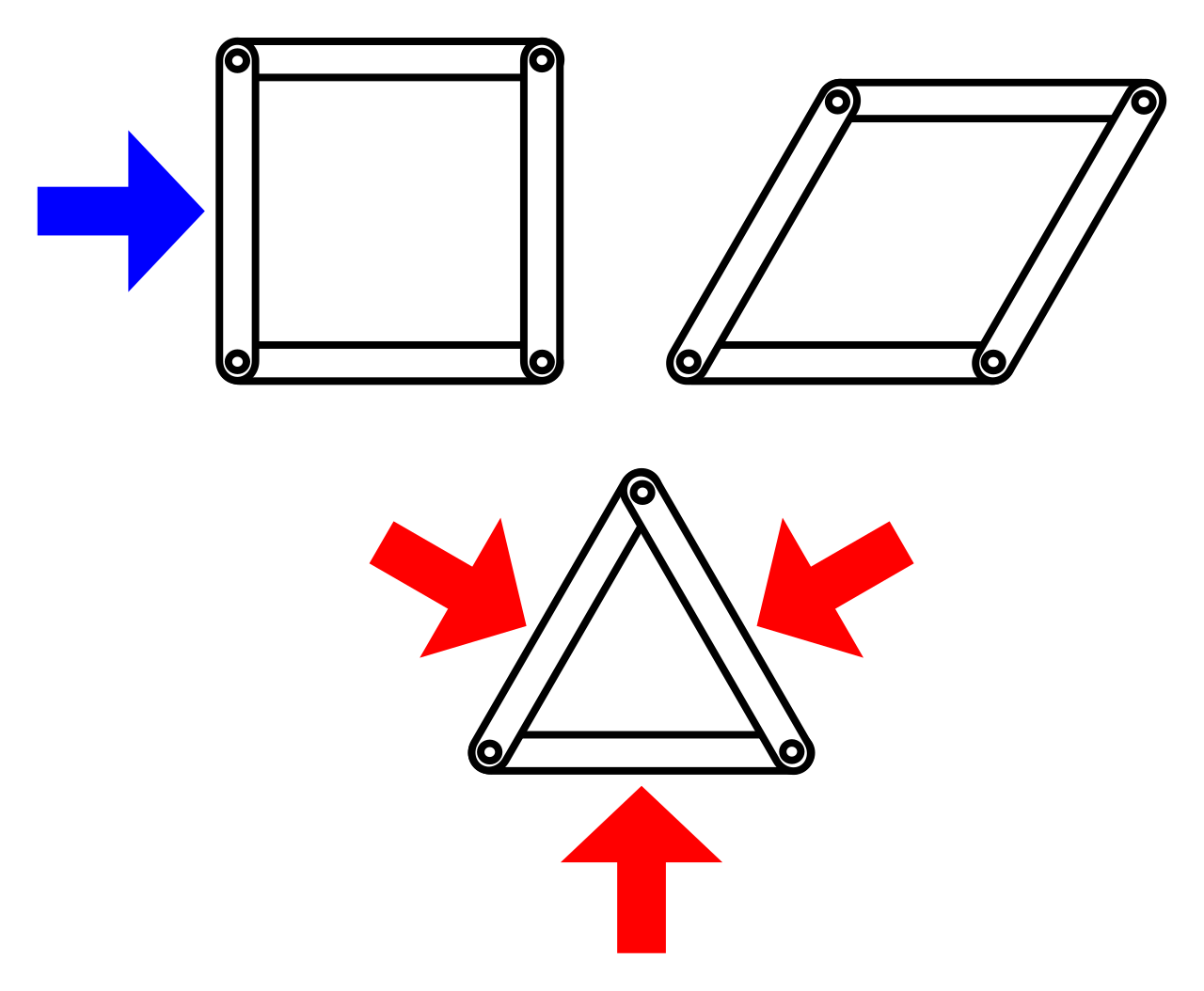
As an aspiring middle school mathematics teacher, your task is to take these physical realities—how sides restrict angles, how angles govern sides, and how the right angle serves as the cornerstone of our measurement systems—and translate them into a logical, algebraic language your students can wield. You are not just teaching formulas; you are teaching the architectural source code of two-dimensional space.
Let us dissect the anatomy of the triangle, from the foundational rules of its existence to the elegance of the Pythagorean theorem.
Before we calculate hypotenuses or delve into coordinate planes, we must first determine if a triangle can exist at all. A triangle is a delicate agreement between three side lengths and three interior angles.
The Rule of Angles
A planar triangle exists under strict angular budgets. The sum of the interior angles of any planar triangle is always exactly 180 degrees. If you are presented with a selected-response question where the given interior angle measures do not sum exactly to 180 degrees, the conclusion is absolute: no triangle can be formed.
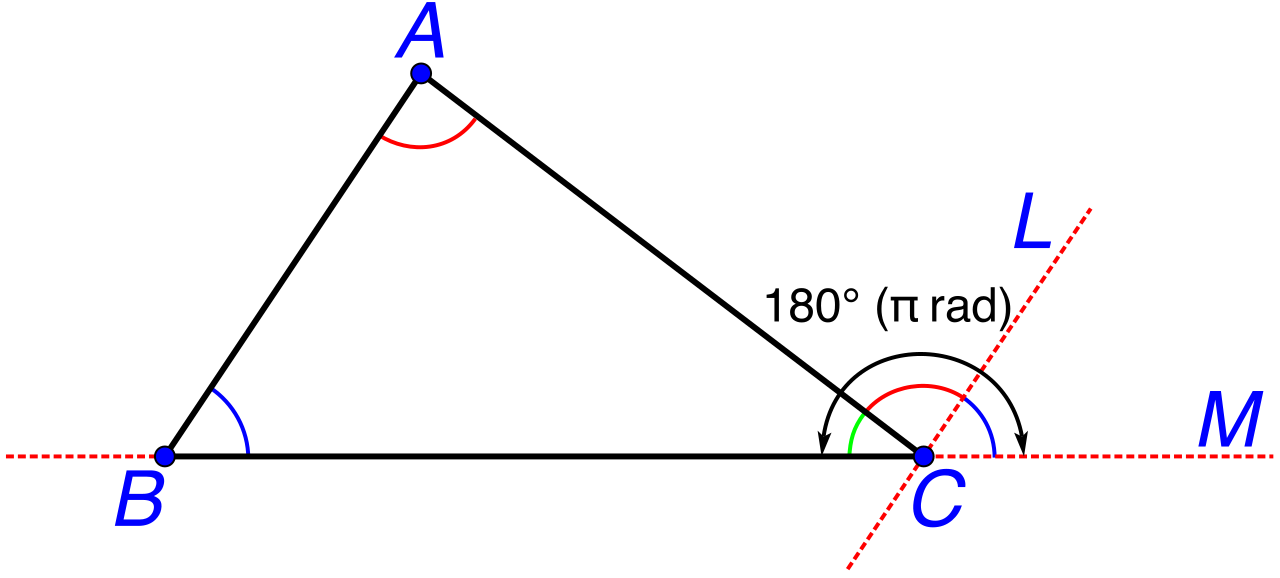
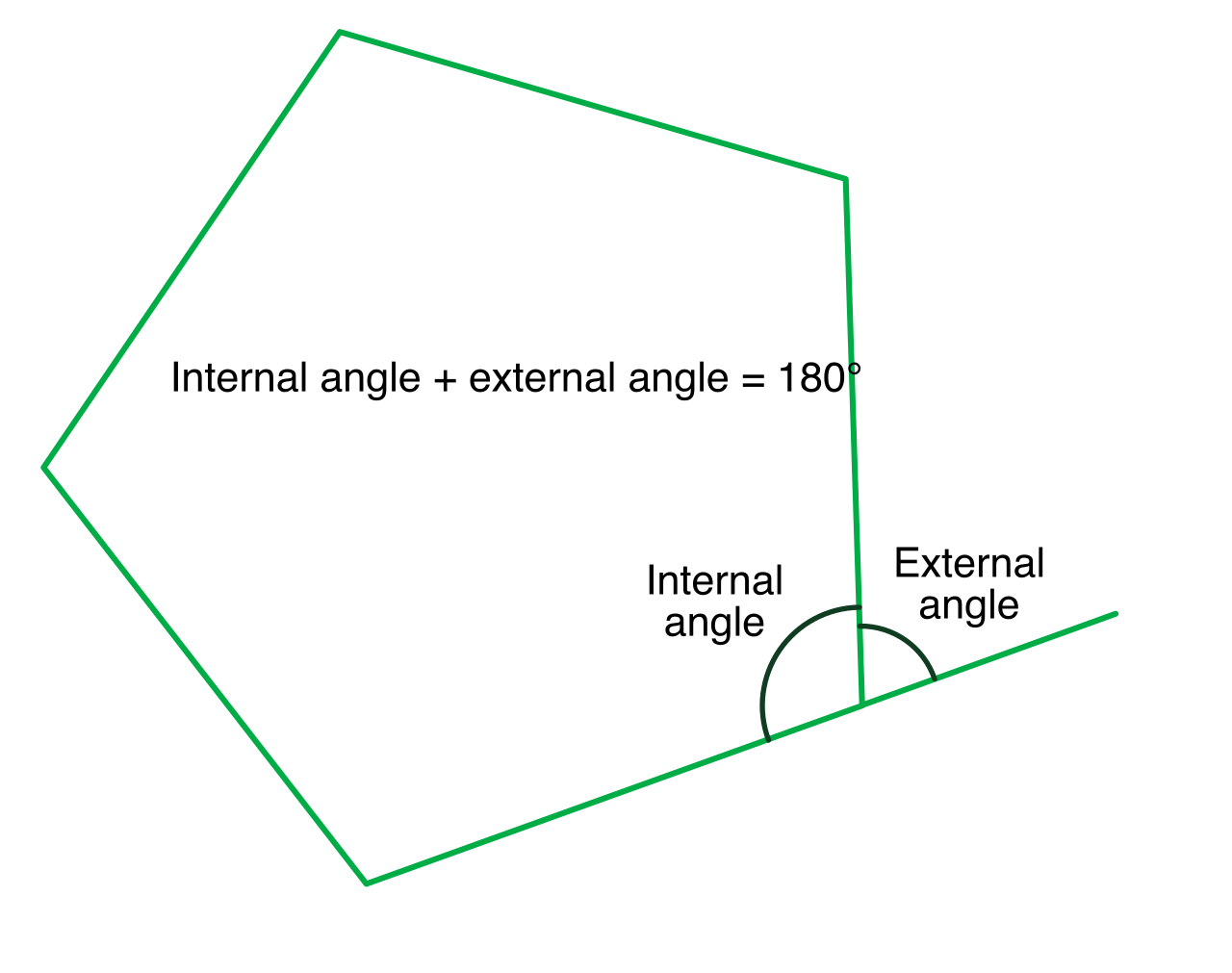
When we extend one side of a triangle outward, we create an exterior angle. The measure of an exterior angle of a triangle equals the sum of the measures of the two remote interior angles (the two angles not adjacent to it). This fact is an incredible shortcut for numeric-entry problems, saving students from having to subtract from 180 twice.
Classifying by Side Lengths
Triangles are classified by their symmetries, which dictate their behavior:
- Scalene triangles are defined as triangles having zero congruent sides. Because side lengths dictate angle sizes, scalene triangles inherently have three interior angles of completely distinct measures.
- Isosceles triangles are defined as triangles having at least two congruent sides. Their symmetry creates a beautiful structural mirror: the angles opposite the congruent sides in an isosceles triangle are structurally congruent to each other.
- Equilateral triangles are defined as triangles having exactly three congruent sides. Because the total 180 degrees must be shared equally, every equilateral triangle has three interior angles that each measure exactly 60 degrees.
The Grand Alignment: In any triangle, the lengths of the sides are locked in a hierarchy with their opposite angles. The shortest leg of any triangle is always positioned strictly opposite the smallest interior angle. Conversely, the longest side sits opposite the largest angle.
The Triangle Inequality Theorem
How do we know if three side lengths can actually connect? The Triangle Inequality Theorem dictates that the sum of any two side lengths of a triangle must be strictly greater than the third side length.
If a student tries to connect sides of length 2, 3, and 6, the lengths 2 and 3 will fold flat against the 6, failing to meet. To form a valid triangle, the longest side must be strictly less than the sum of the two shorter sides. Furthermore, if the sum of the two shorter given side lengths is exactly equal to the longest given side length, they form a flat line segment, meaning no triangle can be formed.
When building test questions, you will often ask students to find the possible range for a third, unknown side. The rule is elegant: The length of any unknown side of a triangle must be strictly greater than the positive difference of the other two known side lengths, and strictly less than their sum. If sides are 5 and 8, the third side x must be: 8−5<x<8+5. Therefore, 3<x<13.
When you provide students with specific measurements, you are giving them constraints. Depending on what you give them, they might be able to build an infinite number of triangles, exactly one triangle, or zero triangles.
Generating Exactly One Unique Triangle
If you hand out specific combinations of sides (S) and angles (A), the mathematical rigidity forces exactly one possible outcome. The following geometric conditions guarantee the formation of exactly one unique triangle:
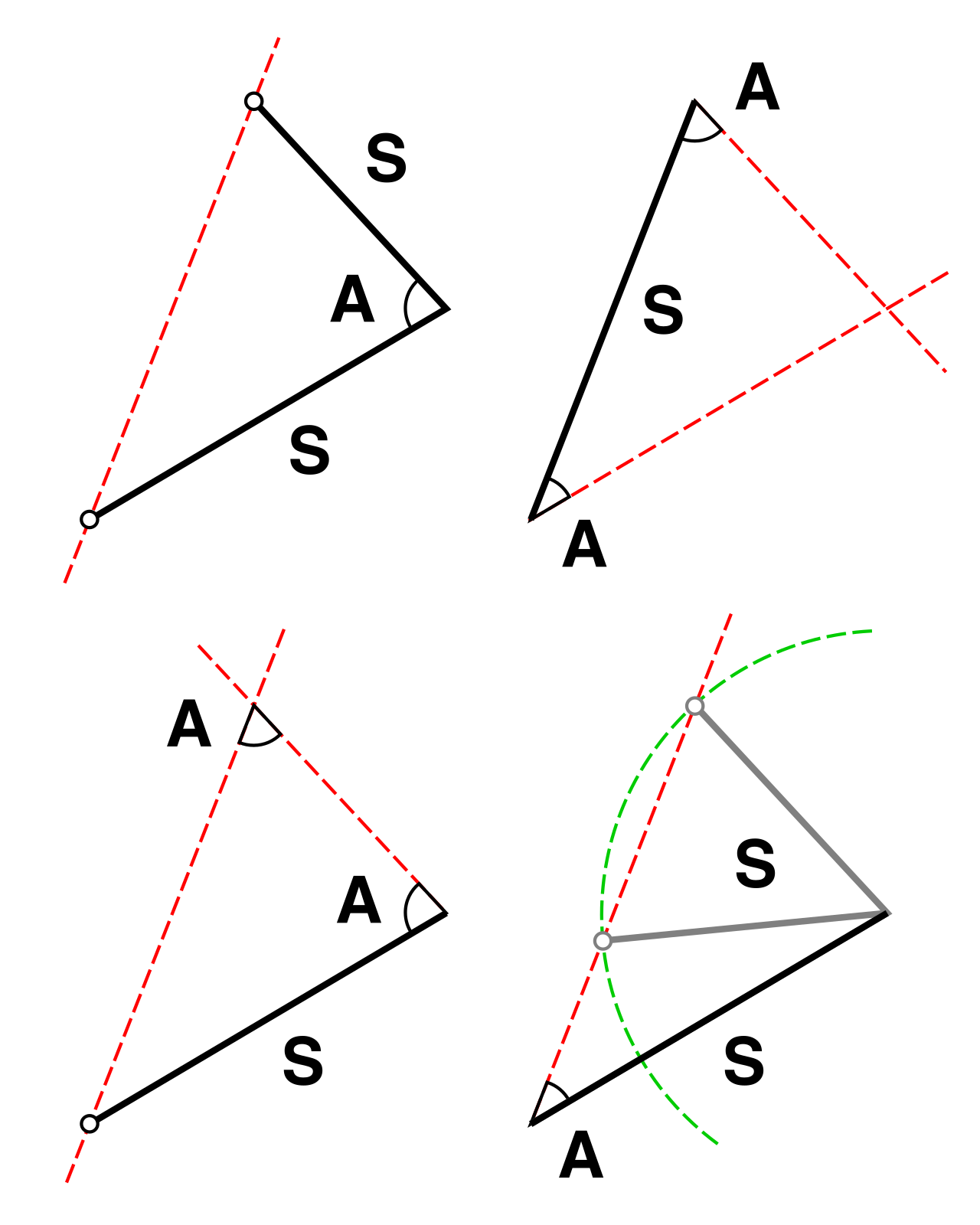
If two students are given SSS constraints, they will independently draw triangles that are perfect, congruent clones of one another.
The Infinite Scaled Clones (AAA)
What happens if you give students the Angle-Angle-Angle (AAA) conditions? Imagine pinching to zoom on a smartphone screen. The angles stay identical, but the shape grows or shrinks. The AAA given conditions produce an infinite number of scaled similar triangles rather than a single unique triangle.
The Ambiguous Case (SSA)
The Side-Side-Angle (SSA) given conditions are considered an ambiguous case in geometry. If you give a student two side lengths and an angle that is not captured directly between those sides, the "swinging" unknown side creates chaos. Depending on the specific measurements, the Side-Side-Angle conditions can result in:
- Zero valid triangles (the swinging side is too short to reach the base).
- Exactly one unique triangle (the swinging side hits the base at exactly a 90-degree right angle).
- Exactly two distinct valid triangles (the swinging side is long enough to strike the base in two different locations, forming either an acute or obtuse triangle).
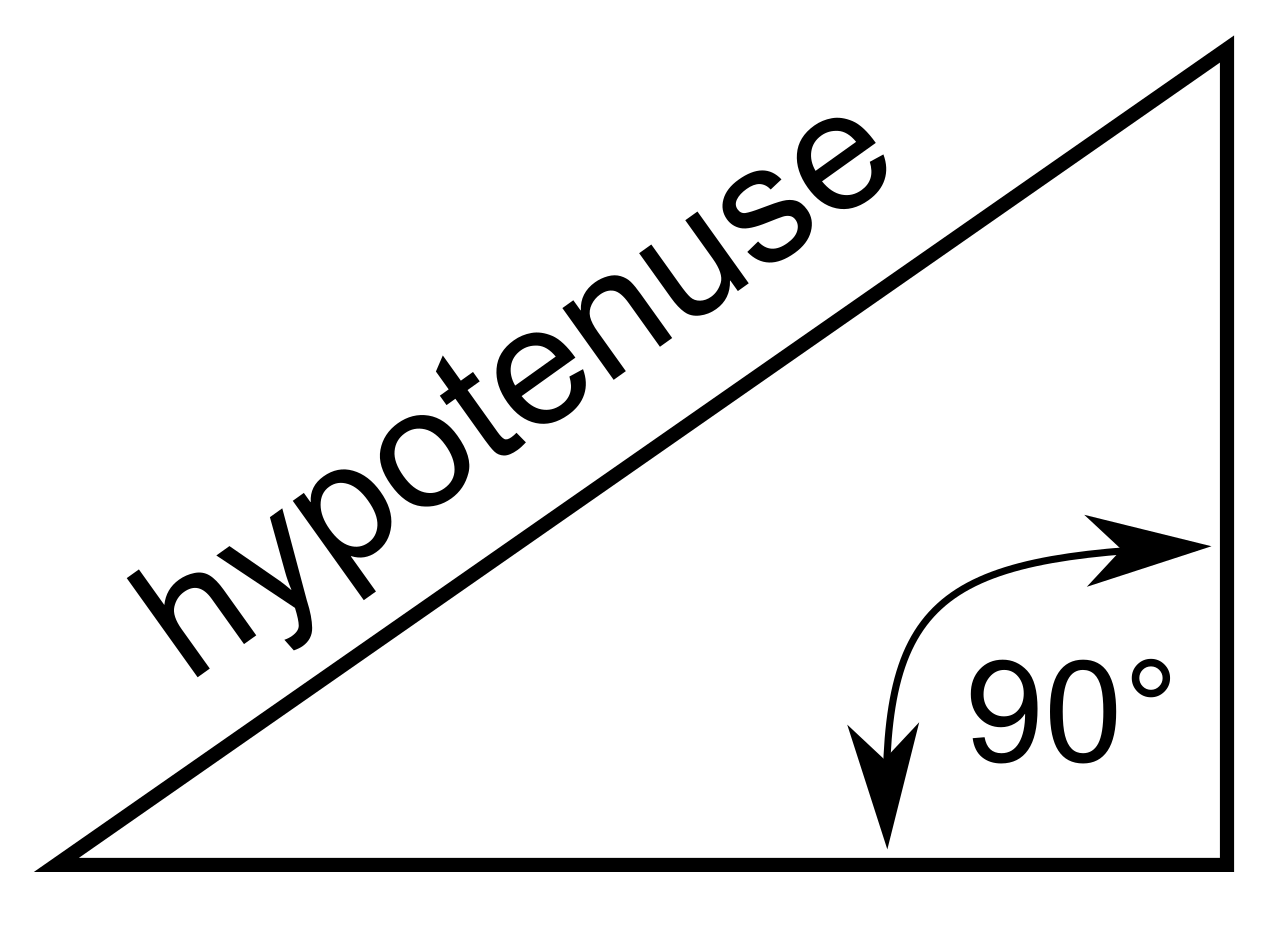
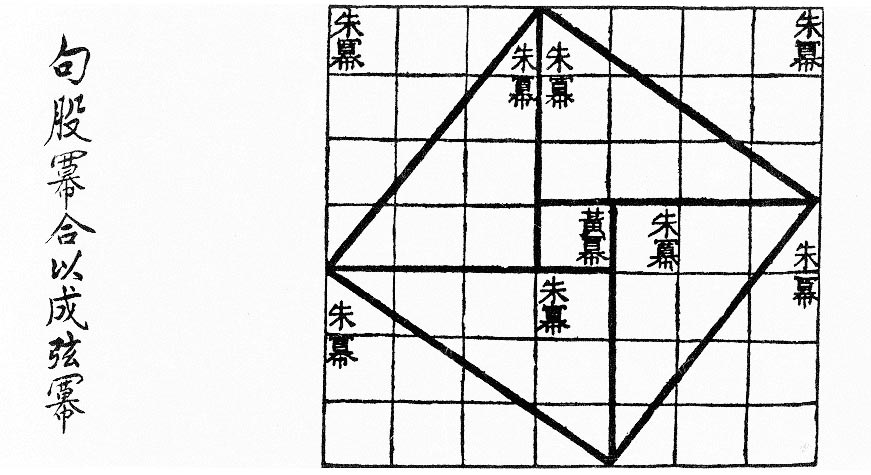
When the interior angle of a triangle hits precisely 90 degrees, a mathematical miracle happens. The Pythagorean theorem states that the square of the hypotenuse equals the sum of the squares of the other two sides in a right triangle.
The algebraic formula for the Pythagorean theorem is simple but earth-shattering: a2+b2=c2
Let us define the players in this equation carefully, as precision of language prevents student misconceptions:
- In the formula, the variables a and b represent the lengths of the legs of a right triangle. The legs of a right triangle are the two shorter sides that intersect to form the 90-degree angle.
- The variable c represents the length of the hypotenuse of a right triangle.
- The hypotenuse is the longest side of a right triangle.
- Structurally, the hypotenuse of a right triangle is always located directly opposite the 90-degree angle.
Applying the Converse to Classify Triangles
The Pythagorean equation works backward just as flawlessly. The converse of the Pythagorean theorem states that a triangle is a right triangle if the square of the longest side equals the sum of the squares of the other two sides.
But what if the equation does not perfectly balance? By analyzing the imbalance, we can classify the triangle without drawing it. Always isolate the square of the longest side (c2) for these comparisons:
- A triangle is acute if the square of its longest side is strictly less than the sum of the squares of its two shorter sides. (c2<a2+b2). Think of the hypotenuse "shrinking," pinching the opposite angle closed.
- A triangle is obtuse if the square of its longest side is strictly greater than the sum of the squares of its two shorter sides. (c2>a2+b2). The longest side has stretched out, pulling the opposite angle wide open.
As a middle school teacher, you will live and breathe Pythagorean triples. Pythagorean triples are sets of three positive integers that perfectly satisfy the Pythagorean theorem.
Why do these matter? Because calculating squares and square roots by hand is tedious. Triples give students (and teachers designing exams) a toolkit of clean, whole numbers.
Here are the heavy hitters. Commit these to memory:
- The integer set 3, 4, 5 is a standard Pythagorean triple. (32+42=52→9+16=25)
- The integer set 5, 12, 13 is a standard Pythagorean triple.
- The integer set 8, 15, 17 is a standard Pythagorean triple.
- The integer set 7, 24, 25 is a standard Pythagorean triple.
The true power of triples is their scalability. Multiplying each number in a Pythagorean triple by the same positive integer produces another valid Pythagorean triple. If you multiply the 3-4-5 triple by 2, you get 6-8-10. Multiply it by 10, and you have a 30-40-50 triangle. Recognizing a 6-8-10 triangle immediately saves a student the time of plugging 62+82=c2 into their on-screen calculator.
While Pythagorean triples deal with clean integer sides, special right triangles deal with clean integer angles. These triangles serve as the bridge between basic geometry and high school trigonometry.
The 45-45-90 Triangle
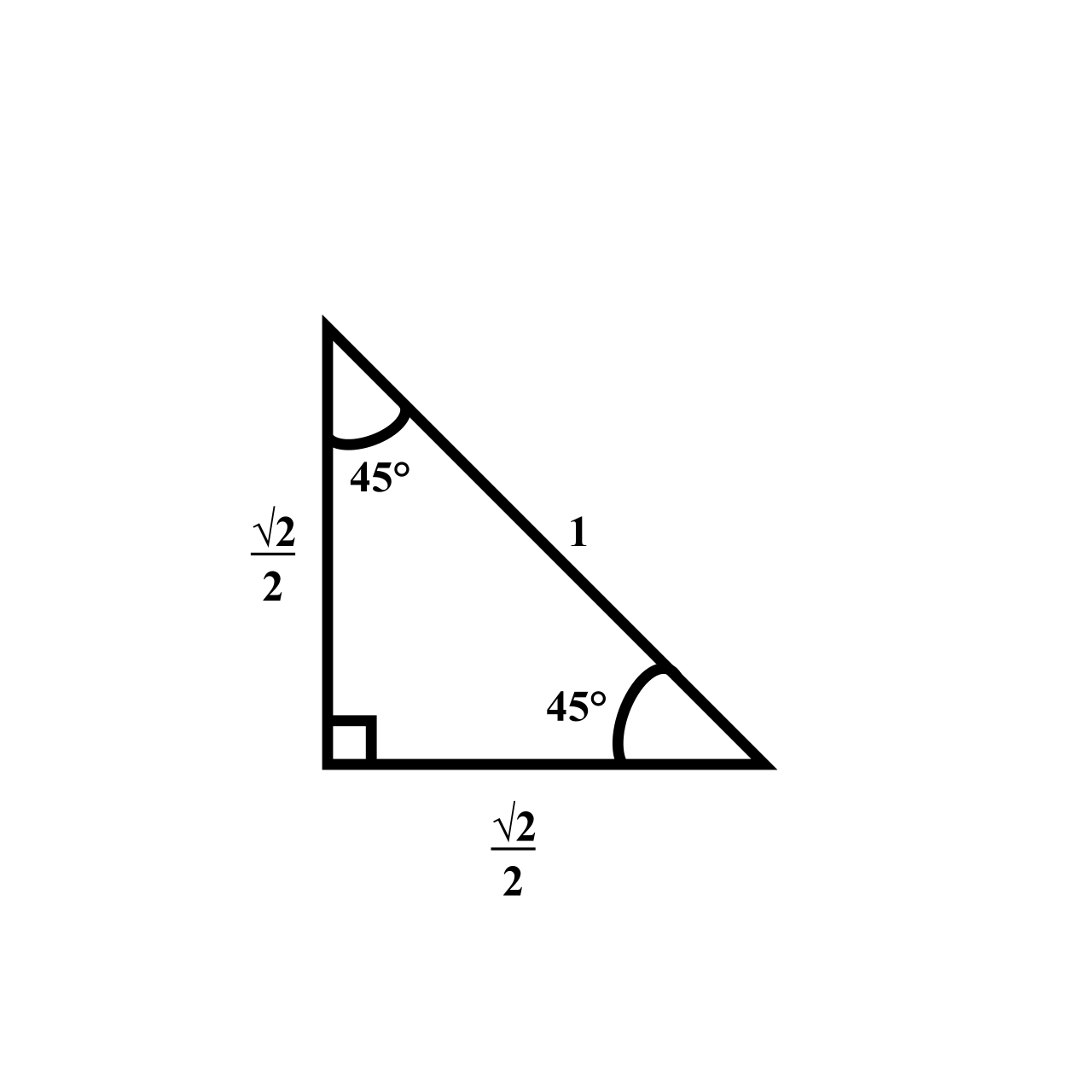
Imagine taking a perfect square and slicing it diagonally. You have just created a 45-45-90 triangle, which is a special right triangle with two 45-degree angles and one 90-degree angle.
- Because two angles are congruent, a 45-45-90 triangle is an isosceles right triangle, meaning the two legs are perfectly congruent in length.
- Through the Pythagorean theorem (x2+x2=c2→2x2=c2), we derive its defining shortcut: the hypotenuse length is equal to the leg length multiplied by the square root of 2.
The 30-60-90 Triangle
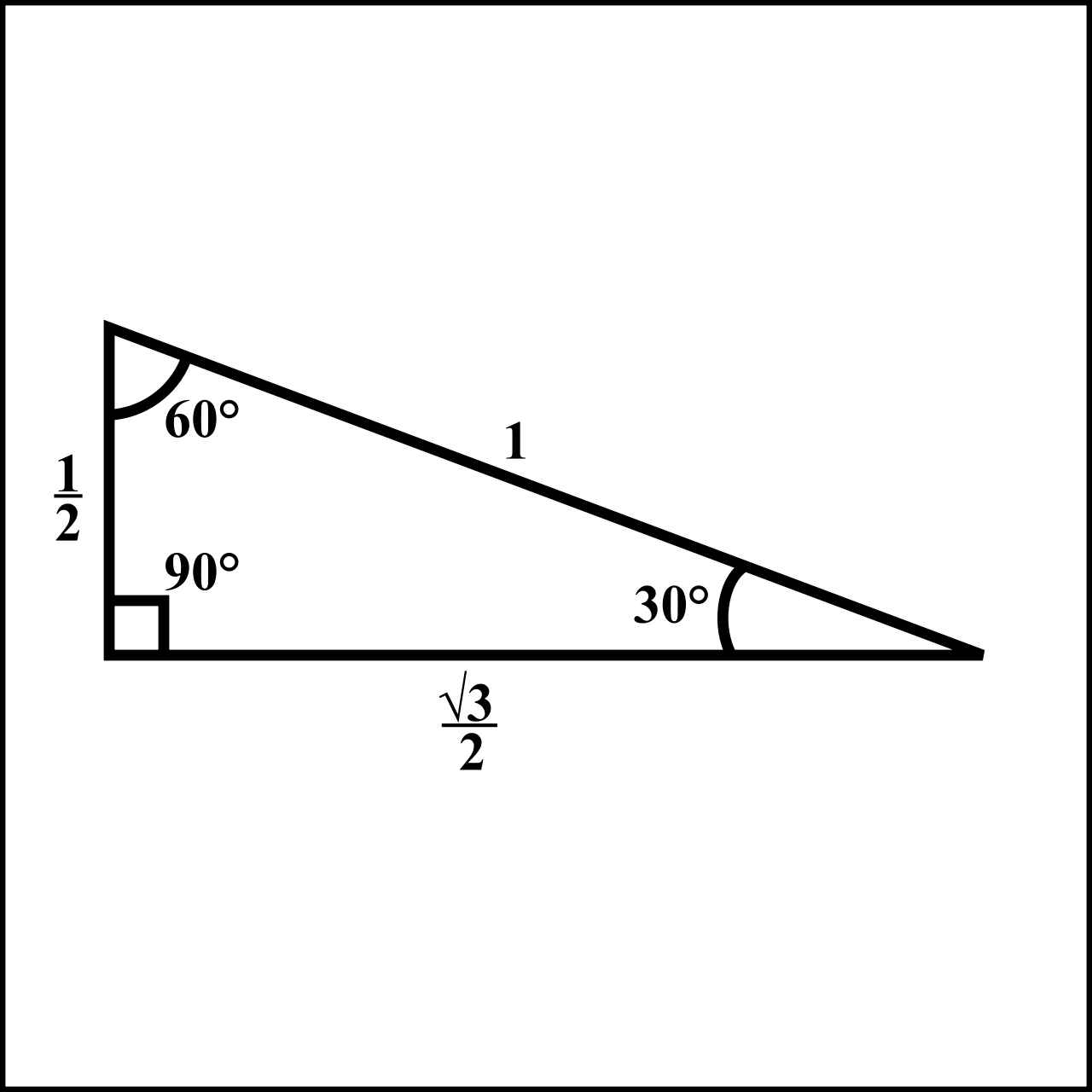
Now, imagine a perfect equilateral triangle. Drop a line straight down from the top point to the bottom base, cutting it in half. You have just created a 30-60-90 triangle, a special right triangle with angles measuring 30 degrees, 60 degrees, and 90 degrees.
- Because you cut the bottom base of the equilateral triangle perfectly in half, the hypotenuse is exactly twice the length of the shortest leg.
- Applying the Pythagorean theorem reveals the middle side: the longest leg is equal to the shortest leg multiplied by the square root of 3.
- Remember your geometric hierarchy: The shortest leg is strictly opposite the 30-degree angle. The longest leg of a 30-60-90 triangle is always positioned strictly opposite the 60-degree angle.
Finally, how do we measure distances on a map, a grid, or a coordinate plane when points do not align perfectly horizontally or vertically? We build a right triangle.
The distance between two points on a Cartesian coordinate plane can be calculated by applying the Pythagorean theorem to a right triangle formed by those points.
When a student looks at the formal Distance Formula, d=(x2−x1)2+(y2−y1)2, they are not looking at a new, mysterious equation. The horizontal distance between the x-coordinates is simply leg a. The vertical distance between the y-coordinates is simply leg b. The distance between the points, d, is the hypotenuse c.
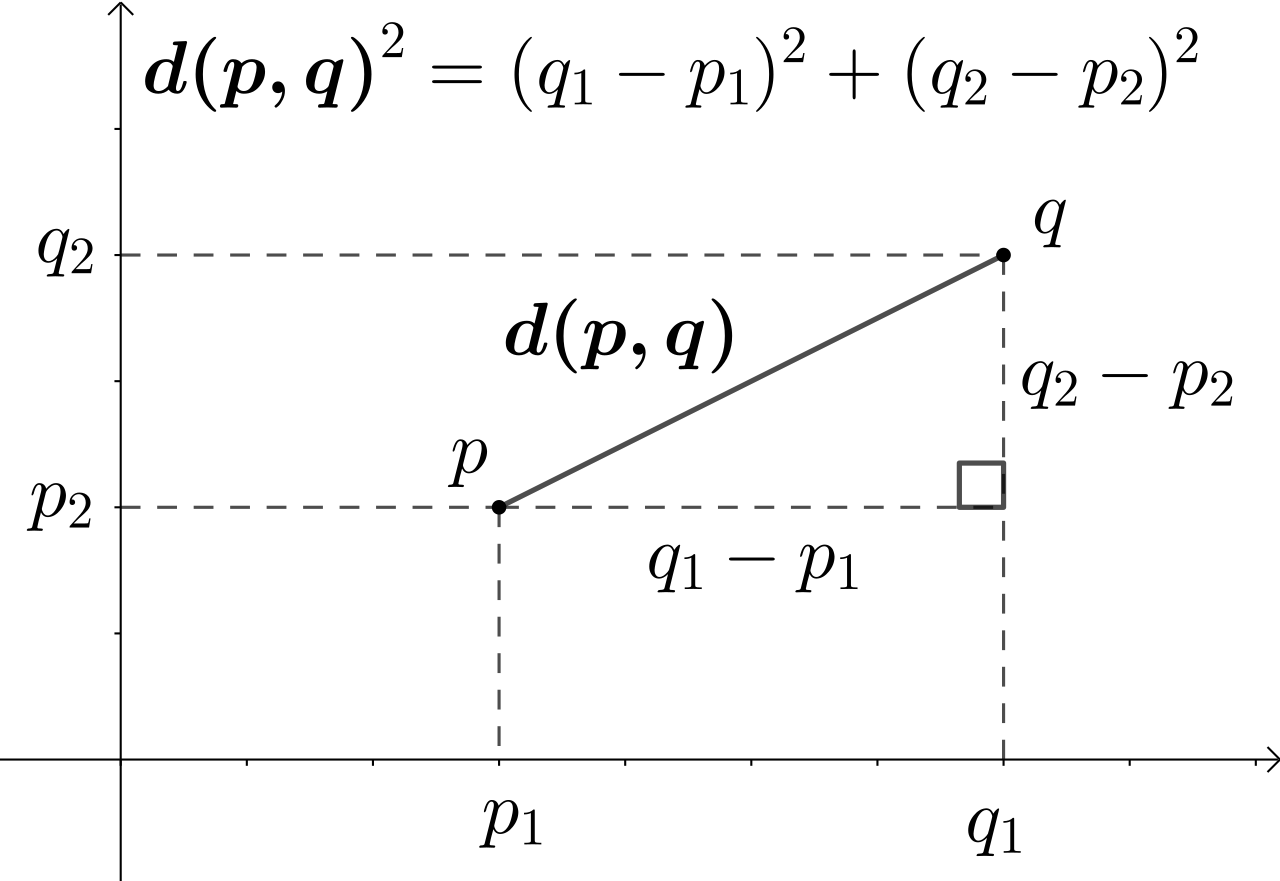
When you teach this, do not let them blindly memorize the Distance Formula. Show them the right triangle hiding behind the gridlines. Show them that a2+b2=c2 is the universal key to distance in two dimensions. Master these concepts, and you will not only conquer the Praxis exam, you will grant your students the spatial intuition required to decipher the physical world.