Number Theory Concepts
Not sure you’re ready?
Take the ~3-minute readiness diagnostic and see where you stand.
Imagine handing a middle school student a set of identical wooden blocks and asking them to arrange those blocks into perfect rectangles. The structural limits of those blocks—whether they can form multiple different rectangular arrays or only a single straight line—reveal the foundational DNA of mathematics. Number theory is the study of this DNA. For a mathematics teacher, understanding the architecture of integers is not merely about reciting rules of divisibility; it is about handing students the keys to fraction simplification, algebraic factoring, and pattern recognition. When we analyze numbers, we are acting as chemists examining molecular structures. Some numbers are elementary building blocks; others are complex molecules built from those elements.
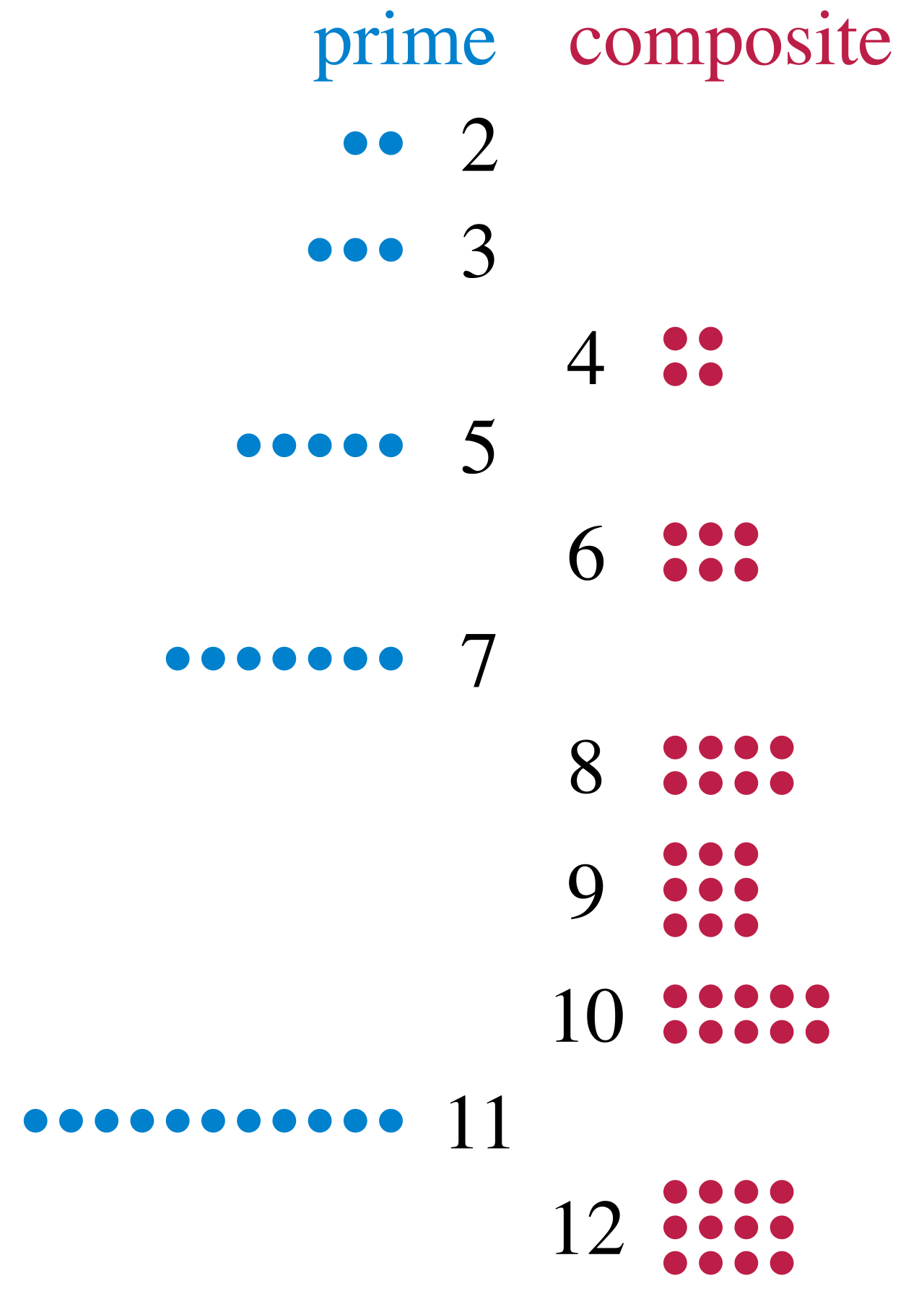
To understand numbers, we must categorize them by their divisors. We define these categories based strictly on the number of distinct positive divisors an integer possesses.
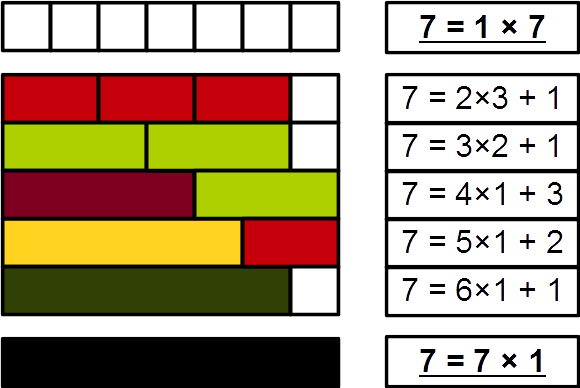
Prime Number: A positive integer greater than 1 that has exactly two distinct positive divisors. The only distinct positive divisors of a prime number are the number 1 and the prime number itself.
Composite Number: A positive integer that has more than two distinct positive divisors.
These definitions naturally exclude certain edge cases that frequently trip up students. The number 1 is neither a prime number nor a composite number because it has only one positive divisor (itself). Similarly, the number 0 is neither a prime number nor a composite number; it has an infinite number of divisors (any non-zero integer divides 0 evenly), but it is not a positive integer.
Because every even number is divisible by 2, the vast majority of prime numbers are odd. In fact, the number 2 is the only even prime number, standing alone as the starting point of our prime sequence.
The Fundamental Theorem of Arithmetic
Why do we care so deeply about primes? Because they are the indivisible atoms of mathematics. The Fundamental Theorem of Arithmetic states that every integer greater than 1 is either prime or can be uniquely represented as a product of prime numbers.
This uniqueness is crucial. Just as water is always H2O, the number 60 is always built from the exact same prime components, no matter how you break it apart.
Prime factorization is the process of expressing a composite number as the product of its prime factors. For middle school students, the most intuitive way to perform this operation is using a visual tool.
A factor tree is a graphical representation used to find the prime factorization of an integer by repeatedly dividing the integer into pairs of factors.
Imagine breaking down the number 60:
- You might split 60 into 6×10.
- The 6 splits into 2×3 (both primes).
- The 10 splits into 2×5 (both primes).
- The branches end. We gather the "leaves": 2,2,3,5.
Written with exponents, the prime factorization of 60 is 22×31×51.
Counting Divisors using Prime Factorization
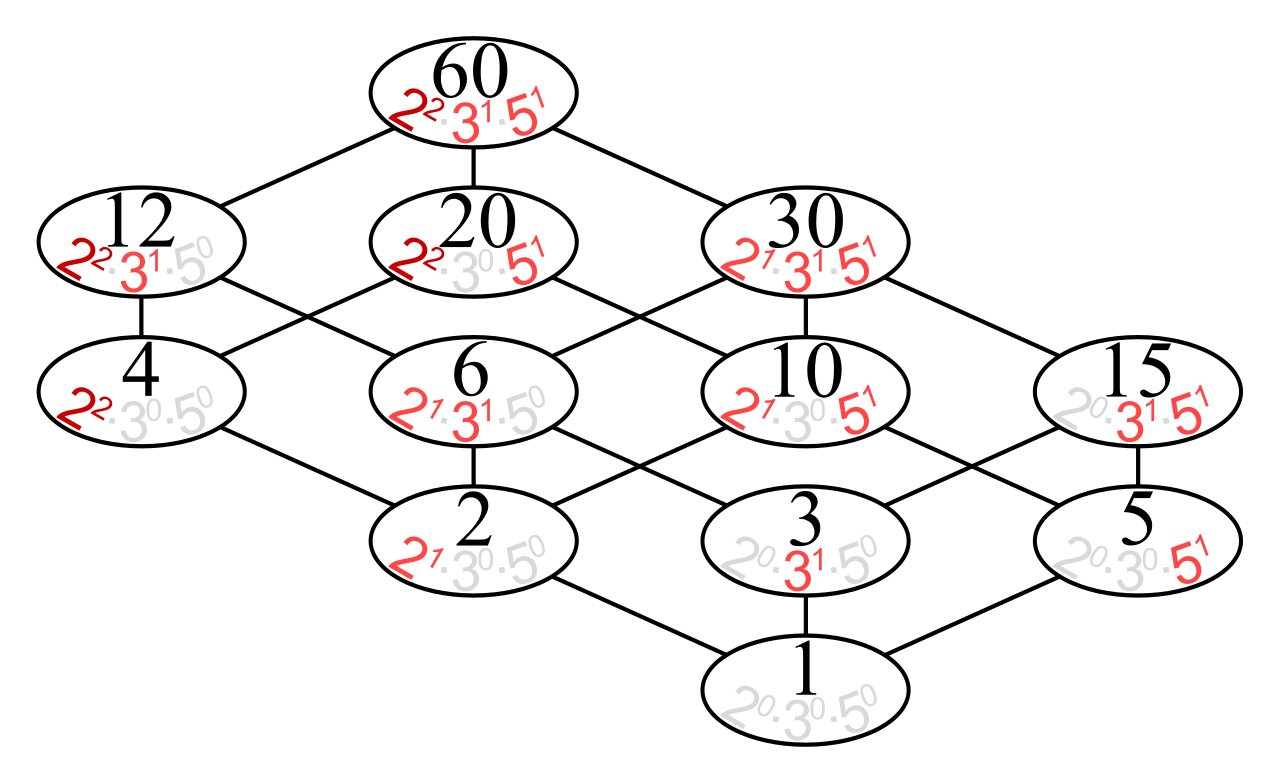
Students often struggle to find all the factors of a number, missing one or two in a long list. Prime factorization gives us a foolproof method to know exactly how many factors exist.
To calculate the total number of positive divisors of an integer, add 1 to each exponent in the integer's prime factorization and calculate the product of those sums.
Why does this work? Think of the prime factors as independent dials on a safe. For 60=22×31×51:
- The "2" dial has 3 settings: use 20, 21, or 22. (Exponent 2+1=3)
- The "3" dial has 2 settings: use 30 or 31. (Exponent 1+1=2)
- The "5" dial has 2 settings: use 50 or 51. (Exponent 1+1=2)
Multiplying these independent choices gives the total combinations: 3×2×2=12. The number 60 has exactly 12 positive divisors. Teaching this combinatorial trick bridges number theory directly to foundational probability and logic.
When teaching rational numbers (fractions), your students' fluency relies entirely on their grasp of factors and multiples. Let us formalize these concepts.
Factor: A factor of an integer is another integer that divides the original integer with a remainder of zero.
Multiple: A multiple of an integer is the product of that integer and any whole number.
Notice the directional relationship: If 3 is a factor of 12, then 12 is a multiple of 3.
The Greatest Common Factor (GCF)
The Greatest Common Factor (GCF) of two integers is the largest positive integer that divides both integers with a remainder of zero.
We use the GCF daily to reduce fractions to their simplest terms. If we want to simplify 6024, we need their GCF. While students can list all factors and look for the largest match, prime factorization offers a rigorous algebraic method:
The Greatest Common Factor (GCF) of two numbers is the product of the lowest power of each common prime factor found in the prime factorizations of the two numbers.
Let's align 24 and 60:
- 24=23×31
- 60=22×31×51
Compare the primes:
- For base 2, the powers are 3 and 2. The lowest is 22.
- For base 3, the powers are 1 and 1. The lowest is 31.
- For base 5, 24 has none (50). The lowest is 50 (which is 1).
The GCF is 22×31=12.

When two numbers share no common prime factors, their GCF is 1. We say two integers are relatively prime if their Greatest Common Factor (GCF) is 1. (For example, 8 and 15 are both composite, but they are relatively prime to each other).

The Least Common Multiple (LCM)
The Least Common Multiple (LCM) of two integers is the smallest positive integer that is a multiple of both integers.
We rely on the LCM to find the lowest common denominator when adding or subtracting fractions. The prime factorization method is the mirror image of the GCF method:
The Least Common Multiple (LCM) of two numbers is the product of the highest power of every prime factor found in the prime factorizations of the two numbers.
Using 24 and 60 again:
- Highest power of 2 is 23.
- Highest power of 3 is 31.
- Highest power of 5 is 51.
The LCM is 23×31×51=8×3×5=120.
The Beautiful Connection
There is a profound, symmetric relationship tying these two measurements together.
For any two positive integers, the product of their Greatest Common Factor (GCF) and their Least Common Multiple (LCM) equals the product of the two integers.
Expressed algebraically: GCF(a,b)×LCM(a,b)=a×b.
Check it with our numbers, 24 and 60:
- GCF=12
- LCM=120
- 12×120=1440
- 24×60=1440
This happens because between the GCF and the LCM, every single prime factor from both numbers is accounted for exactly once. The GCF takes the overlaps; the LCM sweeps up the rest.
When a middle schooler encounters the fraction 234108, they shouldn't immediately reach for a calculator, nor should they blindly guess. Divisibility rules are a form of mathematical x-ray vision. They allow us to peer inside large numbers and instantly recognize their prime factors.
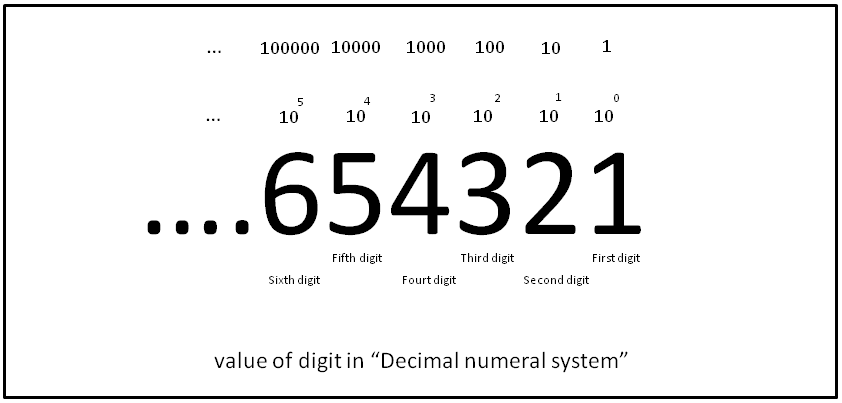
These rules group naturally into logical "families" based on our base-10 number system.
The Powers of 2 Family (2,4,8)
Because 10 is divisible by 2, the last digit of a number tells us everything we need to know about its divisibility by 2. Because 100 is divisible by 4, we look at the last two digits. Because 1000 is divisible by 8, we look at the last three.
- An integer is divisible by 2 if its last digit is an even number. (0,2,4,6,8)
- An integer is divisible by 4 if the two-digit number formed by its last two digits is a multiple of 4. (e.g., in 3,716, the number 16 is a multiple of 4, so 3,716 is divisible by 4.)
- An integer is divisible by 8 if the three-digit number formed by its last three digits is a multiple of 8. (e.g., in 51,024, the number 024 is a multiple of 8).
The Powers of 3 Family (3,9)
These rules work because 10 is one more than a multiple of 3 (and 9). Therefore, place value doesn't change the remainder when dividing by 3 or 9, leaving us to only look at the digits themselves.
- An integer is divisible by 3 if the sum of its digits is a multiple of 3. (e.g., for 108: 1+0+8=9. Since 9 is a multiple of 3, 108 is divisible by 3.)
- An integer is divisible by 9 if the sum of its digits is a multiple of 9. (Using 108 again: 1+0+8=9. Thus, 108 is also divisible by 9.)
The 5 and 10 Family
Since 10 is 2×5, place values from the tens place upward are automatically divisible by 5 and 10. We only care about the ones place.
- An integer is divisible by 5 if its last digit is 0 or 5.
- An integer is divisible by 10 if its last digit is 0.
The Composite Rule (6)
To be divisible by a composite number, an integer must be divisible by its relatively prime factors.
- An integer is divisible by 6 if the integer satisfies the divisibility rules for both 2 and 3. (It must be even, AND its digits must sum to a multiple of 3).
The Alternating Sum (11)
Because 10 is one less than 11, the place values alternate in how they impact divisibility by 11.
- An integer is divisible by 11 if the alternating sum of its digits equals 0 or a multiple of 11. (To calculate the alternating sum, subtract the second digit from the first, add the third, subtract the fourth, and so on. For 2,728: 2−7+2−8=−11, which is a multiple of 11, so 2,728 is divisible by 11.)
Understanding these concepts is not just about passing an exam; it is about recognizing that numbers are not arbitrary collections of digits. They have anatomy. They possess hidden structures that follow unbreakable, elegant laws. Master this anatomy, and you will give your students the tools to see mathematics not as a list of procedures to memorize, but as a logical, interconnected universe.