Quantitative Reasoning and Dimensional Analysis
Not sure you’re ready?
Take the ~3-minute readiness diagnostic and see where you stand.
A pure number is a ghost. When we write 7, it floats untethered to reality. But write 7 meters, and suddenly it has weight, length, and presence. Middle school mathematics marks the crucial cognitive transition where students stop manipulating naked digits and begin reasoning about physical reality. They are no longer just doing arithmetic; they are learning to describe the physical universe using the language of algebra and graphing. When a student learns to track, convert, and interpret units, they are learning how to ensure their mathematical logic holds up in the real world—whether they are calculating the volume of a swimming pool, predicting the stopping distance of a car, or critically analyzing a misleading chart in the news.
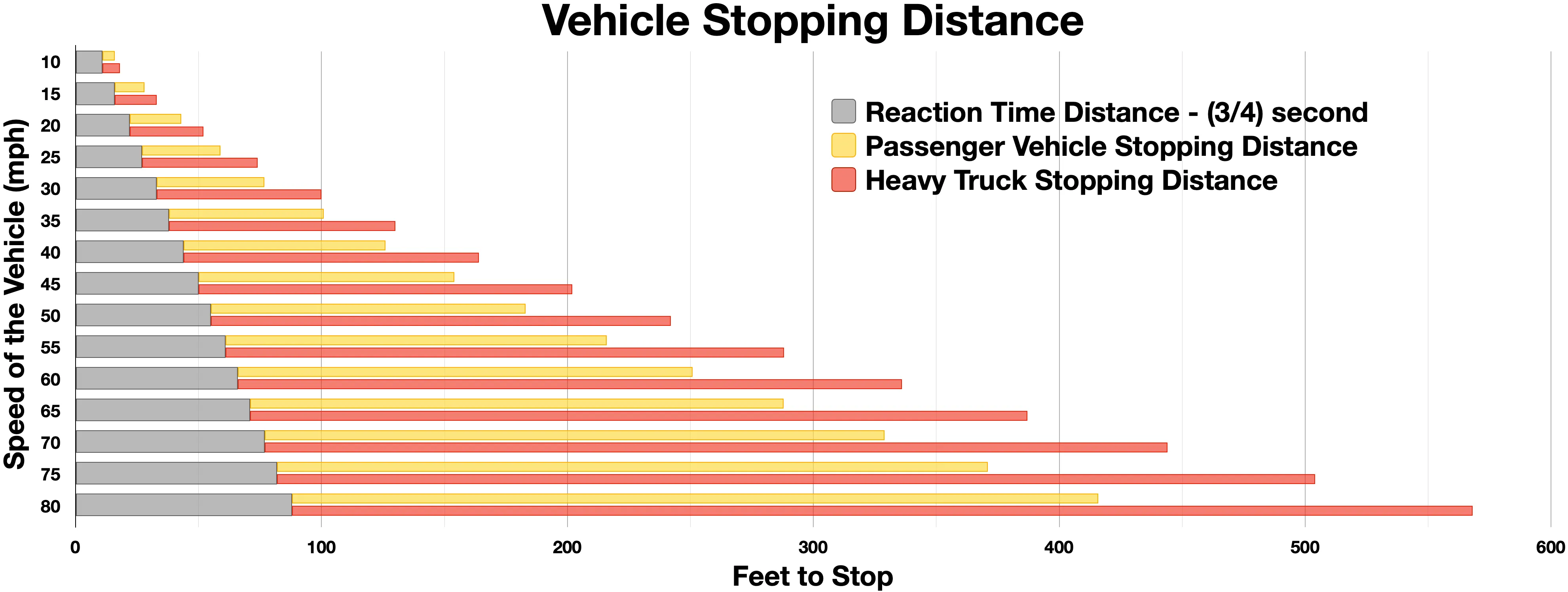
In abstract mathematics, 3+4 is always 7. In quantitative reasoning, 3 apples plus 4 oranges does not make 7 "apple-oranges."
When we combine measurements, the operations we choose dictate strict rules for the units attached to them.
Addition and Subtraction
To add or subtract physical quantities, they must represent the identical type of measurement, calibrated to the exact same scale. Adding quantities requires the quantities to be expressed in the exact same units. If a student is building a shelf and has a board that is 2 meters long, and they cut off 15 centimeters, they cannot simply write 2−15=−13. Subtracting quantities requires the quantities to be expressed in the exact same units. They must first convert the measurements to a common unit (200 cm−15 cm=185 cm).
Multiplication and Division
Multiplication and division are far more permissive but yield a completely different physical reality. When we multiply or divide, we synthesize entirely new concepts.
- Multiplying quantities with different units creates a new derived unit. For example, multiplying a force (pounds) by a distance (feet) creates foot-pounds, a measure of work or torque.
- Dividing quantities with different units creates a new derived unit. Dividing a distance (miles) by a time (hours) creates miles per hour, a rate of speed.
When we multiply identical linear units, we shift dimensions entirely:
- Squaring a linear measurement produces a measurement in square units. (e.g., 5 m×5 m=25 m2, giving us an area).
- Cubing a linear measurement produces a measurement in cubic units. (e.g., 2 cm×2 cm×2 cm=8 cm3, giving us a volume).
Units as Inherent Properties of Variables
In early algebra, a variable like x represents a mystery integer. In applied mathematics, a variable representing a physical measurement in a mathematical formula inherently includes a specific unit.
Crucial Teaching Moment: Consider the physics formula for gravitational potential energy: PE=mgh. Here, g is the acceleration due to gravity, a constant usually given as 9.8 m/s2. Because this constant is anchored in meters and seconds, the mass m must be in kilograms and the height h must be in meters. Substituting values into a formula requires aligning the input units with the units expected by the formula constants.
A graph is a tool for turning quantitative relationships into geometric space. For the graph to be mathematically honest and visually useful, the axes must be constructed with rigor.
Building the Axes
When plotting data, the first decision a student makes is how to number the grid lines. The scale of a graph determines the numerical interval represented by the distance between consecutive tick marks.
To be mathematically sound, a valid coordinate plane axis must maintain a constant numerical interval between equally spaced tick marks. A student cannot label consecutive marks 0,10,20,100,500. The spacing must represent a constant rate of change.
However, the x-axis and the y-axis operate independently. The horizontal axis and the vertical axis on a single graph can use entirely different numerical scales. A scatterplot might show time in years on the horizontal axis (jumping by increments of 1) and national GDP on the vertical axis (jumping by increments of $$$1 Trillion). Ultimately, an appropriate graph scale allows the entire dataset to be plotted within the designated display area without clustering all the data points into an unreadable microscopic corner.
Interpreting Graph Dimensions
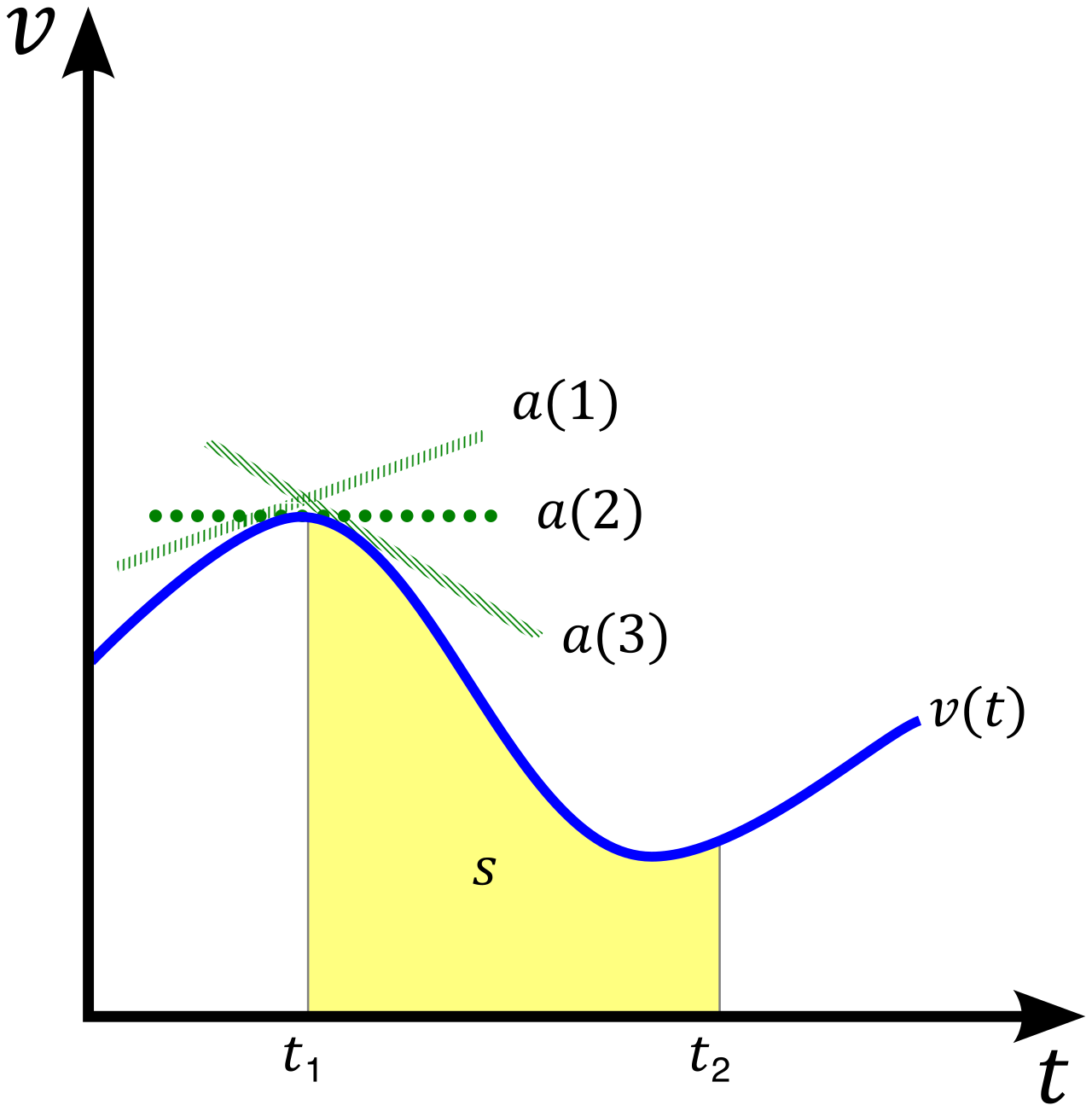
When a graph maps two different units (e.g., Distance in meters on the y-axis, Time in seconds on the x-axis), the geometric properties of the graph take on physical meaning:
- The units of the vertical axis and horizontal axis determine the unit of the slope of a graph. Because slope is the change in y divided by the change in x, the unit of the slope of a graph is calculated by dividing the vertical axis unit by the horizontal axis unit. (In our example: meters divided by seconds, or m/s, representing velocity).
- The units of the vertical axis and horizontal axis determine the unit of the area under a graphed curve. By treating the area under the curve as a series of rectangles (height × width), the unit of the area under a curve is calculated by multiplying the vertical axis unit by the horizontal axis unit.
Visual Manipulation and Misleading Graphs
Because our brains process geometric steepness and height intuitively, graphs can easily be manipulated to lie. Middle school students must be taught to spot these visual tricks:
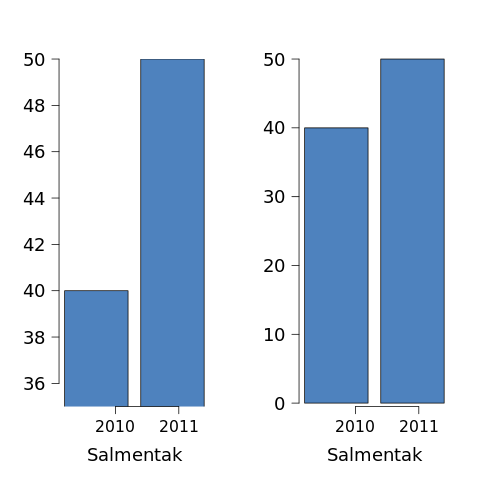
- Changing the numerical scale of an axis alters the visual steepness of a graphed line without changing the mathematical slope. Stretching the y-axis makes a modest growth trend look like an explosive spike, even though the calculated rate of change remains identical.
- A bar graph or line graph that omits the origin on the vertical axis can create a misleading visual comparison. If a company's profits go from \$$98,000 to $99,000,andthey−axisstartsat$$97,000, the bar for the second year will look twice as tall as the first, tricking the viewer into perceiving a 100% increase rather than a roughly 1% increase.
When a physical quantity is expressed in the wrong units for our purposes, we must convert it. Dimensional analysis is a mathematical method used to convert a quantity from one unit of measurement to another.
The fundamental engine of dimensional analysis is the conversion factor, which is a ratio expressing how many of one unit are equal to another unit.
Why are we allowed to multiply a measurement by a conversion factor without changing the underlying physical reality? Because the numerator and denominator of a valid conversion factor represent the exact same physical quantity. For instance, 1 foot and 12 inches represent the exact same span of physical space.
Since any number divided by itself is 1, multiplying any measurement by a valid conversion factor is mathematically equivalent to multiplying the measurement by the number one. The size of the physical object doesn't change; only our description of it changes.
The Algebra of Canceling Units
The secret to dimensional analysis is treating the unit words just like variables (x or y) in algebra. In dimensional analysis calculations, units are treated as algebraic variables.
Because of this, units present in both the numerator and denominator of a dimensional analysis expression cancel each other out algebraically.
If we want to convert 60 inches to feet, we set up the math so the "inches" unit is in the denominator of our conversion factor: 60 inches×(12 inches1 foot)=1260×1 foot=5 feet
Complex Conversions: Rates, Area, and Volume
Students often stumble when converting rates, areas, or volumes because they attempt to use a single linear conversion factor.
- Converting a rate requires applying separate conversion factors for the numerator unit and the denominator unit. To convert $60 \text{ miles/hour}to\text{feet/second}$, you must multiply by a factor to cancel "miles" (turning them into feet) and a completely separate sequence of factors to cancel "hours" (turning them into seconds).
- Converting an area measurement requires applying a linear conversion factor twice. A square yard is 1 yard×1 yard. Since 1 yard is 3 feet, the area is (3 feet)×(3 feet)=9 square feet. You do not multiply by 3; you multiply by 32.
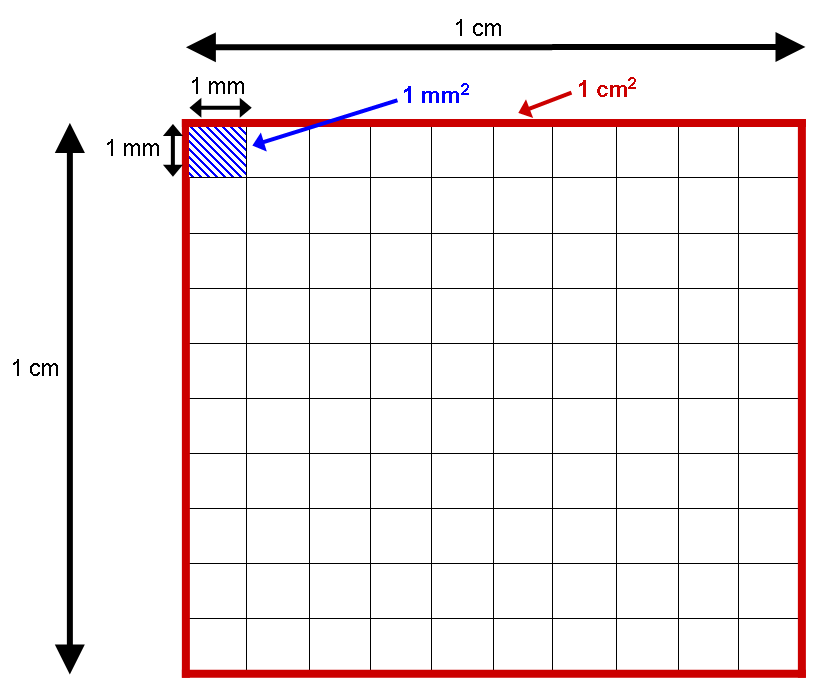
- Converting a volume measurement requires applying a linear conversion factor three times. A cubic yard is (3 feet)×(3 feet)×(3 feet)=27 cubic feet.
To execute dimensional analysis effectively, middle school teachers and students must have immediate recall of fundamental conversion constants across both Customary and Metric systems.
The Customary System
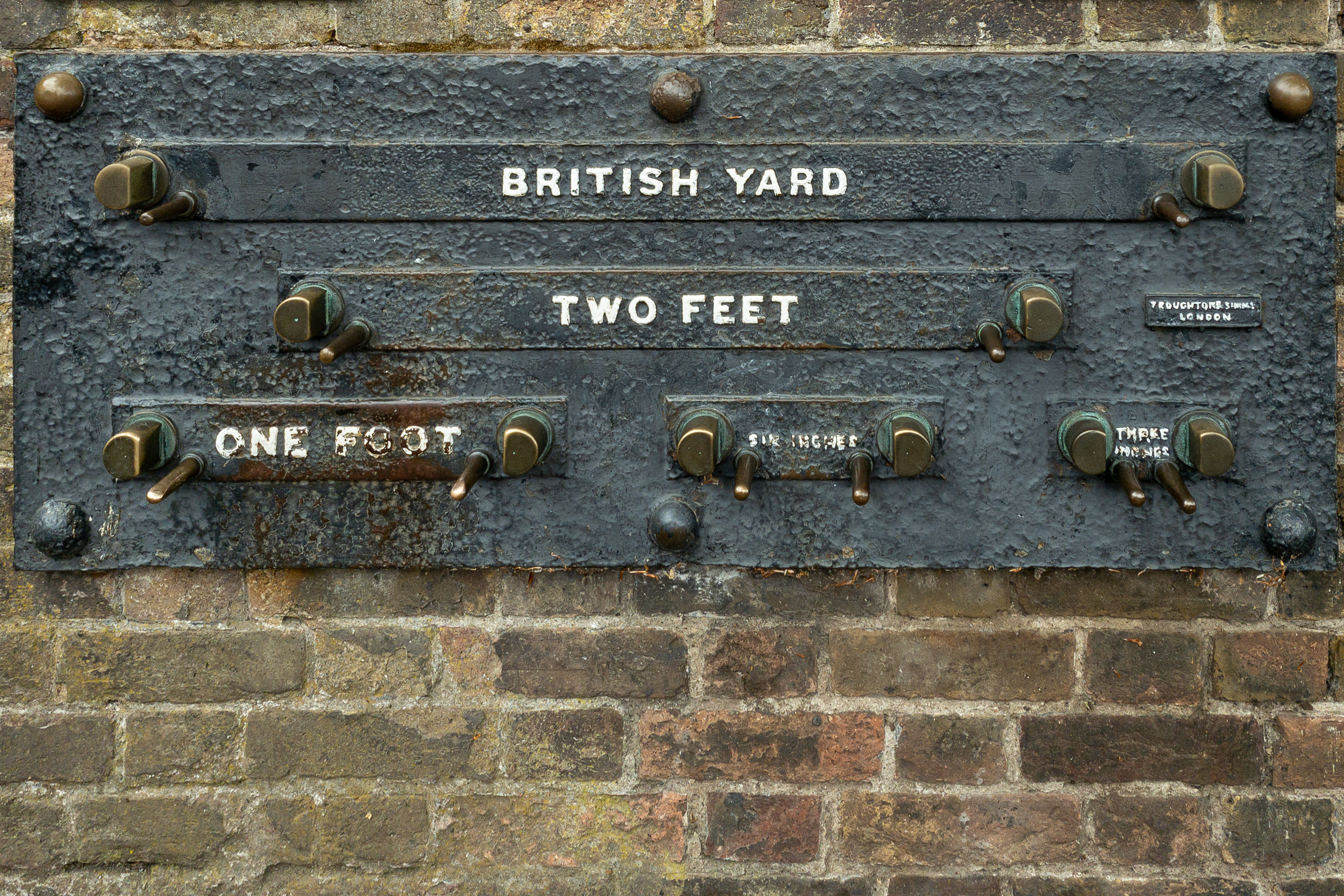
The U.S. Customary System is historically based on physical artifacts and human proportions.
| Dimension | Customary Fact |
|---|---|
| Length | One foot is equal to exactly 12 inches. |
| Length | One yard is equal to exactly 3 feet. |
| Length | One mile is equal to exactly 5280 feet. |
Time
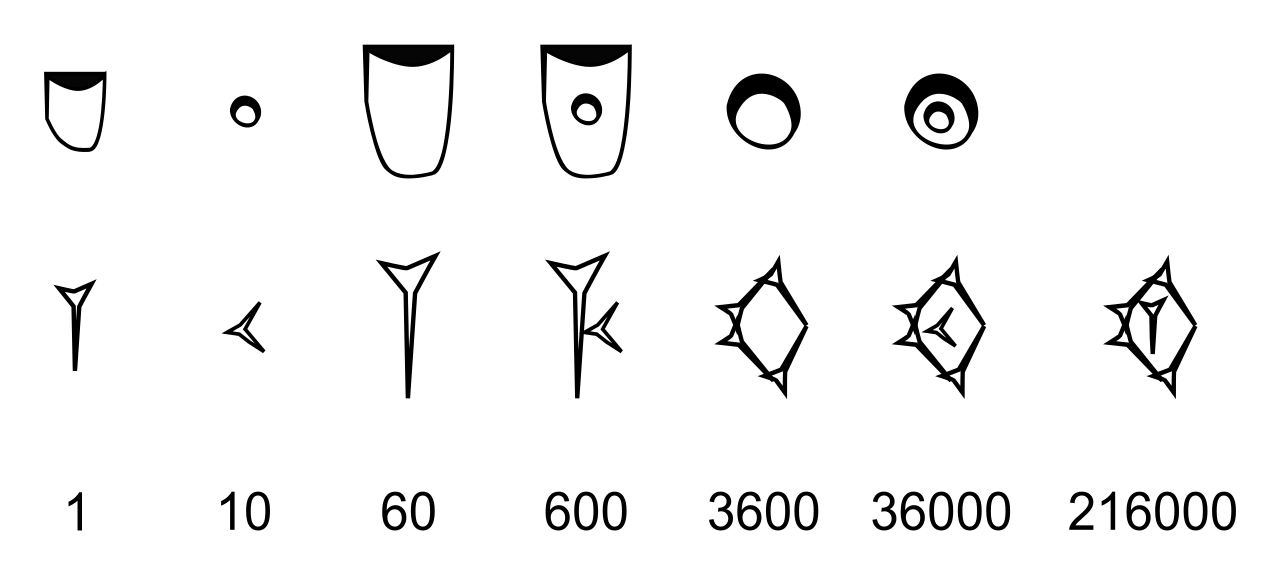
Time remains standard regardless of geographic location, operating on a base-60 system inherited from the ancient Sumerians.
| Dimension | Time Fact |
|---|---|
| Time | One minute is equal to exactly 60 seconds. |
| Time | One hour is equal to exactly 60 minutes. |
| Time | One hour is equal to exactly 3600 seconds. (Derived from 60×60) |
The Metric System (SI)
Unlike the Customary system, the metric system uses a base-10 mathematical structure to convert between units of the same type. This allows for seamless scaling simply by moving a decimal point, guided by specific prefixes.
Core Metric Prefixes:
- The metric prefix kilo multiplies a base unit by 1000.
- The metric prefix centi multiplies a base unit by 0.01. (Think of a cent, which is 0.01 of a dollar).
- The metric prefix milli multiplies a base unit by 0.001.
Applying the Prefixes:
- Length: Because of the "kilo" prefix, one kilometer is equal to exactly 1000 meters.
- Length: Because of the "centi" prefix, one meter is equal to exactly 100 centimeters.
- Mass: Because of the "kilo" prefix, one kilogram is equal to exactly 1000 grams.
Bridging the Systems
To translate between the Customary and Metric systems for length, mathematics relies on one exact, internationally agreed-upon bridge:
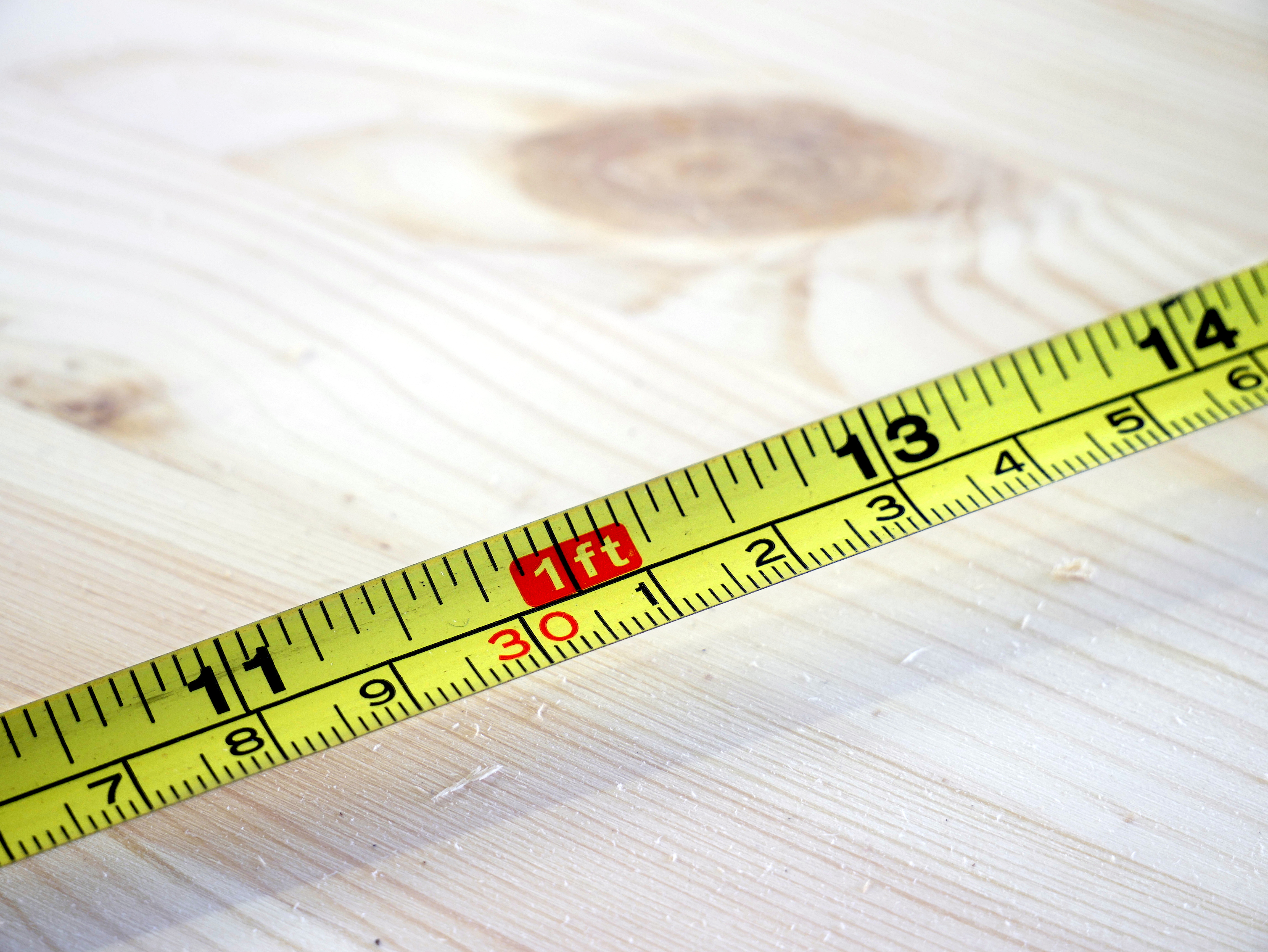
- One inch is exactly equal to 2.54 centimeters.
By mastering how units behave algebraically and geometrically, you equip your students with a profound superpower: the ability to verify the truth of their mathematical modeling simply by watching how the units cancel, combine, and resolve. When the units make physical sense, the math is telling the truth.