Surface Area and Volume of Solids
Not sure you’re ready?
Take the ~3-minute readiness diagnostic and see where you stand.
A three-dimensional solid is, fundamentally, a geometric figure that has length, width, and depth. When we study these physical objects—whether evaluating the capacity of a grain silo or determining the amount of cardboard needed to manufacture a shipping box—we are interrogating two distinct properties: the space the object occupies and the extent of the boundary enclosing it. Volume is the measure of the amount of three-dimensional space enclosed by a solid boundary. The total surface area of a solid is the sum of the areas of all its exterior two-dimensional faces.

To teach this effectively to middle school students is not merely to offer a catalog of formulas; it is to build an intuition for how two-dimensional nets fold into three-dimensional forms, how a cone is mathematically just a fraction of a cylinder, and how scaling an object’s dimensions bends its physical properties in strictly predictable, non-linear ways.
Before calculating the volume of a solid, a student must be able to visualize its "skin."
A net is a two-dimensional pattern that can be folded to form a three-dimensional solid. Conceptually, if you take a cardboard box and cut along its edges to lay it perfectly flat, you have created its net. Because matter is neither created nor destroyed in this un-folding process, the surface area of a solid is equal to the total area of its corresponding two-dimensional net.
When calculating area, we must distinguish between two types:
- Total Surface Area: The entirety of the solid's exterior.
- Lateral Surface Area: The total surface area excluding the area of the base or bases. Think of this as the "walls" of a room without the floor or the ceiling.
Prisms and cylinders share a fundamental architectural trait: they maintain a uniform cross-section from bottom to top.
Prisms
A prism is a polyhedron with two congruent, parallel bases connected by rectangular or parallelogram lateral faces. The shape of the base gives the prism its specific name.
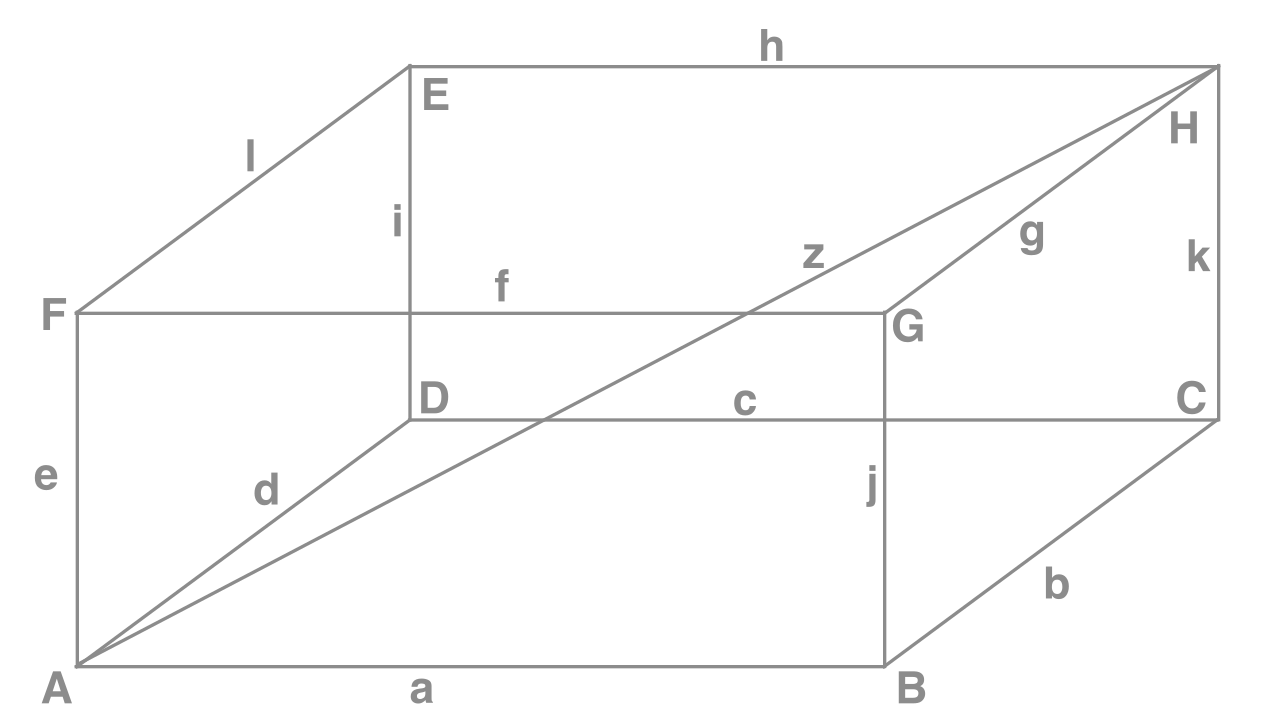
Because the cross-section never changes, the volume of a prism is calculated by multiplying the area of its base by its height.
Prism Volume Formula: V=Bh (Where B is the area of the base and h is the height).
To find the area covering a right prism, we look at its net. The lateral area of a right prism is calculated by multiplying the perimeter of the base by the height of the prism (L=Ph). Therefore, the total surface area of a prism is calculated by adding the lateral area to the areas of the two bases (SA=L+2B).
Let us examine specific prisms:
- Rectangular Prisms: A rectangular prism has exactly six rectangular faces. Consequently, the net of a rectangular prism consists of six rectangles.
- Cubes: A cube is a special rectangular prism in which all six faces are congruent squares. The net is composed of six identical squares. Because every side length s is the same, the volume of a cube with side length s is calculated using the formula V=s3, and the surface area of a cube with side length s is calculated using the formula SA=6s2.
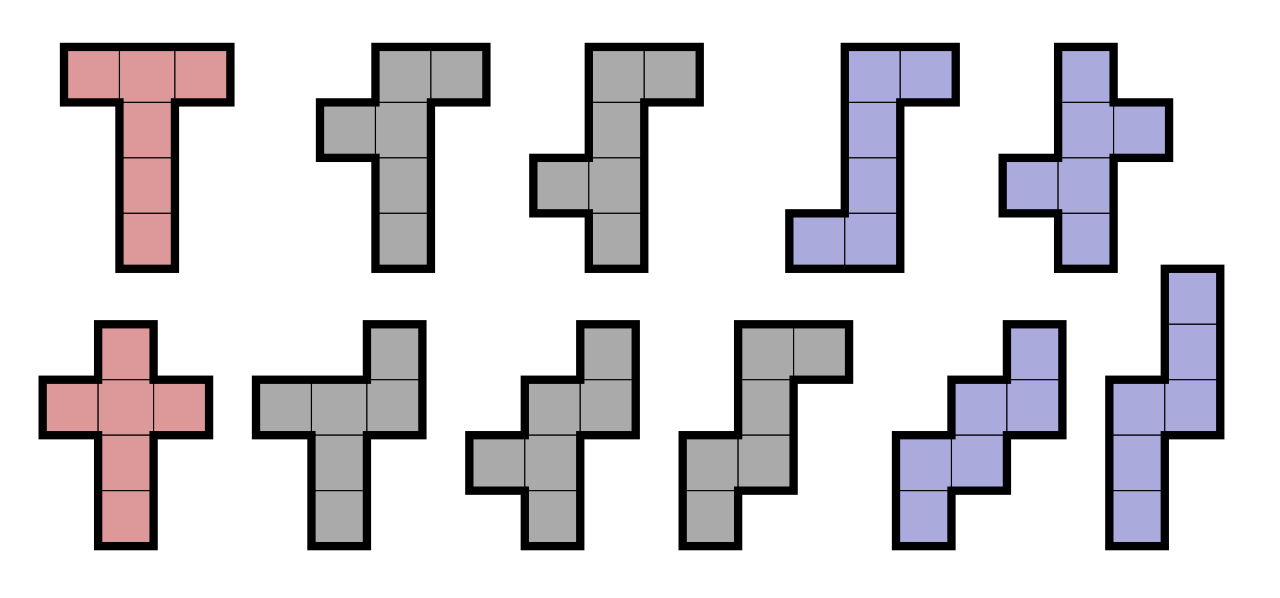
- Triangular Prisms: If you unroll a Toblerone box, you will find that the net of a triangular prism consists of two triangles (the bases) and three rectangles (the lateral faces).
Cylinders
Take a prism, increase the number of sides on its base to infinity, and you arrive at a cylinder. A cylinder is a solid with two congruent, parallel circular bases connected by a curved surface.
Because it behaves like a circular prism, the formula for the volume of a cylinder is V=πr2h, where r is the radius of the base and h is the height.
The net of a cylinder is an exquisite teaching tool. The two-dimensional net of a right cylinder consists of two circles and one rectangle. The critical insight for students is understanding the dimensions of that rectangle. In the net of a cylinder, the length of the rectangular piece is exactly equal to the circumference of the circular base (2πr).
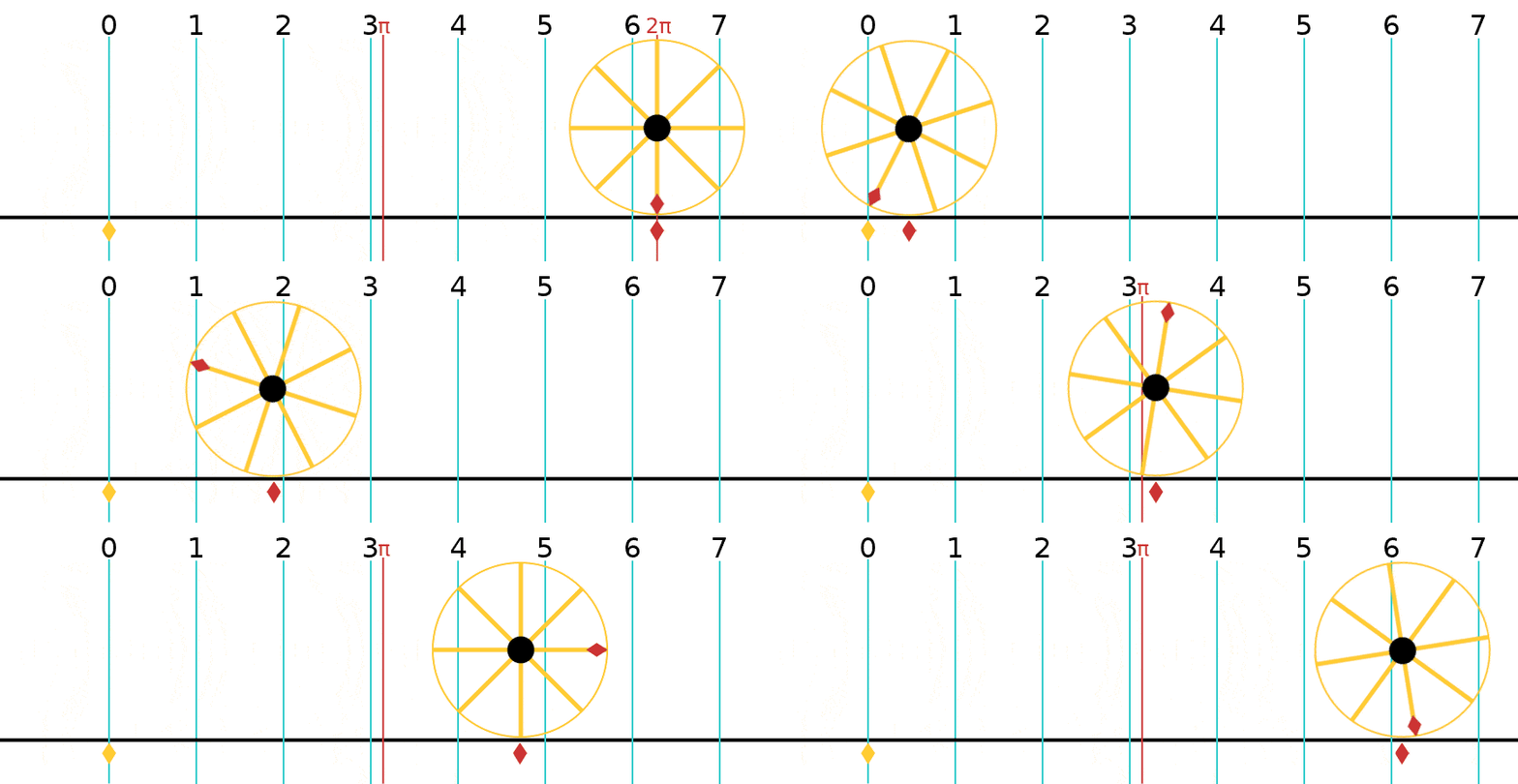
Cylinder Surface Area Formulas:
- Lateral Surface Area: L=2πrh (the area of the unwrapped rectangle)
- Total Surface Area: SA=2πr2+2πrh (the two circular bases plus the lateral area)
When a solid tapers to a single point, its relationship to volume and area fundamentally changes.
Pyramids
A pyramid is a polyhedron with a single polygonal base and triangular lateral faces that meet at a common vertex. For instance, the net of a square pyramid consists of one square and four triangles.
When analyzing pyramids, students must distinguish between two different heights:
- Height (h): The perpendicular distance from the base to the apex. This is used for volume.
- Slant Height (l): The altitude of one of the triangular lateral faces. This is used for surface area.
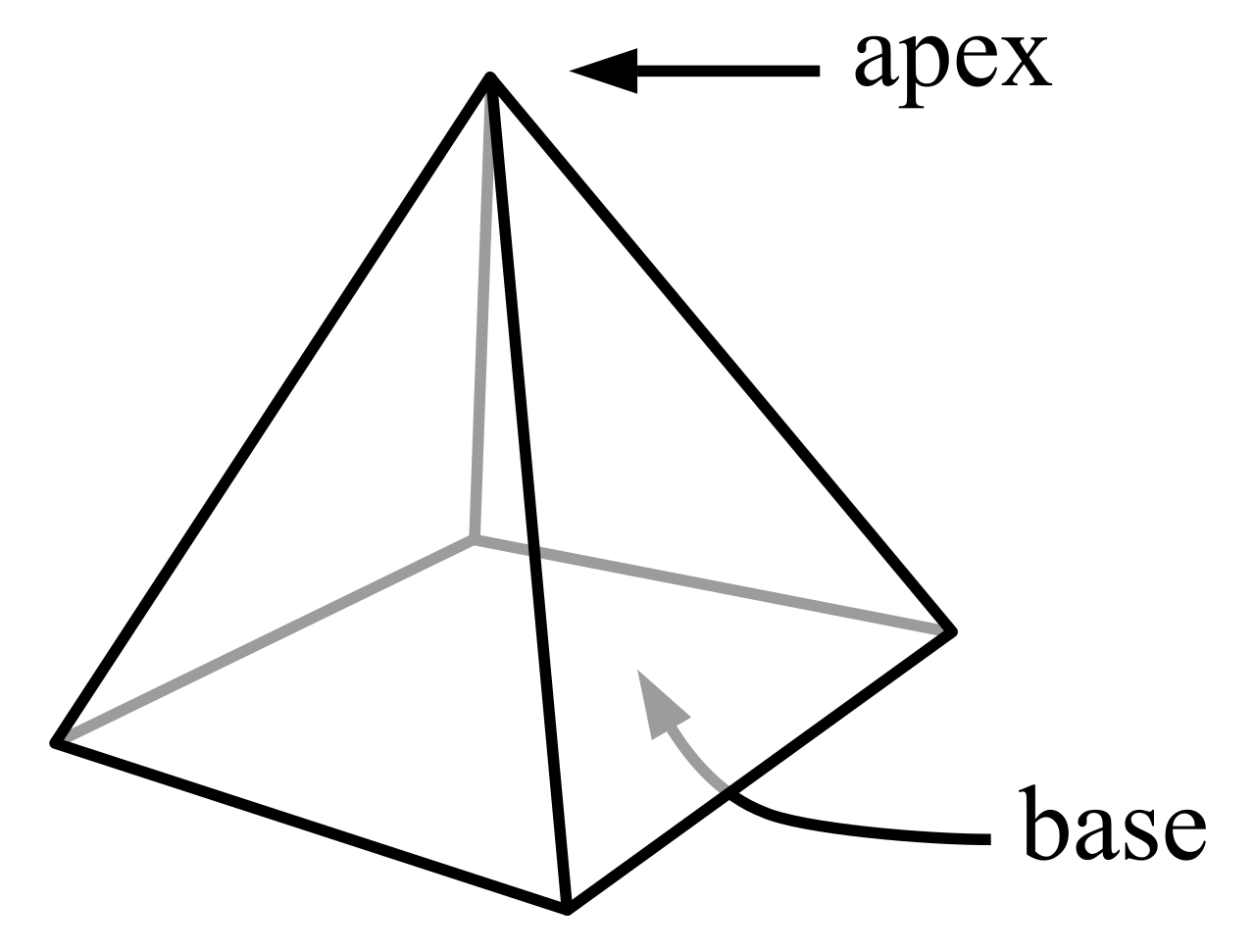
The lateral surface area of a regular pyramid is calculated by multiplying half the base perimeter by the slant height (L=21Pl). The total surface area of a pyramid is simply the sum of the area of the base and the areas of all triangular lateral faces.
For volume, a beautifully counter-intuitive reality emerges: the volume of a pyramid is exactly one-third the volume of a prism with the same base area and height.
Pyramid Volume Formula: V=31Bh
Cones
A cone is a solid with a single circular base and a curved surface that meets at an apex. Like a cylinder, unrolling a cone yields a distinct shape: the net of a cone consists of a full circle (the base) and a circular sector (the unrolled lateral surface).
As with pyramids, the slant height of a cone is the distance from the edge of the circular base to the apex along the curved surface.
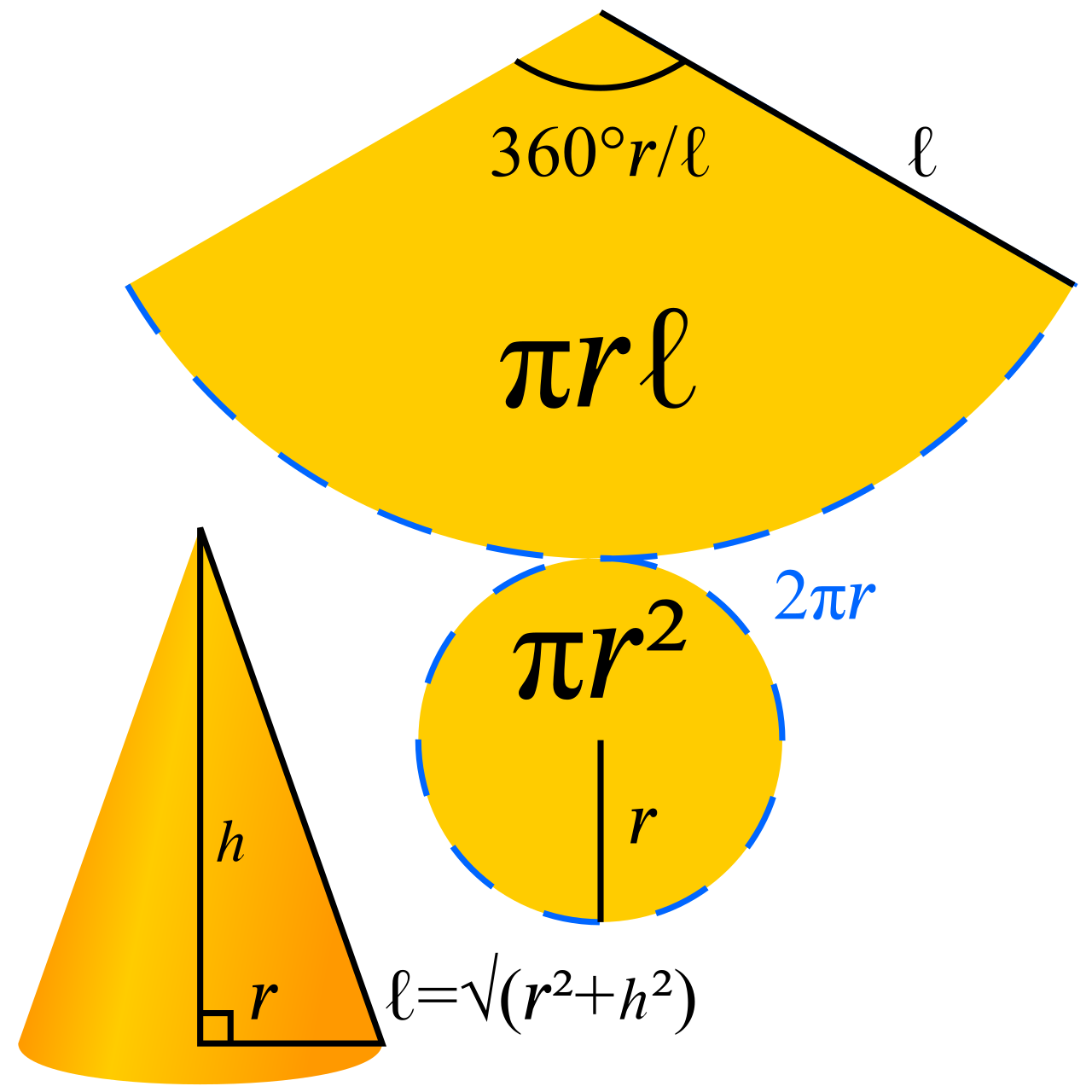
Cone Formulas:
- Lateral Surface Area: L=πrl (where l is slant height)
- Total Surface Area: SA=πr2+πrl
Volume follows the exact same logical reduction as the pyramid. The volume of a cone is exactly one-third the volume of a cylinder with the same base radius and height.
Cone Volume Formula: V=31πr2h
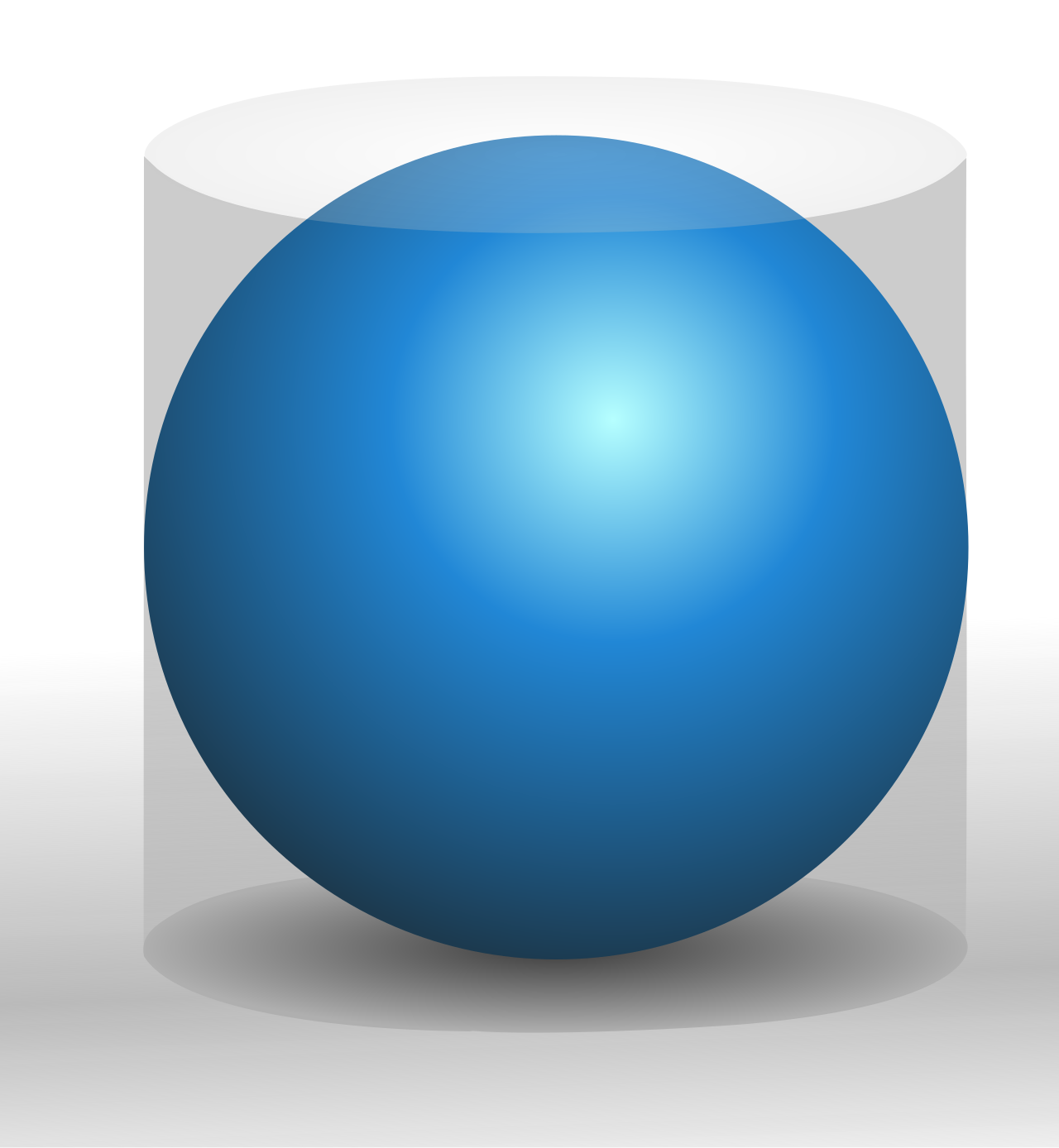
A sphere is the set of all points in three-dimensional space that are a given distance from a center point. It has no edges, no flat faces, and cannot be perfectly mapped with a 2D flat net.
Sphere Formulas:
- Volume: V=34πr3
- Surface Area: SA=4πr2
Hemispheres
A hemisphere is created by dividing a sphere exactly in half using a plane through the sphere's center. Because it is precisely half, the volume of a hemisphere is calculated using the formula V=32πr3.
However, surface area introduces a classic trap. Cutting the sphere in half creates a new boundary. The total surface area of a solid hemisphere includes the curved surface area AND the area of the newly exposed circular base. Half of the spherical skin is 2πr2, and the new flat circular base is πr2.
Total Surface Area of a Solid Hemisphere: SA=3πr2
Real-world objects are rarely perfect spheres or immaculate prisms; they are combinations. A composite solid is a three-dimensional figure made up of two or more simpler geometric solids (like a cylindrical silo topped with a hemispherical roof).
Volume is strictly additive (or subtractive). The volume of a composite solid is the sum of the volumes of its distinct non-overlapping component solids. Conversely, the volume of a composite solid with a removed section is found by subtracting the volume of the removed section from the overall solid's volume.
Surface area requires the "Paint Test." Imagine dipping the entire composite solid into a vat of paint. The surface area of a composite solid includes only the exterior surfaces exposed to the outside environment. Therefore, when calculating the surface area of a composite solid, the hidden faces where the component shapes meet must be excluded from the total. If a cone sits perfectly on top of a cylinder, the circular base of the cone and the top circular face of the cylinder are "glued" together. Neither gets painted; neither is included in the surface area.
When analyzing how structures scale, our intuition often betrays us. We naturally assume that doubling the height of a tank will double its capacity—but what happens if we double all of its dimensions?
Similar solids are three-dimensional figures that have the exact same shape. However, similar solids are not required to have the same size. In similar solids, the ratio of corresponding linear dimensions is called the scale factor, commonly denoted as k.
Here is the master rule of dimensional scaling:
- If the dimensions of a solid are multiplied by a scale factor of k, all corresponding one-dimensional lengths (radius, height, perimeter, slant height) are multiplied by k.
- If the dimensions of a solid are multiplied by a scale factor of k, the surface area is multiplied by k2. Area is two-dimensional (k×k).
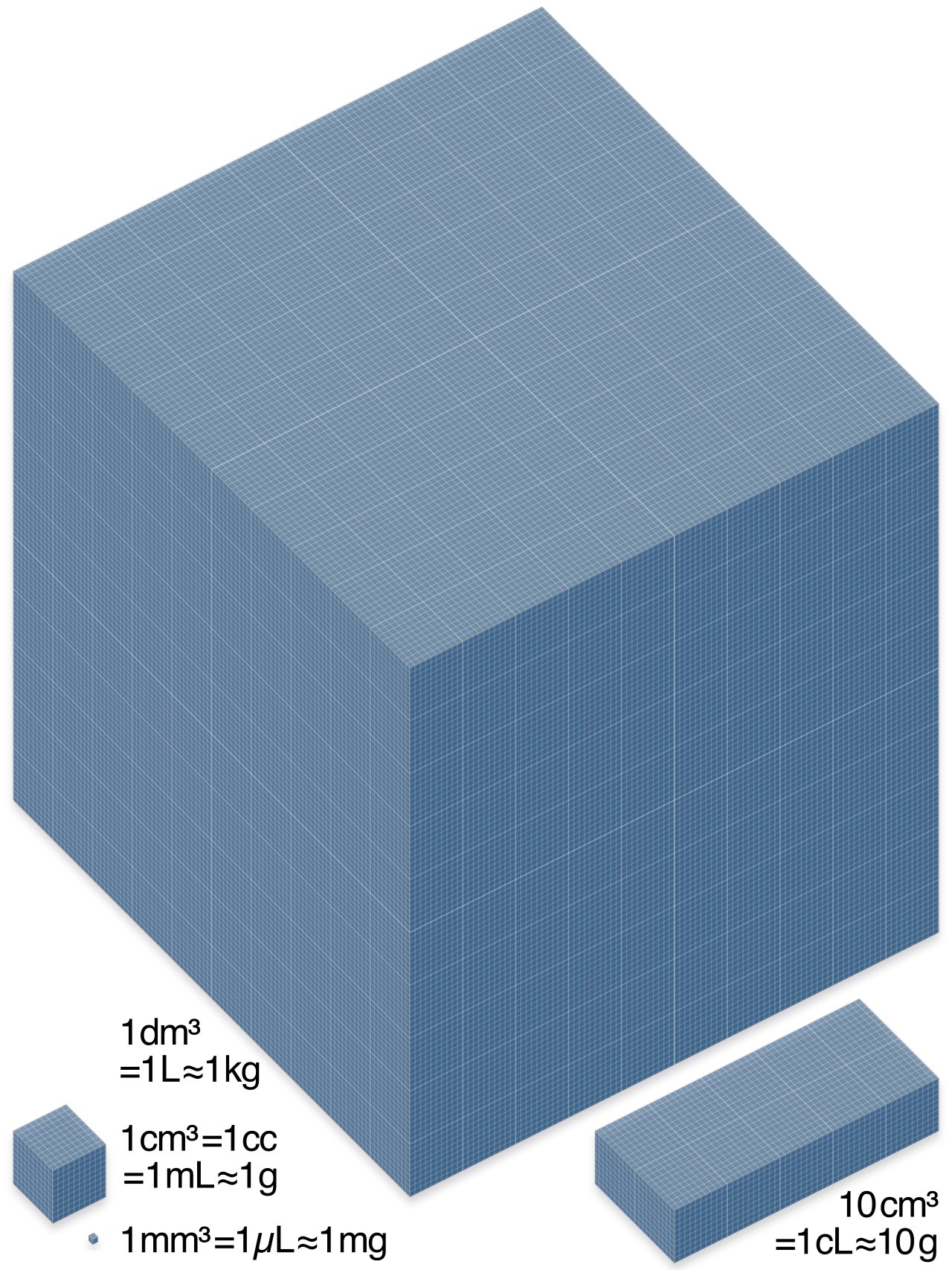
- If the dimensions of a solid are multiplied by a scale factor of k, the volume is multiplied by k3. Volume is three-dimensional (k×k×k).
Practical Application of the Master Rule
If a middle school problem asks what happens when a toy block is scaled up:
- Doubling all dimensions (k=2) of a three-dimensional solid increases the total surface area by a factor of four (22=4).
- Doubling all dimensions of a three-dimensional solid increases the volume by a factor of eight (23=8).
Partial Scaling
Be fiercely attentive to questions that scale some dimensions but not others. The rules change entirely:
- Changing only one dimension of a rectangular prism by a scale factor of k changes the volume by that exact same scale factor of k. (e.g., If V=l⋅w⋅h, doubling just the height gives Vnew=l⋅w⋅(2h)=2(lwh)).
- Changing the radius of a cylinder by a scale factor of k changes the volume by a factor of k2, assuming the height remains constant. Because the formula is V=πr2h, scaling r to (kr) results in π(kr)2h=k2(πr2h).
As an educator, emphasizing where the scaling factor sits within the formula guarantees that your students will understand both the geometric algebra and the real-world spatial reasoning required to succeed.