Systems of Measurement
Not sure you’re ready?
Take the ~3-minute readiness diagnostic and see where you stand.
To measure the physical universe is to translate continuous reality into discrete numerical values. When you teach a middle school student how to measure, you are not merely giving them a list of vocabulary words; you are teaching them how to assign scale, magnitude, and proportion to the space they occupy. As educators preparing for the Praxis (5164): Middle School Mathematics exam, mastering measurement systems is not just an exercise in rote memorization. It requires understanding the architectural logic beneath both the metric and US customary systems, recognizing how units behave algebraically, and anticipating the profound conceptual leaps your students must make when moving from a one-dimensional line to two-dimensional space and three-dimensional volume.
The bedrock of this topic lies in internalizing the standard conversions, but its power is unleashed when we understand the structural mechanics of how these systems operate.
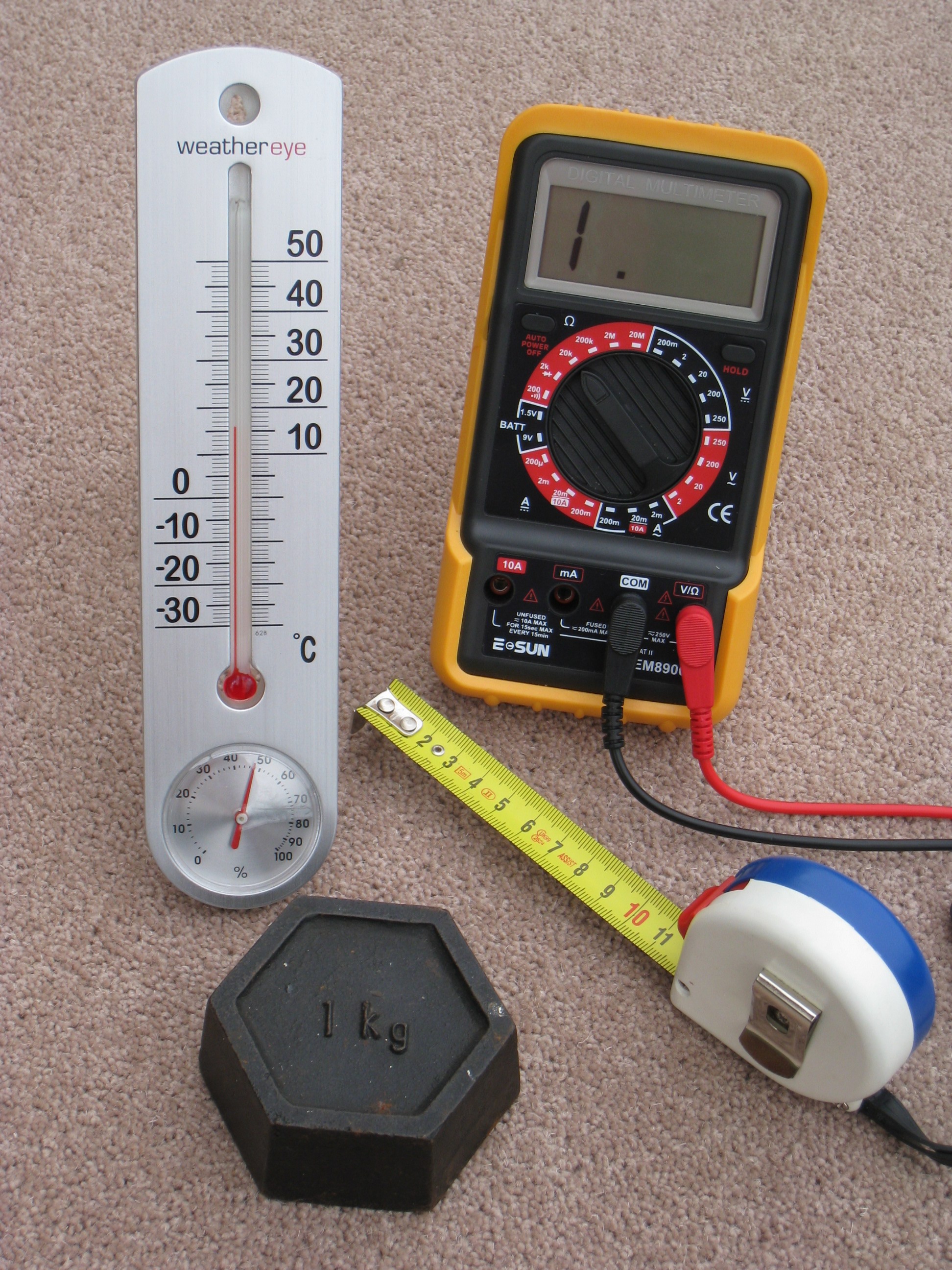
Before performing any mathematical conversion, the physicist—and the middle school student—must look at the physical object and ask: What is the appropriate magnitude of measurement? The choice of a measurement unit must align with the magnitude of the object or distance being measured. If the unit is too large, the decimal becomes awkwardly small; if the unit is too small, the integer becomes incomprehensibly large.
Consider how this applies across dimensions:
- Length: Small units of length like millimeters or inches are appropriate for measuring small items such as insects or paperclips. Conversely, large units of length like kilometers or miles are appropriate for measuring geographic distances between cities.
- Mass and Weight: Kilograms or pounds are appropriate units for measuring the mass or weight of adult humans. But if a student were measuring the mass of a very light object, milligrams or dry ounces are appropriate units for measuring the mass or weight of very light objects like a single coin.
- Volume: To measure the capacity of a large reservoir, liters or gallons are appropriate units for measuring the volume of large liquid containers like bathtubs. In contrast, precision is required at smaller scales; milliliters or fluid ounces are appropriate units for measuring small liquid volumes such as medicine doses.
Helping students select the right unit establishes spatial reasoning. Once they can visualize the unit, they can begin translating between them.
The metric system is a base-10 measurement system. Because our number system is also base-10, metric conversions require no complex arithmetic—only the shifting of a decimal point.
The foundation rests on three primary anchors:
- The meter is the base unit of length in the International System of Units.
- The gram is the primary unit of mass in the metric system.
- The liter is a fundamental metric unit of volume.
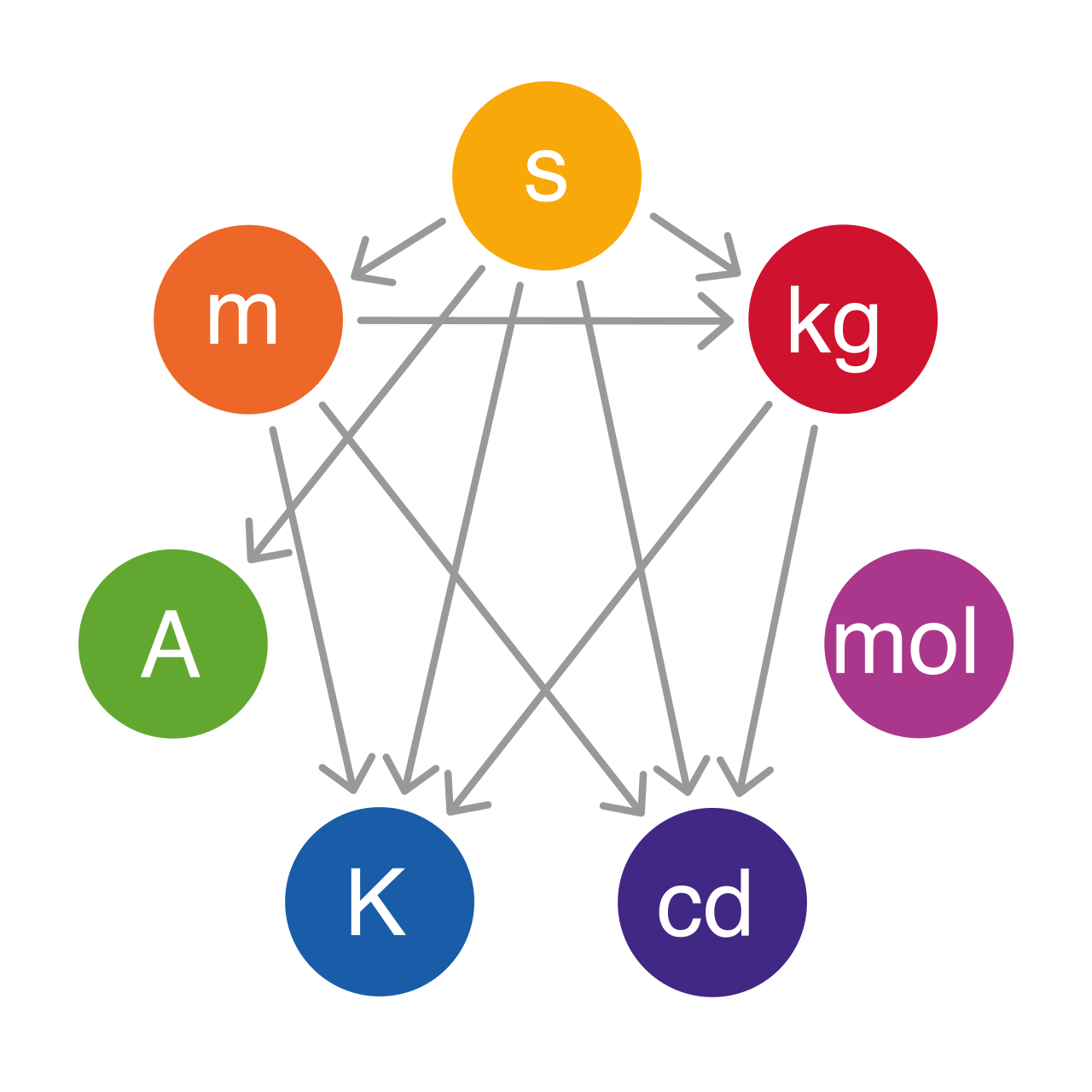
The brilliance of the metric system is its use of universal prefixes that apply uniformly to length, mass, and volume. These prefixes dictate magnitude:
- The metric prefix kilo- denotes one thousand times a given base unit.
- The metric prefix hecto- denotes one hundred times a given base unit.
- The metric prefix deca- denotes ten times a given base unit.
- The metric prefix deci- denotes one-tenth of a given base unit.
- The metric prefix centi- denotes one-hundredth of a given base unit.
- The metric prefix milli- denotes one-thousandth of a given base unit.
Metric Conversion Mechanics
Because of this base-10 structure, converting from a larger metric unit to a smaller metric unit requires multiplying the quantity by a power of 10. You are essentially asking, "How many tiny pieces fit inside this large piece?" By contrast, converting from a smaller metric unit to a larger metric unit requires dividing the quantity by a power of 10.
Let us look at the standard factual benchmarks you must know for the exam:
- Length: 1 kilometer equals 1,000 meters. Stepping down further, 1 meter equals 100 centimeters, and 1 meter equals 1,000 millimeters. Drilling down to the smallest standard unit, 1 centimeter equals 10 millimeters.
- Mass: 1 kilogram equals 1,000 grams, and 1 gram equals 1,000 milligrams. For industrial scales, 1 metric tonne equals 1,000 kilograms.
- Volume: 1 liter equals 1,000 milliliters.
The Perfect Symmetry of Water
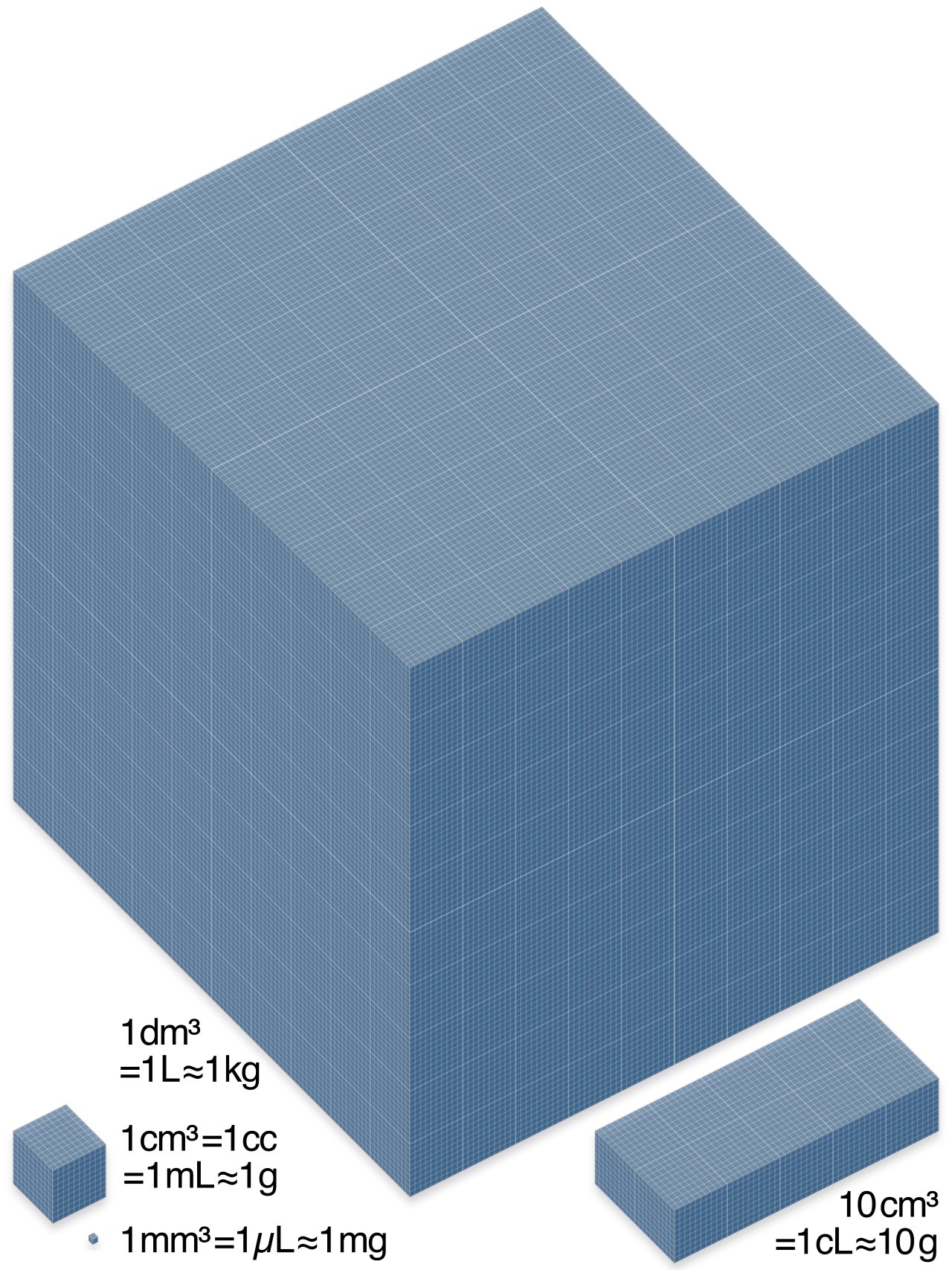
The metric system features a beautiful, engineered symmetry linking length, volume, and mass, centered entirely around pure water. First, length and volume are tied together: 1 milliliter of liquid volume is exactly equivalent to 1 cubic centimeter of space (1 mL=1 cm3). Next, volume and mass are tied together via water's density: 1 milliliter of pure liquid water has a mass of exactly 1 gram at standard temperature and pressure. Scale this up by a factor of one thousand, and the elegance continues: 1 liter of pure liquid water has a mass of exactly 1 kilogram at standard temperature and pressure.
While the metric system is engineered for calculation, the US Customary system evolved organically from human proportions and historical trade. It lacks a uniform base, making conversions highly specific.
Customary Length
- 1 foot equals 12 inches.
- 1 yard equals 3 feet, which inevitably means 1 yard equals 36 inches.
- For vast distances, 1 mile equals 5,280 feet, which is equivalent to saying 1 mile equals 1,760 yards.
Customary Weight and Volume
Unlike the metric system, where mass (grams) and volume (liters) are distinctly named, the US system uses "ounces" for both weight (dry) and volume (fluid).
- Weight: 1 pound equals 16 ounces. On a massive scale, 1 US short ton equals 2,000 pounds.
- Fluid Volume: The hierarchy of US volume doubles its way up to a gallon.
- 1 US fluid cup equals 8 fluid ounces.
- 1 US fluid pint equals 2 cups.
- 1 US fluid quart equals 2 pints.
- 1 US fluid gallon equals 4 quarts.
- Consequently, multiplying these factors (8×2×2×4), 1 US fluid gallon equals 128 fluid ounces.
Time
Time measurement transcends the metric/US divide, tracing its roots to ancient Sumerian and Babylonian base-60 mathematics. Therefore, time conversions require multiplying or dividing by appropriate base-60 or base-24 conversion factors.
- 1 minute equals 60 seconds.
- 1 hour equals 60 minutes.
- 1 day equals 24 hours.
- 1 week equals 7 days.
- Annually, a standard calendar year contains 365 days, while to account for orbital drift, a leap year contains 366 days.
Temperature
Temperature anchors itself on the phase changes of fresh water.
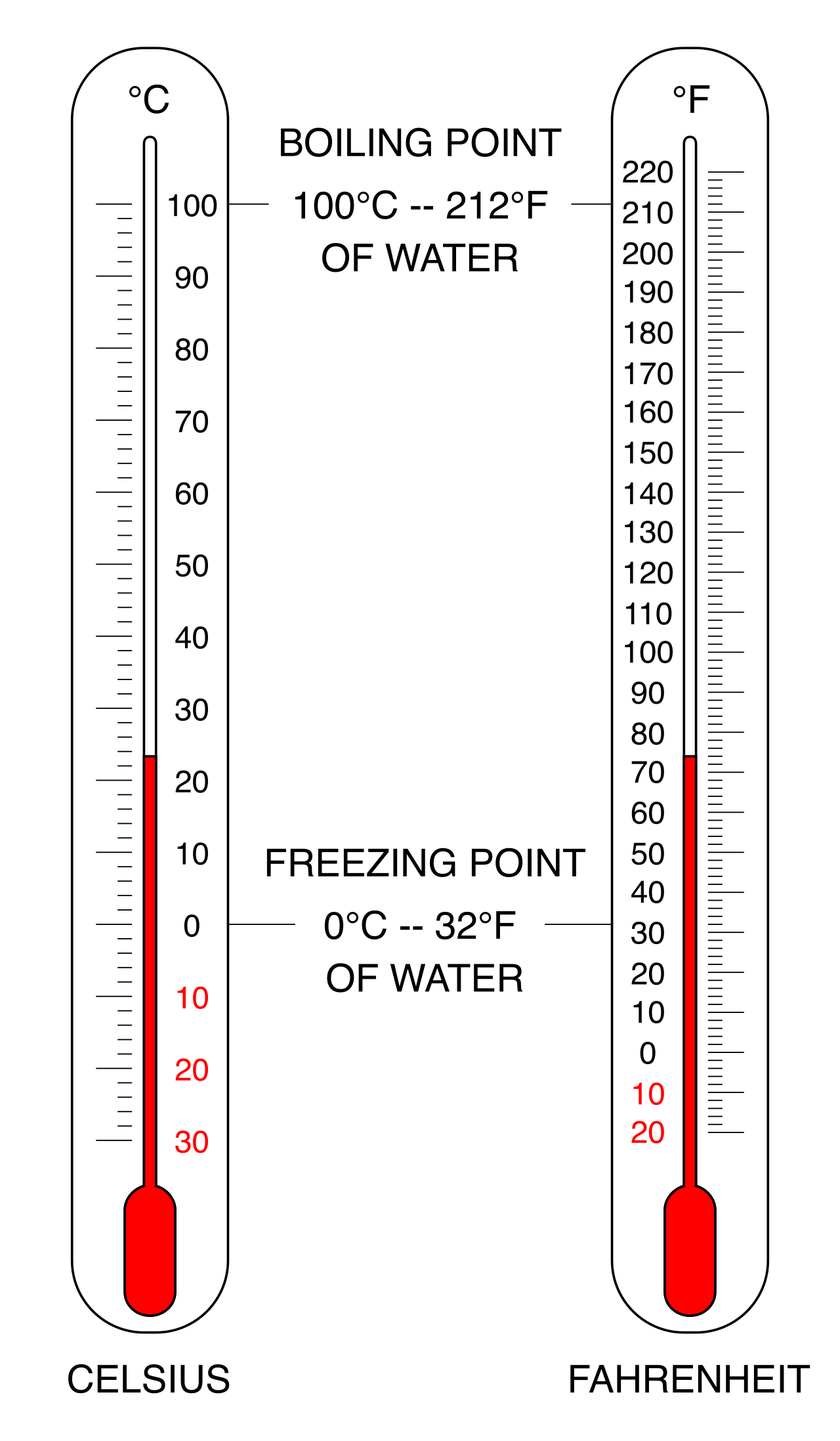
- The freezing point of fresh water is exactly 32 degrees Fahrenheit and exactly 0 degrees Celsius.
- The boiling point of fresh water is exactly 212 degrees Fahrenheit at sea level and exactly 100 degrees Celsius at sea level.
To map the 180-degree span of the Fahrenheit scale (32 to 212) onto the 100-degree span of the Celsius scale (0 to 100), we use a ratio of 100/180, which simplifies to 5/9.
- The formula to convert a Fahrenheit temperature to Celsius is C=(5/9)×(F−32).
- The formula to convert a Celsius temperature to Fahrenheit is F=(9/5)×C+32.
Students often ask, "Do I multiply or divide?" This question reveals a fundamental misunderstanding. As an educator, you must shift their paradigm from guessing operations to tracking units. The definitive tool for this is dimensional analysis.
Dimensional analysis is a mathematical method that utilizes conversion factors as ratios equal to one. Because 12 inches=1 foot, the fraction 1 foot12 inches has a mathematical value of exactly 1. Multiplying a measurement by 1 changes its numerical face without changing its physical reality.
A conversion factor ratio is constructed with the desired target unit in the numerator and the initial unit to be canceled in the denominator. Crucially, measurement units in dimensional analysis cancel out algebraically exactly like numerical values.
Example: Convert 5 miles to feet. 5 miles×(1 mile5,280 feet) The "mile" in the numerator and denominator cancel algebraically. You are left with 5×5,280 feet=26,400 feet.
This method bridges the gap between systems seamlessly.
When operating across the metric and customary divide, the exam will require you to navigate both exact definitions and accepted approximations.
The single most important anchor across the systems is length: 1 inch is exactly equal to 2.54 centimeters. This is an absolute, defined constant.
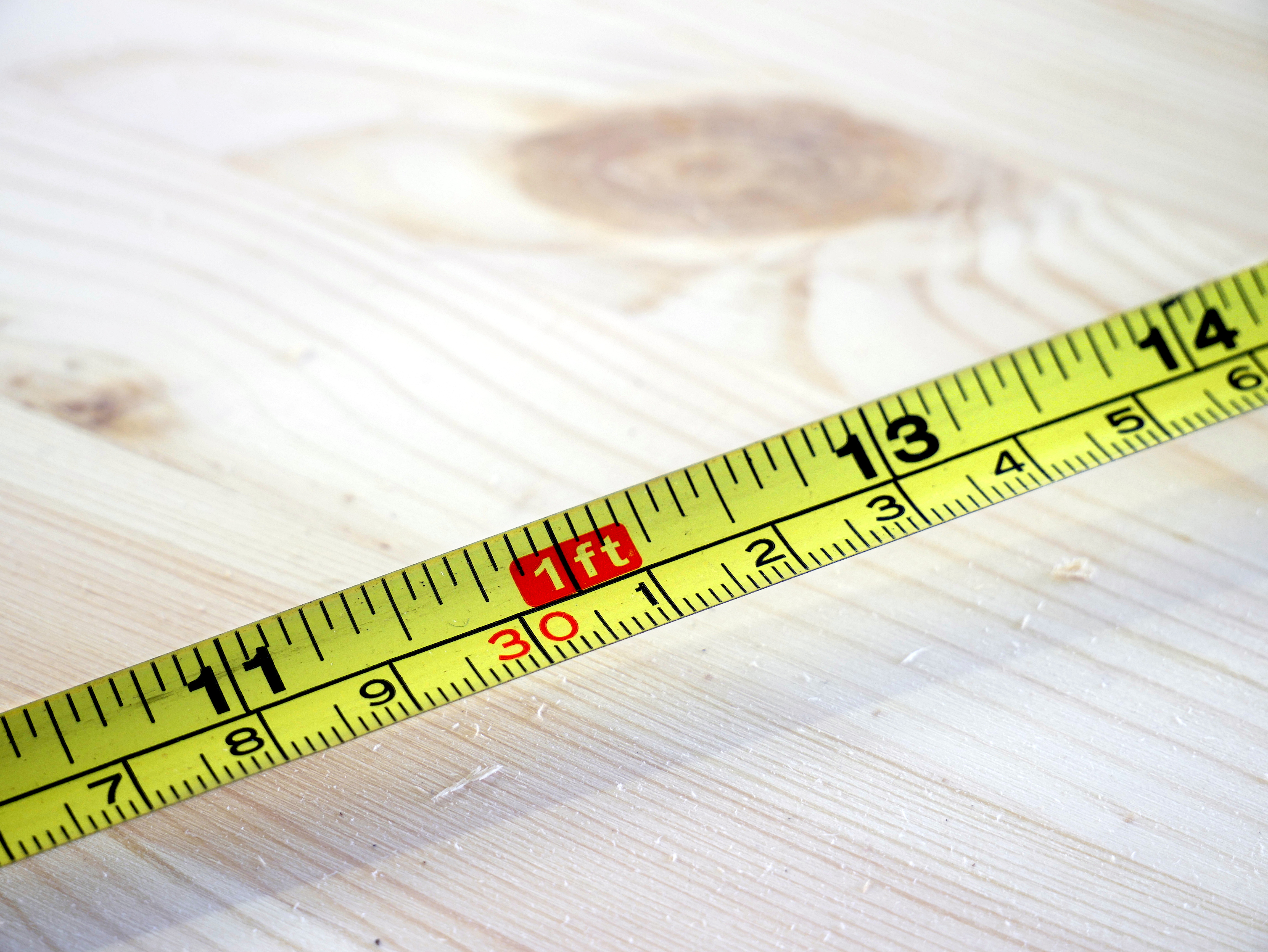
All other common bridges are working approximations you must memorize:
- Length: 1 meter is approximately equal to 39.37 inches. For longer journeys, 1 mile is approximately equal to 1.61 kilometers, and conversely, 1 kilometer is approximately equal to 0.62 miles.
- Mass/Weight: 1 kilogram is approximately equal to 2.2 pounds, meaning 1 pound is approximately equal to 0.45 kilograms.
- Volume: 1 liter is approximately equal to 1.06 US fluid quarts. Scaling up, 1 US fluid gallon is approximately equal to 3.785 liters.
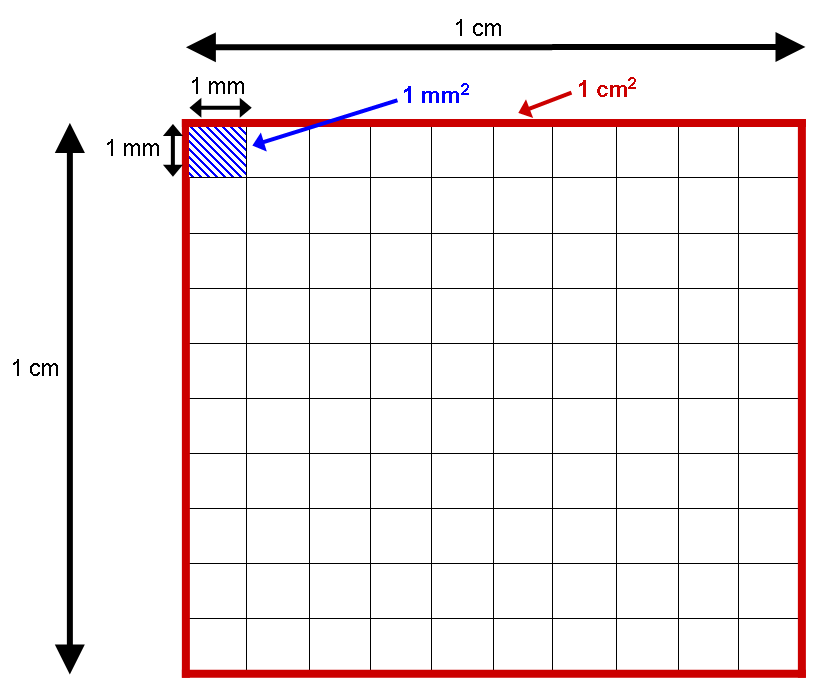
The greatest cognitive trap middle school students face in measurement is failing to scale their conversion factors when moving from one dimension (length) to two dimensions (area) and three dimensions (volume). If 1 foot=12 inches, a student will almost instinctively guess that 1 square foot=12 square inches.
This is fundamentally false. Converting between squared area units requires squaring the linear conversion factor. Picture a square grid: a 1 ft×1 ft square is (12 in)×(12 in). Thus, 1 square foot equals 144 square inches.
Similarly, converting between cubed volume units requires cubing the linear conversion factor. A cubic foot is (12 in)×(12 in)×(12 in). Therefore, 1 cubic foot equals 1,728 cubic inches.
Dimensional Conversions in Practice
US Customary Area and Volume:
- Area: Since 1 yd=3 ft, squaring it means 1 square yard equals 9 square feet.
- Volume: Cubing it means 1 cubic yard equals 27 cubic feet.
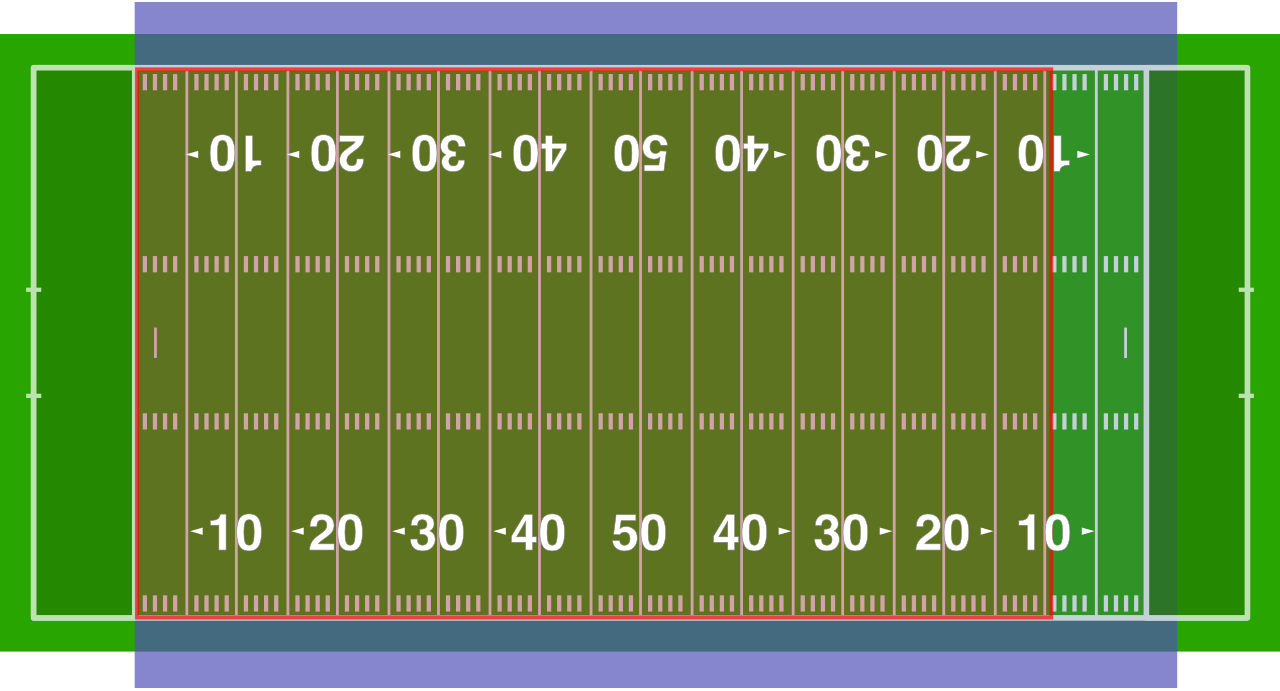
- Land Area: Historically derived from the amount of land a yoke of oxen could plow in one day, 1 acre is a US customary unit of area equal to 43,560 square feet.
Metric Area and Volume: The metric system’s base-10 nature creates explosive growth when squared or cubed.
- Area: Since 1 m=100 cm, squaring the factor gives 1002. Therefore, 1 square meter equals 10,000 square centimeters.
- Land Area: The metric counterpart to the acre is the hectare. 1 hectare is a metric unit of area equal to 10,000 square meters.
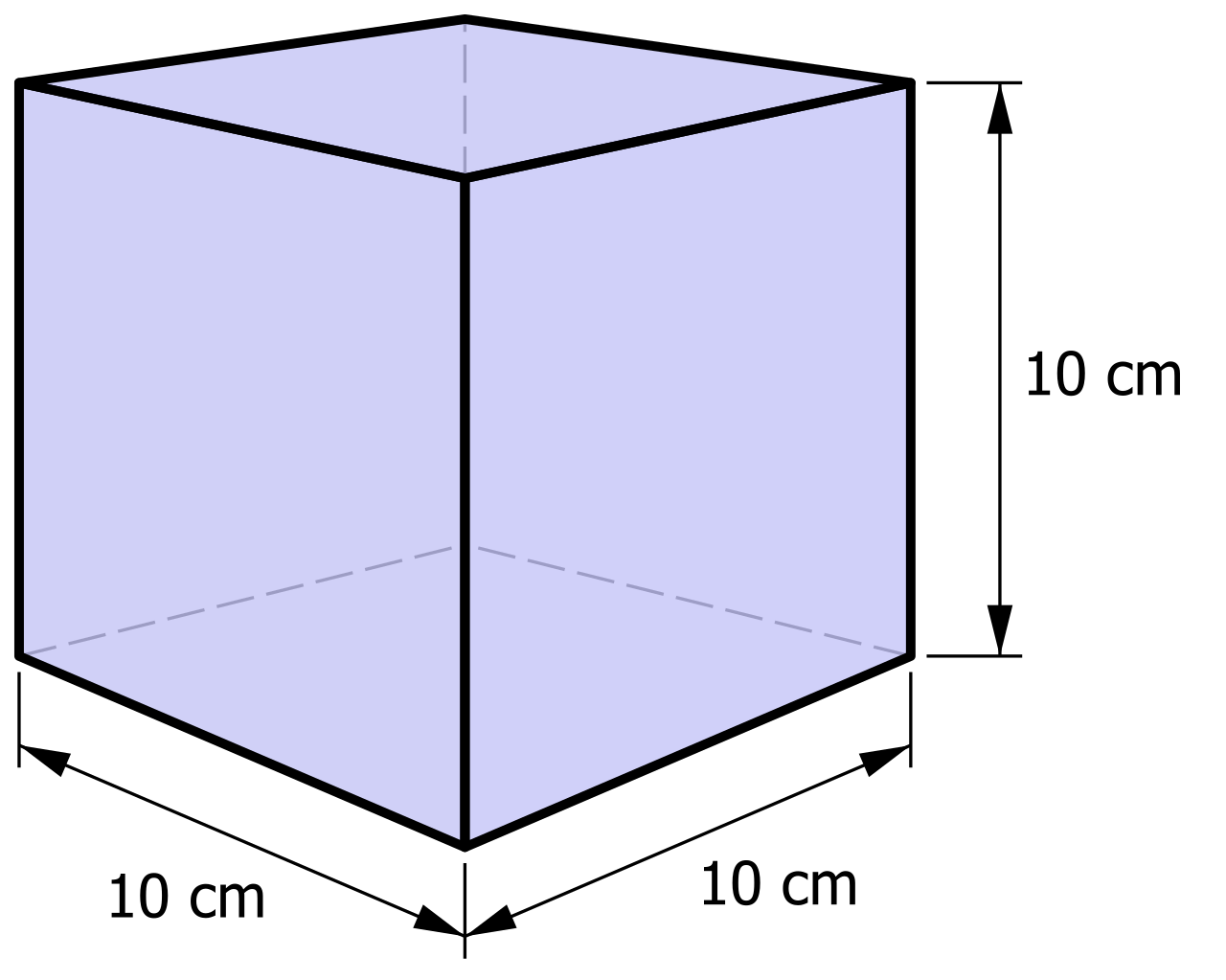
- Volume: Since 1 m=100 cm, cubing the factor gives 1003. Thus, 1 cubic meter equals 1,000,000 cubic centimeters.
- Liquid Capacity of a Cubic Meter: Knowing that 1,000 cubic centimeters=1 liter, it perfectly follows that 1 cubic meter holds exactly 1,000 liters of liquid.
When you encounter selected-response and numeric-entry items on the 5164 exam, remember that measurement is merely an exercise in rigorous translation. The universe does not change sizes when we swap our ruler; only the language we use to describe it does. Master the mechanics of this language, teach your students the algebra of dimensional analysis, and the arithmetic will inevitably fall into place.