Circle Properties and Theorems
Not sure you’re ready?
Take the ~3-minute readiness diagnostic and see where you stand.
A circle is nature’s ultimate exercise in constraint: a single point, a fixed distance, and every possible location that satisfies that rule. From this simple definition—the locus of points equidistant from a center—spills a massive interlocking system of theorems that govern everything from the orbits of planets to the gears in a clock. As a secondary mathematics educator, your task is to take students who see a circle merely as a static shape and guide them to see it as a dynamic mechanical system. You must prove to them that nothing in a circle happens by accident. The angles, the intersecting lines, the swept areas—they are all bound by strict, predictable, and beautiful algebraic laws. When you sit for the Praxis (5165): Mathematics exam, you are not just recalling formulas; you are proving your fluency in this geometric system so you can translate it for the next generation of thinkers.

Before we can slice a circle or pass lines through it, we must establish the boundaries of our domain. The perimeter of a circle behaves differently than the perimeter of a polygon.
The circumference of a circle is the total distance around the perimeter of the circle. If you were to take a graphing calculator cord, wrap it perfectly around a cylinder, and lay it flat, that linear length is the circumference. But how does that perimeter relate to the circle's width? This is where the most famous constant in mathematics emerges.
π (Pi) is defined as the ratio of a circle's circumference to the diameter of that same circle.
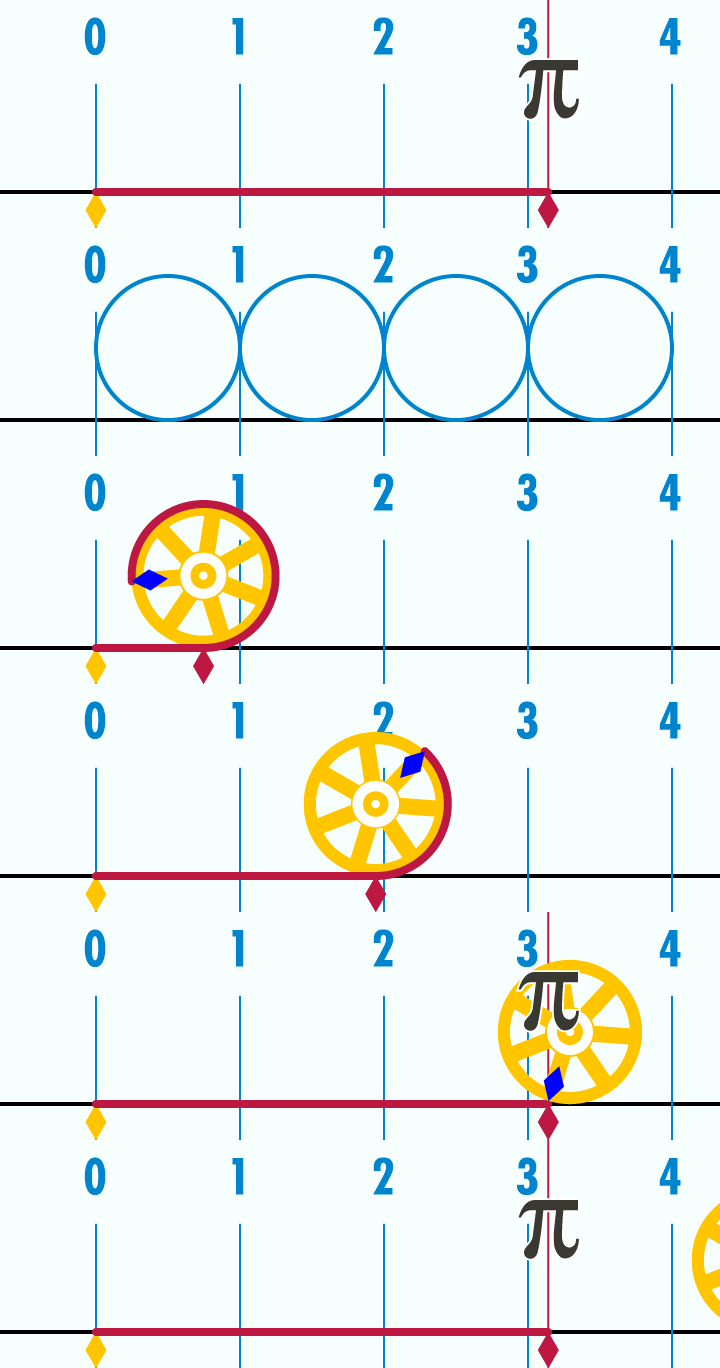
It does not matter if the circle is the size of a coin or the size of a galaxy; π=dC. Because of this invariant ratio, we derive the fundamental formulas for one-dimensional and two-dimensional circle measurements.
- The circumference of a circle equals pi multiplied by the diameter of the circle (C=πd).
- Equivalently, since a diameter is comprised of two radii, the circumference of a circle equals two times pi multiplied by the radius of the circle (C=2πr).
- Moving to two dimensions, the area of a circle equals pi multiplied by the square of the radius of the circle (A=πr2).
When teaching angular measure, we must introduce the systems used to track rotation. The degree measure of a full circle is exactly 360 degrees. This is a human invention, likely rooted in ancient Babylonian base-60 mathematics and the roughly 360 days in a year. But mathematics demands a system linked not to history, but to geometry itself: radians. The radian measure of a full circle is exactly two times pi radians. A radian is simply the angle formed when you take the radius and wrap it along the circle's edge. This natural unit becomes indispensable when calculating partial measures.
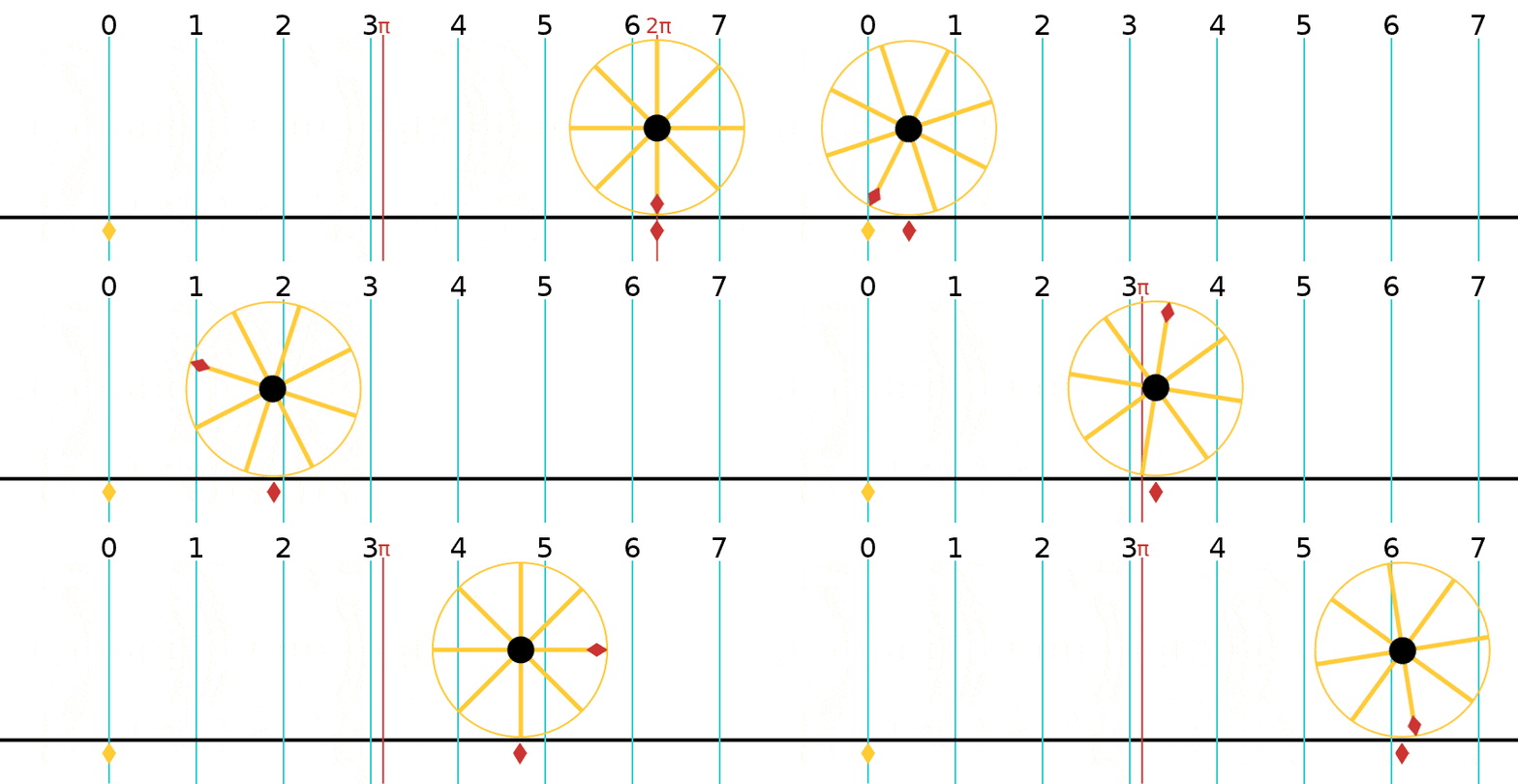
Rarely in physics or engineering do we deal with full circles. A windshield wiper traces a sector. A gear meshes along an arc. Your students must master the mathematics of the fragment.
An arc is a continuous portion of the circumference of a circle. We categorize arcs by their size relative to a straight line passing through the center:
- A minor arc has a degree measure strictly less than 180 degrees. (Usually named with two letters, e.g., \overparenAB).
- A major arc has a degree measure strictly greater than 180 degrees. (Named with three letters to dictate direction, e.g., \overparenACB).
- A semicircle is an arc that measures exactly 180 degrees.
When we extend radii from the center to the endpoints of an arc, we carve out two-dimensional space. A sector of a circle is the geometric region enclosed by two radii and their intercepted arc. Think of a sector as a slice of pizza—the crust is the arc, the straight cuts are the radii, and the cheese is the sector area.
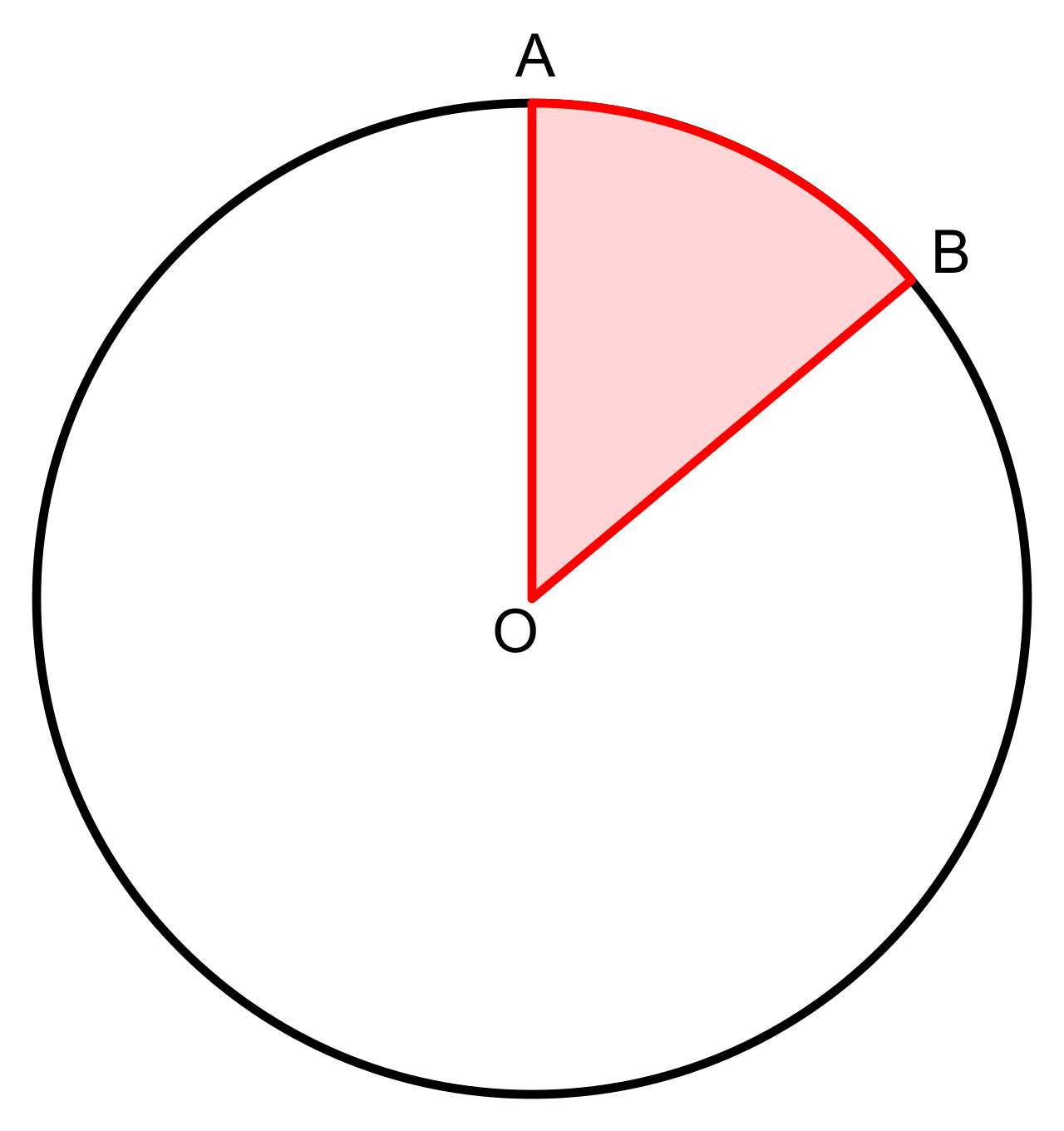
Calculating Arc Length and Sector Area
The formulas for these measurements depend entirely on whether the angle is measured in degrees or radians. Teach your students to see degree formulas as proportions of a whole, while radian formulas are direct geometric relationships.
| Measurement | Using Degrees (θ) | Using Radians (θ) |
|---|---|---|
| Arc Length (s) | The length of an arc equals the central angle in degrees divided by 360, multiplied by the full circumference of the circle. <br> s=(360θ)2πr | The length of an arc equals the circle radius multiplied by the central angle measured in radians. <br> s=rθ |
| Sector Area (A) | The area of a circle sector equals the central angle in degrees divided by 360, multiplied by the full area of the circle. <br> A=(360θ)πr2 | The area of a circle sector equals one-half multiplied by the central angle in radians multiplied by the square of the circle radius. <br> A=21r2θ |
Pedagogical Note: When your students encounter a word problem on a standardized exam—such as finding the area watered by an irrigation sprinkler rotating 120 degrees with a 50-foot spray—ensure they actively check their calculator mode (Degree vs. Radian) before computing.
Where an angle places its vertex dictates how it views the boundary of the circle. This is the geometry of perspective.
A central angle is an angle with its vertex located exactly at the center point of the circle. Because it emanates from the exact center, its perspective is undistorted. Therefore, the measure of a central angle is exactly equal to the degree measure of its intercepted arc.
But what happens if we step back to the very edge of the circle? An inscribed angle is an angle with its vertex positioned exactly on the circumference of the circle. By definition, the sides of an inscribed angle contain chords of the circle. Because the vertex has been pulled all the way to the opposite edge, the angle "sweeps" out twice as much arc for the same angular opening.
The Inscribed Angle Theorem: The measure of an inscribed angle is exactly half the degree measure of its intercepted arc.
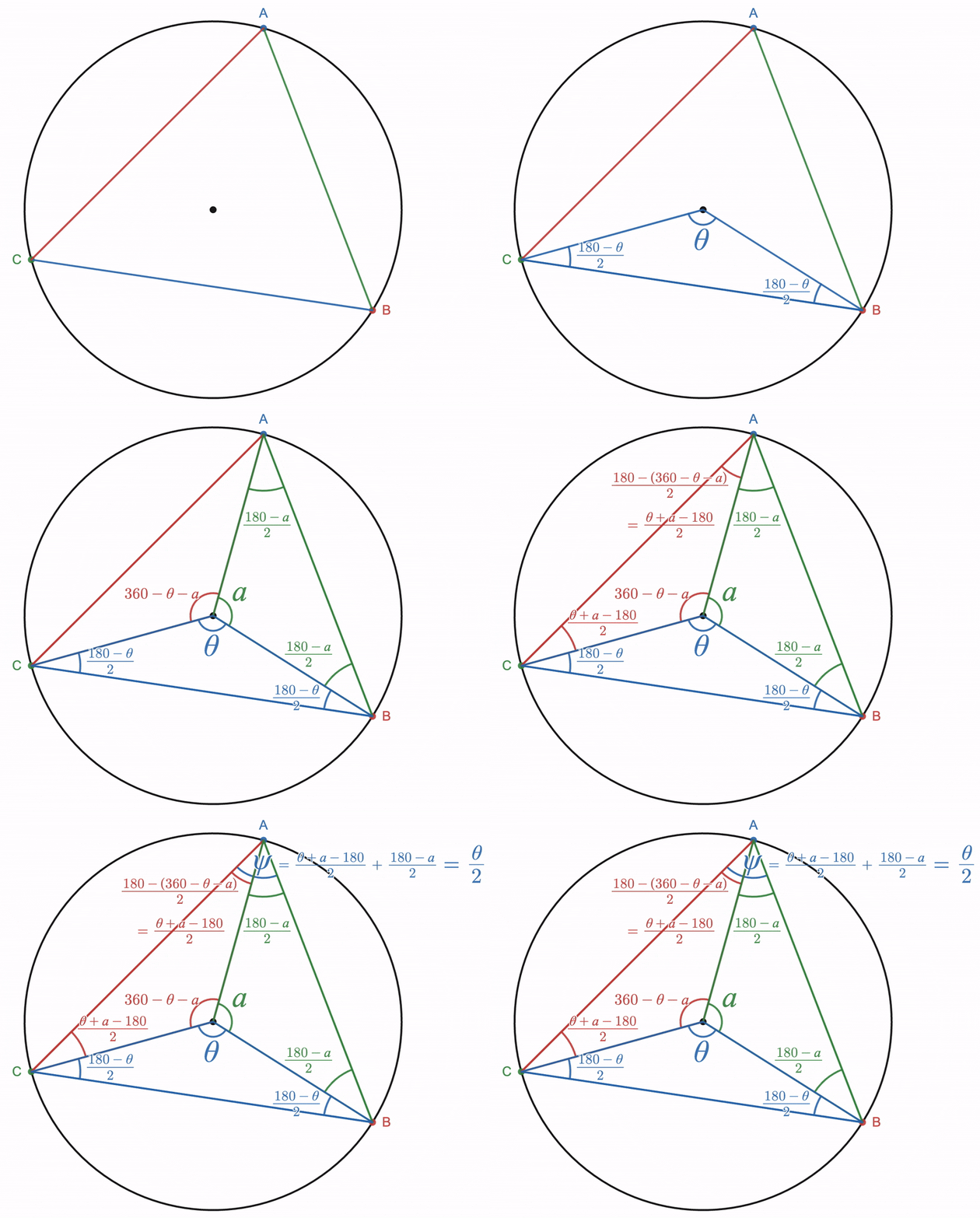
This theorem gives birth to a series of beautiful, cascading corollaries that frequently appear as selected-response items on the 5165 exam:
- Two inscribed angles that intercept the exact same arc are congruent to each other. Imagine sitting in a curved movie theater. Whether you sit on the far left or the far right of an arc, if your sightlines are anchored to the same screen (the intercepted arc), the angle of your gaze is mathematically identical.
- An angle inscribed in a semicircle is always a 90-degree right angle. (Thales's Theorem). If the intercepted arc is 180 degrees, half of that is 90. No matter where you drag the vertex along the circumference, as long as the endpoints anchor to a diameter, the angle forms a perfect right triangle.
- The opposite angles of any quadrilateral inscribed in a circle are supplementary. A quadrilateral whose four vertices lie on a circle is called a cyclic quadrilateral. Since its opposite angles intercept two arcs that together perfectly form the entire 360-degree circumference, their angle measures must sum to exactly half of 360, which is 180 degrees.
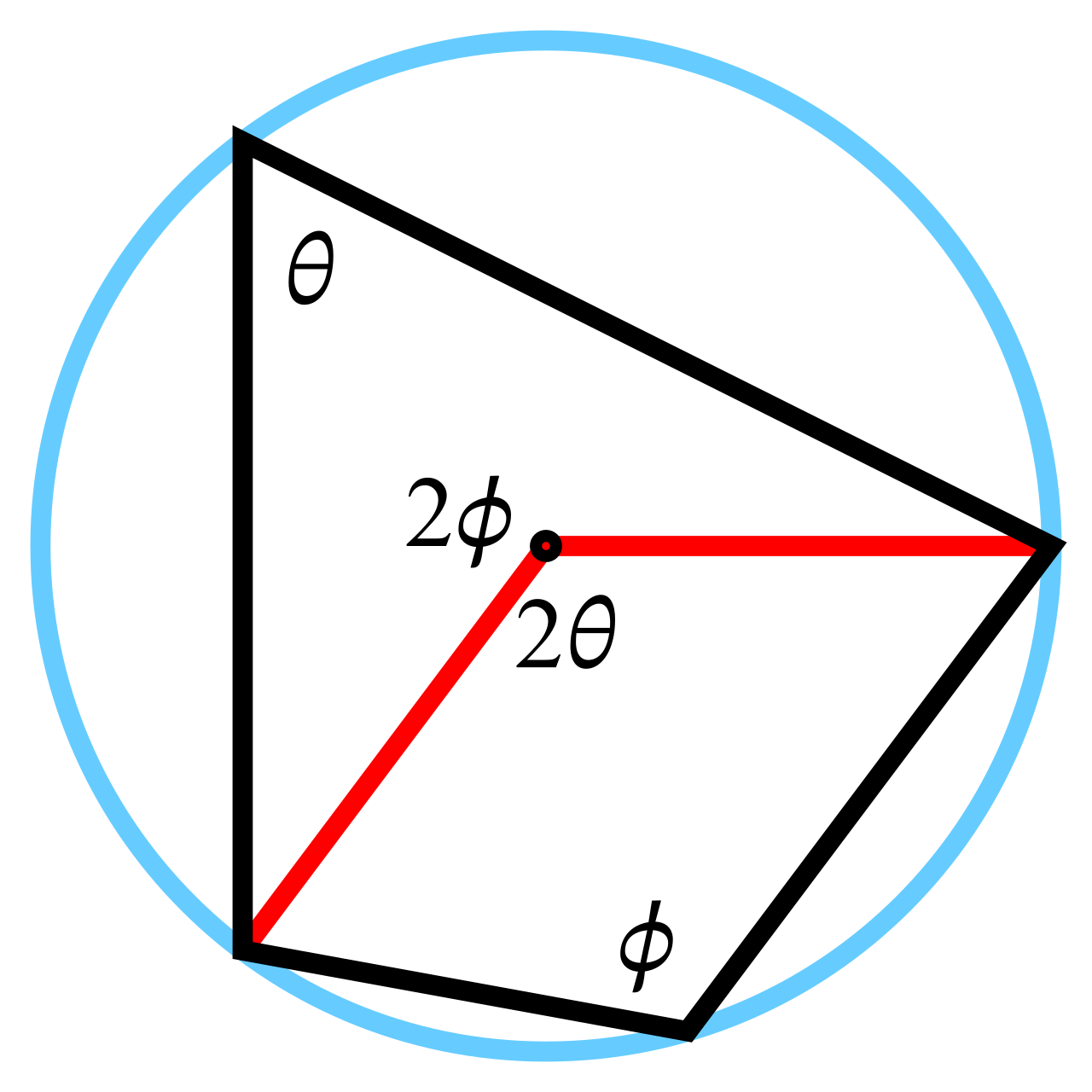
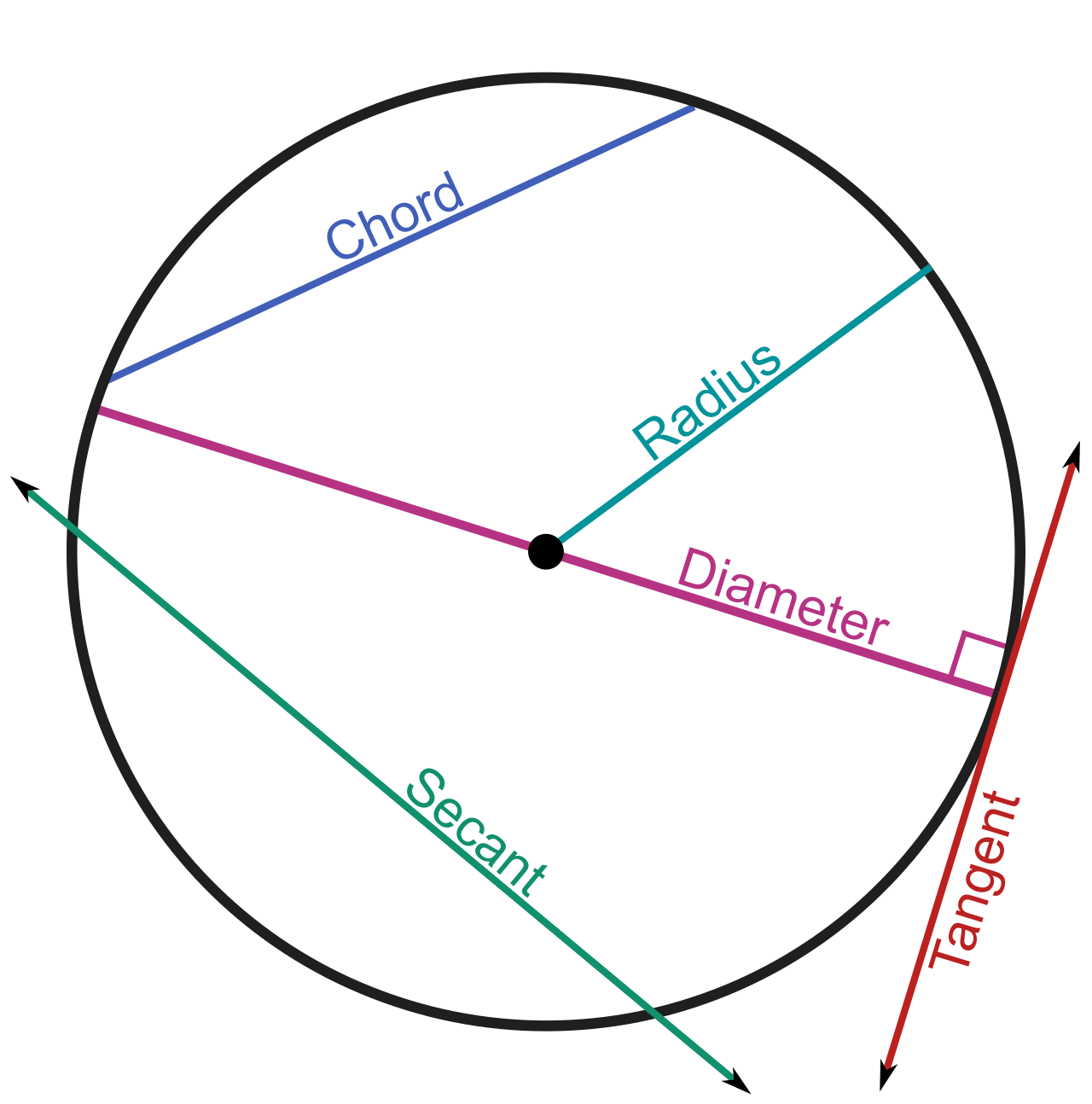
If the circumference is the shell, chords are the scaffolding holding it together. A chord is a straight line line segment whose two endpoints both lie on the circumference of the circle. The longest possible chord is uniquely special: a diameter is a chord that passes directly through the center point of the circle.
Symmetry and Perpendicularity
The circle is perfectly symmetrical, meaning any straight line drawn from the center outward interacts with chords in highly predictable ways.
- A circle radius that is perpendicular to a chord perfectly bisects that chord.
- Simultaneously, that same circle radius that is perpendicular to a chord perfectly bisects the arc intercepted by that chord.
The reverse of this logic gives us a powerful tool for finding the center of an unknown circle (a classic construction task). The perpendicular bisector of any chord always passes through the center point of the circle. If an archaeologist uncovers a curved shard of a broken plate, they can draw two chords, construct their perpendicular bisectors, and find the exact original center of the plate at their intersection.
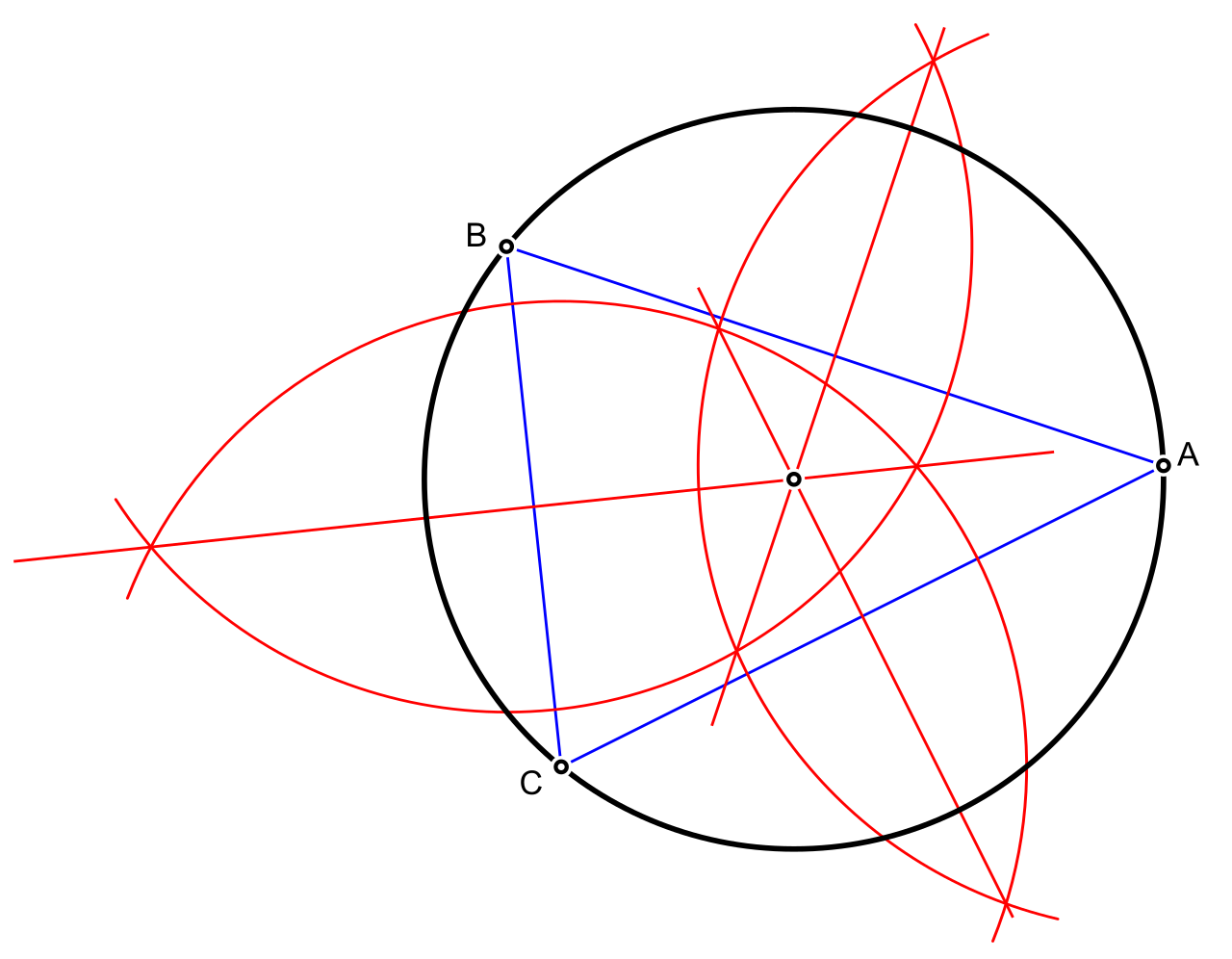
Furthermore, if two chords never intersect because they are parallel, they perfectly trap space between them: parallel chords within a single circle intercept congruent arcs between the chords.
Intersecting Inside the Circle
When two chords intersect inside a circle, they chop each other into segments. The angles and segment lengths obey elegant proportional laws.
- Segment Lengths: For two chords intersecting inside a circle, the product of the segment lengths of one chord equals the product of the segment lengths of the second chord. If chord AB and chord CD intersect at point E, then AE⋅EB=CE⋅ED. This is a direct result of similar triangles formed by connecting the endpoints of the chords.
- Angles: The measure of an angle formed by two chords intersecting inside a circle equals half the sum of the measures of the two intercepted arcs. If you imagine the vertex at the center, the angle equals the arc. If the vertex is on the edge, it equals half the arc. If the vertex is floating somewhere inside but not at the center, the angle is the exact arithmetic mean (average) of the arcs intercepted by the angle and its vertical counterpart.
Finally, we step outside the circle. How do lines passing through a circle behave when they originate from an external point of perspective?
First, we define our lines:
- A secant line intersects a circle at exactly two distinct points. (It contains a chord but extends infinitely in both directions).
- A tangent line intersects a circle at exactly one distinct point. It grazes the circle without ever entering its interior.
Properties of Tangents
The point where a tangent touches the circle is called the point of tangency.
- A tangent line is perfectly perpendicular to the circle radius drawn to the point of tangency. This creates 90-degree angles, allowing us to immediately apply the Pythagorean theorem to exterior problems.
- Two tangent line segments drawn to a circle from the exact same exterior point have identical lengths. If you picture a person wearing a conical party hat, the lines from the tip of the hat to where it grips the circular base of the head are perfectly equal.
Exterior Angles: The "Half-Difference" Rule
Recall that for angles formed inside the circle by crossing chords, we take half the sum of the arcs. For lines meeting outside the circle, the geometry flips. The angle gets tighter as the distance increases.
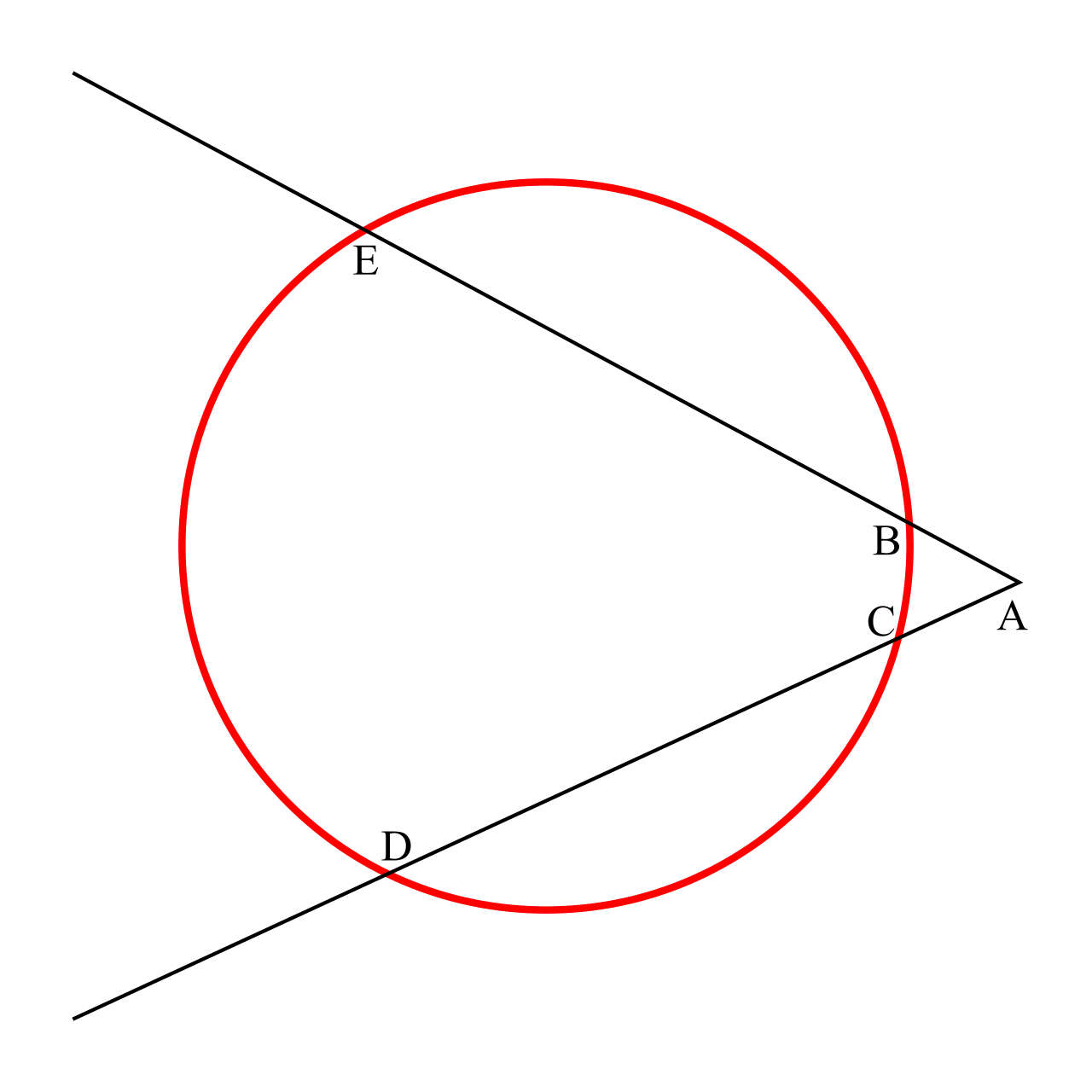
Whether you are dealing with two secants, a secant and a tangent, or two tangents, the rule for the external angle remains unifyingly identical:
- The measure of an angle formed by two secants intersecting outside a circle equals half the absolute difference of the measures of the intercepted arcs.
- The measure of an angle formed by a secant and a tangent intersecting outside a circle equals half the absolute difference of the measures of the intercepted arcs.
- The measure of an angle formed by two tangents intersecting outside a circle equals half the absolute difference of the measures of the intercepted arcs. Formulaically: Angle=2Far Arc−Near Arc.
There is one hybrid case: an angle formed strictly on the edge of the circle by a tangent and a chord. The measure of an angle formed by a tangent and a chord intersecting at the point of tangency equals half the degree measure of the intercepted arc. It behaves exactly like an inscribed angle!
Exterior Segments: The Power of a Point
Just as chords intersecting inside the circle preserve a constant product of segments, lines intersecting outside the circle do as well.
When lines are drawn from an exterior point, we measure the "entire" segment (from the exterior point to the far side of the circle) and the "external" part (from the exterior point to the near edge).
- For two secant segments drawn from an exterior point, the product of one entire secant length and its external part equals the product of the second entire secant length and its external part. (Whole1⋅Outside1=Whole2⋅Outside2).
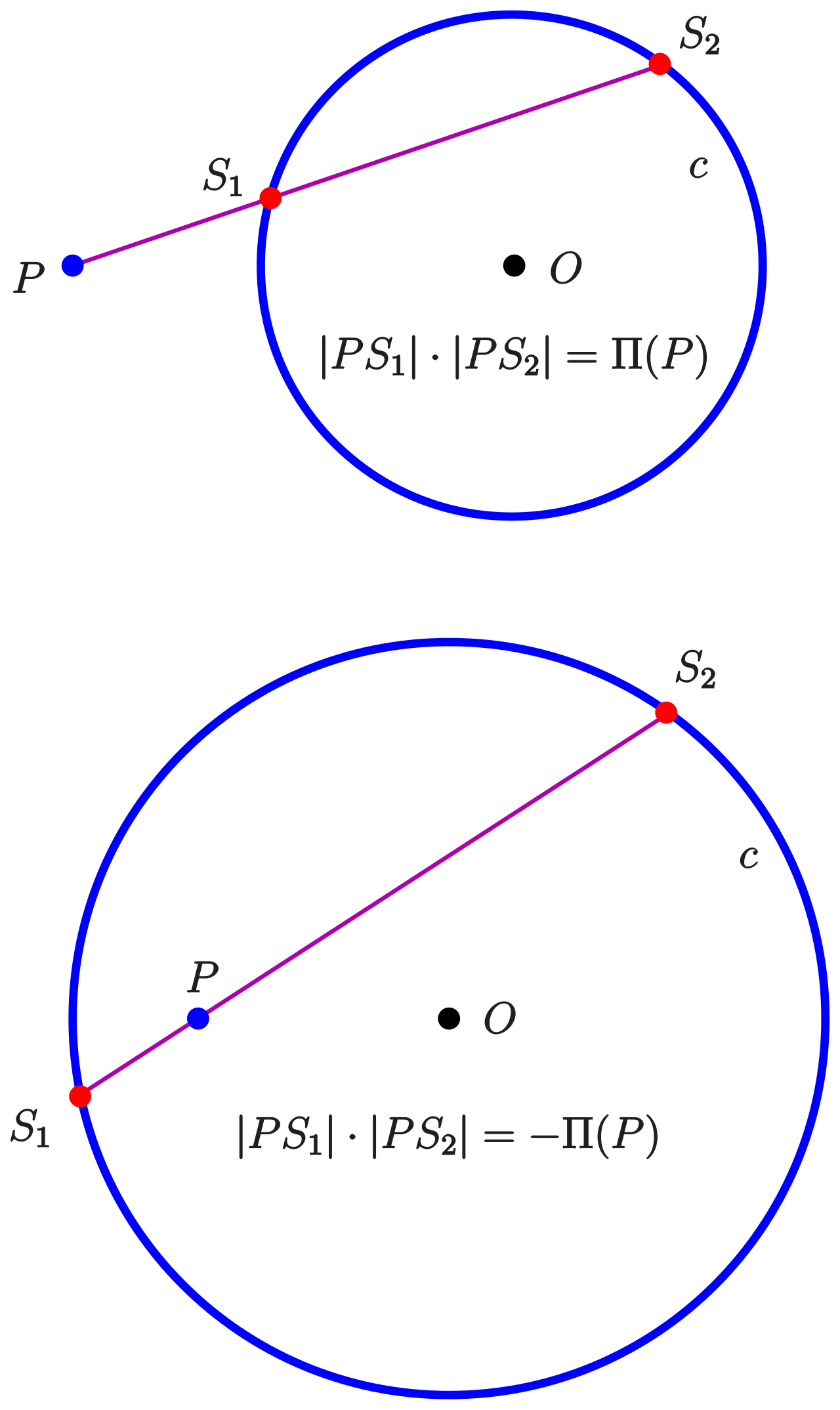
- If we slide one secant further and further out until it barely grazes the circle, the "whole" and the "outside" become the exact same line segment: the tangent. Therefore, for a secant and tangent drawn from an exterior point, the square of the tangent length equals the product of the entire secant length and its external part. (Tangent2=Whole⋅Outside).
To teach this brilliantly is to show your students that this is not three separate theorems to memorize. It is a single, beautiful, continuous truth—the Power of a Point. Whether lines cross inside, rest on the edge, or meet outside, circles preserve geometric harmony. Mastering these principles gives you the toolkit to dismantle any selected-response item the 5165 exam places before you, and more importantly, the pedagogical clarity to make circles intuitive for your future students.