Congruence and Similarity
Not sure you’re ready?
Take the ~3-minute readiness diagnostic and see where you stand.
Consider the physical act of cutting a perfectly identical copy of a triangle out of a sheet of paper. No matter how you slide, flip, or spin that cutout on your desk, its underlying geometric truth—its side lengths and interior angles—remains fundamentally unchanged. In secondary mathematics, this intuitive physical reality is formalized through the study of congruence and similarity. As a teacher, your task is to guide students from their innate understanding of "same shape and same size" to a rigorous language of transformations, invariants, and definitive theorems. When we define geometric figures by how they behave under mappings, we are not just playing with shapes; we are establishing the algebraic and spatial foundations that students will later use in calculus, physics, and linear algebra.
Understanding geometry through the lens of transformations turns rigid rules into dynamic, logical motion. Let us dissect exactly how these mappings determine congruence and similarity, and how you can translate these profound mathematical realities to your future students.
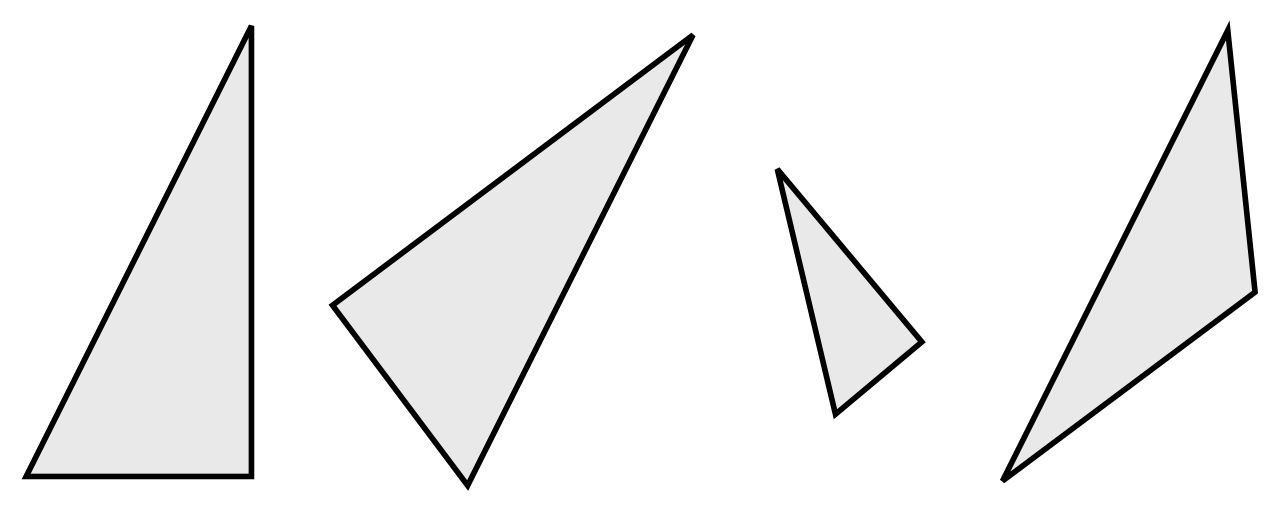
Before a student can prove two figures are congruent, they must understand what congruence actually means in modern geometry. We no longer rely solely on static, overlapping measurements. Instead, we use mappings.
Definition of Congruence via Mappings: Two geometric figures are congruent if there exists a sequence of rigid motions that maps one figure exactly onto the other figure.
To understand this, we must define the mechanics of motion. Rigid motions include translations, rotations, and reflections. These specific transformations share a profound mathematical property: they are isometries.
An isometry is a transformation that preserves distances and angle measures, resulting in a congruent image.
Because of this property, rigid motions preserve both side lengths and angle measures of geometric figures. When your students use a graphing calculator or dynamic geometry software to drag a polygon across the coordinate plane, the coordinates change, but the intrinsic properties of the polygon do not.
The Reflection Foundation
What is truly beautiful about rigid motions is that they are entirely built from reflections. You can think of reflections as the atomic elements of isometries.
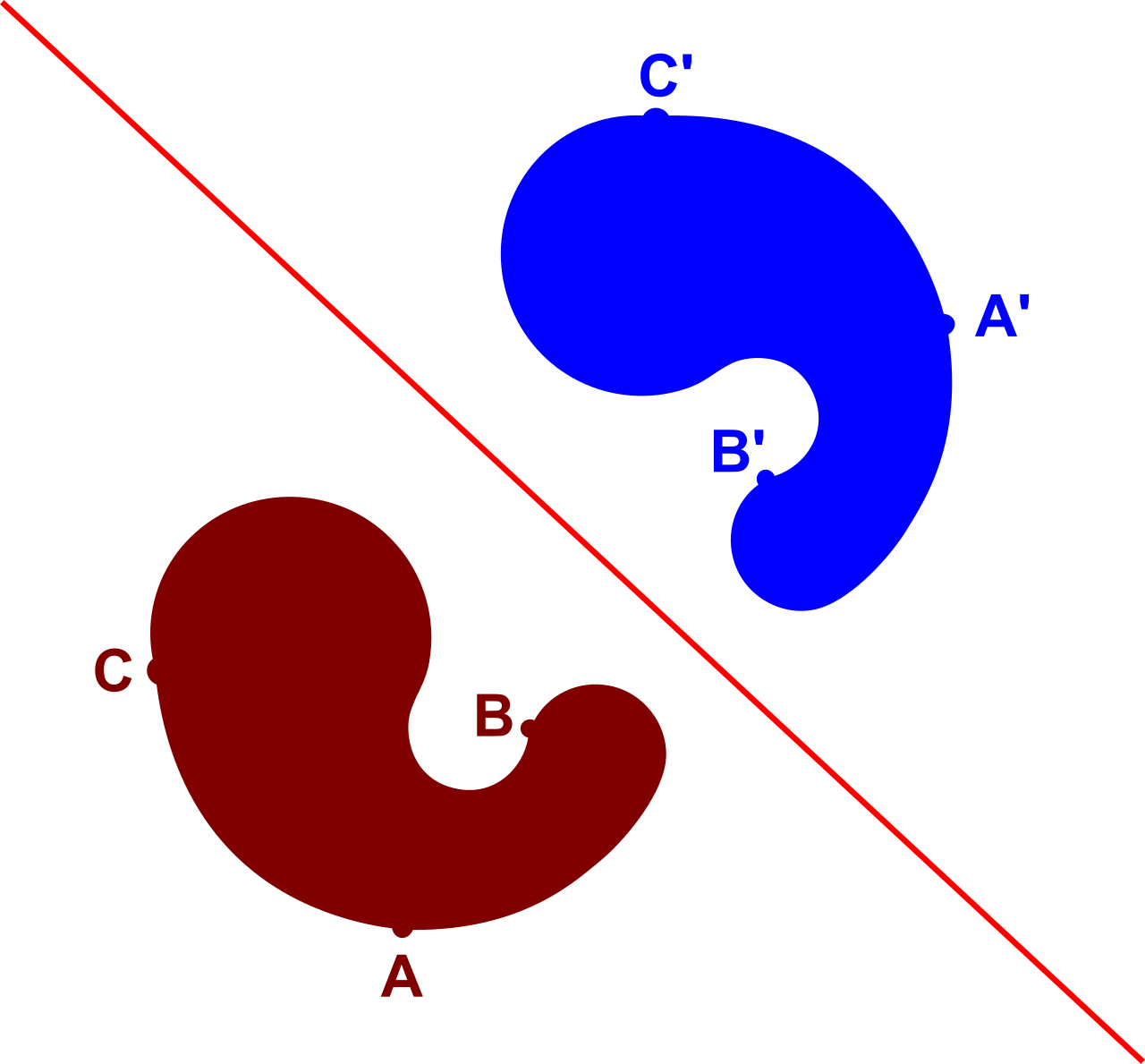
- Translations: Any translation can be expressed as a composition of two reflections across parallel lines. If you reflect a figure over a line, it flips. If you immediately reflect it again over a second, parallel line, the figure flips back to its original orientation, having successfully "slid" a distance equal to twice the gap between the parallel lines.
- Rotations: Any rotation can be expressed as a composition of two reflections across intersecting lines. Reflecting a figure across one line, and then across a second line that intersects the first, results in a rotation around the point of intersection. The angle of rotation is exactly twice the angle between the two intersecting lines.
For a student, this is a revelation. Sliding and spinning are just specific, sequenced variations of flipping.
If the definition of congruence requires mapping infinite points of one figure onto another, proving congruence would be exhausting. Fortunately, triangles are rigid structures. Their geometry is locked in by a minimum number of constraints, which brings us to the congruence theorems.
Instead of verifying all three angles and all three sides, we only need specific combinations of three to guarantee that the entire triangle is locked in place.
The Core Congruence Theorems
| Theorem | Description | Why it works (The Teacher's Perspective) |
|---|---|---|
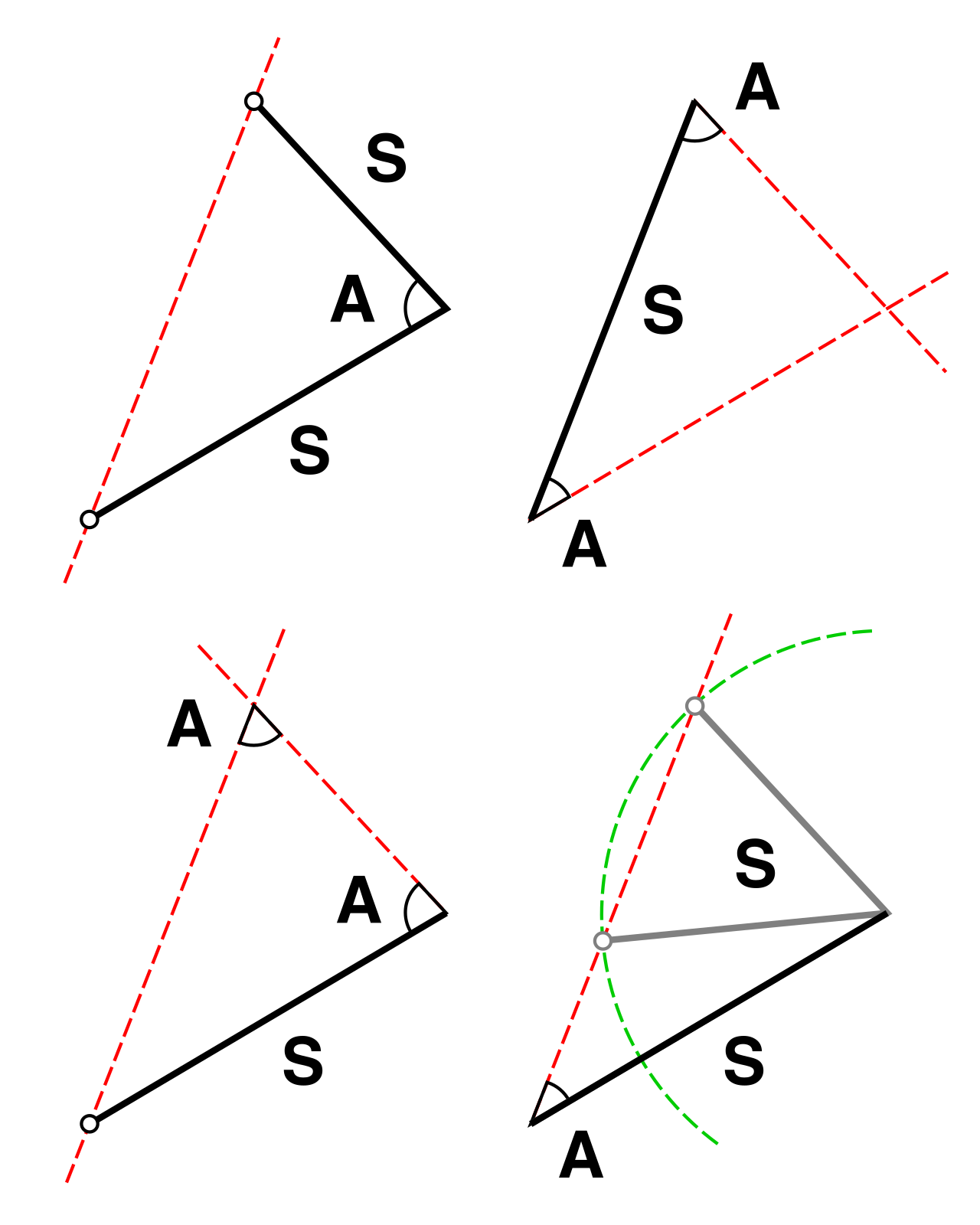
| Side-Side-Side (SSS) | If three sides of one triangle are congruent to three sides of another triangle, the two triangles are congruent. | If you hand a student three wooden dowels of specific lengths, they can only build one unique triangle. The angles are forced into existence by the sides. |
| Side-Angle-Side (SAS) | If two sides and the included angle of one triangle are congruent to two sides and the included angle of another triangle, the two triangles are congruent. | Imagine a hinge. If the length of the two arms of the hinge are fixed, and you lock the angle between them, the distance between the endpoints (the third side) is undeniably fixed. |
| Angle-Side-Angle (ASA) | If two angles and the included side of one triangle are congruent to two angles and the included side of another triangle, the two triangles are congruent. | If you draw a base of a specific length and shoot two laser beams from its endpoints at fixed angles, those beams will intersect at exactly one unique point in space. |
| Angle-Angle-Side (AAS) | If two angles and a non-included side of one triangle are congruent to the corresponding two angles and non-included side of another triangle, the two triangles are congruent. | Because all angles in a triangle sum to 180∘, knowing two angles means you know the third. Therefore, AAS immediately implies ASA. |
| Hypotenuse-Leg (HL) | If the hypotenuse and one leg of a right triangle are congruent to the hypotenuse and one leg of another right triangle, the two right triangles are congruent. | This is the Pythagorean theorem in disguise. If you know the hypotenuse and a leg of a right triangle, the third side is mathematically predetermined. Once the third side is known, it becomes an SSS scenario. |
The Ambiguities: What Does Not Work
As a teacher, predicting student misconceptions is half the battle. Students will naturally try to invent their own theorems. Two common pitfalls require your immediate attention.
Warning 1: The Side-Side-Angle (SSA) Ambiguity The Side-Side-Angle (SSA) condition does not guarantee triangle congruence.
Often called the "swinging door" or "donkey" theorem (read SSA backward), this arrangement leaves the third side's length undetermined. If you have a fixed angle, a fixed adjacent side, and a fixed opposite side, that opposite side might be able to swing into two different positions, creating two entirely different triangles. It is a vital counterexample in geometry.
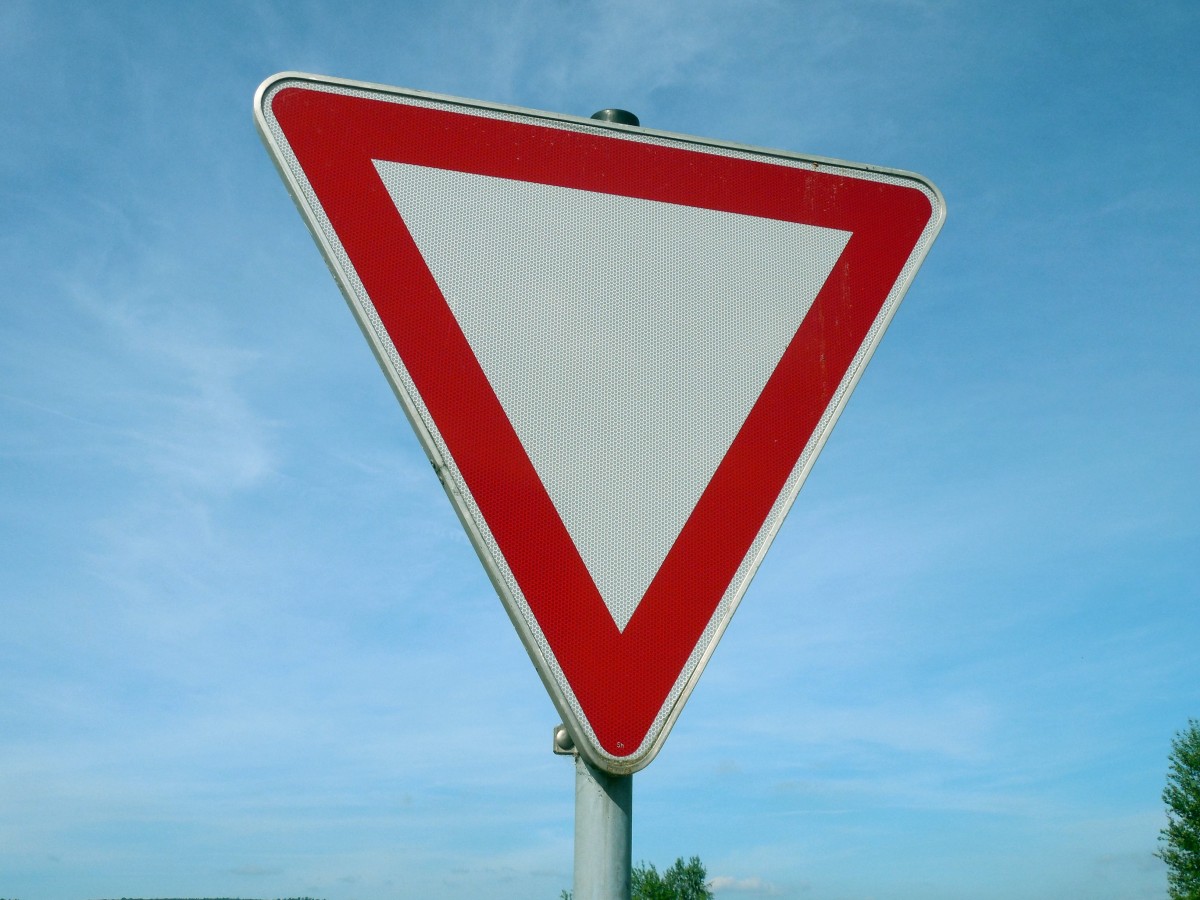
Warning 2: The Angle-Angle-Angle (AAA) Illusion The Angle-Angle-Angle (AAA) condition guarantees triangle similarity but does not guarantee triangle congruence.
If you know all three angles, you know the shape of the triangle perfectly, but you have no idea of its size. A miniature plastic yield sign and a massive metal yield sign on the highway both have angles of 60∘, 60∘, and 60∘. They are not congruent.
The Payoff: CPCTC
Why do we spend weeks having students prove triangles congruent? Because of what it unlocks.
Corresponding Parts of Congruent Triangles are Congruent (CPCTC) states that if two triangles are congruent, all pairs of corresponding angles and corresponding sides are congruent.
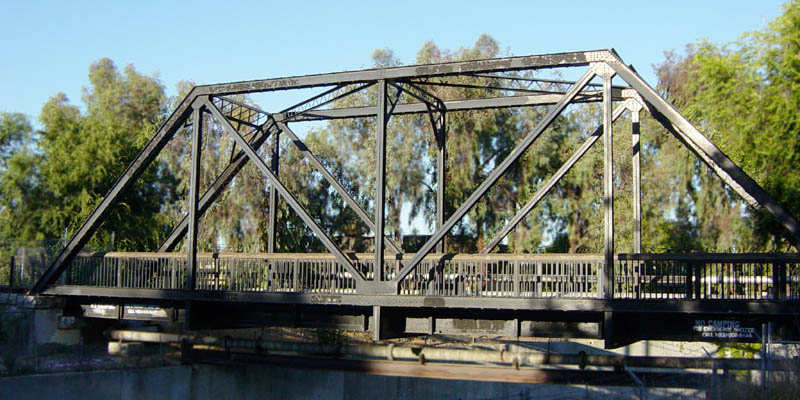
Once SSS, SAS, ASA, AAS, or HL confirms congruence, CPCTC serves as the bridge to further discoveries. It allows students to map complex physical structures—like trusses on a bridge—and deduce unknown lengths or angles with absolute certainty.
We now move from the realm of exact copies to the realm of scaling. If congruence is about preserving everything, similarity is about preserving proportions.
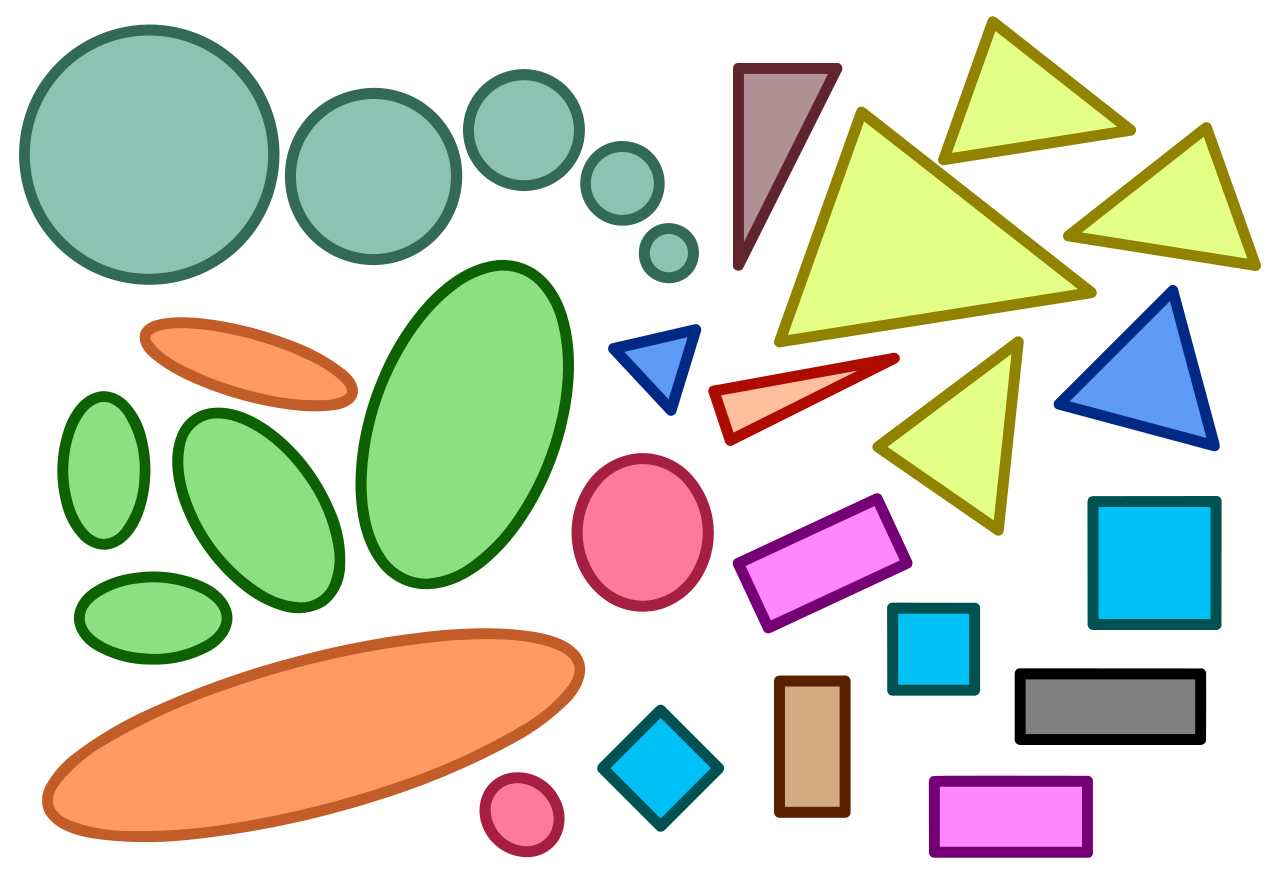
Definition of Similarity via Mappings: Two geometric figures are similar if there exists a sequence of rigid motions and dilations that maps one figure exactly onto the other figure.
To achieve similarity, we must introduce a new transformation that is not an isometry.
A dilation is a transformation that produces an image of the same shape as the original figure but of a different size. While a dilation changes side lengths, it is crucial to emphasize to your students that dilations preserve angle measures of geometric figures. The corners of a square do not change when you zoom in on your smartphone; they remain 90∘.
The Scale Factor (k)
Dilations multiply all linear measurements of a geometric figure by a constant positive value called the scale factor. This scalar determines the nature of the transformation:
- A scale factor strictly greater than one (k>1) produces an enlargement of a geometric figure.
- A scale factor strictly between zero and one (0<k<1) produces a reduction of a geometric figure.
Because similarity relies purely on uniform scaling and angle preservation, geometry provides us with universal truths. Because a circle has only one defining dimension (its radius), and all radii scale uniformly, all circles are similar to one another. Likewise, all regular polygons with the exact same number of sides are similar to one another. A regular pentagon on a microscopic chemical model is perfectly similar to a regular pentagon forming the footprint of a government building.
Just as with congruence, we do not need to verify every side and angle to prove that two triangles are similar.
- Angle-Angle (AA) Similarity Criterion: The Angle-Angle (AA) similarity criterion states that if two angles of one triangle are congruent to two angles of another triangle, the two triangles are similar. (Recall that because angles sum to 180∘, two matching angles guarantees all three match).
- Side-Angle-Side (SAS) Similarity Theorem: The Side-Angle-Side (SAS) similarity theorem states that if two sides of one triangle are proportional to two sides of another triangle and the included angles are congruent, the two triangles are similar.
- Side-Side-Side (SSS) Similarity Theorem: The Side-Side-Side (SSS) similarity theorem states that if all three corresponding sides of two triangles are proportional, the two triangles are similar.
Pedagogical Note: Students often confuse SAS congruence with SAS similarity. Make it a habit to require precise language: "Sides are congruent for SAS Congruence, but sides are proportional for SAS Similarity."
One of the most profound concepts you will teach in geometry is how scale factors interact with dimensions. Students intuitively assume that if you double the dimensions of a shape, its area doubles. This is a catastrophic error in engineering, baking, and biology, and correcting it requires a clear mapping of dimensional growth.
Let the linear scale factor between two similar figures be k.
1. One-Dimensional Scaling: Perimeter
Linear measurements like side length, circumference, and perimeter exist in one dimension. Therefore, the ratio of the perimeters of two similar polygons is exactly equal to the linear scale factor between the two polygons.
- If you triple the sides of a triangle (k=3), you will need exactly three times as much fencing to enclose it.
2. Two-Dimensional Scaling: Area
Area measures two-dimensional space. To calculate area, you multiply a length by a width. If both the length and width are multiplied by k, the area is multiplied by k×k.
- The ratio of the areas of two similar geometric figures equals the square of the corresponding linear scale factor (k2).
- If you triple the sides of a triangle (k=3), the new triangle requires 32=9 times as much paint to cover its surface.
3. Three-Dimensional Scaling: Volume
Volume measures three-dimensional space (length × width × depth).
- The ratio of the volumes of two similar three-dimensional solids equals the cube of the corresponding linear scale factor (k3).
- If you triple the radius of a spherical water tank (k=3), it will hold 33=27 times as much water.
This concept explains why a giant movie monster like King Kong physically cannot exist on Earth: if you scale up a gorilla by a factor of 10, its bones (cross-sectional area) become 102=100 times stronger, but its mass (volume) becomes 103=1,000 times heavier. The gorilla's bones would instantly shatter under its own weight.

When preparing for selected-response and numeric-entry items on your licensure exam, treat every congruence and similarity problem as a puzzle of invariants. Ask yourself: What is preserved? What is changing?
When mapping sequences of transformations, track the coordinates through the rigid motions (checking for distance and angle preservation) and evaluate the scalar multiplier for dilations. As an educator, your mastery of these theorems—knowing why ASA works while SSA fails, and understanding the profound geometric implications of a scale factor—will transform geometry from an exercise in memorization into an exploration of the fundamental logic of space.