Transformations in the Plane
Not sure you’re ready?
Take the ~3-minute readiness diagnostic and see where you stand.
When a video game engine calculates the movement of a character, or when an architect scales a blueprint to match the physical dimensions of a city lot, they are relying on the exact same mathematical machinery: geometric transformations. The Cartesian plane is not merely a static grid of coordinates; it is a highly dynamic space where shapes can slide, spin, flip, and stretch according to precise algebraic rules. For a secondary mathematics teacher, bridging the gap between a student's intuitive, visual understanding of movement and the strict algebraic notation required on a graphing calculator is a fundamental challenge. To succeed on the Praxis 5165 exam and in the classroom, you must understand transformations not just as isolated formulas, but as a cohesive system of functions that manipulate space itself.
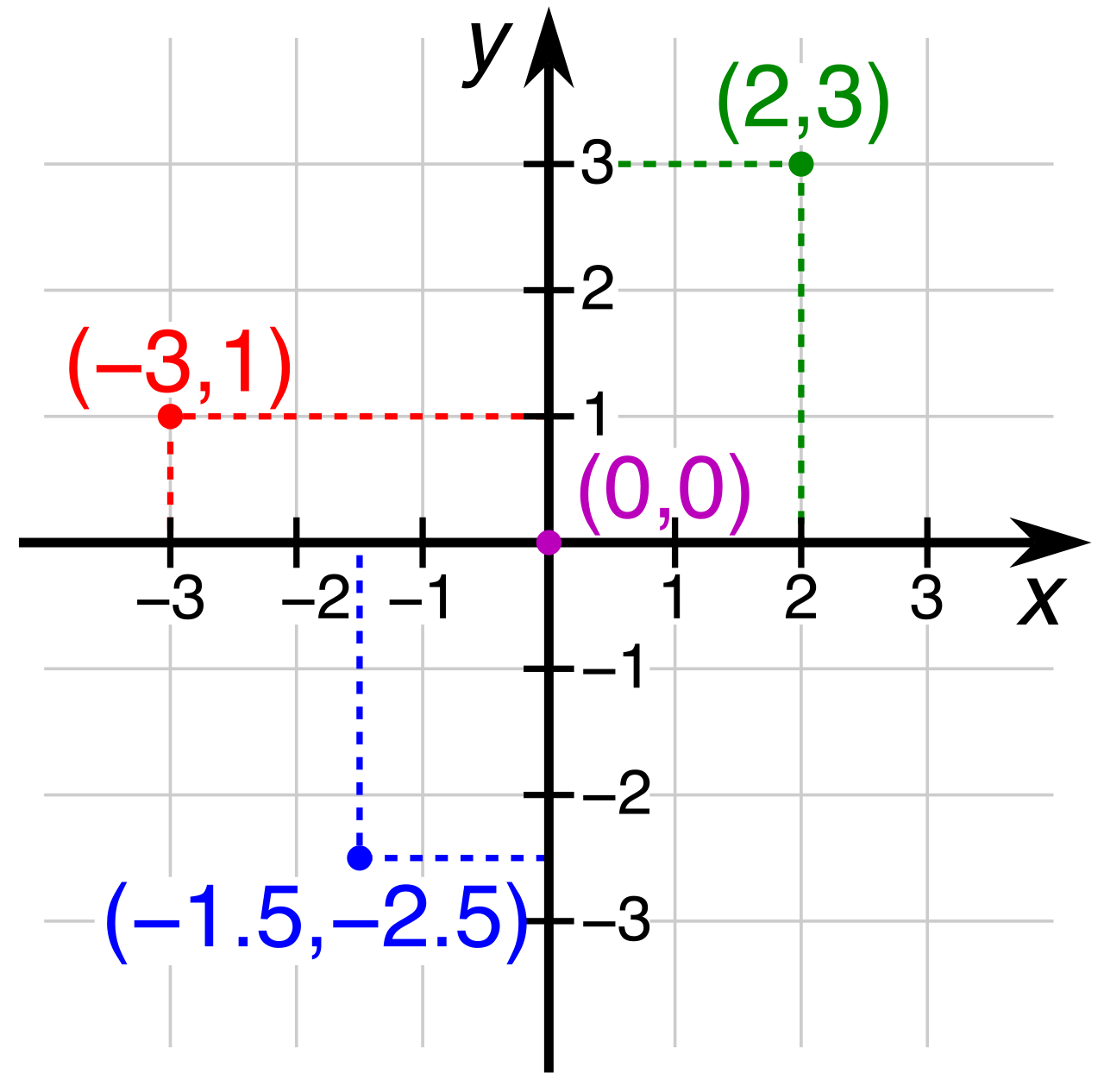
Before we alter the size of a figure, we must first understand how to move it without destroying its structural integrity.
A rigid motion (or isometry) is a transformation that preserves the distance between points of a figure, as well as preserving the interior angle measures of the figure.
Because rigid motions leave the size and shape of a figure completely intact, they are the foundation of geometric equivalence. In fact, modern geometry dictates that two geometric figures are congruent if a sequence of rigid motions maps one figure exactly onto the other.
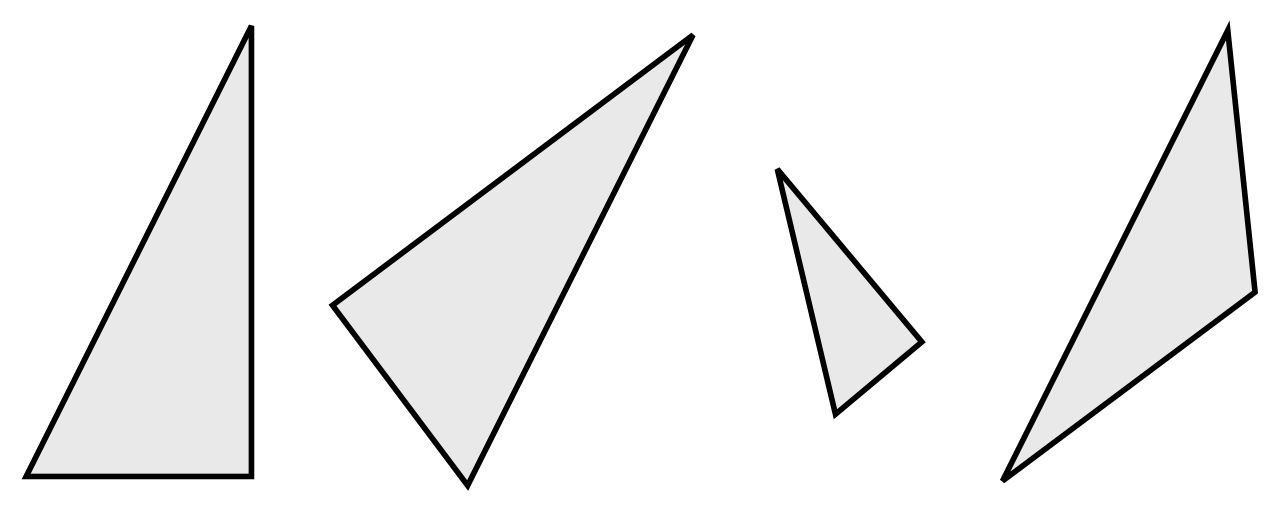
There are three primary rigid motions: translations, rotations, and reflections. To understand them fully, we must track a subtle but vital property called spatial orientation. Imagine a triangle with vertices labeled A, B, and C in a clockwise direction. If a transformation preserves that clockwise labeling, it preserves spatial orientation. If the labeling becomes counterclockwise, the orientation has been reversed.
1. Translations: The Pure Slide
A translation is a rigid motion mapping every point of a figure the same distance in the same direction. It is the most straightforward transformation because it merely shifts the figure without turning or flipping it. Because the figure is simply shifted, translations preserve the spatial orientation of a geometric figure.

In coordinate geometry, we define a translation using a vector ⟨a,b⟩.
- A translation along vector ⟨a,b⟩ maps a coordinate point (x,y) to (x+a,y+b).
When your students practice this on a graphing calculator, they are simply adding a constant matrix to the vertices of a polygon.
2. Reflections: Reversing the Universe
A reflection is a rigid motion mapping a point to a new point across a specific line. Unlike translations, reflections reverse the spatial orientation of a geometric figure. If you wave your right hand in front of a mirror, your reflection waves its left hand.
Geometrically, the mechanics of a reflection are defined by perpendicularity and distance:
The line of reflection is the perpendicular bisector of the segment connecting a preimage point and its corresponding image point.
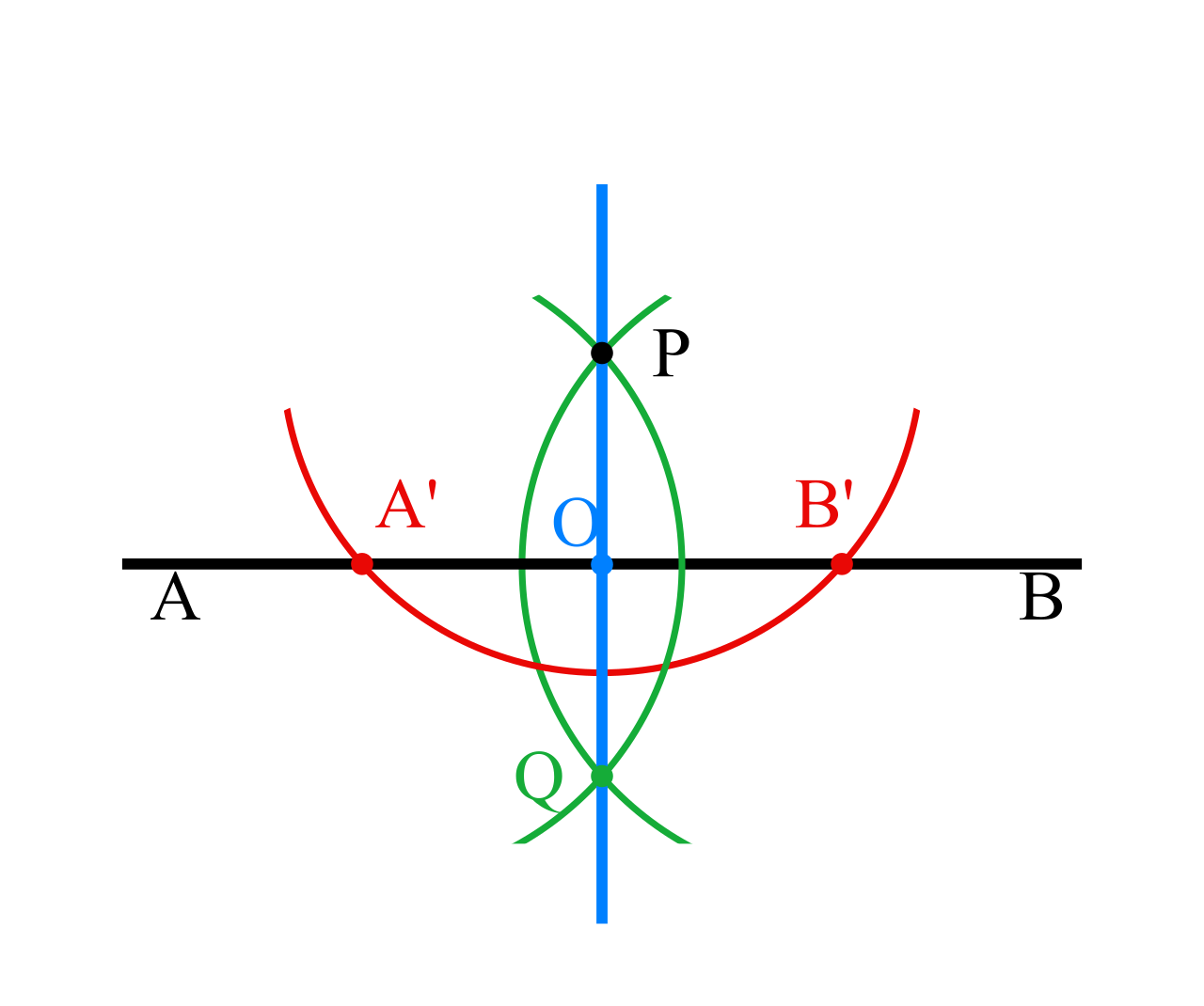
This means the mirror line cuts exactly halfway between the original figure and its image, meeting the connecting path at a perfect 90-degree angle. In the coordinate plane, you must know the algebraic outcomes of reflecting across standard boundary lines:
| Line of Reflection | Coordinate Mapping Rule |
|---|---|
| x-axis | A reflection across the x-axis maps a coordinate point (x,y) to (x,−y). |
| y-axis | A reflection across the y-axis maps a coordinate point (x,y) to (−x,y). |
| Line y=x | A reflection across the line y=x maps a coordinate point (x,y) to (y,x). |
| Line y=−x | A reflection across the line y=−x maps a coordinate point (x,y) to (−y,−x). |
| The Origin | A reflection across the origin maps a coordinate point (x,y) to (−x,−y). |
Note for teaching: A reflection across the origin is mathematically known as a point reflection. As we will see momentarily, its algebraic rule (−x,−y) is identical to a 180-degree rotation.
3. Rotations: Spinning Around a Center
A rotation is a rigid motion turning a figure around a fixed center point by a specific angle. Like translations, rotations preserve the spatial orientation of a geometric figure.
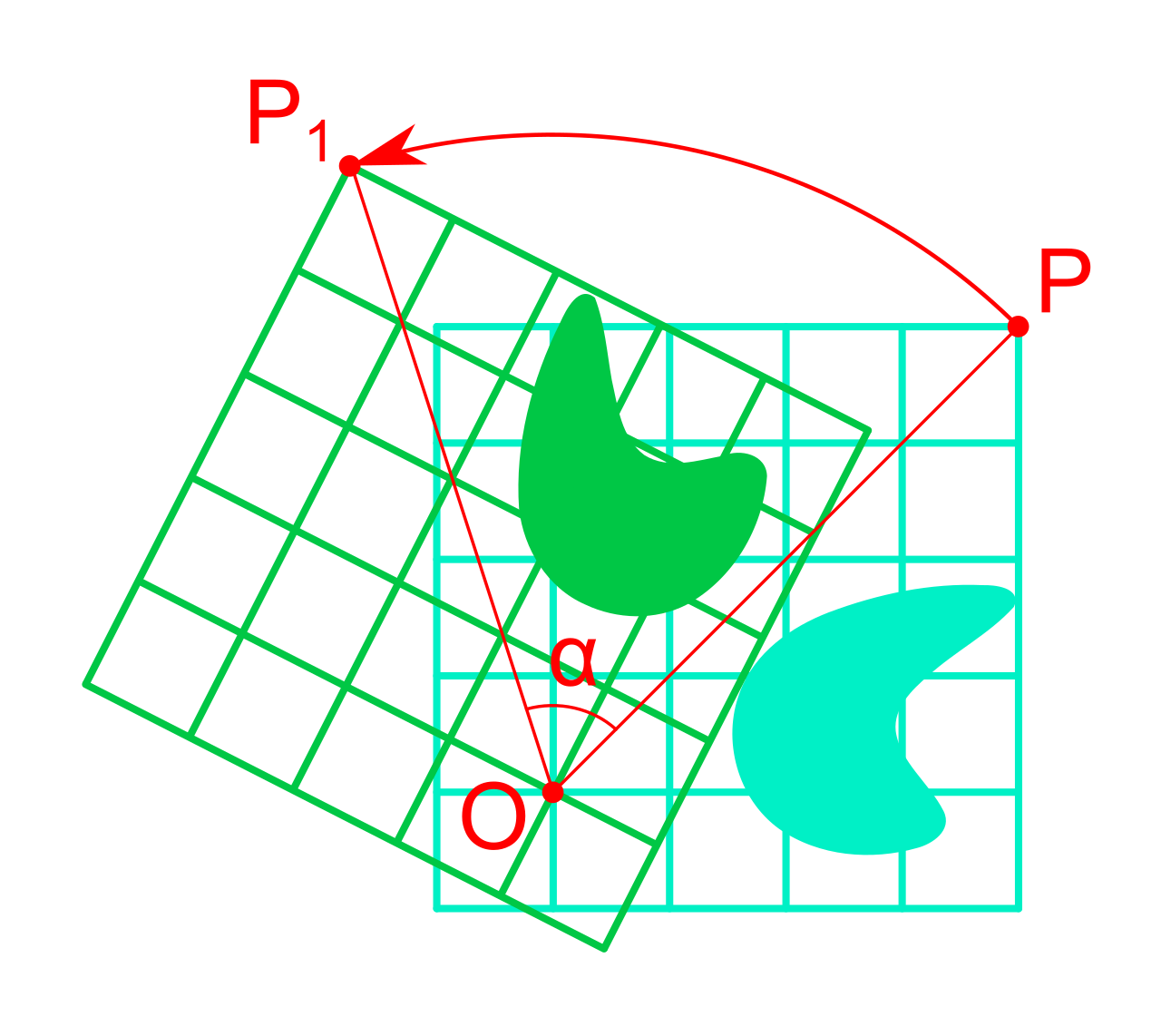
To standardise rotations on the Cartesian plane, mathematicians rely on the conventions of the unit circle:
- Positive angles of rotation indicate a counterclockwise direction in coordinate geometry.
- Negative angles of rotation indicate a clockwise direction in coordinate geometry.
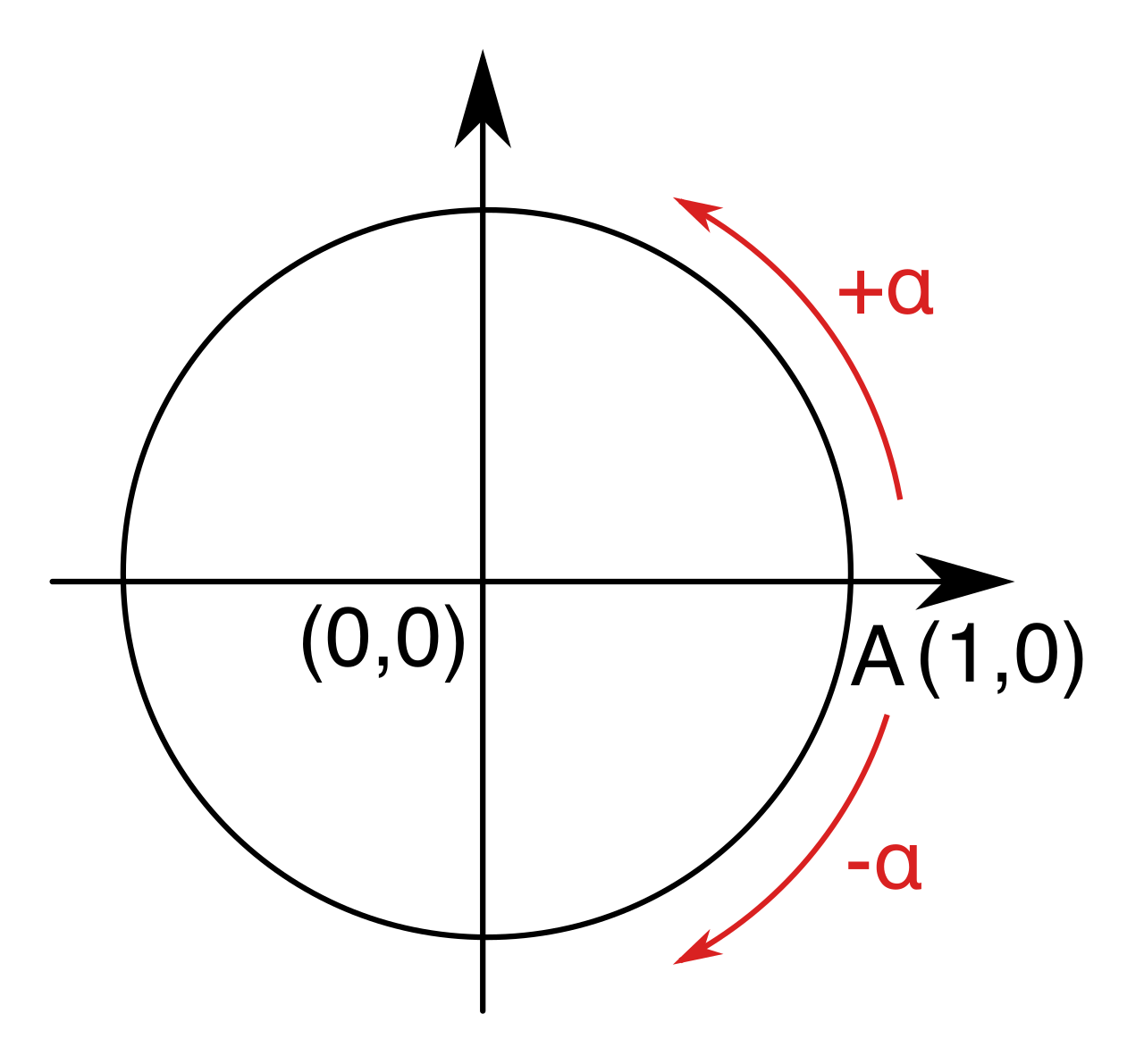
Assuming a rotation is centered at the origin (0,0), the following fundamental mappings occur. Students often memorize these, but encourage them to visualize a point in the first quadrant rotating into the surrounding quadrants to verify the signs:
- 90° Counterclockwise: Maps a coordinate point (x,y) to (−y,x).
- 180°: Maps a coordinate point (x,y) to (−x,−y).
- 270° Counterclockwise: Maps a coordinate point (x,y) to (y,−x). (Note: This is entirely equivalent to a 90° clockwise rotation, or −90∘).
Here is a profound mathematical secret you can share with your students: every rigid motion in the plane can be constructed entirely out of reflections. Mirrors are the fundamental atoms of planar transformations. By composing (chaining together) reflections across multiple lines, we can generate both translations and rotations.
Reflecting Across Parallel Lines
Imagine placing an object between two parallel mirrors.
- The composition of two reflections across parallel lines always results in a translation.
The object has been flipped twice, meaning its spatial orientation reversed and then reversed back, restoring its original orientation. The net result is a pure slide.
- The translation distance resulting from two reflections across parallel lines is exactly twice the distance between the parallel lines.
Reflecting Across Intersecting Lines
Now, angle those two mirrors so they meet at a point.
- The composition of two reflections across intersecting lines always results in a rotation.
Again, a double-flip restores the original spatial orientation. The geometry of this new rotation is directly tied to the intersecting mirror lines:
- The center of rotation formed by two reflections across intersecting lines is the intersection point of those two lines.
- The rotation angle formed by two reflections across intersecting lines is exactly twice the acute angle between the lines.
Up until now, our shapes have been rigid. But the real world requires scale—microscopes, blueprints, and zooming in on a digital map. Enter the dilation.
A dilation is a transformation completely determined by a center point and a scale factor.
Unlike rigid motions, a dilation alters the distance between points of a figure unless the scale factor is exactly one or negative one. However, a dilation does not warp the shape; a dilation preserves the interior angle measures of a geometric figure.
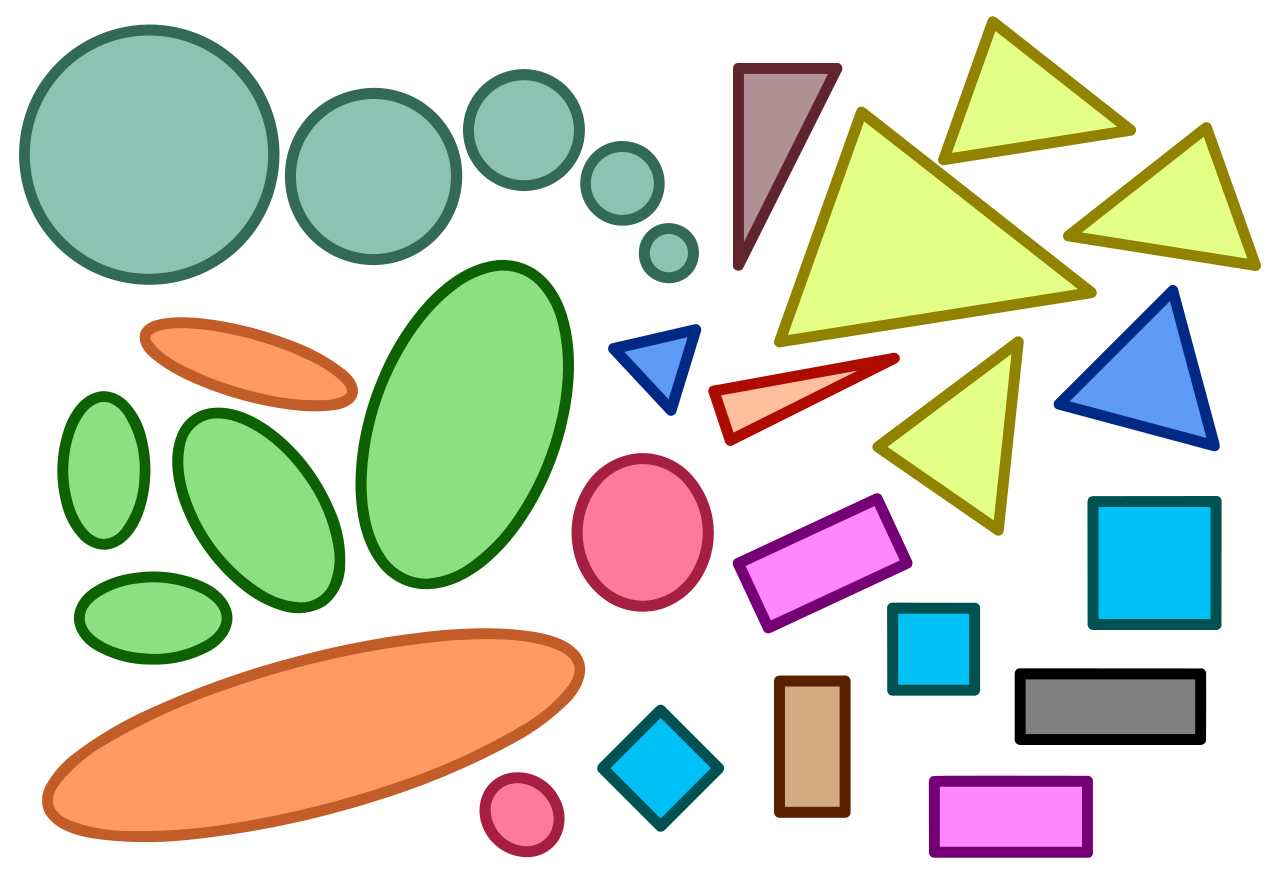
Because angles remain rigid but distances change, dilations give rise to proportional geometry. We state that two geometric figures are similar if a sequence of rigid motions combined with a dilation maps one figure onto the other.
The Scale Factor (k)
The behavior of a dilation depends entirely on its scale factor, typically denoted as k.
- A dilation with an absolute scale factor greater than one (∣k∣>1) produces an enlargement of the preimage.
- A dilation with a positive scale factor strictly less than one (0<k<1) produces a reduction of the preimage.
In the coordinate plane, a dilation centered at the origin with a scale factor of k maps a coordinate point (x,y) to (kx,ky).
Ratios of One and Two Dimensions
When we stretch a figure, how do its measurements react? For one-dimensional measurements (like side length or perimeter), the ratio of a dilated image segment length to the corresponding preimage segment length equals the absolute value of the scale factor (∣k∣).
But area exists in two dimensions. If you double the width and double the height of a rectangle, the new area is four times as large. Therefore:
- The ratio of the area of a dilated image to the area of the preimage equals the square of the scale factor (k2).
Teacher tip: This k2 relationship is one of the most frequently tested concepts on exams and one of the most common pitfalls for students. If a pizza's radius is dilated by a factor of 3, you are getting 9 times as much pizza, not 3 times!
Dilations on Infinite Lines
How does a dilation affect an infinite line rather than a finite polygon? It depends entirely on whether the line passes through the center of dilation.
- A dilation maps a line not passing through the center of dilation to a parallel line. (The line is "pushed" away from or "pulled" toward the center, but its slope remains identical).
- A dilation maps a line passing through the center of dilation to the exact same line. (Points slide along the line, but the line itself does not shift).
Symmetry is the mathematical study of invariance—identifying the exact transformations that leave a figure looking completely unchanged. When an object exhibits symmetry, it means a specific transformation maps the figure back onto its original footprint perfectly.
Line Symmetry
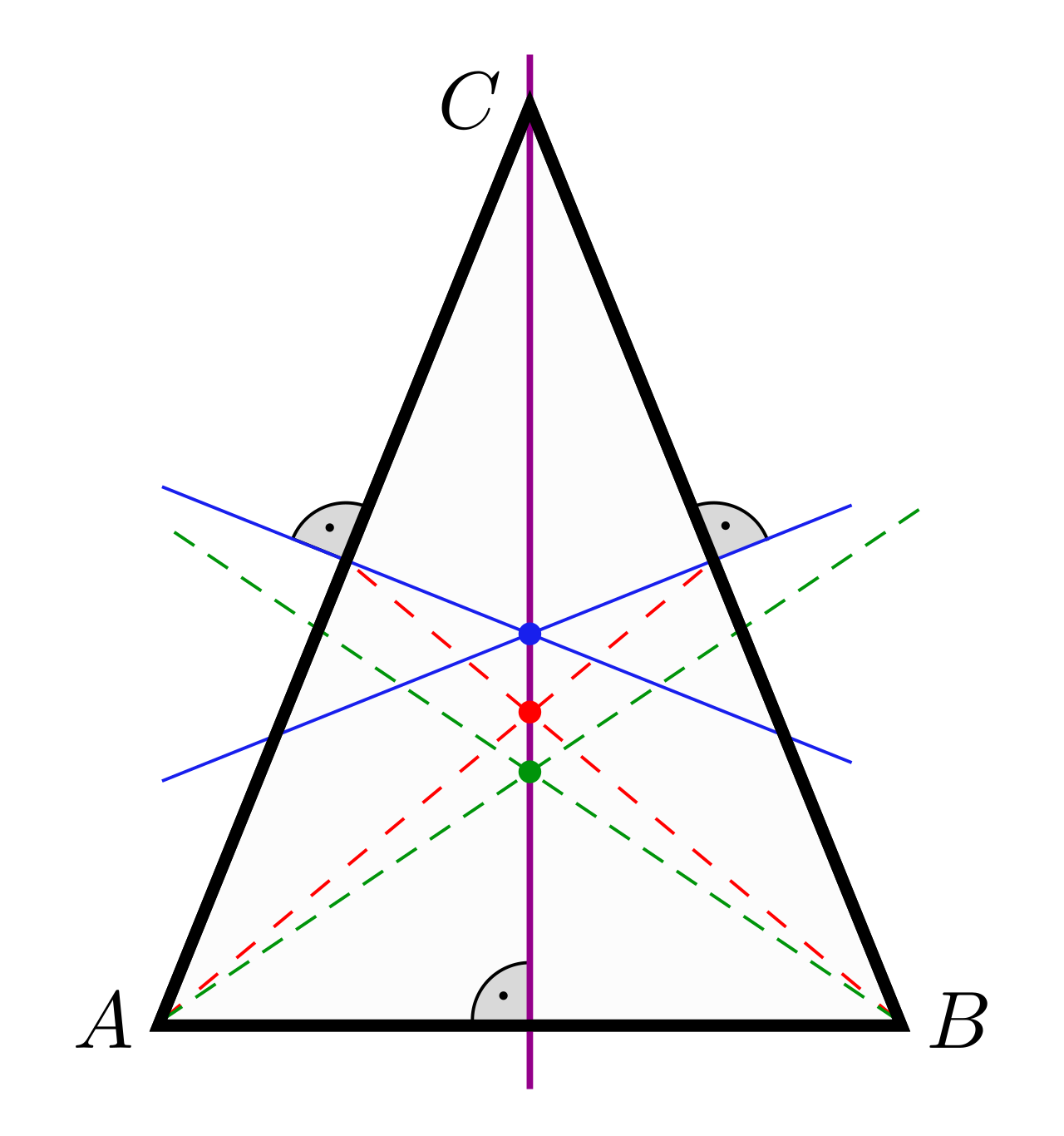
A geometric figure possesses line symmetry if a reflection maps the entire figure exactly onto itself. Think of a standard isosceles triangle. If you draw a line straight down from the apex to the midpoint of the base, reflecting the left half yields the right half. The figure folds over itself flawlessly.
Rotational Symmetry
A geometric figure possesses rotational symmetry if a rotation strictly between 0 degrees and 360 degrees maps the figure onto itself.
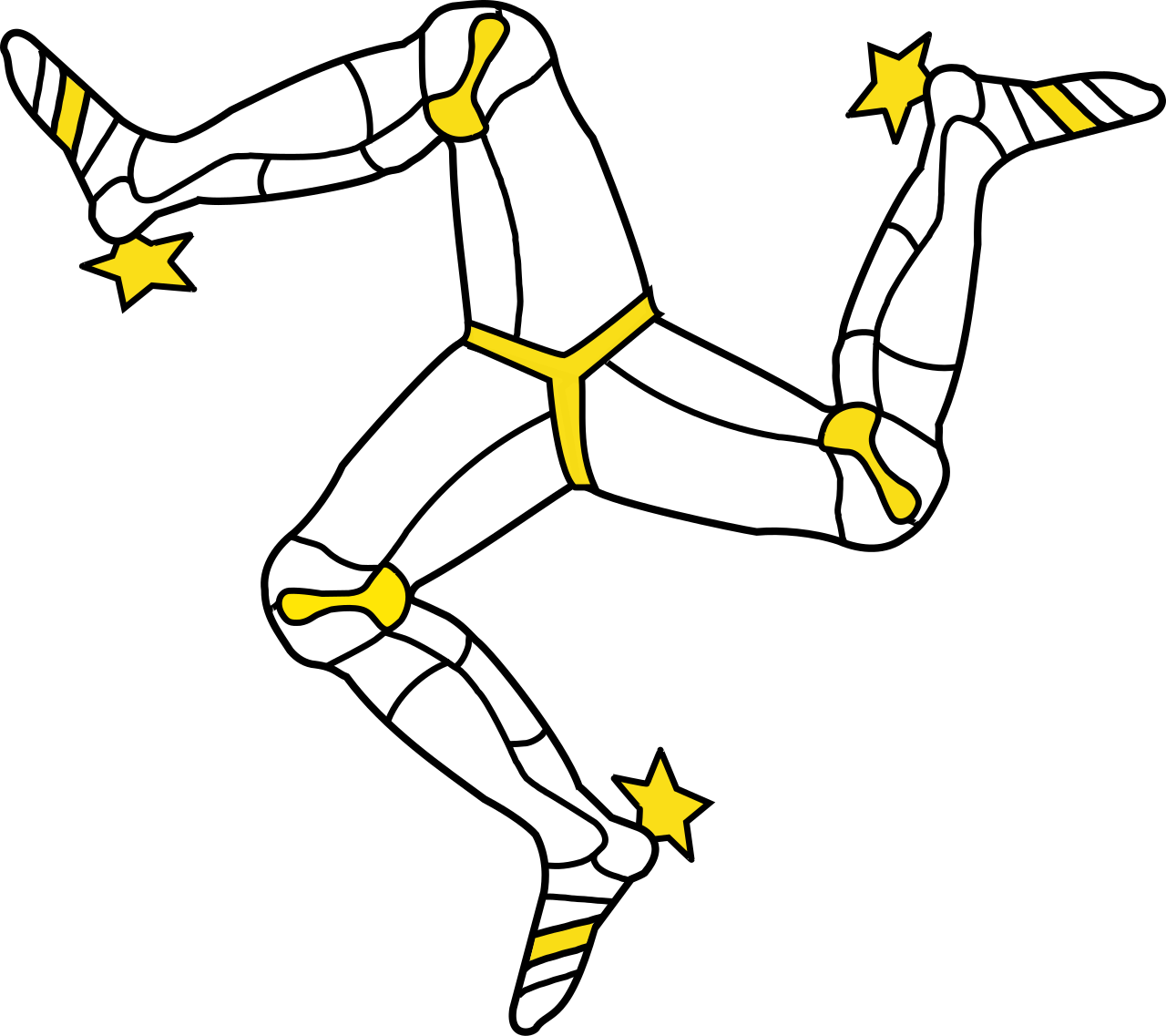
A vital metric here is the order of rotational symmetry, which defines the number of distinct times a figure maps onto itself during a full 360-degree rotation. For example, a square maps onto itself at 90°, 180°, 270°, and 360°. Therefore, a square has an order of 4.
When dealing with regular polygons (shapes with all equal sides and equal angles), finding the symmetry is elegantly predictable:
- The smallest angle of rotational symmetry for a regular polygon with n sides is 360 divided by n degrees. (For a regular hexagon: 360/6=60∘. It will map onto itself every 60 degrees).
Finally, there is a special classification for figures that look identical when turned completely upside down (like a standard playing card or the letter 'Z'):
- Point symmetry is a specific case of rotational symmetry exactly equal to 180 degrees. Remember earlier when we established that a reflection across the origin yields (−x,−y), which is mathematically identical to a 180° rotation? This means any figure with point symmetry can also be said to be symmetric with respect to the origin.

By mastering these rules, you are doing far more than memorizing formulas for an exam. You are learning the structural grammar of the two-dimensional universe. Whether shifting a parabola to find its vertex, scaling similar triangles to measure a distant height, or proving congruence through reflections, transformations are the dynamic engines of geometry. Carry this precision into your classroom, and you will give your students the tools to truly command the coordinate plane.