Cross Sections and 3D Objects
Not sure you’re ready?
Take the ~3-minute readiness diagnostic and see where you stand.
Modern medicine relies on a profound geometric truth: a three-dimensional solid can be perfectly understood by analyzing its two-dimensional slices. A computed tomography (CT) scan passes a plane of X-rays through the human body, capturing a sequence of flat images that computers reconstruct into a complex volume. You, as a future mathematics educator, are tasked with building this exact spatial intuition in your students. To them, the world is naturally three-dimensional. Your job is to show them how dimensions interact—how slicing a solid reveals hidden polygons, how spinning a flat curve carves out a volume in empty space, and how folding a flat sheet of paper can entirely enclose a void.
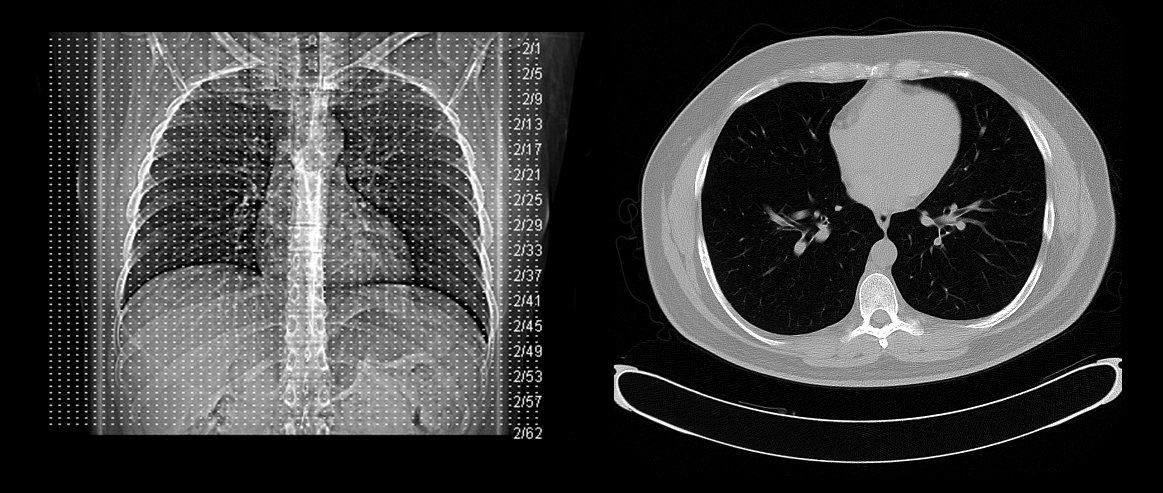
Mastering these spatial translations—cross-sections, rotations, and nets—is not just about memorizing shapes. It is about understanding the strict mechanical constraints that govern our physical universe. Let us dissect exactly how these geometric phenomena behave.
To understand a solid, we must cut into it. By definition, a cross-section is the two-dimensional figure formed by the intersection of a plane and a three-dimensional solid. When you slice a block of cheese, the exposed flat face is your cross-section.
The shape of this cross-section depends entirely on two factors: the geometry of the solid, and the angle of the intersecting plane.
Slicing Symmetrical Solids
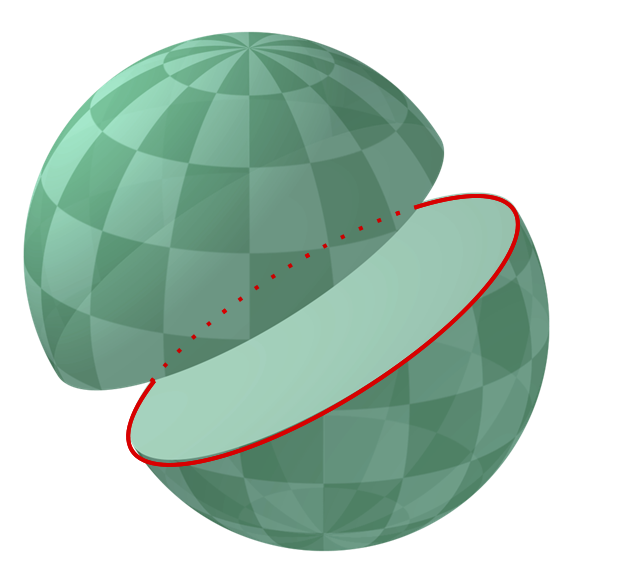
Let's begin with the sphere, the universe's most perfectly symmetrical object. Because of this symmetry, the intersection of a sphere and a plane always produces a circle or a single point (the latter occurring if the plane merely rests tangent to the surface). If you shift that intersecting plane so it passes exactly through the center of the sphere, you create a maximum-sized slice. We call this specific cross-section a great circle. In navigation, great circles represent the shortest distance between two points on the globe; every line of longitude, and the equator itself, is a great circle.
Now consider a right circular cylinder—like a standard soup can. The cross-sections here change dramatically based on your cutting angle:
- A plane parallel to the base of a right circular cylinder creates a circular cross-section.
- A plane perpendicular to the base of a right circular cylinder creates a rectangular cross-section. Imagine a guillotine dropping straight down through the top of the can. The cut runs across a chord of the top circle, drops straight down the height of the cylinder, runs across a chord of the bottom circle, and returns straight up.
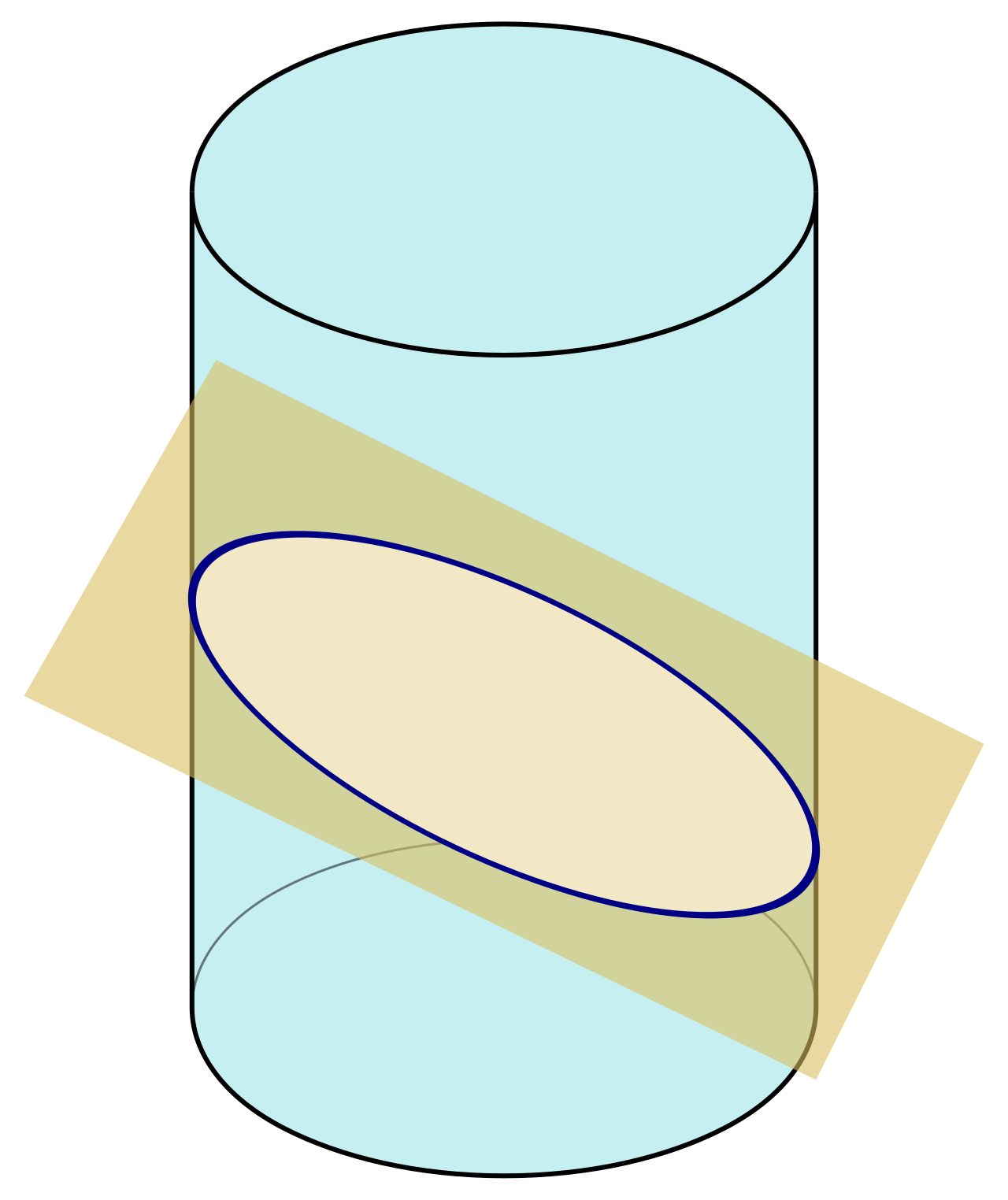
- If you tilt the cut? An oblique plane intersecting only the lateral surface of a cylinder creates an elliptical cross-section.
The Conic Sections
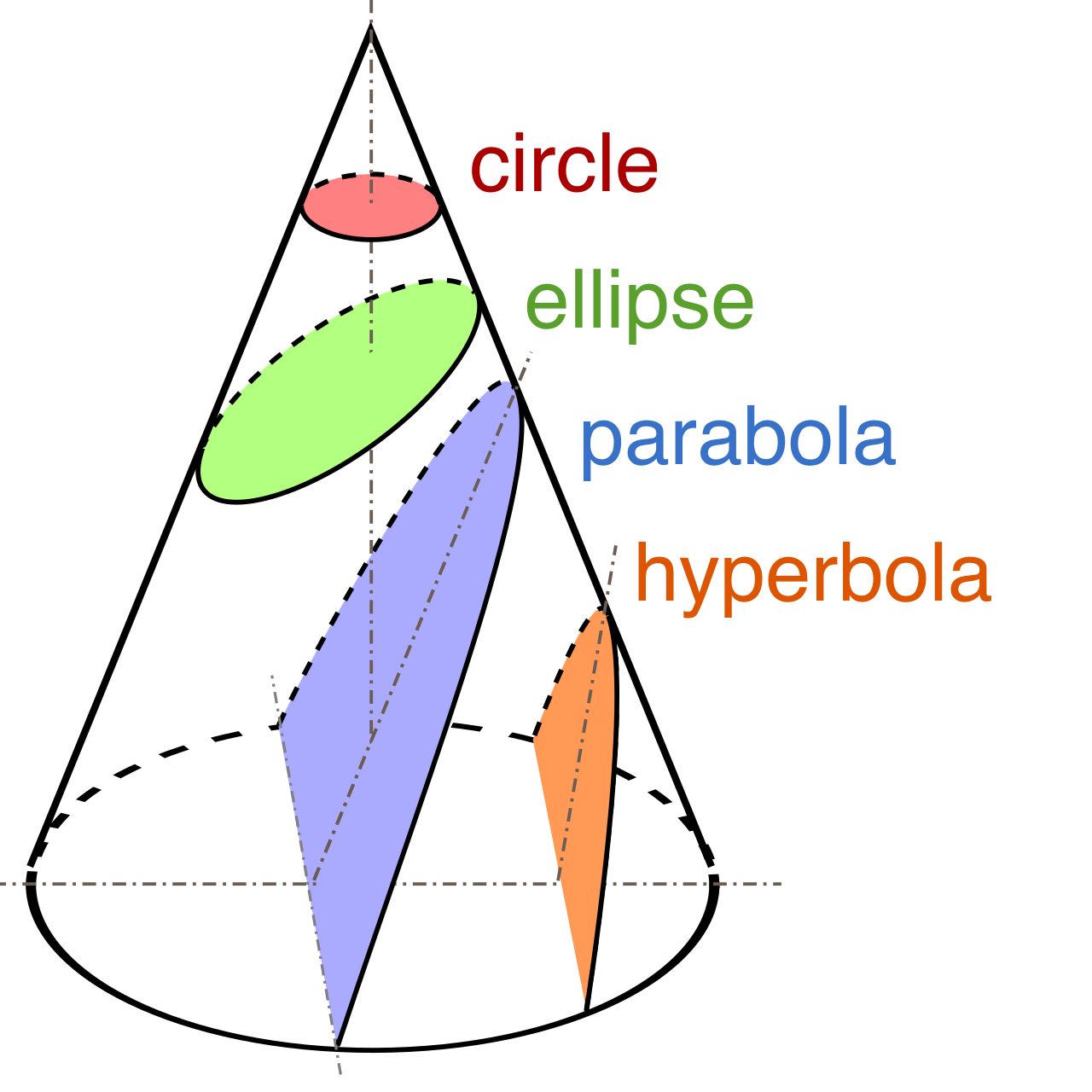
When we slice a right circular cone, we generate the famous conic sections, which govern everything from satellite orbits to satellite dishes.
- A plane parallel to the base of a right circular cone creates a circular cross-section.
- A plane intersecting a cone parallel to the slant edge of the cone creates a parabolic cross-section. Because the plane perfectly matches the angle of the cone's growth, the curve never closes back on itself.
- If we slice straight down from the top point, a plane perpendicular to the base of a right circular cone and passing through the apex creates an isosceles triangle cross-section.
- To find our last shape, we must visualize a double cone (two cones meeting at their apexes, like an hourglass). A plane intersecting both halves of a double cone parallel to the vertical axis creates a hyperbolic cross-section, resulting in two separate, mirrored curves.
The Hidden Polygons of Cubes and Pyramids
Curved surfaces yield smooth cross-sections. Polyhedrons, possessing flat faces and sharp edges, yield fascinating polygonal cross-sections.
Consider a pyramid. Due to the proportional scaling of a pyramid from its base to its apex, a plane parallel to the base of any pyramid creates a cross-section that is geometrically similar to the base polygon, simply scaled down depending on how close the cut is to the apex.
The cube, however, hides deep counterintuitive beauty. When a plane intersects a cube, the number of sides on the resulting cross-section corresponds to the number of faces the plane slices through.
- By slicing off a single corner (intersecting three faces), a plane intersecting a cube can create a cross-section shaped like an equilateral triangle.
- If we meticulously orient a plane to slice exactly through the middle of the cube, we find a hidden symmetry: A plane intersecting a cube can create a cross-section shaped like a regular hexagon. Specifically, a regular hexagon cross-section of a cube is formed by a plane passing through the midpoints of six specific edges of the cube.
Can a cube produce a regular pentagon? To get a five-sided polygon, the plane must intersect five faces of the cube. Because a cube only has three pairs of parallel faces, intersecting five faces guarantees that you will hit at least one pair of parallel faces. A rigid rule of geometry dictates that when a plane intersects parallel planes, the resulting lines of intersection must also be parallel. Therefore, a plane intersecting a cube cannot form a regular pentagon as a cross-section because any five-sided cross-section of a cube must contain at least one pair of parallel sides (and a regular pentagon has zero parallel sides).
We have seen how a plane can cut down a 3D solid into a 2D figure. Now, let us reverse the process.
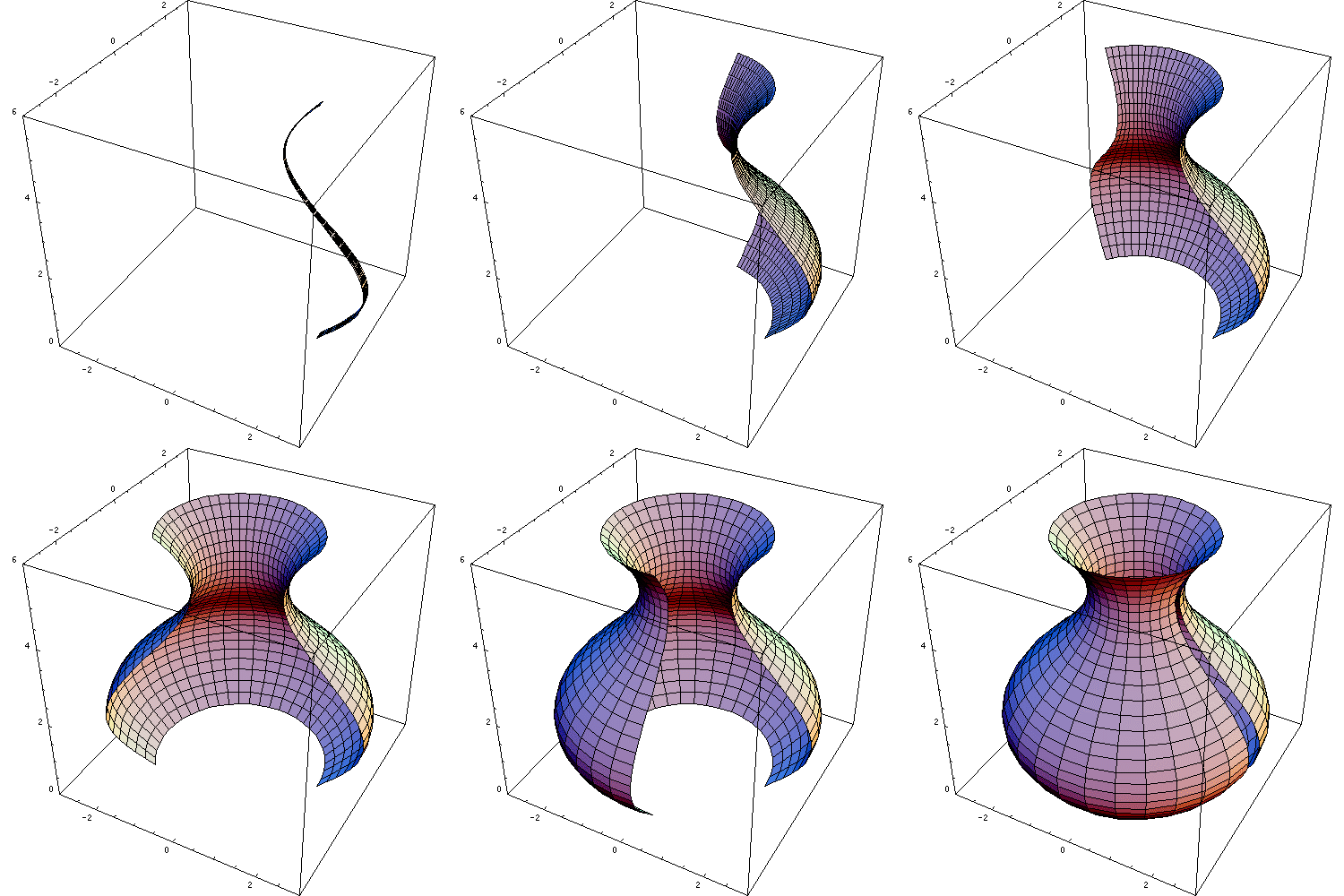
Definition: A solid of revolution is a three-dimensional figure obtained by rotating a two-dimensional plane curve around an axis.
Think of a potter at a wheel. The potter's hands remain completely still in two-dimensional space, forming a specific profile. As the clay spins around the central axis, that 2D profile sweeps through space, carving out a 3D vase. In mathematics, we achieve this by rigidly rotating flat shapes around an axis.
Generating Prisms and Cylinders
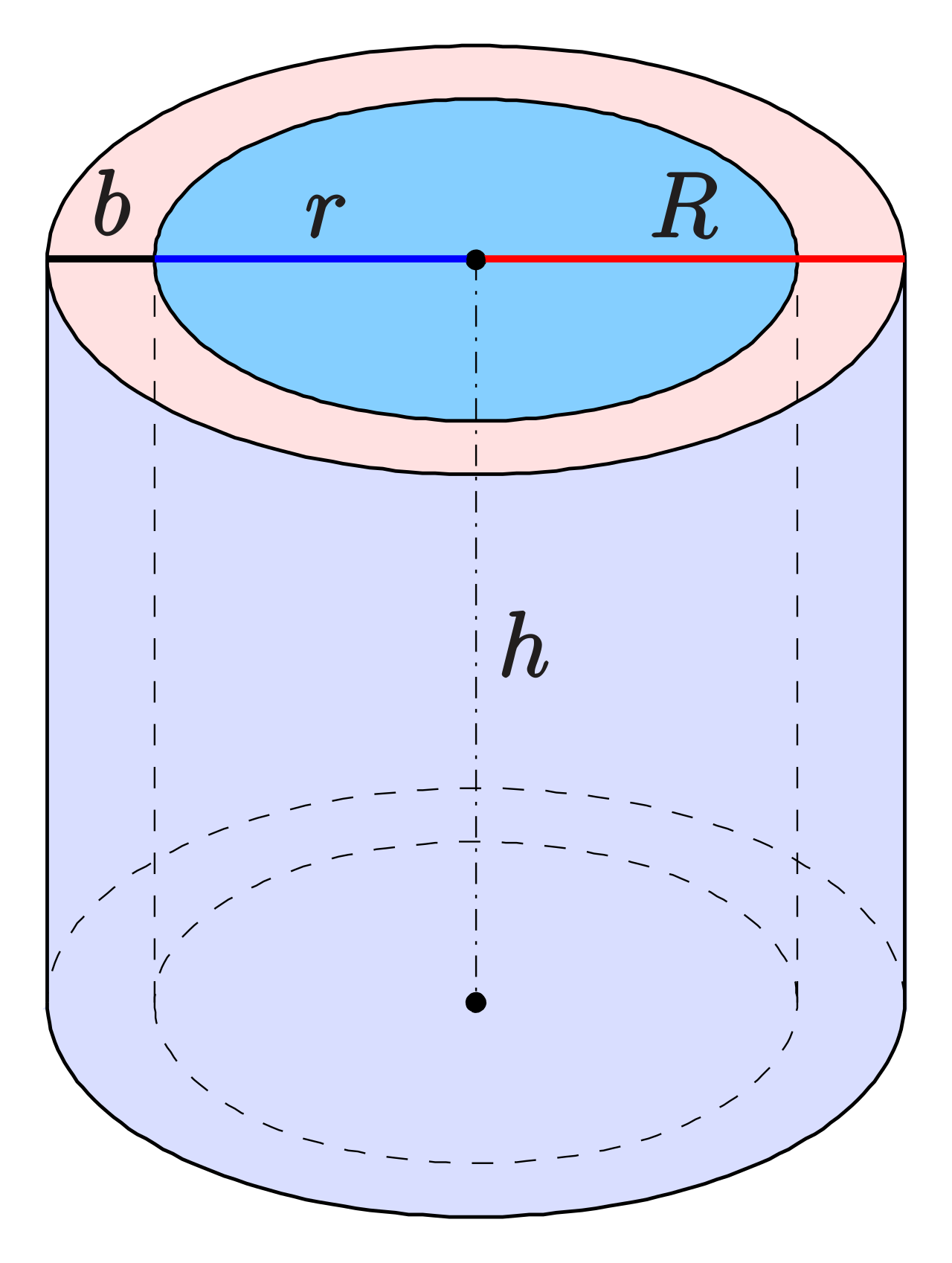
If you hold a flag perfectly still while the wind blows, you see a rectangle. If you take that rectangular flag and twirl its pole rapidly between your hands, the flag sweeps out a cylinder in the air. Rotating a rectangle around one of the rectangle's sides generates a right circular cylinder. The mechanics of this rotation are strict:
- The side of the rectangle used as the axis of rotation becomes the height of the resulting right circular cylinder.
- The side of the rectangle perpendicular to the axis of rotation becomes the radius of the resulting right circular cylinder.
What if we pull the axis away from the shape entirely? Imagine rotating a rectangle, but this time spinning it around a vertical line floating a few inches to its left. Because the axis does not touch the rectangle, the rotation sweeps out an empty center. Thus, rotating a rectangle around a line parallel to one of the rectangle's sides without intersecting the rectangle generates a hollow cylindrical tube (much like a roll of paper towels).
Generating Cones, Spheres, and Tori
We can map out other common solids of revolution based on the 2D shapes that generate them:
| 2D Shape | Axis of Rotation | Resulting 3D Solid | Key Anatomical Correspondences |
|---|---|---|---|
| Right Triangle | Around one of its legs | Right Circular Cone | • The leg used as the axis becomes the height. <br>• The leg perpendicular to the axis becomes the radius. <br>• The hypotenuse becomes the slant height. |
| Isosceles Triangle | Around its line of symmetry | Right Circular Cone | The line of symmetry serves as the height; half the base serves as the radius. |
| Semicircle | Around its straight diameter | Sphere | The radius of the semicircle remains the radius of the sphere. |
| Full Circle | Around a coplanar line that does not intersect it | Torus | Generates a doughnut shape; the distance from the line to the circle determines the size of the "hole." |
Whenever your students encounter a solid of revolution problem, advise them to draw a cross-section that includes the axis of rotation. The 2D shape resting on one side of that axis is exactly what was spun to create the solid.
While a solid of revolution is generated by motion, we can also build 3D solids through folding. When packaging engineers design cardboard boxes, they don't manufacture them in three dimensions. They cut flat, perfectly patterned 2D cardboard and fold the edges up.
Definition: A net is a two-dimensional pattern that can be folded along defined edges to form a three-dimensional solid.
The most important physical truth regarding nets is one of conservation: The surface area of a three-dimensional solid is exactly equal to the total area of the solid's corresponding two-dimensional net. If your students are struggling with a surface area formula, have them draw the net. The formula will suddenly reveal itself as nothing more than the sum of basic 2D areas.
Polyhedron Nets
For shapes with flat faces, nets are highly intuitive, though multiple valid configurations can exist for a single solid.
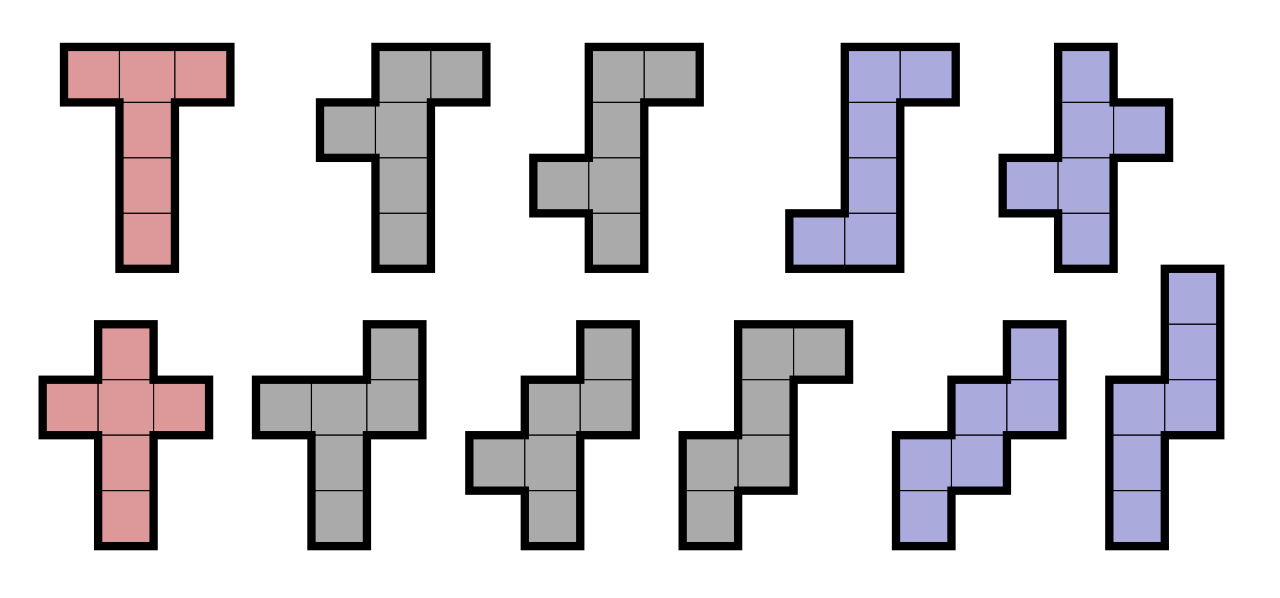
- There are exactly eleven distinct valid nets that can fold into a perfect cube.
- More broadly, a net folding into a closed rectangular prism must contain exactly three pairs of congruent rectangles, corresponding to the front/back, top/bottom, and left/right faces of the box.
- A net of a regular n-sided right prism consists of two congruent n-sided polygons and n corresponding rectangles. (For example, a hexagonal prism net requires two regular hexagons and six rectangles).
- A net of a regular n-sided pyramid consists of one n-sided polygon and n corresponding isosceles triangles.
- For the most elemental of the Platonic solids, a regular tetrahedron can be formed from a net consisting of exactly four congruent equilateral triangles.
Curved Surface Nets (Cylinders and Cones)
Curved surfaces present a conceptual hurdle because their nets do not perfectly resemble their 3D counterparts.
Consider the right circular cylinder. If you peel the label off a soup can, the label unfurls into a perfect rectangle. Therefore, a standard net of a right circular cylinder consists of two congruent circles (the top and bottom lids) and one rectangle (the lateral surface). The width of that rectangle is the cylinder's height, but what is its length? For the rectangle to wrap perfectly around the circular base without overlapping or leaving a gap, the length of the rectangular part of a cylinder's net equals the circumference of the cylinder's circular base.
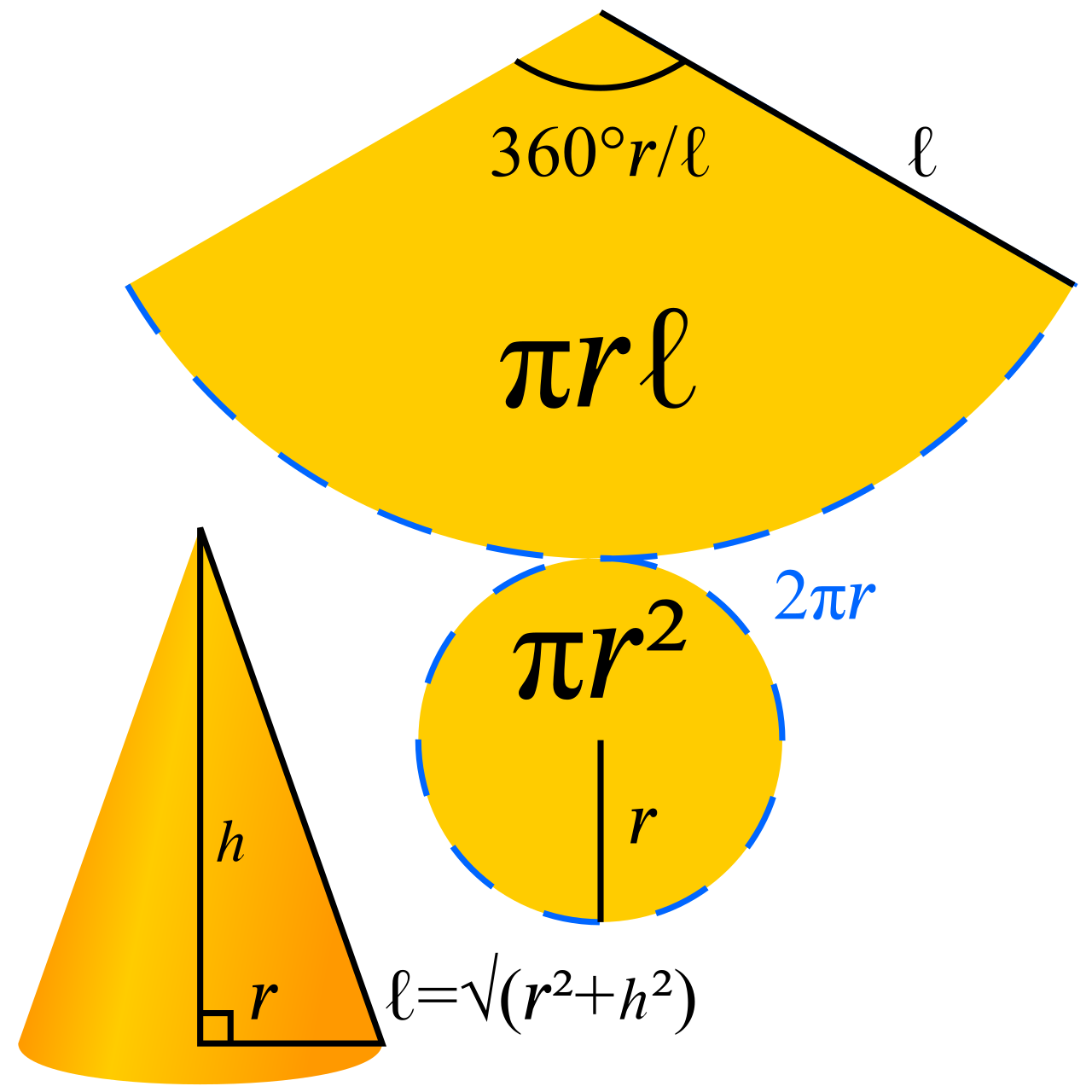
The right circular cone is even trickier. A standard net of a right circular cone consists of one full circle (the base) and one circular sector (a "Pac-Man" shape representing the lateral surface). Just as with the cylinder, the curved edge of this lateral sector must wrap perfectly around the base. Thus, the arc length of the circular sector in a cone's net equals the circumference of the cone's circular base.
Teacher's Warning: Students frequently conflate the radius of the circular sector in the net with the radius of the cone's base. This is a fatal geometric error. The radius of the circular sector in a cone's net corresponds to the slant height of the folded three-dimensional cone.
Conclusion
Your ability to fluently translate between two and three dimensions will dictate your success on the Praxis (5165): Mathematics exam, as well as your effectiveness in the classroom. When you look at a cylinder, you must simultaneously see the rectangle spinning to create it, the rectangle and two circles waiting to be folded into it, and the ellipse waiting to be sliced out of it. This is not mere abstraction—this is the hidden mechanical language of the physical objects we interact with every single day. Teach your students to see the invisible planes intersecting their world, and you will teach them to see geometry everywhere.