Perimeter, Area, and Volume
Not sure you’re ready?
Take the ~3-minute readiness diagnostic and see where you stand.
Measure the physical boundaries of a piece of land, and you are calculating its perimeter. Tile the floors of a home, and you are evaluating area. Fill a shipping container with goods, and you are working with volume. Geometry is not merely a collection of abstract lines plotted on a coordinate plane; it is the fundamental language we use to quantify physical space. When you stand in front of a secondary mathematics class, your objective is to guide students in a transition from intuitively navigating their physical world—knowing how to pack a backpack or how much wrapping paper covers a gift—to mathematically defining it. We do this by revealing a powerful secret: every complex, jagged, or curving object in the universe can be understood by breaking it down into simple, predictable, and calculable pieces.
When we deal with two-dimensional shapes, we are exclusively concerned with the boundary (perimeter) and the interior flat surface (area). A common stumbling block for students is looking at an irregular, composed polygon—say, an L-shaped room—and feeling overwhelmed. Your job is to teach them how to systematically dismantle it.
Perimeter and Composed Polygons
The perimeter requires no complex multiplication. Think of it as a fence enclosing a yard.
The perimeter of a composed polygon is the sum of the lengths of the exterior boundary segments.
The interior lines where shapes touch are irrelevant. If a student tries to add an interior dividing line to the perimeter, remind them: if you walk the property line, you never cross the yard.

Strategies for Area
To calculate the area of an irregularly shaped room—perhaps to determine the cost of carpeting at $15 per square foot—we have two distinct strategies. The choice depends entirely on which dimensions are given.
- The Additive Method: The area of a composed polygon can be found by decomposing the polygon into simpler non-overlapping geometric shapes and summing the areas of the simpler shapes. Imagine cutting the L-shaped room into two distinct rectangles.
- The Subtractive Method: The area of a composed polygon can be found by enclosing the polygon in a larger bounding rectangular shape and subtracting the areas of the external regions from the bounding shape. Imagine stamping the room out of a larger rectangular piece of dough, subtracting the scrap left behind.
The Triangle: The Atom of Geometry
Every polygon can be shattered into triangles, making the triangle the atomic unit of 2D geometry. You must equip your students with multiple tools to find its area, depending on the available information.
If you know the base and the orthogonal drop to the opposite vertex:
The area of a triangle is half the product of the base length and the corresponding perpendicular height. (A=21bh)
If you have a triangle but no height, only the lengths of the three sides (a common scenario in land surveying):
Heron's formula states the area of a triangle is the square root of the product of the semiperimeter and the differences between the semiperimeter and each of the three side lengths.
A=s(s−a)(s−b)(s−c) (where semiperimeter s=2a+b+c)
If you are working within a coordinate or trigonometric context where you know two sides and the angle wedged between them:
The area of a triangle can be calculated as half the product of two adjacent side lengths and the sine of the included angle. (A=21absin(C))
Quadrilaterals and Regular Polygons
For quadrilaterals, the logic flows directly from the rectangle.
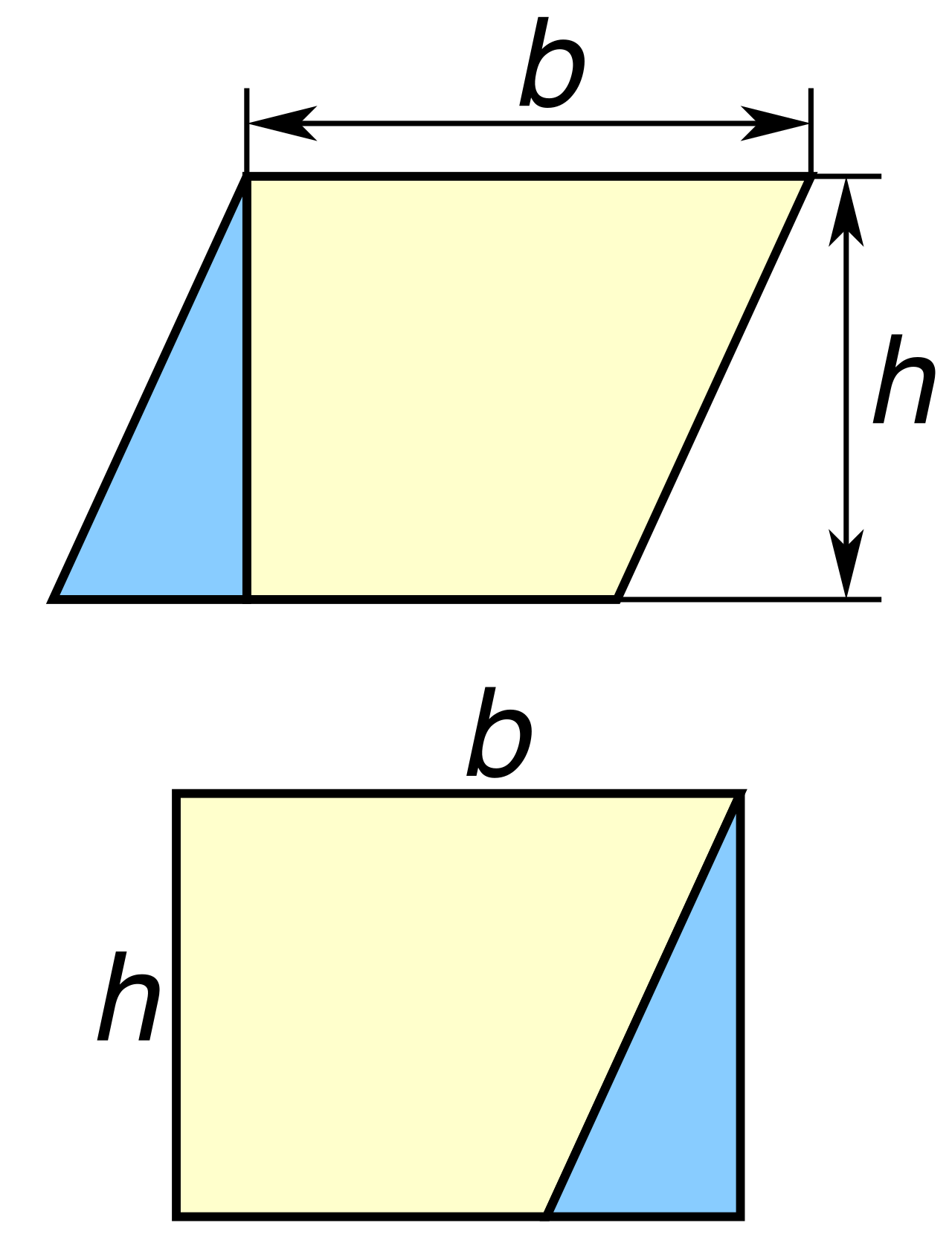
- Parallelogram: If you slice a right triangle off one end of a parallelogram and attach it to the other, it becomes a rectangle. Therefore, the area of a parallelogram is the product of the base length and the corresponding perpendicular height. (A=bh)
- Trapezoid: A trapezoid's area is essentially the average of its parallel bases, multiplied by how far apart they are. Thus, the area of a trapezoid is half the product of the height and the sum of the parallel base lengths. (A=21h(b1+b2))
When teaching regular polygons (like a stop sign), introduce the apothem.
The apothem of a regular polygon is the perpendicular distance from the center of the polygon to the midpoint of one of the sides.
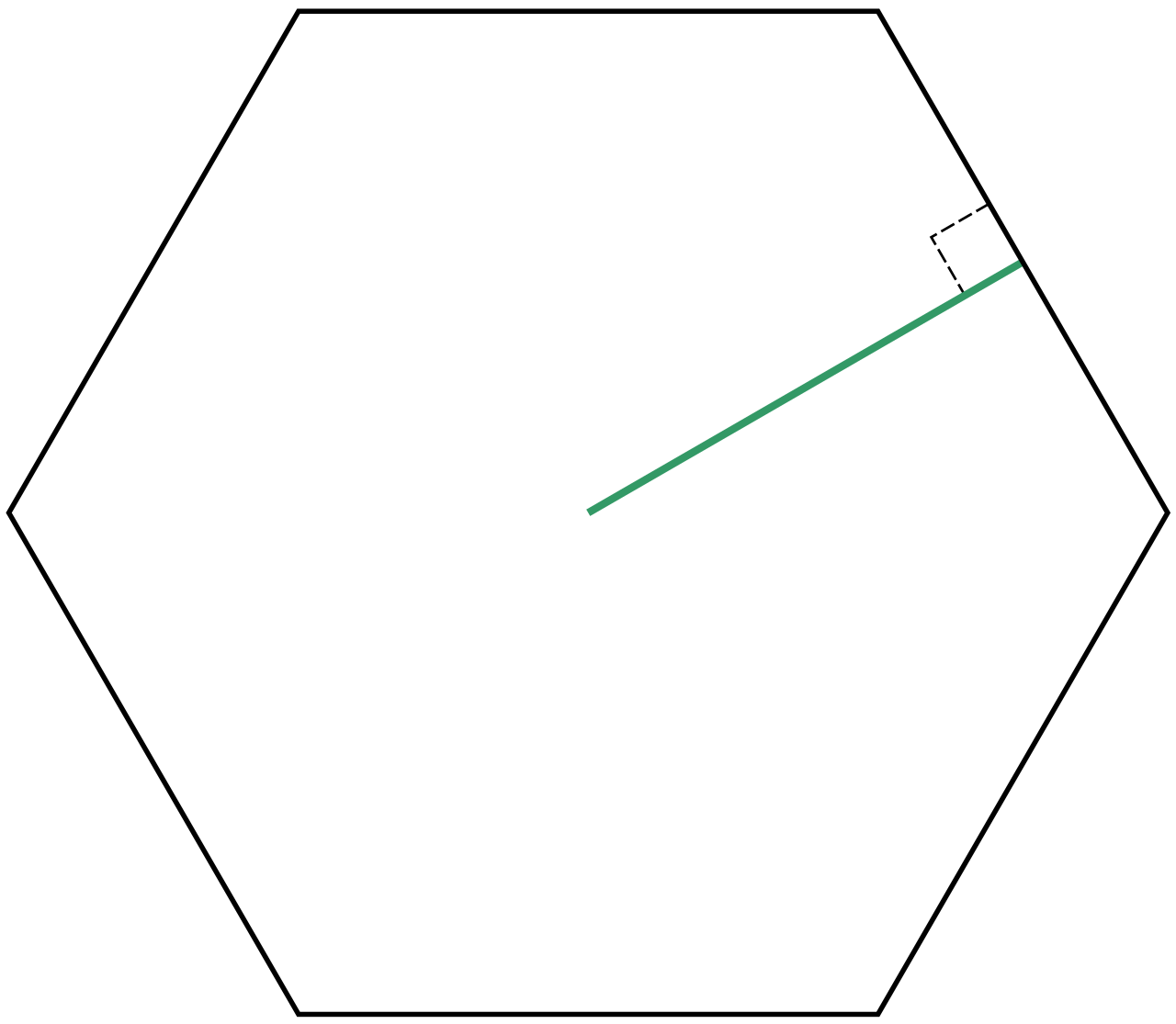
If you draw lines from the center of an n-sided regular polygon to its vertices, you create n identical isosceles triangles. The height of each triangle is the apothem (a). The base of all those triangles combined is the polygon's perimeter (P). Therefore, the area of a regular polygon is half the product of the apothem length and the perimeter of the polygon. (A=21aP)
Volume is the measure of capacity. Surface area is the measure of the skin wrapping that capacity. These are two fundamentally different metrics, yet they share the same dimensional DNA.
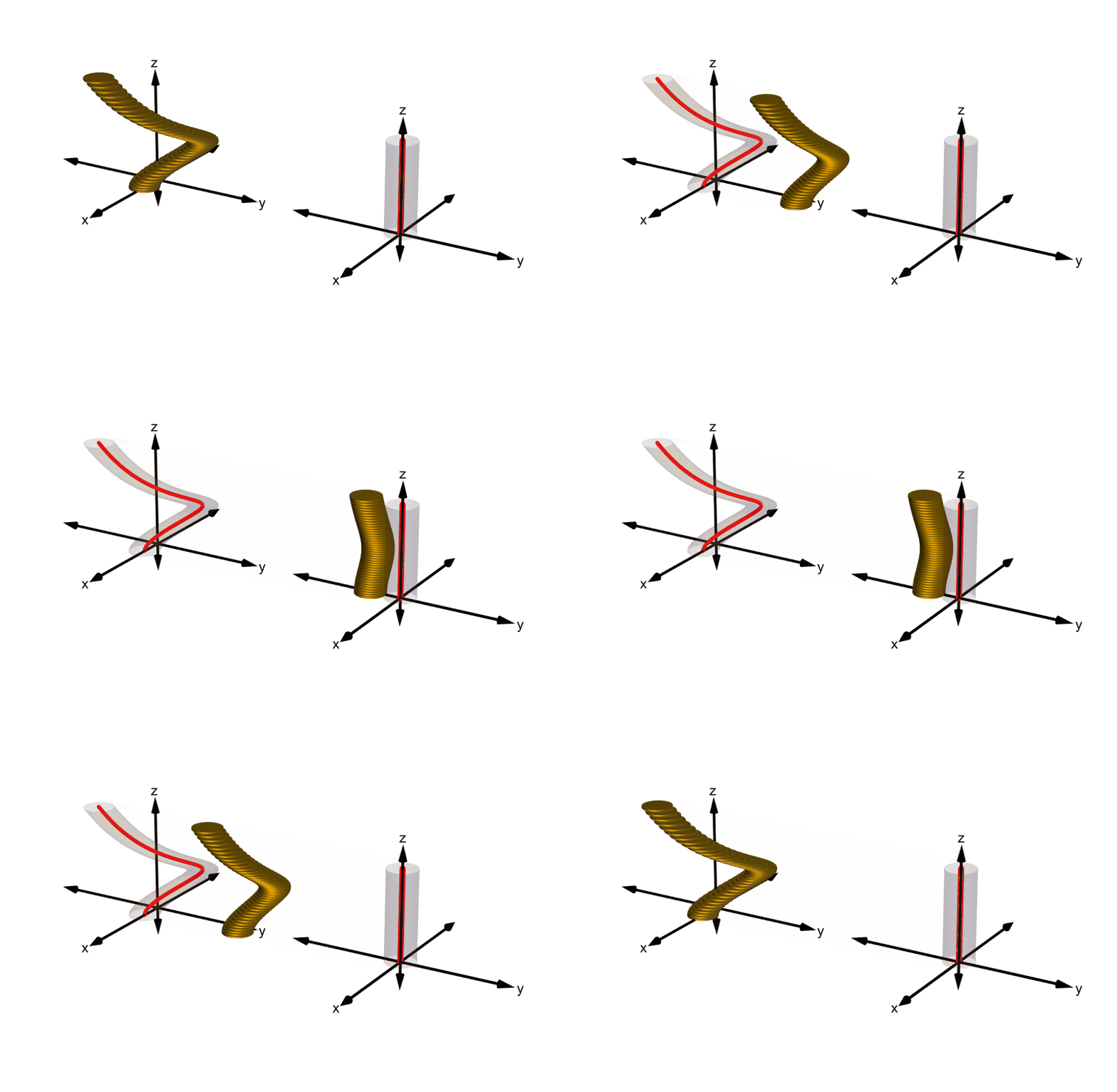
To bridge the gap between 2D and 3D, we use one of the most elegant ideas in geometry: Cavalieri's Principle. Imagine a stack of 100 flat index cards. If you push the side of the stack so it leans over, the volume of the paper hasn't changed.
Cavalieri's Principle states that if two solids have the same height and the same cross-sectional area at every level, the two solids have the same volume.
Prisms and Cylinders: Extruding Reality
A prism is simply a flat 2D shape dragged straight up through the third dimension. Therefore, the volume of a prism is the product of the area of the base and the height of the prism. (V=Bh).
When measuring the surface area of these extruded shapes, we look at the "skin" or the net.
The surface area of a three-dimensional solid is equal to the total area of the two-dimensional net that forms the three-dimensional solid.
For a right prism:
- Lateral Area: Think of wrapping a label around a hexagonal box. The lateral surface area of a right prism is the product of the perimeter of the base and the height of the prism.
- Total Area: The total surface area of a prism is the sum of the lateral surface area and the areas of the two parallel bases.
A cylinder is just a prism with a circular base. It obeys the exact same logic:
- Volume: The volume of a cylinder is the product of pi, the square of the base radius, and the height of the cylinder. (V=πr2h)
- Lateral Area: If you peel the label off a soup can, it unrolls into a rectangle. Thus, the lateral area of a right cylinder can be represented by the area of a rectangle with a width equal to the cylinder height and a length equal to the circumference of the cylinder base. Because circumference is 2πr, the lateral surface area of a right cylinder is the product of two, pi, the base radius, and the height of the cylinder. (LSA=2πrh)
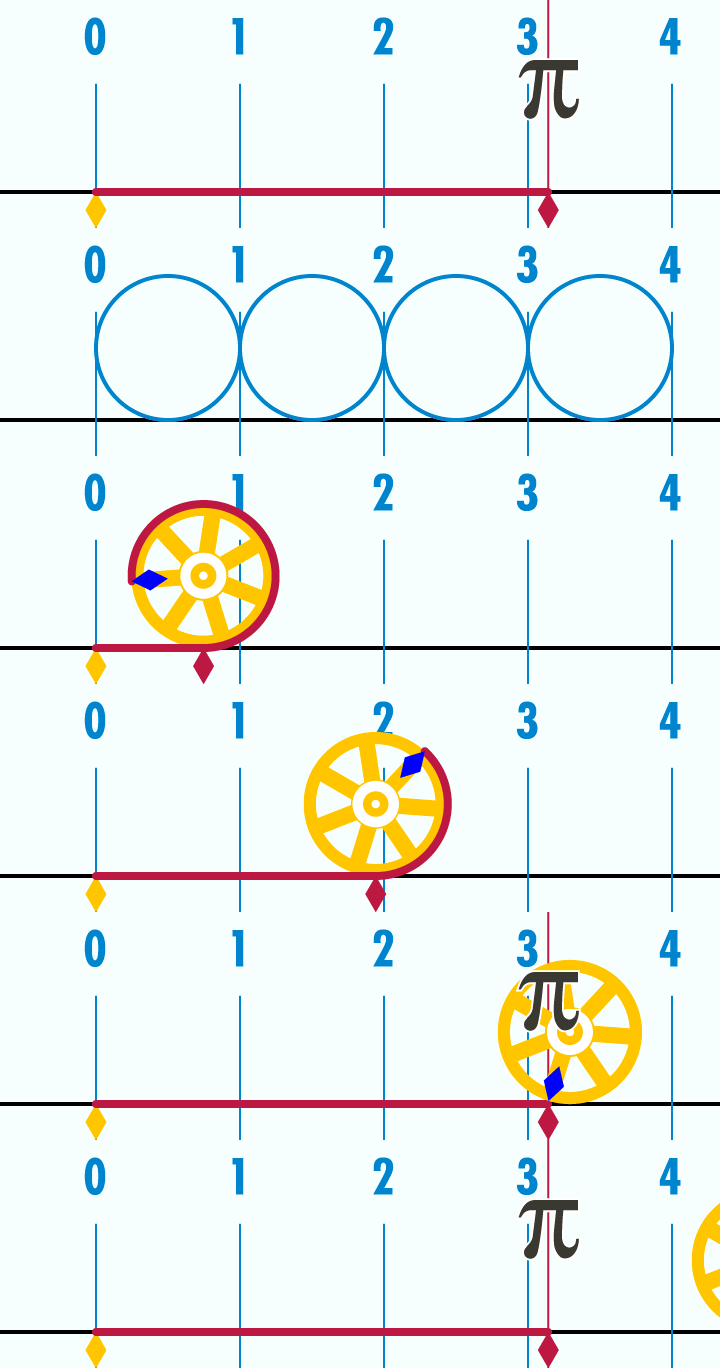
- Total Area: The total surface area of a cylinder is the sum of the lateral surface area and the areas of the two circular bases. (SA=2πrh+2πr2)
Pyramids and Cones: The One-Third Rule
If a prism goes straight up, a pyramid tapers to a point (the apex). If you were to hollow out a prism and a pyramid that share the exact same base and height, it would take exactly three full pyramids of water to fill the prism.
- Pyramid Volume: The volume of a pyramid is one-third the product of the base area and the perpendicular height. (V=31Bh)
- Cone Volume: Similarly, the volume of a cone is one-third the product of pi, the square of the base radius, and the perpendicular height of the cone. (V=31πr2h)
Warning for Teachers: When transitioning to surface area, students frequently confuse perpendicular height (h) with slant height (l). Perpendicular height drops straight from the apex to the center of the base (used for volume). Slant height slides down the external face.
- Pyramid Fact: The slant height of a regular pyramid is the distance from the apex to the midpoint of an edge of the base.
- Cone Fact: The slant height of a right circular cone is the distance from the apex to any point on the circumference of the base.
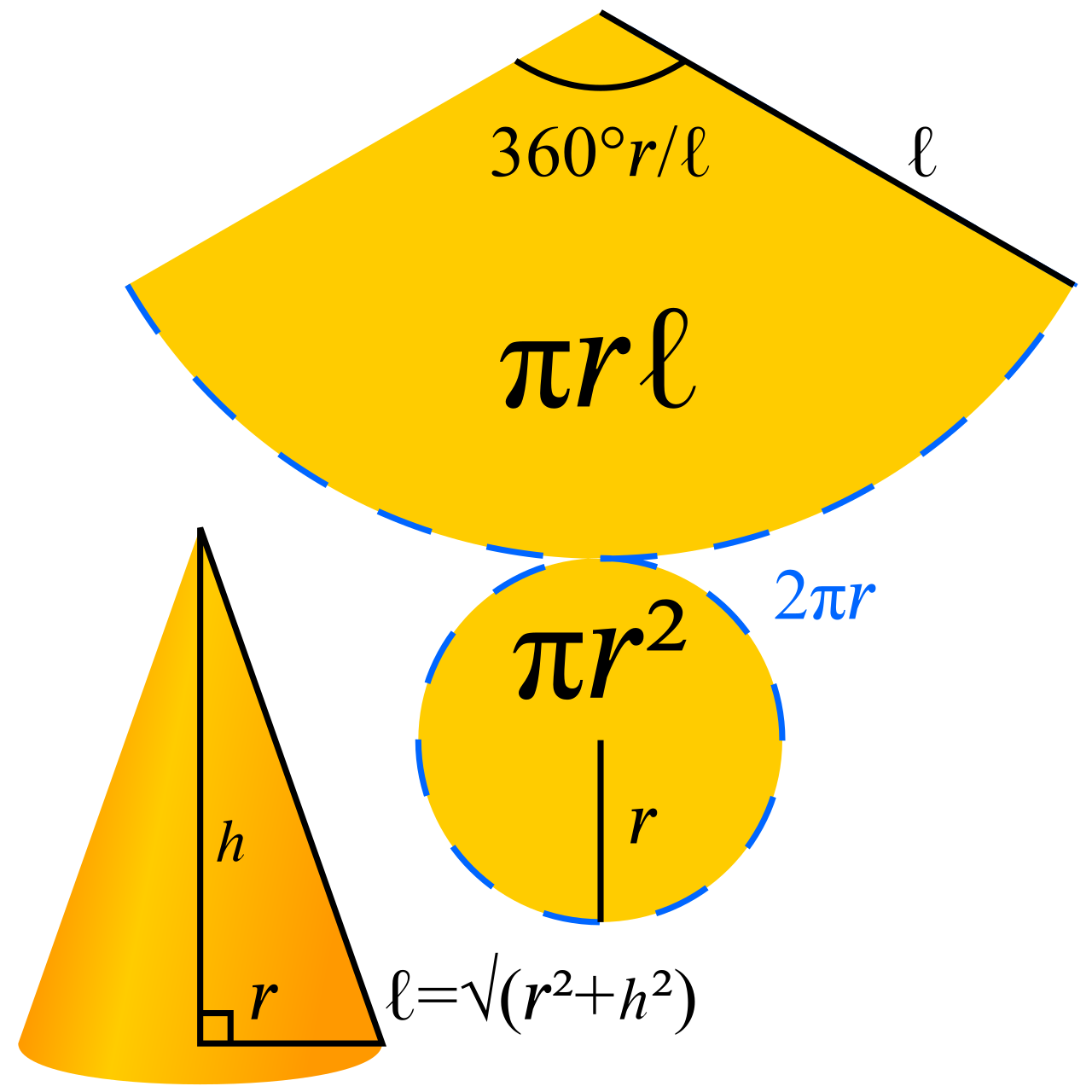
Using the slant height, we measure the outside wrapping:
- Pyramid Lateral Area: The lateral surface area of a regular pyramid is half the product of the base perimeter and the slant height. (LSA=21Pl)
- Cone Lateral Area: The lateral surface area of a right circular cone is the product of pi, the base radius, and the slant height. (LSA=πrl)
- Cone Total Area: The total surface area of a cone is the sum of the lateral surface area and the area of the circular base. (SA=πrl+πr2)
Spheres and Hemispheres
A sphere is perfectly symmetrical. There are no distinct "bases" to worry about.
- Volume: The volume of a sphere is four-thirds the product of pi and the cube of the radius. (V=34πr3)
- Surface Area: Beautifully, exactly four circles with the same radius will perfectly wrap around the sphere. The surface area of a sphere is four times the product of pi and the square of the radius. (SA=4πr2)
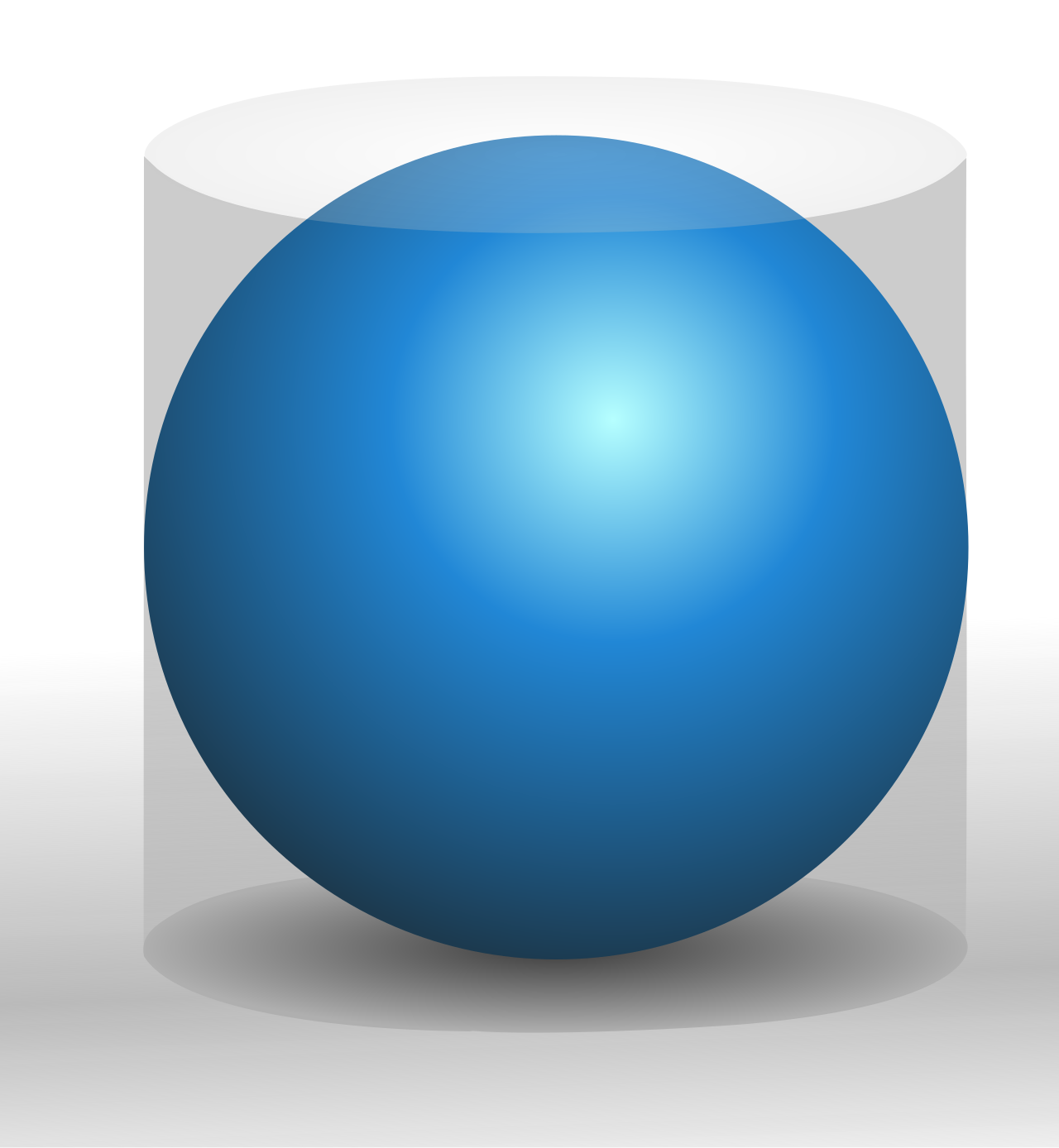
What if we slice an orange in half to create a hemisphere?
- Volume: The volume is simply halved. The volume of a hemisphere is two-thirds the product of pi and the cube of the radius. (V=32πr3)
- Surface Area Trap: The surface area is not simply halved. Halving the sphere gives us the dome (2πr2), but slicing the orange exposes a brand new, wet circular face at the bottom (1πr2). Therefore, the total surface area of a solid hemisphere is three times the product of pi and the square of the radius. (SA=3πr2)
Composite Solids
Just as we decomposed 2D polygons, we can build or dismantle complex 3D objects (like a silo, which is a cylinder topped with a hemisphere). The logic holds: the volume of a composite solid is the sum of the volumes of the individual non-overlapping constituent solids.
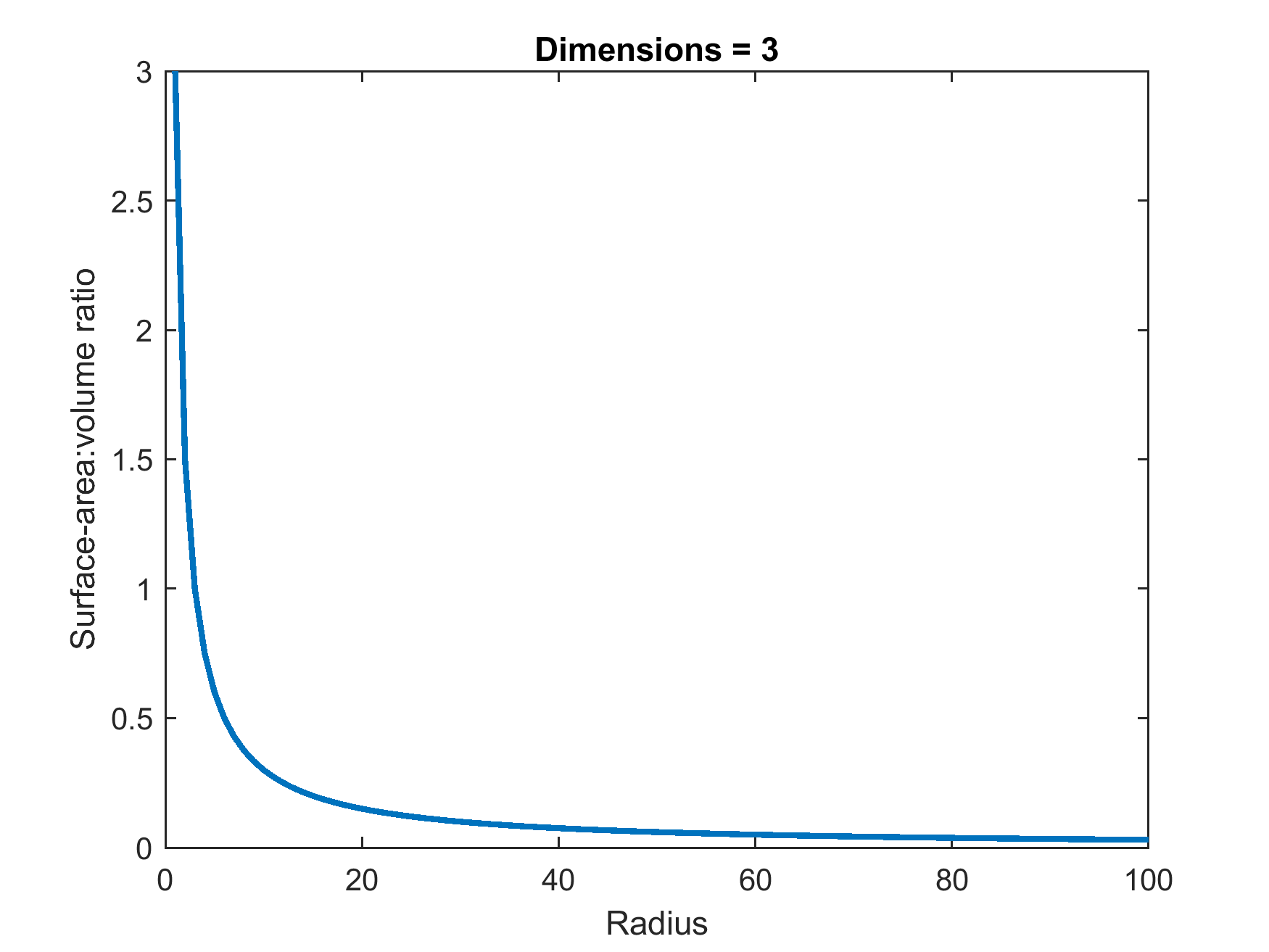
We now arrive at a concept where human intuition notoriously fails. If you want to double a recipe, you double the ingredients. If a student scales a 2-inch square up to a 4-inch square, they often guess the area is doubled. But reality scales geometrically, not linearly. Understanding this is vital for secondary teachers, as it is heavily tested and universally applicable—from biology (surface-area-to-volume ratio in cells) to engineering.
The scale factor between two similar figures is the ratio of any corresponding linear dimensions. Let's call this factor k.
Uniform Scaling
When we stretch a shape uniformly by a factor of k in every direction:
- 1D Boundary: A line is one-dimensional. Multiplying the linear dimensions of a two-dimensional figure by a uniform scale factor of k multiplies the perimeter by a factor of k. (If a room is twice as wide and twice as long, it takes twice as much baseboard to line it).
- 2D Surface: Area represents two dimensions (k×k). Multiplying the linear dimensions of a two-dimensional figure by a uniform scale factor of k multiplies the area by a factor of k squared. This means the ratio of the areas of two similar polygons is the square of the ratio of the corresponding side lengths. (That same doubled room requires four times the carpet).
- 3D Surface Area: Even on a 3D object, surface area is just 2D skin. Thus, multiplying the linear dimensions of a three-dimensional solid by a uniform scale factor of k multiplies the total surface area by a factor of k squared.
- 3D Volume: Volume spans three dimensions (k×k×k). Multiplying the linear dimensions of a three-dimensional solid by a uniform scale factor of k multiplies the volume by a factor of k cubed. The ratio of the volumes of two similar solids is the cube of the ratio of the corresponding linear dimensions. (If you double the radius and height of a cylindrical water tank, it holds 23=8 times as much water).
Independent Scaling
What happens if the stretch isn't uniform? Suppose a manufacturer wants a shipping box to be twice as long, three times as wide, but half as tall.
- If the orthogonal dimensions of a rectangular prism are multiplied by distinct independent scale factors, the new volume is the original volume multiplied by the product of the independent scale factors. (Vnew=Vold×(k1⋅k2⋅k3)). In our example, the volume is multiplied by (2×3×0.5)=3.
The Teacher's Perspective
When your future students memorize formulas, they forget them. When you teach them that a cylinder's volume is just stacking circular slices, that a cone is simply a third of that stack, and that stretching a box in three directions multiplies its capacity by the product of those stretches, you give them the architecture to deduce the formulas themselves. Master these foundational properties, trace the lines from the 1D perimeter up to the 3D volume, and you will not only conquer this exam—you will illuminate the physical world for your students.